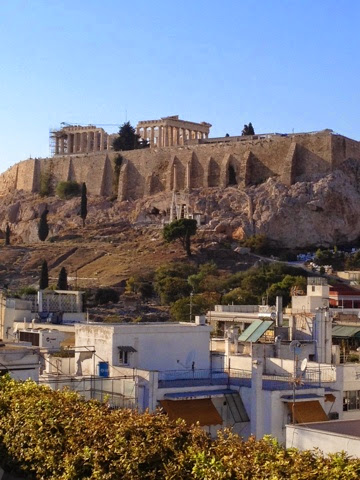
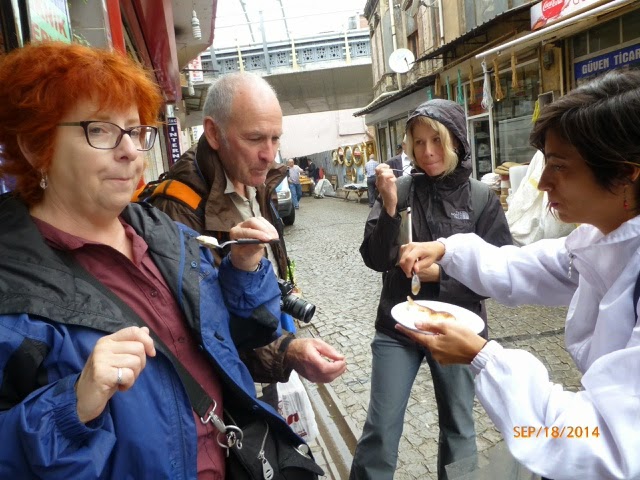
Sumela monastery

When all the Crimean ports on our cruise were cancelled an additional Turkish port was added – Trabzon. I had heard of the city (aka Trabizond) as one of the great cities of the Silk Road and the centre of an empire, for a time. The guide books are fairly dismissive of the modern city, and the cruise ship warned us that there were not a lot of services. In fact our day long tour returned to the ship for lunch – I guess there was no restaurant in town that could handle that many people to the standard required. Not only were there no suitable restaurants but there was a shortage of English speaking guides so some were brought in from Istanbul. 
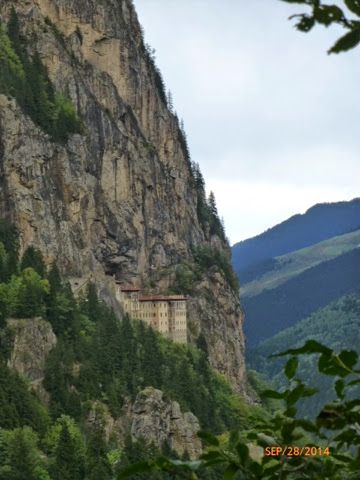
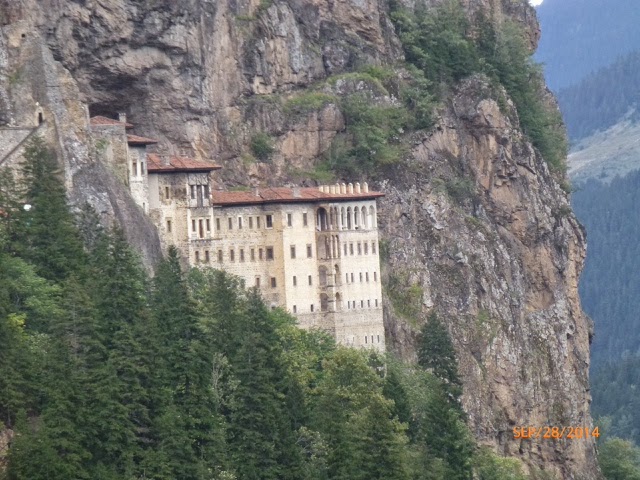
It turns out that our Trabzon excursion was a highlight of the trip. Trabzon may not be considered very interesting, but at 500,000 it is a big place. We drove out from the city, heading for the mountains. This is the road to Iran, and it winds through a mountain valley, lined with hazelnut orchards and other agricultural pursuits. These are rough and rugged mountains. Once upon a time a group of Greek monks settled in a cave in these mountains, which eventually became a monastery, and that is what we came to see. 
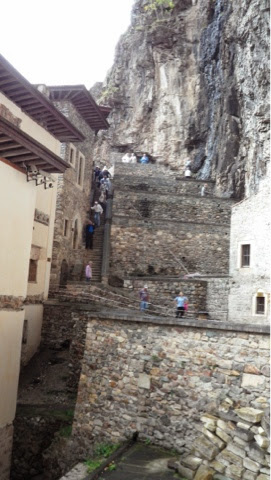
We rode in our coach for about an hour, entering a national park. Eventually the road became too narrow and we switched to little mini vans. I tried not to think about it too much as we careened up a narrow road, swinging around the hairpin turns as we worked our way up the switchbacks. Then – a photostop. This is where we were going:
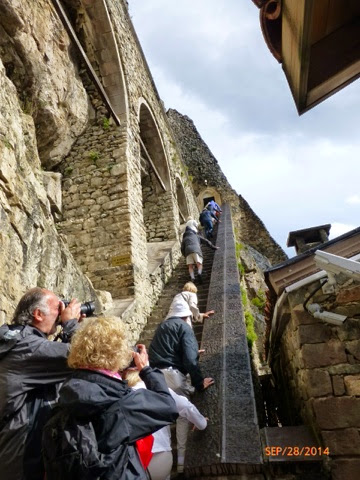
Once we got to the end of the road it was time to start climbing (did I mention that it started to rain?)
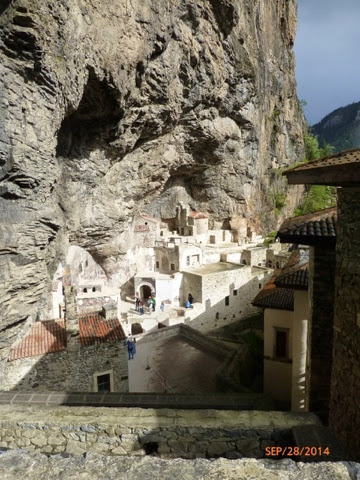
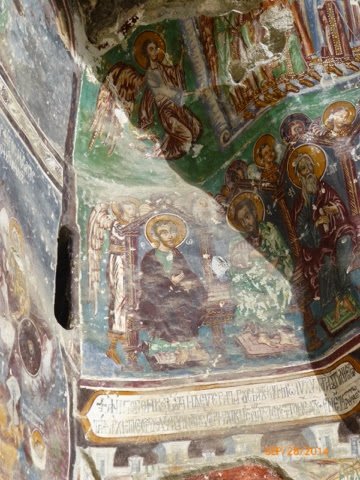
First a cave, then more permanent constructions then a full fledged monestary complex, which was inhabited until 1924. It fell into disuse and ruin, but concentrated work has restored the paths, buildings and infrastructure. In the very oldest part of the complex are frescoes painted onto the rock. They have been damaged over the centuries, but they still have the power to impress. 
And we met up with this guy again….
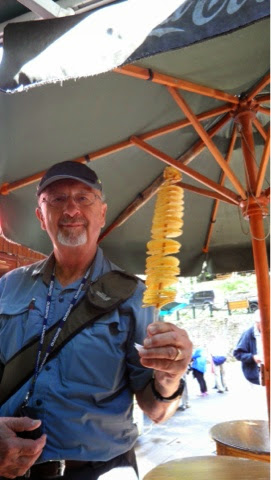
And after all that climbing up and down – Turkish tea and a potato on a stick!
It did stop raining and the sun came out. Up there in the cloud forest, where it rains 250 days of the year (or more) we were lucky. 

Postcard from Sochi

We figured we’d go to Russia, fine. But we wouldn’t spend any money, take that Mr. Putin. Well, he gets the last laugh. We did a short tour of the city, but our movements were so tightly controlled that there wasn’t even a opportunity to buy a bottle of water, let alone shop! And there we as a lot of pent up shopping demand on that cruise ship. 
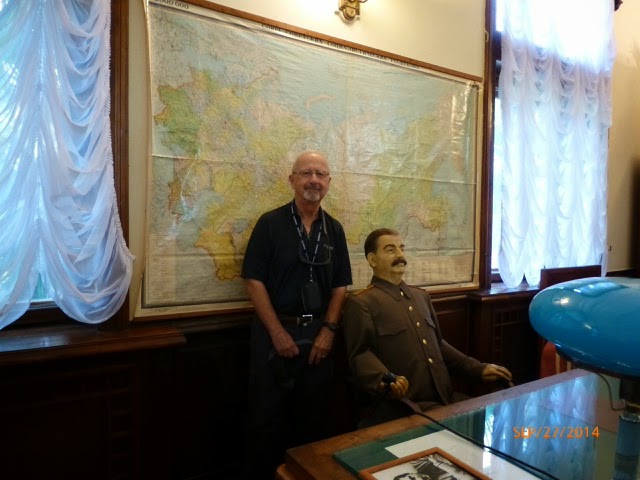
So, a couple of guys hanging out at the summer place:
Once a man who struck fear in the hearts of millions, now a prop for tourist photos. 

A bit of Romania

We had two days in the Romanian port city of Constanta, which meant that we had time for a day trip to Bucharest. Romania is another country that was a bit shadowy during the Soviet years – there were their fabulous gymnasts, but mostly they seemed to be a country that really suffered during those long years. We were curious to see what the past 25 years and membership in the EU brought them. 
The day trip to Bucharest was a long one – just over three hours on the bus to get to the city. The highway was new and in perfect condition. We drove across an immense plain, every part of which was under cultivation. It was a combination of the latest high tech farm equipment along with fields being worked with horse and cart. 
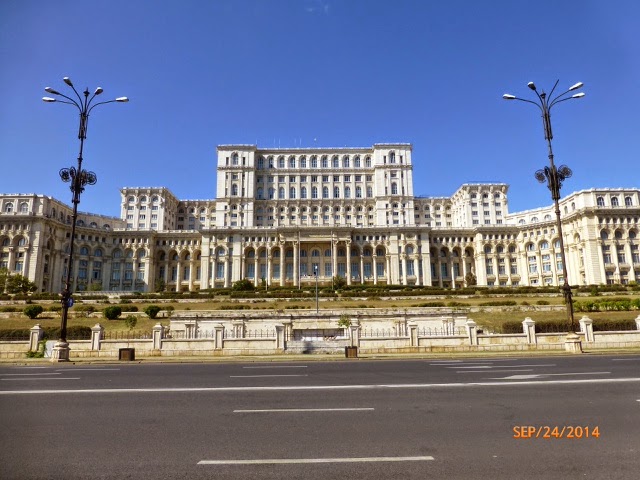
As we entered Bucharest we passed great swathes of Soviet era apartment blocks, some in pretty good repair, some not so much. The old part of the city is very beautiful. There was a lot of money in the city from the mid-nineteenth century up until WWI. There are many gorgeous buildings, which have survived til now and have been cleaned and restored. And then, of course, there is the palace of parliament:
After the Pentagon this is the largest administrative building in the world (there are many stories below ground, too). Former dictator Ceaucescu wanted an impressive building, which it is. Karma being what it is – the big building got built, but he did not live to see it finished. 
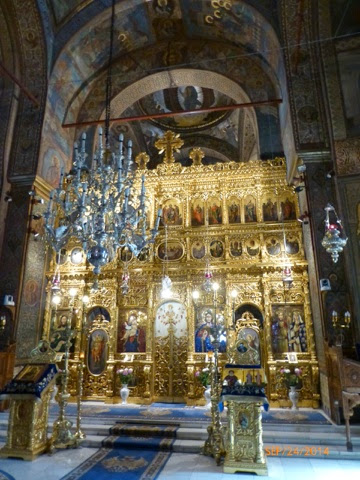
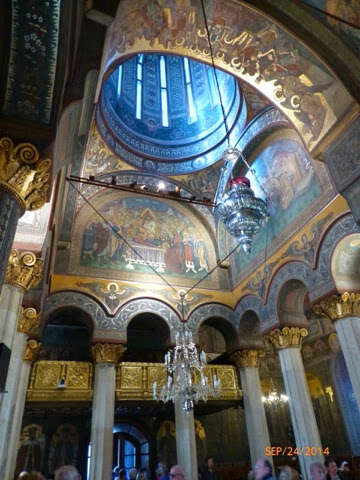
Most of the churches we have seen on this trip have been historical, some are restored, some not. In Bucharest we visited the church of the patriarch, which was built at the end of the 19th century Be still, my magpie heart:
Glittering screens of gold. Decoration in Art Nouveau style. So beautiful. 
Our second day was a bit of a look at the way things were. From Constanta we headed for the ancient citadel of Histria. Again across vast agricultural plains. This time we were on back roads that had not been upgraded, or were being worked on right now. Small villages frozen in time. We passed an enormous oil refinery (which our guide referred to as the biggest distillery in Europe, which caused a bit of confusion until we got distillery vs refinery sorted). 
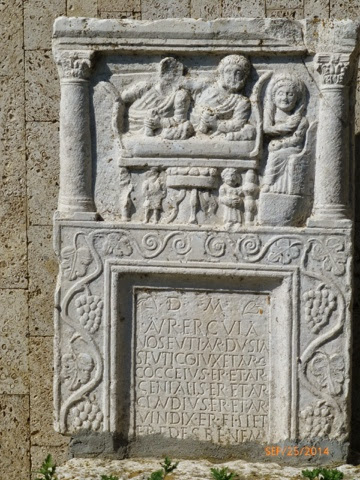
The citadel at Histria was a Greek settlement that passed into history, then became part of the Roman Empire. Bad geological luck meant that the port was eventually cut off from the sea and it passed again into history. Now it is just ruins, some of which have been partially excavated, revealing the odd treasure. 

Bulgaria

I must admit that when it comes to Bulgaria – well, that’s all kind of a grey area. Wrestlers, right? Or maybe weight lifters? I don’t know much about the country, so when we were scheduled to put into port at Nessebur I didn’t really have any expectations. And a half a day visit isn’t enough to learn about an entire country. Considering the hardships of the Soviet years it seems like the country is trying hard to make their way.
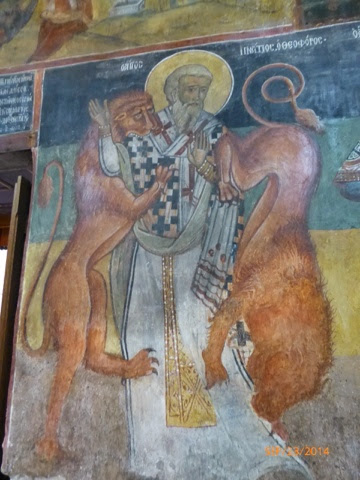
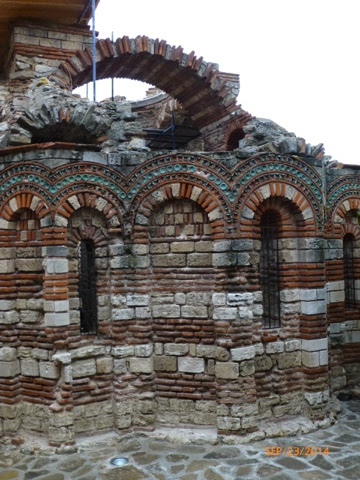
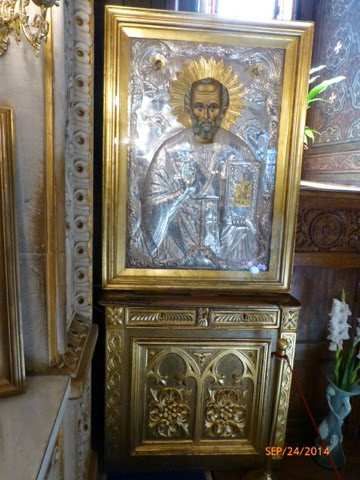
This trip has also been an opportunity to learn about orthodox Christianity – different styles, new to us saints, different practices.
For instance, this fellow:
A thousand years ago his picture was painted on the wall of a tiny church in Bulgaria and he’s been dealing with those lions ever since.
Most of the churches in Nessebur are ruins, but work is being done to preserve what’s left to showcase the distinctive local style:
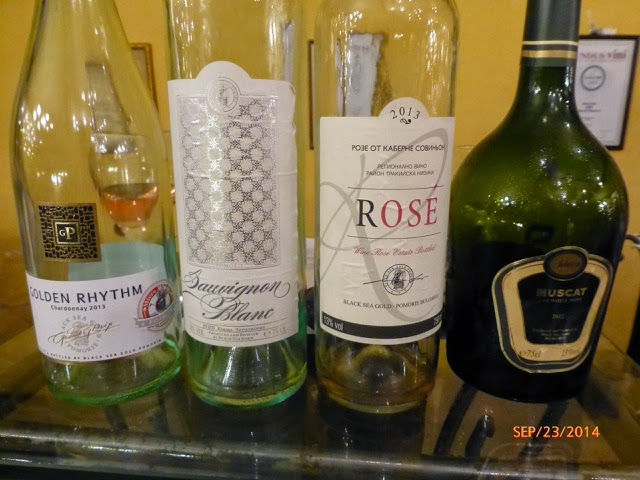
Part two of our tour was a wine tasting, which was entertaining. After it was all over we decided that the wine was competent, but not special. All French varietals, and really wouldn’t you rather drink a good version? Then again, at €6 per bottle….


Our guide’s enthusiasm for the wines she was sharing with us was worth the price of admission, though!


By the Bosphorus

Every so often we see a magazine called ‘Cornucopia’, which is all about Istanbul. A recent issue had a long article about a new naval museum that holds a collection of the barges of the sultans.  The pictures were spectacular and we decided to go there. 
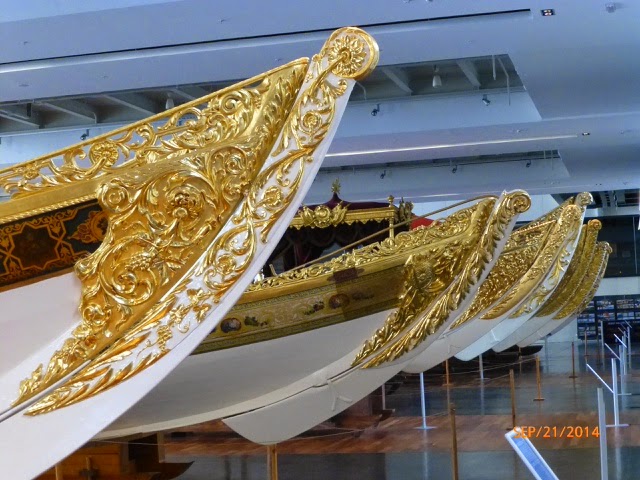
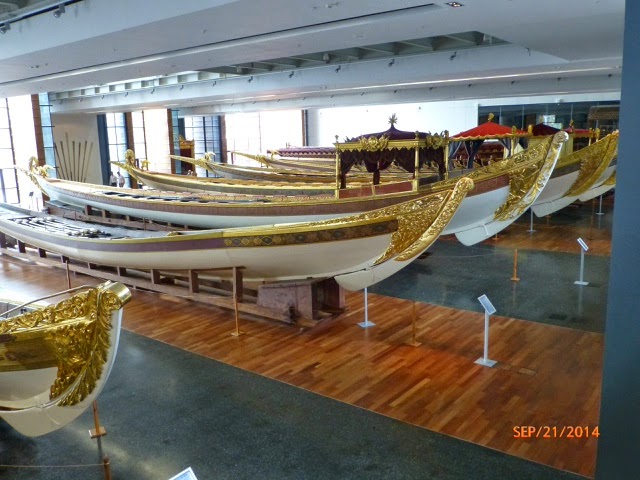
Barge – that doesn’t sound very interesting, I know. The word used in the museum was ‘caique’. They are an open, rowed boat used to move the sultan, members of the imperial household and high ranking officials through the waters around Istanbul. The collection now resides in a purpose built museum which is lovely in and of itself.
Extensive restoration (and pounds of gold leaf) have returned the boats to their former glory.
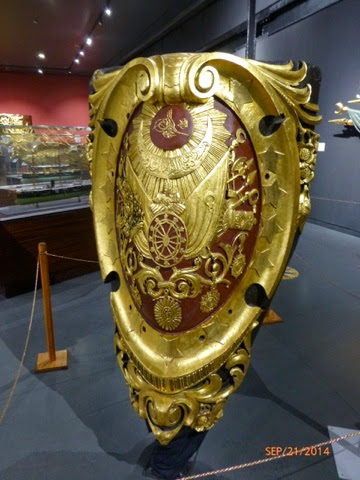
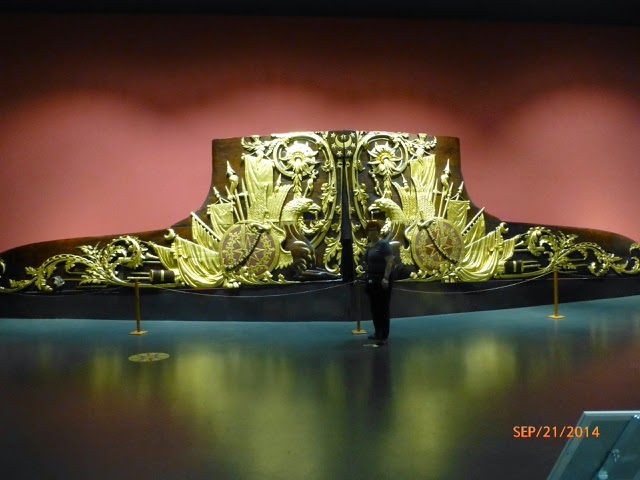
In addition to the boat collection there was a special exhibit of works from the naval woodcarving shops, which displayed name plates and other decorative pieces from both sail and steam military vessels. No mistaking who you were dealing with when you saw these guys coming…..
It was a lovely museum, all signage in English – very interesting. Once we left the museum the next item of business was lunch. We waded into the streets of the neighbourhood. Since we were right on the Bosporus fish was the thing. Again, we were out of the tourist area and we could look about without being half dragged into restaurants by over enthusiastic waiters.
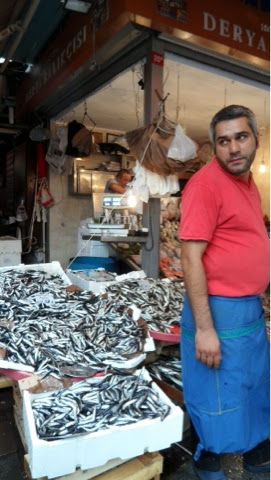
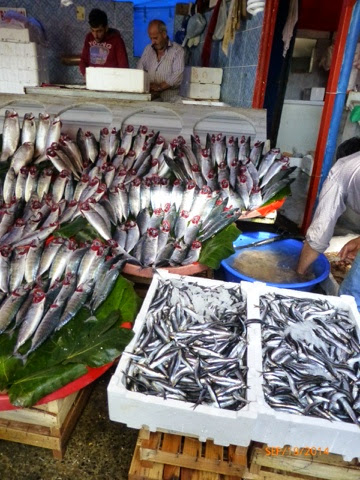
September is hamsi season – that’s anchovies to you and me.
From this guy to the place next store:
Anchovies and beer!


Up the Golden Horn

Before Istanbul, there was Constantinople. Not a lot of the Byzantine city is left. The Hagia Sofia is one example – first a church, then a mosque, then a museum. The bell tower became a minaret and many of the interior decorations were altered or covered over.  Restoration work has returned many of the mosaics to their former glory and they are beautiful. The scale of the building means the mosaics are huge – and quite far away. There is another Byzantine church in Istanbul, however.  The Chora church once stood outside the city walls ( in the boondocks, the information sign so helpfully said…). It too became a mosque, then a museum, and it has beautiful mosaics. The difference is the scale:
The church is quite small and it is off the main tourist track so the feeling is intimate and uncrowded.


To get to the Chora church we took a ferry up the Golden Horn from downtown. The last stop was at Eyrup. There is an important mosque there that is a major site for pilgrimage, so we went to take a look. The mosque itself is small and modestly decorated.


There was a fellow there who insisted on taking everyone’s picture.


While the mosque is small the attraction is a tomb in the courtyard, which is subject to much veneration. The plaza outside is huge and they clearly handle big crowds of worshippers.
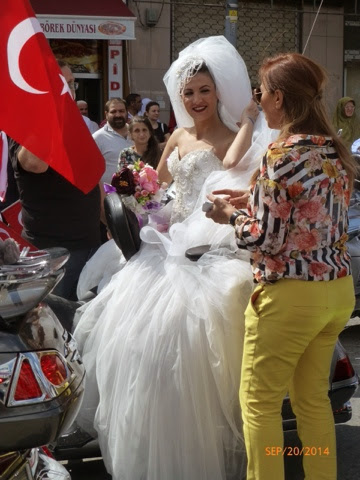
Sometimes, being in a country where we know neither then language nor the culture means we run across things that really have us scratching our heads. From the mosque to the church was a long complicated uphill walk along the ancient city walls. There was a zig when there should have been a zag and we were on a street beside a really big mosque. The street was filled with vintage (1950 & early 60’s) cars and contemporary motorcycles. And in the cars and on the motorcycles were women in wedding gowns. Some were driving, most were passengers. There were two bands. A truck full of photographers. These were not demure real brides. They seemed more like brides via the Las Vegas strip. Hooker brides. Some of the women seemed quite well known – people were rushing up to take selfies with them.


And we couldn’t find anyone who would admit to speaking English. Eventually the parade headed of down the street, snarling traffic, leaving us scratching our heads. Eventually a guy managed to say that it was a festival of weddings. Okay, then. We asked the concierge at the hotel and he had no idea, couldn’t find it on the ‘net.  Just a Saturday afternoon happening.


But wait – there’s more!

One walking tour wasn’t enough – we followed the first eating extravaganza with another. This one was the Two Continents tour – breakfast in Europe, lunch in Asia. 
First breakfast was a quickie in another han – yesterday was a centre for the coffee folks, today it was metal manufacturing. The building was built in the last 1500’s and was stuffed full of little workshops making springs and screws and stuff.
Second breakfast was at a restaurant that mostly does lunches for the workmen in the area. But they did a beautiful breakfast for us – more Kaymak!
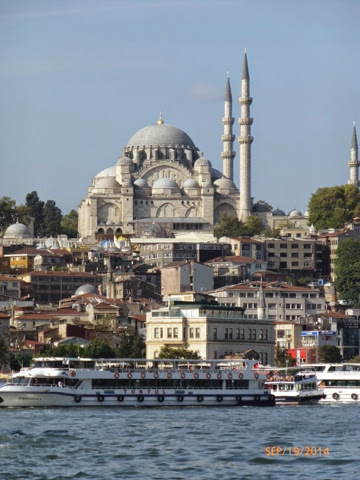
We walked through the fish market – it is anchovy and bonito season -to get to the ferry to take us to Karakoy on the Asian side. Always nice to ride in boats but especially with views like this:
The Asian side of Istanbul has been inhabited for a very long time, but the area we were in doesn’t have quite the same narrow twisty streets as the old city. And it is not a particular tourist destination – it doesn’t have the big attractions and the ferry stop for Uskadar is closer to the old town  – so the people were just out doing their own things. On both days it was really nice to be away from the tourist areas – we could walk along without attracting any attention.
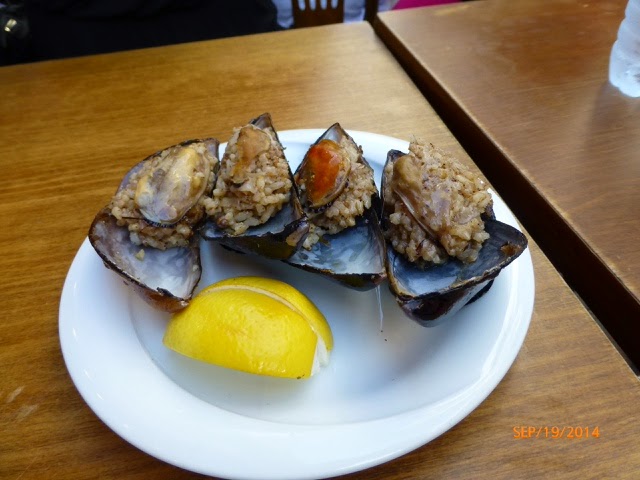
Once again it was a panopoly of food. First up mussels, both stuffed and deep fried. Mussels are in season right now and are sold as street food. I was glad to try them from a proper restaurant – seems like an iffy choice for street food.
Good, but not super mussel tasting – mussels for people who don’t like them?
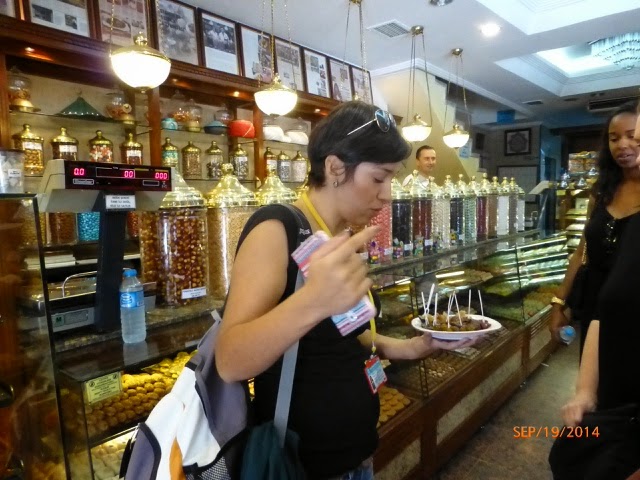
Of course there was a stop at a candy store. Our guide Katerina has a plate of sugared vegetables for us to try:
Sugared cabbage, tomatoes and olives. And walnuts, whole in the shell – the process totally softens them up. Kind of weird. I think I’ll stick with the Turkish delight.
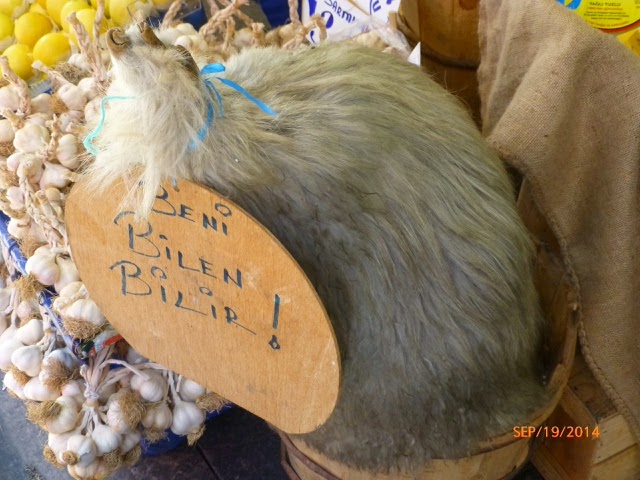
We tried many types of cheeses – mostly goat and or sheep milk of varying strengths. Then there was the goat skin cheese:
Goat’s milk cheese aged in a goat skin. Imagine what that tasted like.
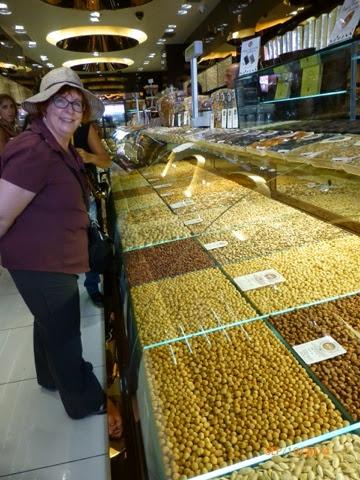
Turkey produces a selection of nuts – almonds, walnuts and hazelnuts in particular. So fresh and so delicious. We saw them piled up in markets all over. But on this tour we visited a store that displayed them like jewels.
We tried pistachios from different regions (they are different!) as well as such yummy hazelnuts. Turkey has been exporting hazelnuts to Europe for the manufacture of Nutella for ever. Someone finally thought – hmm. Maybe we should just make the stuff where the nuts are, so a factory is opening in Turkey. But I digress.
After a stop at the green grocers for fresh figs and grapes it was time for the pickle shop. The Turks like to pickle pretty much everything. Not just the usual suspects like beets and cucumbers. Whole heads of garlic? As well as the samples of pickles we got a glass of pickle juice – pale pink in colour, tart – I quite liked it. But opinion was divided on this one!
After a stop for Turkish coffee it was on to lunch. Tough work, some one’s gotta do it. We had a selection of regional salads – not green salads, but vegetables mixed with yoghurt and other interesting combos. And stuffed zucchini flowers. To accompany the salads we had deep fried horse mackerel, little fishes about 4″ long, gutted but otherwise whole. Opinion was divided about eating the heads…..
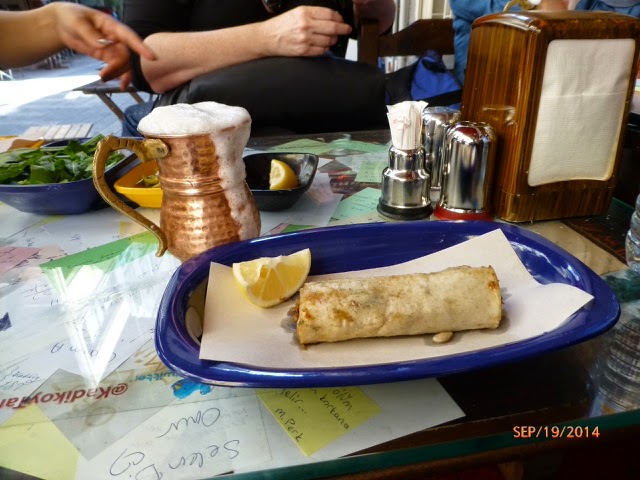
In case we were still hungry we stopped for Turkish pizza topped with lamb, then ambled over for tantuni, which looks sort of like a burrito:


Stuffed with beef and accompanied with a nice foamy mug of ayran. We made a stop for Kokorech, which Wilf and I didn’t have this time as we had it yesterday and we knew there was baklava in the offing. Must have been done differently than what we had because it was a big fail. Honestly one gal was trying to back away from her own tongue and another didn’t get it past her nose.  The only solution was, of course, get something else to eat. So, another round of baklava – so good. The Turks make it with syrup, not honey, which I prefer. Our last stop for the day was for soup made from sheep’s heads and feet. Sounds disgusting but was delicious.

And there we were at 4:00, having put in a solid day of eating. All kinds of interesting foods. It got us away from the tourist treadmill of hummus and kebabs. Some things we liked, some we loved, a few we didn’t care for. We learned a lot about the country and its people – it was a great way to spend a few days.


And just think – soon we’ll be on a cruise and you know how hard it is to get anything to eat the !
Urp…


Save

Chicken breast pudding

No, that’s not an auto-correct error. Yes, those are three words that don’t really belong together. And yet…

On our first full day in Istanbul we dove right in with a walking tour. Not just any tour – a culinary walking tour. This one was called ‘Backstreets of the Old City’ and began at the Spice Market. From 9:30 in the morning until 4:00 in the afternoon we walked around – and ate all the things!
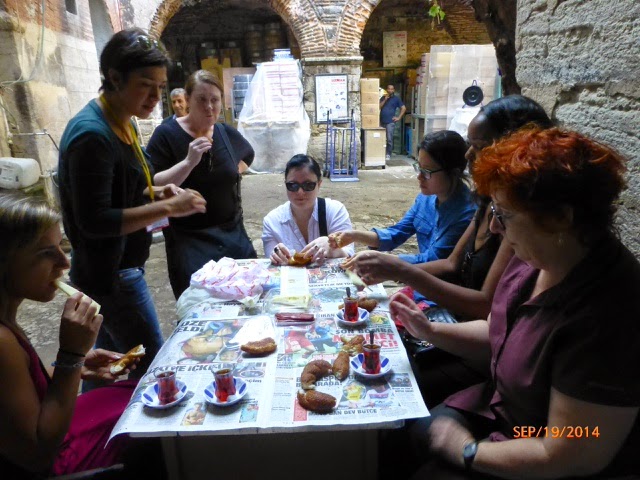
Our guide’s name was Esim and she did a great job of showing us around. We has a couple from Australia and a fellow from England to round out our group. We began with a little shopping in around the Spice Market to acquire our breakfast, then we were off to a building that once was the coffee business centre. The building is still full of all kinds of businesses – we tucked in a table across from the tea kiosk and got to it.


On the menu was simit (sort of like a bagel), several types of sheep and goat milk cheeses, olives and the nectar of the Gods. Yes, we discovered Kaymak – clotted cream made from water buffalo milk. It is on the list of the best things ever, especially served with honey. We had tea, of course. The word for breakfast in Turkish translates to ‘before coffee’. That’s because Turkish coffee is so fierce that you don’t want to have it on an empty stomach so tea and food happen, then the coffee. I can’t say that I liked it the way I like regular coffee, but it wasn’t bad. So, fed and coffeed we hit the streets.
We don’t have to get far from the bazaar to lose the tourist stuff and get into things for the locals – pots and pans, for intstance?


They’re not just selling them – they’re making them.
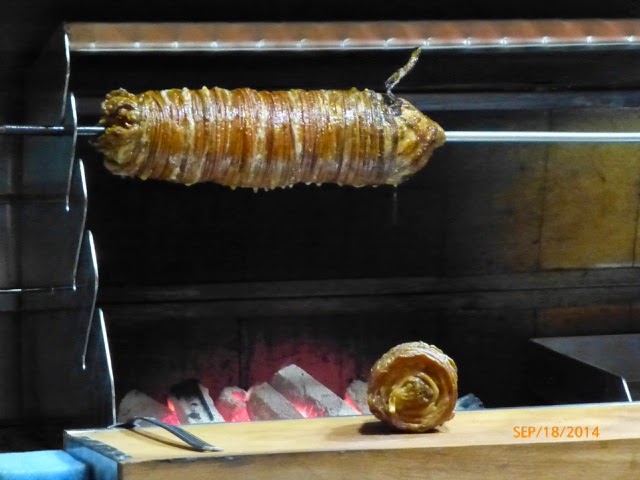
Next food stop was to try Kokorech, which seems to be a local hangover cure. Take a look:
Appealing? Turns out to be sweetbreads, wrapped in sheep intestines, which are grilled over the fire. Pieces are then cut off, chopped up, mixed with tomatoes, green peppers, onions and lots of spices, the  sautéed and served on a bun. It was actually very tasty and if you didn’t know what the meat was you’d never know.
Our journey through the streets included tastes of a Turkish form of pastrami, an assortment of baklavas (including one made with the wonderful Kaymak), a visit to a candy shop for real Turkish delight (lokum) and halva. Each stop was at a different store or booth, where we met the owner and learned about the food. There were also many stops just to learn about foodstuffs.
And that brought us to the pudding shop. Turkish culture is really big on desserts. We haven’t seen much in the way of cakes and pies as we know them, but specialty stores for baklava, candy, pudding, ice creams – wow. The puddings are what you’d expect, though more pistachio and milk flavours and not as much chocolate. And yes, chicken breast pudding – wherein said chicken is puréed to a fine pulp and added to a basic pudding. It gives it a different, more robust texture, but no chicken flavour. Why? Because they can? I don’t know….


The look on my face is more ‘are you taking my picture again?’, not a comment on the pudding.
Another stop for a really spectacular layered donair – look at that beauty!
Slices of beef layered with tomato, onion, green pepper and spices then cooked on the spindle. So good.
Next stop was for a traditional drink called Boza. It is made from fermented millet, topped with roasted chickpeas and cinnamon. Thick like a milk shake – I think it qualifies as an acquired taste – opinion in the group was split on whether it was a good thing.


Drinking Boza with the locals – the store has been in the family for generations and is lovely. Looks sort of like a high class saloon. For milkshakes.

In addition to all the eating we visited mosques and talked and learned a lot about Turkish culture. And then it was time for lunch!
Lunch was pit roasted lamb, chicken and rice pilaf, two salads – and ayran. Another drink with mixed reviews. It is made from yoghurt, water and salt and has air blown through it so the top is all bubbly. Some folks were ‘OMG its so salty’, others were ‘OMG its so sour’ and some were ‘Yum!’  The lunch was delicious and concluded with a sort of cake stuffed with Kaymak, but man we were picking at our food by this time. We had started with breakfast at about 10:00, and been walking and eating until 2:00, when we tackled lunch. We staggered back to the hotel for a nap and that was the day done.
Lamb from the pit.


Urp.


More adventures in bathing.

And so the great adventure, Autumn 2914 version, begins. We are in Istanbul – we were last here in 1999. It was pretty straightforward to travel from Victoria – Victoria to Toronto direct (~4 hours) followed by Toronto to Istanbul direct (~9 hrs). Long flight, but not complicated. 
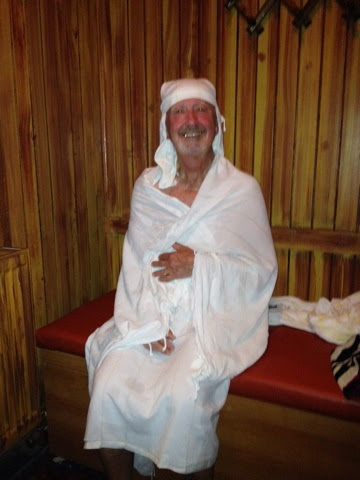
Because we arrived at 9:30 am I figured that we’d be too early to check in to our hotel – and we’d be tired. So maybe a visit to a Hamam would be in order. One thing and another, we found a Hamam that met our requirements and made a reservation. 
Most hamami are segregated – there are either seperate facilities, different times of the day or different days of the week. Which is fine, but the first places we found would have had me going in the morning while Wilf did??? And then Wilf off in the afternoon leaving me unattended. But we found a place – for tourists- that is co-ed. 
After a visit to the Hagia Sofia (in the 15 years since our last visit they’ve moved the scaffolding from one side to the another) we found ourselves at the Hamam, tired, disheveled and hours early for our appointment. No matter – they swept us in and got us settled. 
As is traditional men get a large towel wrap to wear in the bath. To preserve modesty women are given a pair of shorts and a bikini top in addition to the wrap. A pair of wooden clogs completes the ensemble and off we went. 
The main room is a large domed area with a huge marble platform in the centre – 8 people can lay out easily. The platform is heated – as is the floor – and we layed down to relax in the heat. Around the outside of the room are big marble sinks and small basins. We could go and pour water over ourselves – mostly to cool off. After awhile we were called into a smaller room where there were two marble massage tables and two muscular guys. First up we sat down by the big sinks for a rinse and then a scrub. Sort of like being worked over with a potscrubber. 
Once we were scrubbed there was the small problem of hauling my weary slippery self up off the floor, but big guy helped me get the job done. I’d forgotten about the Ottoman sitting on the floor thing…
Next up was the soap bubbles – the masseur had what looked like a big pillowcase in a pail of soapy water – the case would be full of air and bubbles – it was a strange sensation as the hot bubbles poured over me – by the time he was done I was covered from my neck to my feet in a layer of bubbles about 4″ thick. 
After the bubble bath and a rinse – a massage. That worked out the kinks! In a more traditional set up there would have been a very thorough scrubbing to take off a couple of layers of skin followed by a massage that takes you apart and then puts you back together. None of this was quite as rigorous but it was just the ticket. 
After it all we changed out of our wet things and into a dry towel. The attendants then used more towels and lots of flapping and wrapping to get us all bundled up – we sort if looked like gift wrapped packages by the time we got to the lounge area to enjoy fresh and delicious orange juice. 
My bathing beauty!

What I did on my winter vacation

2014 is half gone and I haven’t checked in for an age – so this will be a quick recap.

Rather than take a winter vacation this year we underwent another project.

First – pack up about 85% or our belongings and have them moved to the garage:

Second – have a lot of wood delivered:

We then moved out for six weeks, while a lot of this went on:
And when it was over – new hardwood floors throughout!
Along the way we repainted our bedroom, changed some appliances and light fixtures. We did NOT do the heavy work ourselves. Alain, Nathalie and Kyle of Woodfellow Flooring did the work on the floors and it is beautiful. With an open plan house they had lots of strange angles and no places to hide. And they did a wonderful job. The installation is lovely and the finish just gleams. And they took extra special care in getting our home back in shape when they were done. We would recommend them if you need new floors in the Victoria area.
While I’m in a recommending mood I have good things to say about AtoB Moving – they came to move our stuff and did a great job. They were quick and careful and had the contents of most of the house packed into the garage in very short order. They really worked hard. And when the time came to move back in they were as quick and careful as the first time around.
Moving out, having our house in an uproar made for a strange winter. But the end result is worth it!