Eyjafjallajokull

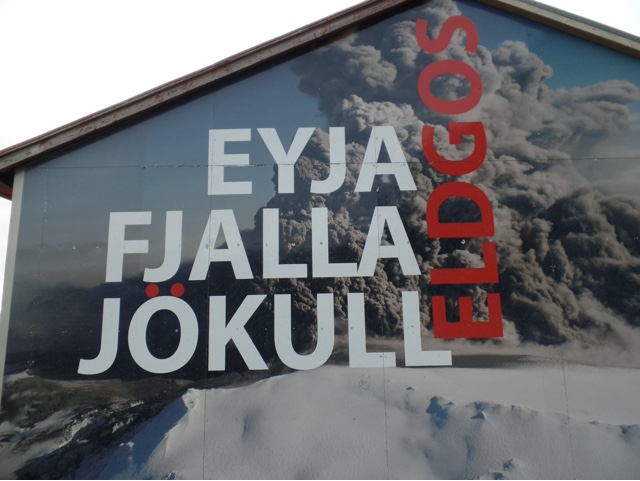
No, I didn’t just sneeze on the keyboard.

How about this?
Yes, the famous Icelandic volcano that erupted in 2010 and shut down the air space over Europe. The name that broadcasters the world over had to learn.
I usually try to learn at least a few phrases of the language of countries that we visit. But Icelandic has defeated me.
Consider the list of places that we have visited or viewed so far:
Solheimajokull glacier
Myrdalsjokull ice cap
Reynisfjara
Svartifoss waterfall
Skaftafellsjokull glacier
Jokulsarlon lagoon
Landmannalagaur
Ljotipollur lake
My spell checker is off whimpering in the corner.
It’s not all long words – we’ve learned thank you (takk takk) and goodbye (bless). And the grand dame of the volcanos – Hekla- shed her cloak of clouds for us when we passed by.


Visiting a new land

South of Iceland are the Westerman Islands. In the early 1960’s a new island rose from the sea in an eruption that lasted several years. When lava erupts under the sea the contact with the cold water causes it to shatter into cinder and pumice, which is ejected. Eventually enough of this material makes an island and the magma is no longer entering the water directly. Now it flows and hardens into basalt. The island of Surtsey was so formed and became the southernmost point of Iceland. Because it is mostly made of cinders the island has eroded significantly over the past 50 years, though it will take longer for the basalt core to wear away. 
The largest of the Westerman islands is Heimaey. I’m sure it was very exciting to have another island appear right next door, but nothing prepared the 5000 inhabitants for what happened on a January night in 1973. There was an earthquake and then people on one side of town saw a fissure tear open the earth and an eruption was underway. Bad weather had kept the fishing fleet in the harbour and everyone fled in the night with what they could carry and took to the boats. Everyone was successfully evacuated, but as the eruption proceeded through the cinder, gas and lava phases over 400 homes were destroyed. By the time it was all over in July there was a new mountain in town, a changed harbour entrance, a bigger island and a huge clean up ahead.
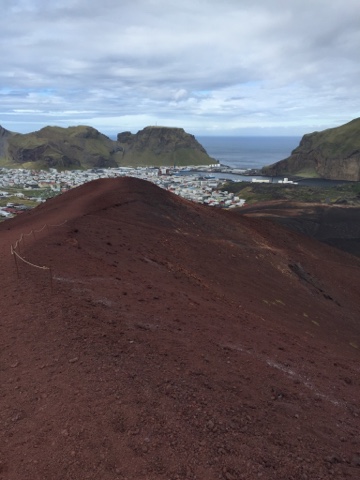
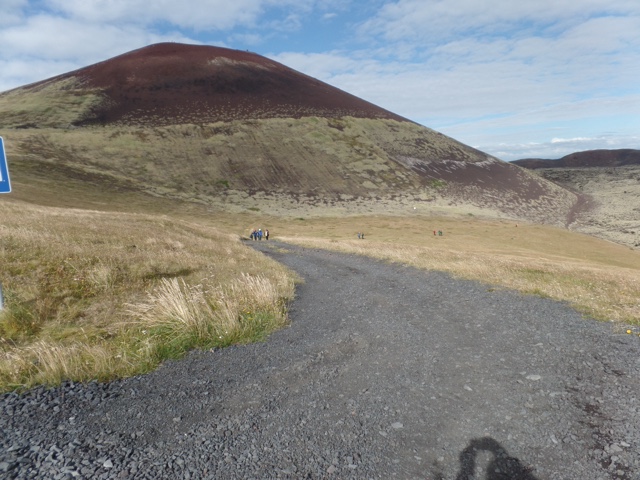
The new mountain of Eldfell is protected from the sea by its lava flow so it remains, just asking to be climbed. So of course we did.
View from the summit looking toward town.


Brave souls walking out to the very furthest point.
After having climbed 400m in the howling wind I decided that was a few steps too far.
Did I mention that it was really windy?


That was a long walk up!
In the town they have excavated one of the buried houses and built a remarkable little museum around it.
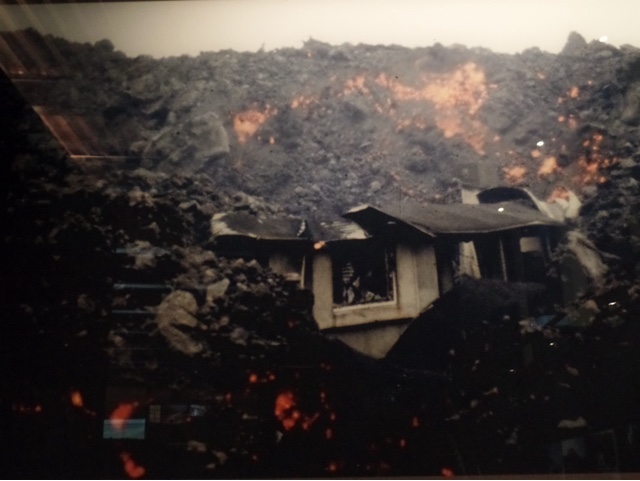
The house during the eruption – eventually it was completely buried in ash and cinders.


The house today, within the museum. You can look in and see beds and cupboards and the toilet.


The neighbours house is partly excavated.


Eating Icelandic


If you’ve been with us in our previous travels you know that we like to investigate the cuisine of places that we visit. Before we set off for Iceland I read a bit, and knew that we were in for lots of fish and lamb. Sounds good. I really didn’t think too much about how the constraints of life on a small remote island would influence the cuisine.

Immediately upon arrival we went to the Blue Lagoon for a swim and finished up with lunch at their restaurant, which is called Lava. It is a very fine restaurant, elegant in style and service. And food to match. The only mismatch was the clientele – many of whom were in spa bathrobes and most of the rest looking dampish and carrying their swimsuit in a plastic bag.
We chose the Icelandic menu, which started with smoked Arctic char, then rack of lamb finishing with ice cream and pastry. It was all very good and the lamb especially so – large pieces of tender lamb served with great lashings of béchamel sauce.
The next day in Reykjavik we went to a restaurant called Matur og Drykkur, which means Food and Drink. They take classic Icelandic cuisine and play with it. Fish with whey butter is a very traditional dish. Here it showed up as fish chips with whey butter and pickled seaweed. Unbelievably good – I was so tempted to lick the plate.


Apparently the traditional Christmas dinner is smoked leg of lamb served with bechamel and nutmeg. Which explains the sauce with the lamb yesterday. Today it was dried double smoked lamb with buttermilk. The lamb was sliced shatteringly thin and the buttermilk was thickened like a dip.
The Arctic char today was smoked over sheep dung (???) and served with charred flatbread and horseradish. You might think that it wasn’t very appealing but you’d be wrong! The smoke of the fish, the slight sharpness of the horseradish and a touch of bitterness from the bread- such an interesting combo.


By the time we got to crispy seaweed with lumpfish roe and then salted cod croquettes I was dizzy with new tastes.
The rest of our time in Reykjavik was filled with culinary adventures – often lamb twice a day. Once we joined our tour things were a little less adventurous. But there was one thing on the breakfast buffet in Hvolsvollur.


Yep, a bottle of cod liver oil.


Complete with instructions on how to take it without gagging.
And in four days I never saw anyone partake!

Another bathing experience

We have enjoyed the benefits of Japan’s geothermal blessings on our trips there. And now we’re in Iceland, where they also know how to harness those powers as well.

Flights from North America tend arrive between 5:00 and 7:00 in the morning, which means a traveler is likely  to have a long wait before being able to check into their hotel. A little investigation showed that the bus from the international airport to Reykjavik conveniently makes a stop at the Blue Lagoon – perfect!
The people of Iceland harness the volcano heated water beneath their island to produce electricity and hot water to heat their buildings. The water that comes from the earth is heavily mineralized, so rather than use it directly they use the super heated water to heat clean lake water, which then spins turbines or is piped to where it is needed. The mineralized water is then re-injected into the ground to complete the cycle.
Some of that hot mineralized water went into a small lake before being re-injected and soon enough people were coming for a swim. And soon after that someone thought ‘Hmmm’. And voila, the Blue Lagoon complex was born.
The water really is an amazing milky blue. The silica dissolved in the water precipitates out making a white rim around the lava edges – it feels slick like porcelain. Easier to sit on than the lava. A huge lagoon has been carved out of the lava, with little bays to explore. It’s not terribly deep – mostly we walked in the water at about chest depth with some swimming.
When we arrived it was 08:00, drizzling lightly with some very ominous skies.


In this picture (taken through the window)!you can see the geothermal plant (and steam) in the far distance with part of the swimming lagoon and change room area in the foreground.

We were there for several hours and got a tour of several seasons – light rain, wind strong enough to raise whitecaps, brilliant sunshine, rainbows- no snow, though. Price of admission included a drink at the swim up bar, so by 9:30 we had beer and cider and were lounging in the shallows out of the wind. The life guards were bundled up in parkas and woollies as they watched over us!
We took the opportunity to have an in water massage. In a separate little cove we reclined on what looked like a floating yoga mat. Once aboard we were covered with a blanket and for 30 minutes we floated in the lovely water and had the kinks of a 7 hour plane ride dealt with.
Before taking the bus on to Reykjavik we had a sumptuous lunch in the restaurant called Lava. Smoked Arctic char and incredible rack of lamb. Wilf took this picture of me as dessert arrived – jet lagged, waterlogged, dishevelled and happy!


Caramel mousse, vanilla ice cream and deep fried pastries. Urp.)
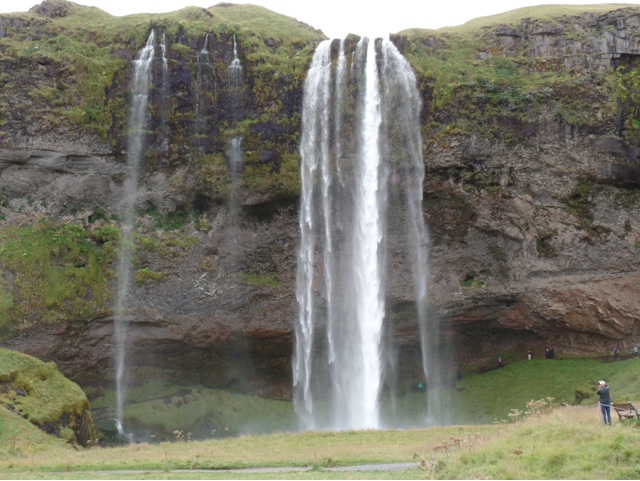
They call it fishing, not catching

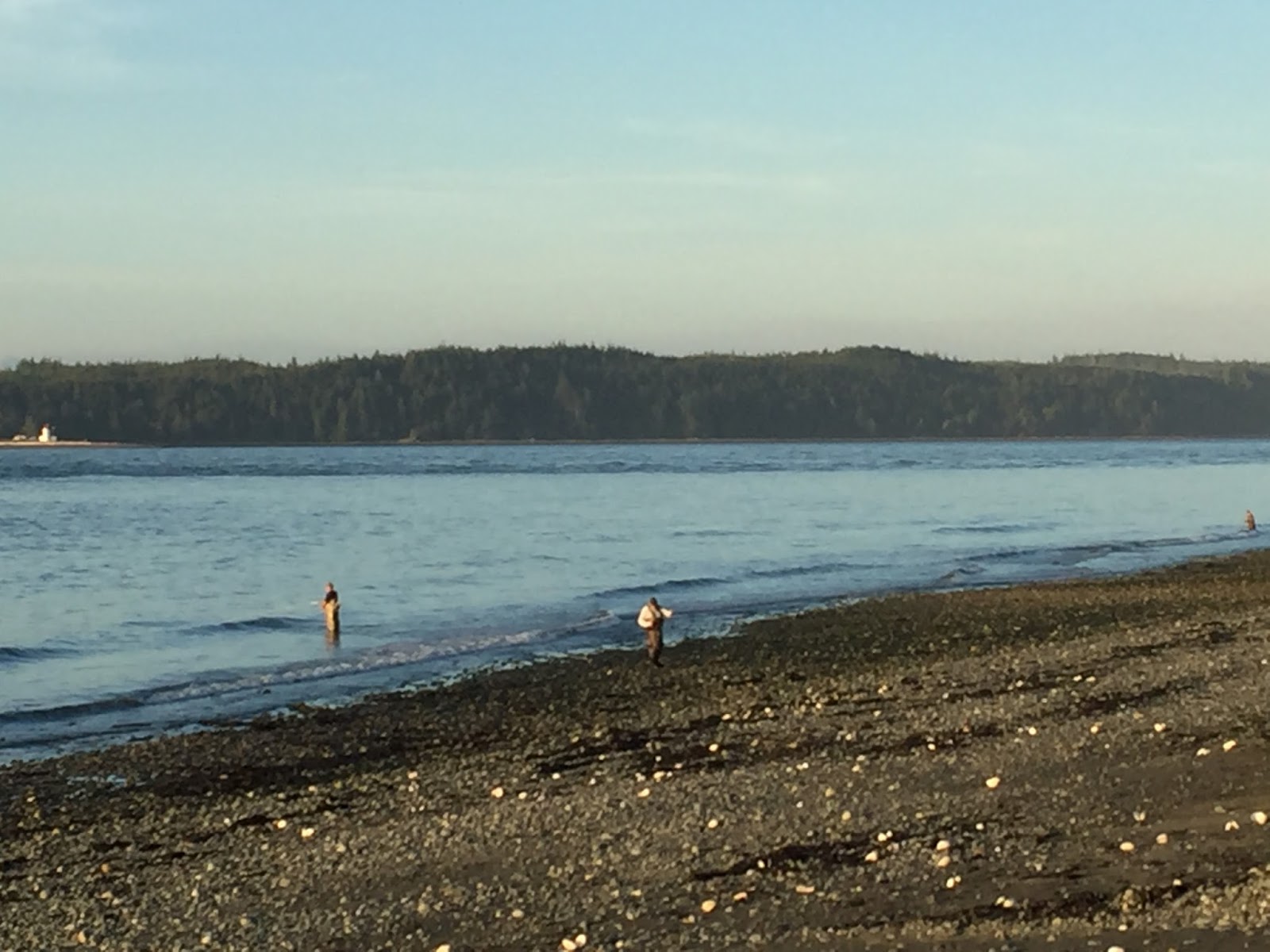
Wilf and I headed to the north end of Vancouver Island recently to see if the pink salmon were schooling at the mouth of the Cluxewe River. After the miraculous summer of 2014 and the no show of 2015 our hopes were high. Wilf has been following reports from his fishing buddies throughout the north island, and the reports were…… inconsistent. Some fish around, but they were not biting.
 

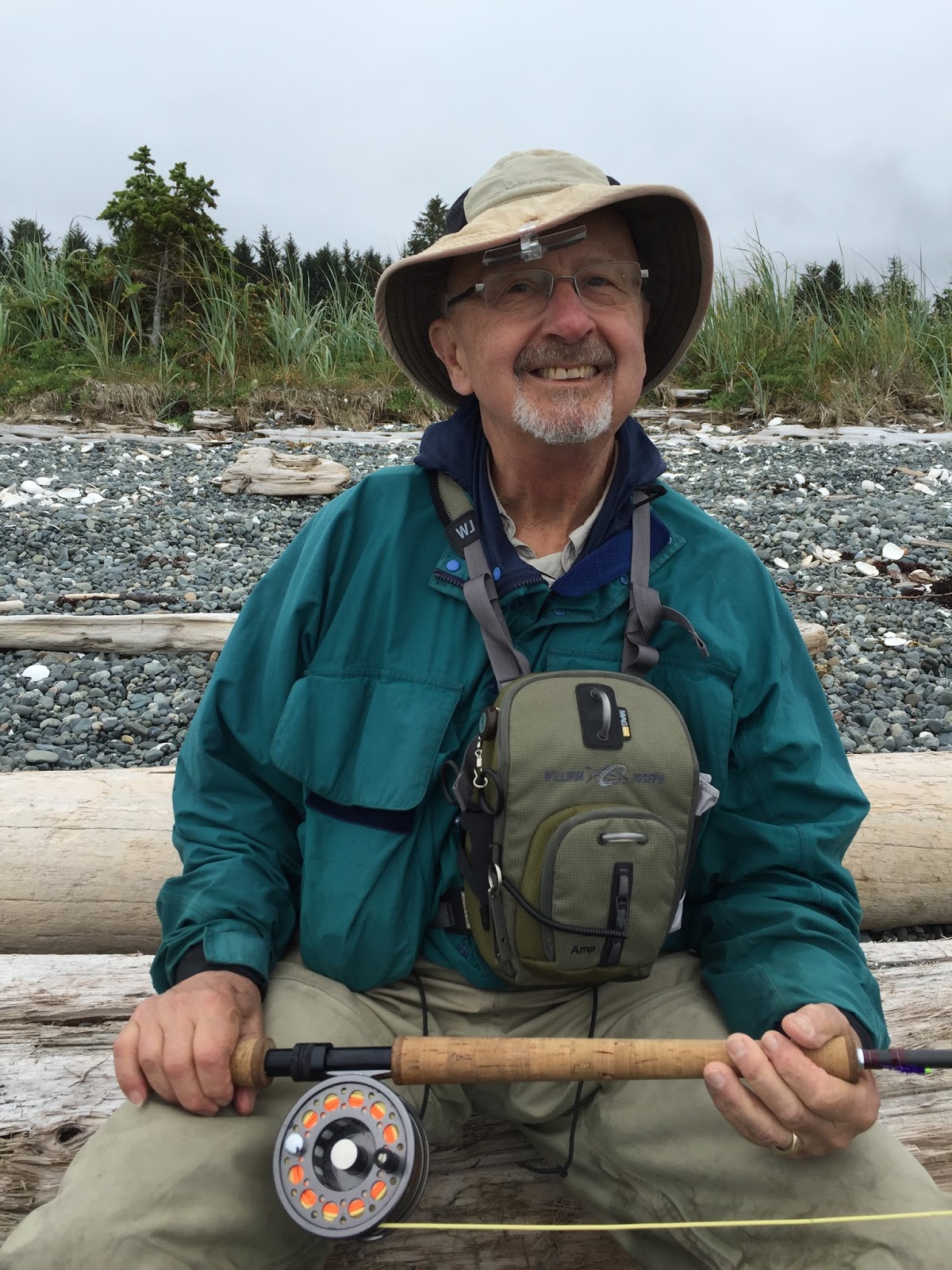
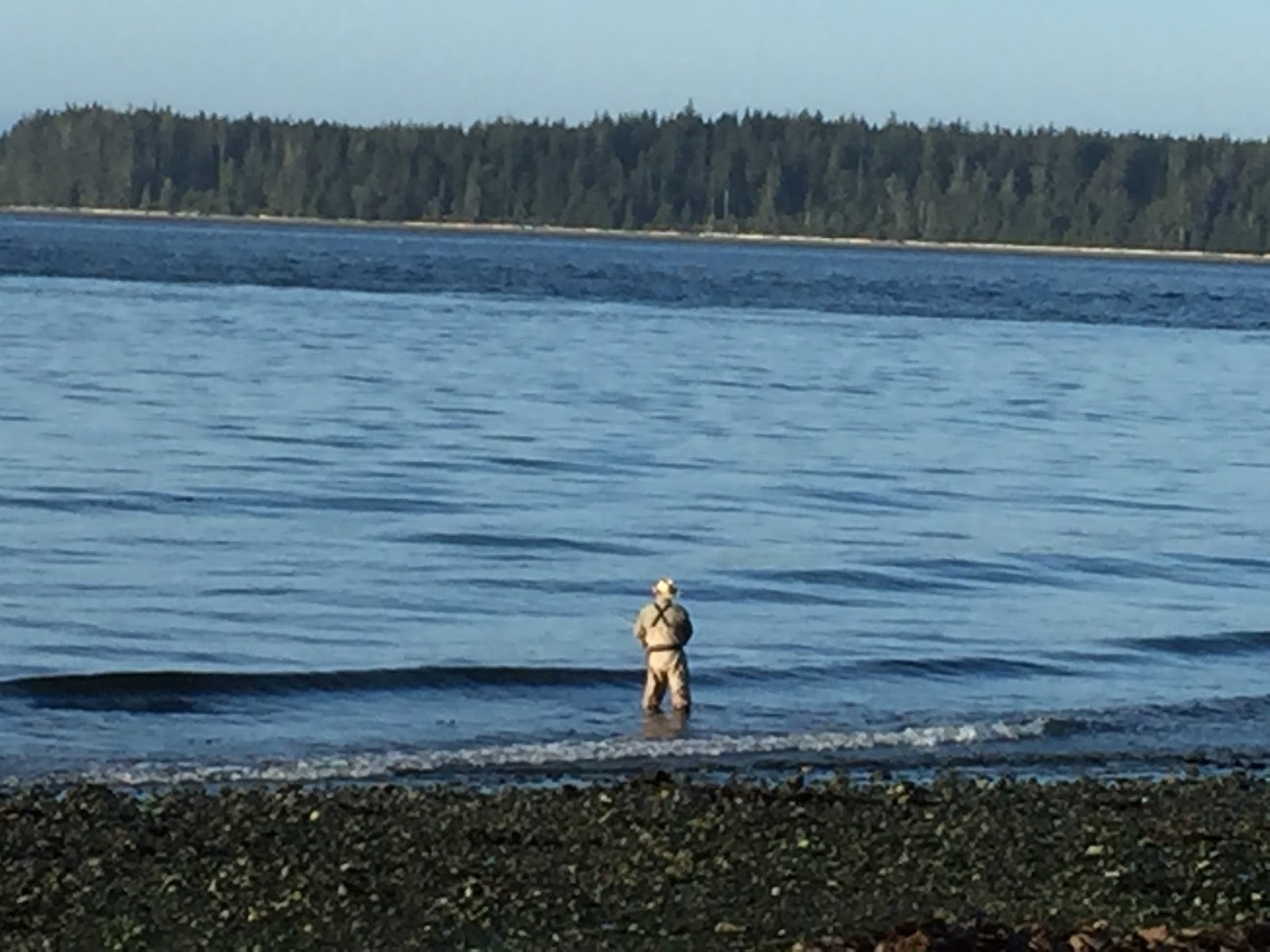
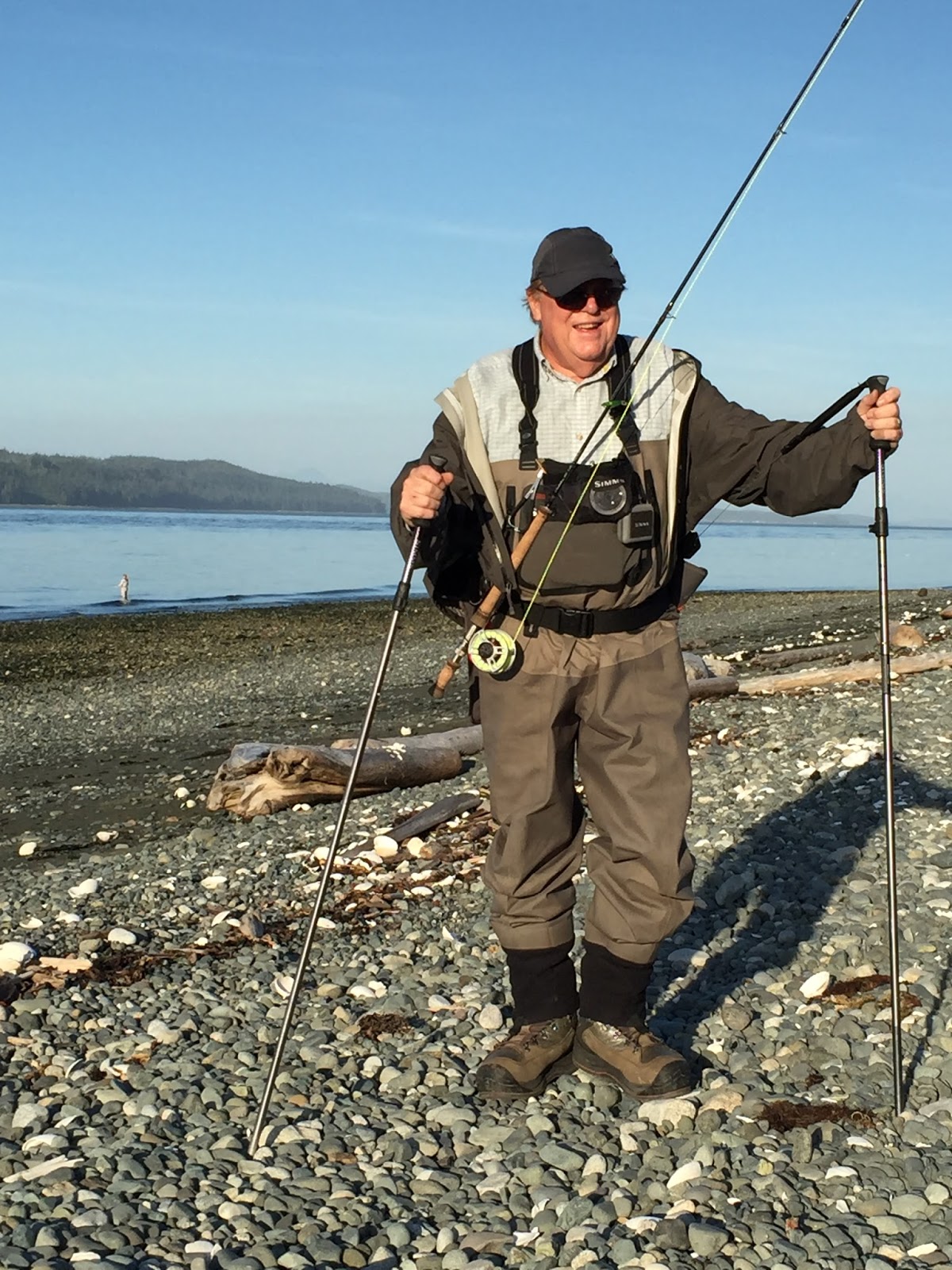
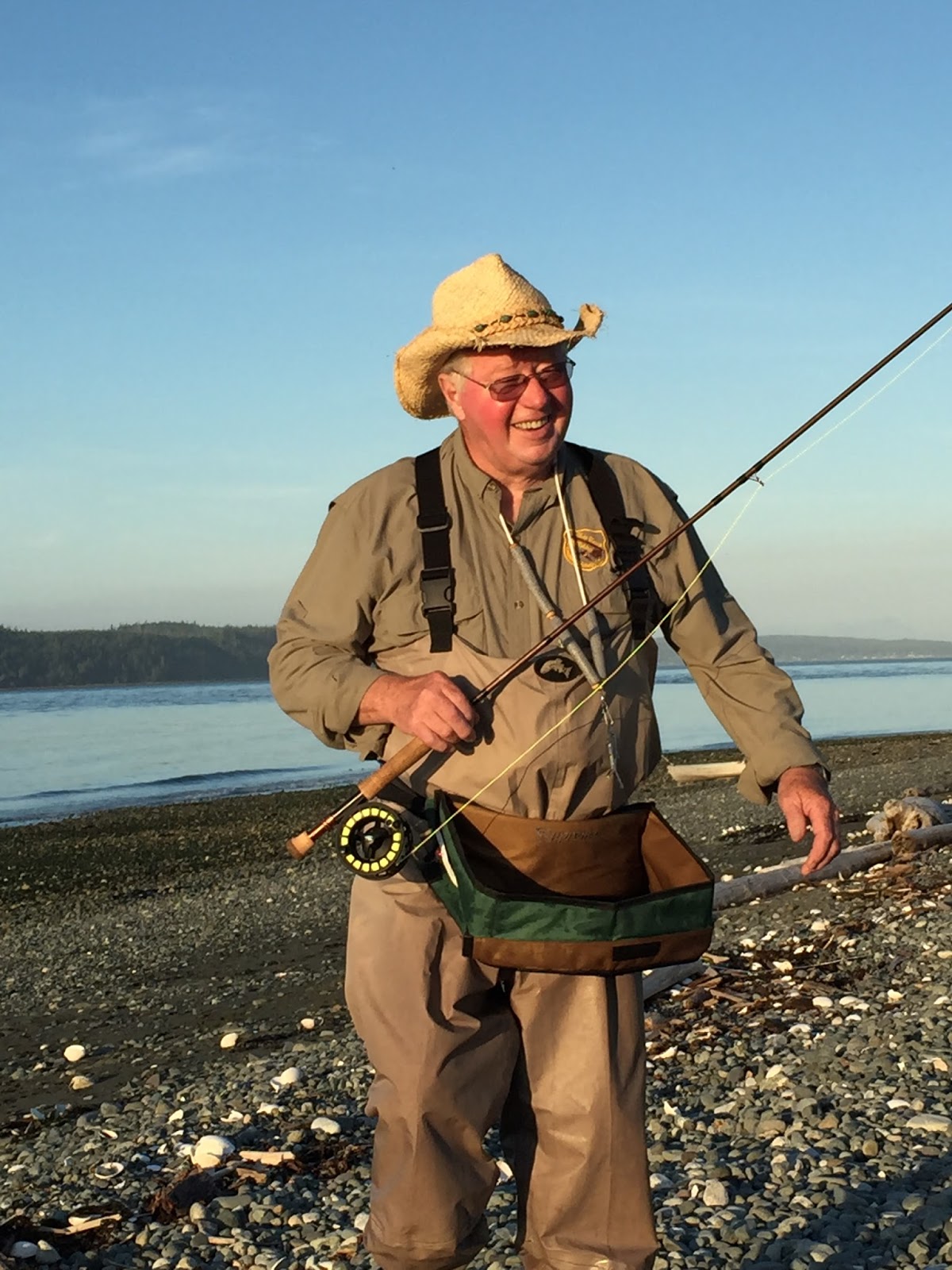
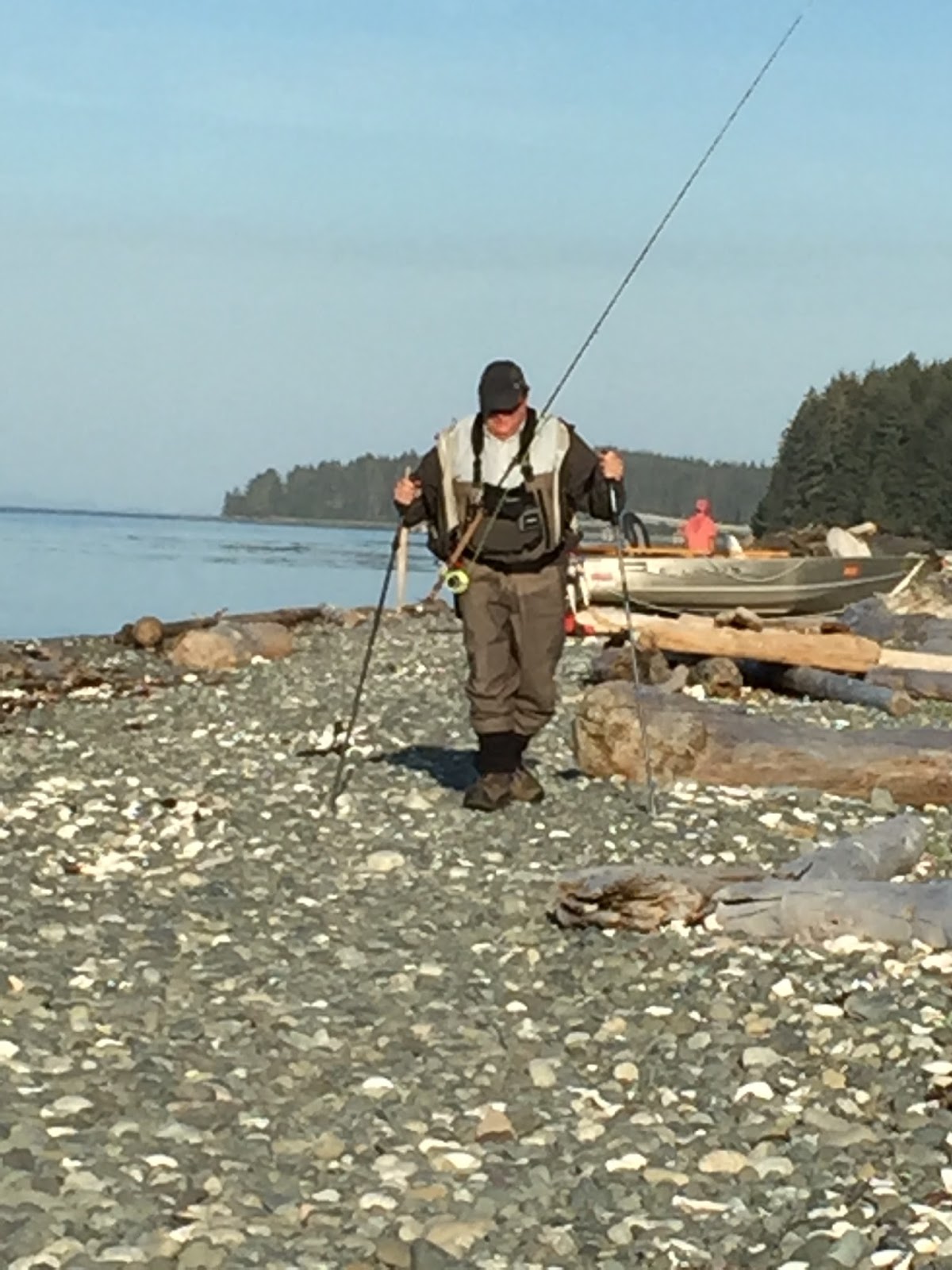
Wilf sets out to see who’s out there.

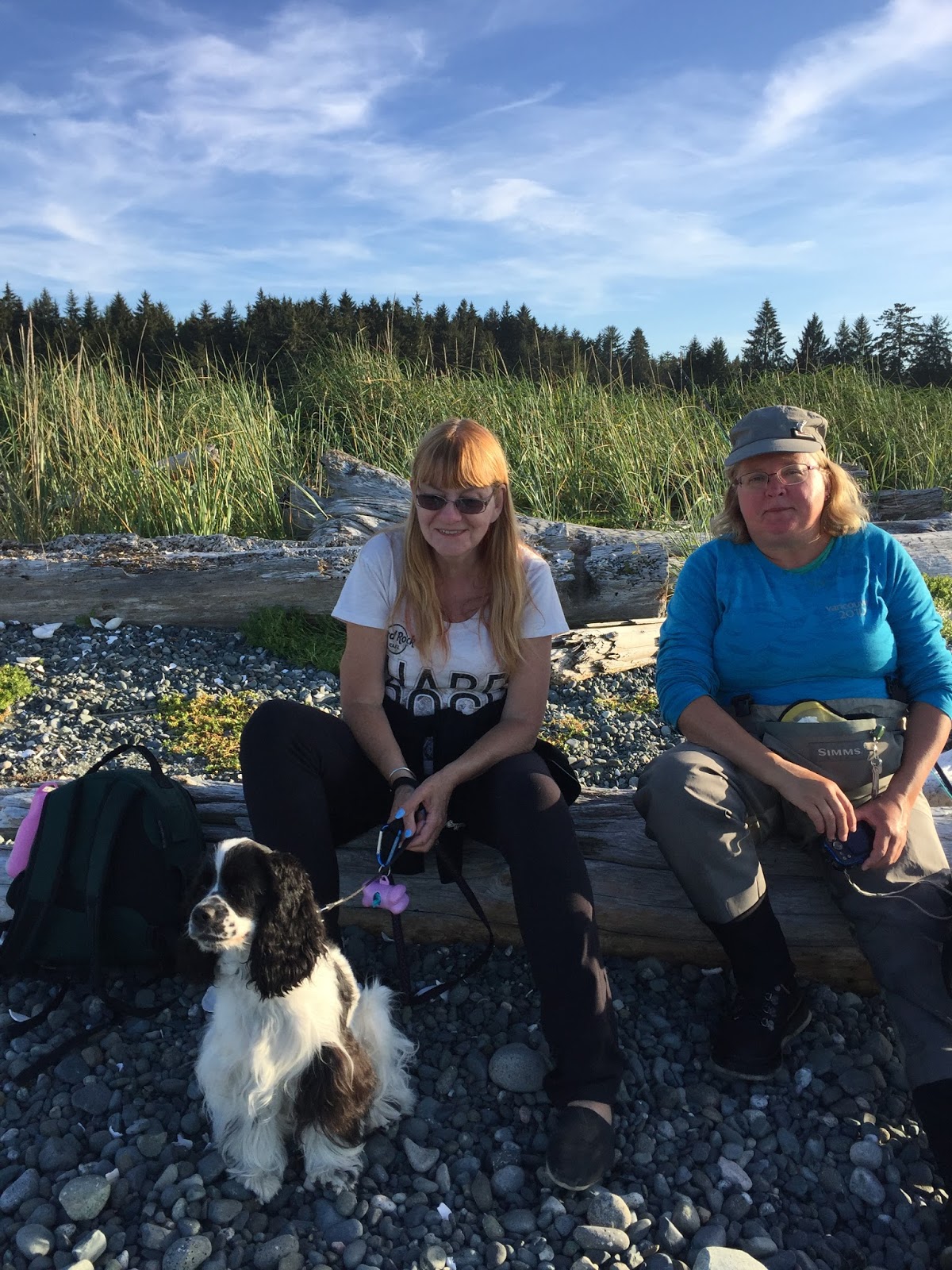
 One of the nice things about being at Cluxewe is running into friends. Don and Peggy, Margaret and Denise were on hand.

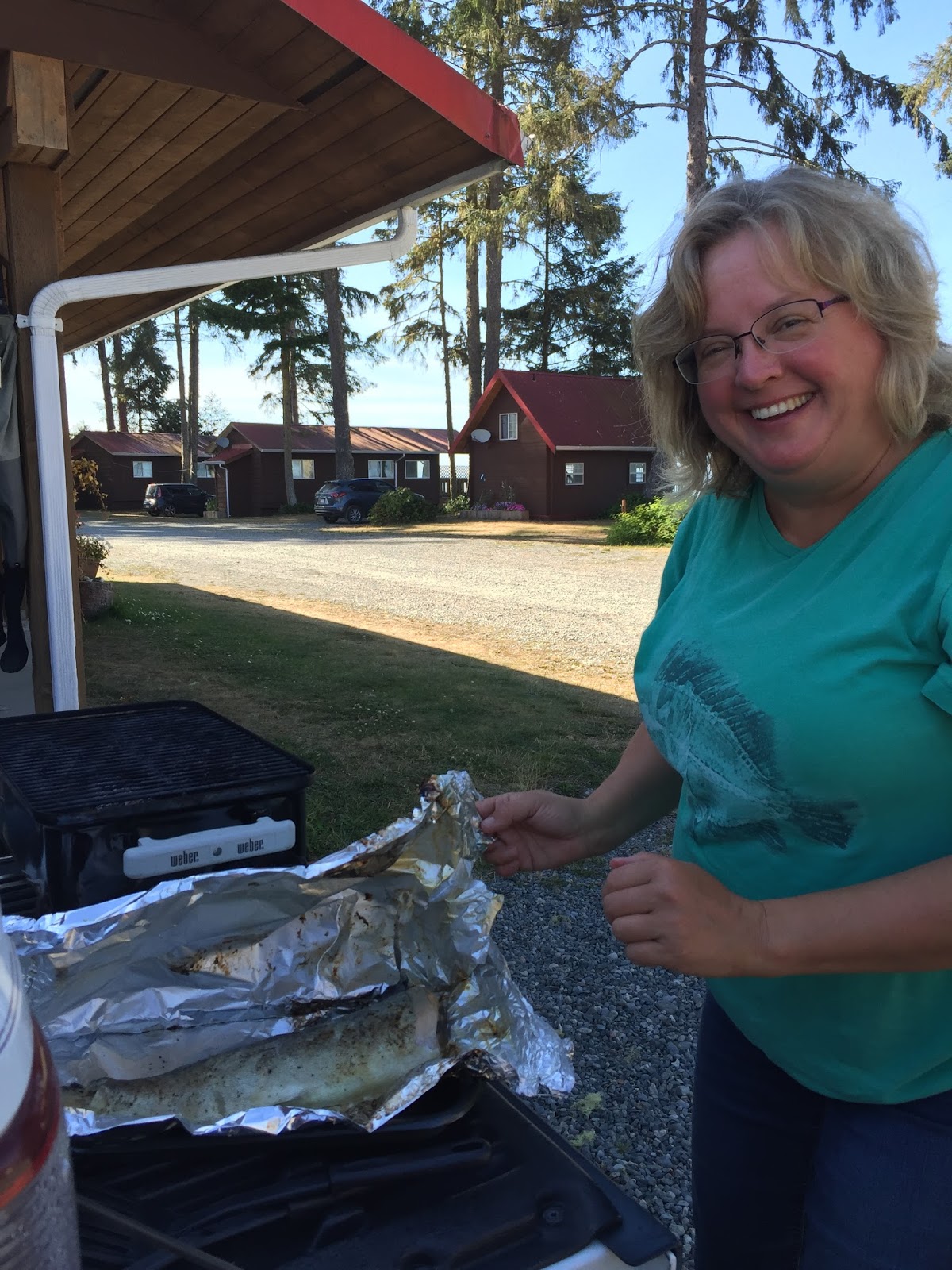
 Margaret did catch fish – one of which we ate!


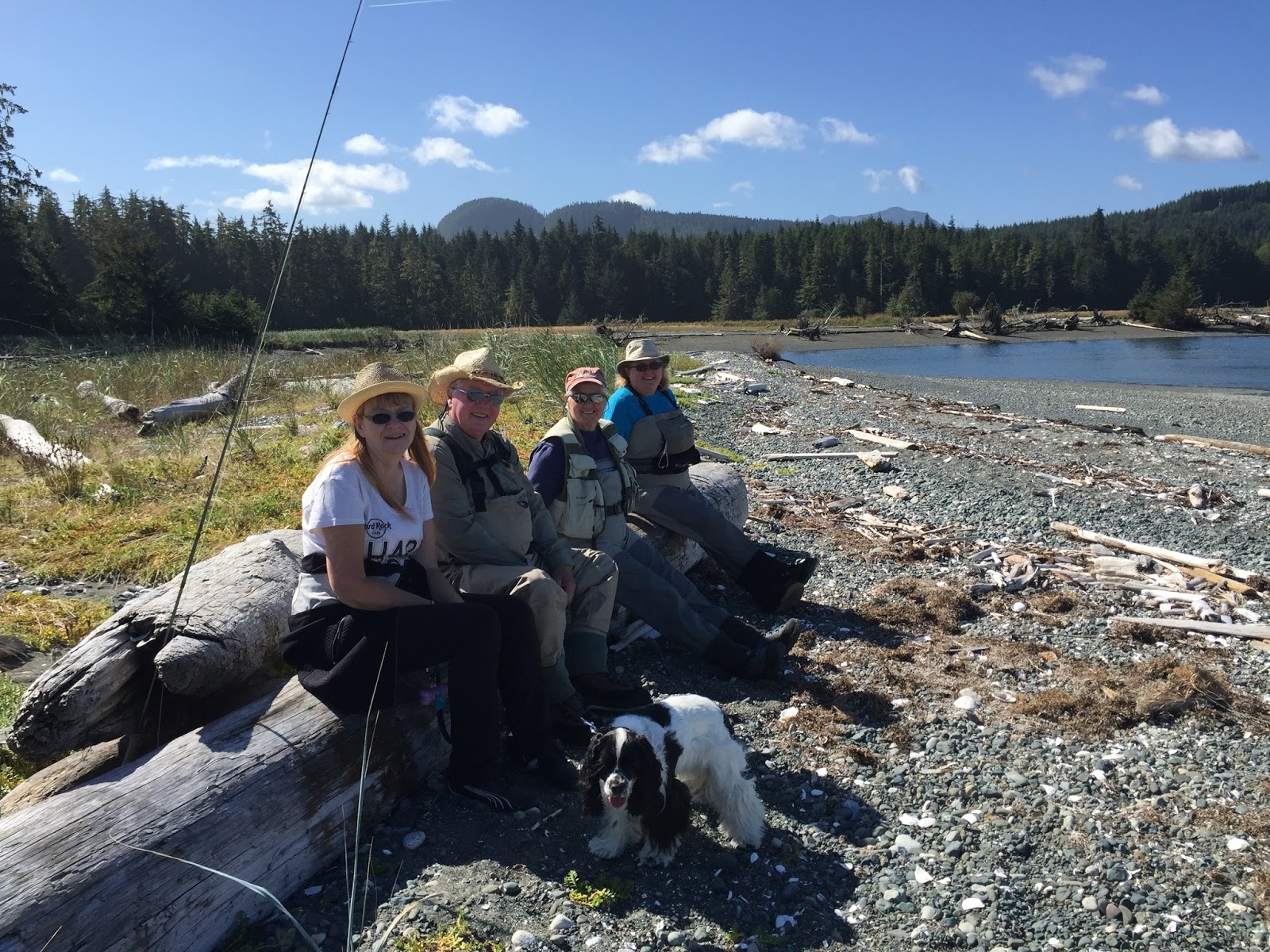
 Our last night there was perfect – sunny, no wind. Margaret took a break with us while Miss Emma kept a close eye on Don.


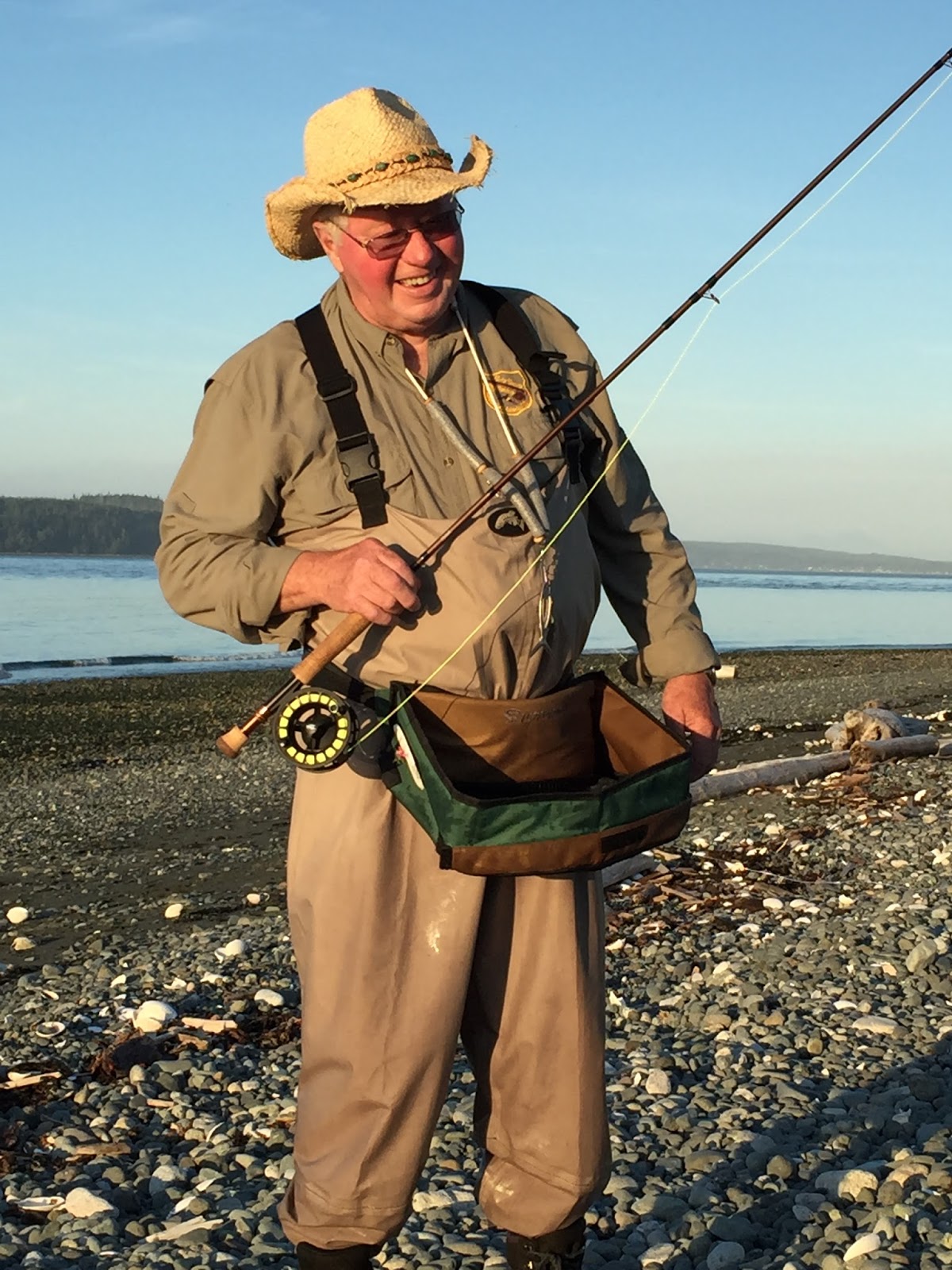
There’s at least one fish out there and Don wants it.

 James wandered by

 Eventually Don came in to join the log sitters.


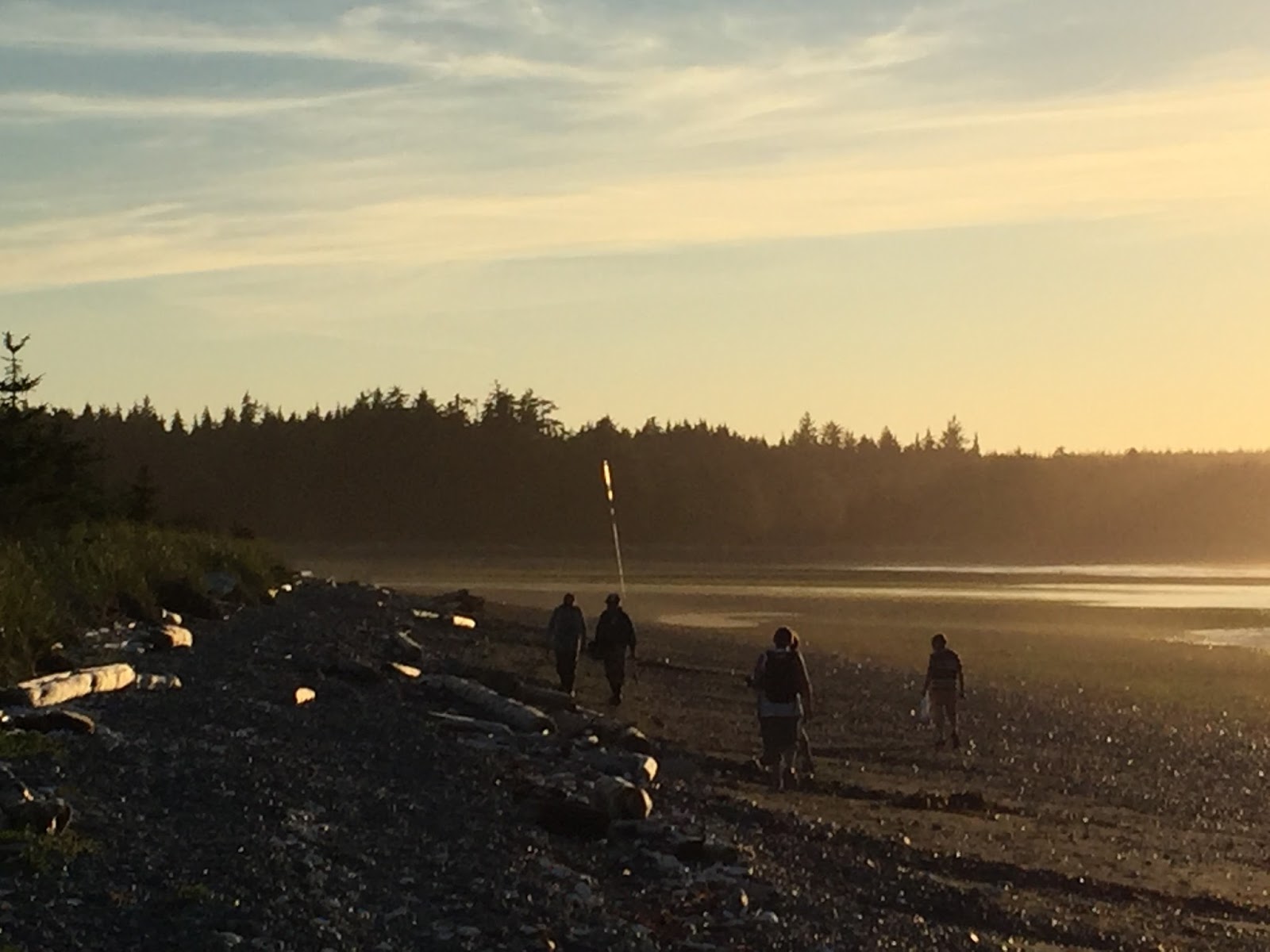
I wandered up the beach

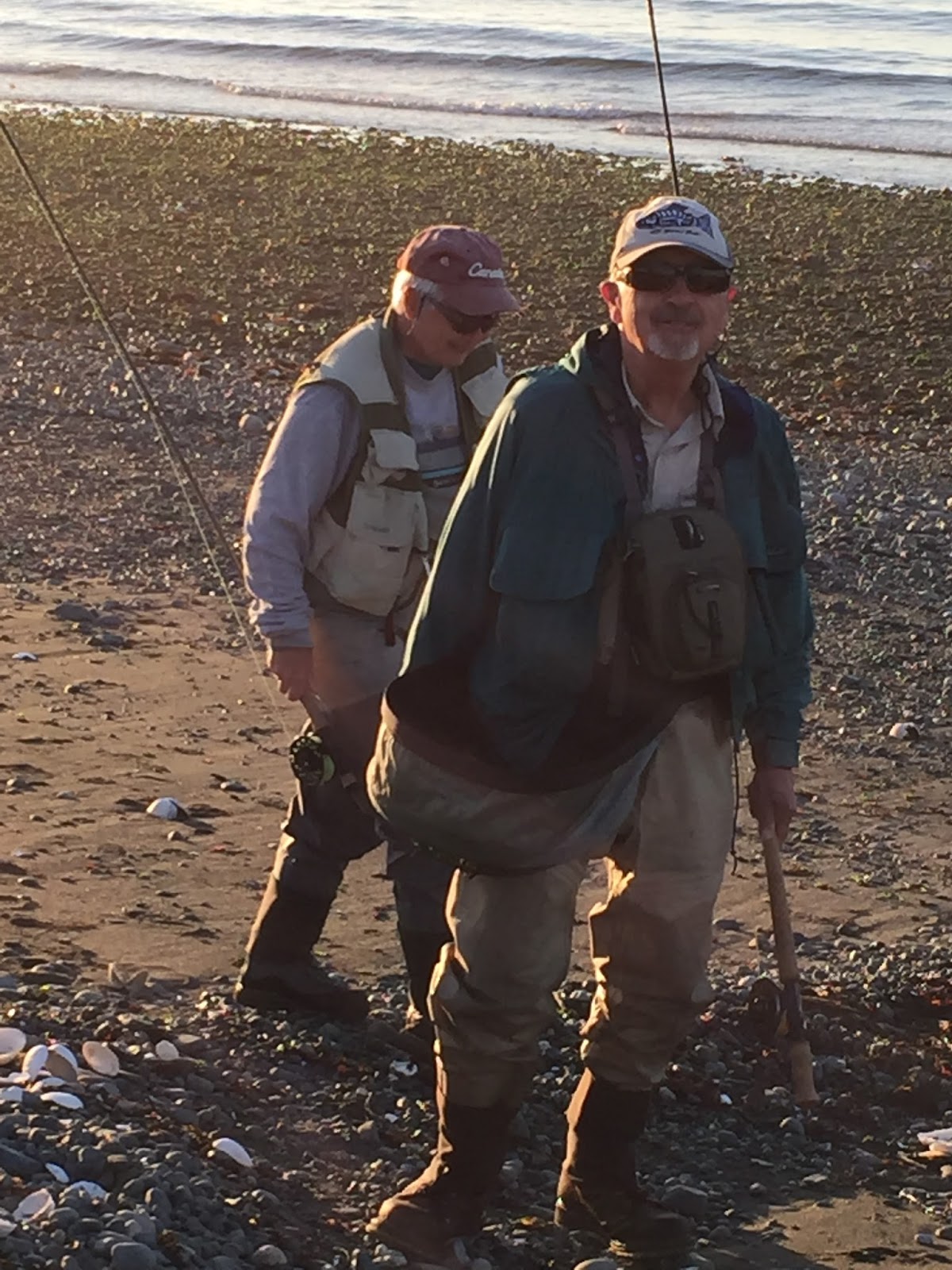
 And found Wilf and Denise returning from the mouth of the river.

There were a few fish out there, and a few were hooked but they weren’t being landed. Once again- lots of fishing, not much catching.

And that’s a wrap, folks

Well it’s been 30 days.

We have travelled by train, tram, subway, bus, funicular, cable car, ferry, chair lift, bicycle and ferry.
We have stayed in 11 towns or sites, at 8 hotels (7 hotels and 1 ryokan), 2 guest houses and 1 monastery.
We took two bike trips, visited two aquariums and I don’t know how many shrines, temples and castles.
We have climbed so many steps that we have a new appreciation and fondness for our knees.
We have eaten all the things and enjoyed pretty much all of it.
We met so many wonderful, friendly, kind and interesting people. We have been treated with nothing but kindness.
We spent our last morning just wandering the streets of Shibuya and Harajuko, enjoying not having a plan.
And we finished up with a bowl of wonderful porky pork tonkatsu ramen


Wilf did a brilliant job of planning our portion of the trip, and Sayuri-san and the Niimi folks made the first week memorable.
And thank you to everyone who has commented and sent notes- it is good to know I’m not talking to myself!
Now it’s time to go home! Sayonara, Japan


Words fail me

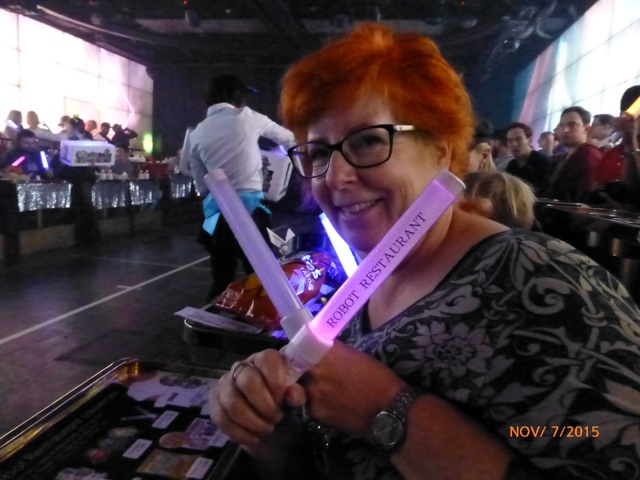
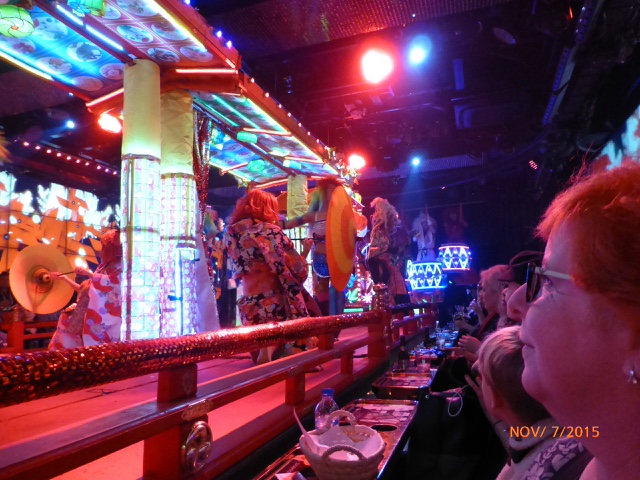
So. The robot restaurant. We did it. And it was hilarious.

We had booked our tickets back in May through and online agency and we were at the ticket office when they opened just after 5:00 on Saturday. Once we were checked in we went down the street, around the corner and up two flights to the pre-show lounge. Which is probably the shiniest place I’ve ever been.
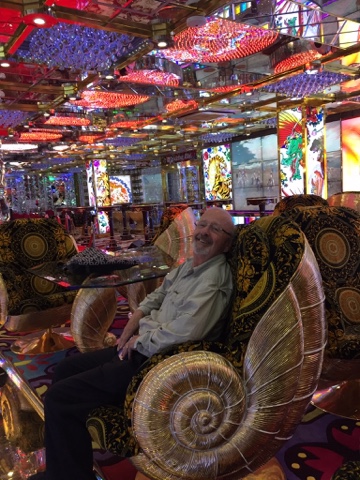
Wilf considers the giant snail chairs.
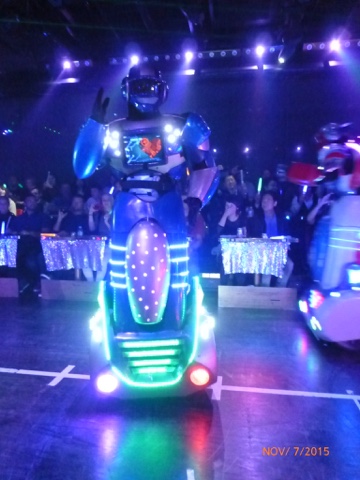
And the shiny robot band came out to play some smooth jazz for us.


After the pre show set we went down for the main event.

There wasn’t a theme or a story. Part one was a drum battle between taiko drummers – one float filled with drums and bikini clad drummers, the other float with drums and people dressed as – banshees? And there were two smaller floats with regular drum kits adding to the rhythm. And then they all went away and out came more bikini gals and geishas.


As you can see it is a surprisingly small space and things are happening right in front of us.
Cultural portion done we move on to nature loving creatures battling evil robots.


Lots of swords and pyrotechnics.
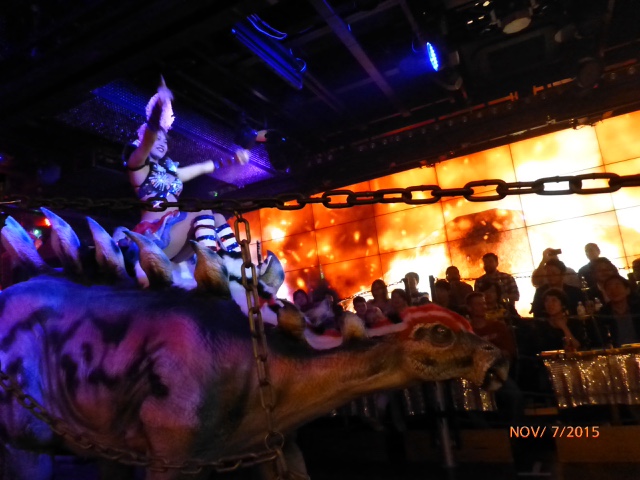
And dinosaurs.


Eventually, after the small dinosaur, spiders and a whale, T-Rex showed up to finish off the evil robot queen.


Dancing robots


Big snake
Something to do with Superman, while singing ‘Dreamgirls’


More robots


More dancing
Getting ready for the finale!


Really – a splendid combination of shininess, loud music, tackiness, sushi and robots. The totally touristy thing to do.

That cat!

You know that cat? The one that’s everywhere? No, not Hello Kitty. Though heaven knows she surely is everywhere.

I’m talking about the waving cat you see about – often in Chinese food restaurants. Turns out there’s a story there. Once upon a time there was a poor monkey barely eking out a living at a temple. But he had a cat. Things are a little fuzzy here, but one night a shogun/noble/prince was forced to take shelter on the temple grounds. He saw the temple cat waving at him, beckoning him over. He went to investigate and lightening hit the tree he was by/the roof of his shelter fell in/catastrophe occurred. He was saved by the cat. In gratitude the shogun/noble/prince endowed the temple and it prospered. When the cat passed on it was enshrined on the grounds of the temple. The beckoning cat has since become a symbol of good fortune and prosperity.
It turns out the maneki neko shrine is in a suburb of Tokyo, so of course we went to take a look. A couple of train and subway connections and an interesting walk through a neighbourhood (a lady who gave us directions was wearing a Niagara Falls, Canada t-shirt) brought us to the grounds of the temple. And there is a very impressive temple hall and a very interesting cemetery to visit. But tucked away behind the temple …..
 

A shrine to maneki neko.


People still come and leave cat statues as thanks for good luck and business prosperity.


Best laid plans. And the kindness of strangers.

Wilf found a place for us to visit that would be a day trip out of Tokyo. It wasn’t in any guide books, but he found some descriptions online. So off we set.

We walked to the nearest station and took the JR Yamanote line, which is the circle line that runs around the city. After five stops we transferred to another train line to head south. We spent an hour on the train, passing through Yokohama. We arrived at the town of Kurihama, a few stops before the end of the line. We picked up some boxes of sushi, and then realized that we had forgot to bring Gravol with us. That led to a drugstore. I asked the pharmacist if she spoke English. When she said no I got my phone out to get to work. In the mean time she asked over her shoulder if any of her colleagues spoke English. You know, in case they had magically acquired the ability recently. One of the gals back there practically crawled under the counter to not have to deal with us! Anyhow, the magic wifi device and Google delivered the word for seasickness (in case you need to know it is norimonoyoi). Mr Google delivered the results in kanji and she knew right away what we needed. If we had been there all day we wouldn’t have found this:


Suitably prepared we took a short taxi ride to the ferry port. While waiting for the 12:10 ferry we ate our sushi and soon enough it was time for about a dozen walk on passengers and a few cars to board a big ferry and roll our way across to the Boso peninsula.
This is when the best laid plans thing started to unravel. The next step was supposed to be a short walk to a cable car. Turns out that is was super windy and the cable car was closed. And we’re a pretty long way off the tourist track and there’s not many people who speak English around. We find out that there is no bus, but we get a map in the English that indicates that there is a path. It also shows a tourist information centre not too far away. We walk there, only to discover it is a pizza restaurant. It wasn’t clear to us if it was a pizza restaurant and tourist info centre, but the gal there helped us out by calling us a cab. And finally we were there.
But Sharon – what was worth all this effort?
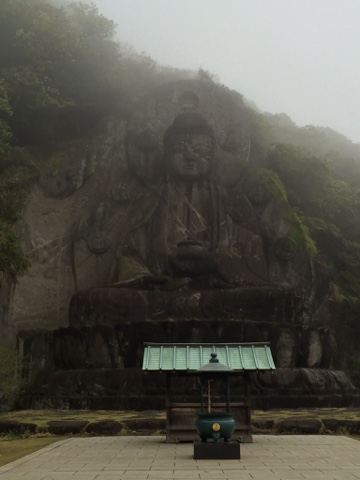
Carved into the side of the mountain is a Buddha. It is 31 metres tall. As you can see the fog was rolling down the mountain at a good clip – it is about  2:00 in the afternoon at this point.
Of course there is a tour group up there. The guide, in full uniform of skirt, blouse, tie, hose and heeled shoes was waiting by the Buddha in a shelter. Some of her charges were hanging around and they were very curious about us, so we had a lot of conversation that was a merry mix of Japanese and English.
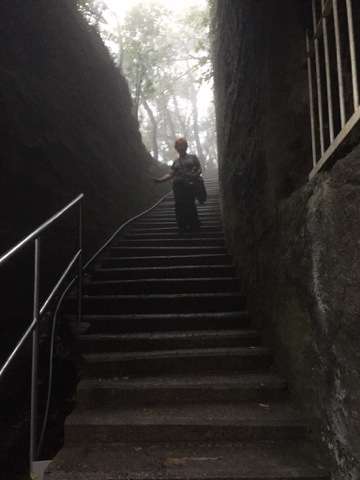
Time to see the rest. Turns out the rest involved climbing a mountain. On the one hand – we climbed up a freaking mountain. On the other hand almost the entire way was on beautiful granite staircases with sturdy stainless steel railings. So there was that. The fog continued to roll in and the atmosphere got more and more spooky. As soon as we started up we met some more of tour group one in their matching green jackets. One guy looks at Wilf and says ‘hey how old are you?’ Wilf told him and the guys says ‘Ha! I’m 83!’  So they shook hands and there was much laughing and we went our separate ways.
All over this side of the mountains are statues of arhats. Arhats are beings who have advanced along the path of enlightenment but have not quite achieved buddhahood. There are some 1500 of these statues tucked into niches and caves. Each one is different and individual.


We climbed up a lot. Down a lot. Through tunnels and arches.


Sometimes I would begin to think – oh, this isn’t going to end well. And then we meet someone coming from the other direction and we’d cheer each other on. Fortunately we had a good map, and just as we were getting to the last series of stairs that would bring us to the top I looked up and there was a guy standing there. In a dark suit. White shirt. Dark tie. Clipboard. WTF? Turns out he was the leader of yet another group. A group of Buddhist priests. I don’t know who was more surprised – me to see them, or them to find this shiny, sweaty redhead coming up the stairs (did I mention that it was about 20 degrees and foggy. Like hiking in a sauna). Of course there had to be formal bows and greetings as passed one by one, along with the where are you from questions. Wilf caught a picture as the end of their group passed into the mist.


Our original plan had been to take a path down the front of the mountain back to town. (Seemed like a good idea before we went up!)

As I heaved myself up the last few stairs I could hear Wilf saying to someone, ‘You have room for two?’ There was a group of three that we had met up with on the way and were trailing behind and they were offering us a ride. And sure enough, when we rounded the (inevitable) vending machines at the top there was a parking lot with a beautiful big SUV. The man, his wife and their friend were day tripping. They spoke almost no English, but we had a laugh filled ride back down the mountain. They delivered us back to the ferry port and went on their way.   By the time we got there is was raining hard. I can’t say how grateful we are for their kindness in offering us a ride.
We still had a ferry ride and an hour and a half on two trains. But we did it. And yes, it was worth it. The mountains and the sculptures – it was all amazing.

1,200 years. And counting.

90 minutes from Osaka, in a valley high in the mountains is a special place. We knew we were in for something interesting when we arrived at our train.


The train has been specially painted up to honour the 1200th anniversary of the temple complex at Koyasan. Our limited express train zoomed along to Hashimoto, then began the long climb up. We could feel the effort of the Diesel engines as they hauled us up up up. At the end of the line we boarded a funicular train that hauled us up even further, where we were met by a bus that took us to the town proper. By the end of the journey we were 800 metres above sea level.
So what is worth all this effort? Way way back a Japanese Buddhist went to China to study, and upon his return he wanted a place to study, to meditate, to educate. There are many tales of how he wound up here, in this mountain valley that is surrounded by eight peaks that form the shape of a lotus. Now people can arrive as we did, or drive on up.  But for most of its history this has been the back of the back of beyond. In fact for many years women were not even allowed on the mountain. In 2004 the complex was named to UNESCO’s world heritage list, which has increased traffic to the area. It is still a  site of pilgrimage. There are many temples in the town area, and back in the day they offered basic accommodation to pilgrims. Over time this was expanded to include travellers in general.
We stayed at a temple called Muryokoin. One of the priests was born (this time, he assured us) in Zurich, which meant we had someone who could explain things to us.
We had a very large room
Notice the table in the foreground? Those blankets are attached to the table. We would snuggle up with our feet under the table – where there was a heater! Brilliant. We also had a space heater, which was a good thing, because wow was the place cold!  No heat in the building itself, windows wide open. But we’re toasty here. No private bathroom – men’s and ladies down the hall, and communal  baths on the other side of the building.
There is a specific cuisine at temples. It is, of course, vegetarian. But it is also non stimulating – no garlic, onions, ginger or chilis. We ate in a large hall with the non Japanese guests.


The food was good, if bland. And mostly soft in texture. Lots of it. You can see the tea pots on the mats. At the end of the meal, after we had finished our rice, the tea was poured into the rice bowl. That way not a grain of rice was wasted.
At this temple they conduct an elaborate service every morning, so we were up very early. We presented ourselves at the meditation hall just before 6:00 am. Fortunately there were chairs to sit on, and we were given a lap blanket. The floor was heated but the room was not. It was quite dark, inside and out and the candlelight sparkled off the golden decorations.
The service – a fire service- lasted almost 90 minutes and involved the burning of 108 sticks representative of 108 failings or attachments. The monks chanted, bells were rung, passages from books were read, offerings were made. It was very interesting and fairly mysterious. After the service the Swiss priest spoke to us about Buddhism, this particular sect’s beliefs and life in general. And then we had breakfast. 


And yes, the town and the temples were beautiful.