‘Kuidaore’

Japanese cuisine is wide and various, and one of the things about it that is so interesting is how regional it is – each area, each city has its own specialties. Osaka is a really foodie city. So much so that there is a word to describe how they approach things ‘Kuidaore’. Which means ‘bankrupt yourself through food’, or ‘eat until you fall over’. We thought we’d work on the latter definition.

When we were here three years ago we didn’t get around to trying one of THE Things to eat in Osaka – takomaki, which are balls of batter and chopped octopus, fried and piping hot. We always seemed to be passing the places to get them too early in the morning, or right after we had eaten something else, and I regretted that.

Things would be different this time! We arrived on Wednesday night, fell asleep promptly and Thursday morning we were ready to go bright and early. Like many big cities, Osaka plays hard. Bars and restaurants are often open until 05:00. There’s a break and then things start up again at about 10:00.

In the district of Namba there is a street called Donbori – it runs beside the river and meanders along. All along the street are restaurants and food stalls. The cross streets are some of the main shopping arcades. I’ll have to do a whole blog post on the wonders of these arcaded shopping streets. But – the Donbori. At 10:00 it was starting to hop – the takomaki carts were warming up. The delivery trucks were leaving, having done the morning provisioning run and the street was turning back into a pedestrian area.

I joined a line. It was early so it was a short line.
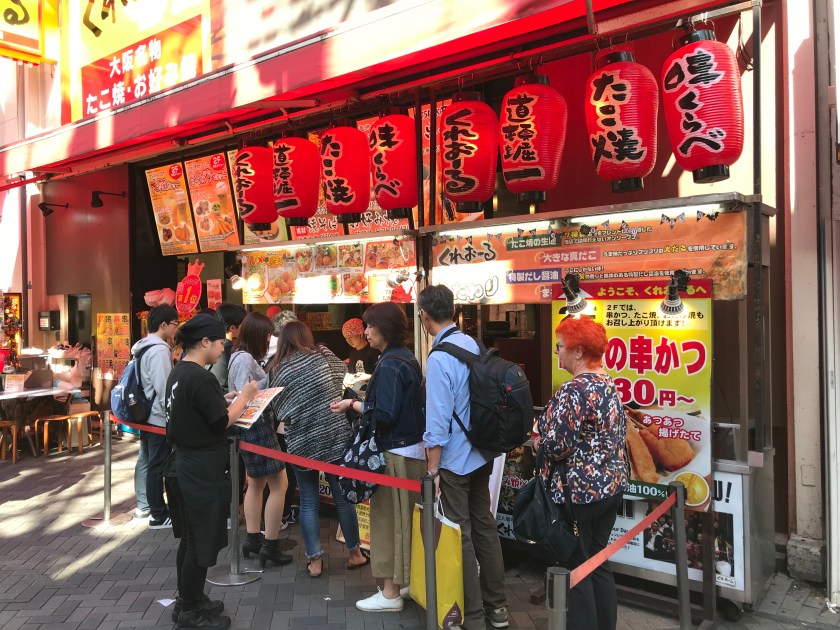
Takomaki!
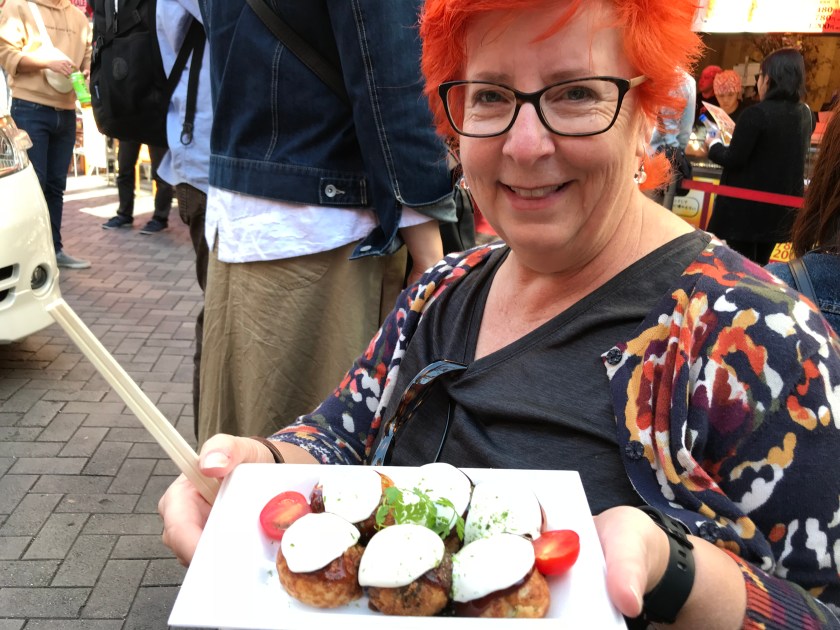
With cheese sauce…. Crispy on the outside, very gooey on the inside. Hot like the temperature of the sun. The people of Osaka must have asbestos mouths….

Early times, so not too busy on the street yet…
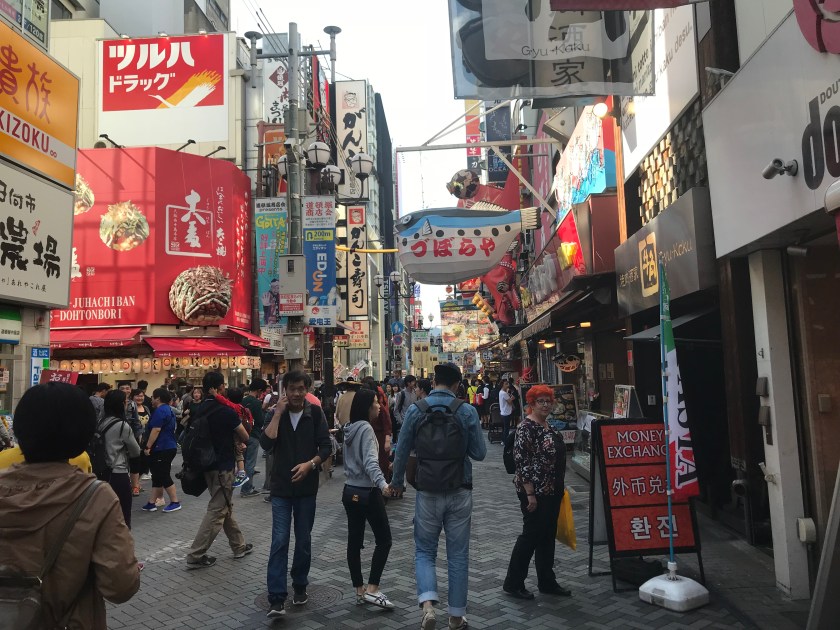
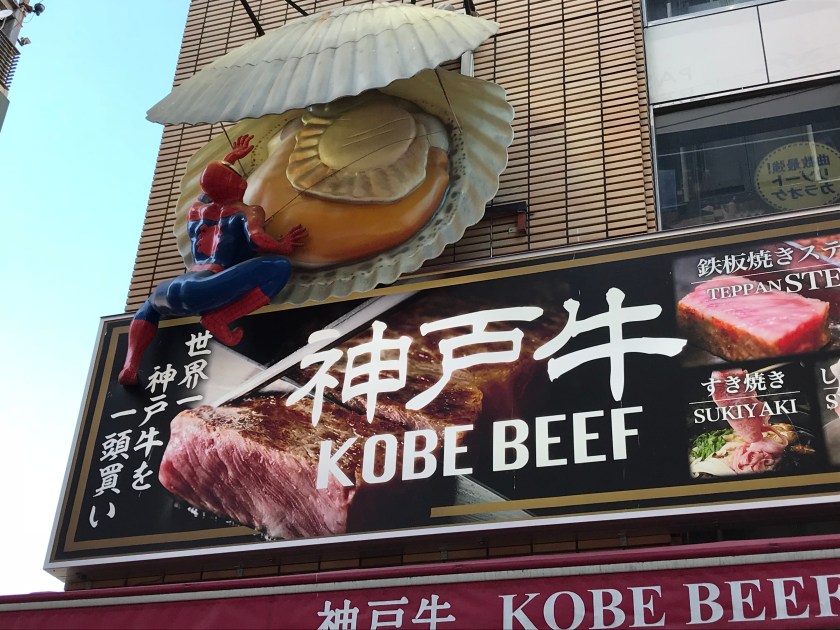
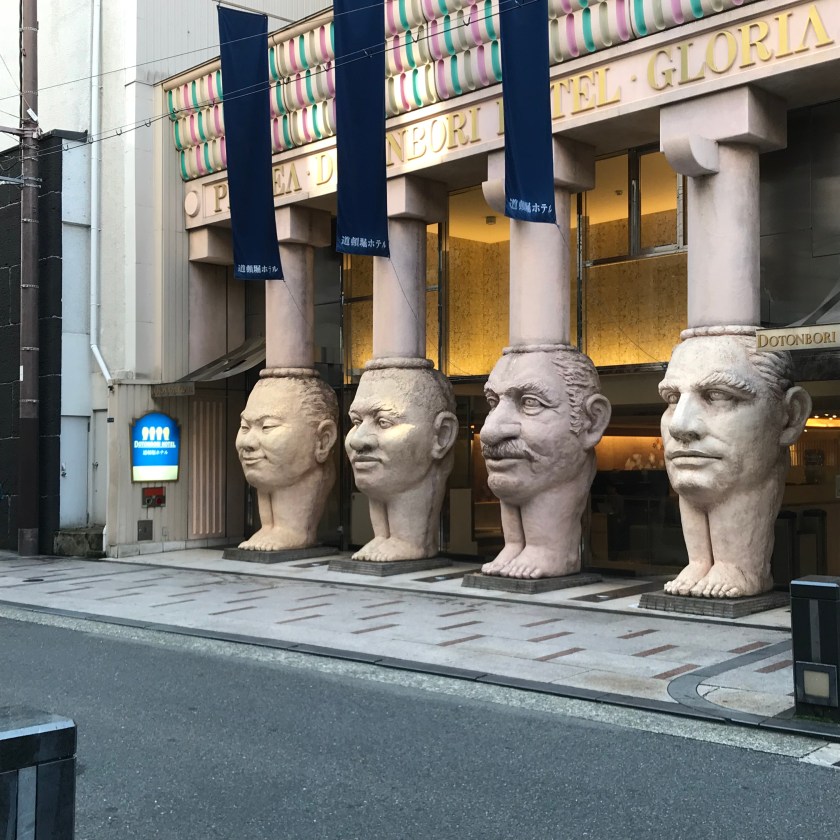
One of the fun things about the Donbori is the signage – giant representations of what is on offer:
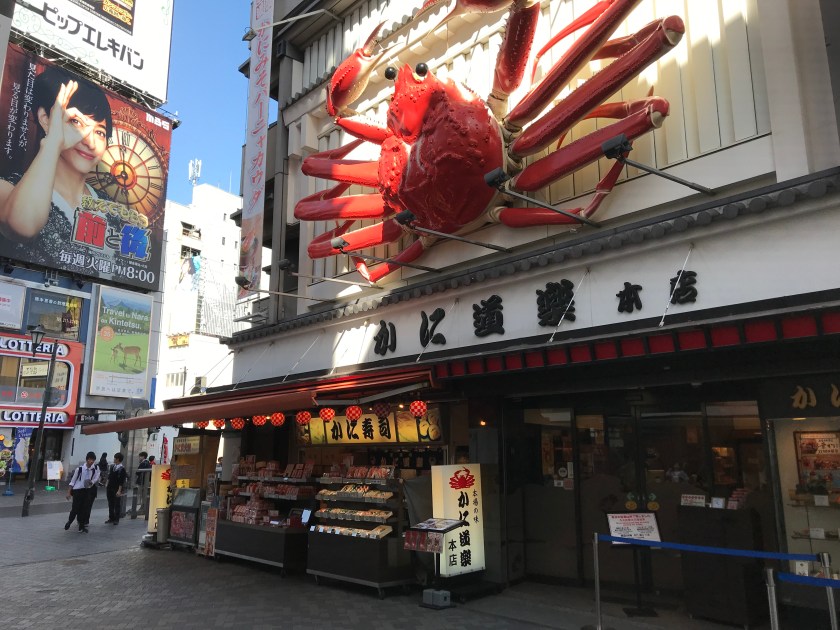
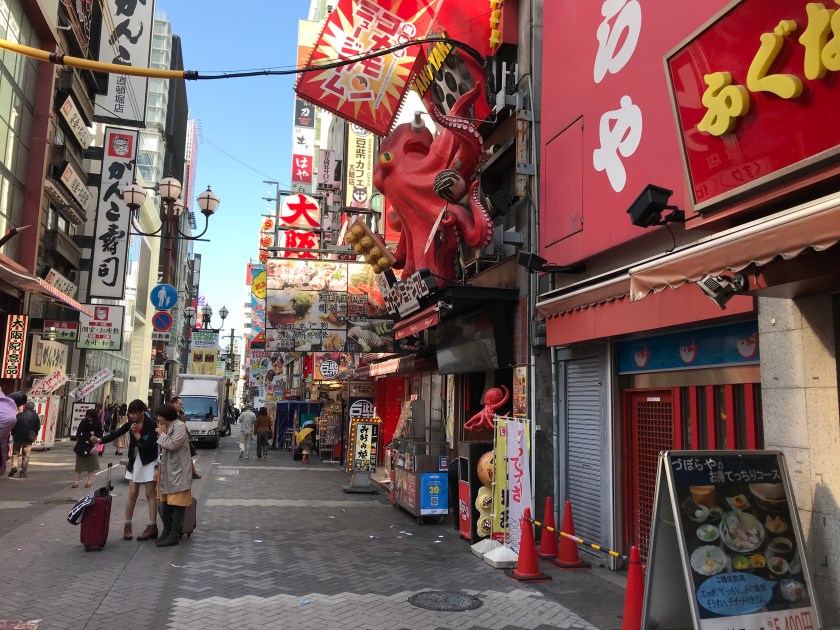
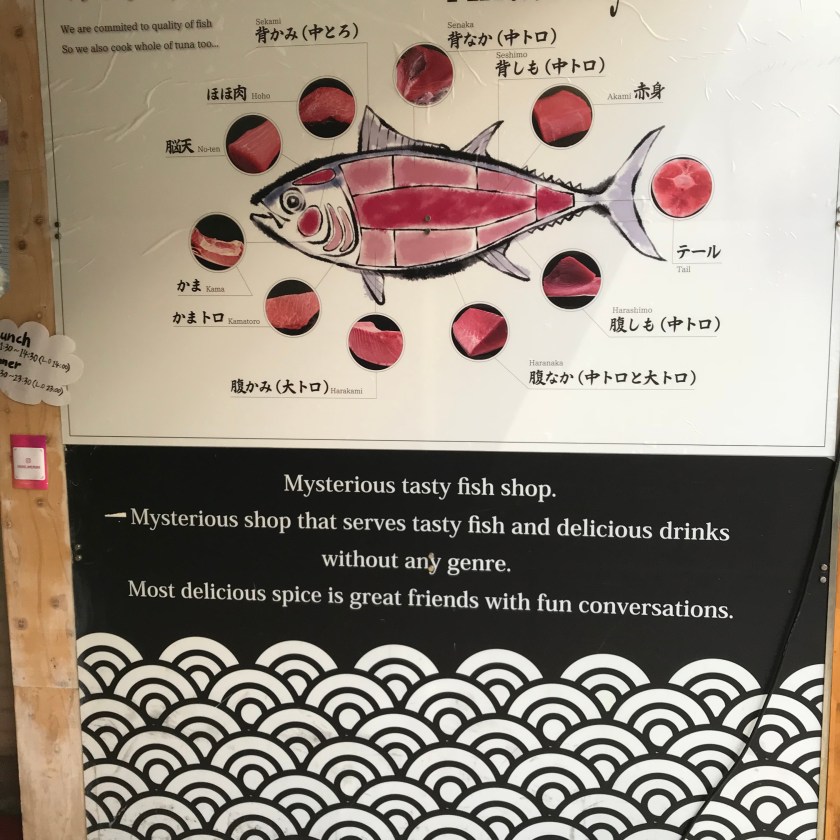
Not far from the street is the fish/seafood market. Last time we were here Wilf rampaged through eating a all the things. So of course we had to do it again:
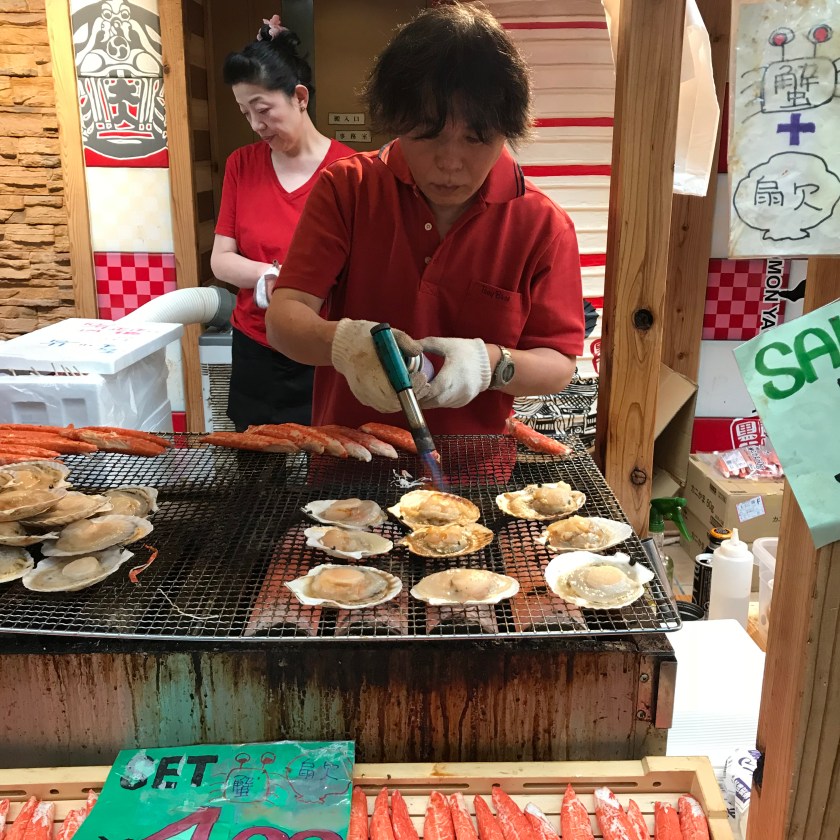
Scallops on the grill, finished with a blow torch….
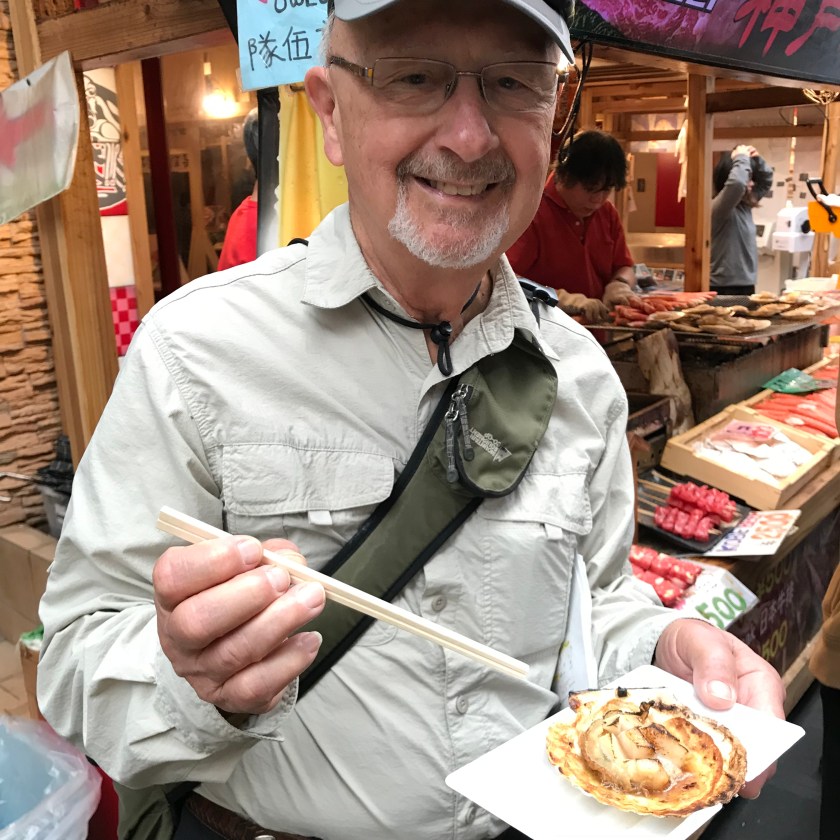
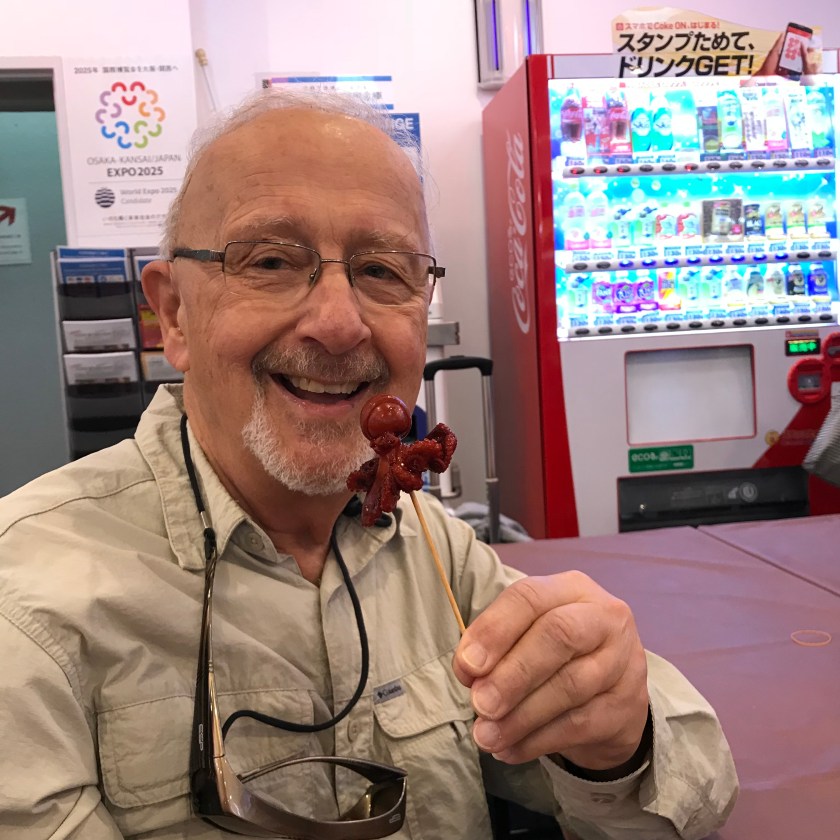
Baby octopus on a stick
They also had black soft serve ice cream:
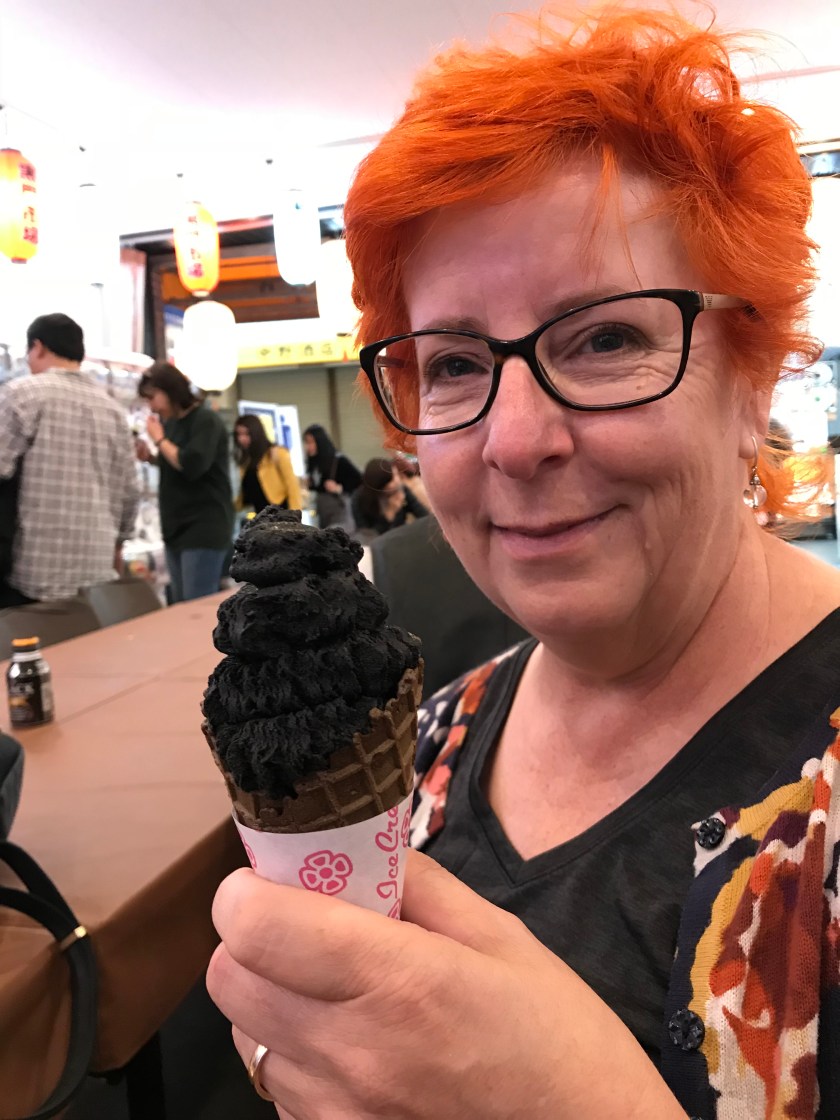
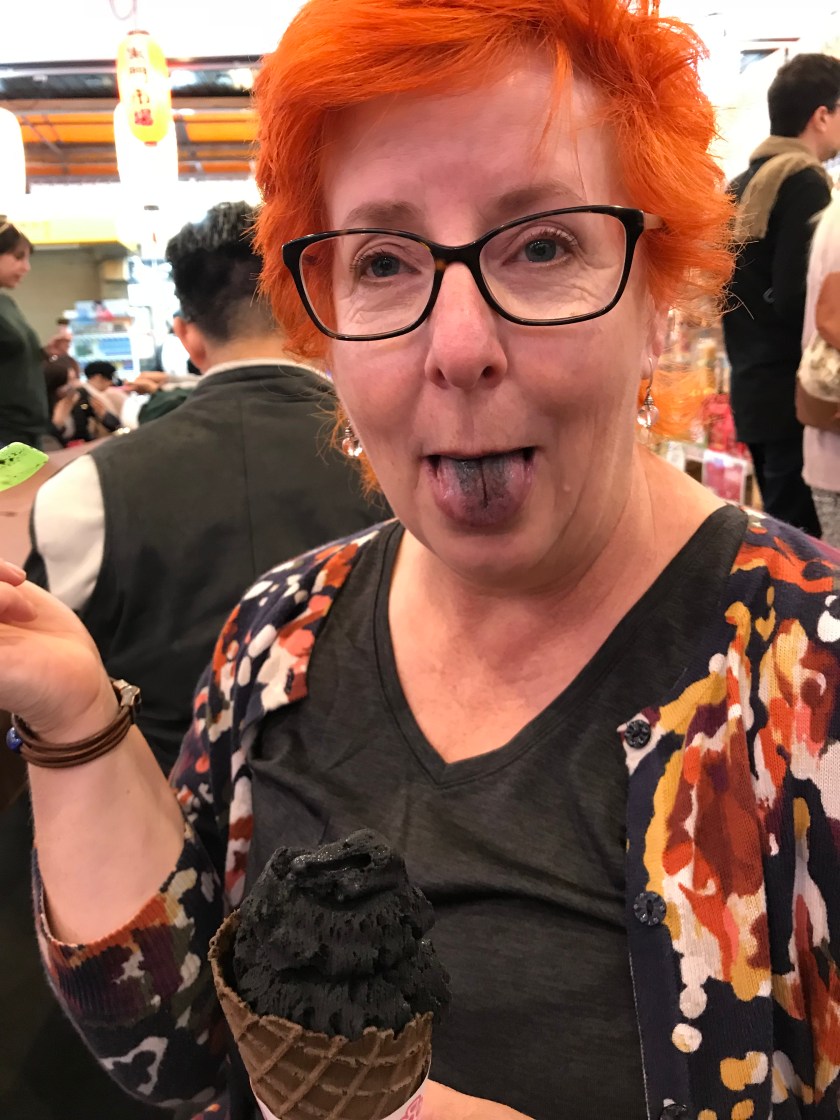
I thought it might be black sesame, but it was black vanilla. It was delicious. However:
If seafood is not your thing it is melon season:
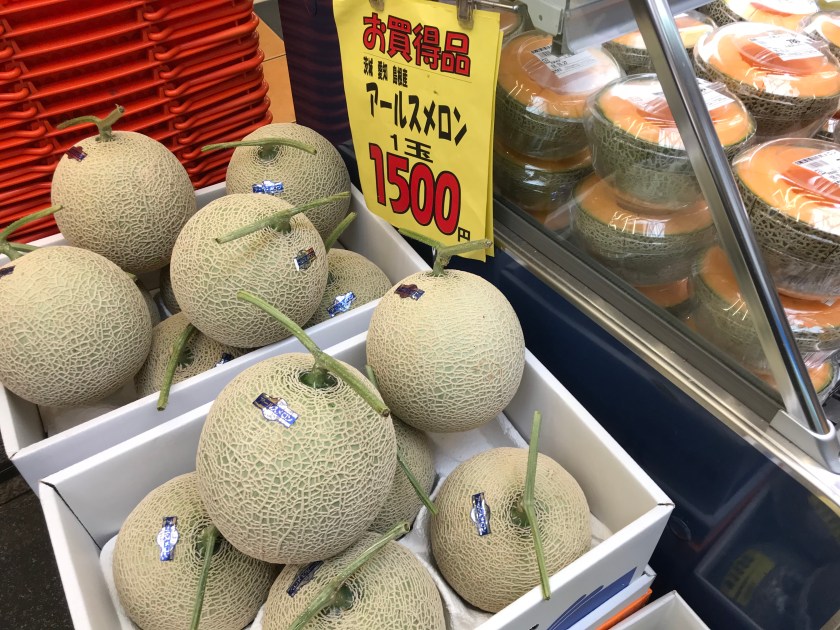
That’s just over $17.00 in Canadian funds for each perfect melon…

On the way back along the Donbori we discovered that the ‘Dancing Octopus’ cart was open:
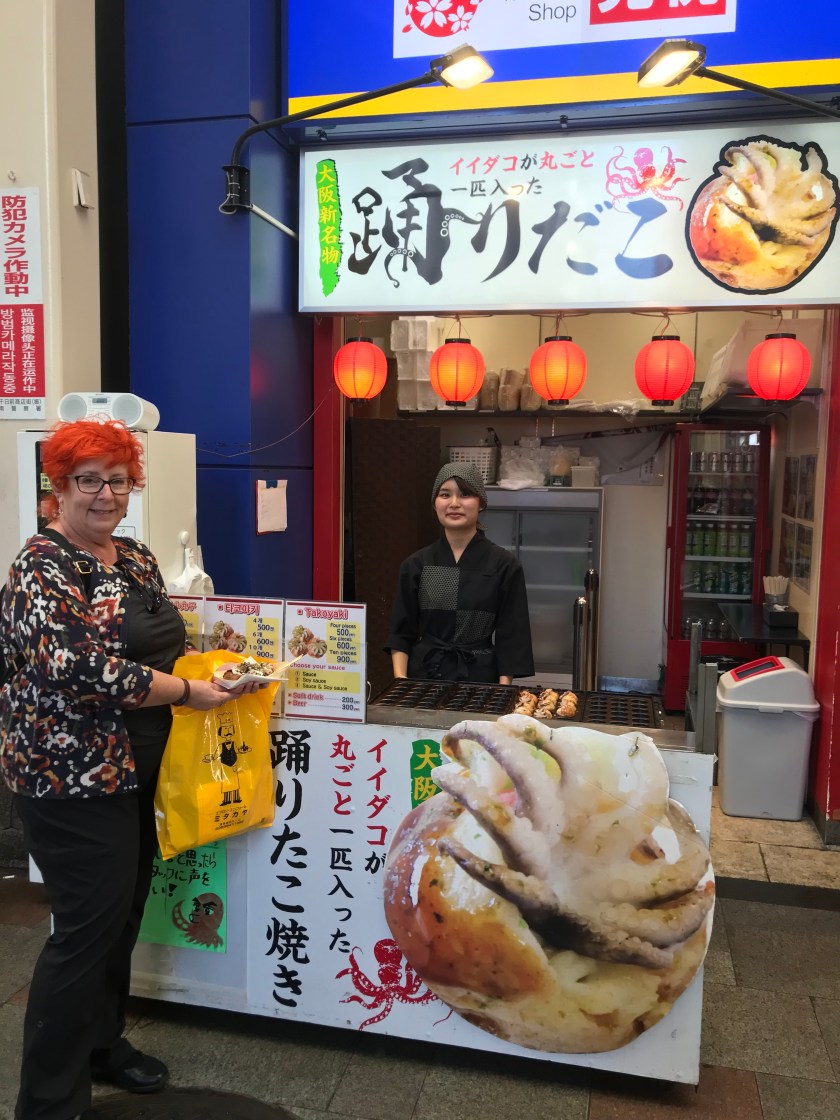
As you can see from the picture on the cart each takomaki has a whole baby octopus on the top in addition to the chopped bits.

We went with the traditional presentation on this one – topped with mayonnaise, tonkatsu sauce and bonito flakes. Yum

There was also a stop for coffee and cake in there before we returned to our hotel for a rest before heading back out for dinner. Forgot to take pictures of that – a restaurant called Kushikatsu Daruma, which is all about fried things on skewers.

(Edited to add: I forgot that the waiter did take our picture!
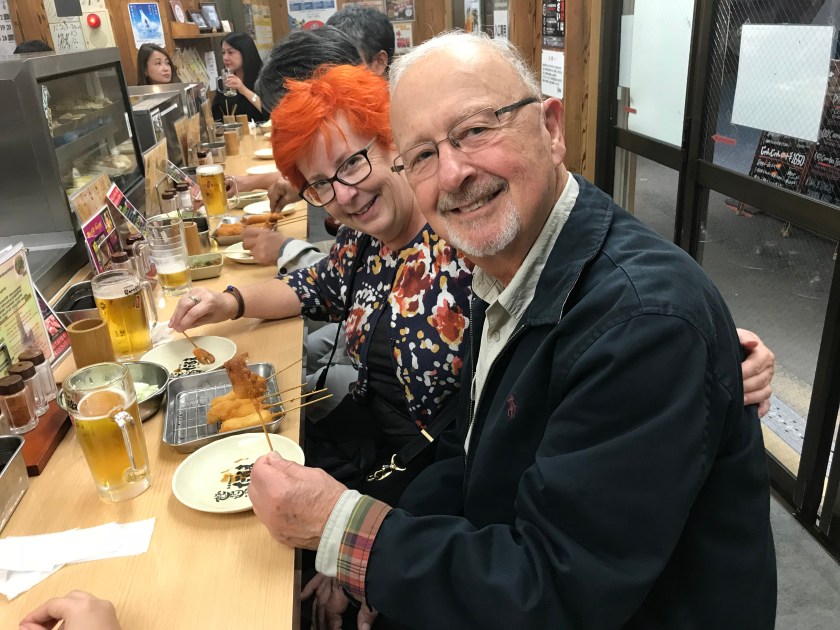
)

So – we didn’t fall over. By adopting the ‘grazing’ methodology and walking over 11km in the progress we managed to try a bunch of really great food!
Back to Japan

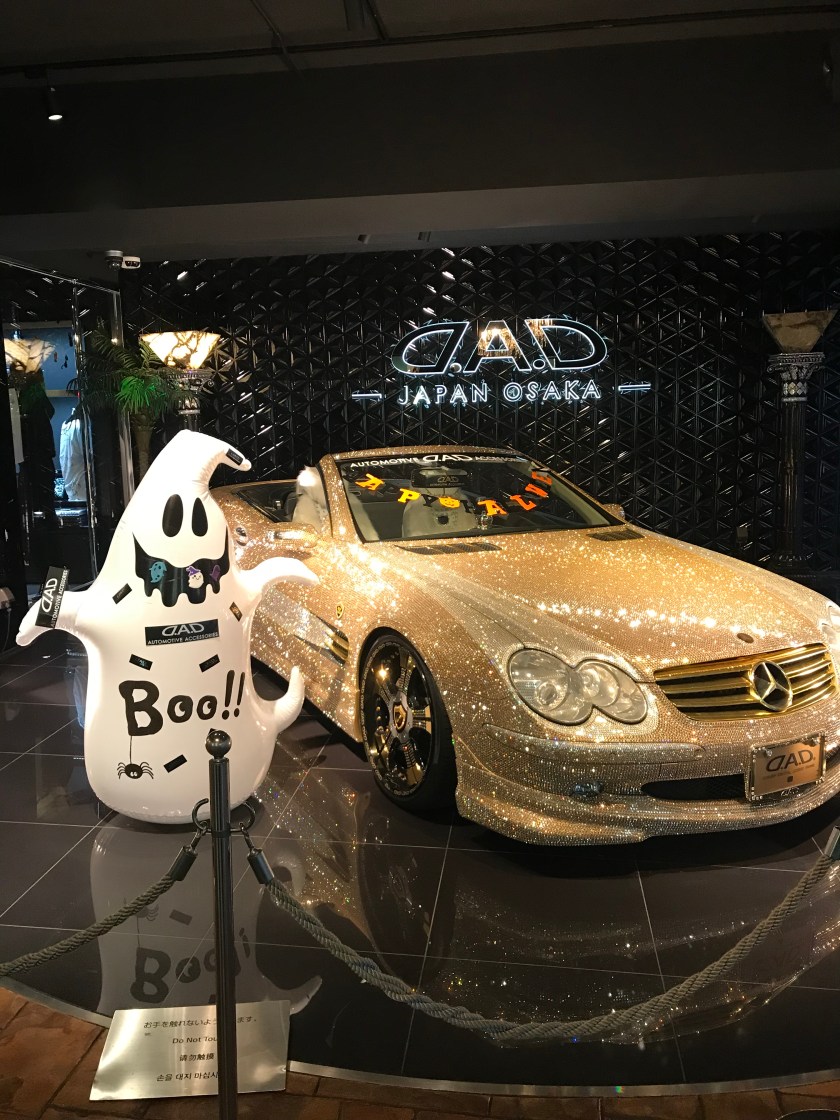
Wilf and I just can’t seem to get Japan out of our system, so off we go again. We’re starting in Osaka this time. I’ll be back with the details of our adventures- until then here’s a little bling from a shop across from our hotel:

U-huh – that’s a convertible Benz completely covered (seats, too) with rhinestones. As one does.

The first time we came to Japan in 2009 Hallowe’en was a low key affair. It gets bigger each time we visit.

From the unexpected adventures file

We’ve lived here for eighteen years, but that doesn’t mean we know about all the things going on in our neighbourhood.

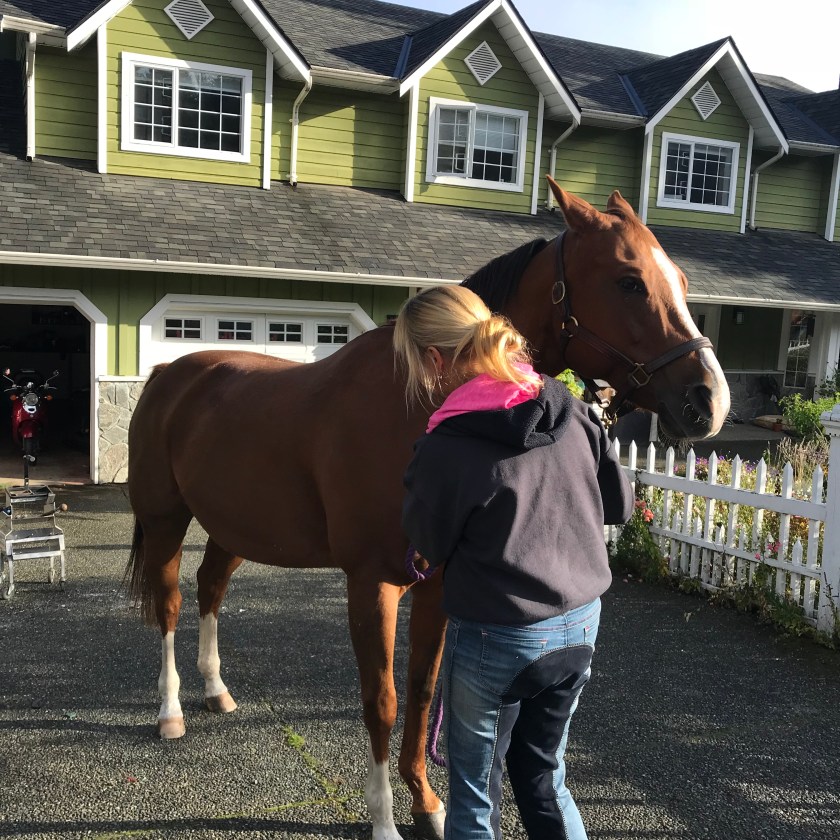
Case in point – driving home this morning we passed a house and there was a woman standing in the driveway holding the halter of a horse. ‘I didn’t know they kept horses there’, I said. How did we not notice? Then we saw the horse trailer. And also on the driveway – a farrier’s truck. What! It turns out that one of our neighbours has a business as a farrier – looking after the feet of horses and their metal shoes. Who knew!

Here’s the ever patient Gracie, waiting for her new shoes to be measured and installed:

IMG_6308

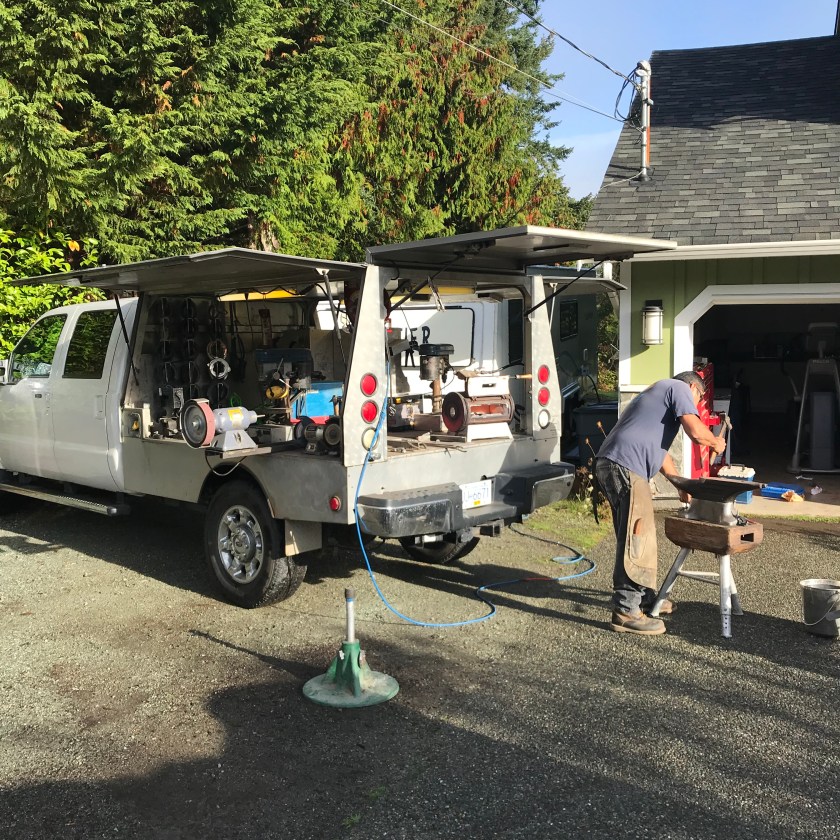
Have you seen a farrier’s truck before? Here is one open for business:

IMG_6307

Racks of shoes, grinding equipment, a portable forge, an oven. We had seen the truck all closed up many times and not known what it was (closed up it sort of looks like a food truck…..)

It takes a lot of steps to get the shoes just right – lots of hammering and filing and adjusting:

IMG_6306

And then when it is just right – installation time.

IMG_6312

How much fun is that?


And while we’re on the subject, here’s a link to a very interesting article about the farriers who look after the horses of the New York City Police Department mounted patrol. When a police horse needs its feet attended to the farriers come to them, right on the street – that would be something to see. But it turns out that we have our own version here in North Saanich!

Veni Vidi Vici

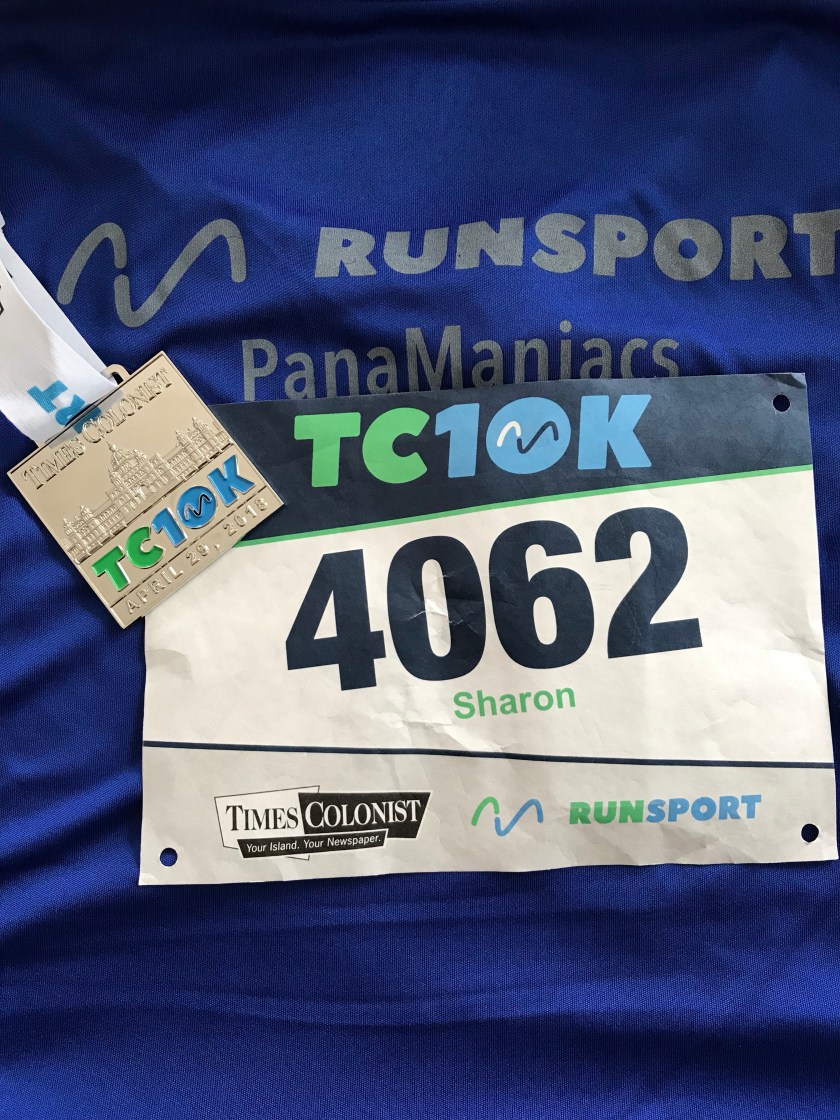
And another Times Colonist 10k is done and dusted.

Once again I took part of the training clinic this winter. The training is great, and it gets me out and about. Yeah Panamanianiacs! I’ve done the clinic and the 10k 7 times now. Getting older, but not faster!

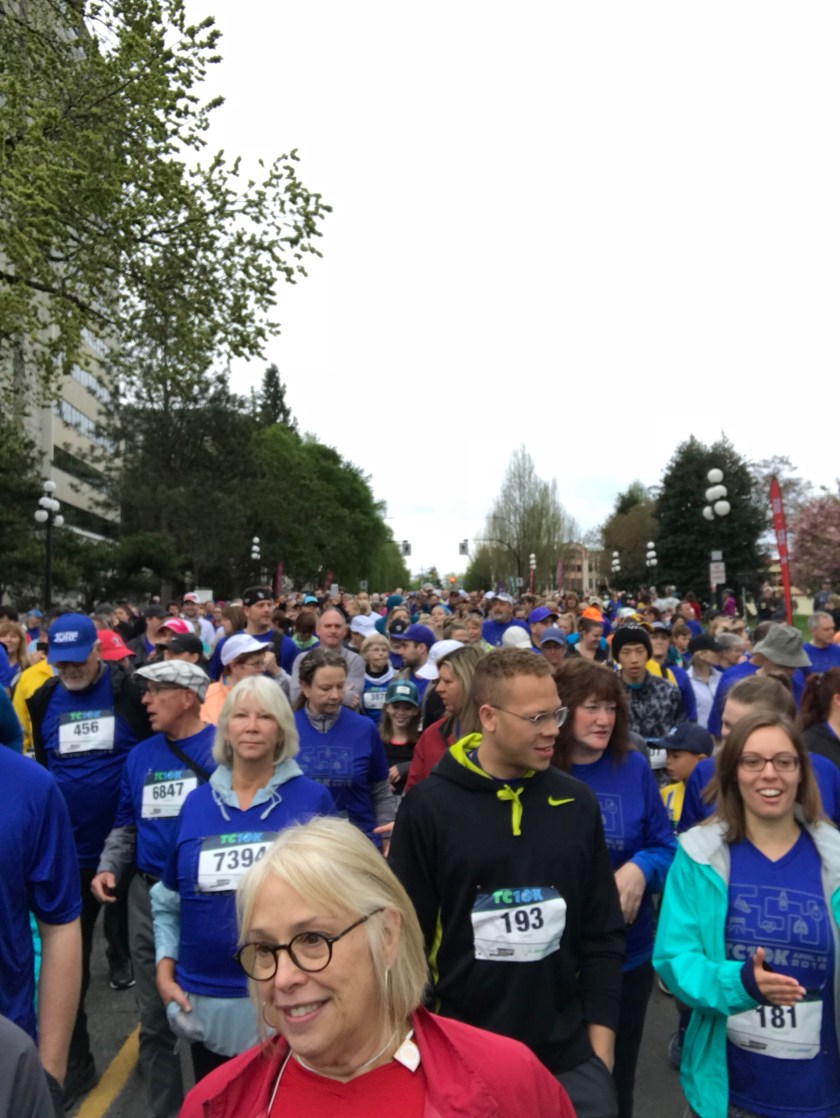
I felt like I was under trained this year – life kind of got away from me for a bit. But – off I went this morning with about 8000 other souls. Perfect day for it – no rain, no sun, no wind. Cool but not cold.

Before the race:

Got myself seeded in the right place to start.

Then everyone else showed up – people behind me:

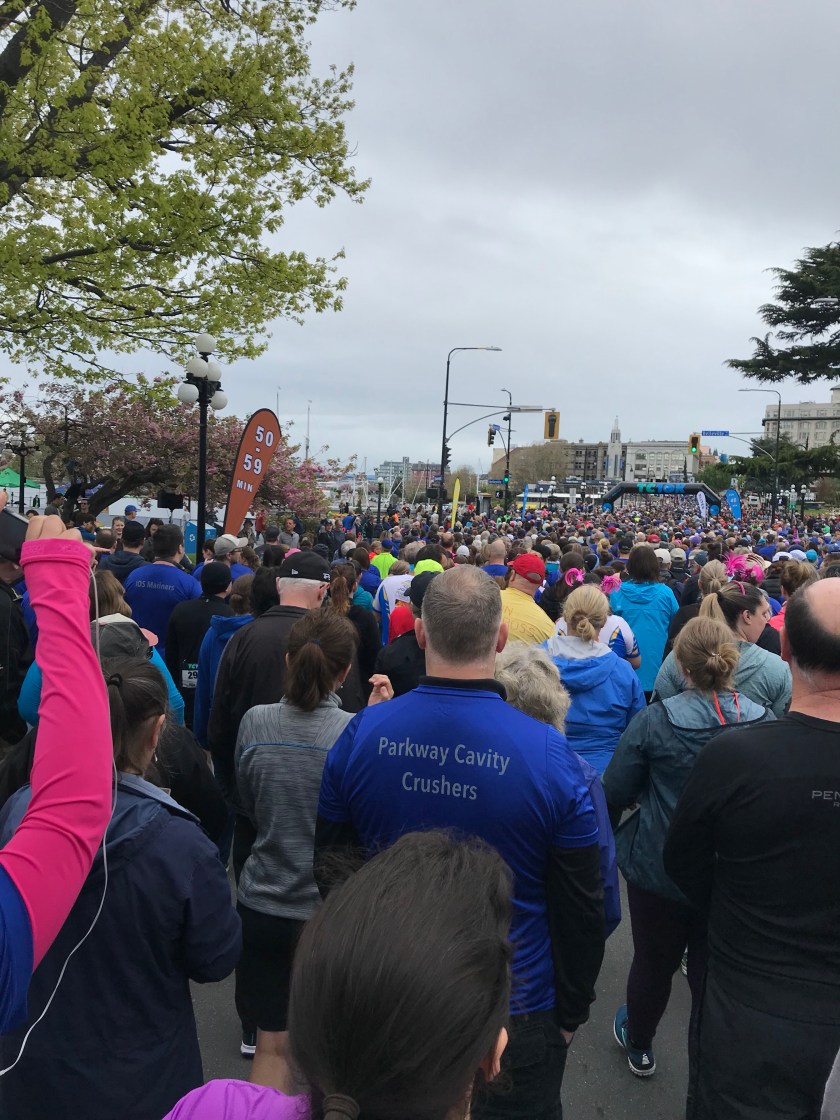
And even more people in front of me:

It took almost 7 minutes from when the starting gun sounded until I crossed the start line.

1:39 later I was done. It was a great race and I did better than I expected. Hence the happy shiny face at the finish line:

I guess it’s time to sign up for the next one – Sidney Seaside 8k in September – anyone else interested in joining me?

The third time around

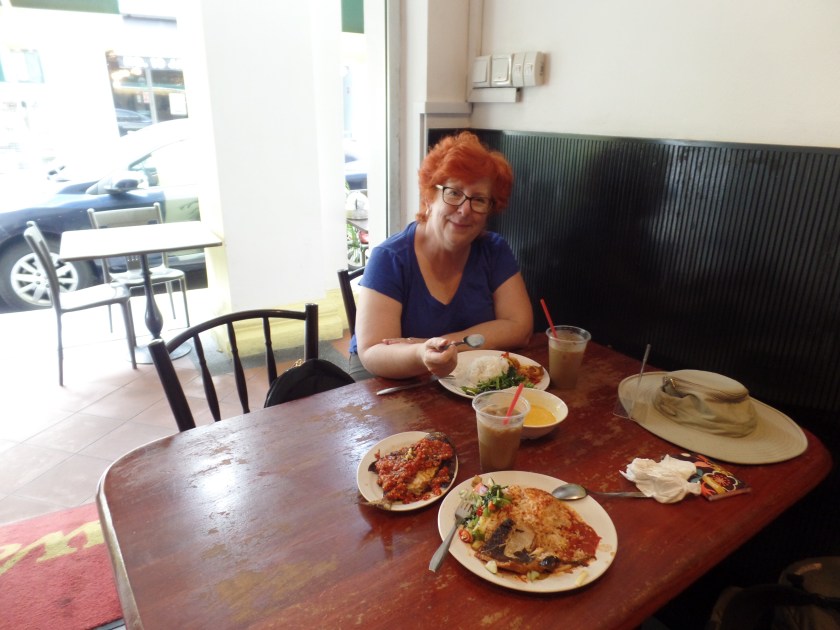
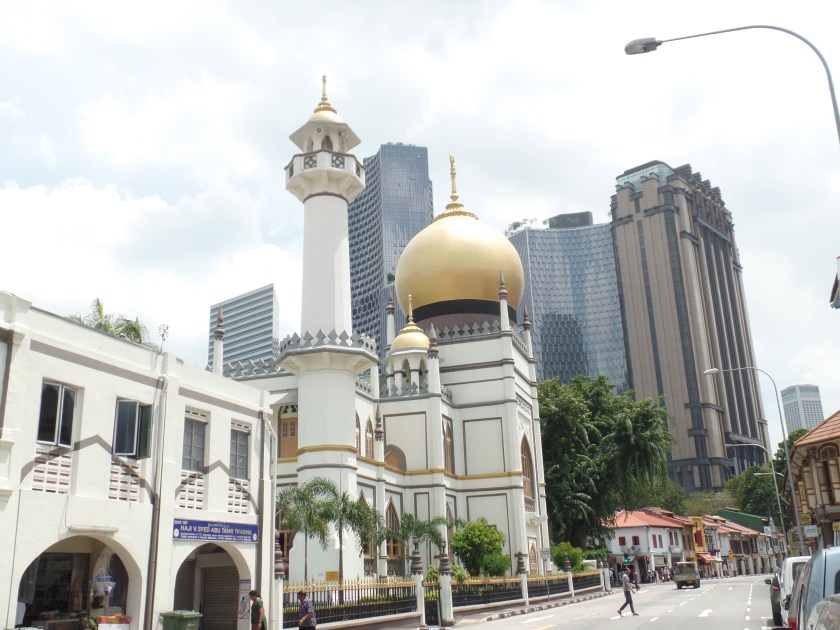
We had one day in Singapore – enough time for some revisits and a couple of new things. After gawking at the luxury shops on Orchard Street we headed to a Malaysian restaurant Wilf had read about. Found it without trouble, waited in line and then discovered that the cafeteria style service was all in Malay, served by people who didn’t speak English. So – we pointed at things that looked good and settled in.

I think western tourists are not that common. We attracted a fair amount of friendly attention, and comments about the spicy food. In fact one gal stopped to chat, looked at Wilf’s plate and told him to be very careful of the bones in the fish. Then she saw the chili sauce. ‘Oh no,’ she said. ‘That is not for English people. Too hot’ and took the spoon out of his hand and scraped it to one side where it would not hurt him. We had a whole fish, some skate, some calimari, unknown to us green veg, coconut milk soup, rice and iced coffees for about $20.00. We considered it a great success.

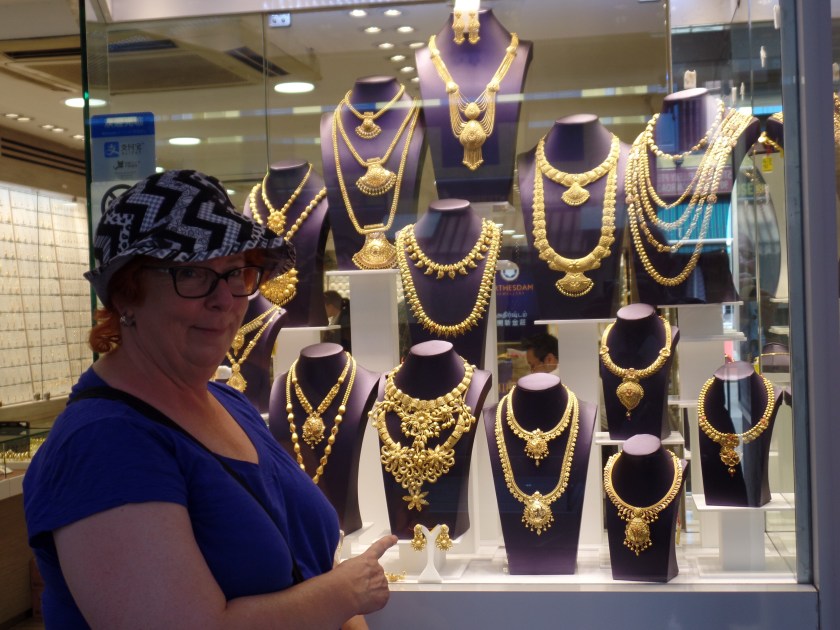
After lunch we walked a bit and then took a cab to Little India. We must have looked particularly sweaty and disheveled because as we getting out of the cab the driver was calling after us ‘ Walk slowly! Drink water! We walked a bit and looked at the gold jewelry on offer.

What do you think – just the thing for coffee in Sidney?

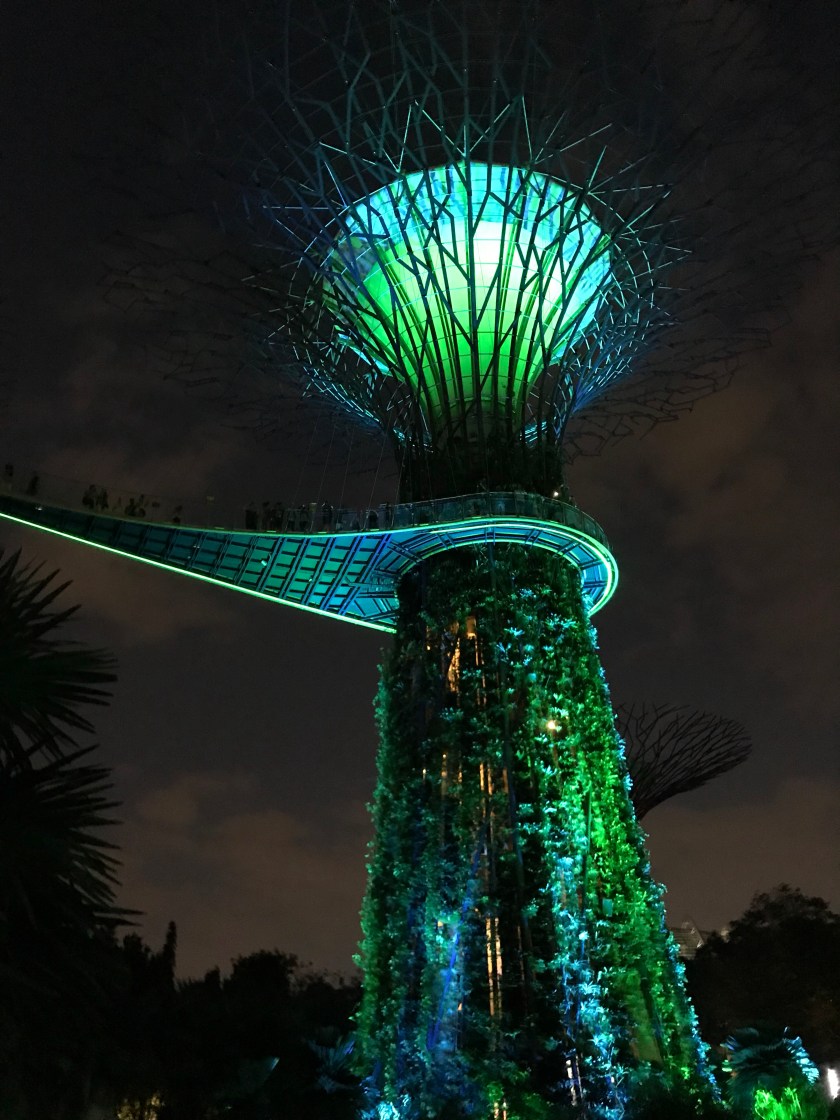
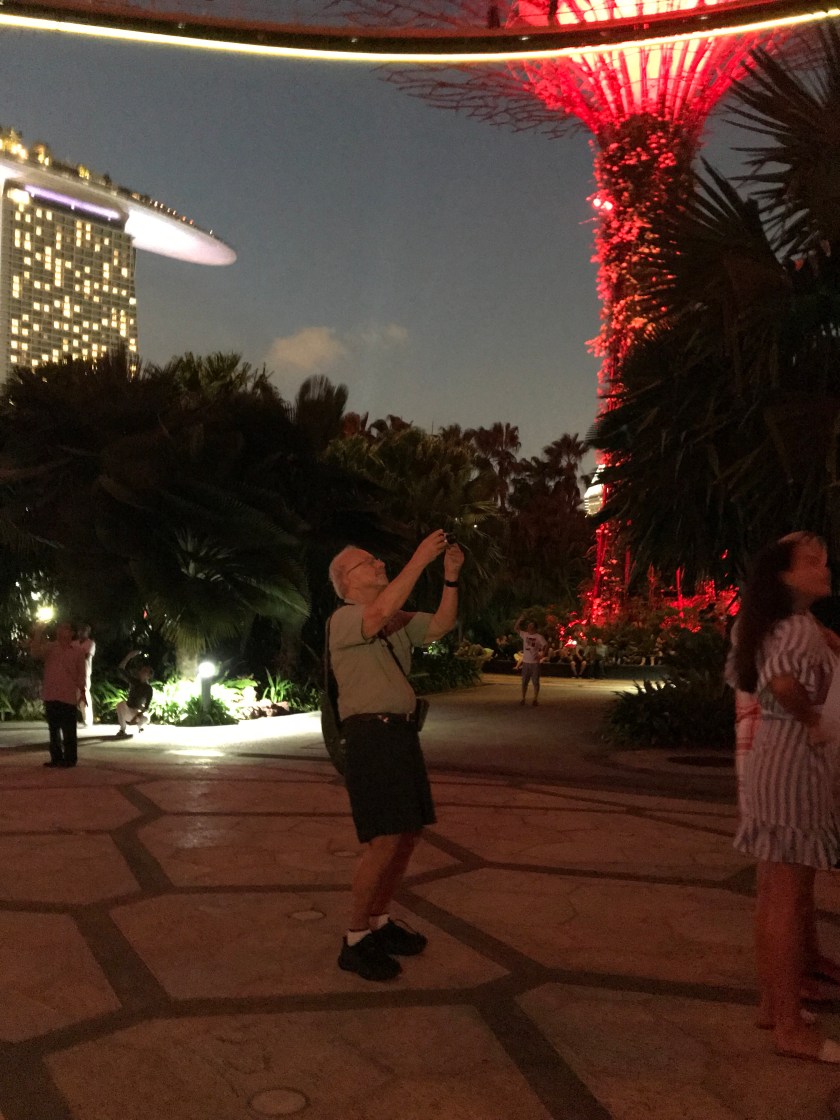
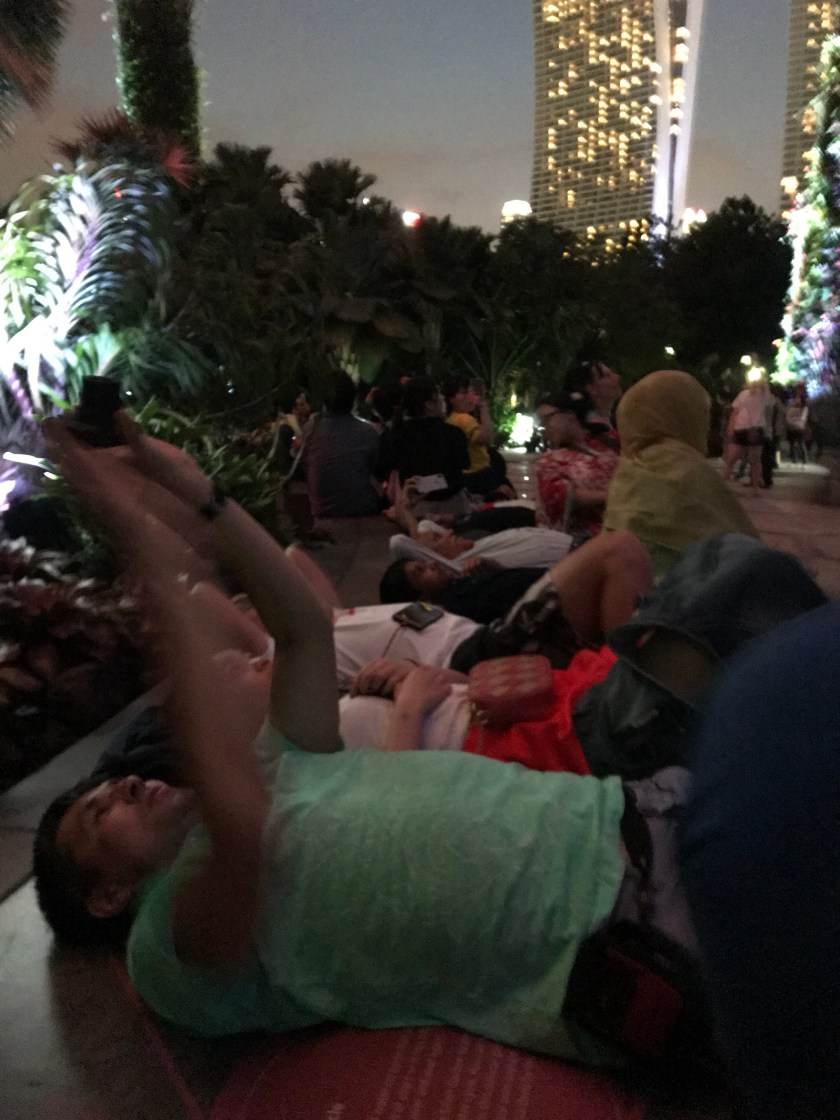
Both previous visits to Singapore included trips to the Gardens by the Bay but we had never been at night. Now we’ve done that. Very impressive light show with music. People pretty much lay anywhere to watch. We were glad to find a spot to sit – even in my grubby sweaty state I wasn’t prepared to lay down on the walkway. Besides – what if I couldn’t get up again?

And that, ladies and gentlemen, concludes Sharon and Wilf’s adventures across the Indian Ocean. Over 8000km, 35 days on board. It has been a blast. A long day of travel tomorrow and we’ll be home again.
An intelligent city?

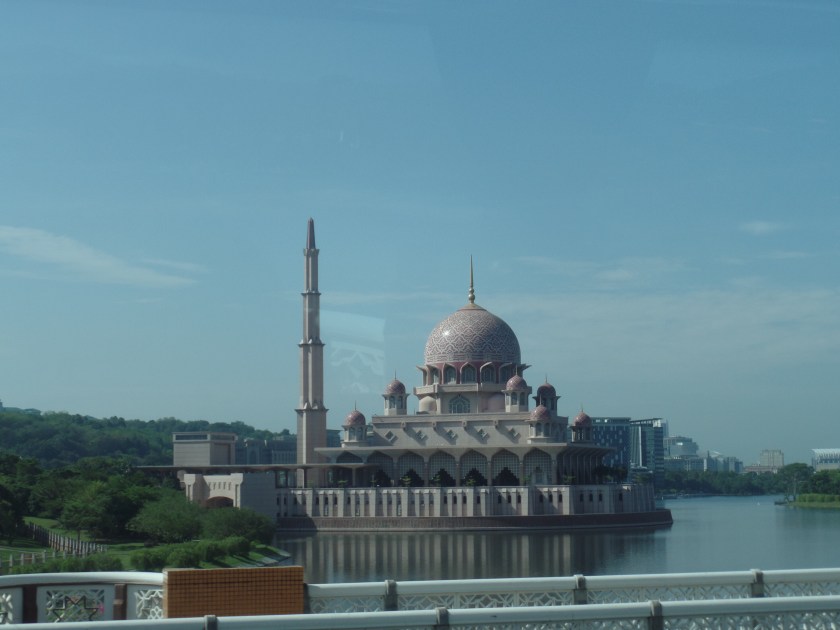
We stopped in Malaysia at Port Klang. Kuala Lumpur is about 90 minutes inland. We’d been there before and decided to see what other options were available. Around 20years ago the government decided to move its administrative offices out of the crazy of KL, and built themselves a new city. It is called Putrajaya and is heralded as an intelligent city, designed to be Green and well planned. The kind of place people would want to live in.

We visited the very impressive botanical gardens. It was really really hot, so we were rather skulking through the shrubberies trying to avoid heatstroke.

We then went to see the main square, which is where the main mosque is located. Everything is beautifully landscaped, and there are a series of man made lakes, which makes for lovely vistas.

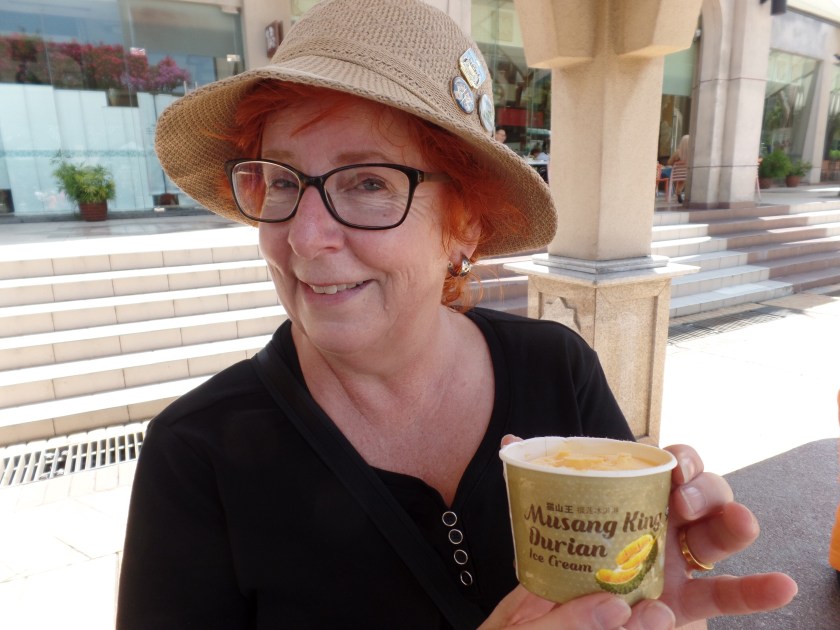
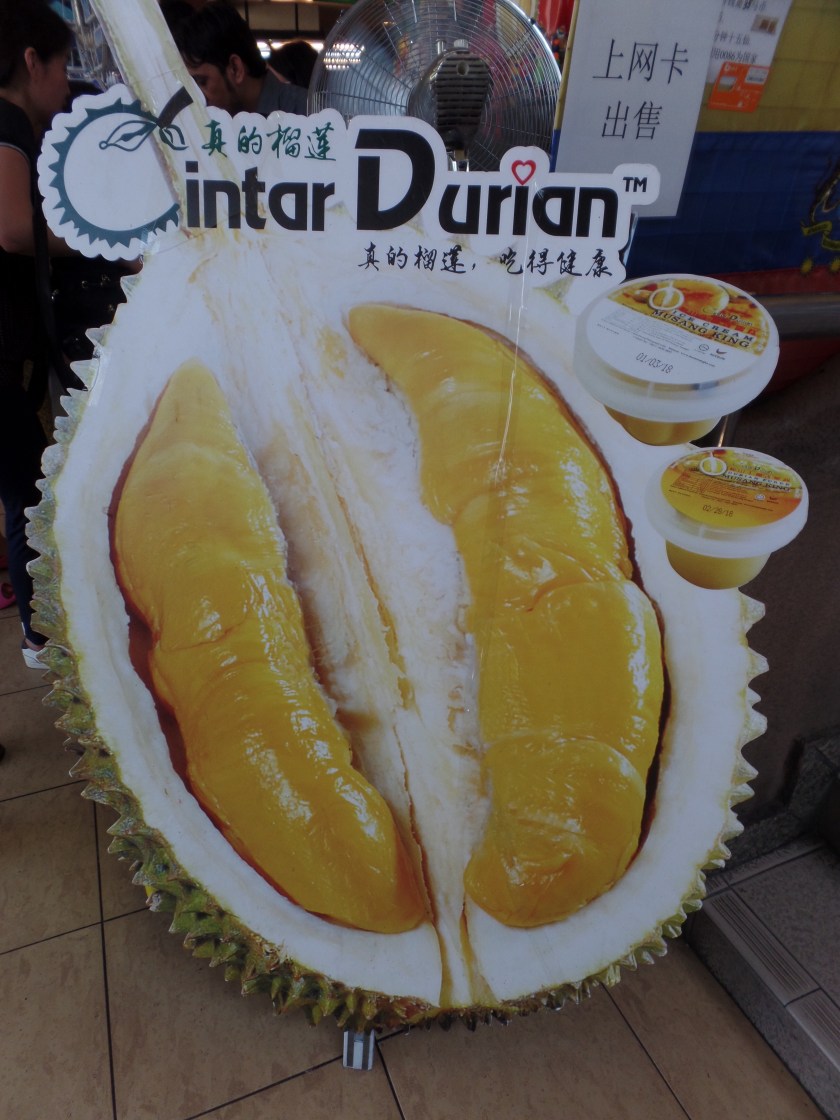
Faced with the choice between visiting the mosque and:

We went for the durian ice cream.

While the city and its buildings were very beautiful and dramatic the city seemed to suffer from the problem not uncommon to cities designed to impress- they are more lovely than liveable. The streets are so wide, the buildings so big and widely spaced that there are no people out and about. And it’s not just a question of the heat. Kuala Lumpur may be noisy, crowded and dirty – but it is alive!

A golden city

Myanmar – a mysterious and controversial country. When we passed this way five years ago it seemed like the country was just beginning to open to tourism on a larger scale. This time we stopped for three days/two nights. There are several crew members from Myanmar on board who were excited to have a day off at home. And a new fellow joined the restaurant crew – his first time away from home. He admits to being a bit homesick.

We sailed up the Yangon River to the port of Thanylin. The river has a tidal drop of almost 20 feet. The port can handle big ships, but there is a lot of time spent making adjustments to the boat’s position. For us that meant moving the gangway every three hours or so. The people on deck three spent a lot of time looking at the side of the pier as they were below the level of the pier when the tide was out. The port is about 10years old and has no facilities for passenger ships, so on the bus for us. The port is not that far from the city, but the ride can vary from 60 to 90 minutes. For us it was 90 minutes – busy Friday morning.

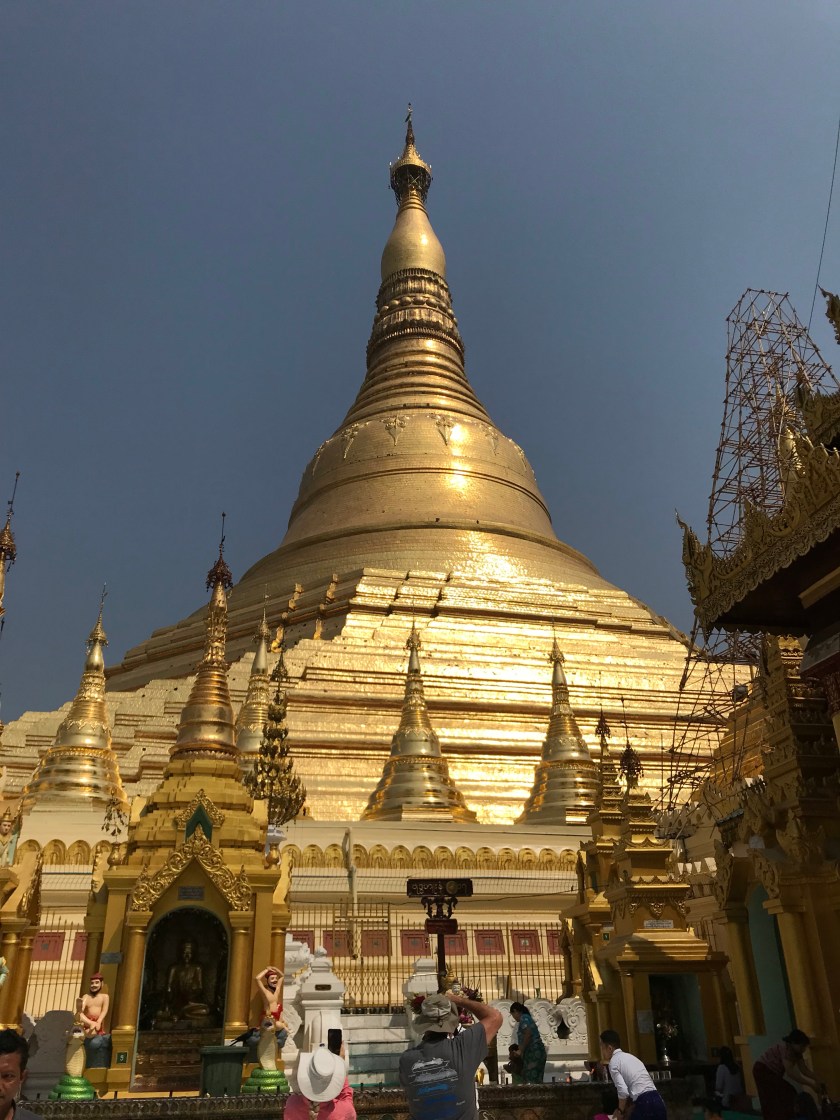
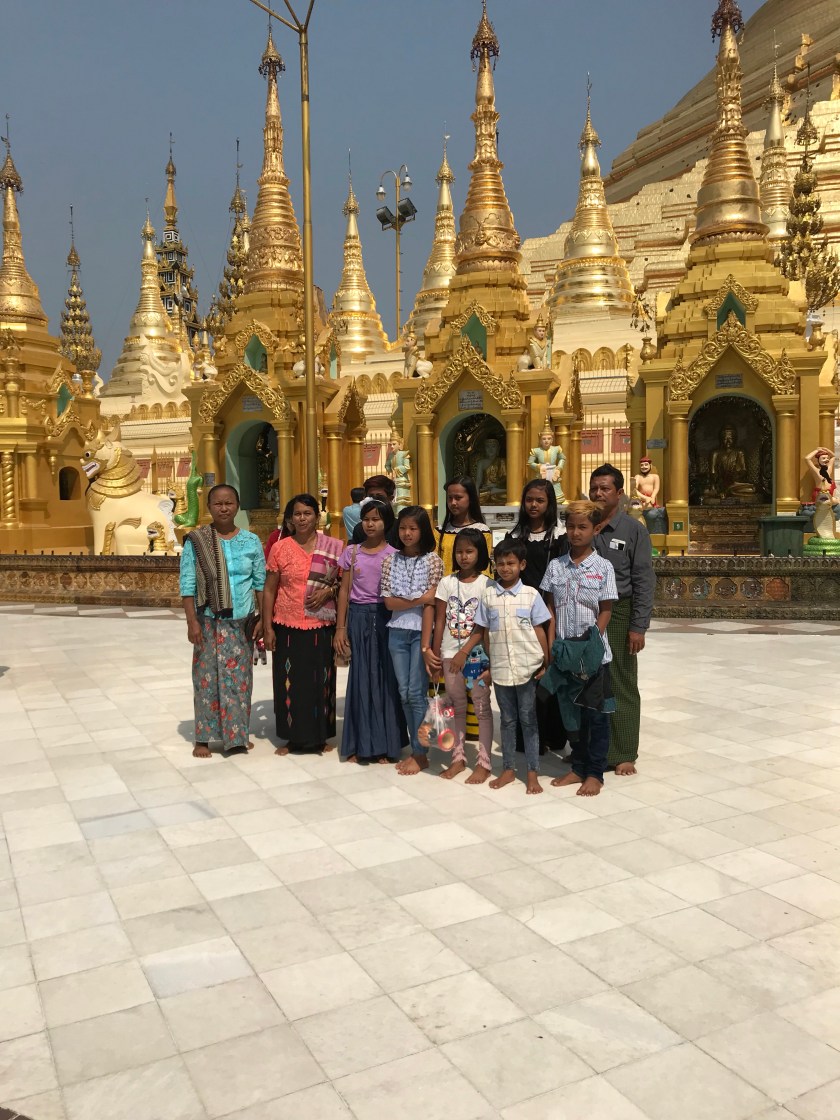
Our first stop was the Shwedagon pagoda complex. Turns out ‘shwe’ means golden in the Myanmar language. Good description.

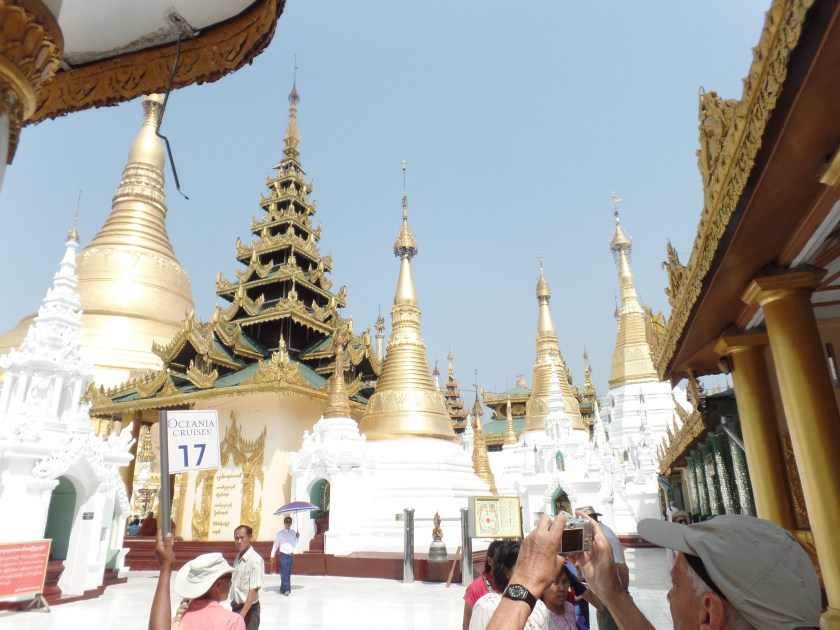
Each country we visit has a different expression of Buddhism- things seem quite complex here. The pagoda complex is huge with stupas and temples and miles of marble walkways. No shoes, no socks. It was good that we were there before it got really hot (topped out over 40C that day)

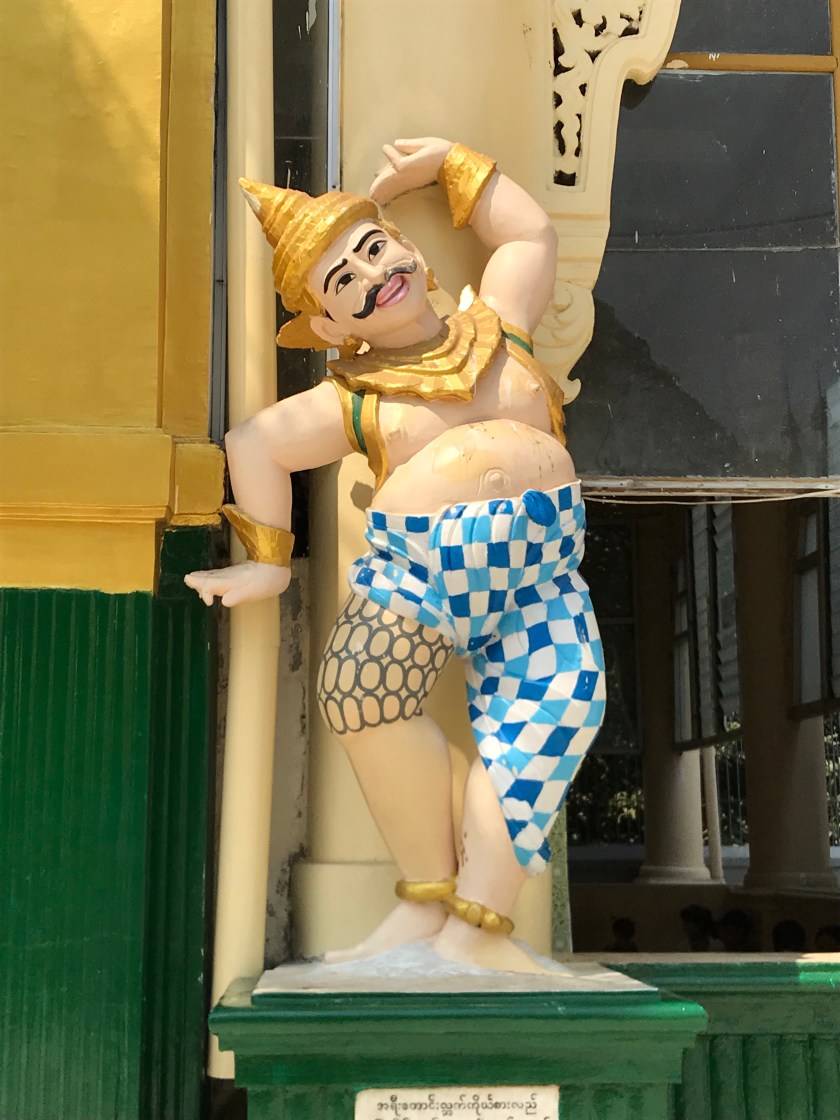
So many things to see :

After visiting the golden pagoda we went to see another Buddha- this one a giant reclining Buddha who lives in a huge house, surrounded by hundreds of smaller golden Buddhas.

We had time on our own on our second day, so back on the bus (being the weekend it was only an hour each way!)

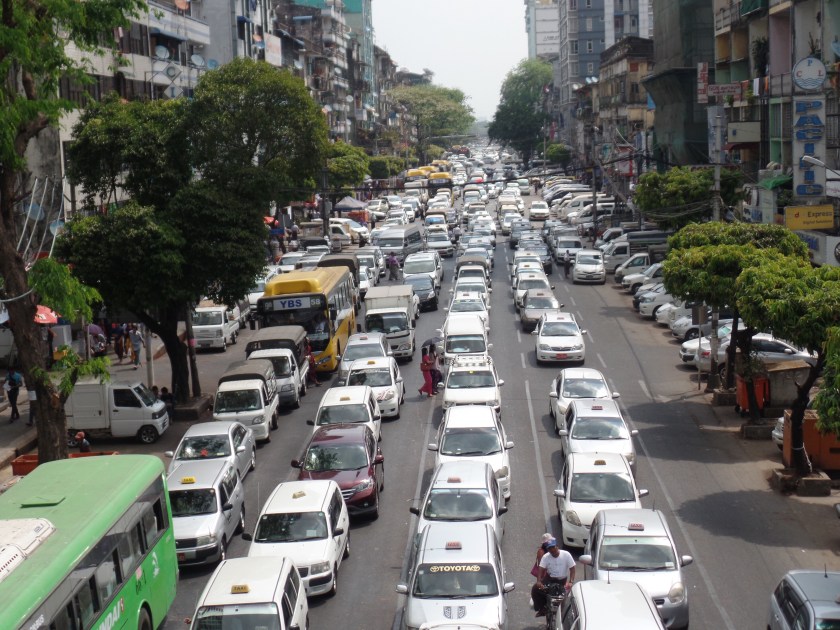
With the help of a local lady we managed to cross that sea of traffic.

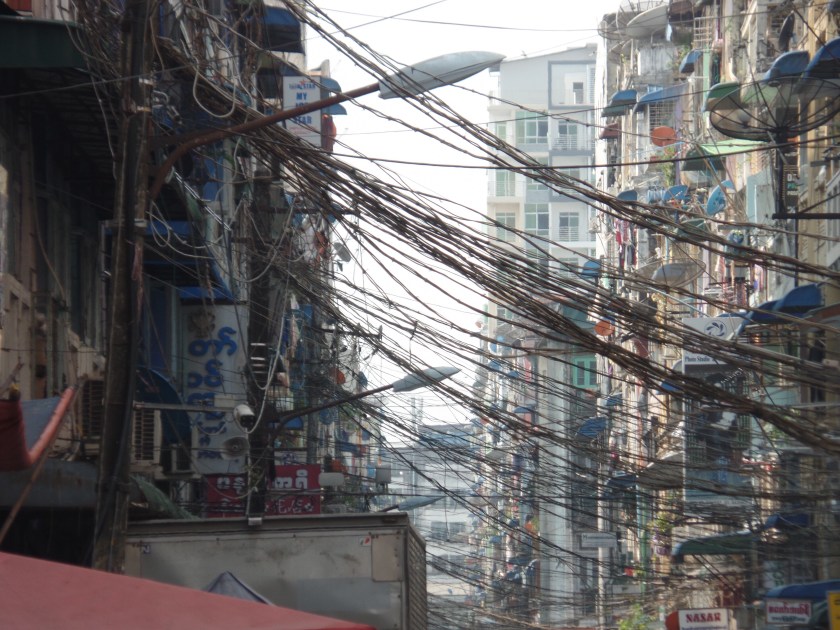
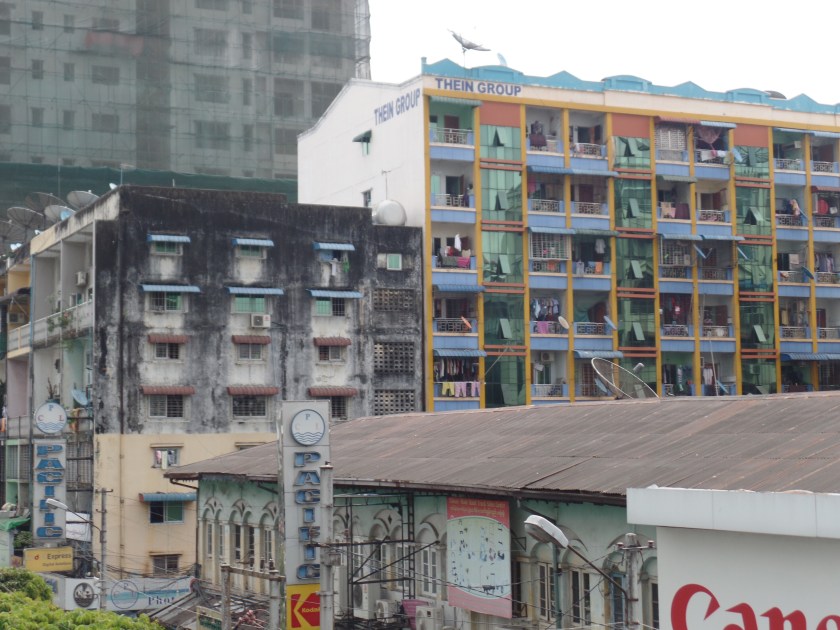
The combination of the heat and humidity mixed with the pollution means that the buildings very quickly start to look beaten down. The air quality was very poor- when we got back on the bus after our touring we were given damp cloths to cool ourselves. It was shocking how dirty we were just from walking around in that air. And sweating. A lot!

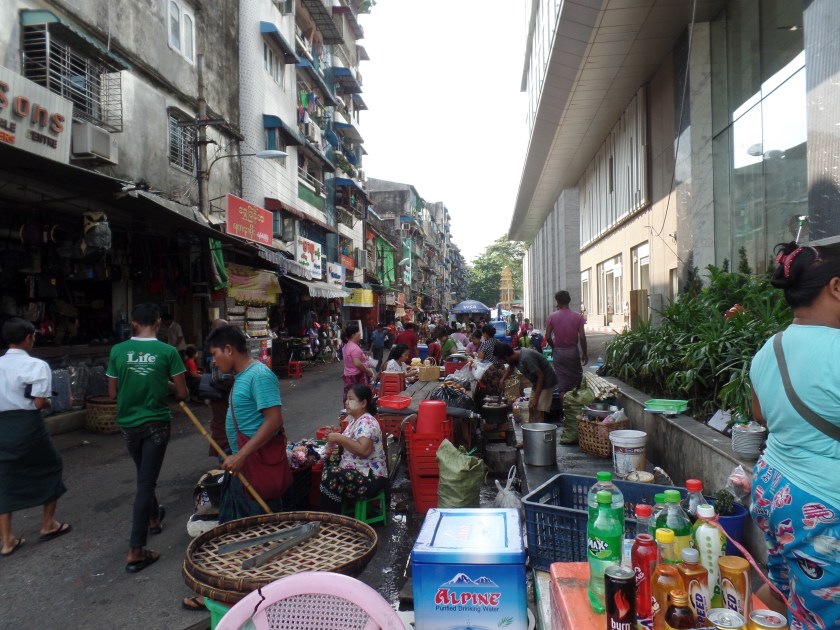
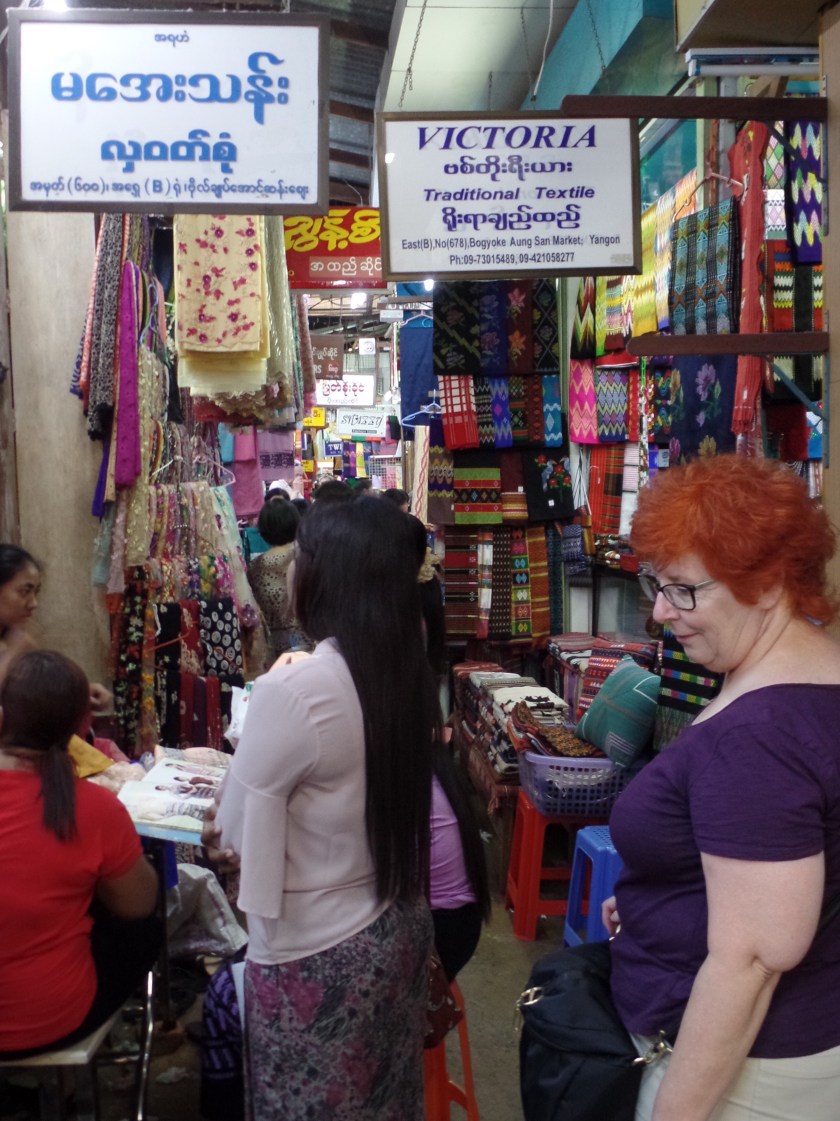
We shopped at the big market

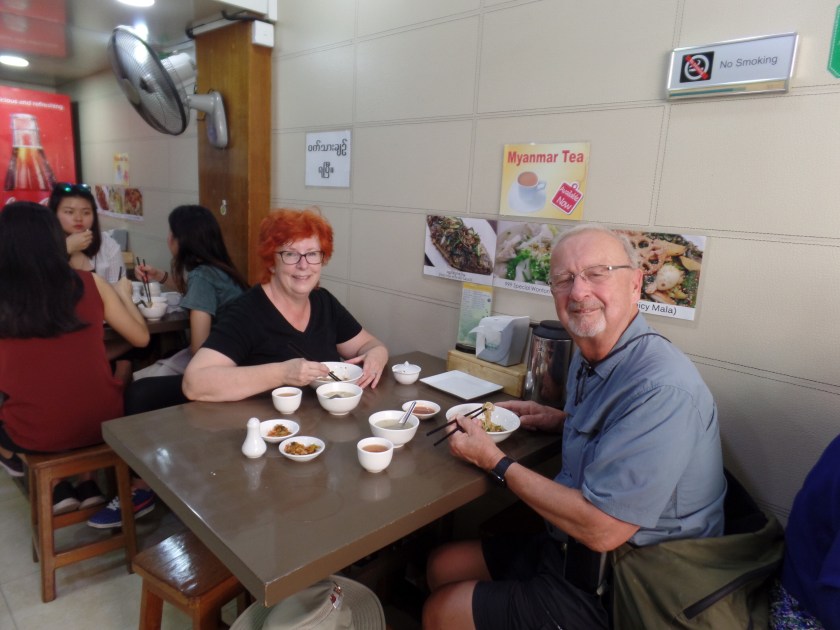
But mostly we wandered and saw what the local people were buying and eating. We didn’t think street food was a good idea, but we did have a very good noodle lunch in a tiny little restaurant.

I think we may have to go back.

Hello again Cochi

Five years ago we cruised the Indian Ocean, and one of the highlights of that trip was the excursion we took out from Cochi, India. The river that empties into the ocean at Cochi takes a long and wandering path across the flats and we took a boat tour of the meandering waterway. It was a long and interesting day and we remember it fondly. This time around we decided to visit the city. The Portuguese came this way in the 1500’s and found a small Jewish population in place back then. Over the many centuries the western powers have passed this area amongst themselves until Indian independence. This has meant that there is a higher than usual percentage of Christians in this state, both RC and Anglican. And many churches that day way way back. There is also a collection of synagogues. And in a typically Indian way they are all scrambled together, so the churchyard over looks the temple and the mosque is in the background.

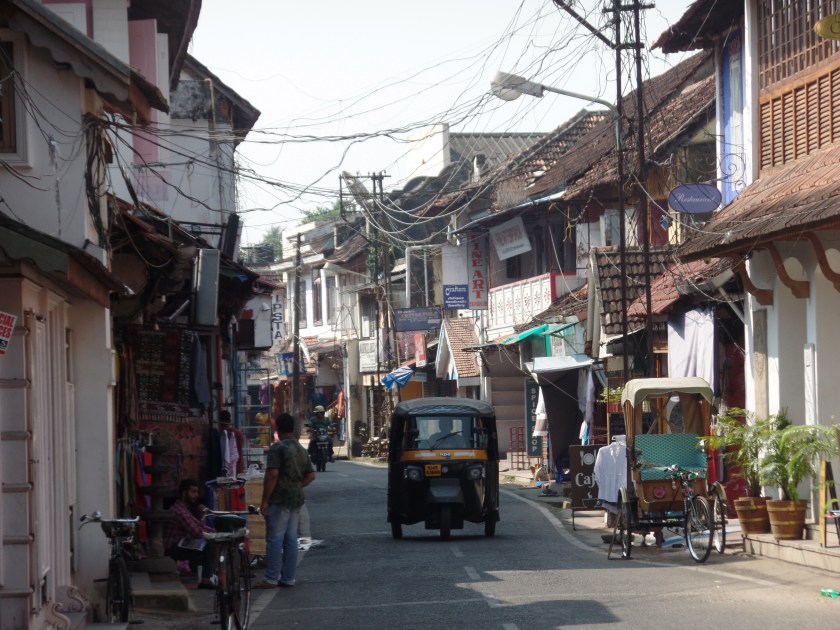
Our tour began in the historic Jew Town. Writing that makes me uncomfortable – couldn’t we call it the Jewish Quarter? As you can see the streets are narrow and lined with little shops. There was a lot of pent up shopping demand regarding Cochi – the word was this was the place to buy clothing. And everyone is getting pretty sick of their own clothes by now. The round the world people must be really feeling it. (Dinner that night was a bit of a fashion show!)

There is a very old synagogue in this area. There are no longer enough people to constitute an congregation, but the synagogue is endowed and is used for special occasions.

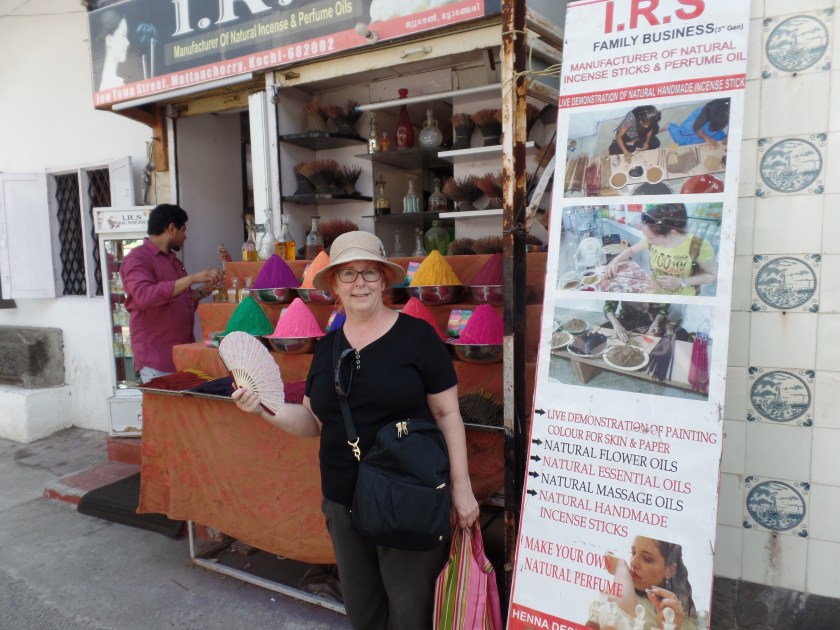
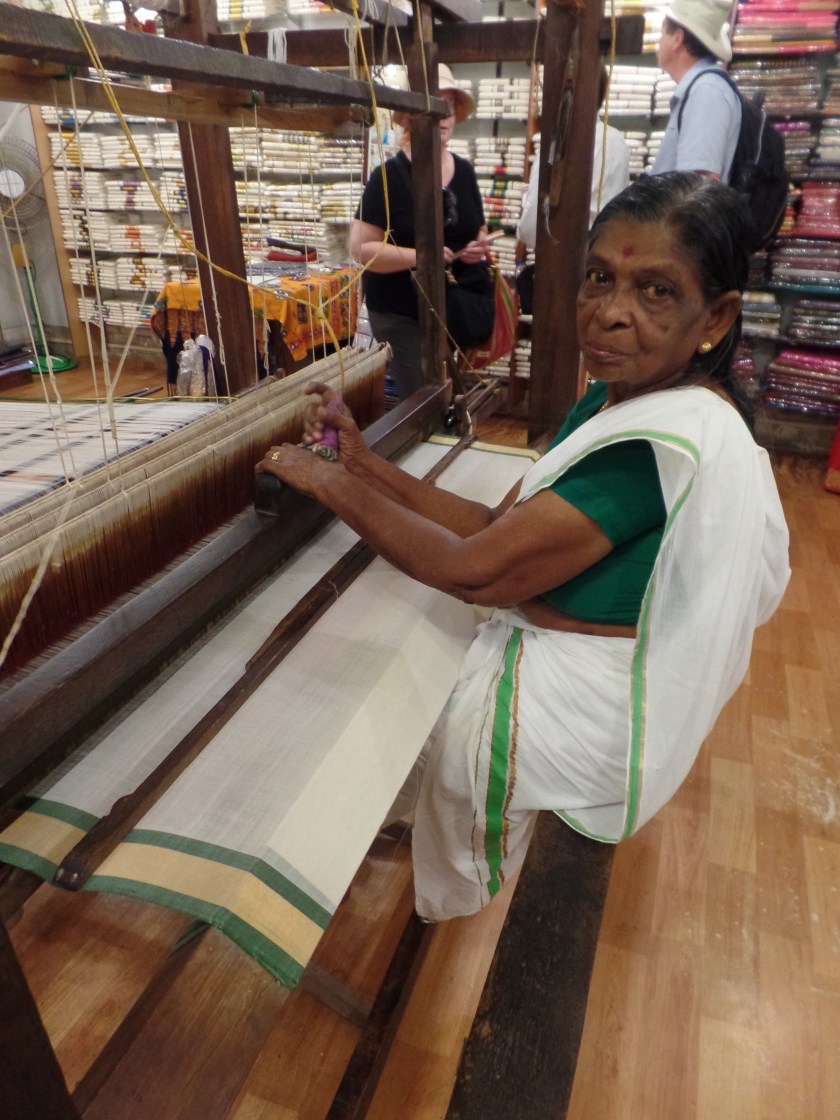
As we walked along the street members of our group would be darting in and out of the shops, emerging with bags.

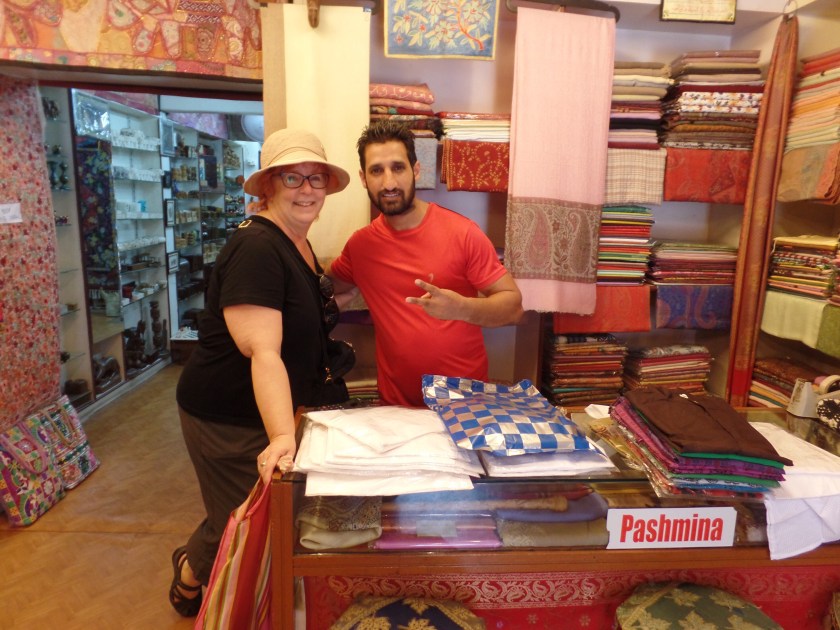
We were the first customer of the day and he had our purchase bagged and ready to go before the picture was taken. And no, I didn’t buy another pashmina! A tea cozy shaped like an elephant to remind of us our trip.

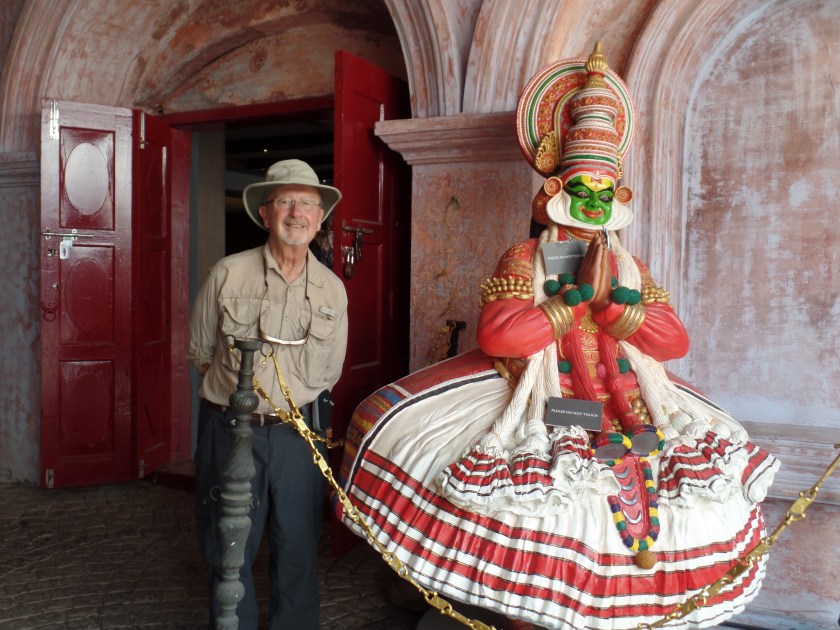
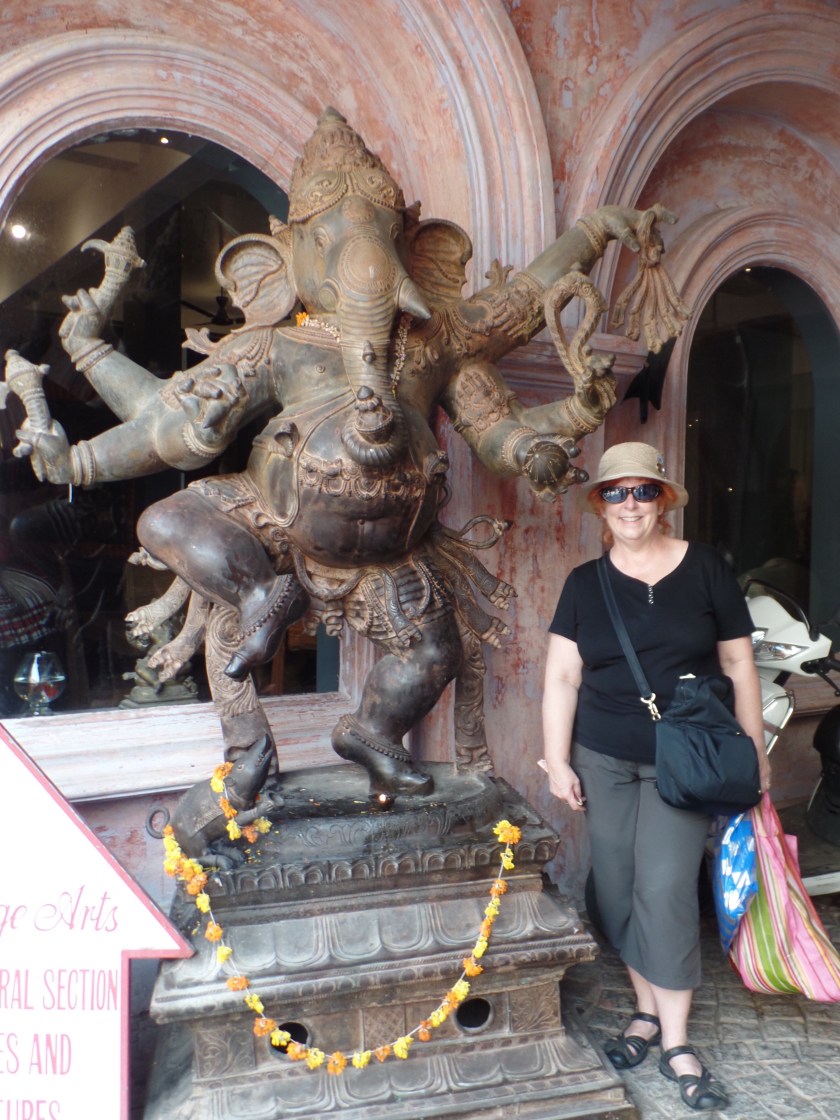
Aren’t these two statues great? No way to get them in the checked luggage, however.

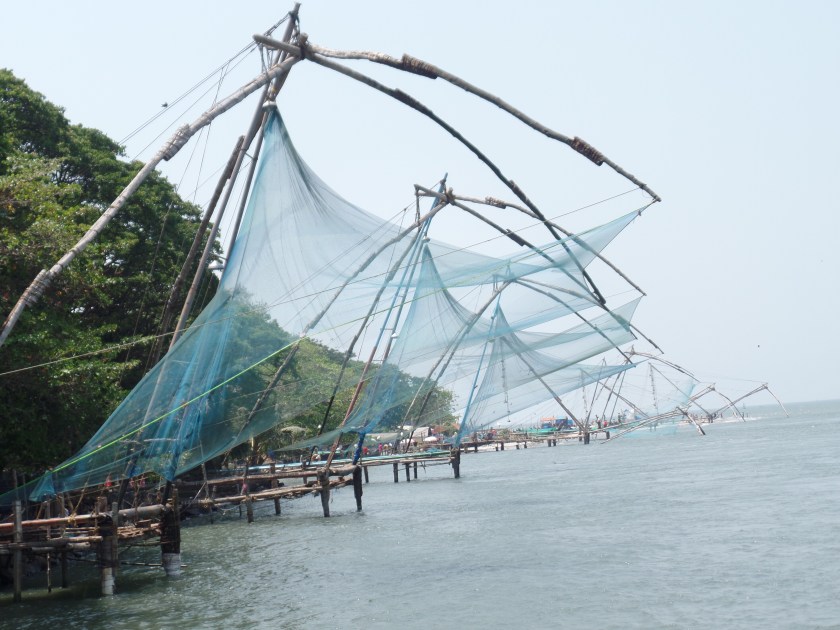
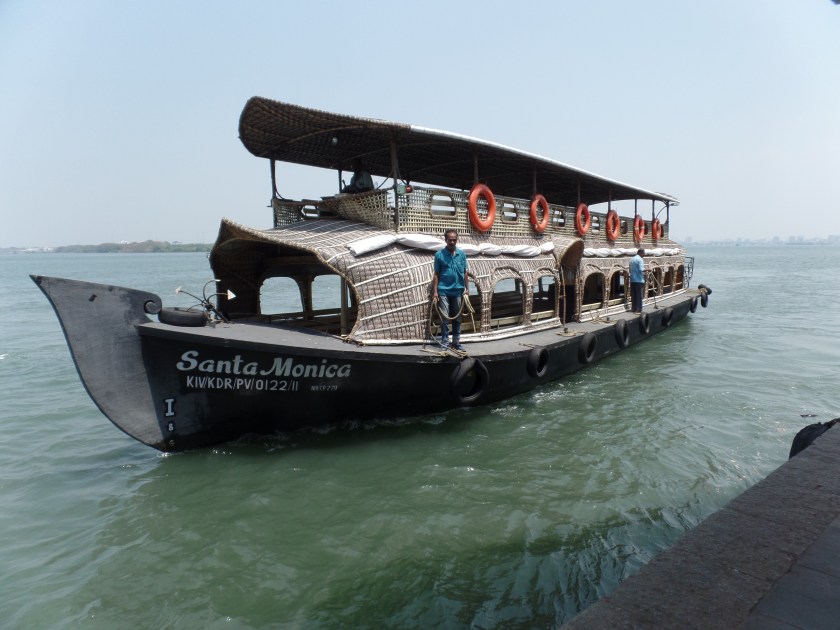
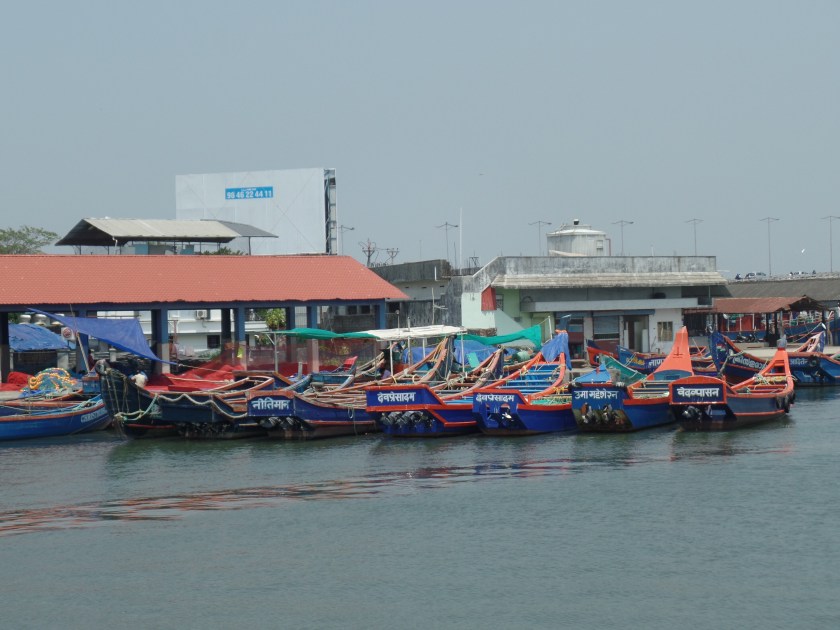
The second part of the tour involved a walk along the shore to see the fishermen, their nets and stalls, ending with a boat ride in the harbour.

There were hundreds and hundreds of these boats. It was Sunday, so many of the fishermen were in port. Apparently there are 4000 or so of these small boats in this area. And the fish processing plants and ice plants that support them. A large part of what makes this area work.

Both Mangalore and Cochi did not look like the scenes of poverty and despair that we often associate with parts of India. Both states have over 90% literacy and are relatively prosperous. One thing that we didn’t see in either place was begging. Of course we didn’t see everything and life is very difficult for the rural ( and urban) poor. These two ‘small’ states (each of which has a population greater than Canada!) do seem to be making progress.

City of industry

It is entertaining to wake up, open the curtains, and see what new place we have arrived in. Sometimes we are far from the action, other times we are in the thick of it. When we opened the curtains in Mangalore, India we were greeted with – industry. Piles of coal. Steel mill. Cement factory. And of course any time you have piles of coal around – dust. Things looked rather grubby and beat down.

We had a tour booked – a short one. Usually when the tours in a big city are all short that means there is nowhere that the cruise line feels is acceptable to take us for lunch. In this heat we’re feeling that shorter is better, so we were good with a short visit.

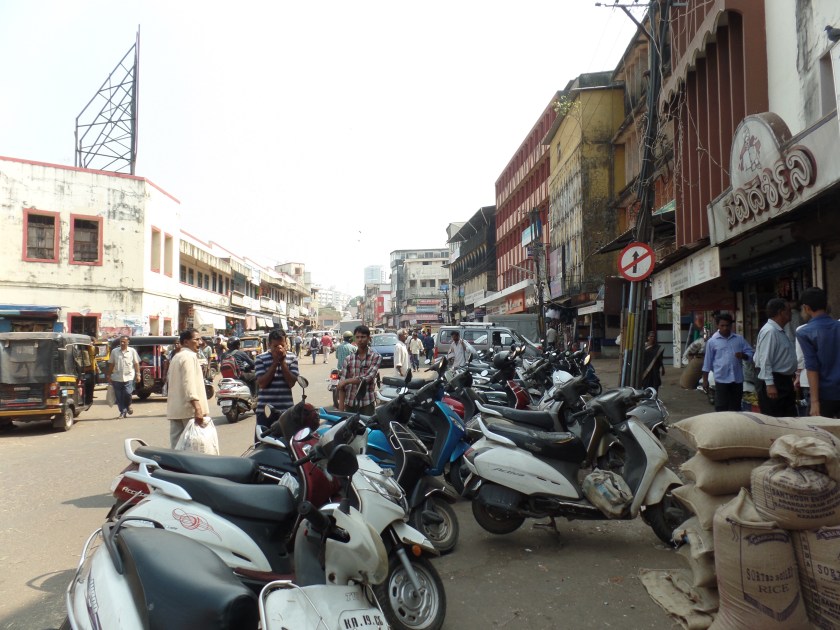
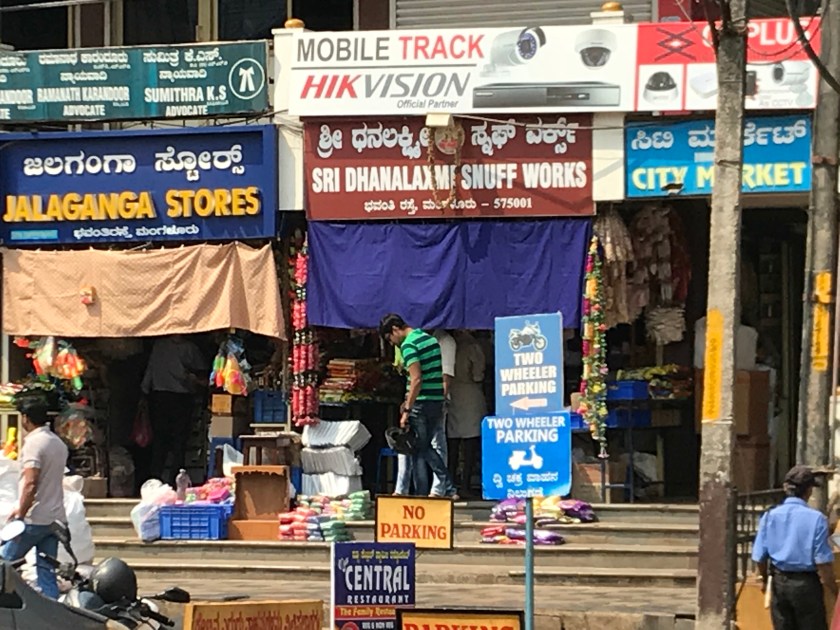
Mangalore is a busy place. There were the usual vendors at the port, but once we were out and about very little obvious tourist infrastructure. The city looked better than the port.

Our first stop was a house from the English colonial period. Somehow the house has survived and has been lovingly restored and tended by the current family, who raised their family there. We had a chance to meet the owners and tour the house. It was very nice and very interesting. Especially the kitchen. When they bought it after the war there was a hearth and fire in the floor. Now it has all the mod cons. As you know Indian cuisine requires the preparation of many spices into blends. Someone has to grind grind grind with a mortar and pestle. This house had a mechanized version:

There’s a burr on the top – he is holding a coconut in place. Once the meat is ground out he puts it into the bottom portion where the coconut and spices are ground round and round and round into a paste.

Back on the bus and off to the fruit and vegetable market. We passed the fish market but our guide said we wouldn’t be stopping ‘Odour is very bad’. Hard to argue with that!

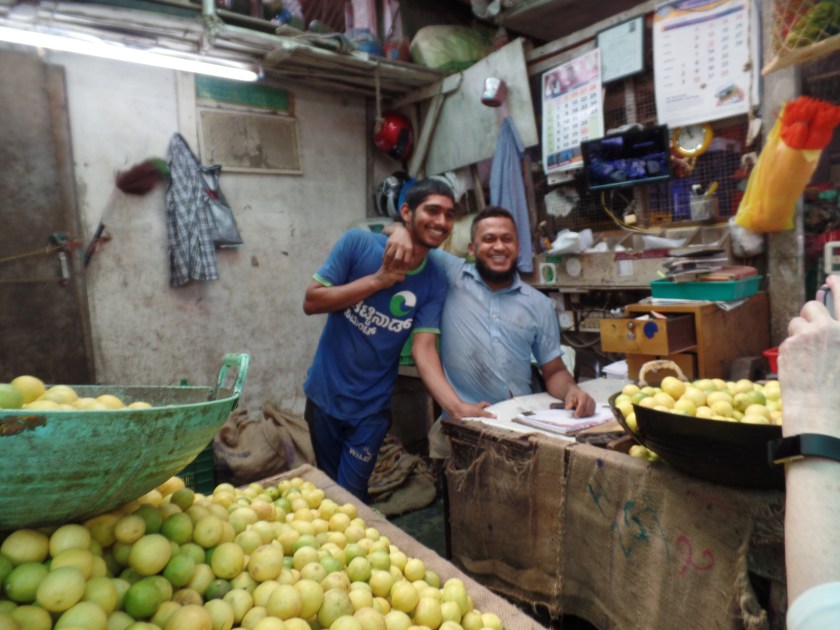
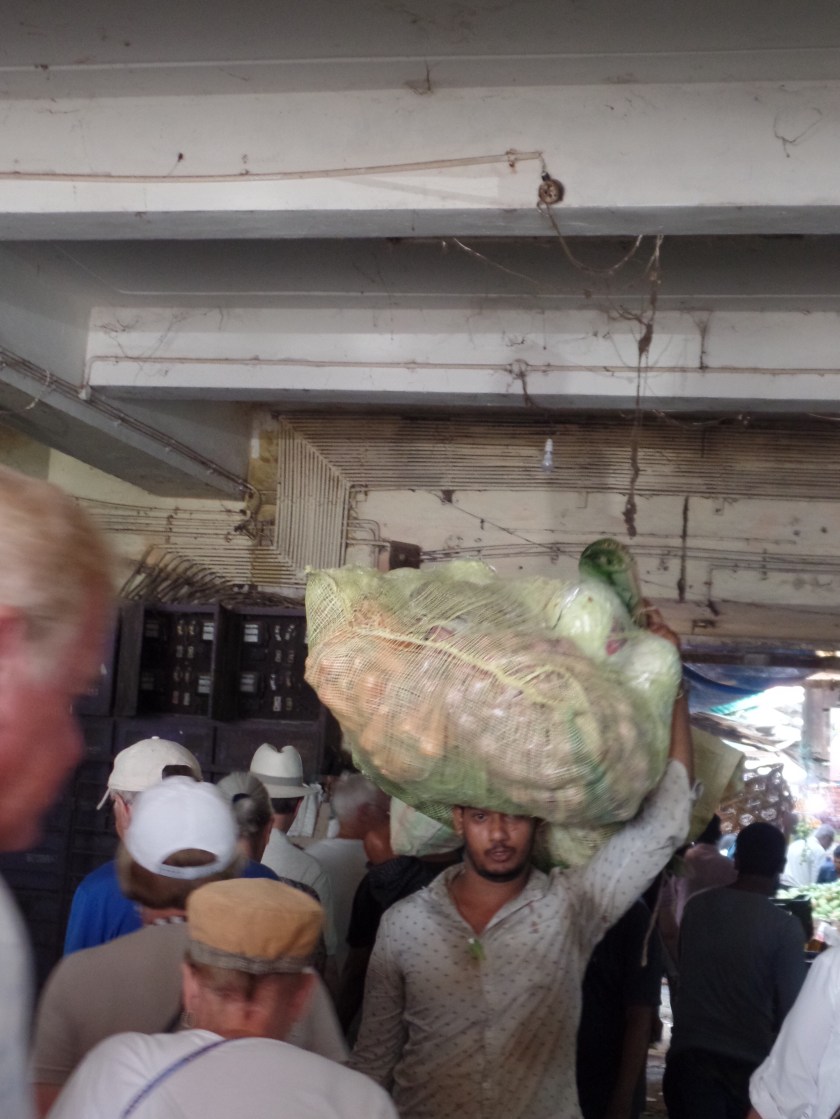
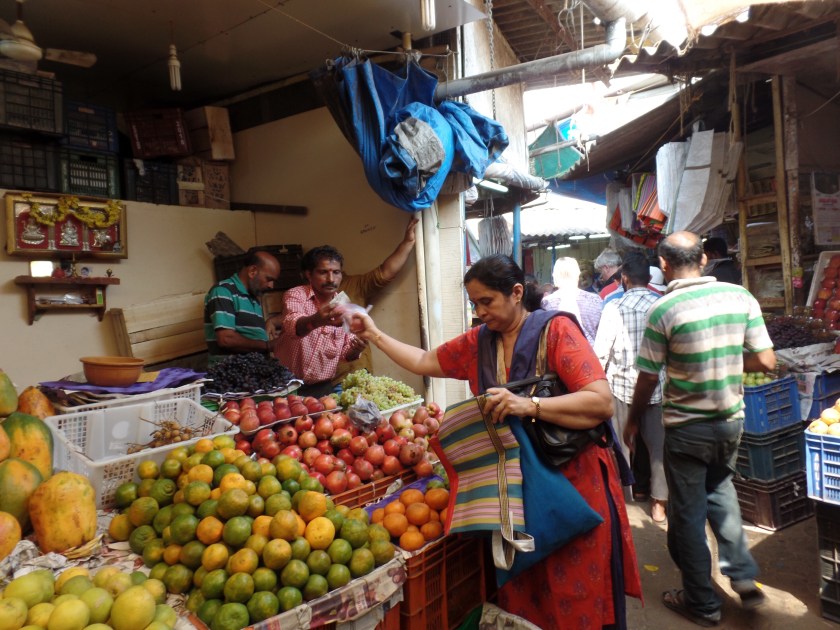
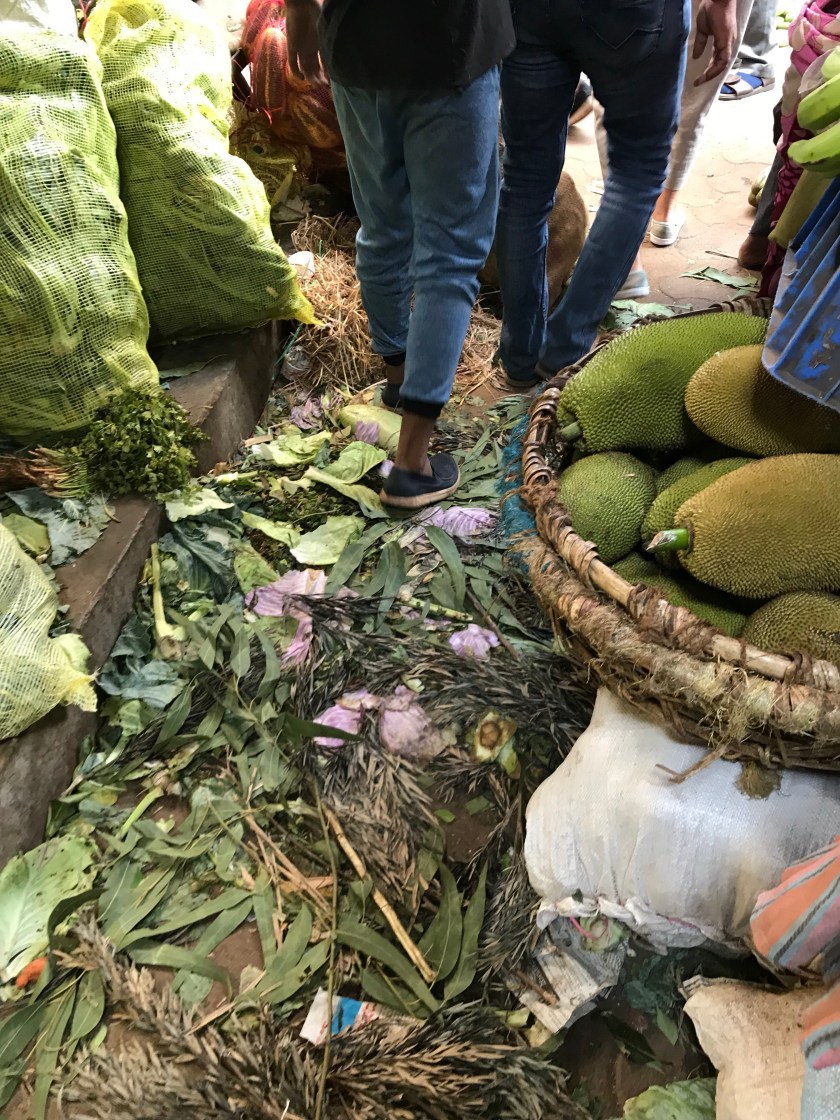
It was interesting to walk through the market – so many unfamiliar and interesting fruits and vegs. And so many kinds of bananas!

The souvenir sellers in India can be very aggressive. It is hard as a tourist to be in refusal mode most of the time. This was a tour where I felt like we met more of the naturally open, friendly, kind people of India. They knew we weren’t going to buy 25lbs of bananas and a durian fruit. They welcomed us, asked where we were from and tried to make connections. A good memory!

Malé is a mystery

Of all the places I never expected to visit once, let alone twice Malé, Maldives may be at the top of the list. And yet, there we were. The island is less than 1 kilometre square and sits on a coral atoll that has been added to over time. Officially around 60,000 people live there, but apparently everyone has a brother or a cousin staying so the number may be as high as 100,000. How does this work?

Since we were by last they have added a lot of high rise buildings and way more scooters. There are not that many trucks or cars, but thousands of scooters. In a place that is 1km at its widest point.

Most tourists beat it to the other islands where the resorts are – there’s not a huge amount to see and do in the city. Fish market….

But as we were walking around we kept wondering about things. Where does the water come from? Where is the sewage treated? How and where do they generate electricity’s? The next island over has the airport and industrial concerns. I assume that is where the infrastructure is and stuff is piped to the other islands – there were blue pipes along the curbs on most of the tiny twisty streets carrying something. I gather that the country is a transhipping port as it lays in the big shipping lanes – east west ships drop off and pick up cargo that is travelling north, so that is one way they make money. And tourism, of course.

Behind the national museum there was a park – the Sultan’s Park. I don’t remember it as being anything special, but in a concrete island it was one speck of green. In the ensuing 5 years it has been completely redone and is quite spectacular. I was particularly intrigued by this structure:

This looks like the work of Toshiko Horiuchi MacAdam, a Canadian based Japanese textile artist. I could find no attribution, however. Looks like fun, though. There was also this sculpture – a dying tree from the old park was re-purposed.

The sign for the park said it was free for Maldivians. The equivalent of USD5.00 for expats. I didn’t think to much of it – a foreign aid contribution. Reading later I discovered that charge is controversial. Side benefit is making money from foreign tourists. The real target is labourers from India. The old park was apparently where those workers met on their day off. Now they can’t afford the entrance fee and have nowhere to go on their day off. Mine, mine, mine – the same the world over.