If it is good enough for Will and Kate.

Our first stop after leaving Africa was the island of Mahe, one of the Seychelles. What a beautiful place! It is different from many tropical islands in that it is not a volcanic remnant, nor is it an atoll. In their long dance across the eons the continents once met here, and when they wandered off again there remained a chunk of granite that has eroded away over the millennia to be the chain of islands that is the Seychelles. There is not the red soil of a volcanic island, nor the flatness of an atoll. Rather the land rises up into huge granitic outcrops, which are draped in lush jungle vegetation. On Mahe there has been a lot of land reclamation to make flat areas – otherwise there is a lot of going either up or down.

Beautiful coral sand beaches, but with granite!

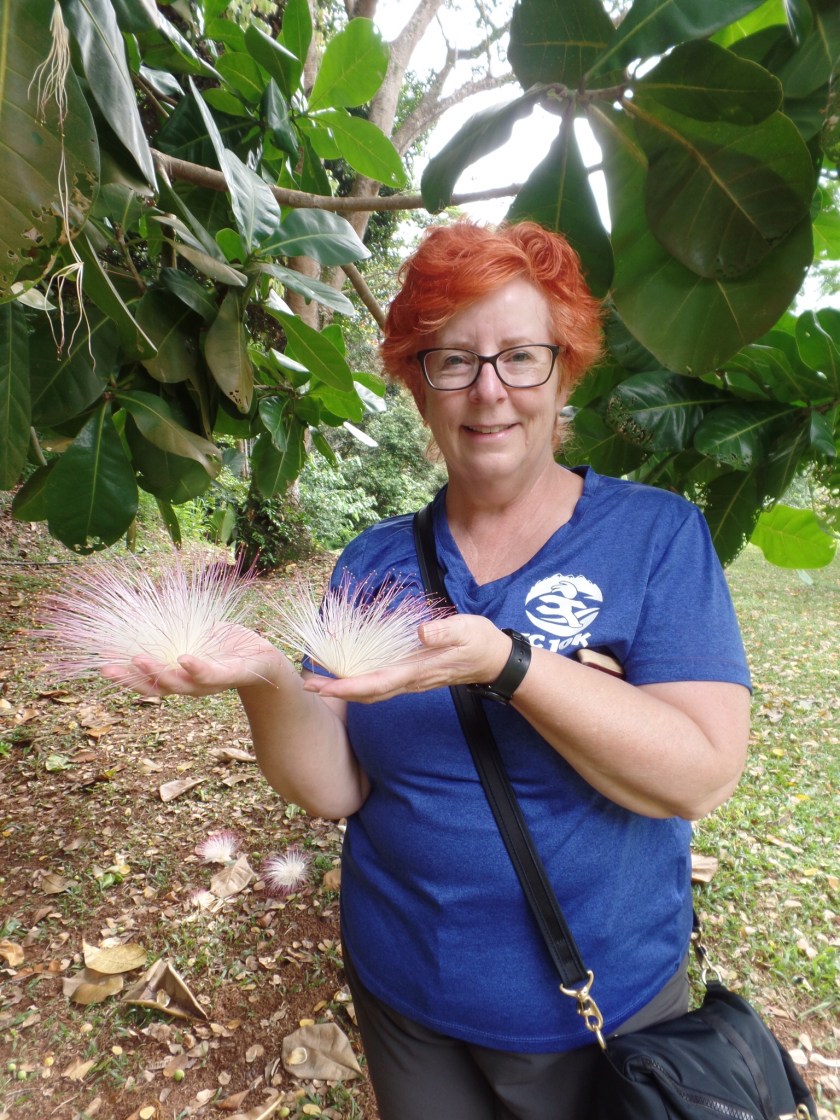
Our first stop was at a spice farm. Where we saw a tree that produced these flowers.

They don’t even look real!

There were some resident tortoises for us to observe, including this somewhat confused guy.

The lady tortoise was in the pond and this guy was climbing aboard anything that had a shell. Guy on the bottom didn’t seem too impressed.

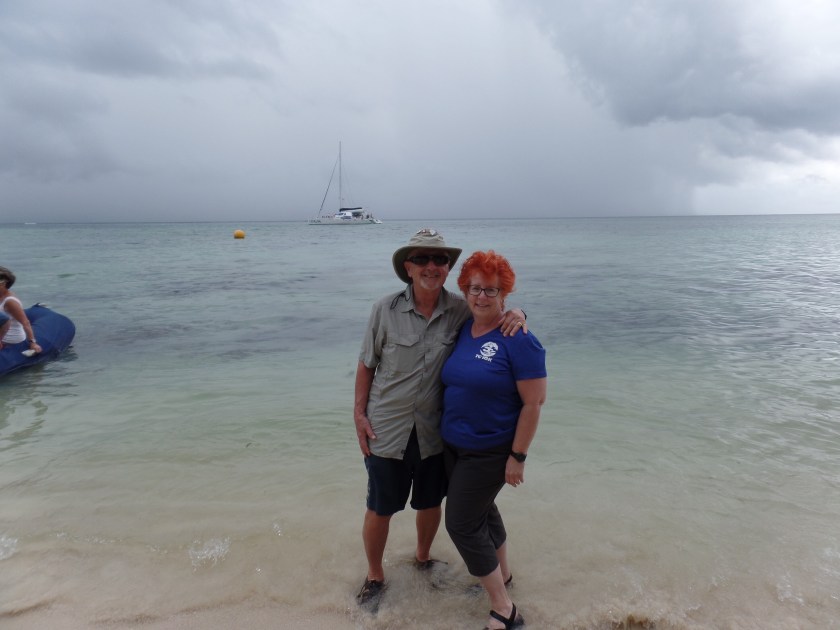
This trip also included a bit of snorkeling – which meant walking into the Indian Ocean to board a zodiac.

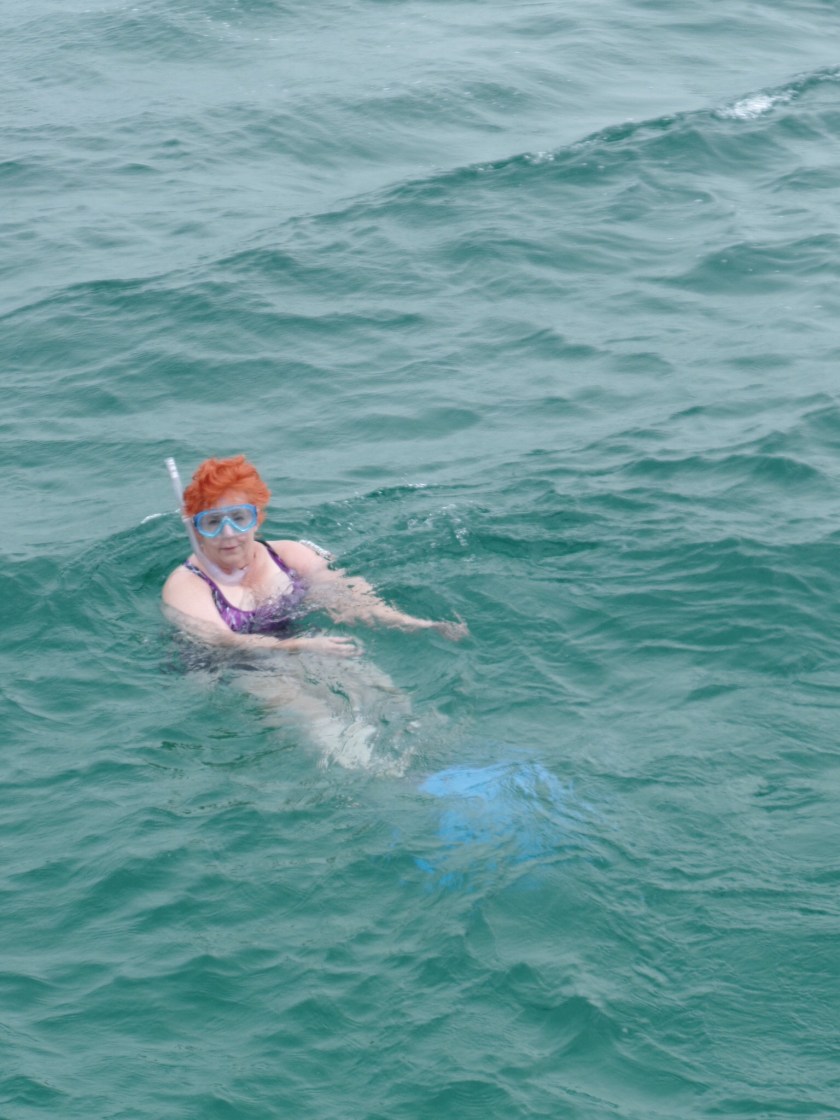
Once on the catamaran I deployed the mask and fins.

A few years back a spell of warm weather raised the water temperature and killed off a lot of the coral. The big resorts and deeper areas weren’t as affected. In this little bay apparently the damage was extensive, but there are signs of regrowth. Where we swam the coral was dead but it was covered in a thick layer of sea grasses and there were fish everywhere. So – not a pristine coral experience but fun snorkeling.

Out of Africa

Back in the day, in the early 1980’s I was very interested in Karen Blixen, her life and the lives of the people around her. I read Out of Africa, and Judith Thurman’s bio of Blixen, along with biographies and auto biographies of her contemporaries. I was thrilled when the movie was made (even if Robert Redford was just wrong wrong wrong for the movie) and couldn’t wait to go see it. Wilf and I went with our friend Elizabeth. A few minutes into the movie Streep recites the opening line of the book I had a farm in Africa, at the foot of the Ngong hills and the tears began. By the end Wilf said he had to wring his socks out with two weeping women on his hands. But – the story, the music, the cinematography!

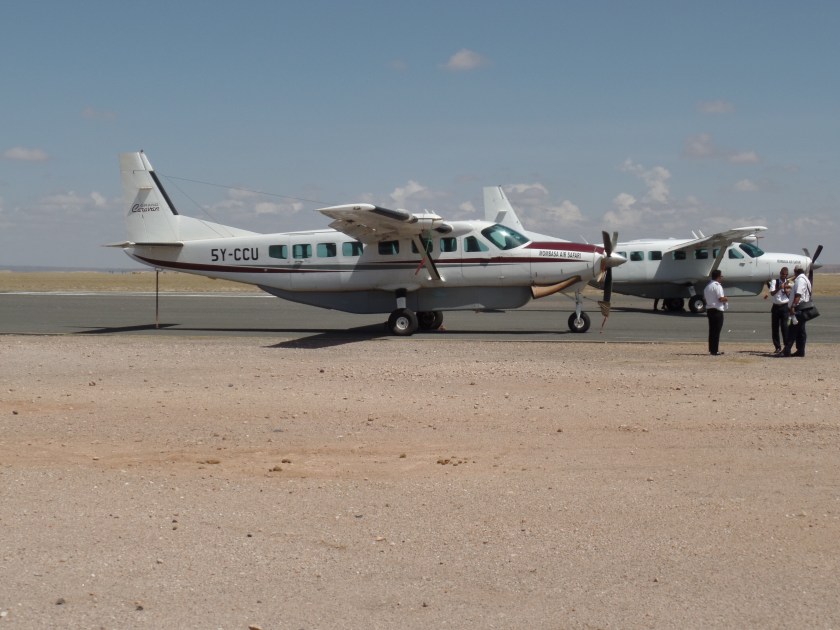
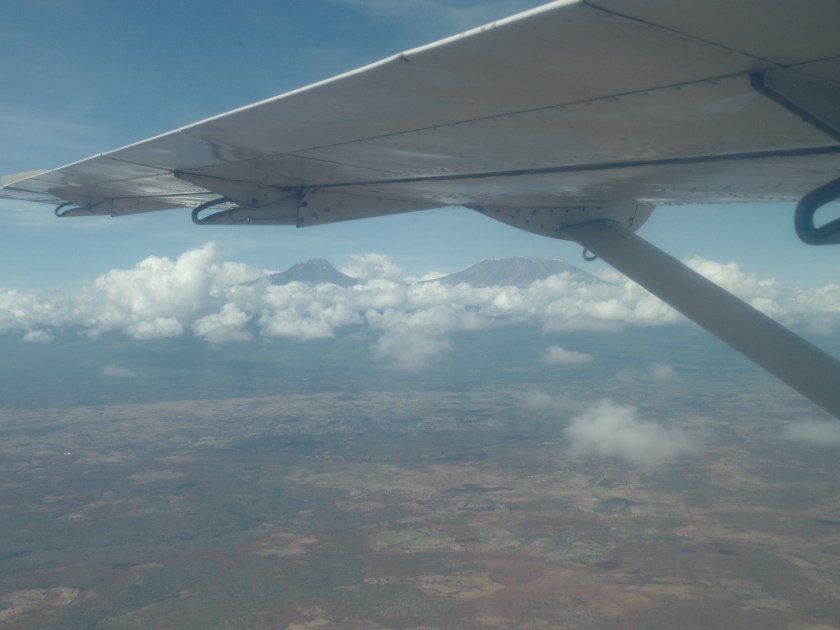
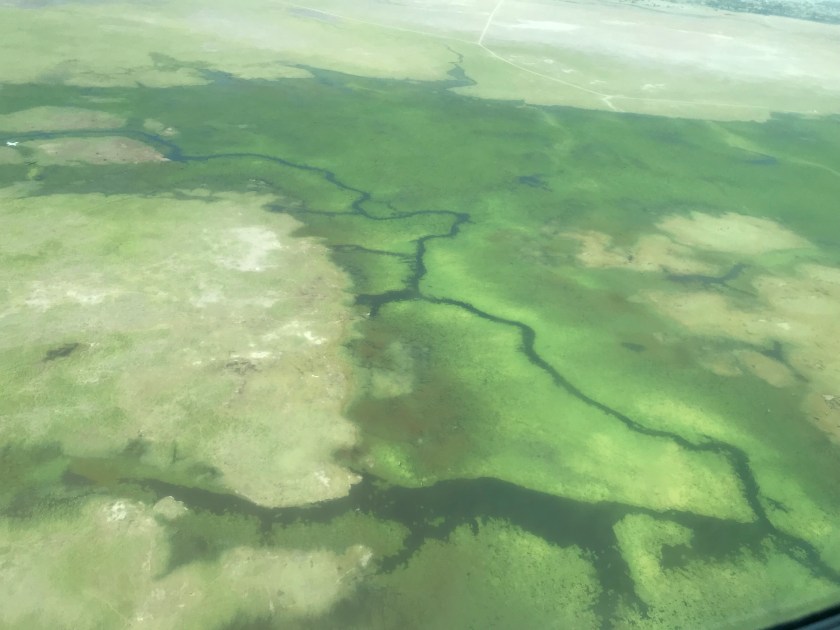
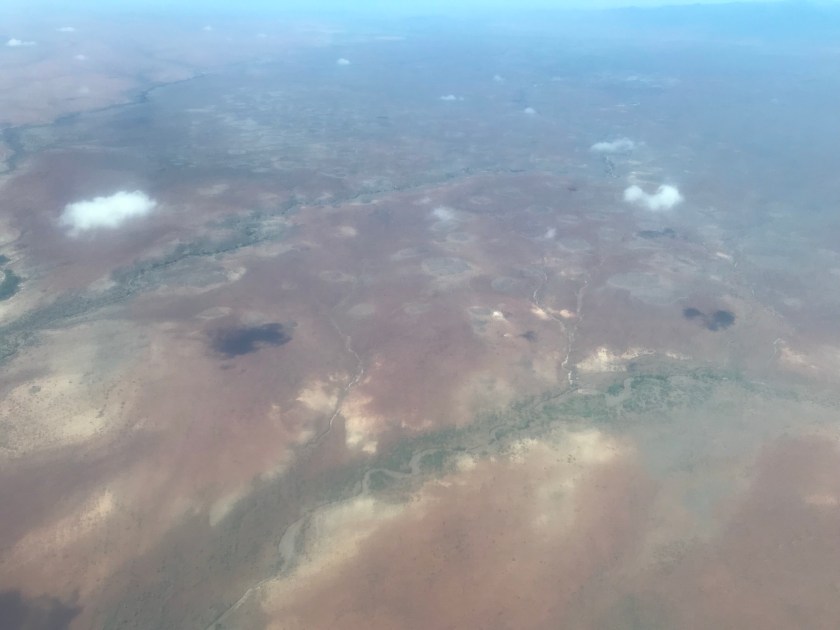
We arrived in Mombasa and immediately transferred to the airport for a very special excursion. We flew to the foothills of Kilimanjaro to Ambolesi National Park.

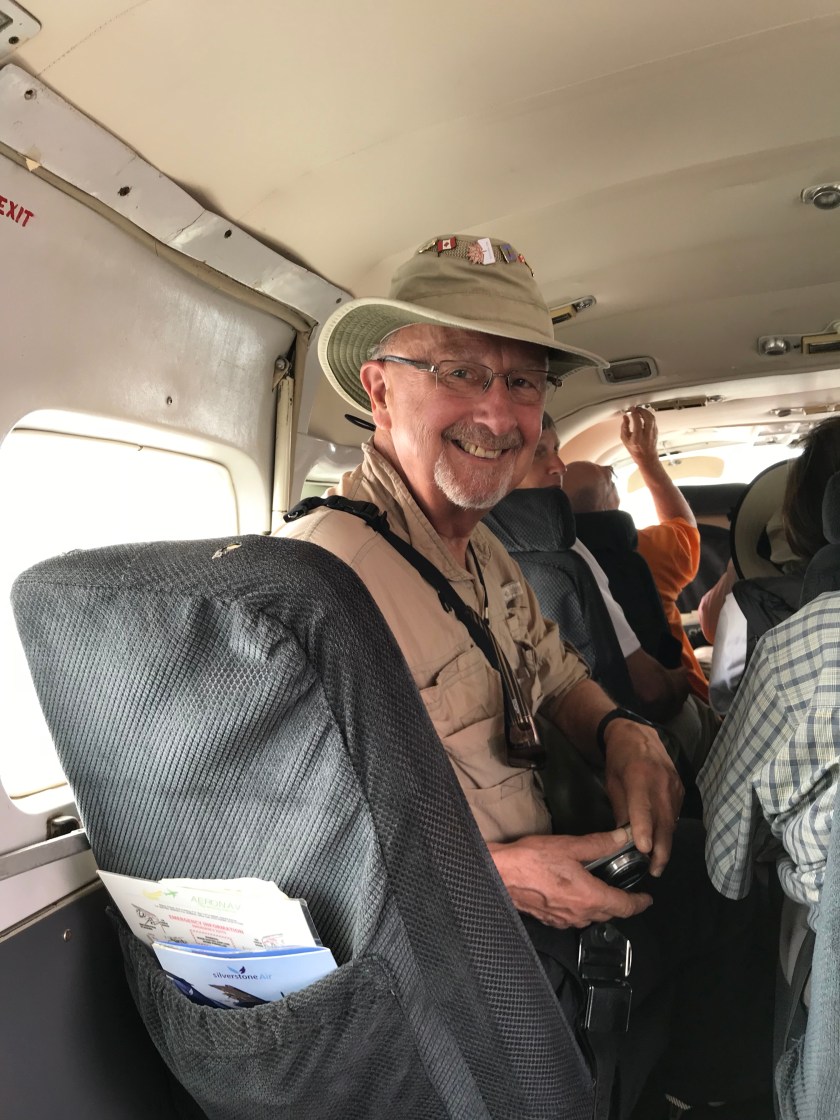
12 person planes

As much of Kilimanjaro as we would see:

SAMSUNG CAMERA PICTURES


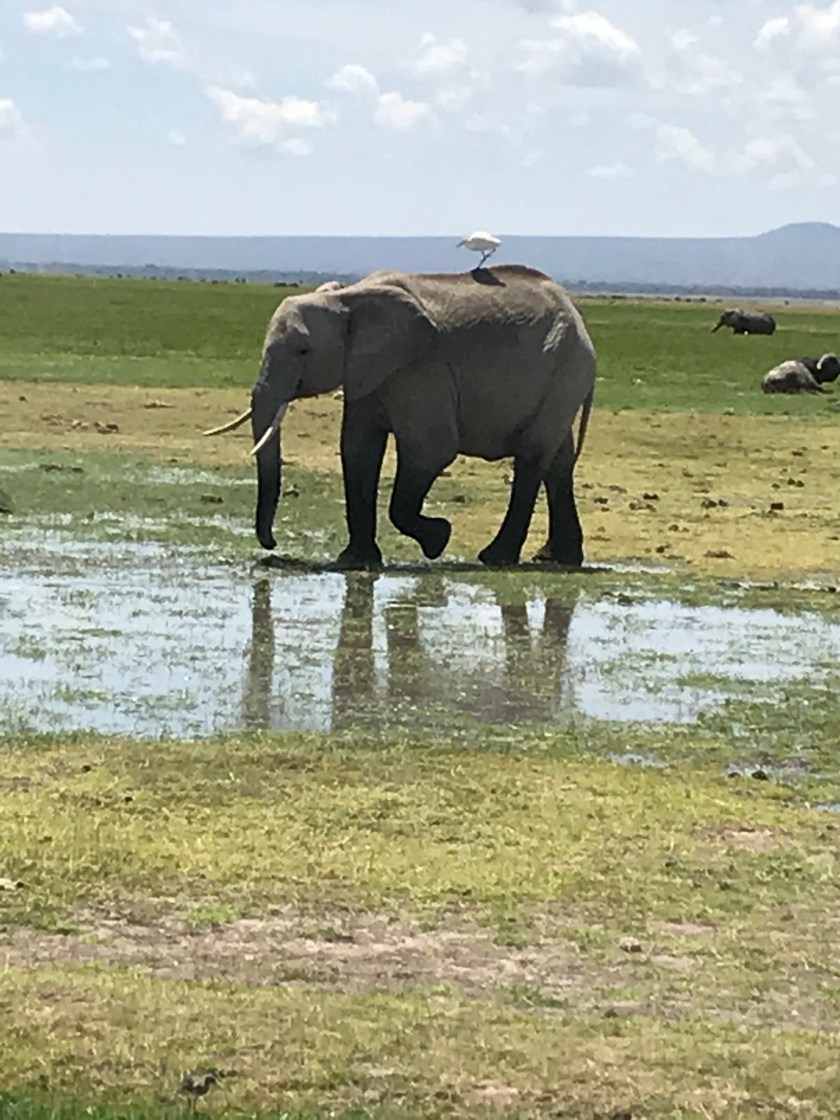
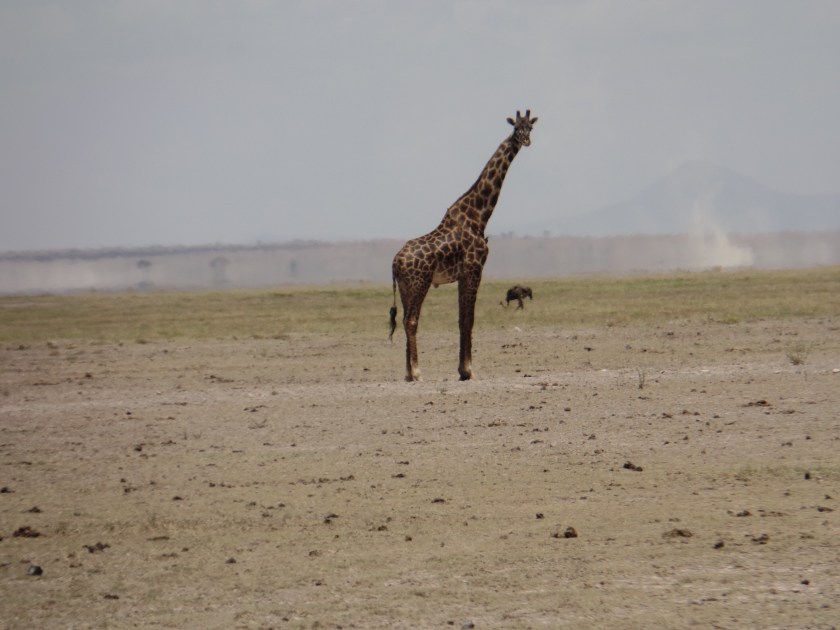
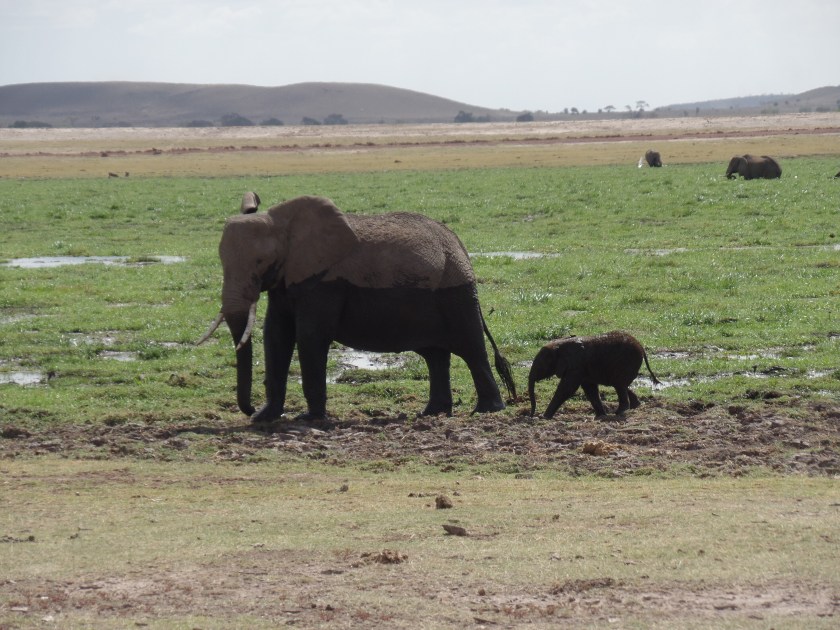
Enough water comes down from the mountain to make permanent water places in the midst of the near desert. As we were coming in to the air strip I realized that what I was seeing below was elephants standing in the water. The flight up was so wonderful and so interesting that I could have turned around and gone straight back. But there was more.

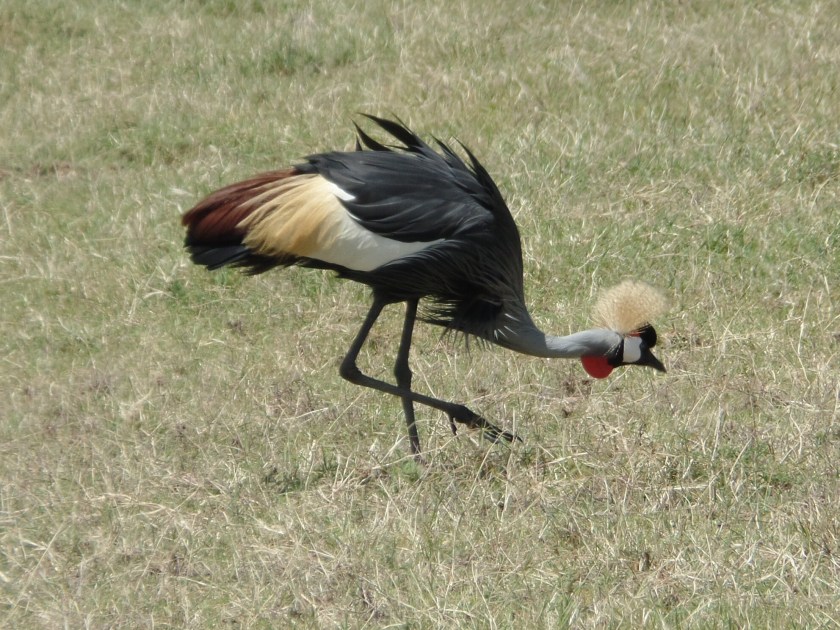
We’ve been so busy looking at the ‘charismatic megafauna ‘ that I haven’t really talked about the beautiful birds. Like the crown bird:

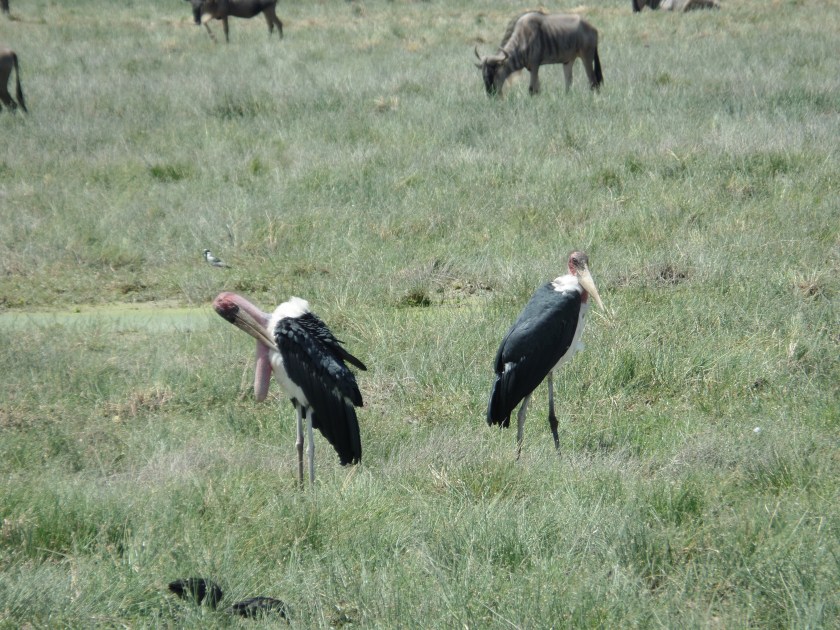
Or the maribou stork

Or all the fast moving little birds. And then there was this guy – who is not beautiful.

Jackal sitting right beside the road, licking its paws. We couldn’t figure out why it was staying put. We moved onto a bridge over a small culvert and then we knew. It’s very dead lunch was tucked away in the culvert. Bad smell.

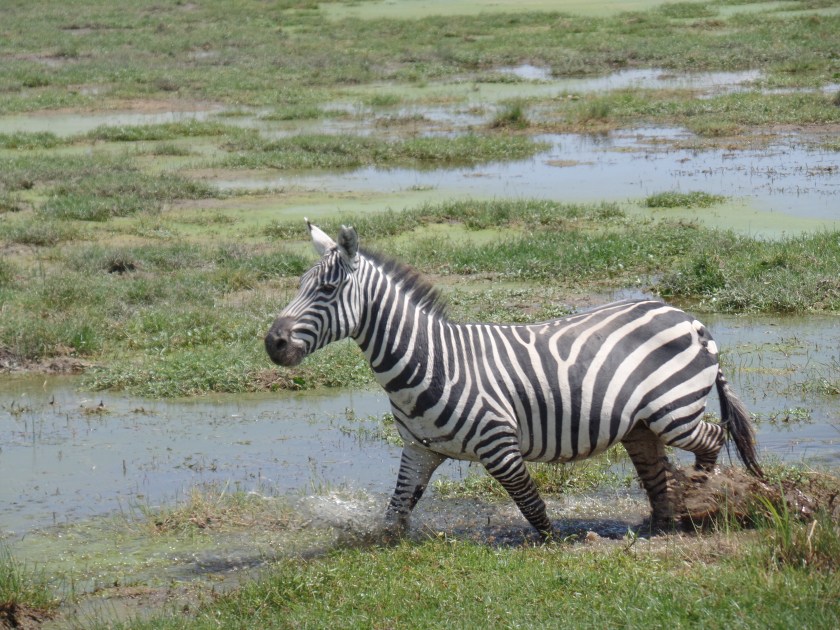
After a lunch and an afternoon drive (it’s kind of embarrassing how quickly ‘oh, another zebra’ sets in) we flew back down to the coast.

It was a wonderful day and I can’t tell you how lucky I feel to have seen it all.

The next day the afternoon movie was Out of Africa. I was a little worried – what if it didn’t stand the test of time?

I needn’t have worried. When the lights went up there wasn’t a dry eye in the house.

Front row seats

I, for some reason, am interested in container ports. I like the look – the repeating patterns of the stacks of containers, the lines made by the cranes, the colours, all of it. Usually container ports are busy but quiet, things happening without commotion but with intention as trucks come in and out, containers are loaded and unloaded and everything happens as it should. When we opened the curtains in Zanzibar, however we hardly knew what we were seeing. Chaos. Confusion. Mess. People. Shouting. But we had a tour to take so off we went. When we returned, slayed by the heat, we went up to have lunch. We found a table by the window and tried to sort out what was going on.

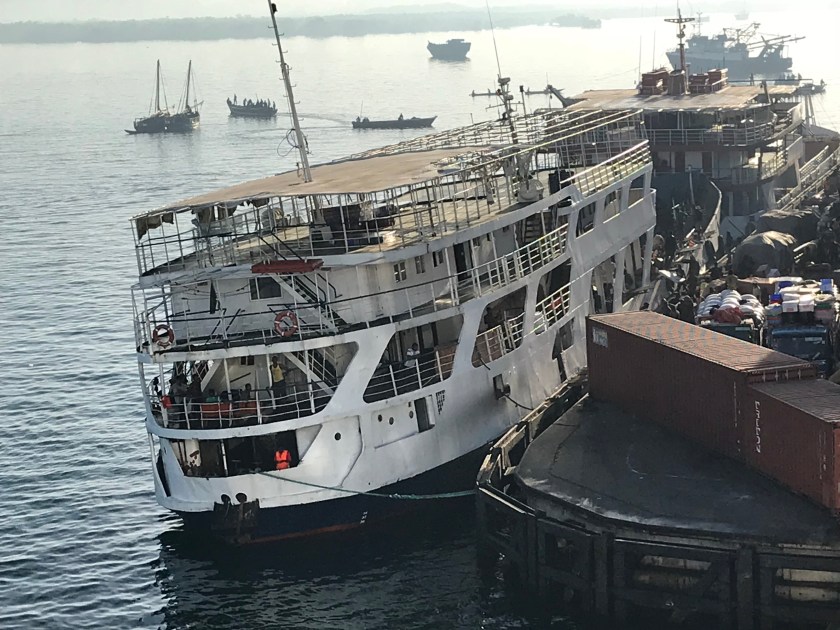
We’re on deck 9, looking over the container port itself at what appears to be a ferry landing. I won’t call it a terminal because as you can see the people, the many hundreds of people, are wading into the water to board the boats. The tide is falling, so they are wading further and further out and the moored vessels are leaning more and more. In the second picture you can see that a boat appears to be on fire. At first we were a bit excited, but no on out there seemed concerned. At least there was no running around. A Viking funeral? The old ‘you owe me money and I’m going to burn your boat down’ story? Eventually we could see that the flames were moving around the bottom of the boat from front to back. After the second and third of this (the further the tide went out the more flaming boats happened) we decided they were sealing the outside of the boat with tar and after the flames went out they would go in and smooth the now liquid tar out on the boat hull. That would also explain the prevailing smell and haze. Having sorted that we returned to our cabin to consider the scene night in front of us.

In this part of the port the containers are arranged in streets and a being emptied right there. The active containers are the second level – the easier to drop things down to the waiting truck. The guys emptying the container of drywall board were at it all day (36C), loading little trucks with frightening quantities of board. When a truck would pull away guys would hustle broken and damaged pieces of wall board into one of the ground level containers. Further back (truck with bright yellow containers in the back) they were unloading big plastic containers of cooking oil, which they would drop from the second story onto a pad on the truck bed. Which meant that some bounced right out of the truck, some rattled around the truck bed. The truck bed was slick with oil so there had been some breakage. It was amazing that no one got hurt by a flying container. Across the ‘street’ an entire container of ‘ Super Mama’ laundry detergent was being loaded bag by bag into a series of waiting trucks. And closest to us was a container that appeared to be huge bundles of second hand clothes. Some were addressed to people, some had a series of codes. Some had oops ‘broken’ open and the unloaders were pulling things out and putting them in their own bags. You can get a lot of bundles of clothes in a shipping container.

The other parts of the port seemed to be more like a regular container port with trucks in and out and cranes moving round stacks of boxes. Not everything was arriving by container ship :

No one seemed terribly fussed by the lean on this boat as they were off loading it.

It was really hot:

It took a long time and a quantity of beer before we could even rouse ourselves to get out of our touring clothes (long pants, long sleeves to keep the sun and bugs off and to respect the local sensibilities) It was a very entertaining afternoon and someday when I have enough bandwidth I’ll post a little video so you can see and hear what it was like.

Zanzibar – the spice island

We were told that so many spices were grown on Zanzibar that we would smell them as we sailed in. The previous day, as we arrived at Dar Es Salam we woke up and both said ‘What’s that smell?’ Something burnt – but not a fire. Not electrical. Sort of petrochemical. We eventually settled on burning tires. Same thing in Zanzibar. We eventually found out what it was, but that is another post. We had booked a private tour for Zanzibar and Jackson was waiting for us at the dock. Off we went to a spice farm. Once upon a time the tourists would be taken first to a cinnamon farm, then cloves, then nutmeg…..until someone said maybe we should put a few of all the plants in one place and then not have to haul the tourists all over the island. So that is where we went – a demonstration farm that does produce spices but is set up to show us some of everything. It felt sort of like being back at school, as we were handed leaf after leaf to identify by smell.

Jackson is quizzing me. Ibrahim, in the background, works on the farm. He has made me a little cup out of a leaf that I am holding – to hold all the things they are giving me.

Ibrahim demonstrates usage of the lipstick plants. He also climbs trees to retrieve specimens when required.

Vanilla beans and pepper berries:

Nutmeg (and mace)

You can probably tell by my pink face that it is HOT! 36C that day and the humidity at OMG%. We discovered where on board we could get bottles of Gatorade, so in addition to the bottles of water they hand us as we leave the ship my bag is full of Gatorade. What really saved us on this tour that pretty much all of it was under the trees and out of the direct sun. Of course the farm operators know their pale pasty visitors are prone to keeling over, so we stopped while one of their guys ran up a palm tree(!), sang a song, came down and opened the coconut for us to drink.

Our guide in Dar, when he would run out of things to say, would burst out with the same song. Now I know a few Swahili words jambo for hello, asante for thank you, karibu for welcome and hakuna matata- no problem!

While we were walking Ibrahim was picking up palm fronds and weaving, and at the end of the tour we were presented with our finery:

Crowns, jewellery and a tie. Of course, being us we wore them. Even when we were dropped at the gate to the port and walked through the very busy port – much to the amusement of the port workers. Once on board we had to surrender our finery. The nightly newsletter has note saying that wooden and plant material souvenirs would be collected at boarding, inspected, fumigated and then returned to us to prevent bringing spiders (and other things) onboard. Hard to argue with that.

So, we were back at the ship by 11:30 am after what felt like a very busy morning. And then things got interesting.

Good morning Dar

Wilf may be getting tired of me saying ‘well, this is a place I never expected to be.’ But really – Dar Es Salam! After the rather depressed feeling of Maputo, Dar was an explosion of energy. I’m sure life is difficult, but the sense is one of energy. The city has a modern skyline

At street level it has a very entrepreneurial air – lots of little booths selling all sorts of things (and if you ever wondered where your donated clothes wind up – I have an idea about that)

We took a bus tour of the city, which started at a village museum. It had many examples of traditional huts and houses throughout the country. And a performance, of course.

We visited a marketplace where the artisans worked with the ebony – this piece is a work of four years:

I met Mariane, who sold me a dress and sent me on my way with many blessings.

For lunch we were taken to a beach resort for a very nice lunch. And beer. To say it was hot doesn’t even begin to describe the situation. The scenery was lovely.

The downside was that the big wide exposed foreshore – well, it smelled very bad. I suspect the seaweed cooking in the sun was probably part of it, but we were suspicious of the sewage system. The fishermen didn’t seem concerned. There was a pool to use, but it that means one has to deal with the issue of getting ones sweaty self into and out of a swimsuit. That usually includes unseemly grunting, cursing and the risk of a dislocated shoulder. The discussion on the bus was that perhaps this was an occasion for the North American ladies to abandon their modest one piece suits and join our European sisters with their two piece suits.

How do you say that?

Our last stop in South Africa was the port of Richard’s Bay. It is a relatively new city, created in the 1960’s to be another deep water port. We did not see the city, just the port area. Which is surrounded by a very impressive industrial area. In fact they’re working on ‘industrial tourism’ to allow people to see the plants – mining, wood products, agricultural. It would be a little more impressive if it weren’t so clear that the benefits of this activity was all going offshore and not befitting the country.

That’s not why we were there, though. We were scheduled to go to the Hluhluwe national park. My first question to the driver was ‘how do you pronounce the park name? Turns out it is ‘Shlushluey’. Big park with more animals! Let’s go!

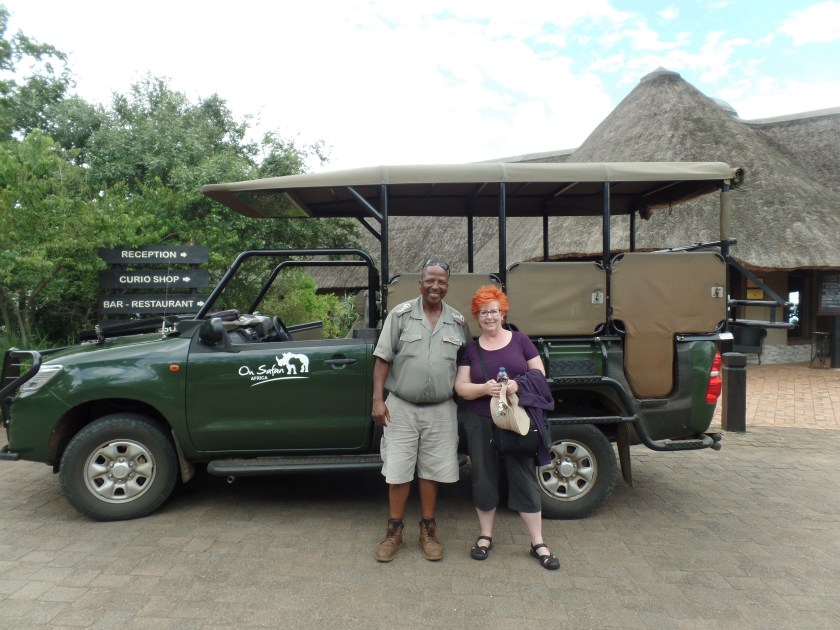
First – our guide and our truck.

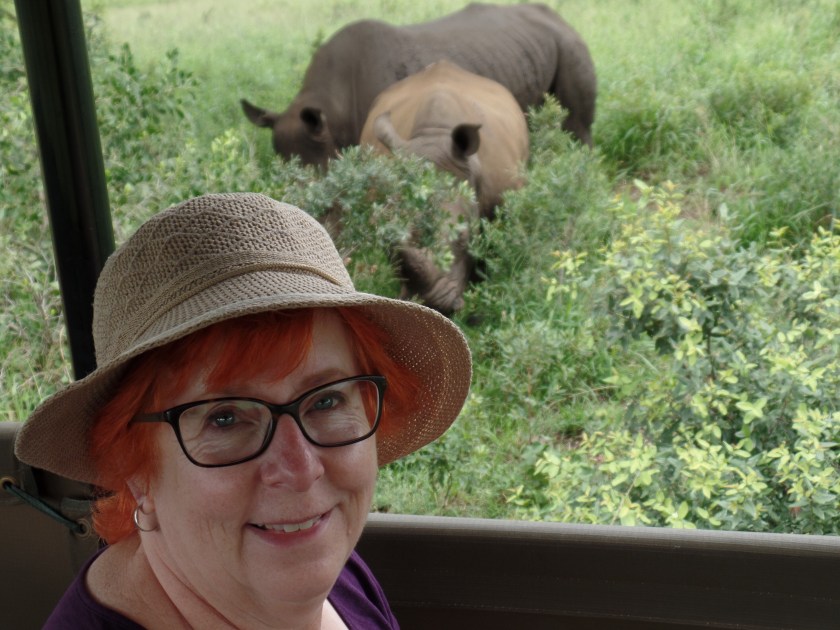
We had arranged a private tour, which was nice because we could stop where and when we wanted. Like when we saw Mr Rhinoceros and his lady friend. We could sit and watch them as they came right up to us. They seemed quite unconcerned. We could hear them breathing and the sound they made as they chewed the grass.

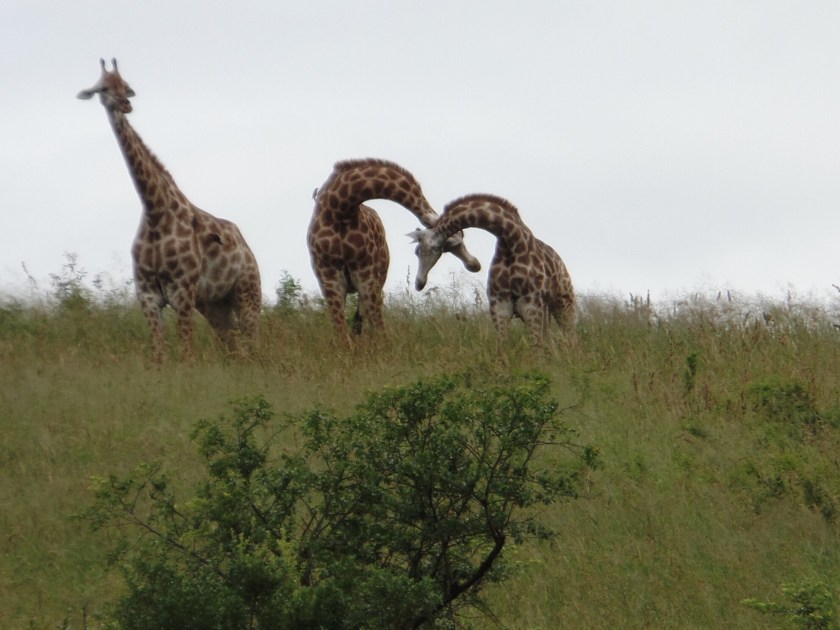
We saw giraffes in most of the parks we visited, but never close up. Usually they just stand like statues but these ones were goofing off a bit.

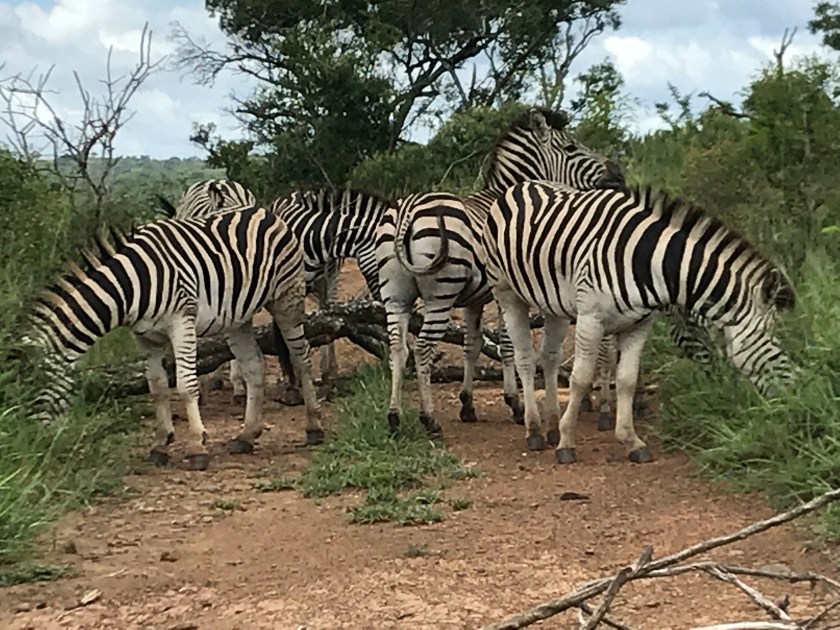
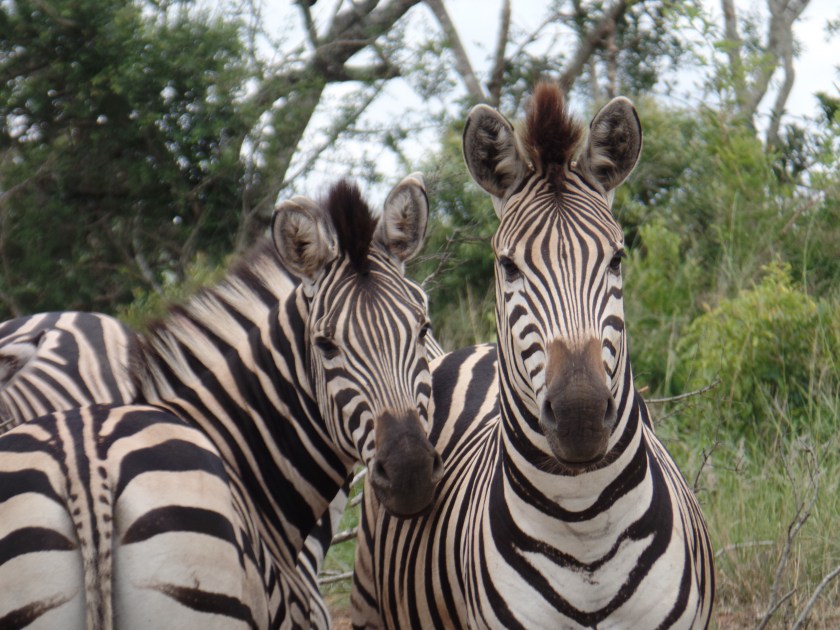
There were usually zebras around and this is how they presented themselves:

Our guide ‘spoke’ zebra and after a series of scuffy sounding grunts and barks from him they got curious and turned around

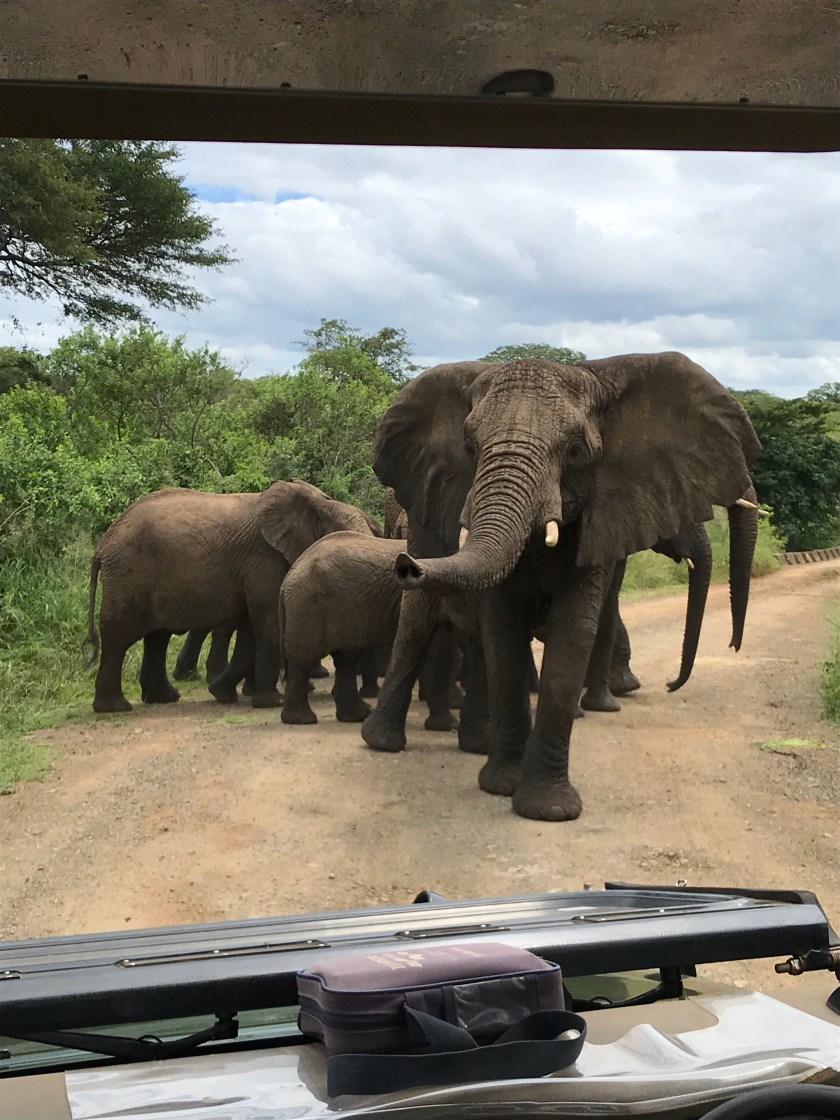
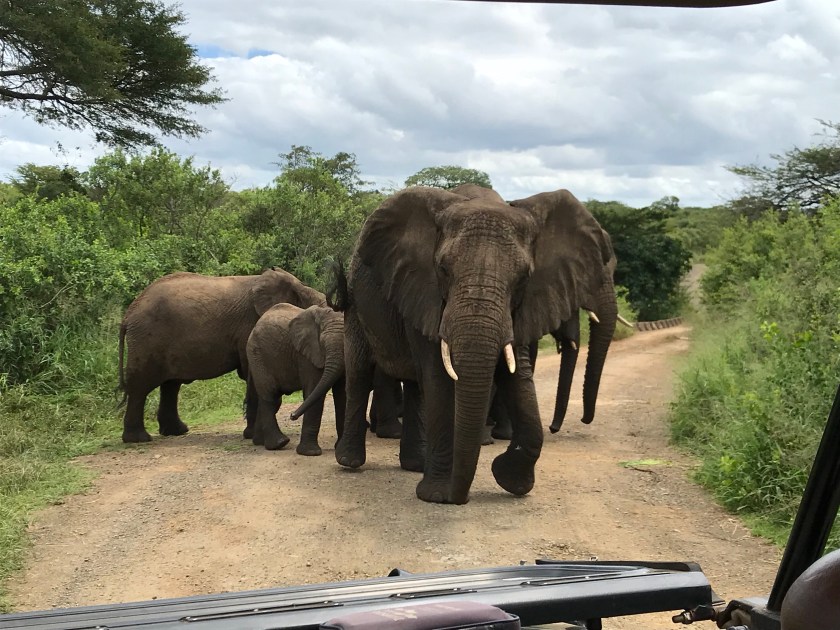
And of course, elephants. Here Momma is coming to investigate us.

But then she decided we weren’t really very interesting.

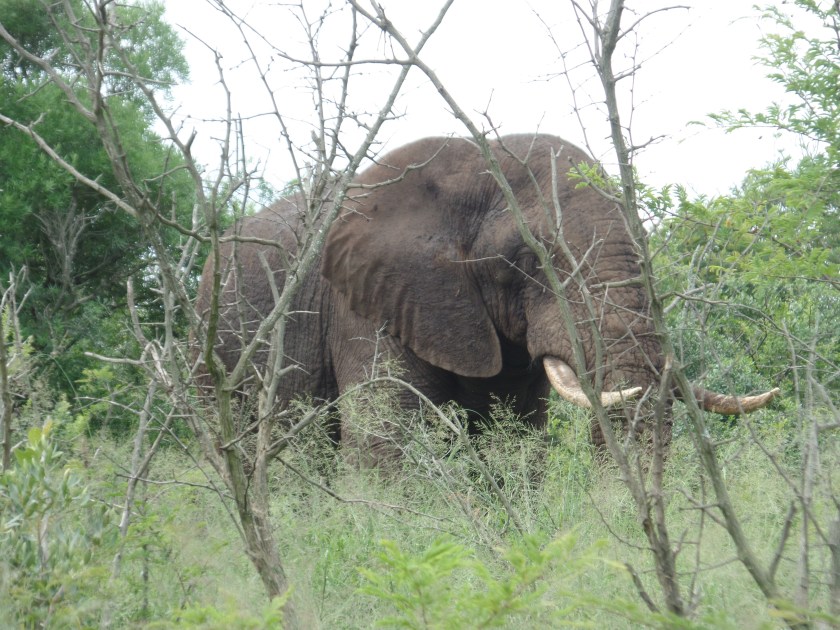
This big guy kept a close eye on us.

It was a wonderful day.

The tale of the salt and pepper shakers

There are about 680 passengers on board the Insignia, along with around 400 crew. While we are on the Cape Town to Singapore leg, there is a larger program afoot. To celebrate 15 years in business the Insignia is doing a 180 days around the world cruise, departing Miami January of 2018 and ending up back in Miami in July. There are about 130 passengers doing the whole program.

Of course we are all here to have a good time. But a major concern is keeping us all healthy. Oceania is always meticulously, scrupulously ship shape and proper – every detail attended to and very precise in their food handling. No pawing at the buffet on this ship! We noticed that there were no salt and pepper shakers on the tables- rather a saucer with paper packets. Okay.

A few days in and things began to change – 10 people were sick and ‘the plan’ was in place. The elevator buttons were covered with a large sheet of plastic – everyone has to touch it and it is easier to wipe down than clean each button. The laundrettes closed. The doors to the washrooms in public areas were propped open (so no one had to touch the door handles). One day between breakfast and lunch – whoosh no more table clothes or place mats. No place settings- when we sat down they would bring only the glasses and service ware required. At dinner this included a large table napkin wrapped around all the cutlery we might require – 9 different knives/forks/spoons – the darn thing weighed about 5 pounds.

When 13 people were sick more things disappeared – no more salt and pepper packets. If you wanted sugar they would bring the little container and hand you the packet – no rummaging around. Want ketchup? The waiter would bring the bottle and put some on the plate. We could have whatever we want, just had to ask. Eventually after each group left the table the table would be disinfected and a little sign left with the time when the table could be used after the disinfectant had dried.

In addition to all of this in the dining areas other staff were cleaning everything. Anything that might be casually touched – hand rails, service counters, wall panels – was being washed with disinfectant. For us it was a matter of lots of hand washing and hand sanitizers. But for the crew and staff? So. Much. Work. They work such long hours and now they had all these extra jobs to do.

And then, yesterday morning we went to breakfast and saw this:

The salt and pepper shakers had arrived! The table was set! And sure enough. The sick people were getting better and no new cases. Return to normal procedures.

p.s. on the plate? Those are passion fruits. OMG! The best!

Three days on the Cape

Our cruise included a ‘pre’ tour, which turned out to be a good thing. We spent three days traveling around the Cape area, drinking wine and looking at animals.

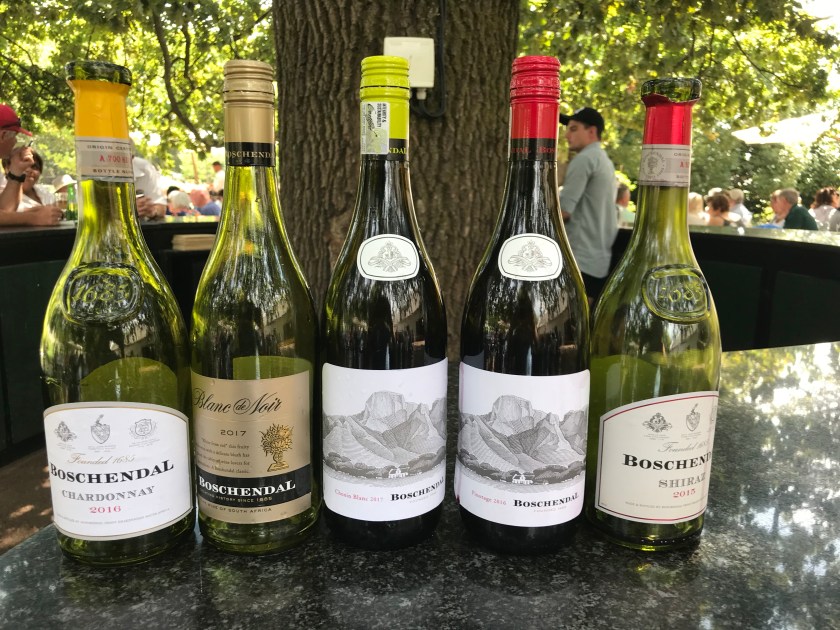
The wine country north of Cape Town is lovely – not hard to see why everyone wanted to be there. Lots of agricultural opportunity. We visited some of the towns (Franshoeck, Stellenboch) but the highlight was the winery of Boschendal. They’ve been making wine there since 1685! Now they grow their own grapes, grow a huge variety of foodstuffs, make vast quantities of very good wine and buy grapes from the farms round them. Lack of water is an issue everywhere, but there is enough water on the property for them to manage without having to make some of the hard decisions required by other wine producers.

We tasted 5 wines and enjoyed them all.

We’re hoping to track down some of their wines once we return home. The wine tasting was followed by a picnic under a three hundred year old oak tree. It was a spectacular picnic – but after tasting 5 different wines we were pretty merry and tore into the baskets and ate everything – and forgot pictures! Probably just as well as we enjoyed the moment rather than being behind a camera lens.

Another day on the tour was a trip to the Aquila game reserve. It was over the pass from the fertile wine valley, into a dry and shattered landscape. When we get home I’m going to have to read up on the geology of this area.

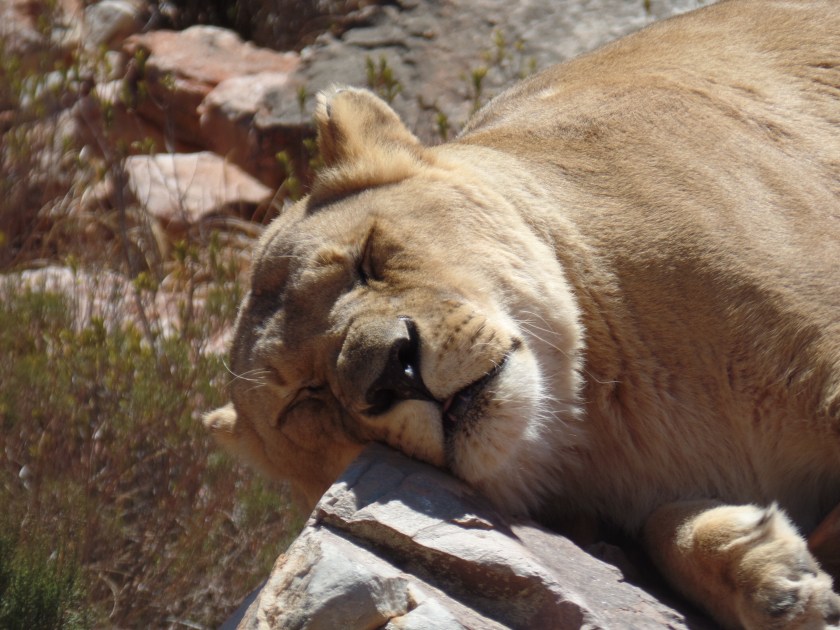
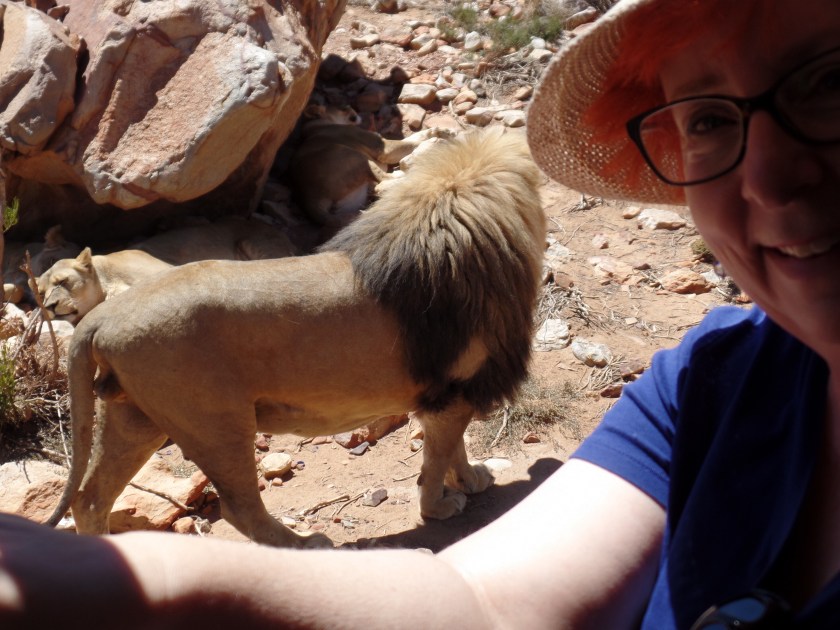
These were our first animals and we were very excited to see elephants and zebras and giraffes, among others. This would turn out to be the only place we saw lions while in Africa. The Aquila lions are a bittersweet story, though. They are rescue lions. There is a truly revolting business where animals are captured and kept in cages. Wealthy ‘hunters’ then select the ones they want and when they are let out of the cages they shoot them. In order to make them look bigger the lions are fed steroids. The group we saw had been rescued from such a place. They live in their own area within the preserve. They can kill an animal but don’t know how to hunt effectively. The group had been fed recently, after which they usually wander off to rest for several days. The driver was very surprised to find them right beside the road. Dozing in the sun, stuffed after a big meal they were pretty dozy. (A preview of life on a cruise ship? The pool deck looks much the same right now!)

While the first pictures are zoomed in as you can see above they were right beside the truck!

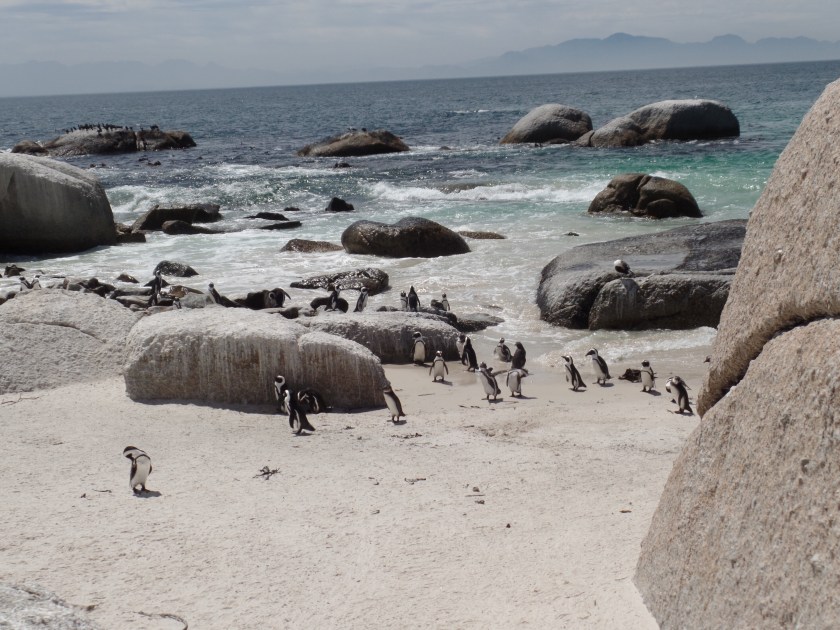
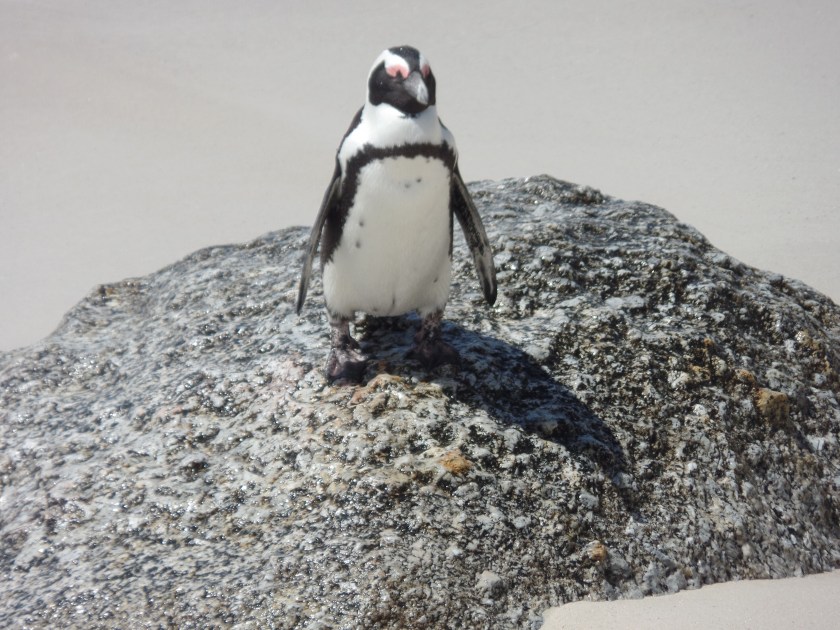
And to finish off? Things are always better with penguins. This colony showed up south of Cape Town, took a look at Boulders Beach, and moved in. The town built boardwalks so visitors could see the birds without bothering them. It’s a pretty cool beach even without the penguins – I would have liked to explore the boulders, though.

Not the happiest of places…

South Africa has long been in the news for its history and politics. Neighbour Mozambique has also had a difficult time – no sooner did they gain independence from Portugal then they were battling opposition forces supported by the countries around them. We were in the capital of Maputo for a short while and took a walking tour in the city centre. It was, of course, terrifically hot, which made it a little more difficult to love the place. But ….. Maputo is having a tough time. Mozambique is having a tough time. They are in a major debt crisis, there are no jobs. It’s probably not wise to make judgements based on a two hour walking tour (although people on bus tours who ranged further afield saw much the same) but – not a happy place.

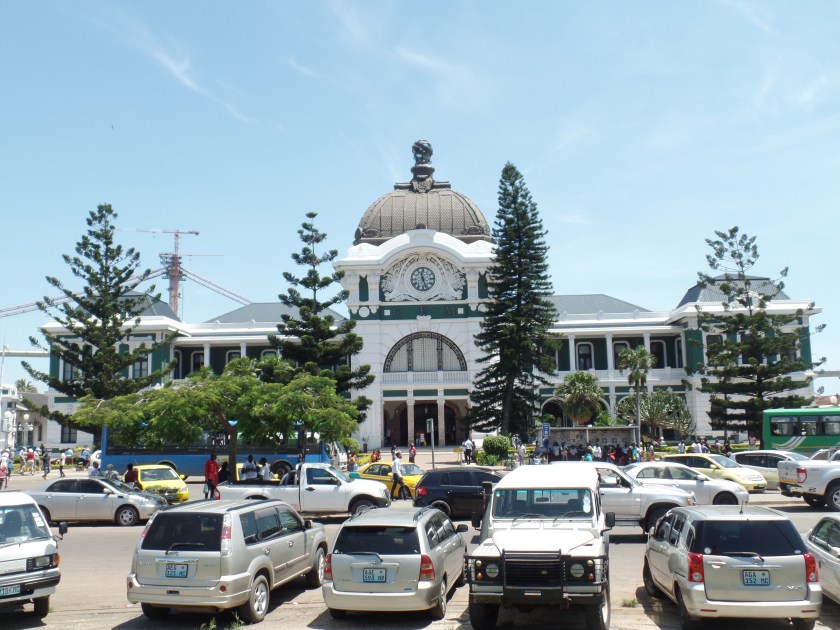
There was money once upon a time – enough to build this beautiful train station:

At lunch after the tour there were people complaining about the rundown look of the city and the amount of trash laying about. It didn’t seem to occur to them that when people don’t have jobs they don’t pay taxes and when no one pays taxes then their government doesn’t have any money to spend on anything – including garbage removal.

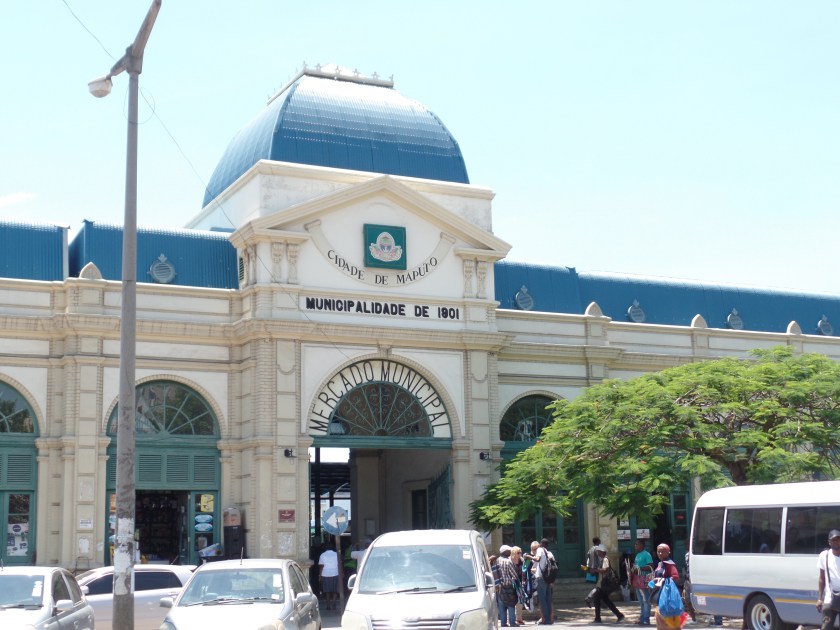
In addition to the train station there was a market still standing from back in the day.

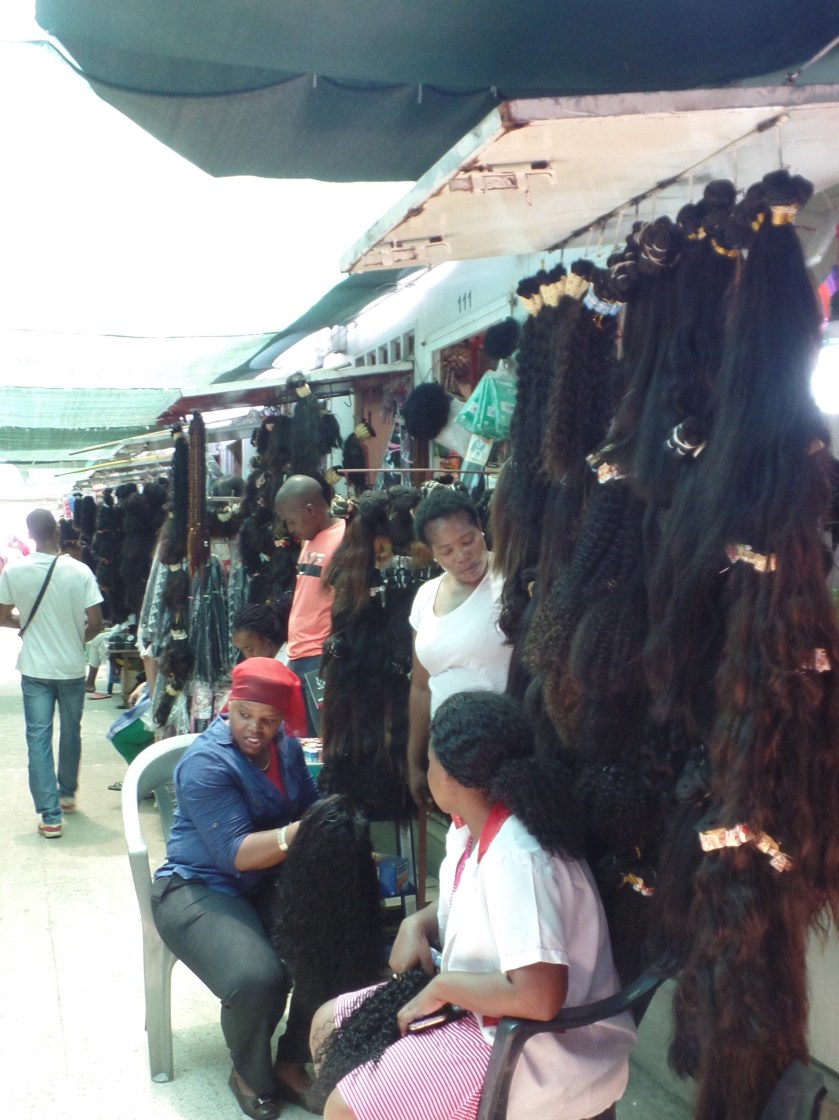
The market was full of stalls of foodstuffs, but around the back was something new to us…..

Yep. Hair. Lots of it. In fact I had seen advertisements for hair – specifying country of origin, along with ads for styles (22″ extensions for the Beyoncé look. A four part set to look like Tyra….) But here is where you could purchase – and have installed – a whole new ‘do. I would have loved to ask questions but general vibe was not particularly welcoming so we moved on. But there were several ‘streets’ within the market all selling hair…..

Best laid plans….

On board the Insignia we have an area called the Artist’s Loft. Suzanne Stohl is the artist in residence and on ‘at sea’ days she presents various classes. Her media is coloured pencils, and in a past life she was a trainer in the corporate world. That means her classes are incredibly well designed and delivered, as well as being fun. As an example for one of her classes she had this drawing of a lemur.

Pretty great, huh?

Suzanne’s picture is, unfortunately, as close as we’re going to get to a lemur. We were scheduled to stop in Madagascar and take a tour to a nature preserve to see some lemurs. Sounded like fun – involved boats and landing on a beach and cute critters. But one thing we’ve learned about cruising is that not much is for sure for sure. We left Mozambique for a two day ride up the Mozambique Channel. It was windy and the current was strong. We could feel the engines working hard. But apparently it wasn’t enough and it became apparent yesterday that we would be so late arriving at Nosy Bey that there wouldn’t be time to get ashore, toured and back on board in time to head off to Tanzania. So – too bad about Madagascar and onward. The good news is that the wind and current have eased and the ocean is like a big bathtub. And we’re not having to pound along. The staff and crew put together a program for an extra at sea day very quickly.

it’s sort of like having a vacation in the middle of our vacation.