I don’t know what I was expecting

But it wasn’t this….

Wilf has several day trips planned for us, and yesterday we were to go see a famous library. Okay – that sounds good. I like libraries. We’ve gone to look at libraries before. First up – an hour of riding trains to get to a town near the city of Saitama. The town is called Tokorozawa. As we were pounding our way north and west from Tokyo the train lines went through some agricultural areas, quite a lot of small industrial areas, small towns, small cities – quite a variety. Sometimes the train stations were big multilevel affairs with shopping centres and lots of activities, sometimes they were not. Tokorozawa was from the ‘sometimes not’ side of the ledger. But, our friend Mr Google knows how to get us places, so when we wound up in front of a small station on a small street he began to direct us.

I will say that for some reason Mr Google has taken to showing us the scenic route when we are walking. We have seen many a neighbourhood in quite a bit of detail, only to discover that there was another route on more traveled streets that might have been simpler…..
So we are walking through neighbourhoods, admiring the mostly two story houses. Nice houses with nice gardens – quite a few persimmon trees. We go a little further and the neighbourhood shifts a bit to small businesses.

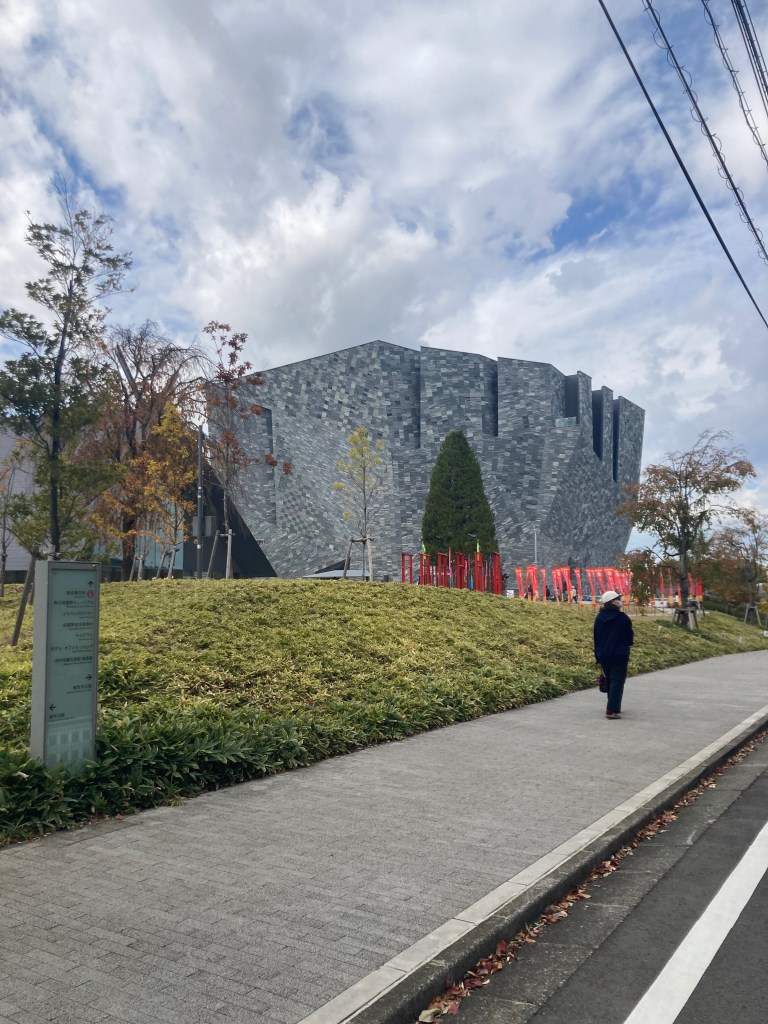
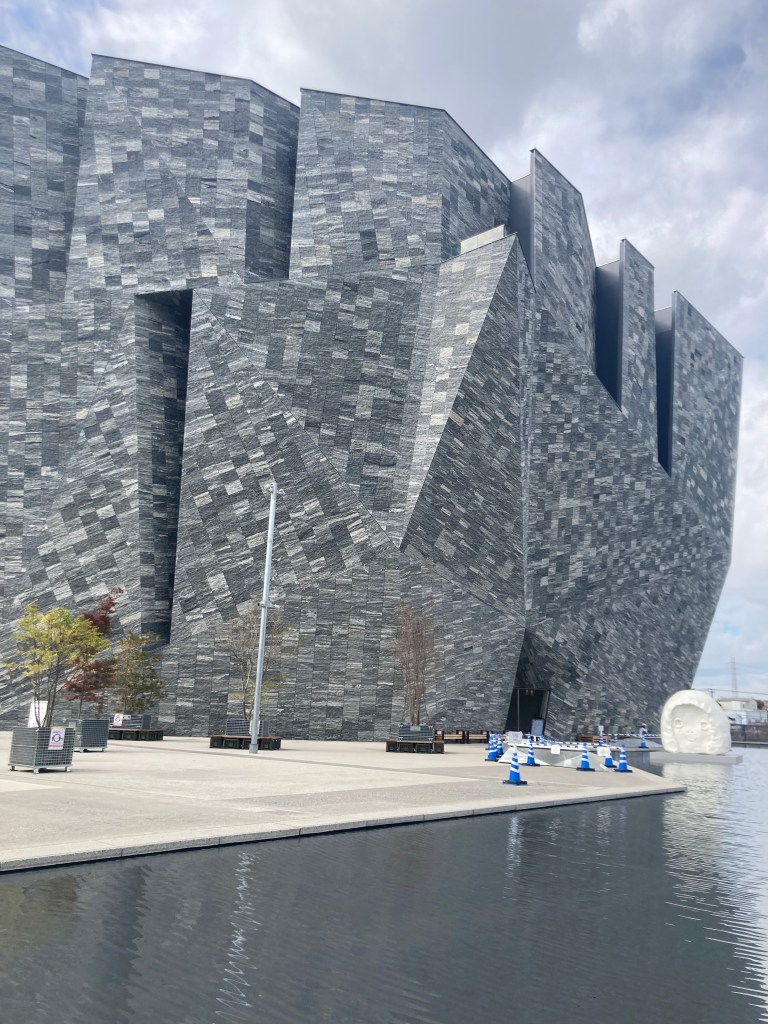
And then this heaves into view:

This is where we’re going? According to the map it is…..
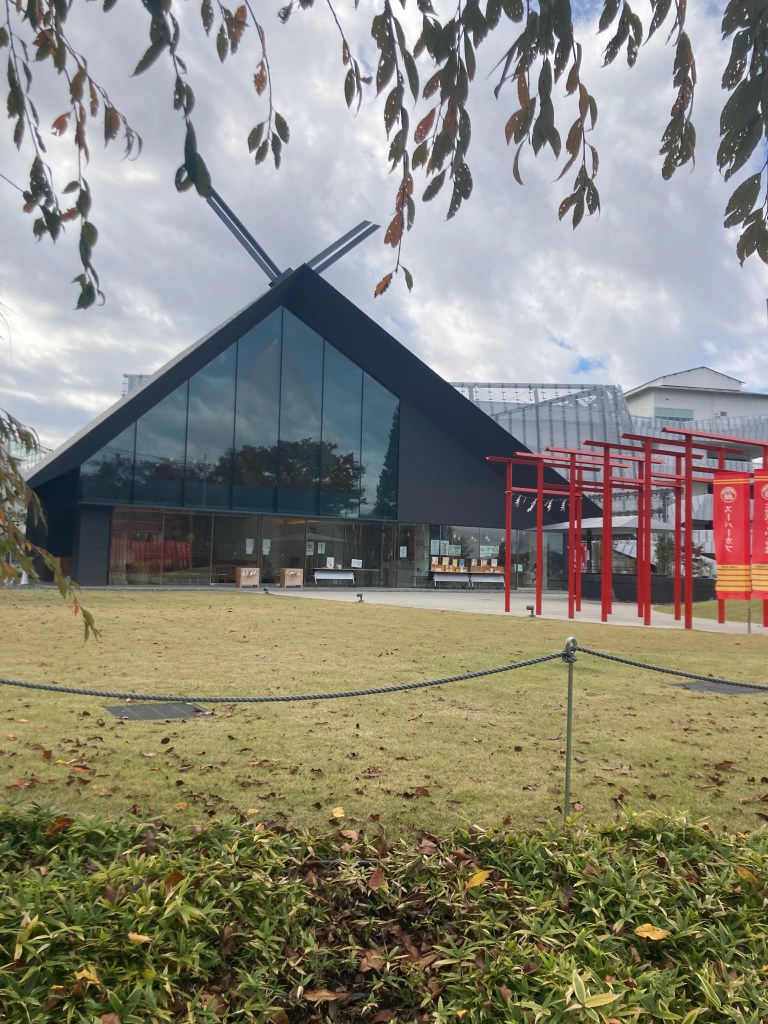
Before we get there we see a first for us – a contemporary Shinto shrine

Complete with tori gates and a purification fountain out front.
But lets get back to the main attraction across the plaza

This is the Kadokawa Culture Museum, designed by architect Kengo Kuma.The giant polyhedral is clad with 20,000 blocks of granite and ‘floats’ in a wading pool.

I’m a little confused at this point as I was expecting a public library and this seems a bit …. much.

In we go. Into a cavernous space. We look around a bit and Wilf engages an employee to ask where the granite came from. With some toing and froing and a translation app the answer is ‘China’. Wilf has read that the books are on the 5th floor, so we take the elevator up. And when the doors open we are greeted with this:

And a ticket gate. I look at Wilf and say ‘I don’t know what this is but we have to go back and get a ticket.’

A quick session with my phone tells me that this is not, in fact, a public library. It is a museum/gallery/event space sponsored by a publishing company called Kodokawa. Their area of publishing is the world of manga, anime, and light novels(which are basically young adult novels), with tv and movie divisions.

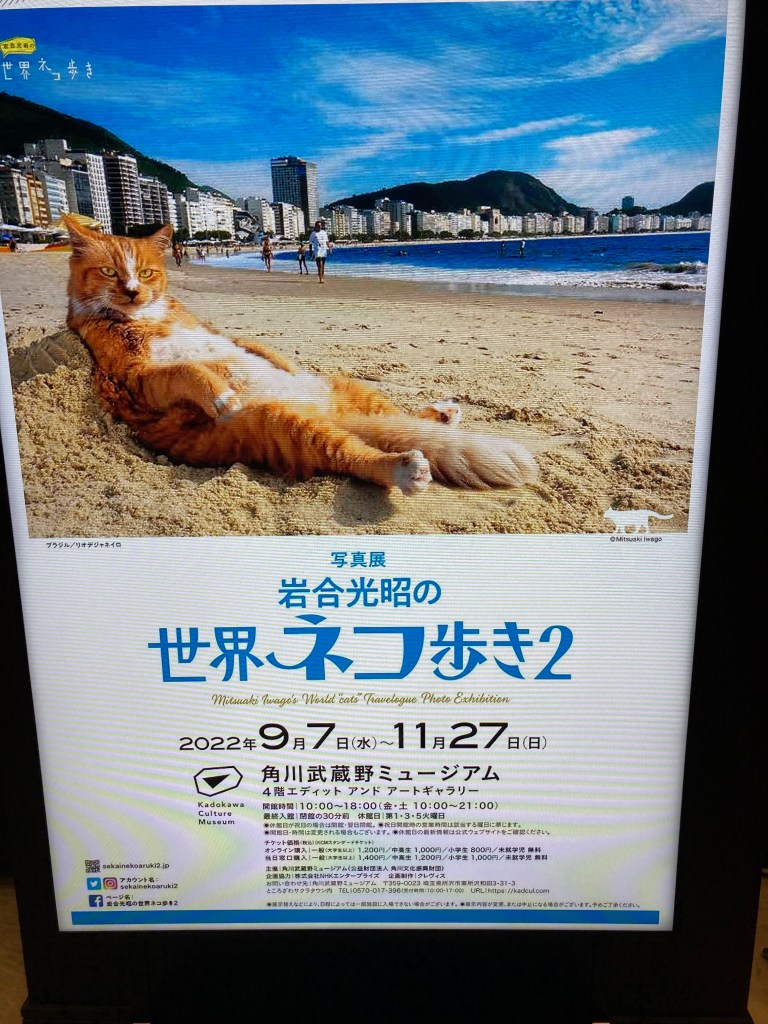
Back to the fifth floor we go, tickets in hand. First we are directed to the exhibition space. No pictures allowed, and lots of young ladies with signs telling us so and watching over us. I did not, of course, take pictures in the exhibit. But I did take a picture of the poster for the show to share with you:

The artist Mitsuaki Iwago is a wildlife photographer and this exhibit is pictures of cats taken all over the world. The poster cat, chilling on Copacabana Beach in Rio di Janeiro, is the coolest cat of the bunch, but there were many more from all over the world.

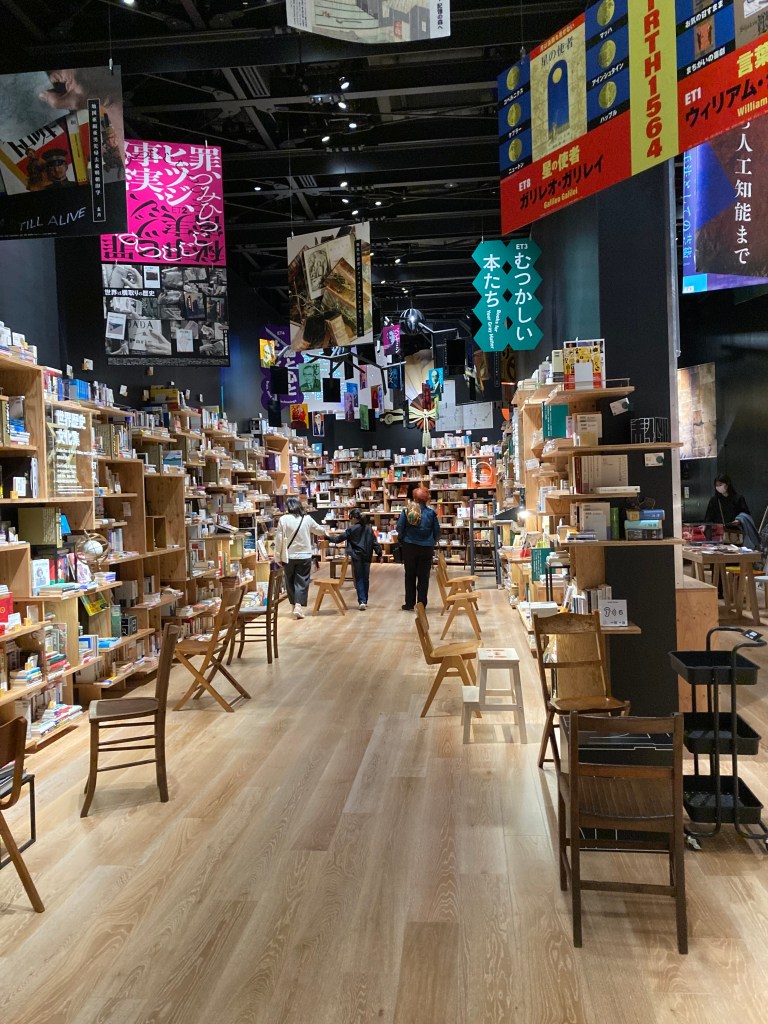
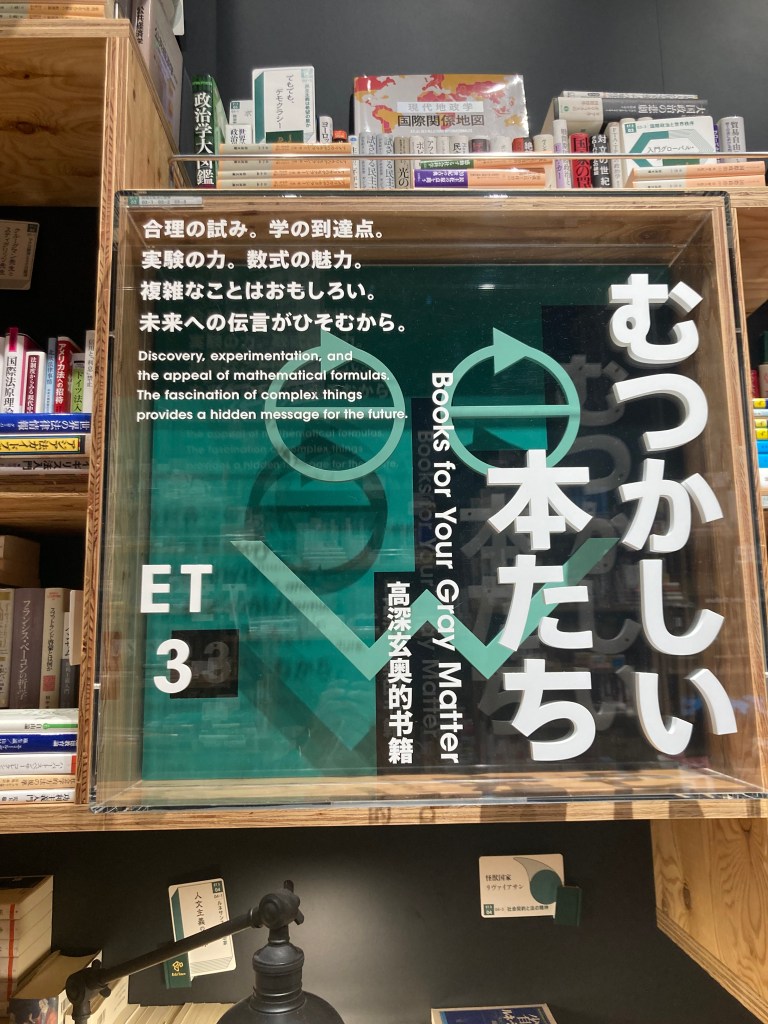
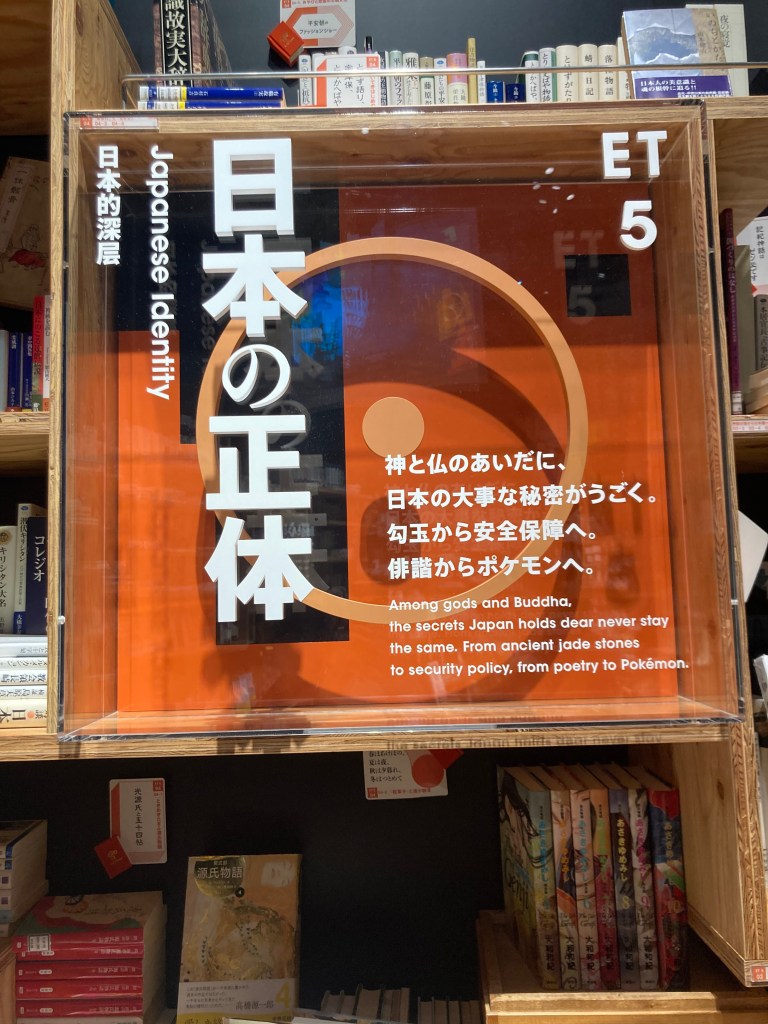
Having seen the cat pictures, back to the books. There is a desk at the front with a librarian at it, so the sign said. And then the books. Piled up every which way. Well, not entirely every which way. There is a type of classification. For example:

Each section is crammed with books, shelves full to bursting. Japanese books, English books, old books, new books. There are chairs and tables to sit at, and trolleys to put the books for re-filing.

And there are things to look at all around

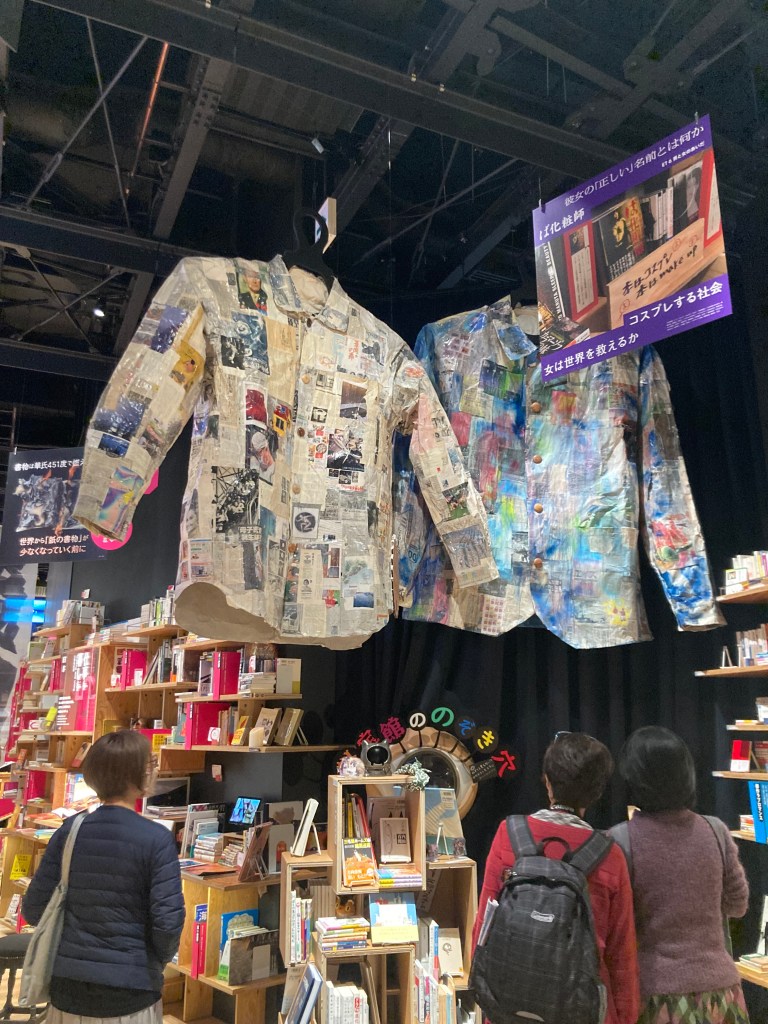
Two giant paper mache shirts because why not.

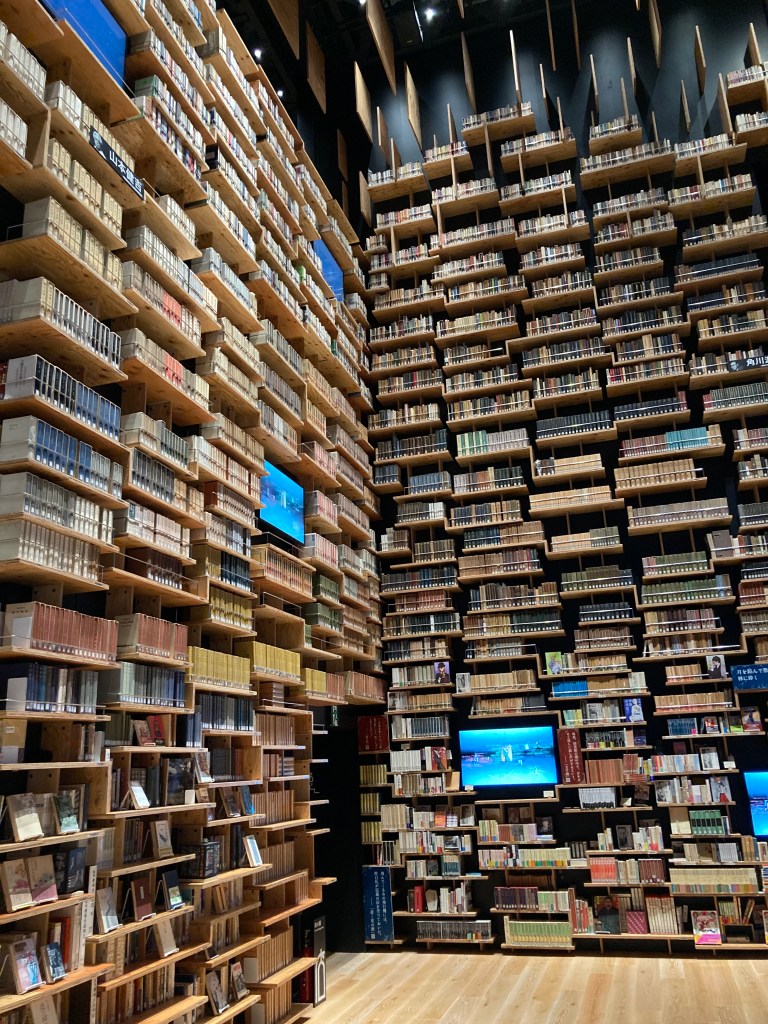
And then, we pass through a huge gauze curtain to this space:

Here is a video to give you a sense of the space:

Behind the mask my mouth is hanging open.

I had to sit down for a bit after that.

In the big room the lower stacks are of modern books – a lot of them collections of books published by Kadokawa. In the upper reaches the books looked older and the info brochure said that they were private libraries from the founder of the publishing company and other famous Japanese writers and scholars.

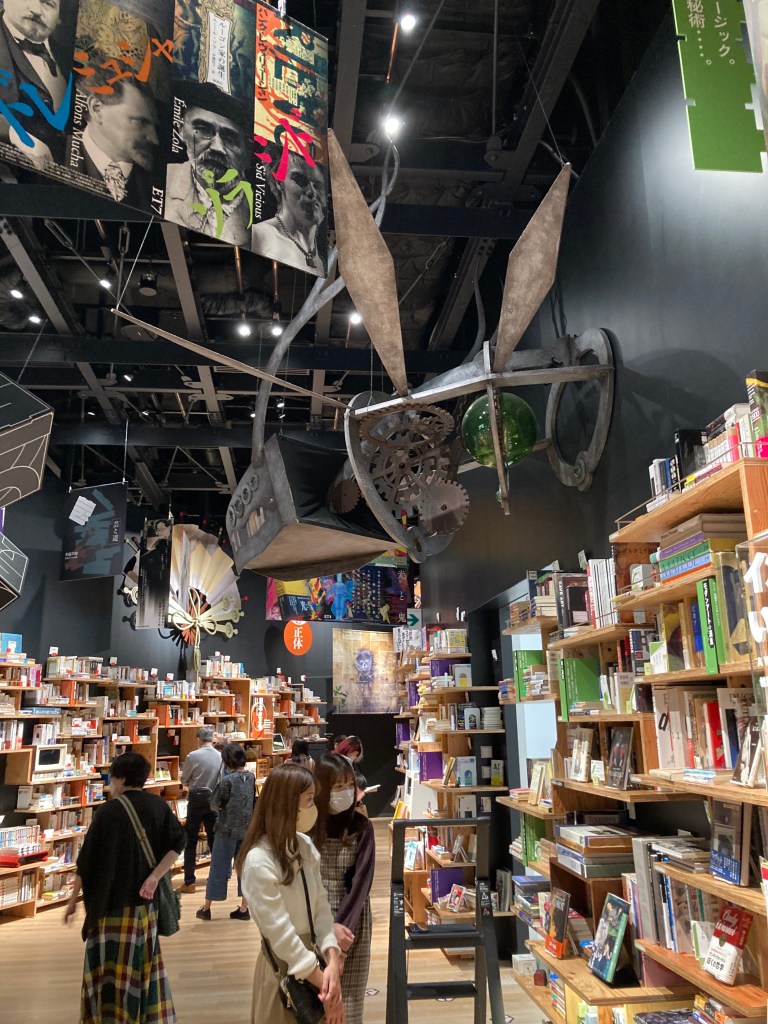
A giant steampunk fish is coming out of the wall and people are walking around, reading books, looking at things. There was another exhibit tucked behind the stacks that was a sort of cabinet of curiosities that a Victorian collector might have assembled. No pictures there, either. But collections of butterflies and bird skeletons and everything you can imagine.

On the second floor there was another smaller library of manga and light novels. I forgot to take a picture there – it was a bright open space with comfy low furniture and and probably everything Kadokawa had ever published. It was full of young people reading the books. If you are a fan and a local – what a treasure trove.

So – I was pretty dazzled by what I’d seen. It is not a lending library, though you are free to sit and read. There is no catalogue, so it is really a matter of serendipity what kind of books you come across. But walking down what felt like streets of books, interspersed with art and video and places to sit was an interesting thing to do.

And top it all off there was an brewpub on the other side of the plaza that made excellent beer and handmade udon noodles, so we were able to fortify ourselves for the journey back to Tokyo.

Dancin’ in the street

Continuing with our theme of exploring culture and festivals on this trip we headed to the entertainment island of Odaiba. We pretty much always make a trip over there to see something. Once upon a time there were a few small islands in Tokyo Bay that were used as fortifications – ‘daiba’ means fort in Japanese – but a big landfill project combined them into one big island. It is a fun ride on the monorail over to the island, and there are lots of shopping centres, museums, beaches and other things to entertain.

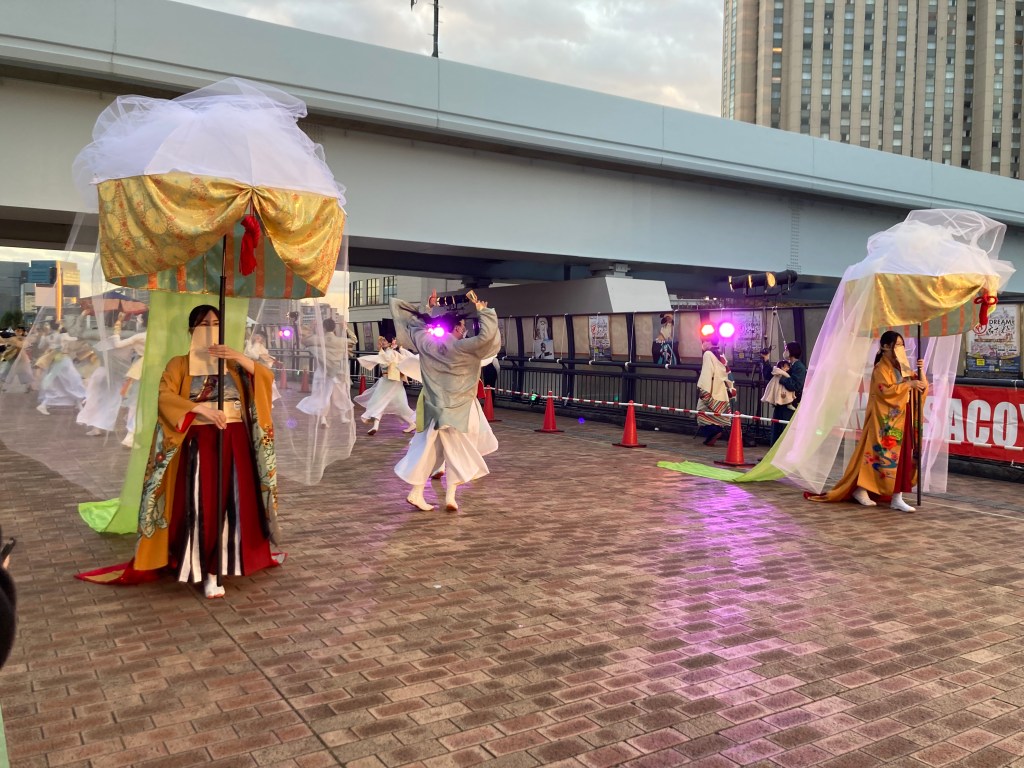
This time we were going to see an event called ‘Dream Yosacoy Matsuri’. I was kind of curious about the name – first word in English, second word an Anglicized Japanese word and the third the word for festival written in romaji. What was this to be?

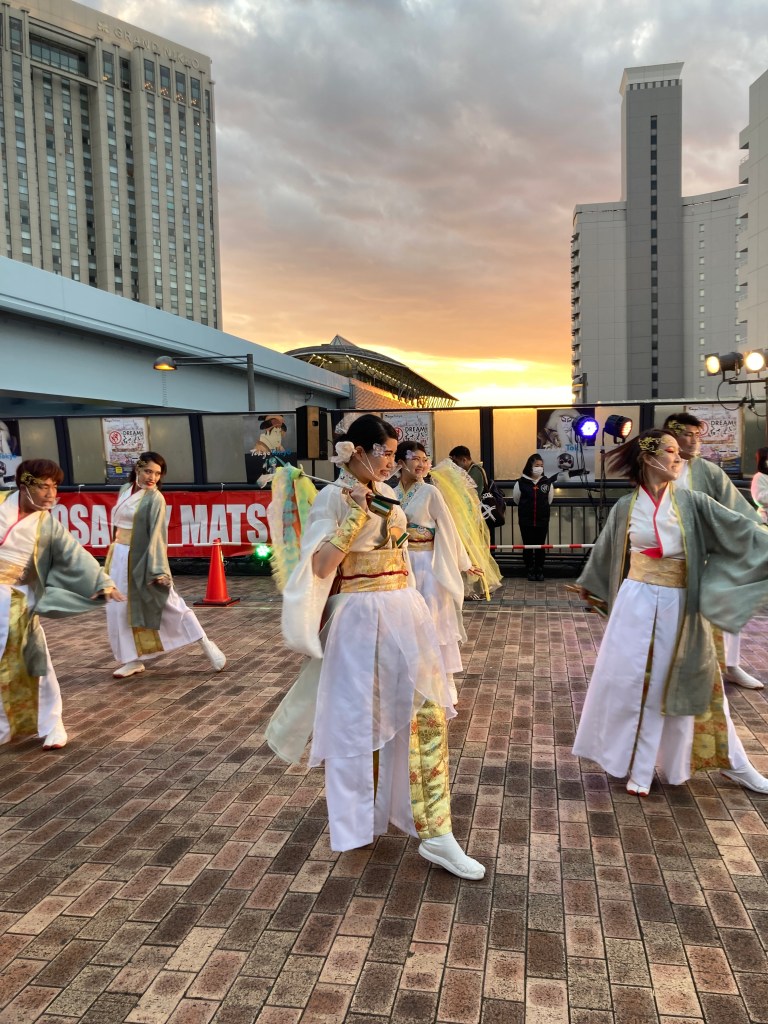
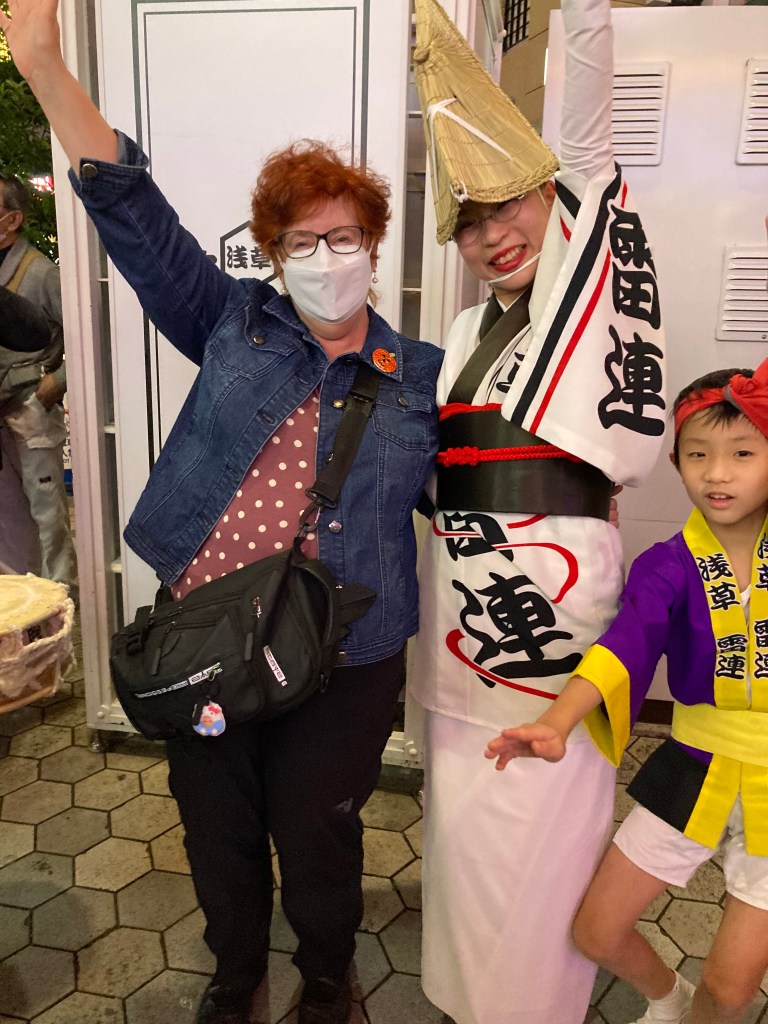
It turns out that the dance form called yokasoi was created after the Second World War in the city of Kochi. While many dance forms follow ancient traditions and steps, yokasoi is a fusion of old and new. And it was amazing.

This was one of those time when being unable to read Japanese was a leeetle bit of a problem. We bought tickets for the standing only area and they said the performance began at 14:45. Turns out that the opening ceremony began then. 25 minutes of speeches from the assembled dignitaries. Then a twenty minute break to reset the area for performances. It wasn’t a stage, but a wide roadway that passed under the monorail track. To tell the truth we weren’t quite sure what was going to happen.

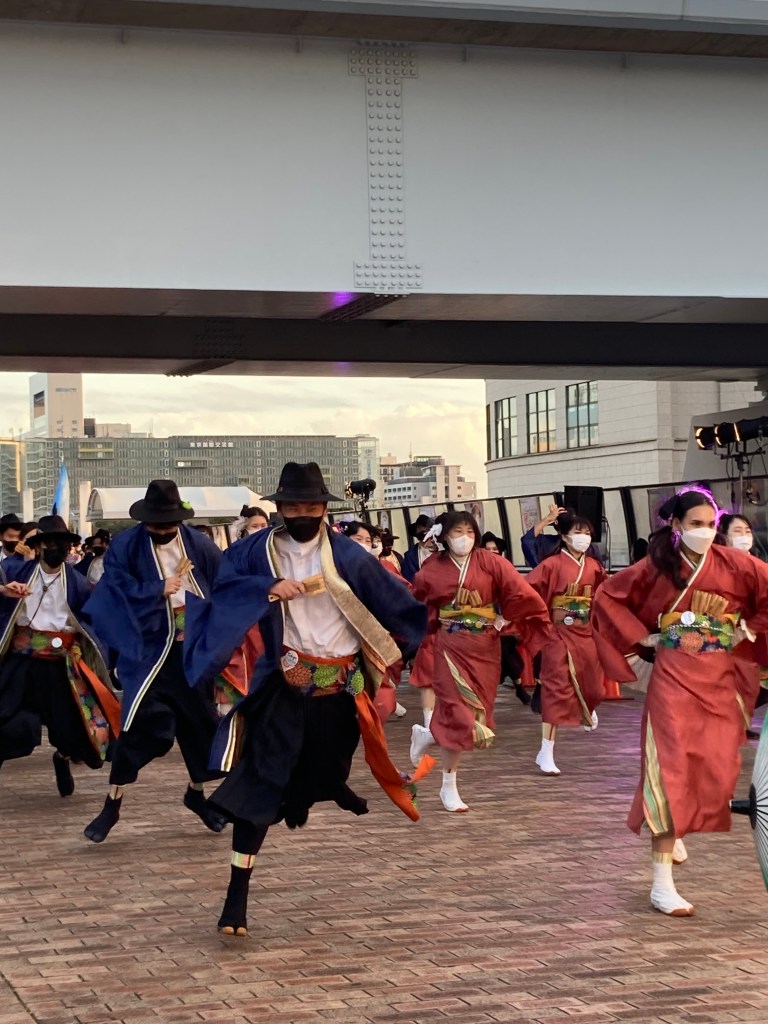
And then it began!

What we were to see was just a part of the total event, which had 80 teams participating – about 6,000 participants. The teams ranged between 20 and 60 people each.

This group had a vaguely 1940s vibe, with their fedoras and music choices.

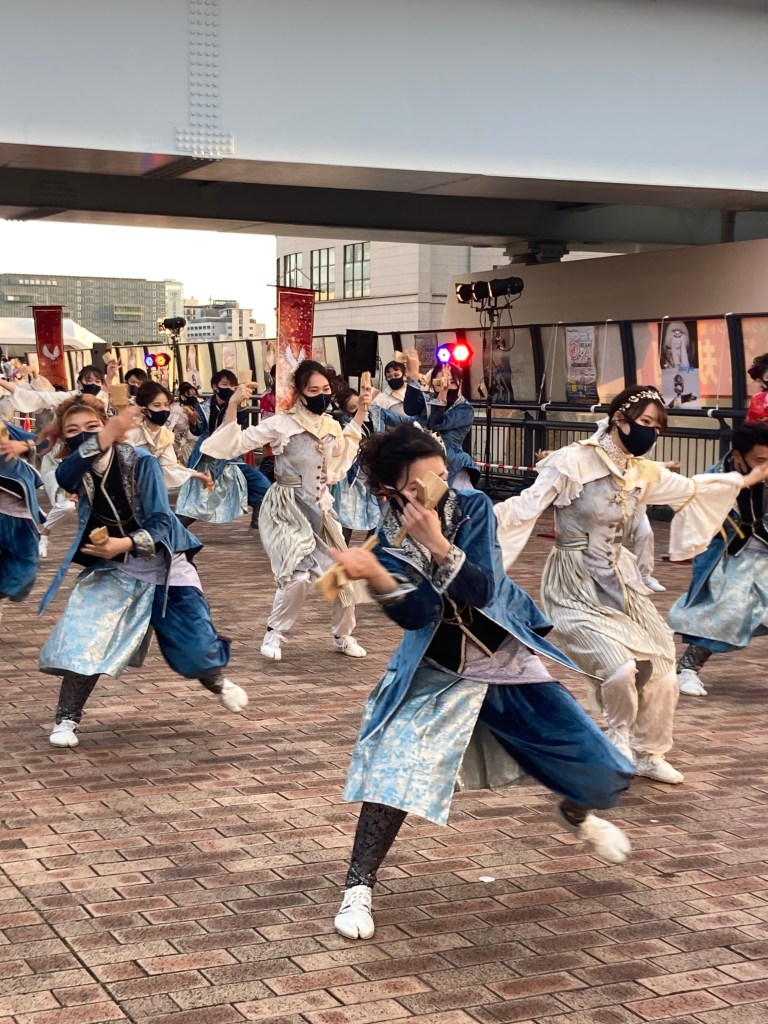
These folks had a vaguely Steampunk look to them.

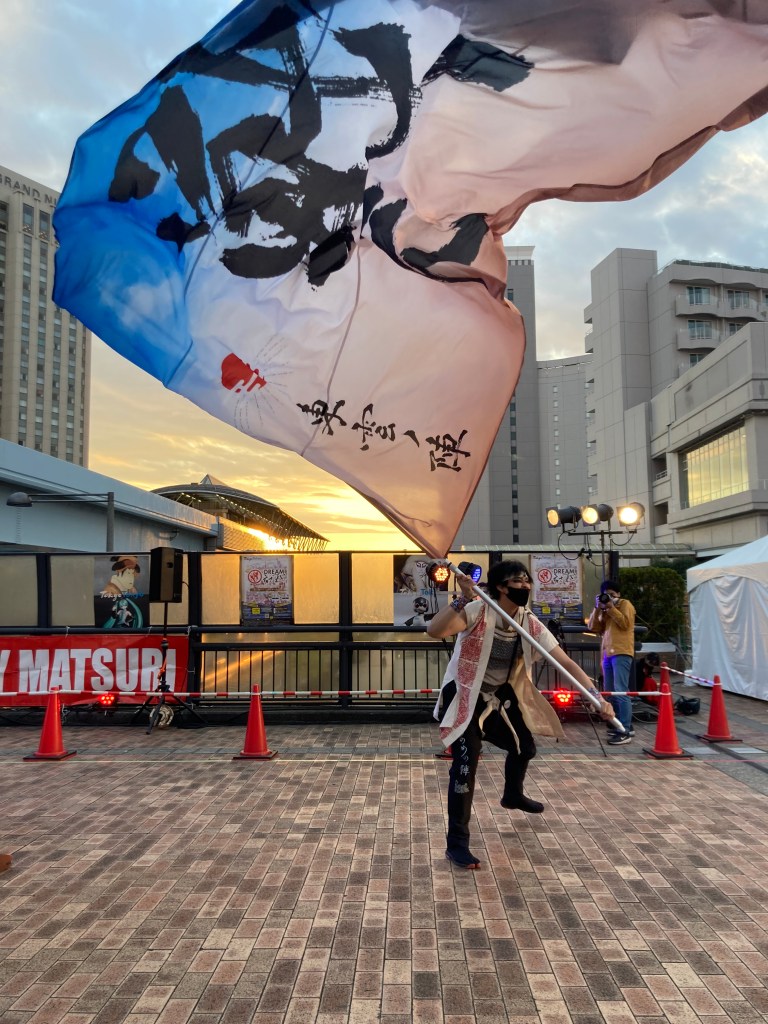
Most groups had a big guy at the back with a huuuuge banner. And they all made it under the monorail track!

Not sure who the two young ladies were with the umbrellas….

I wondered if this group was made up of professional performers – they were all about the same age and were very good dancers.

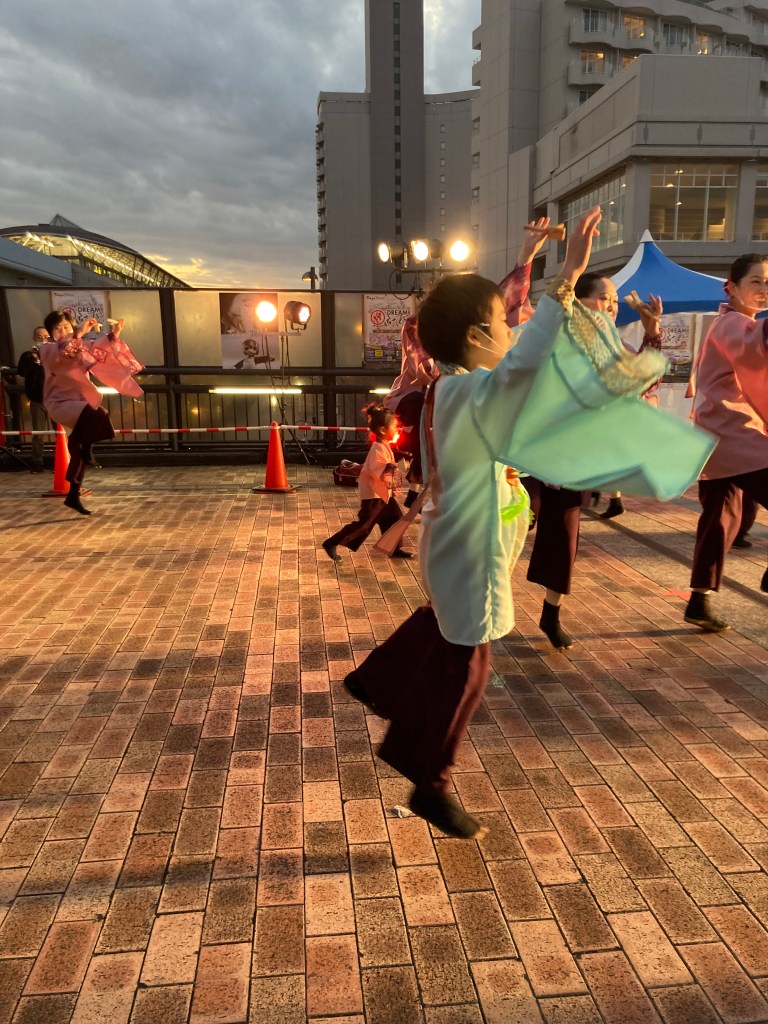
Most of the groups were made up about equally of men and women, and across a range of ages. Young kids, like this one flying along.

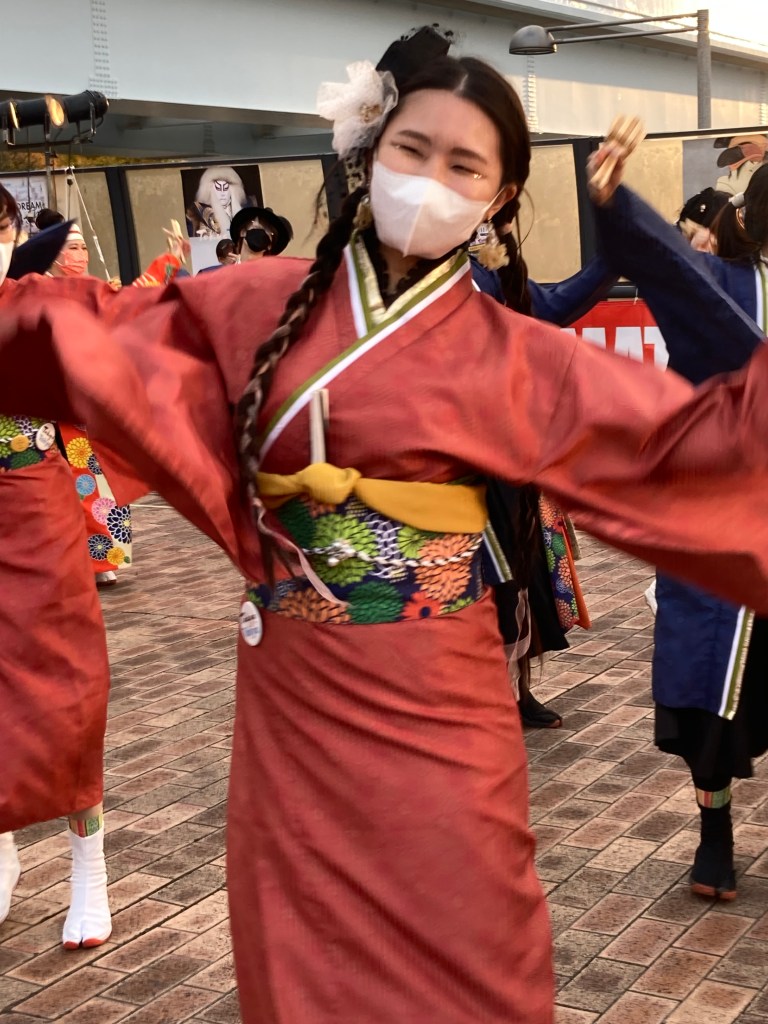
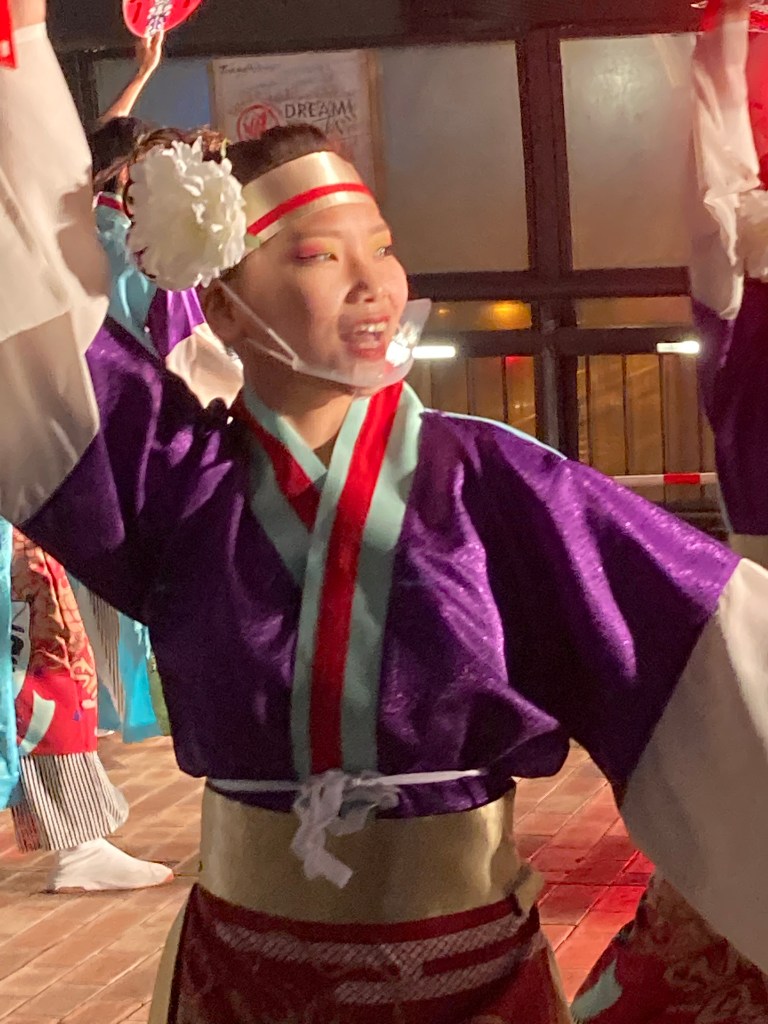
The costumes were amazing!

So much detail. And sometimes they would flip their jackets inside out and whoosh – a whole different look.

So what does it look like?

And here’s one with the kids

It was quite wonderful. There were some groups that could have been professionals, but mostly they were just folks, doing something they love. High school and university students. Moms, Dads and kids. Everyday people. And behind the costumes and the dazzle there was a real sense of joy as they danced for us.

It was so good.

Culture Day 2022

November 3 is a national holiday in Japan – a day to celebrate culture. The part of Asakusa where we are staying has a bit of a holiday feel to it most of the time – this is an entertainment district historically and it still has many theatres, bars and an amusement park. But it is also a residential area and there are many small businesses here. Big ones, too. Lots of bustle, all the time. And even the weekends have a sense of ‘getting things done’. This past Thursday was Culture Day and the vibe around here was very different. This wasn’t a work day. It wasn’t even a ‘doing the Saturday errands day’. It was a holiday. It didn’t hurt that it was 20C and sunny.

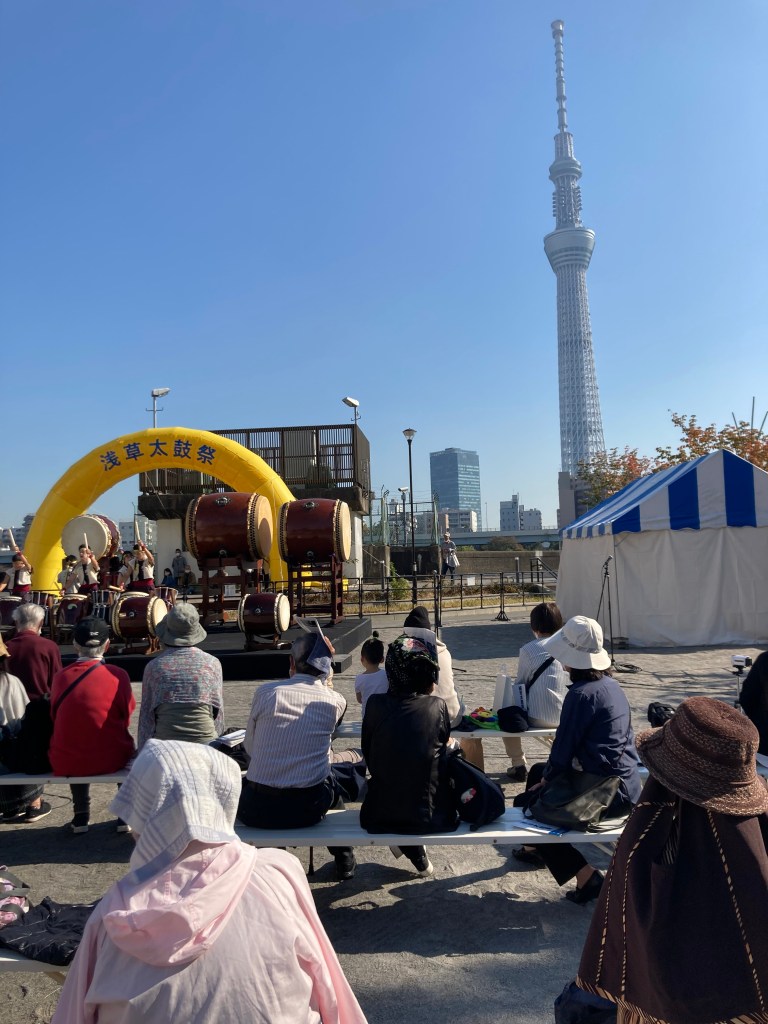
We had seen a poster for a taiko drum festival, and scoped out where we thought it would be, so off we went. One thing about a drum festival – it is not hard to find! Just follow your ears….

The park is right beside the Sumida River, with the SkyTree as a pretty cool backdrop. It was hot! I wasn’t the only person who forgot their hat and had to wear their handkerchief on their head, as you can see. Wilf kindly did not record that, but suffice it say I fit right in with the crowd – handkerchief on head, brochure as a visor.

Anyhoo. The drums. The 12 groups varied from big to small. Most of them had their own equipement, but the two big drums on the stage were shared. I expect they’re pretty difficult to move around.

It was all fantastic. Some groups had little kids, some seemed to all be made up of women of a certain age, others appeared to be student groups. All were highly choreographed and the skill level was amazing.

Volume up for this one!

It was great way to spend the afternoon. When we got back to our hotel we discovered that our street had a little ninja situation going on, but that is a tale for another day!

I’m glad I got to see the taiko festival. We have a taiko performance group in Victoria and they show up at all sorts of events and festivals. I always enjoy coming across them at the 10K road race, feeling the pulse of the drum before I can see them.

Tori no ichi 2022

When we visited Japan in 2018 one of the highlights was a visit to the tori no ichi festival in Shinjuku. I wrote about it here. It was a big deal, but we knew that the really big event was in Asakusa.

And – the way things worked out for this trip we are staying in Asakusa, so the festival is about a 15 minute walk away.

As a refresher – Japanese businesses often have a decorative object called a Kumade, which originally looked like a rake. The tines of the rake would be decorated with auspicious symbols and the idea is that you would ‘rake in’ good fortune and prosperity. Over time the ‘rakes’ have become more and more abstract and elaborate. Some have lost the handle all together and look more like a box or a basket.

My brother Bill is with us in Tokyo right now, and last night he and I decided to walk up and scope out where the festival is to happen. Things start at the stroke of midnight on the fourth of November – we figured they’d be in prep mode as the evening wore on. We were also concerned that it might be mob scene today and we may not be able to get to the shrine itself.

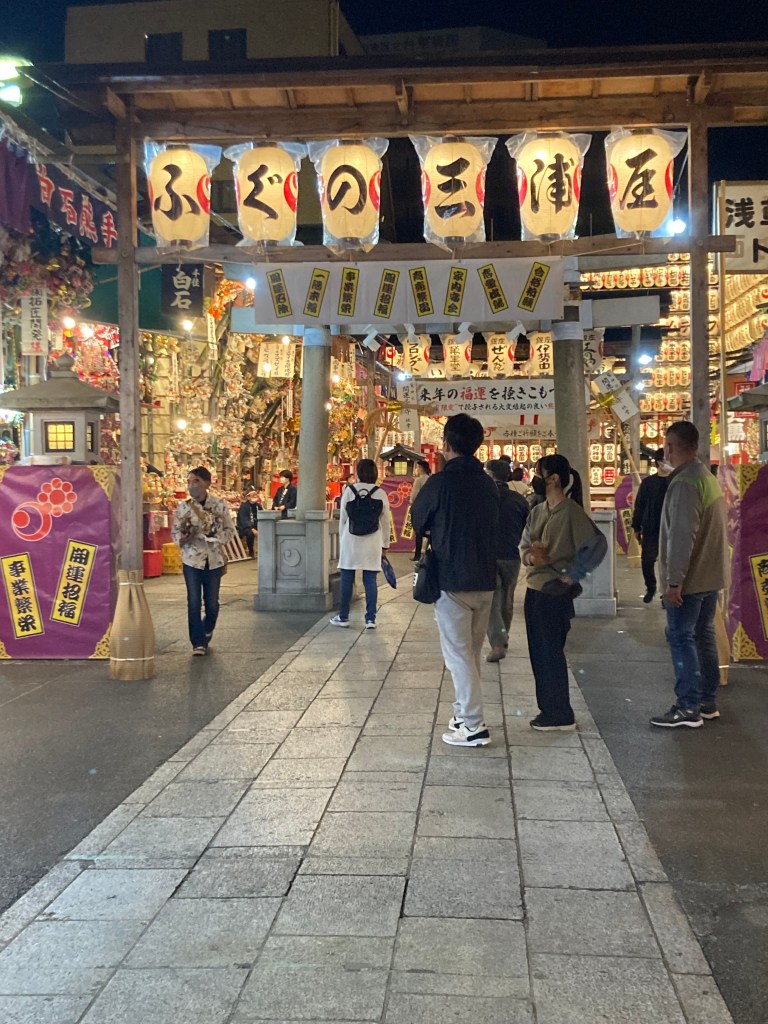
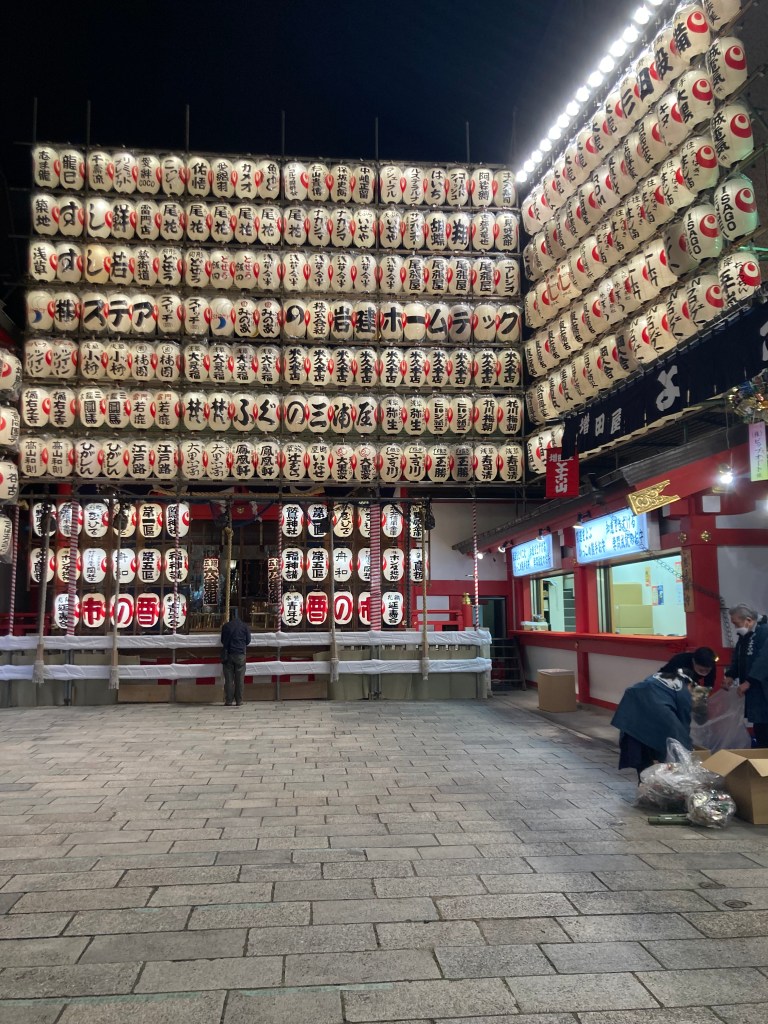
The shrine was ready and not too many people were there so we could go right in.

All decorated and ready to go.

The kumade stalls are ready.

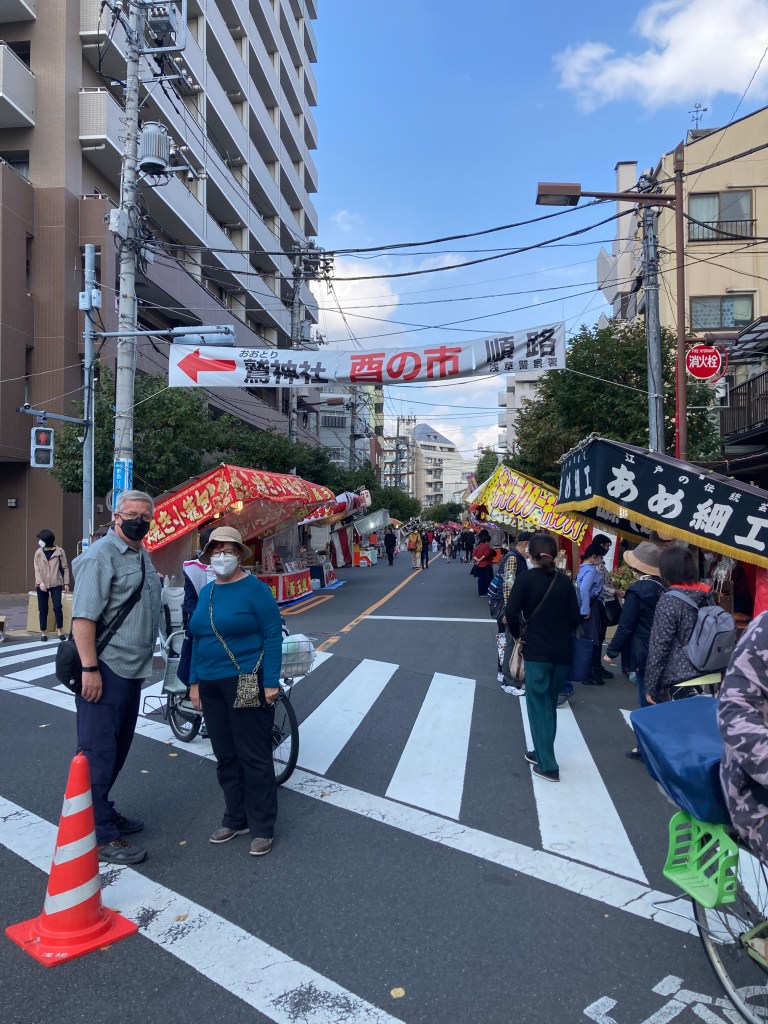
Today the food stalls were getting busy.

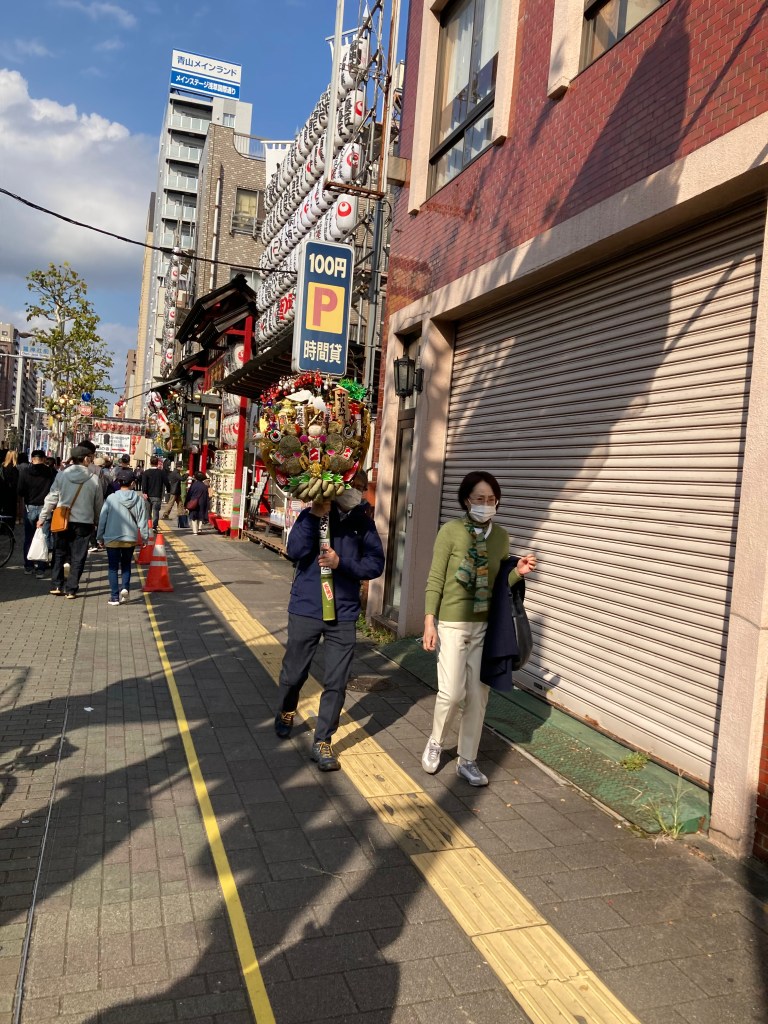
We knew we were in the right area because people were walking down the street with their new kumade.

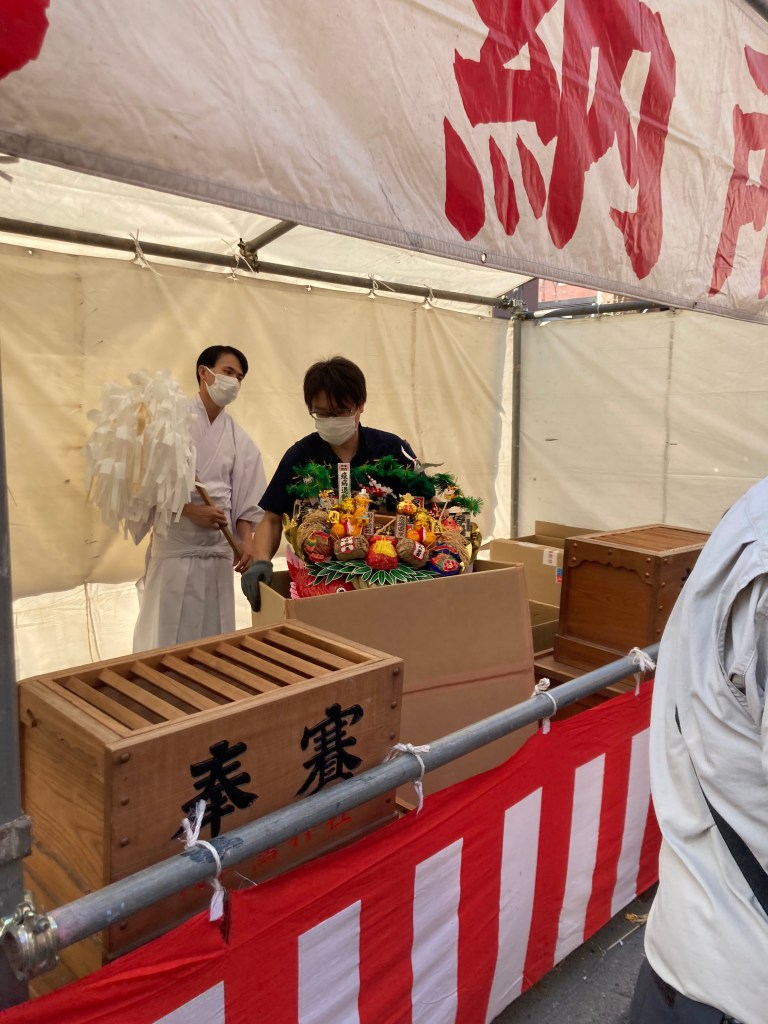
Part of the ritual is to bring in the kumade for the previous year – it is to be replaced with a bigger, better and more auspicious one for the new year. On the street there is a place to put the old ones. You see here a big kumade being taken away while an attendant from the shrine waves an implement called an onusa to purify the outgoing rakes.

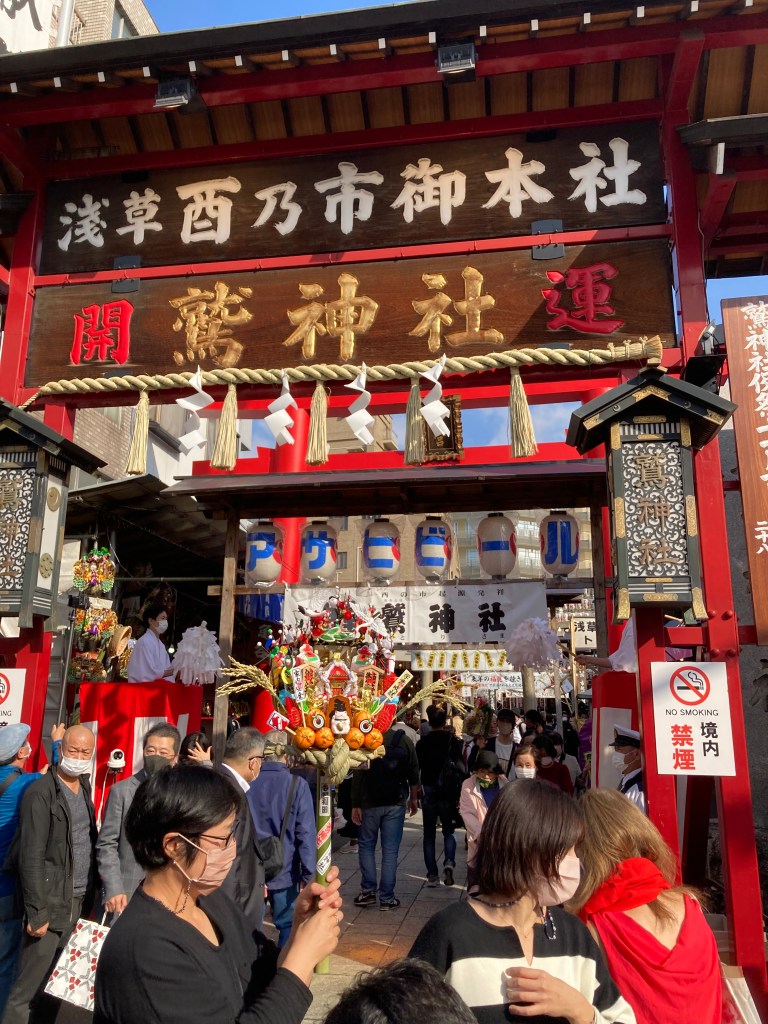
Two more attendants stand at the entrance to the shrine to purify those entering.

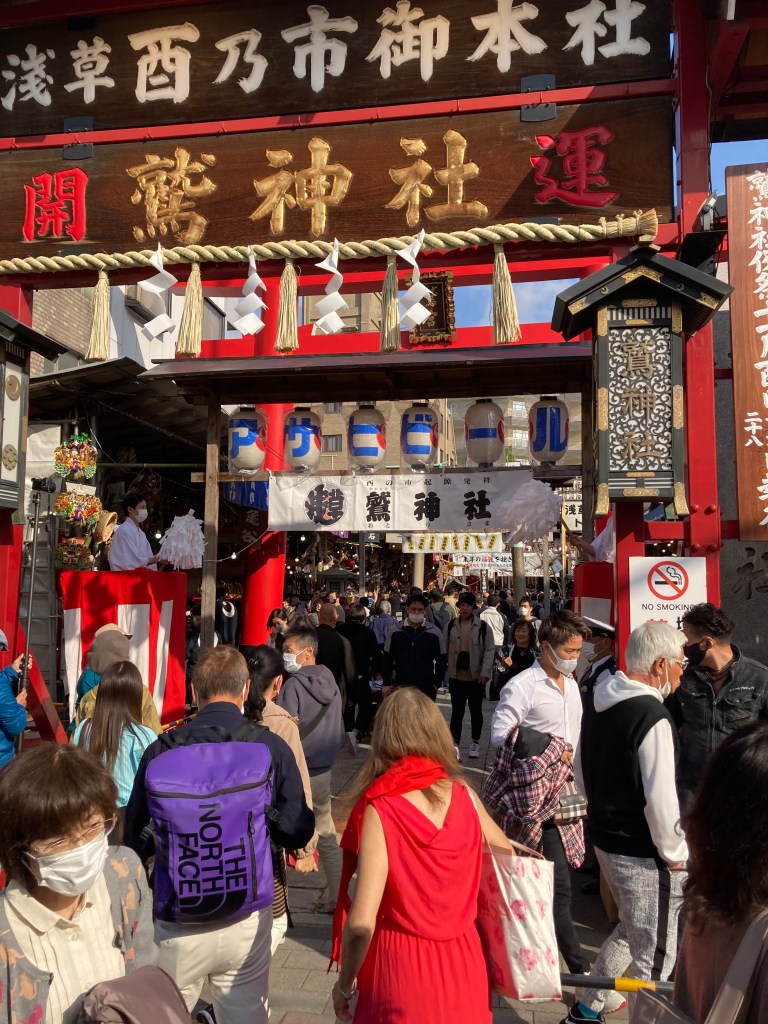
And it is getting busy.

Here’s a video of the scene in front of the shrine.

People are waiting to approach the shrine where they can ring the bell and make their prayer. At the same time a shrine official is up on a balcony area – perhaps making a blessing. In the video you can hear a voice close by – the police were managing the crowd very carefully. Although there were a lot of people it was not a press and we felt safe.

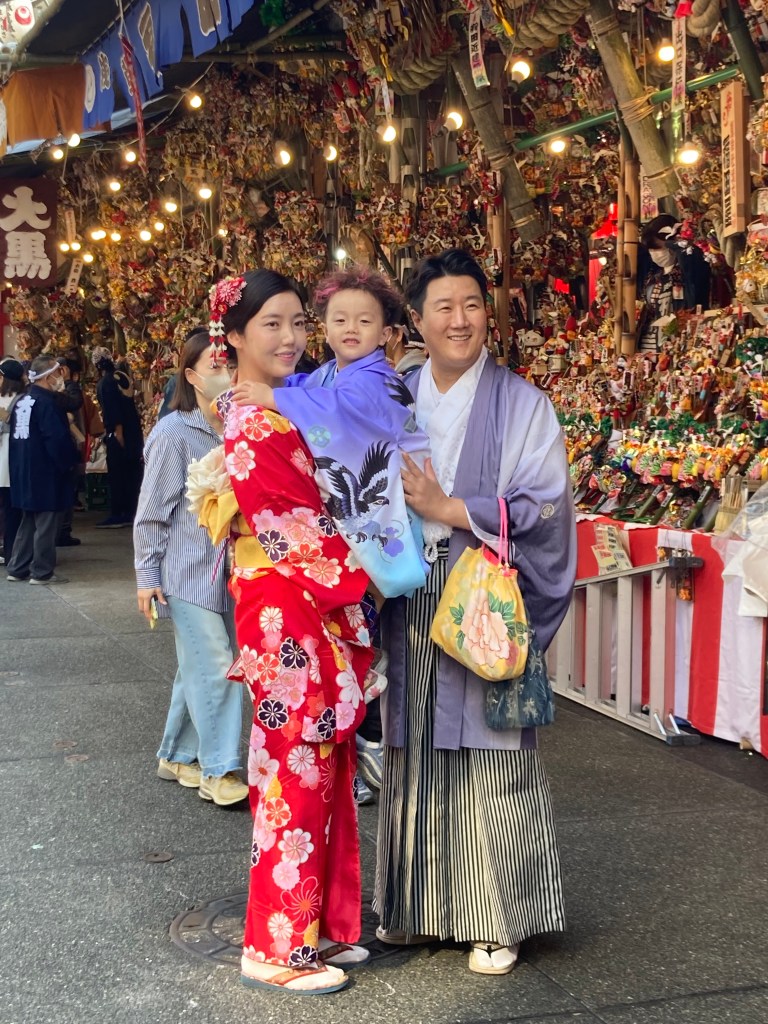
This family was having professional photos taken at the shrine – in the background you can see one of the hundreds of stalls selling the kumade.

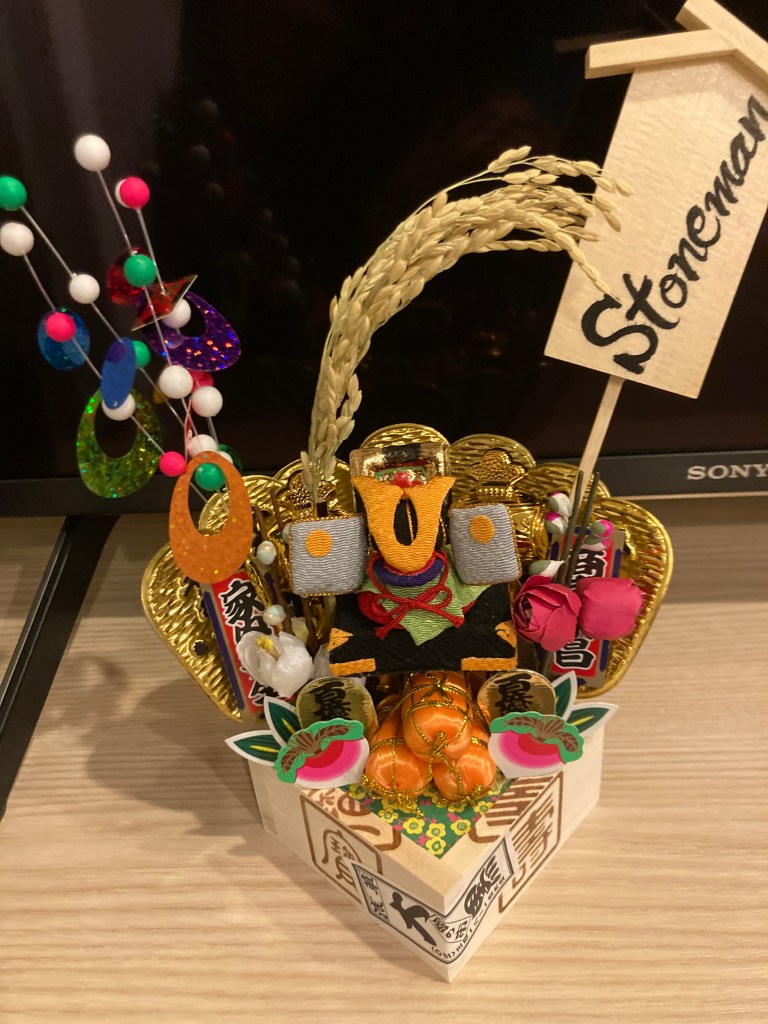
We did buy one. We were sidling along looking at the stalls and everyone was polite enough, but there was one guy who got to chatting with us. He told us about his products and we settled on one packed with auspicious emblems. He asked me to write my name on a piece of paper and then he went away for a moment. When he came back our little kumade in a box was all decorated:

I’m very impressed at how beautifully he wrote my last name. If I’d had to write my last name in Japanese it would not look nearly so beautiful. Sadly my writing in Japanese looks just like what you would expect from some with grade two level abilities. But by the way it looks like this typed out: ストーンマン .

Part of the routine of acquiring a kumade involves a ritual exchange of good wishes for prosperity in the coming year and a ceremony involving clapping hands. I think we acquitted ourselves well.

Of course the other reason to go to a festival is for the food. The shrine itself is quite small so the food stalls spill out through the neighbourhood for blocks and blocks.

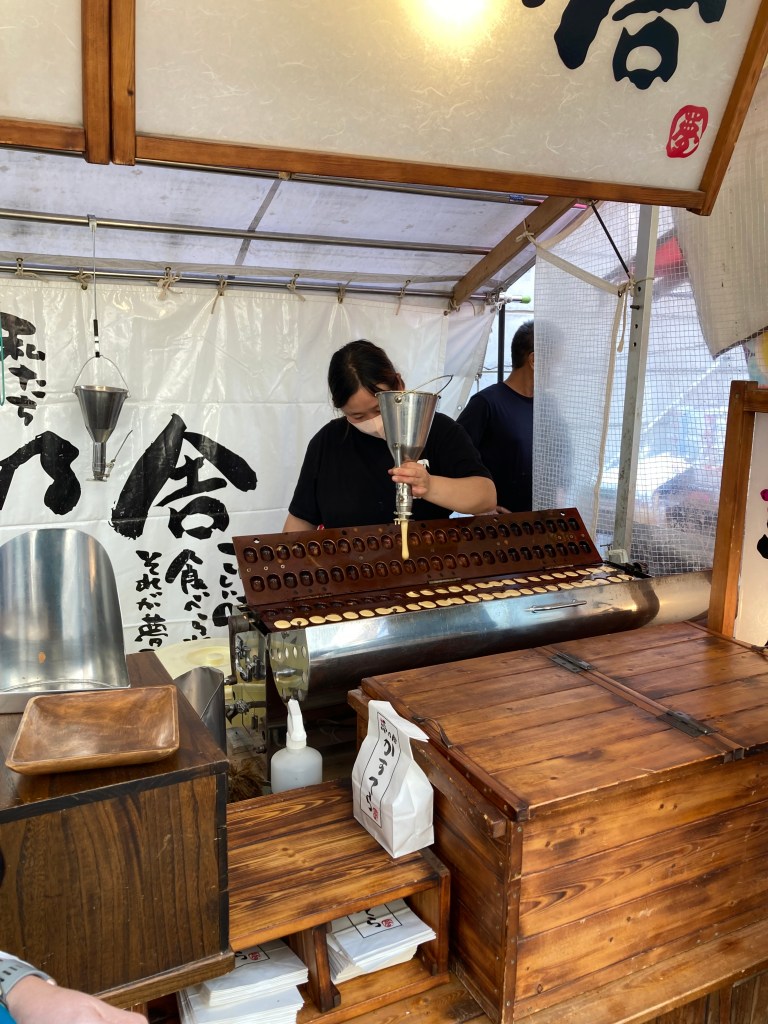
The festival equivalent of mini doughnuts are these little cakes called castella (かすてら). Lovely little sponge cakes.

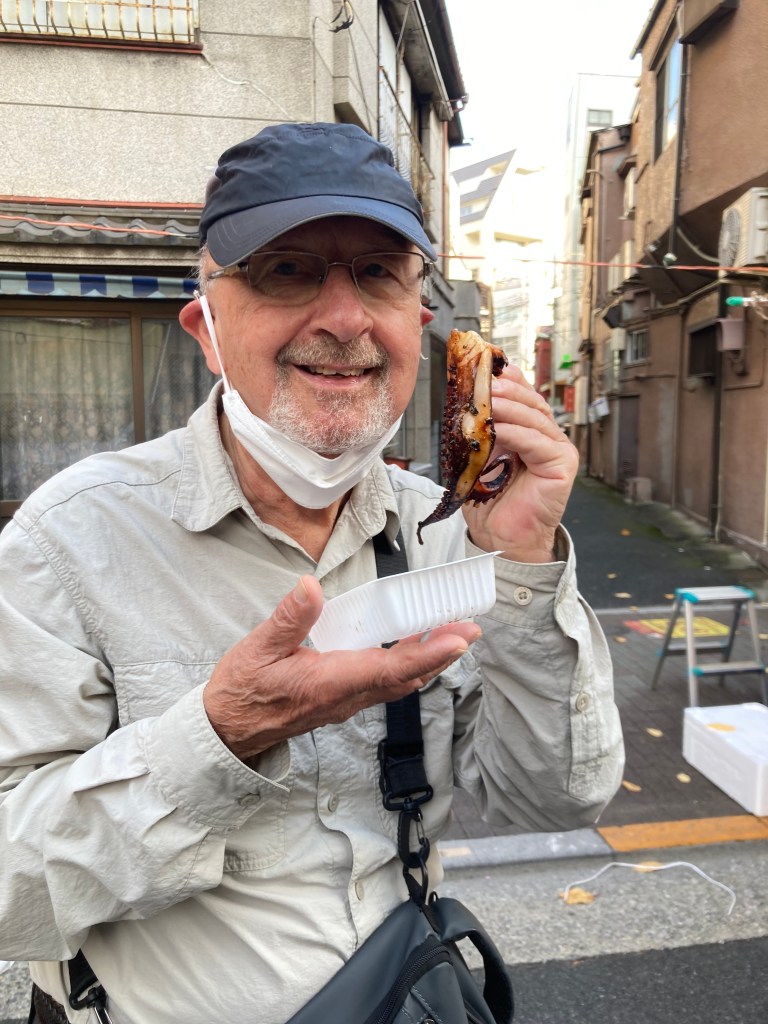
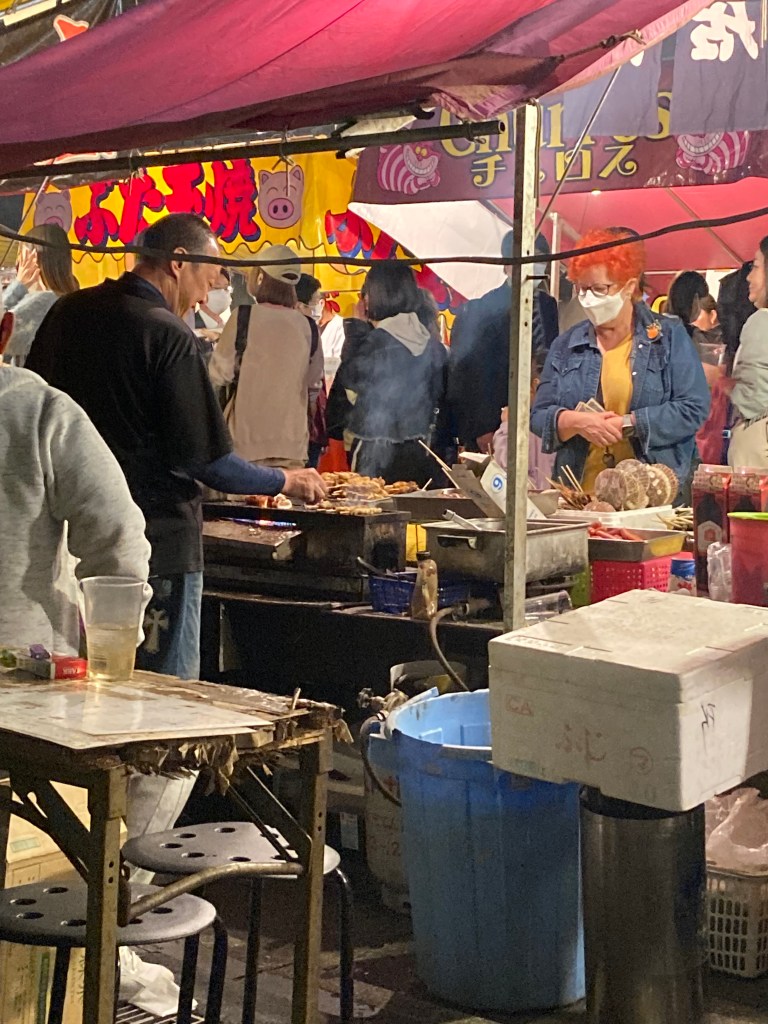
And if there is an octopus, you know who will find it! There was everything you could imagine. The only thing we couldn’t find was a place to sit down! It is one of the few times it is appropriate to walk along the street, eating and drinking.

We ate the sausages and karaage chicken before we got pictures! So good!

I expect that by tonight (Friday night) the whole area will be just heaving with people. We went out for dinner tonight and there were people walking about with their new rakes, parading them down the sidewalks as they returned to their home or business, secure in the fact that they would be raking in good fortune for another year.

A first for me – Michelin Dining

Did you know that Tokyo has the most Michelin starred restaurants of any city in the world? There are more than 200 restaurants in the city that have a star.

I’m not interested in chasing after restaurants with rankings like that – I’m pretty basic in my food preferences and would rather eat a well cooked down home meal than a cheffy concept meal.

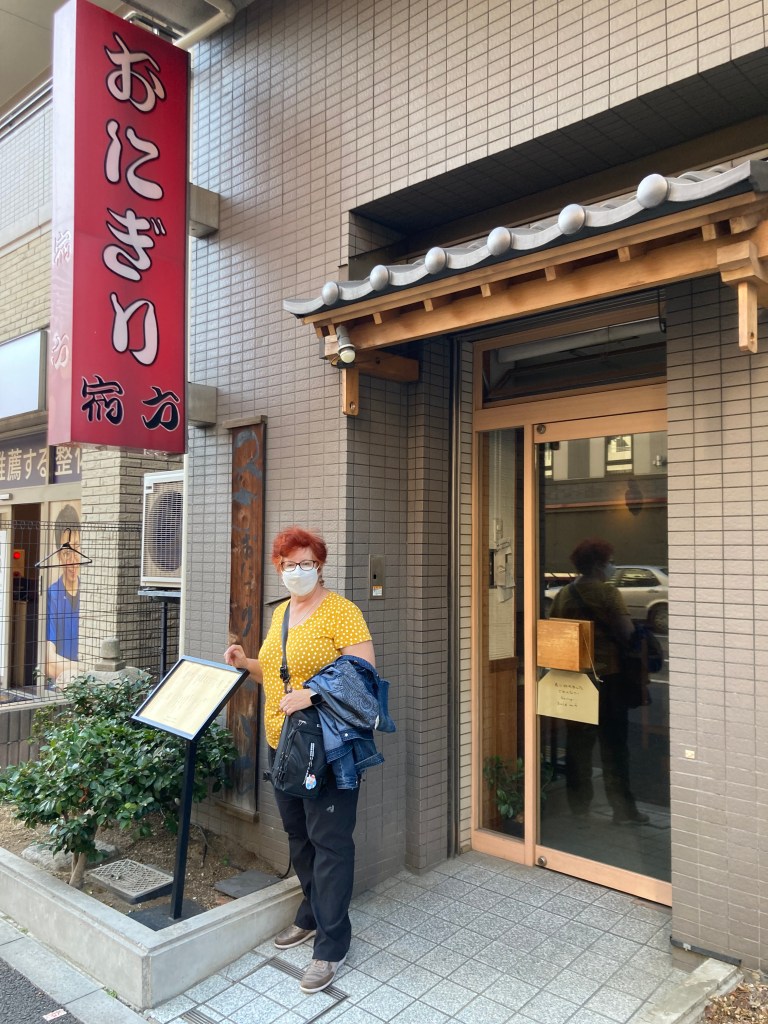
Having said that it turns out that there is a restaurant a few blocks from where we are staying that has been noted by the Michelin people. And it turns out to fit my ‘not too fancy’ criteria.

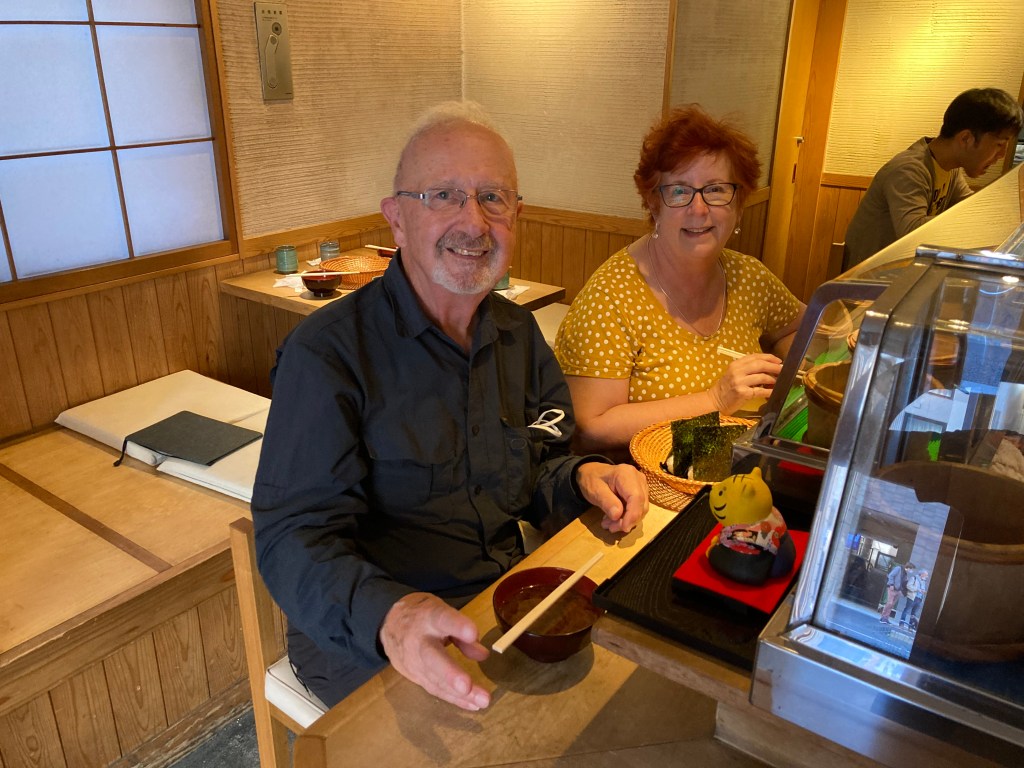
This is Asakusa Onigiri. I didn’t expect that we would be able to get in to the restaurant, but we scooted in as the last two people for lunch service. There are two tables for four people and six seats at a counter. It looks like a sushi restaurant with all the ingredients displayed behind the counter, and a chef preparing the onigiri as they are ordered.

And yes, I’m talking about onigiri – rice balls! The lunch set is a cup of tea, a bowl of miso soup and two onigiri.

Our soup has arrived, and the tray between us has the first two onigiri (grilled salmon filling).

At this restaurant they wrap the nori (seaweed) around on one side and the other side of the sheet of nori stands up like a wing. Because the onigiri is made and immediately handed over the nori does not have time to get soft, so the contrast between the crispy outside and soft warm rice inside is perfect.

For our second ‘course’ I had the pickled ginger filling and Wilf’s had tiny little shrimp boiled in soy sauce.

And all this for about $6.00 per person. Some might say that’s alot for rice balls that can be had at the 7-11 for two dollars, but these were Michelin approved rice balls. And it was a great little meal!

A tale of two festivals.

I was going to say that Japan has a lot of festivals, but then it occurred to me that maybe we just don’t have as many where I live. And in a country of many people living close together with a deep deep culture – there is a lot to festival about. So- two examples, quite different.

Wilf told me that there was a pickle festival to be seen. At first I was thinking ‘okay – pickles. Like dill pickles?’ With a bit of reflection I realized that was probably unlikely. Japanese cuisine has a wide variety of pickled foodstuffs, so who knew what to expect? The website we found said that the festival happened near a particular shrine and involved between 400 and 500 food stalls.

Well then, I’m in!

The story of our travels around Tokyo usually involve us having a plan of how to get to a place, with detailed instructions regarding the transit system. The weak point in the plans is always the same – the point at which we come to the surface. We know where we want to be, but it can be surprisingly difficult to figure how to get started – which way is north? Do we turn right or left. Oftentimes we have to get moving before the wi-fi can decide where we are and tell us which way to go. This can lead to walking back and forth. And muttering.

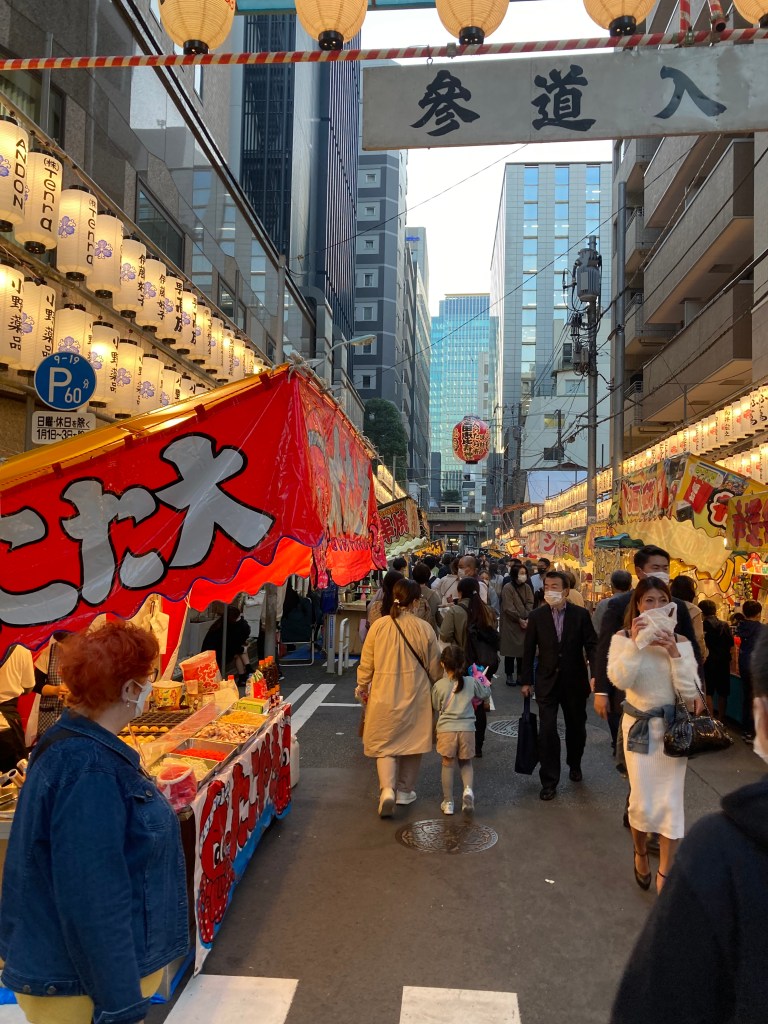
When we came to the surface this time it was just falling dusk – a lovely time of day. We started off in what we believed was the direction. And right away – in the distance – we could see the lanterns. Good sign!

You know how the website said between 400 and 500 food stalls? I really didn’t think about what that meant. What it meant was blocks and blocks of streets filled with stalls. And those streets were quickly filling up with people.

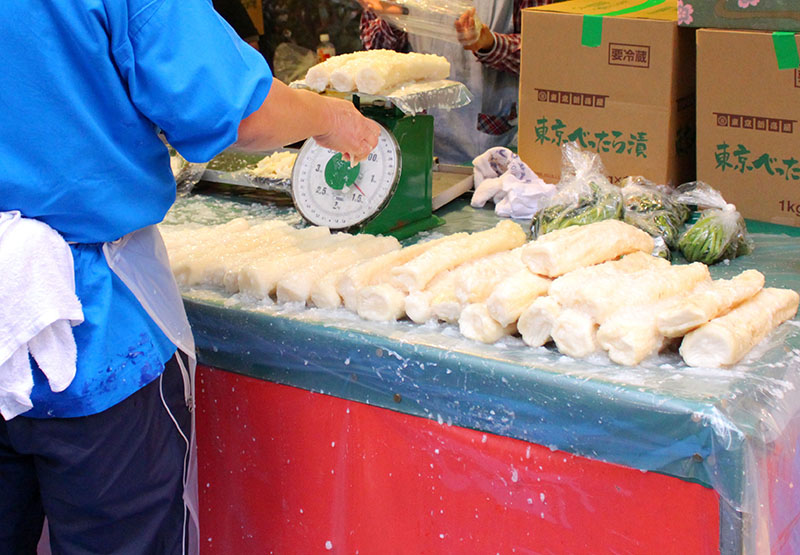
Bettarazuke (べったら漬) pickled daikon radish

These are the pickles for which everyone has come. And people were buying them to take home in large quantities

Here is the street early on. See what I mean about the lanterns?

The thing about this many stalls is it is actually hard to pick anything. Lets assume 450 stalls. A certain percentage are selling the pickled radishes. We probably passed 30 different sellers of okinomiyaki (お好み焼き savory pancakes), and at least as many takoyaki (たこ焼き deep fried octopus balls) vendors. And then there yakisoba (fried noodles with other stuff) and it went on and on.

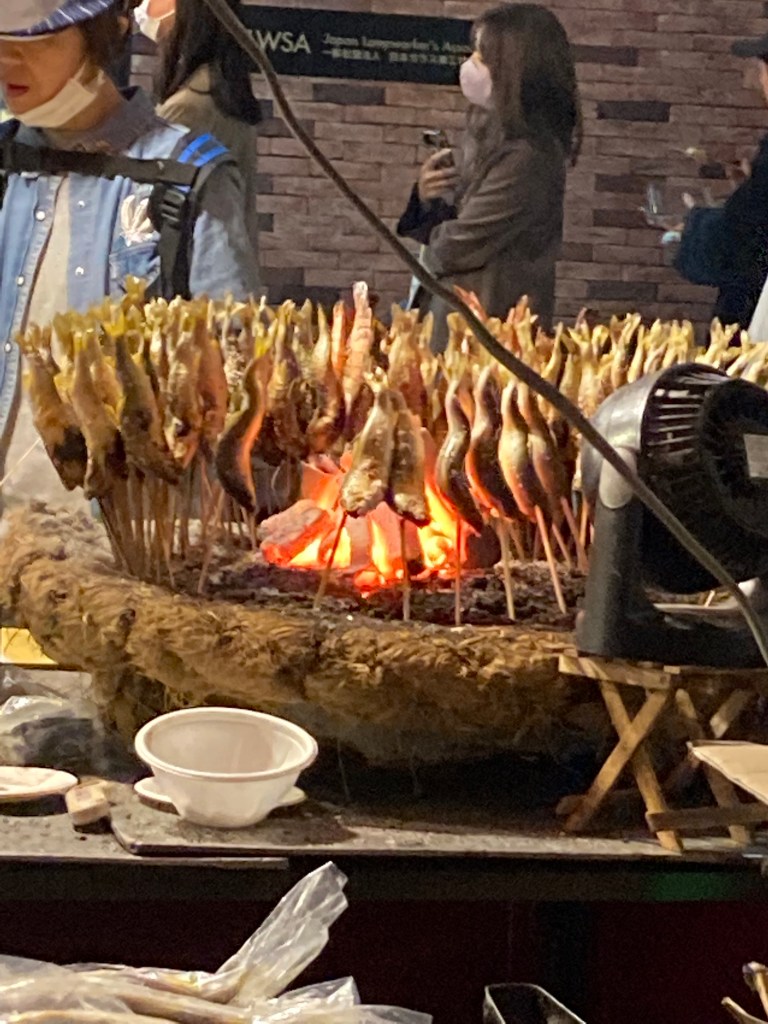
And then we saw this:

These are little fish and big shrimp being grilled over a charcoal fire, turned and turned and turned until they were all cooked and smokey.

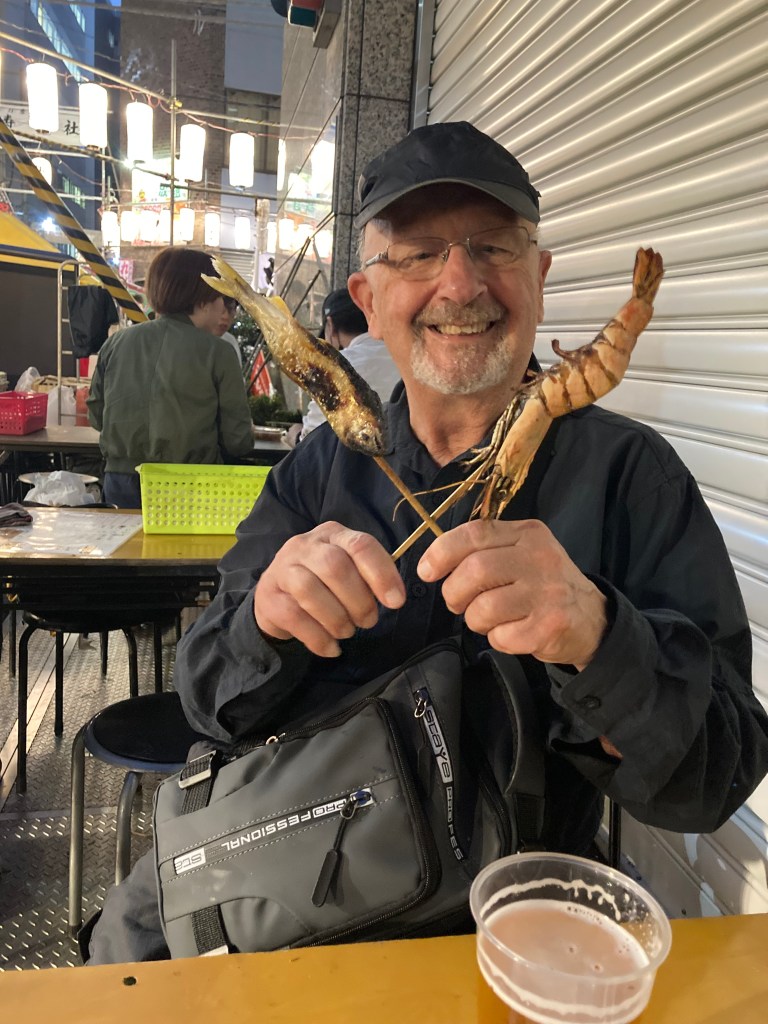
And beer. And a place to sit.

Picking out things on sticks for the grill.

That was a fun thing to do, and it is a festival that has deep roots in the culture.

There was another street fair this past weekend near the Koen-ji train station. The ads said there would be performances in the area, a beer garden, things to see on the shopping street. Among the performances were to be folk dancers. Professional wrestlers. Musicians. Samba dancers. Does that not sound like an interesting combination of things to see?

We fell out the door of the train station right into the square where the stage was and found a wall to perch on. There was a folk singer singing very passionately, but it is hard to really connect when we didn’t understand a word she was saying. But in the background we could see – feathers. And I had kind of been wondering if when the program said Samba if that was a Japanese dance form, or did they mean Samba like from Brazil?

Turns out they did mean Samba from Brazil! Lots of tail feathers being shaken there!

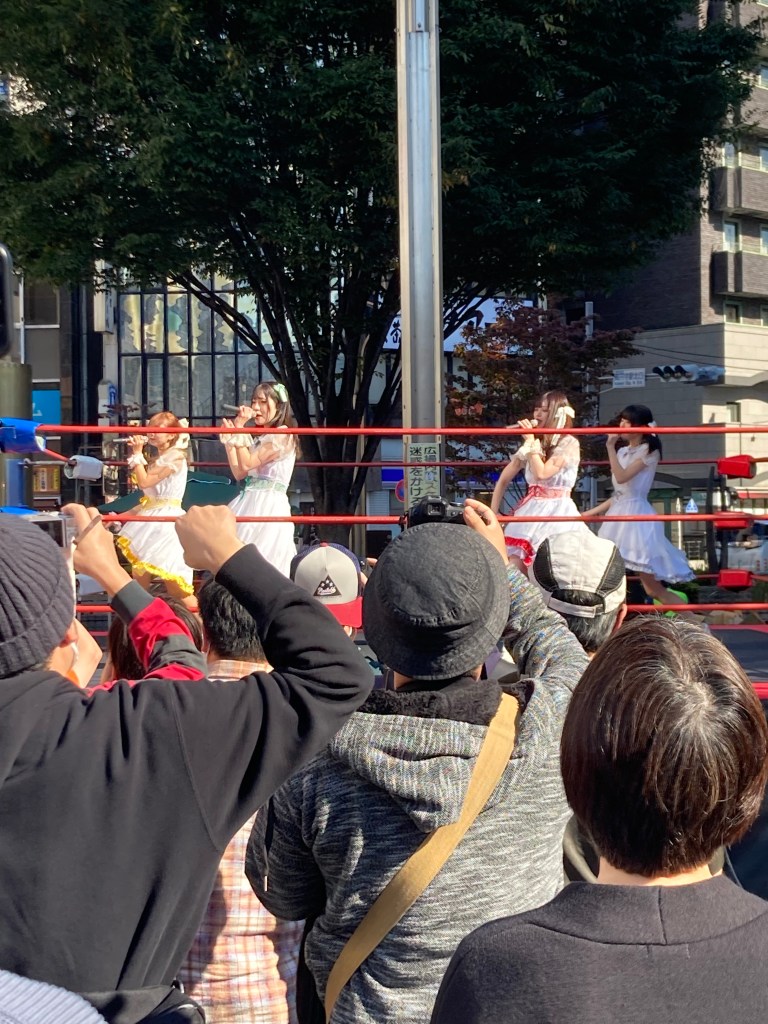
This was followed by two different groups of young women in fluffy white dresses singing and dancing their hearts out. JPop Idols, working their way up the ladder.

The thing I’m actually trying to capture in this picture isn’t so much the group. The people – the men – in front who know every word, every gesture and every dance move and are following along. There were a lot of them. We couldn’t tell if this group was performing their own music or covering the tunes of of more famous singers, but the crowd did know the songs, were singing and dancing along.

We did find the beer garden, which was held in the front and back of a small apartment block next to the train tracks. Beer, food, music, families and lots of sunshine. This felt less like a festival of deep cultural significance, and more like a neighbourhood inviting everyone down for a fun afternoon in the sun. We never did see the pro wrestlers. Or the folk dancers.

The folk dancers did, however, show up practically on our street last night!

We arrived right at the tail end of their performance, which had become a big street dance in front of the Don Quixote store.

Grandma’s Harajuku

Harajuku is an area in Tokyo that caters to the young and the hip. The main shopping street, Takeshita Street is a pedestrian street packed with clothing stores, cosmetic shops and places to eat cute trendy food. It is crazy busy on the weekend, and near impassible on a Sunday as the young and beautiful come to shop and to be seen, and everyone else comes to see them.

Been there, done that.

But there’s another part of town that services a different clientele.

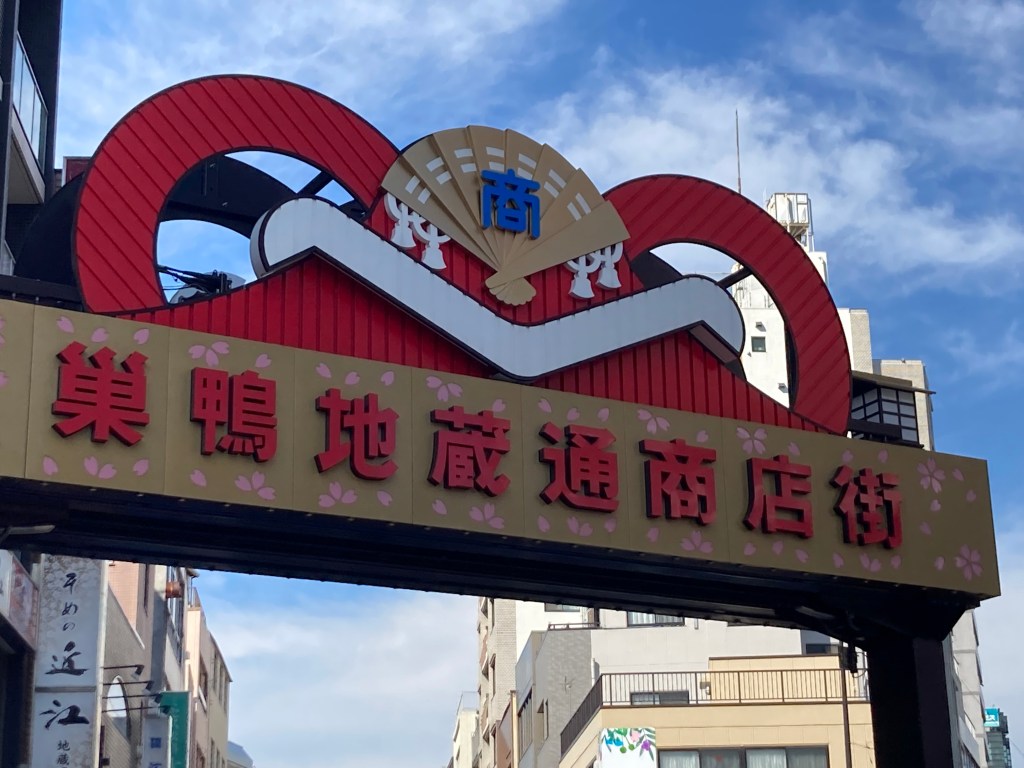
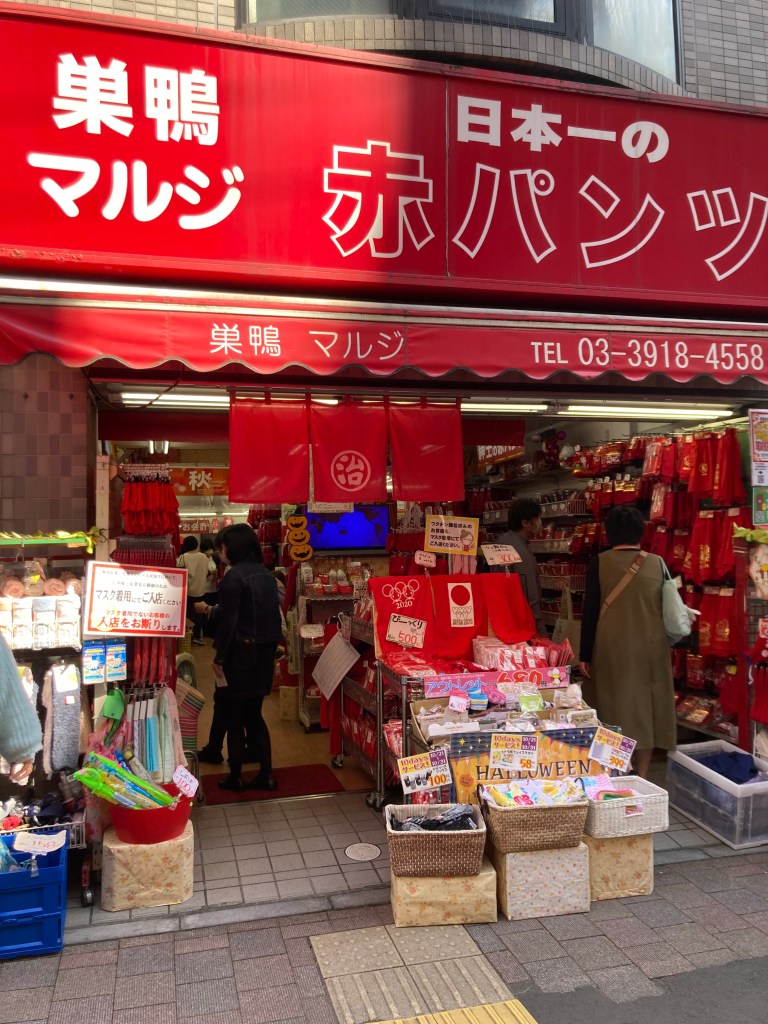
This is the entrance to the shopping street in the district of Sugamo, known as Grandma’s Harajuko. Here, the street is wide and flat. There are benches upon which one can rest and stores that cater to a clientele looking for comfort over trendiness.

We were there on a Sunday afternoon, and it kind of reminded us of our Sidney – lots of senior citizens out for a stroll, a snack, some shopping.

Red is colour associated with strength and vitality, and apparently it is not uncommon to give people over 60 articles of red clothing to ensure that they remain energetic and vital.

There is, of course, a store for that:

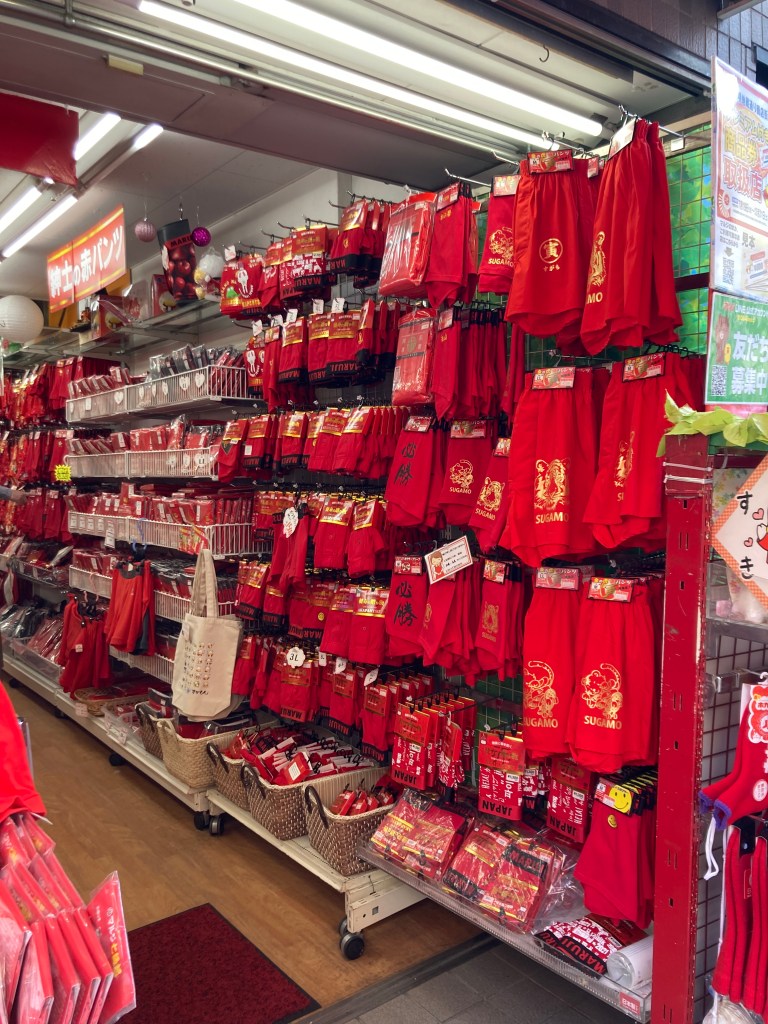
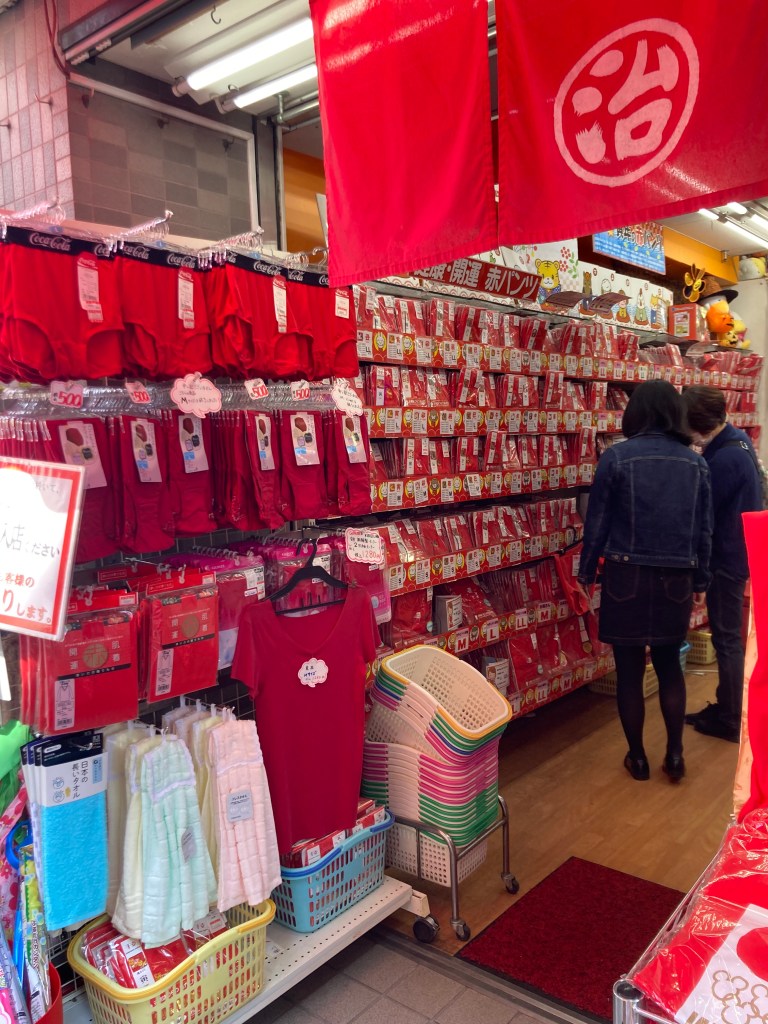
A store dedicated, mostly, to red underwear.

Boxers for the gents

Briefs for the ladies.

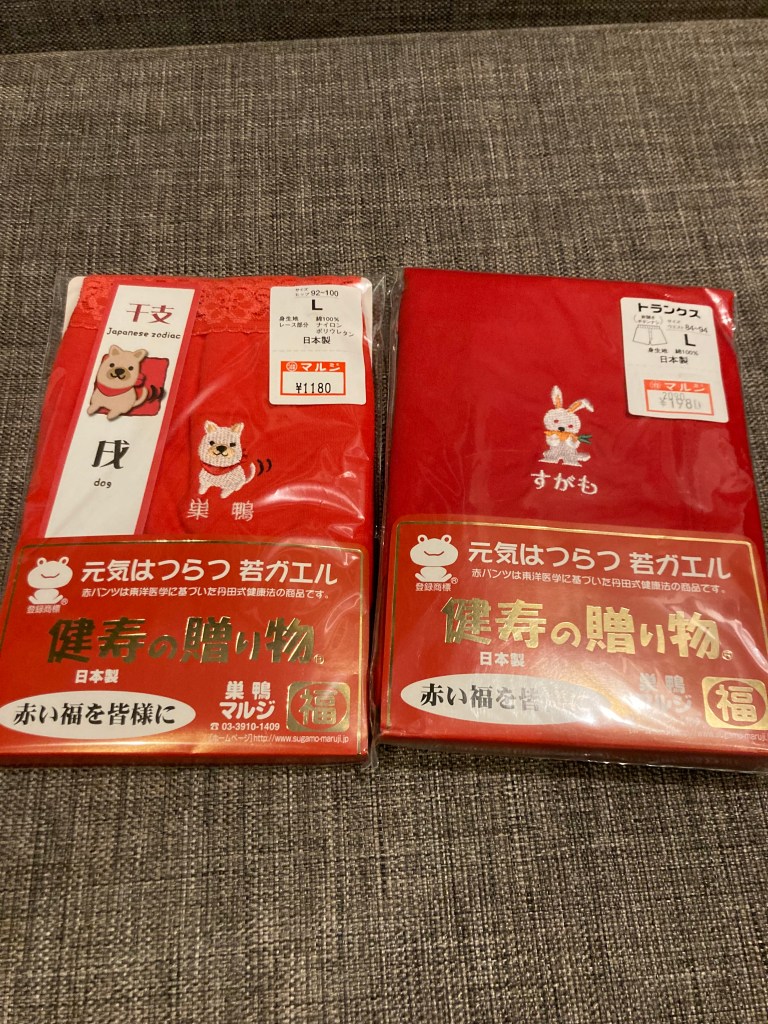
Why so many, you say? To get the full effect you need to have red underwear emblazoned with the symbol from the Chinese Zodiac that matches your birth year.

And so – the year of the dog, and the year of the rabbit. Ready to be pressed into service…..

There was a slip of paper tucked into the bag with information about how the wearing of red panties can stimulate the Qi energy in the body without having to learn all sorts of esoteric breathing techniques. It concludes with the following statement

Please note that our Red Panties may cause you to suffer from insomnia due to their stimulating effect, so please change into underwear of an ordinary color when you go to sleep.’

Well then, we’ve been warned!

Another type of aquarium

If you’ve been with me for awhile you know that we like to visit aquariums. We’ve been to some great ones and always look forward to them. Today we visited an ‘aquarium’ unlike any we have visited before.

It is called the ‘Art Aquarium’, and it is not new, even though it is in a new location. We watched a drama series on Netflix called ‘Fishbowl Wives‘ in which the Art Aquarium was featured, and then this summer the NHK series Japanology did a program about gold fish, and there it was again.

The new location is on the 8th floor of the Ginza Mitsukoshi department store (the kind of department store where the main floor escalators are flanked by Boucheron and Bulgari boutiques).

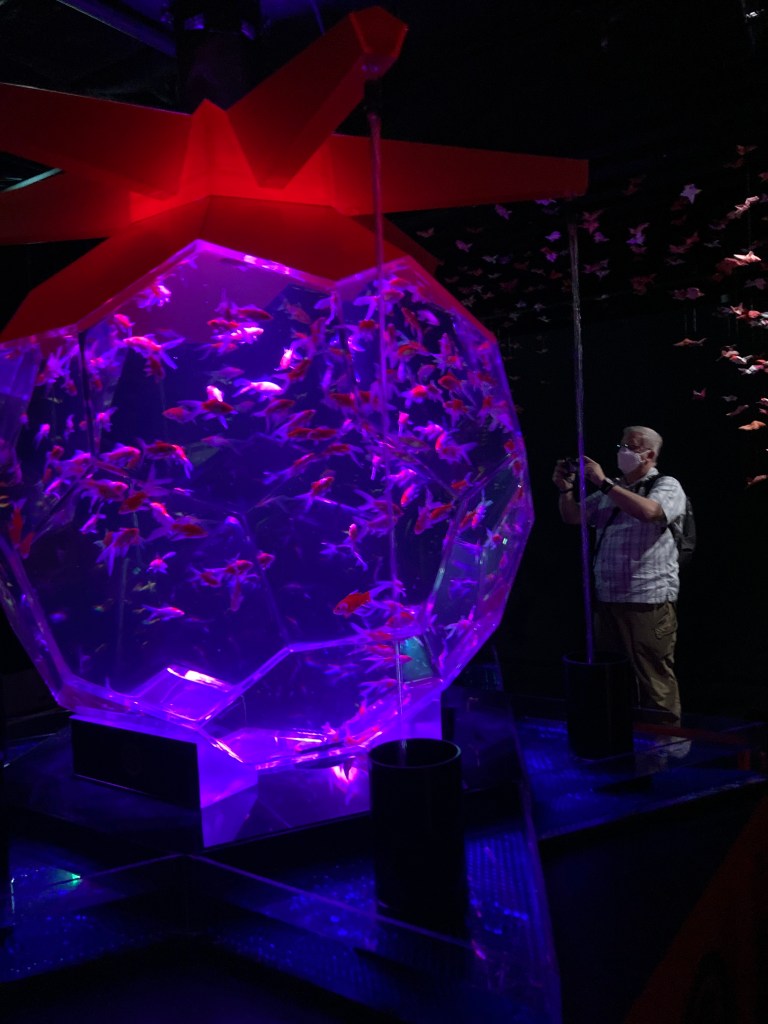
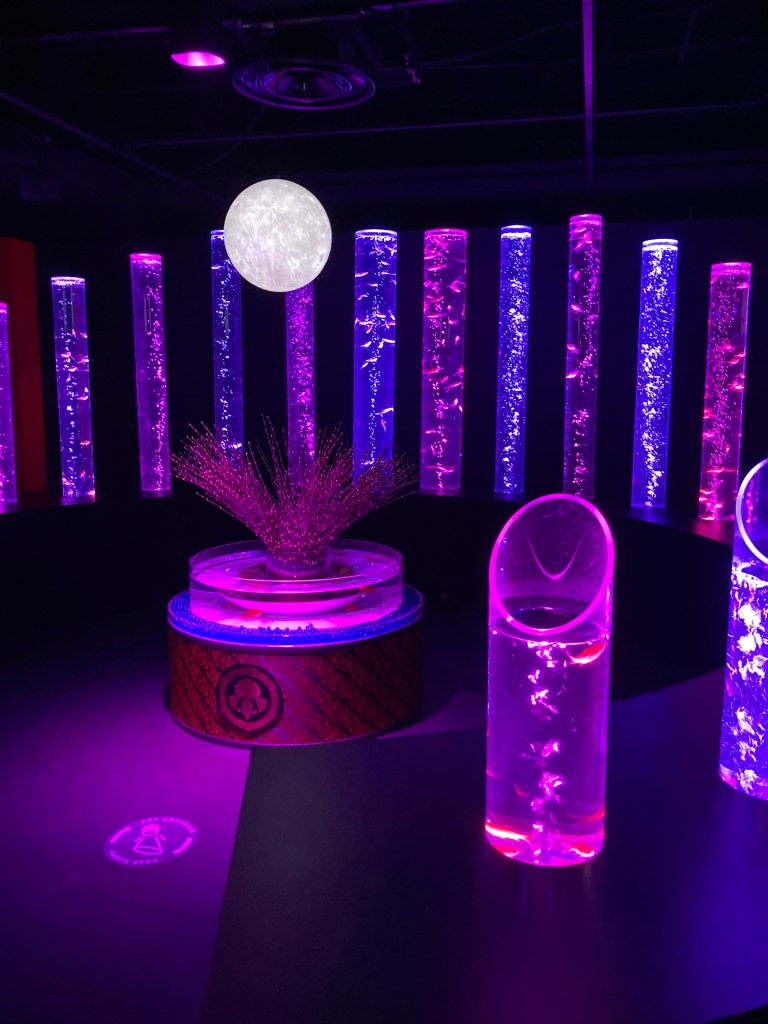
The exhibition is an exquisite little jewel, and is all about 金魚(kingyo) – aka gold fish.

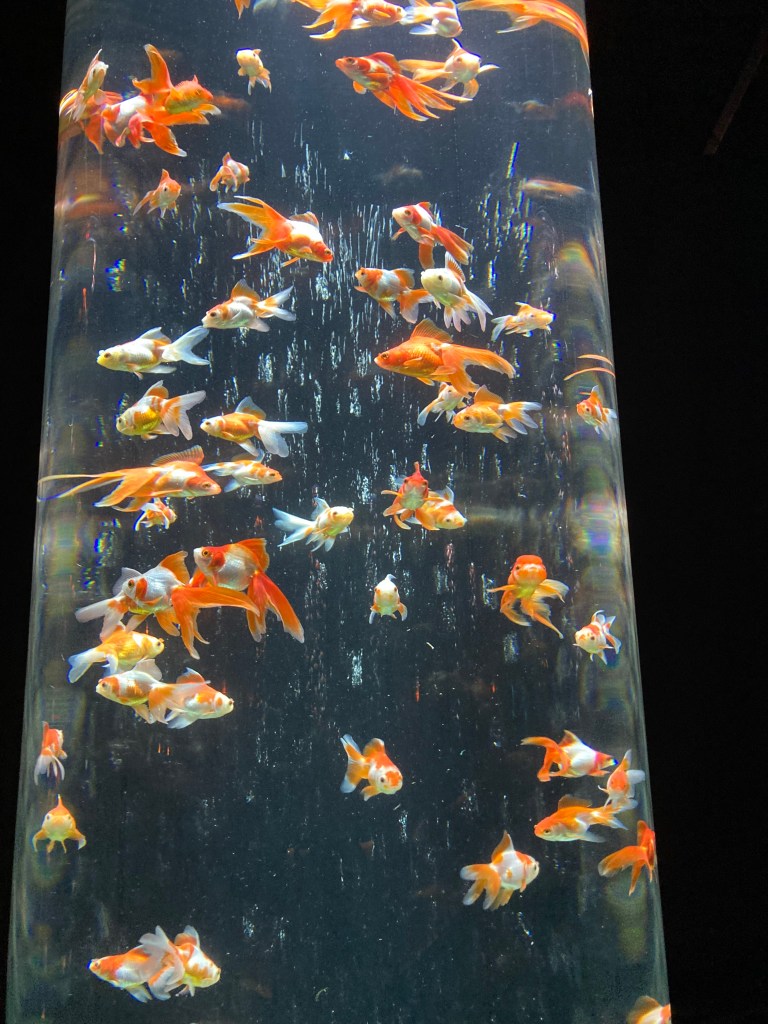
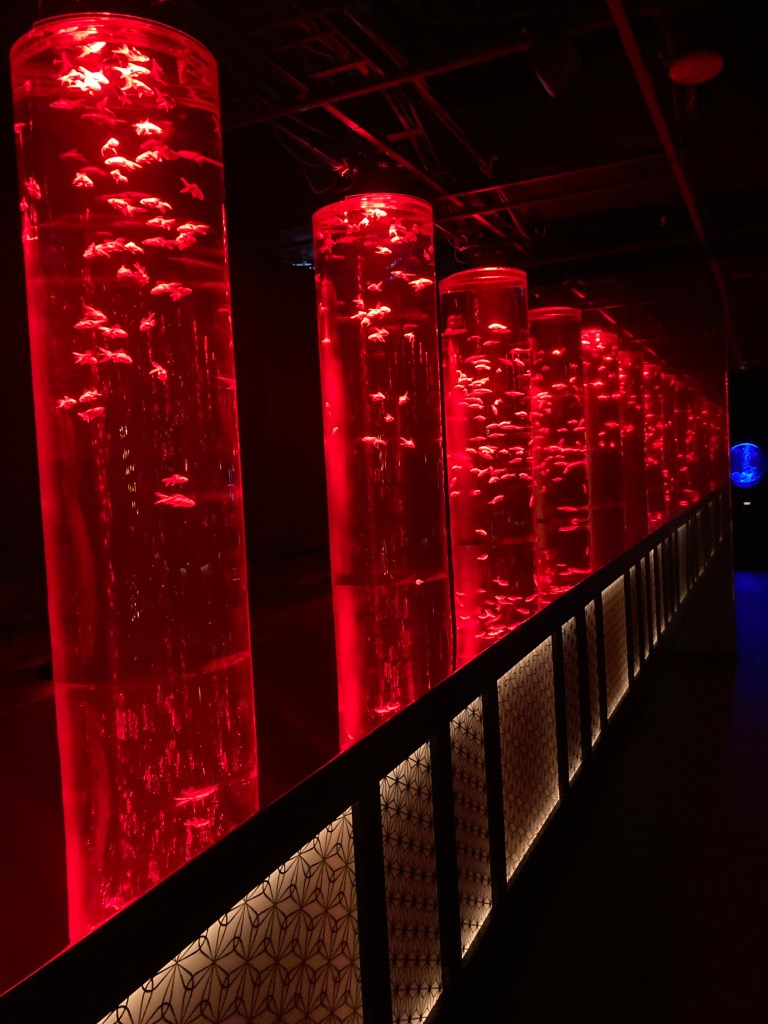
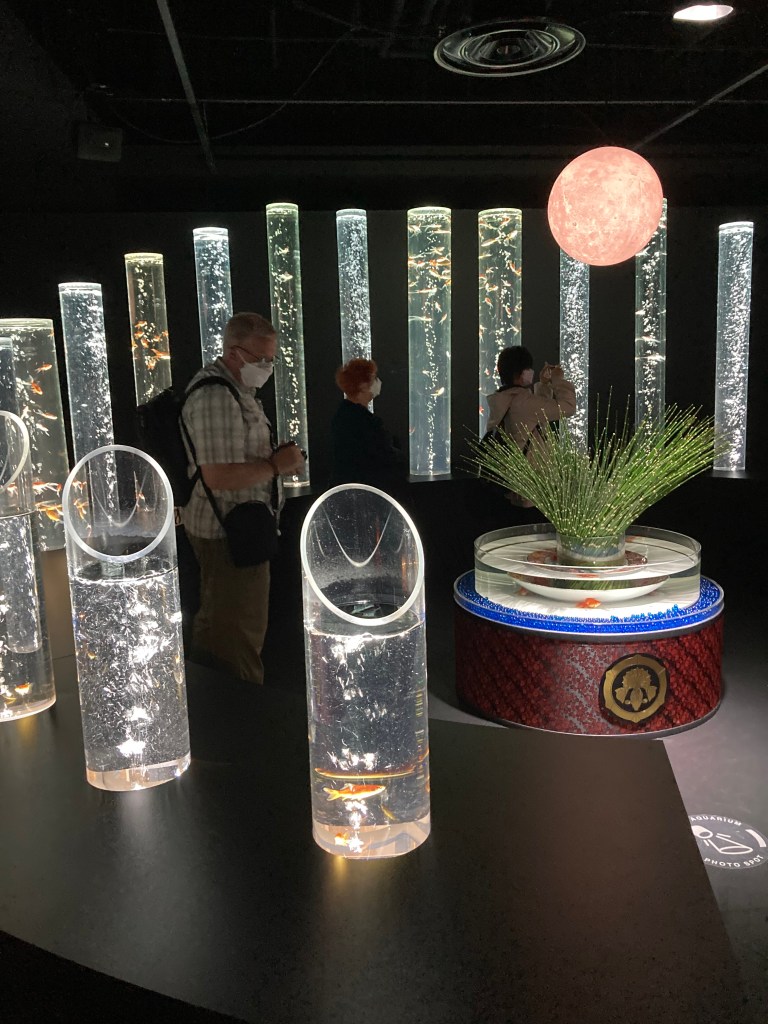
Everything about the design was so interesting. Here – columns of small goldfish.

But with lights and mirrors there is suddenly and infinity of goldfish…

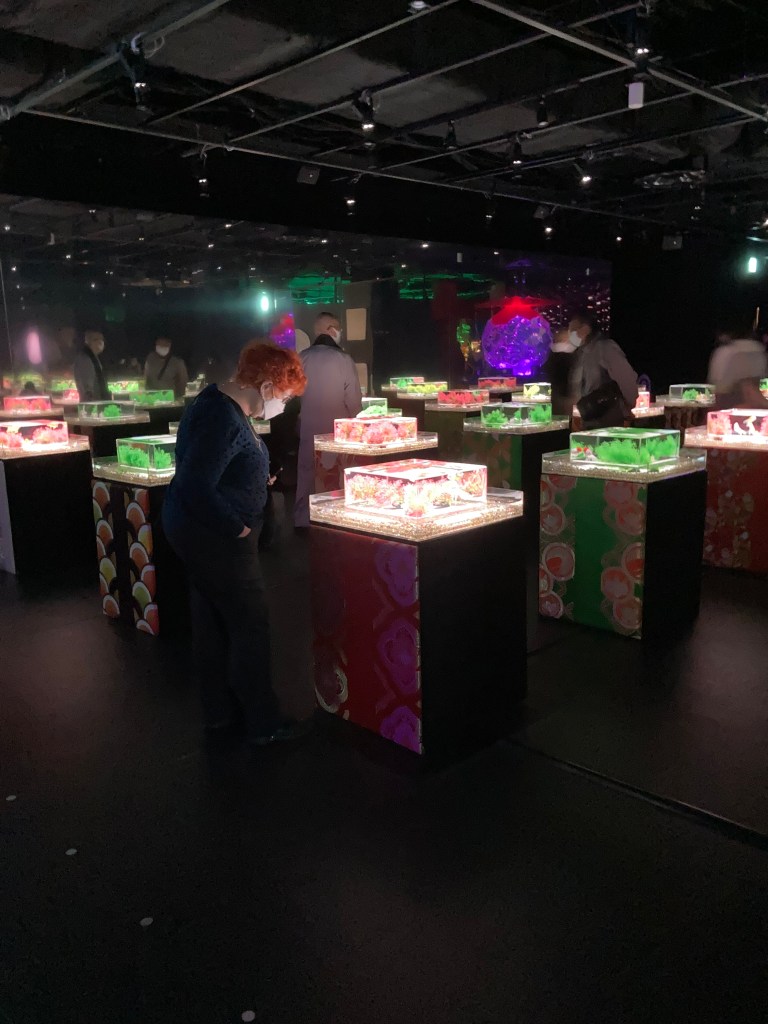
In this area the fish are displayed in small shallow tanks. The pedestals are wrapped in beautiful obi fabric.

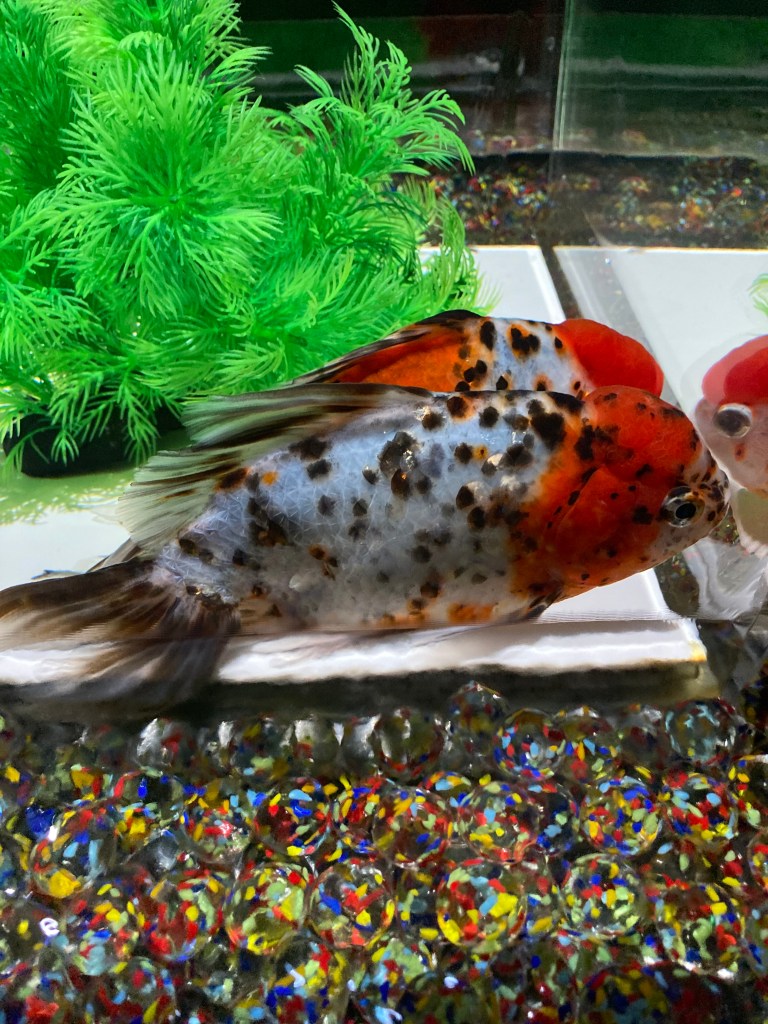
I’m here just for the beautiful marbles, let alone the pretty fish! Each one is a little work of art.

In addition to light and mirrors for effect the magnification effect of water is used. Those fish are not actually as big as they look. The big glass ball is huge, but the fish are normal goldfish sized. (By the way – that’s my brother Bill, who joined us on our adventure yesterday!)

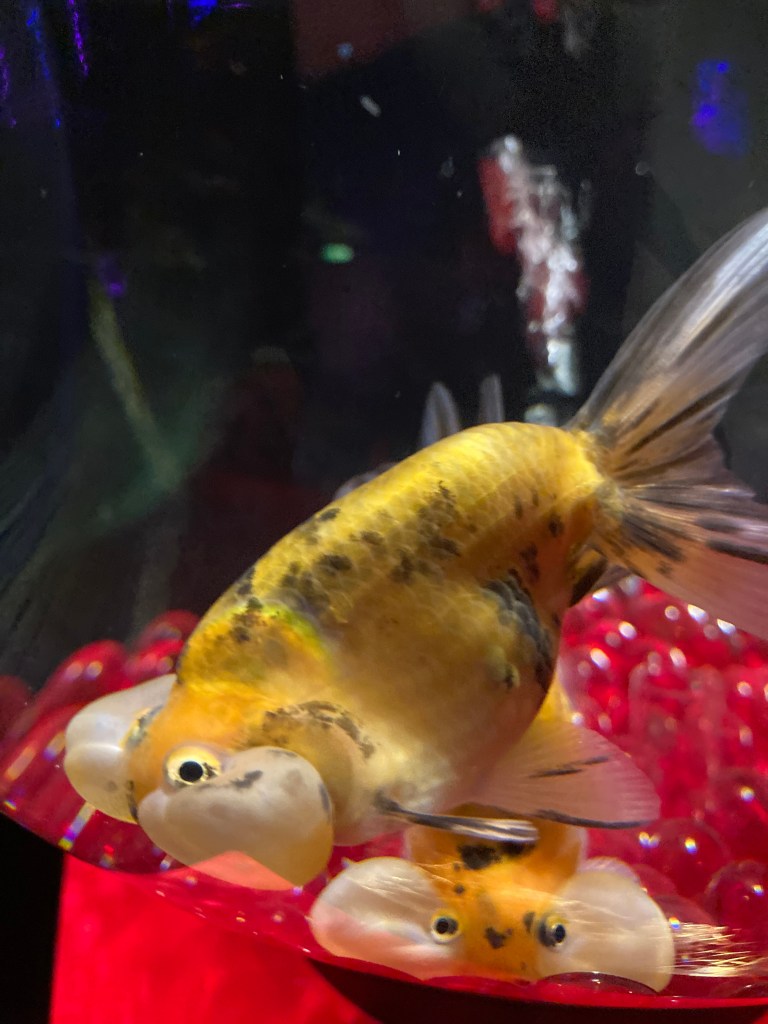
And there was every type of goldfish that you could imagine. Puffy faced ones.

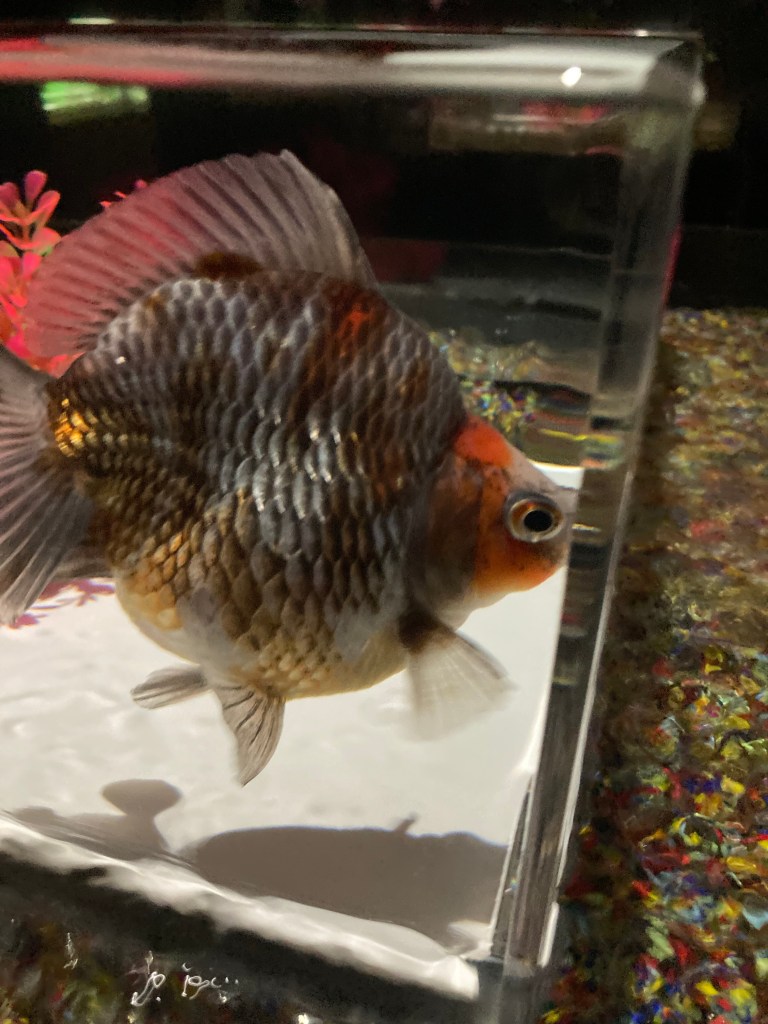
Goldfish that looked like they had been hammered out of metal.

Same scene, different light, different mood.

And everything was perfect and pristine. All the glass was immaculate. There wasn’t a flake of fish food floating in the water, nor a single poop. All the fish looked healthy. In tanks with lots of bubbles they were feisty and in other bowls and tanks they drifted languidly. We were a bit boggled at the thought of the animal husbandry and cleaning that goes on to make this all so beautiful.

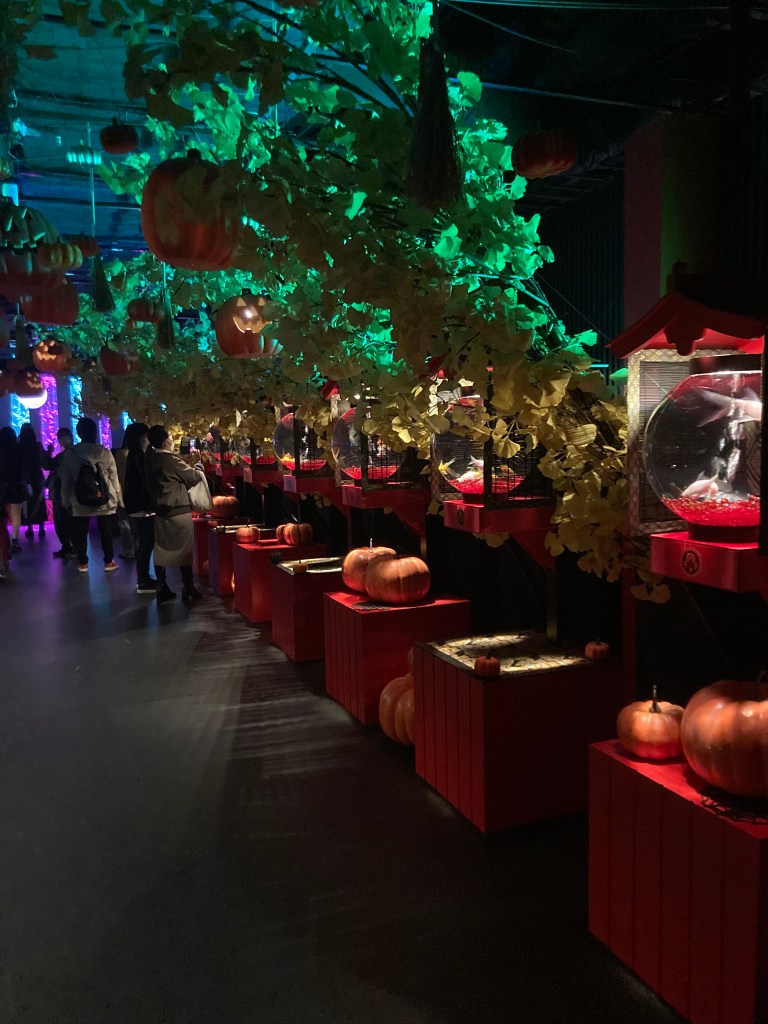
And yes, there was a Halloween themed area

Lost in Translation – the Sharon and Wilf edition

Not that we’ve been chomping at the bit, but one week after the Japanese government opened their borders to independent travelers – guess where we are! Usually Wilf has our big trips planned in great detail well in advance. And, in the past two years, he has discovered the world of city video bloggers on YouTube, which means he has been ‘visiting’ Tokyo virtually since the spring of 2020. This trip is not like the usual for us. We booked a hotel for a month in Tokyo and just showed up. We’ll figure the rest out as we go.

We are staying in the Asakusa district. Way, way back the city of Edo, the precursor to Tokyo, was founded in this area on the banks of the Sumida River. Besides the great temple of Senso-ji, which has endured through the many versions of the city, this was at one point an entertainment district and a horse racing area. There is still an amusement park, and venerable theatres. Wide modern streets cut through little areas of narrow streets packed with shops and restaurants. Much of this area was destroyed during WWII, so while people have lived here for a very long time, it is mostly a modern district.

Usually when we come to Japan we have Places to Go! Things to See! Trains to Catch! Food to Eat! We hit the ground running and get to it. I suppose we’ve been jet lagged, but we’ve been to busy to notice. Let’s just say the pace this time is more relaxed – and we’re both fighting the time difference. I’m writing this at 5:30 pm and trying to figure out how we’re going to stay awake until 9:00 so that we can sleep. And not be up at 4:00 like we were this morning

Thank heavens our hotel room is big enough that there is a bedroom with a door and a sitting room with a couch. At 40 square metres this place is positively capacious! Most regular hotel rooms are about half that. I’ll take pictures later and show you what the place is like.

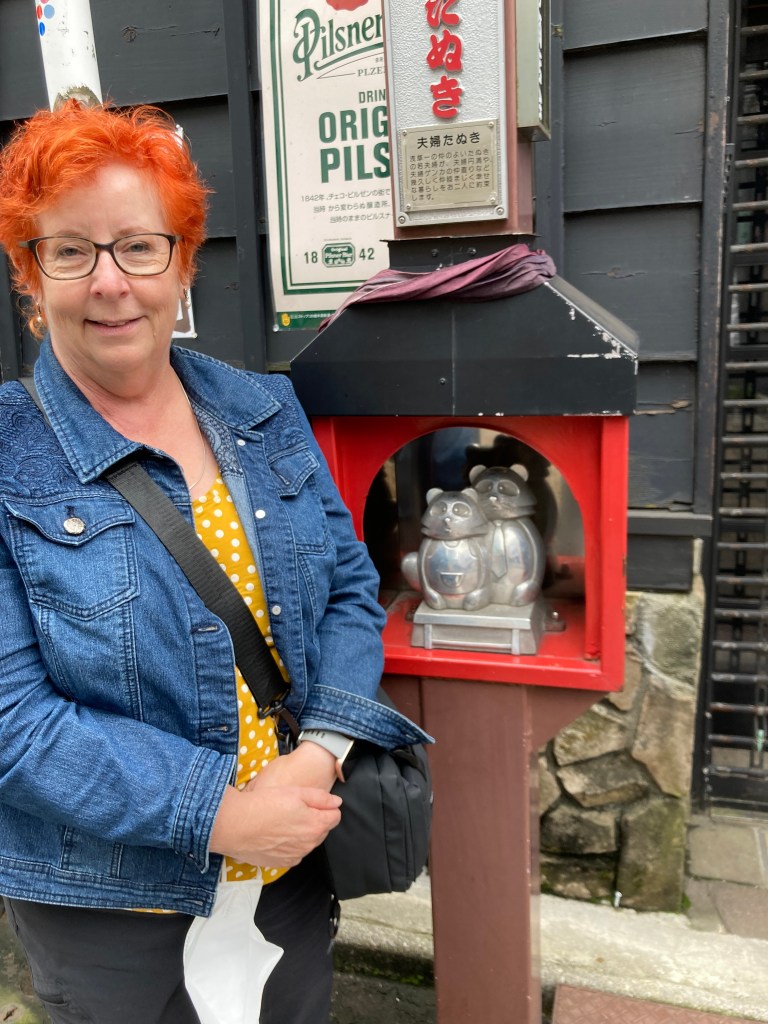
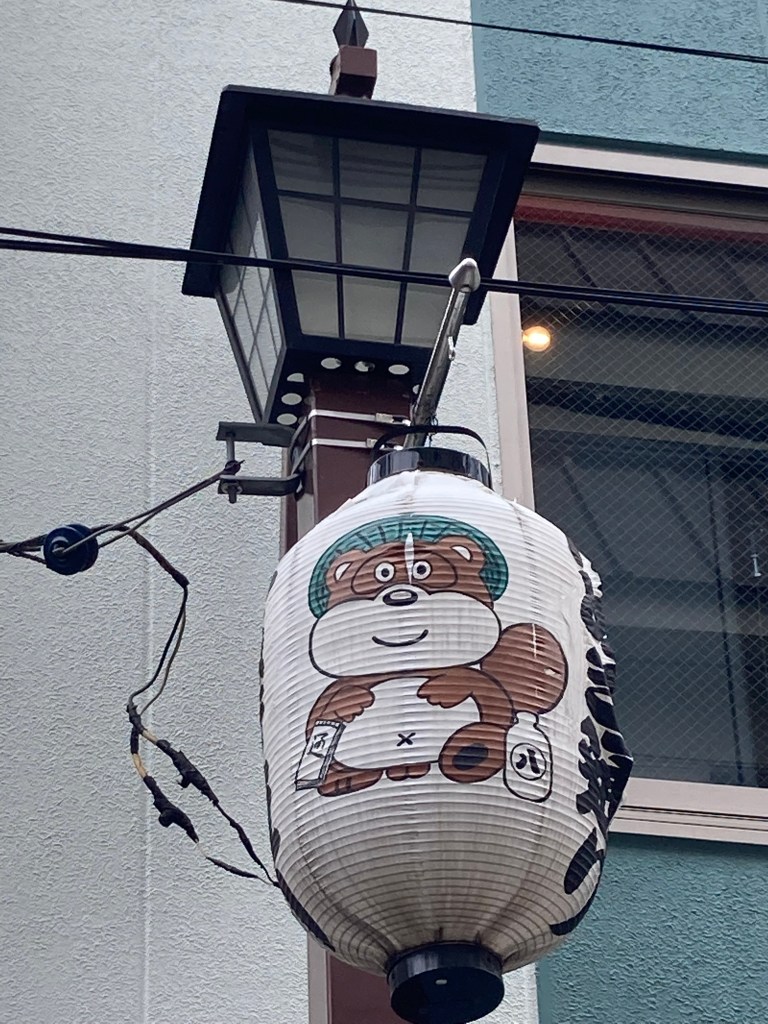
When we were here in 2009 we found a shrine to the tanuki, the raccoon-dog patron saint of good times and prosperous business. I wrote about it here: Tanuki shrine. And here is an article about who he is and where he fits in Japanese culture. Every time we come back to Tokyo we make a visit to the shrine to say hello. And we have learned that there is a small street in Asakusa with little lampost shrines to various aspects of tanuki-ness. It is called Tanuki street and it runs between Hoppi and Orange street.

Looking a little bleary, I’m saying hello to Mr & Mrs Tanuki

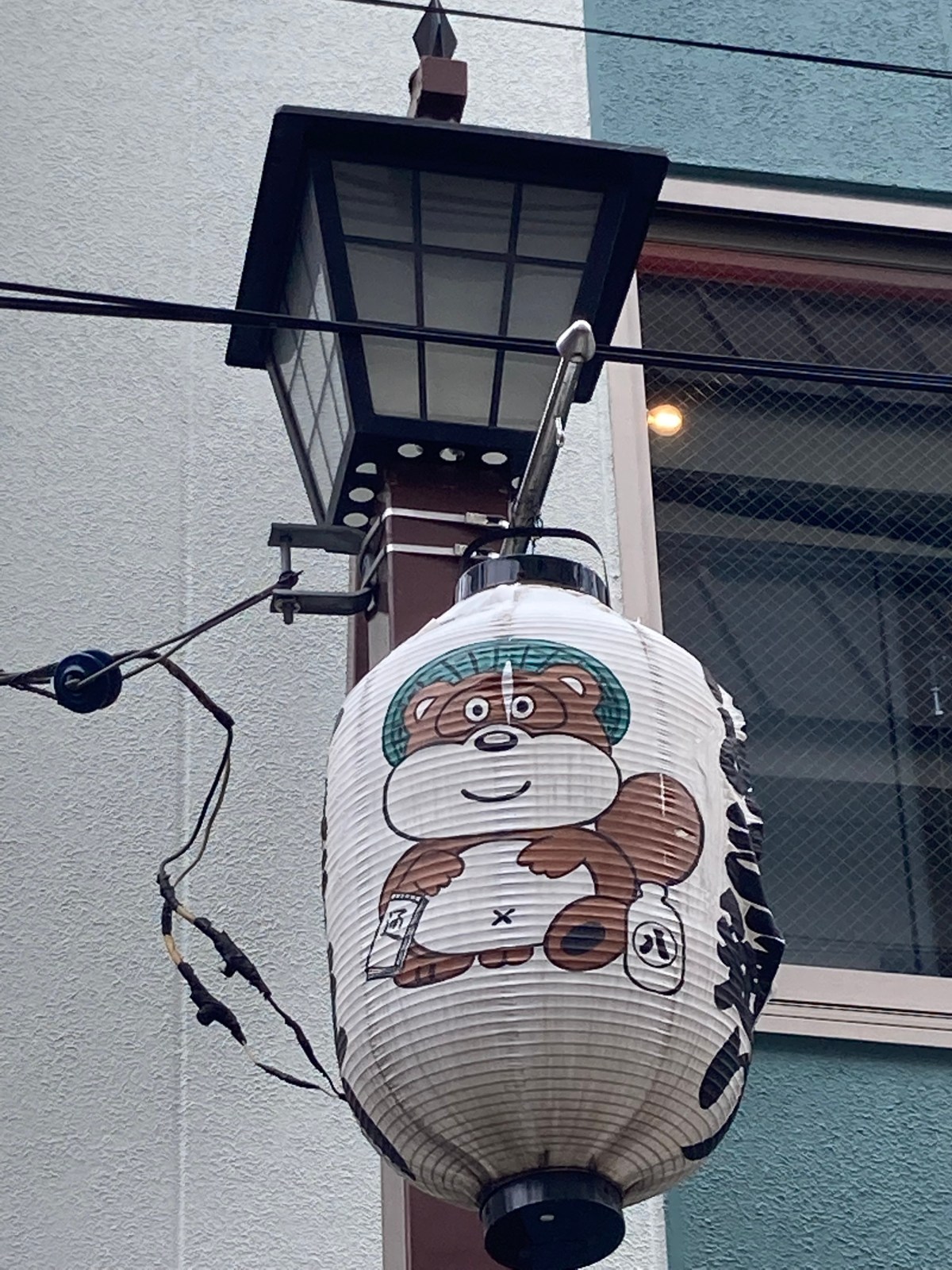
All you have to do is look up to know you are on Tanuki Street.

This shouldn’t be a surprise!

Merry Christmas! We woke to a white Christmas this morning – the first one since 2017. That shouldn’t be a surprise. After all this is the year where we’ve had the highest temperatures on record, the longest dry spell, the greatest single day rainfall and I don’t know how many other weather events. So – snow and forecast serious cold is not a surprise.

The view to the west.

Bit of snow – not too serious yet. That almost looks like a chinook arch over Cowichan Bay, but we don’t have those here!

And to finish up – here is our Christmas letter for this year. Wishing you all a 2022 of good health, good friends and good times.

Greetings to you all. In ‘The Before Times’ we would be recounting our travel adventures from the year that was. In 2021 our adventures have been more of the domestic variety. In June there was the heat dome. In a temperate climate such as ours it was rather a shock. And then in November we had a series of atmospheric rivers that threw stunning amounts of water at us. Sometimes we grumble about the constant fight against gravity that living on a hill brings, but we were very happy to watch all that water pass right by.

We made travel plans for 2021 which didn’t happen, and have made travel plans for 2022, which it looks like might not happen either. We did have visits from Sharon’s brothers this year. Sharon’s Mom continues to live independently but is considering a move closer to us in Sidney.

The garden got a lot of attention this year, which was good, as it seems like everything reacted to the combination of rain and heat with a desire to grow. If we hadn’t been on our game we fear the house might have been swallowed by vegetation!

Sharon has continued her Japanese language studies at the University of Victoria, and after several years of hard work can now communicate at the level of a kindergarten student. She figures that by the time we return to Japan she may have worked her way up to a grade school level!  がんばって!(Do your best!)