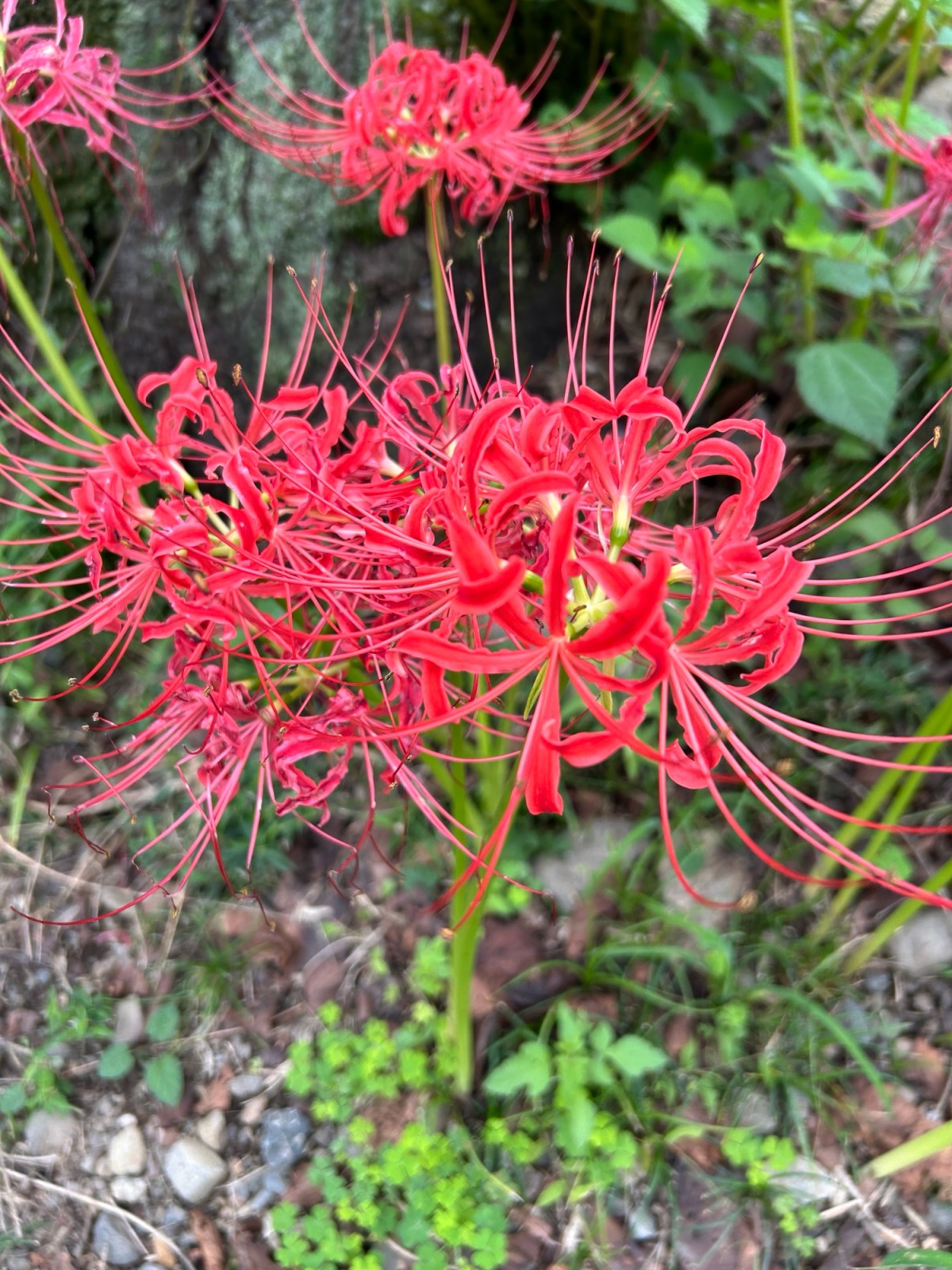
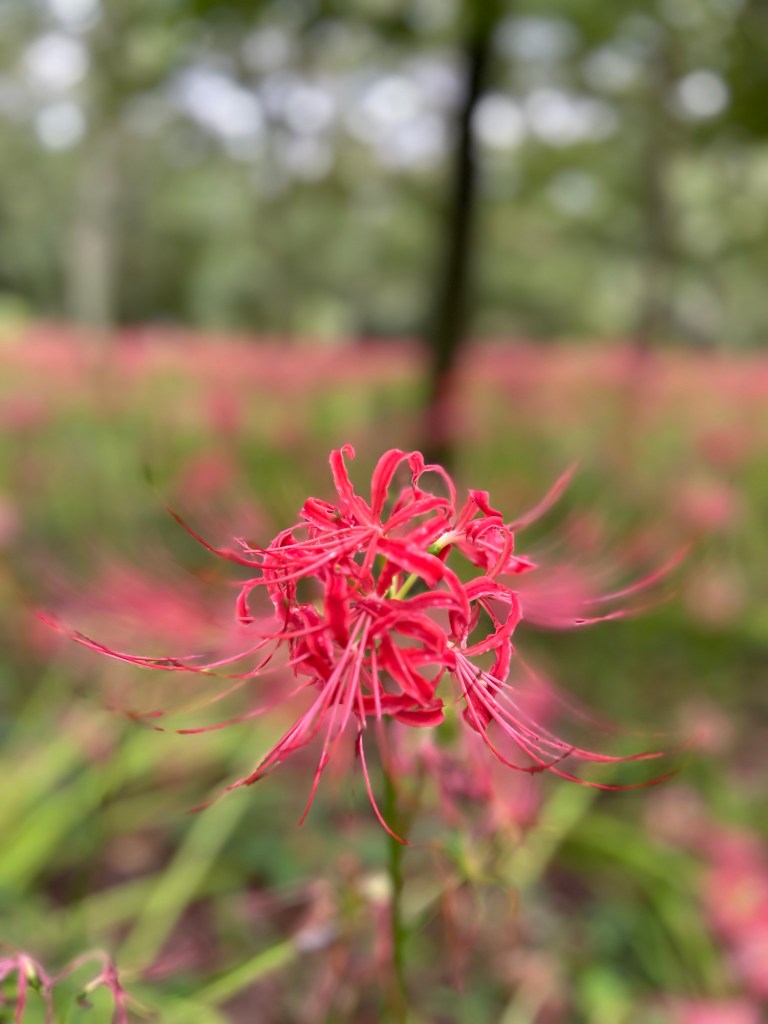
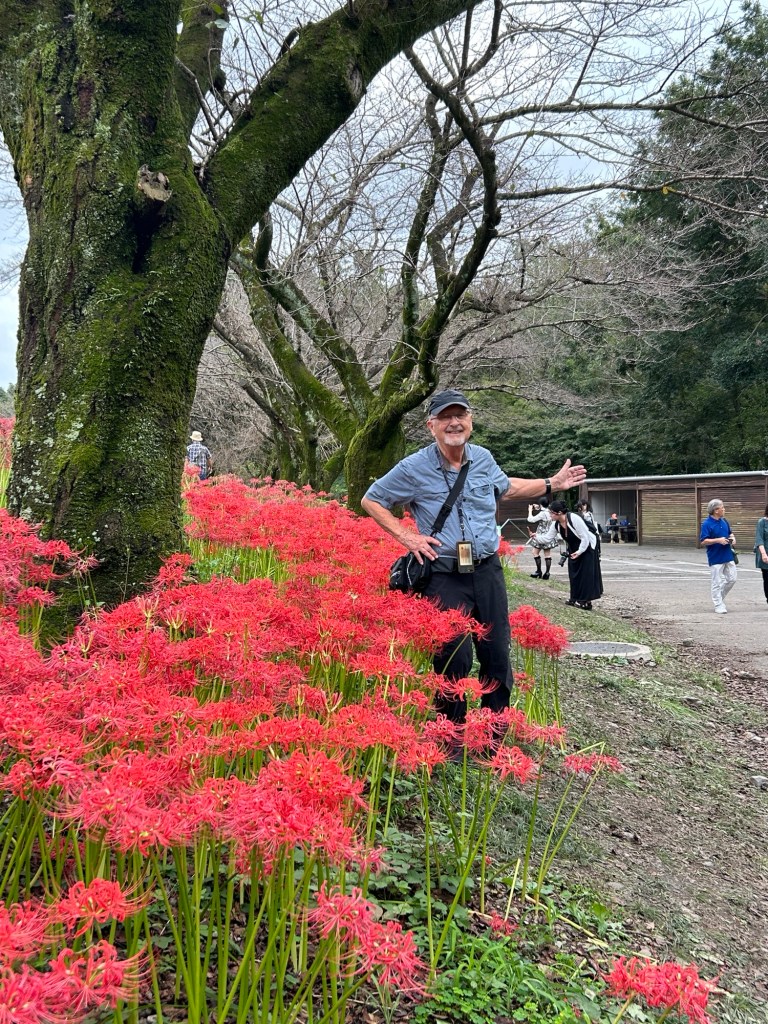
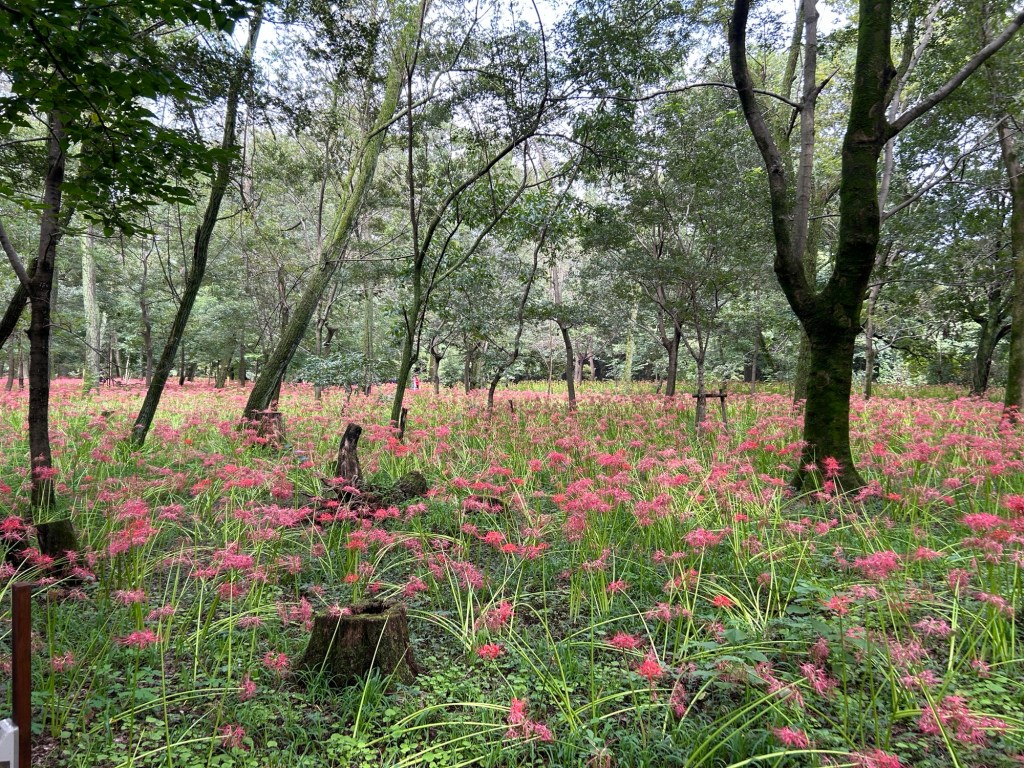
Have you ever seen five million of one thing? I don’t think I have, at least not until Monday. In a far suburb of Tokyo there is a park planted with five million red spider lily plants. Latin name Lycoris radiata, in Japanese they are called higanbana 彼岸花。
Pretty, eh?
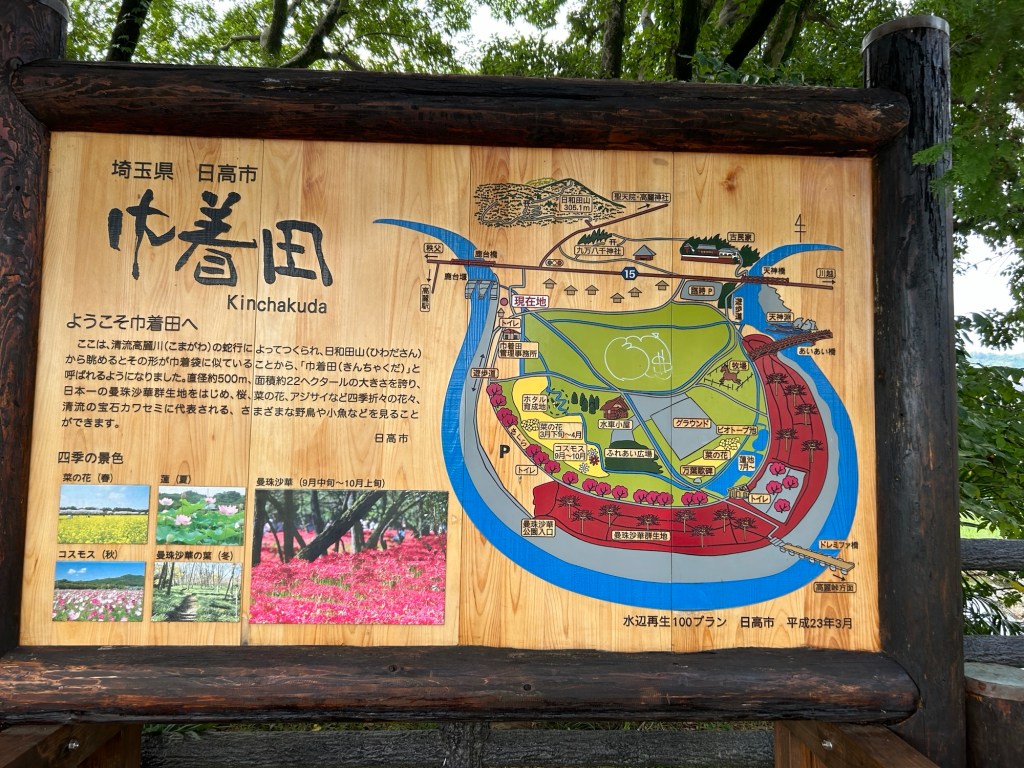
Here’s a map of the park:
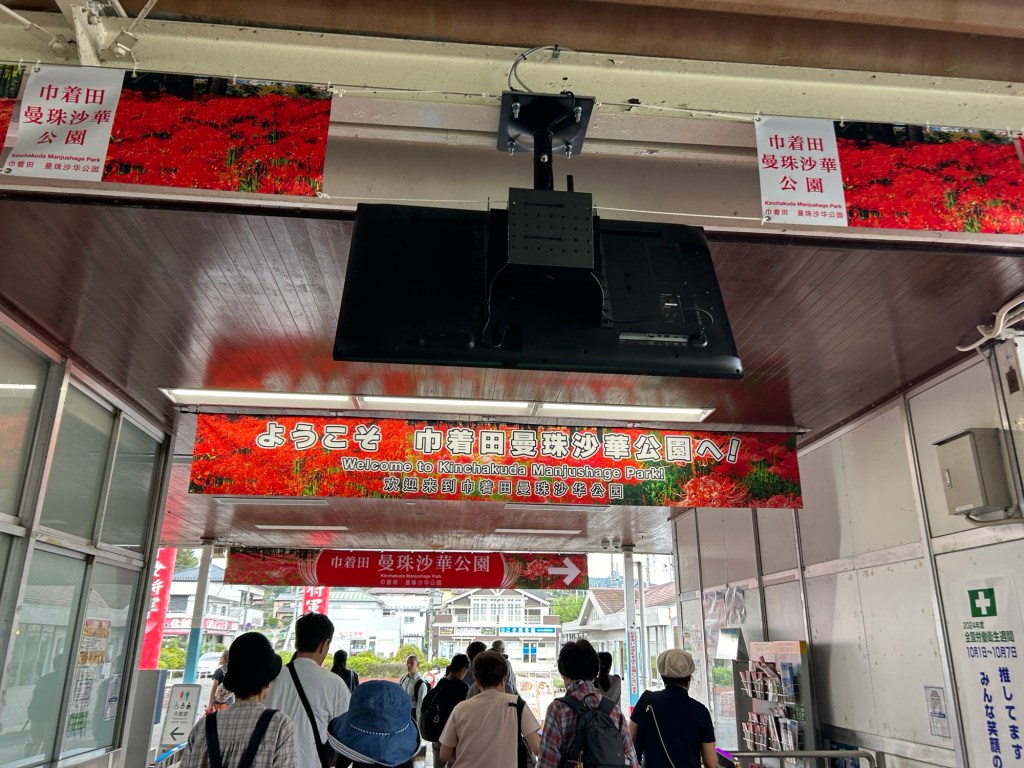
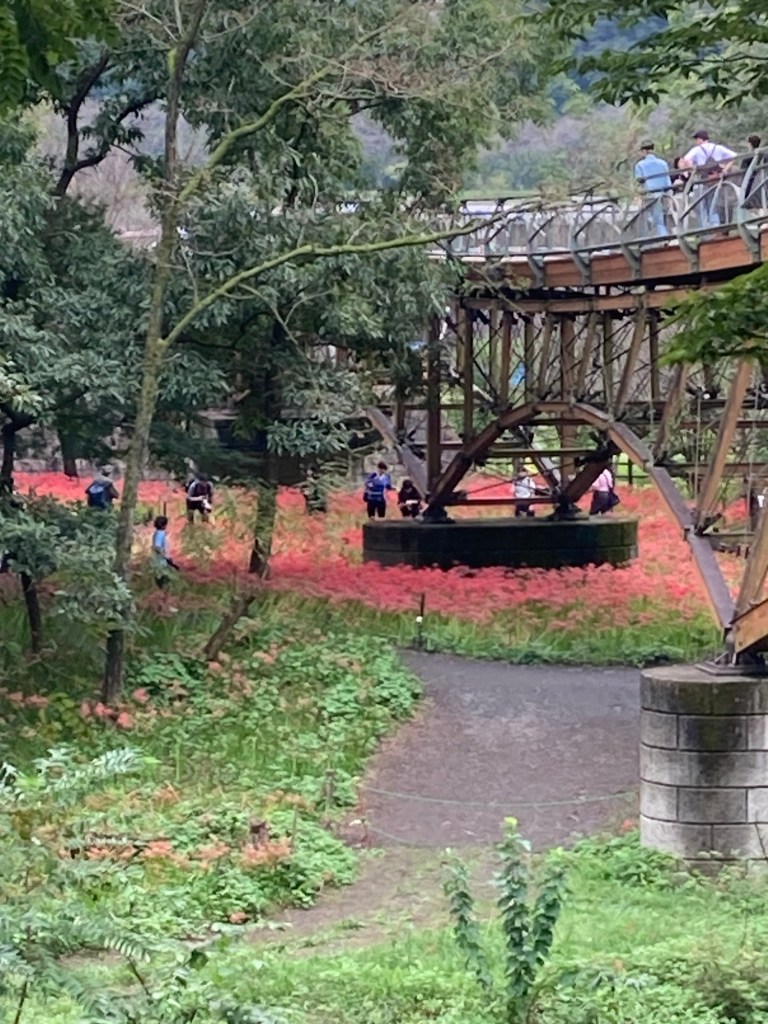
In the swoop of the river there is a lovely park, with cherry trees and maples trees and all the lilies. The little town is very organized. When we got off the train there was signage galore:
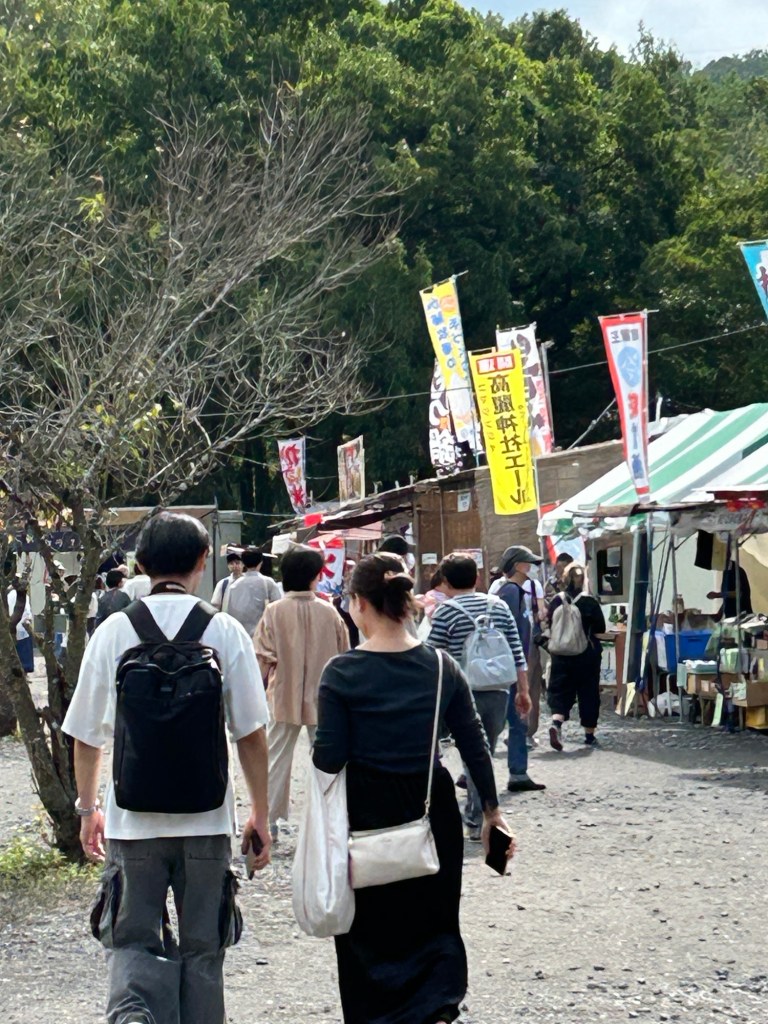
We had taken the subway, a train and then another train, and we had directions for the walk to the park. As it turns out the directions were not needed – everyone on the train was going where we were and there were banners the whole way along. The matsuri (festival) had been extended by a week as the flowers were still blooming. In many areas the were past their peak, but there were still lots to see. They were set up for a lot of people – the expectation was that some 200,000 would come during the festival. We were fortunate as it was not a madhouse.
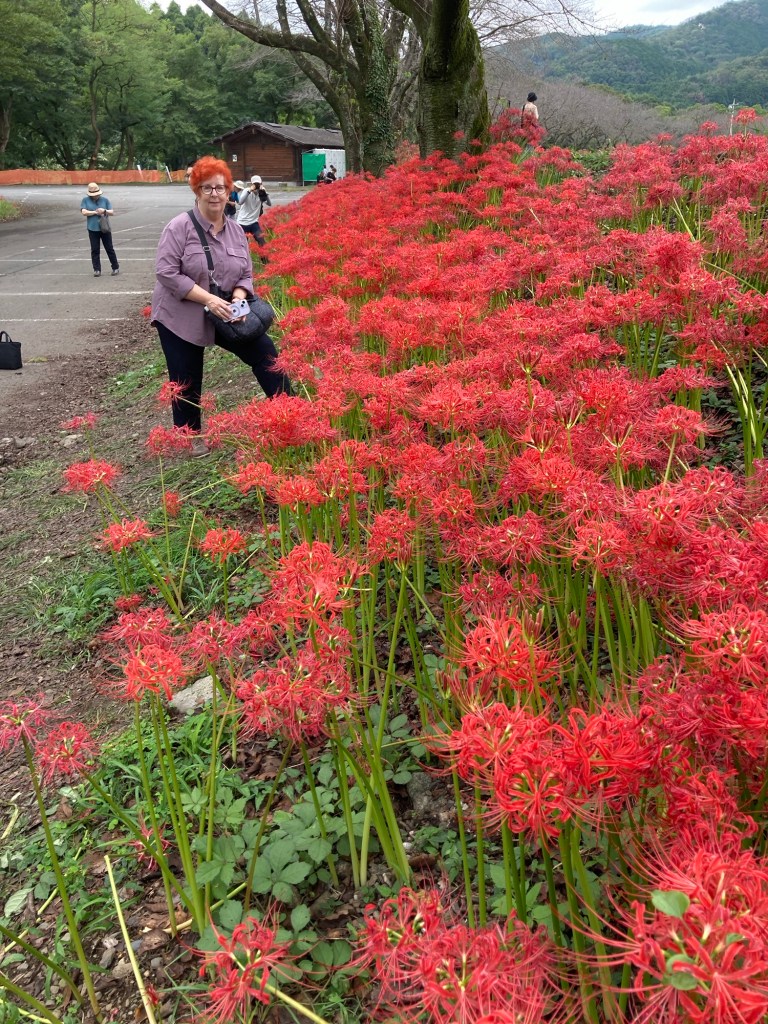
The plants are quite tall – about 2feet or so. They don’t have the usual lily smell – not like Easter lilies or Stargazers. That would be rather much multiplied by the millions.
Rolling up the embankmentsAnd the food tents were there!
There was an assortment of vendors of both food and agricultural products. I may have had the best karaage ever – deep fried chicken so good!! And mango sorbet.
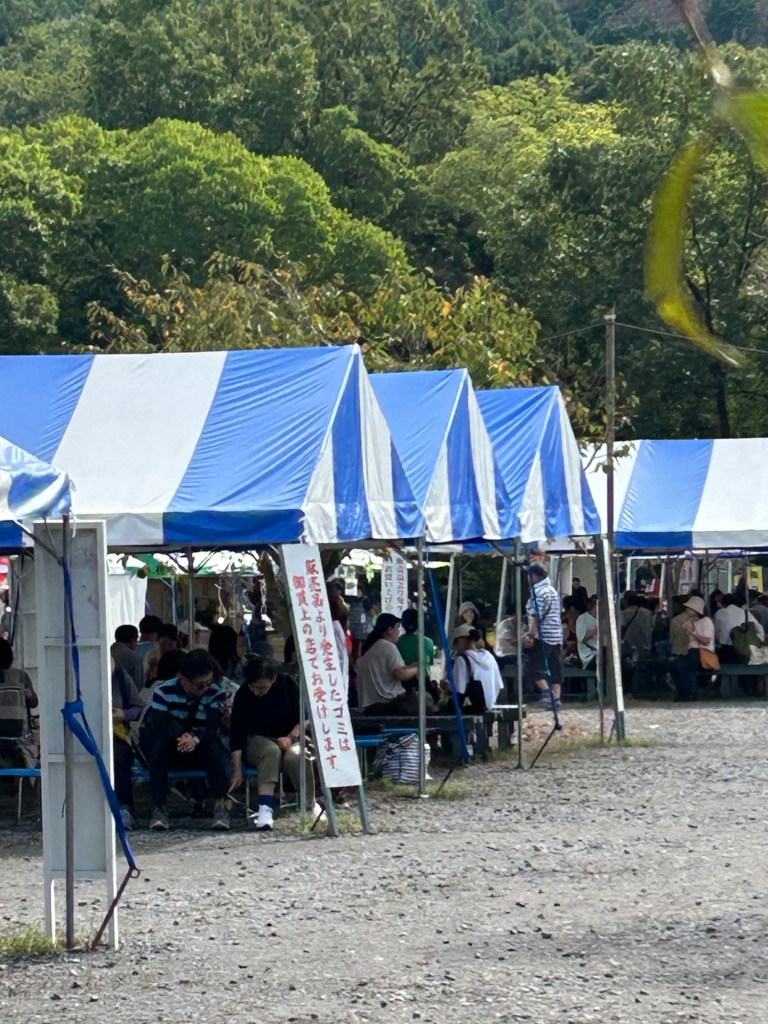
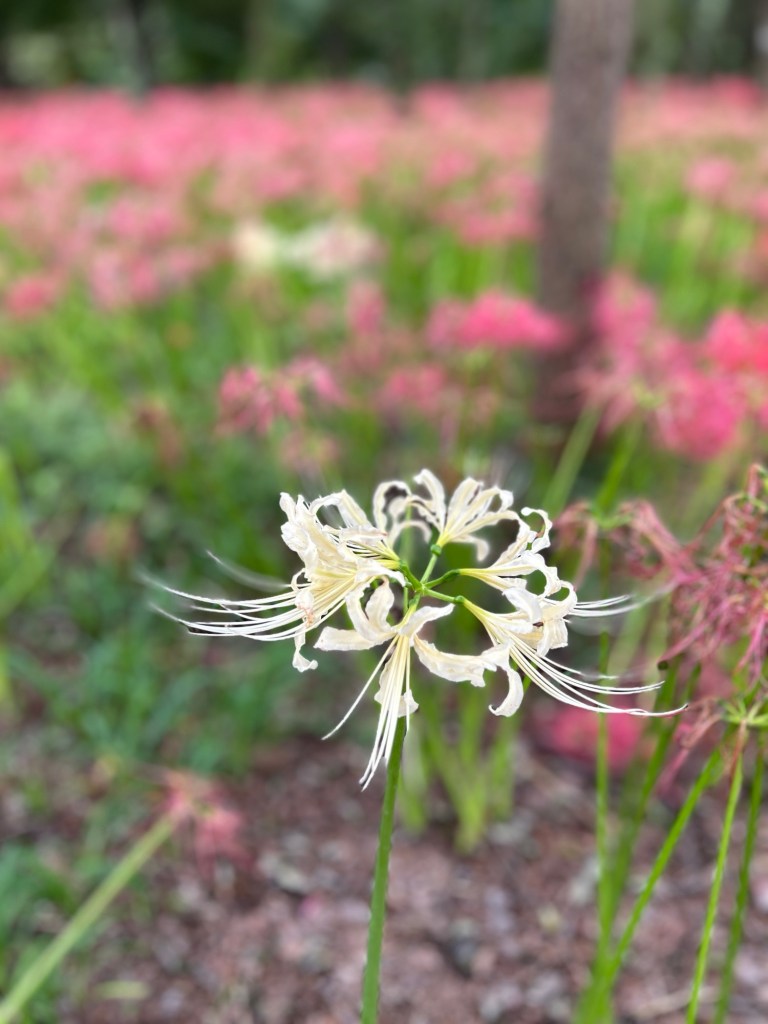
Lots of places to sit – very important!A few white ones snuck in…
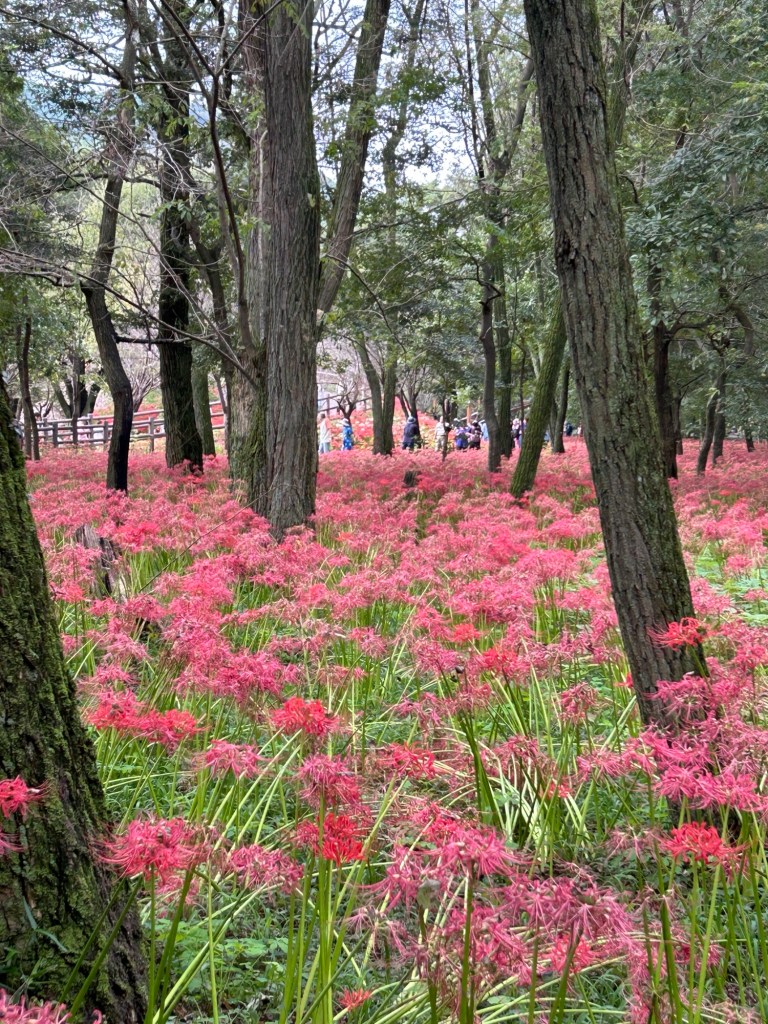
Wilf tracked down an online nursery and just before we came to Japan a box of red spider lily bulbs was delivered to our house. They have been planted and we are hopeful that we will have blooms next fall. Not a display like this, but something beautiful to enjoy in the fall and remember the drifts of lilies under the trees.
It’s hot in Tokyo. And raining on and off. Today one of our travel umbrellas gave up the ghost. We bought them several years ago for $7.00 apiece, so they owe us nothing. Fortunately when it is raining in Japan places to buy umbrellas pop up like mushrooms and we were able to get upgraded versions easily. An extra three dollars and we have umbrellas that actually cover us!
On Saturday we set out to see the Sumida Hokusai museum. The Sumida River flows through this part of Tokyo, and the museum is not too far from us (again, in terms of Tokyo not too far….) so off we went.
In the West there are several iconic paintings – Van Gogh’s ‘Sunflowers’, Da Vinci’s ‘Mona Lisa’ being two. And Hokusai’s ‘The Great Wave Off Kanagawa’ is probably in that class. We see it all the time, it is used in pop culture references, it is so familiar that it is easy to forget that it is a piece of art, not just a thing that has always been there.
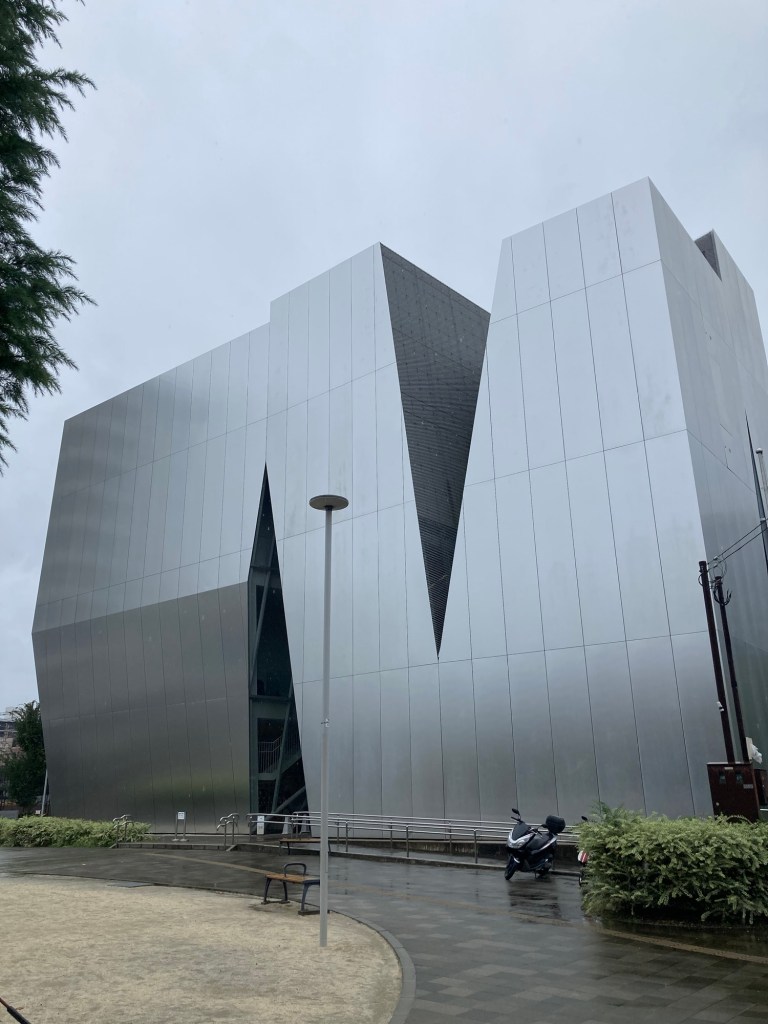
The museum itself is quite an interesting building. From the subway we walked along a busy and interesting street, turned the corner and there across the park was …
It has some pretty neat views out over the neighbourhood, and of the Skytree in the distance, but mostly it is a dimly lit enclosed space. They have an extensive collection of Hokusai’s work – he was prolific both in his lifetime and posthumously.
I’m trying to think how to tell you about this without sounding like a dry dissertation. Especially since no photos could be taken inside the museum! We know Hokusai’s work, for the most part, from the woodblock prints. He didn’t just work with woodblock prints, however – he painted and drew and experimented throughout his life, always trying new things. He made popular prints that were not expensive, and were many copies were printed.
There is a story – perhaps true, perhaps not – that in the mid 1800”s when Japan had opened to the west and Japanese porcelain and art was being shipped to Europe that a shipment of porcelain was being unpacked and someone looked at the wrapping papers and thought they were nice – and they turned out to be Hokusai woodblock prints. True or not the prints greatly influenced the course of European art and were widely collected. The museum was fully bilingual, which was very helpful. I would say that the majority of the people visiting the day we were there were westerners. Due, I’m sure, to the fact that Hokusai’s woodblock prints, at least, are quite familiar to us.
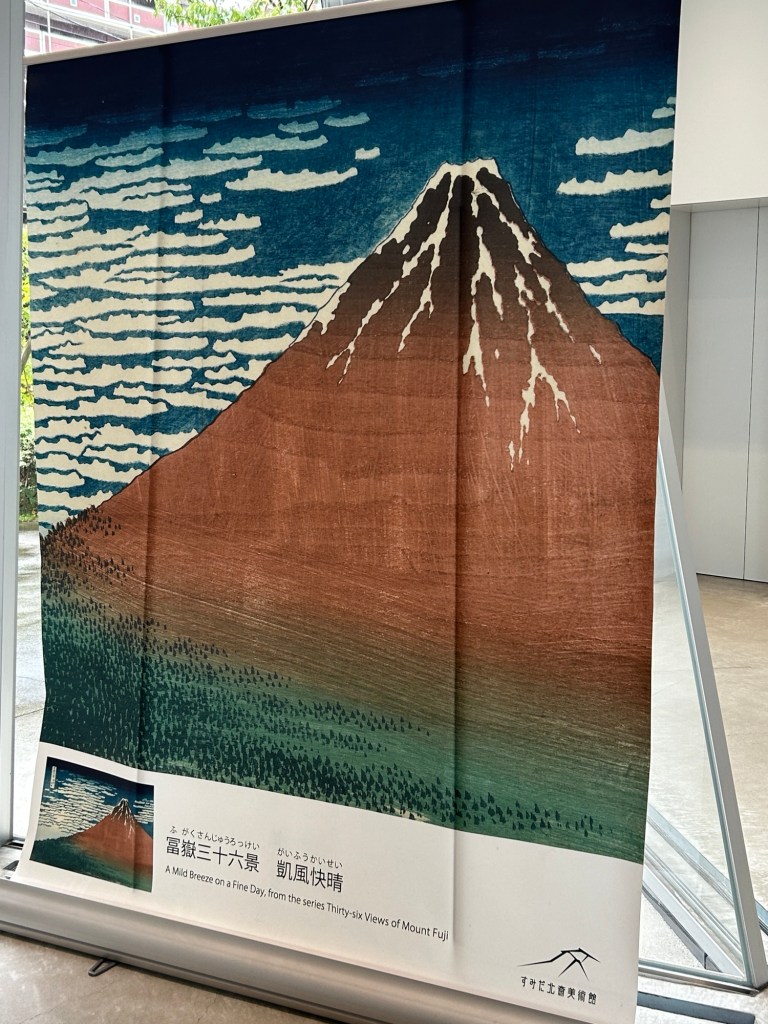
Me, sneaking in a shot in front of the gift shop. After the big blue wave this is probably the second most famous of the 36 views of Mt Fuji.
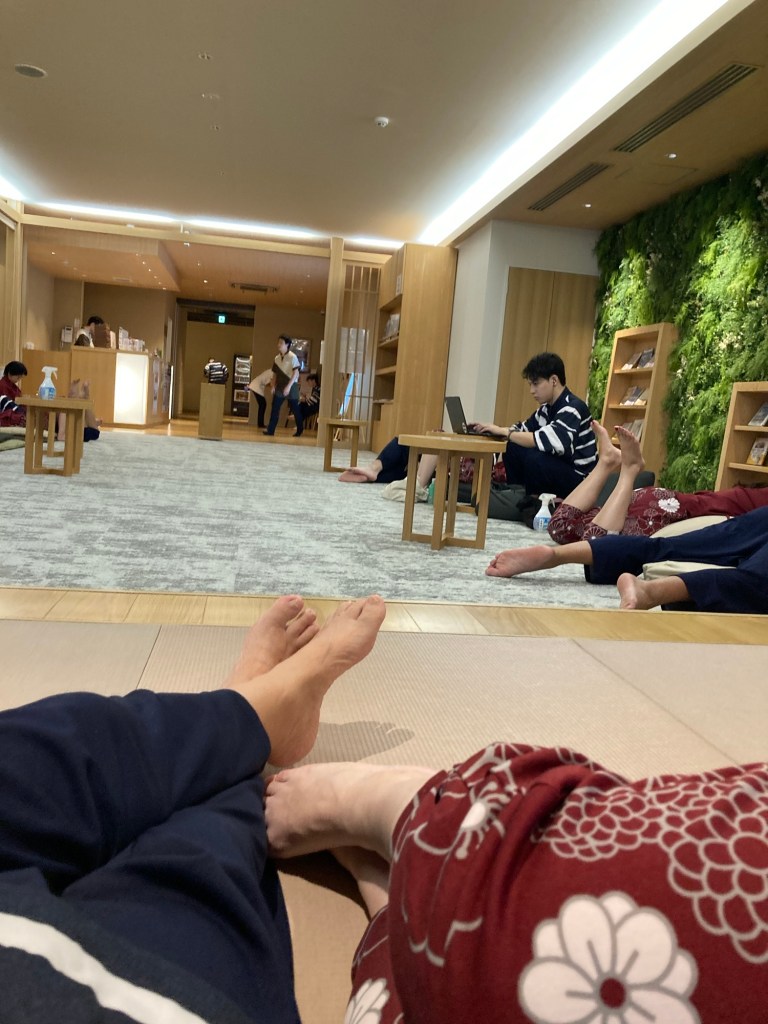
Once left the museum we wandered along – feeling both hot and sweaty because it was 28C and clammy because it was raining hard. And what did we find? A fancy super spa. A stand alone public bath that can accommodate lots of people and offers a wide range of services in addition to a hot bath. So in we went. This one was pretty high tech. We each got a bracelet with a chip that we could use to charge food and drink. And we got some swishy lounge clothes. The idea is that you go for a soak in one of the many baths (there were 6 different baths, a sauna and a steam room in the ladies side, I assume the same for the men’s). Then you change into your lounge clothes and go for something to eat or drink. Or have a massage. Go to one of the lounges to watch tv, snooze, relax. Back to the bath for another round. And so on and the day goes by. It being a Saturday the place was full of young people. And of course no pictures. But Wilf and I met up in one of the relaxation rooms which had bean bags on the floor so we had a visit…..
As you can see people are working, snoozing, reading, generally chilling on a rainy Saturday afternoon.
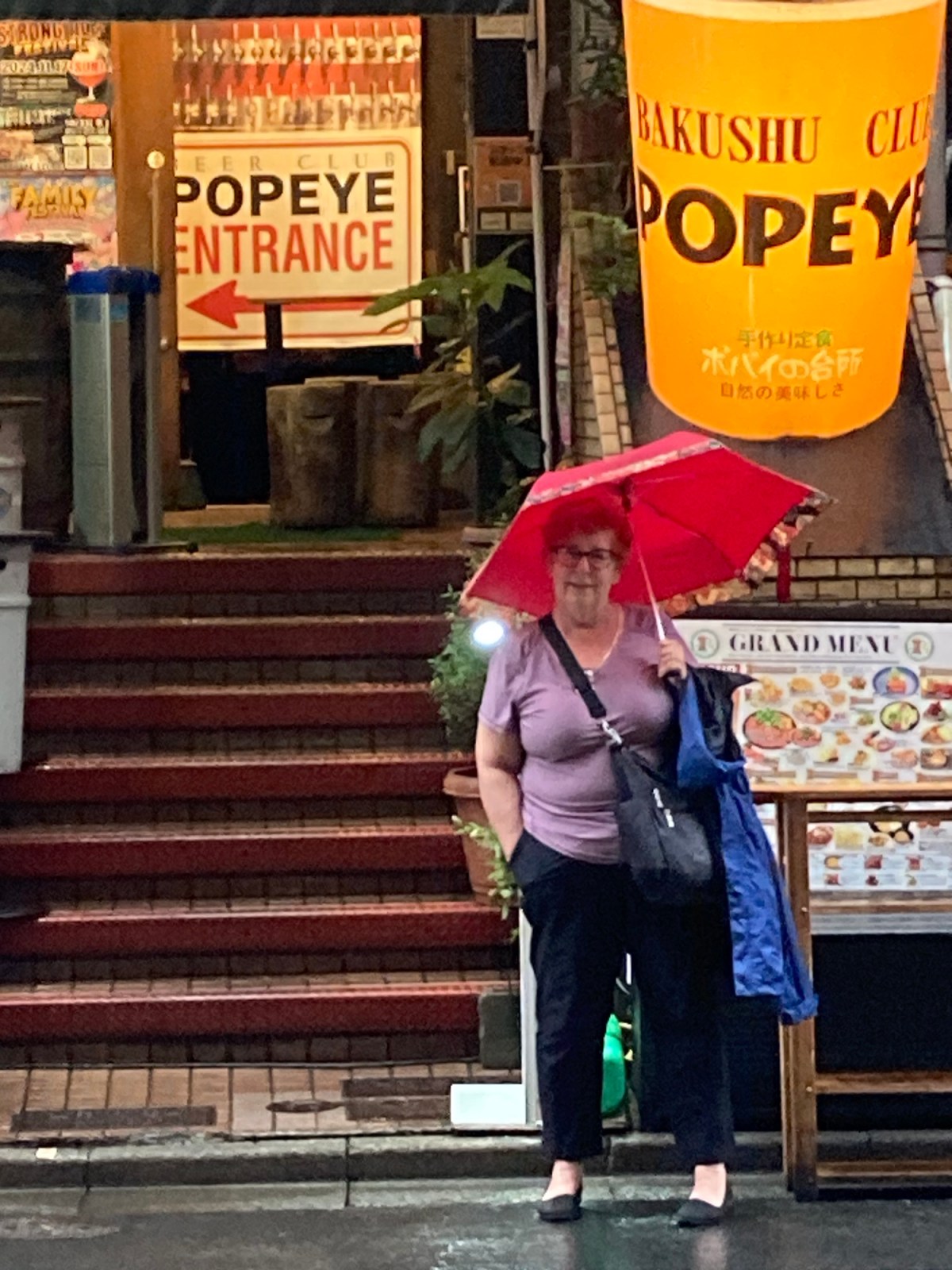
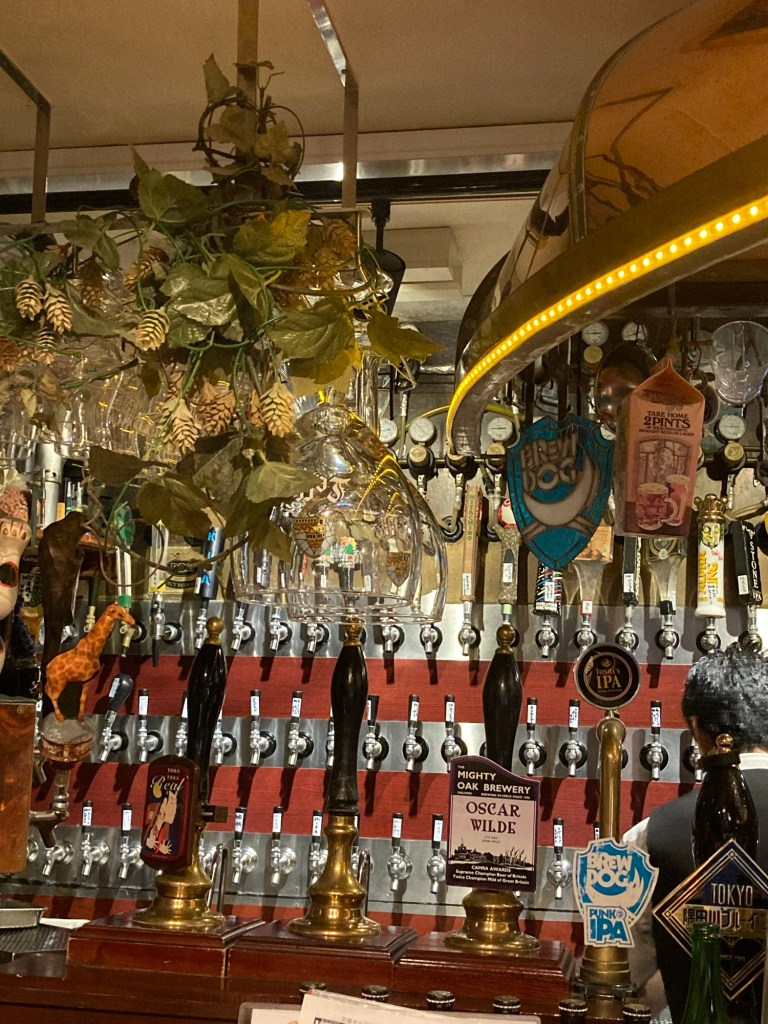
And after all that we were powerfully thirsty. And wouldn’t you know we were just around the corner from one of Wilf’s favourite places in Tokyo: Beer Club Popeye, where they have 70 beers on tap.
That’s just a few of them!
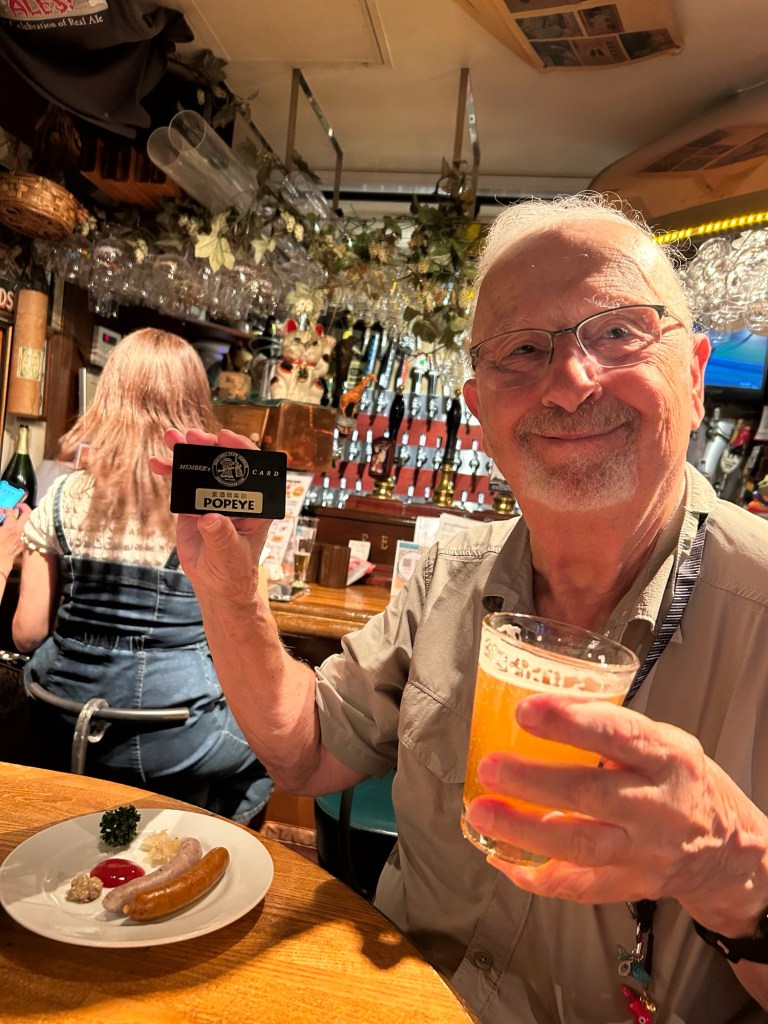
The deal here is that if you order a beer you get an appy, Sounds fair, eh?
They have a VIP club that you can join, which we did in 2012. They were quite astounded when we showed up with our decade old membership card, but we were issued new ones to keep us in good stead. The place is always packed to the gills and yet they always manage to squeeze us in!
It was big Saturday! We were two tired puppies at the end of it all, but it was a good day.
We stayed in the cutest hotel. I told Wilf I was going to title this post (with apologies to Willie Nelson) ‘On the floor again’, but decided that wasn’t as clever as I thought.
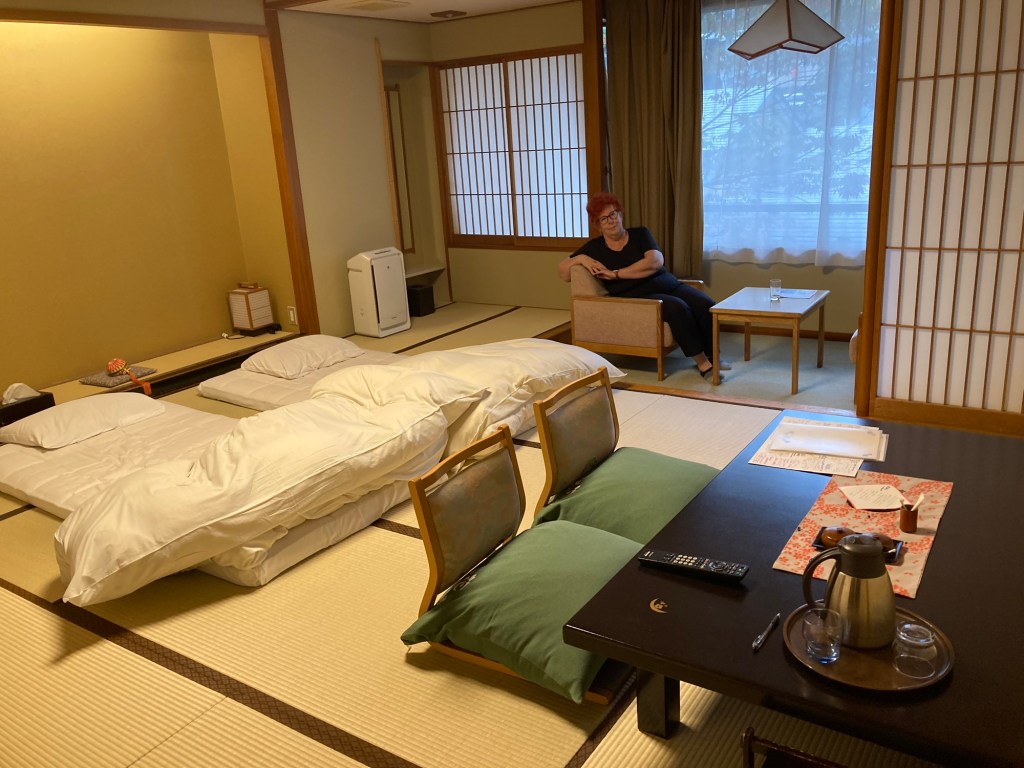
Anyhoo. The hotel is called Shosenkaku Kagetsu and it is a traditional hotel right near the train station, practically underneath the gondola to the ski area. It is set back from the street amongst the trees. Our room was a traditional Japanese room…
It has a sitting area with chairs and a table, in addition to the low table and chairs in the main area. As you can see the beds are futons on the floor, and I will say (as I always do) that they are comfortable for sleeping its the getting up and down that is sometimes a challenge. We arrived after dark so could not see what was outside the window.
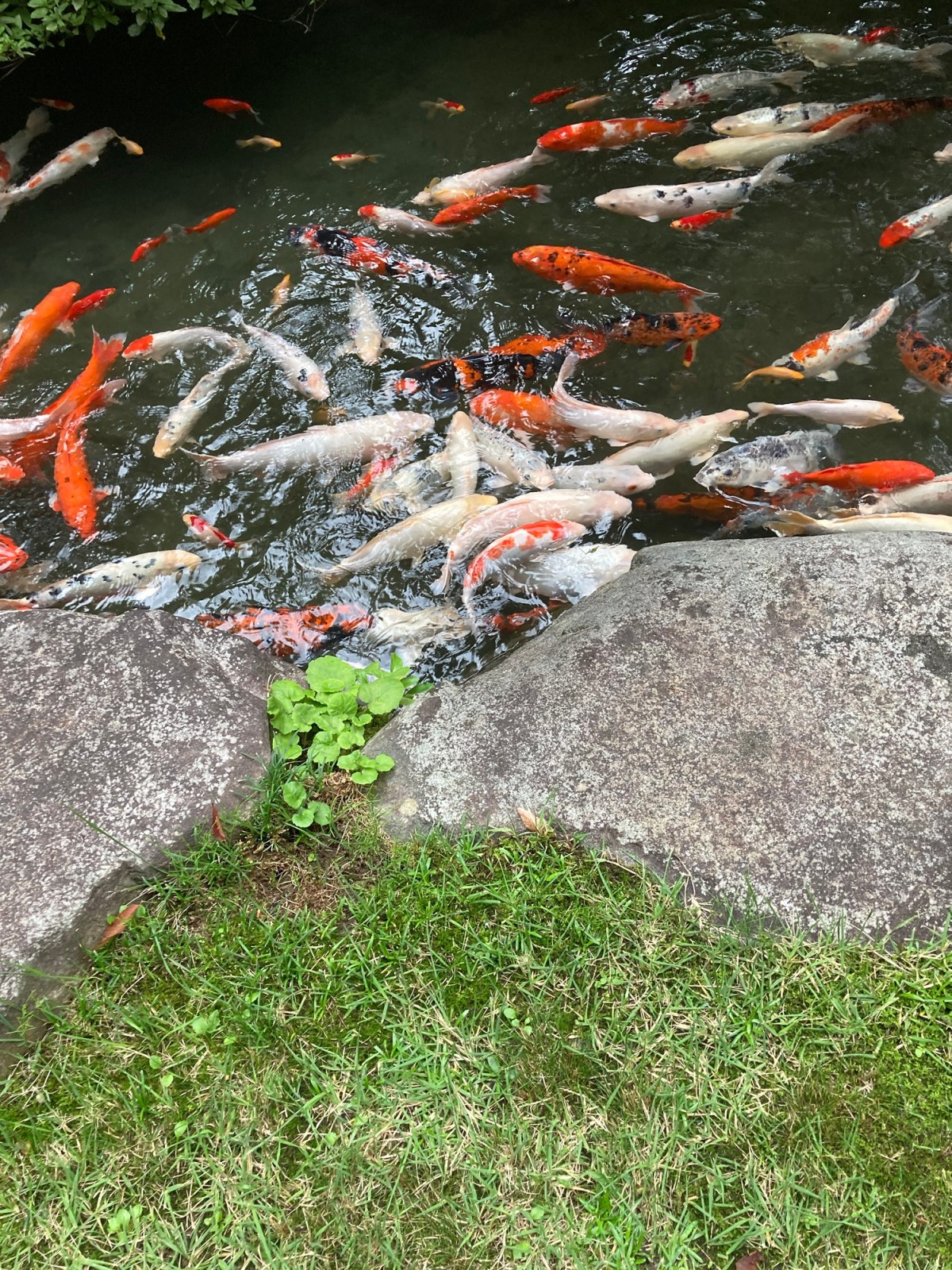
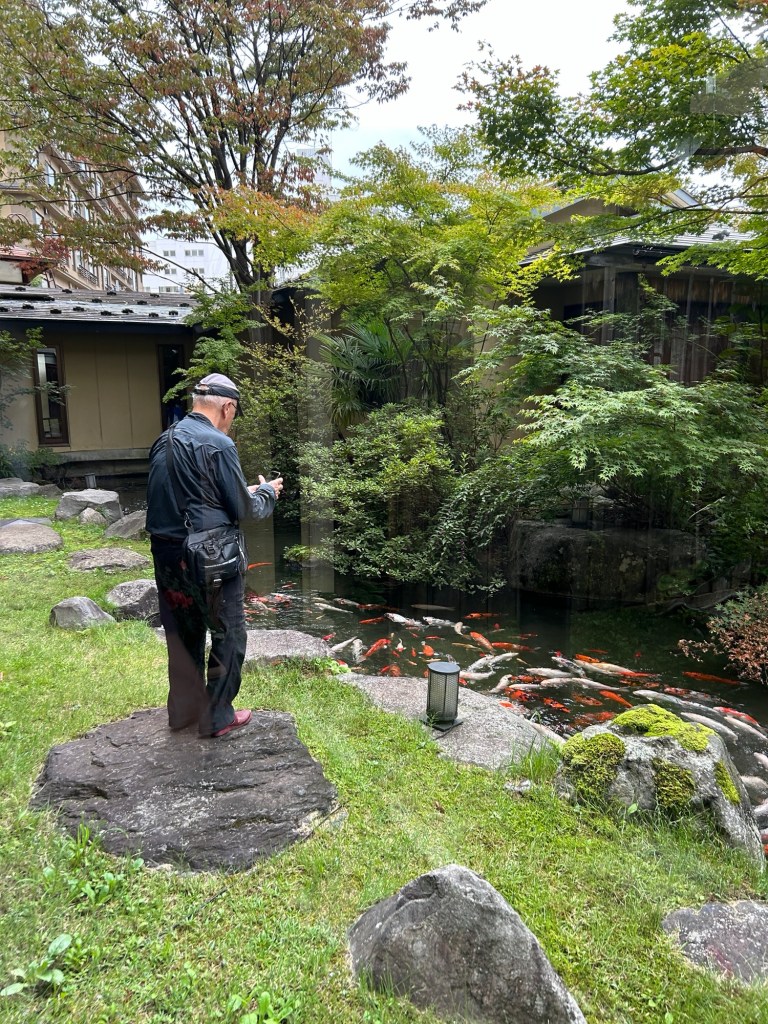
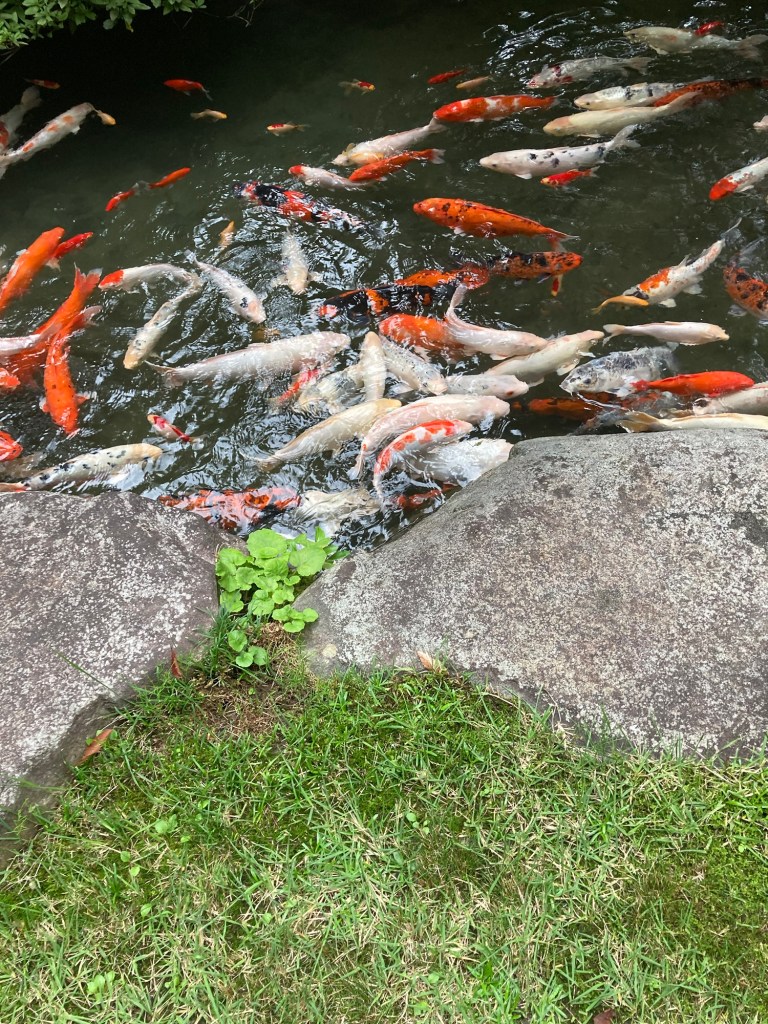
Our room looked down onto a koi pond.
Koi of all sizes, expecting a hand out..
There was a lovely public bath with one of the nicest outdoor baths we have been to. Smaller inns like this switch the baths back and forth one day to the next, so on Thursday the ladies use the area to the left and on Friday they use the area to the right. The big clue is that the curtains at the entrance change colour. In fact it was the public bath at a hotel years ago when I firmly leaned the kanji for man and for woman. We had gone to the bath before bed and when I got off the elevator I turned to the right. In the morning I decided to go back , got off the elevator and was in the process of turning to the right. From out of nowhere a tiny elderly lady in a kimono appeared, spun me around and pushed me through the curtain to the left, saving me from embarrassment. Advice for you – Ladies change room, restroom, whatever- signage is always in red. Men’s are blue. And the kanji for woman is 女 (looks sort of like a figure curtsying). Man is 男 (figure with a rice paddy for a head..)
The baths switch back and forth when they are different – one might have a view of the garden, another is outside. This way the guests can enjoy all of the options.
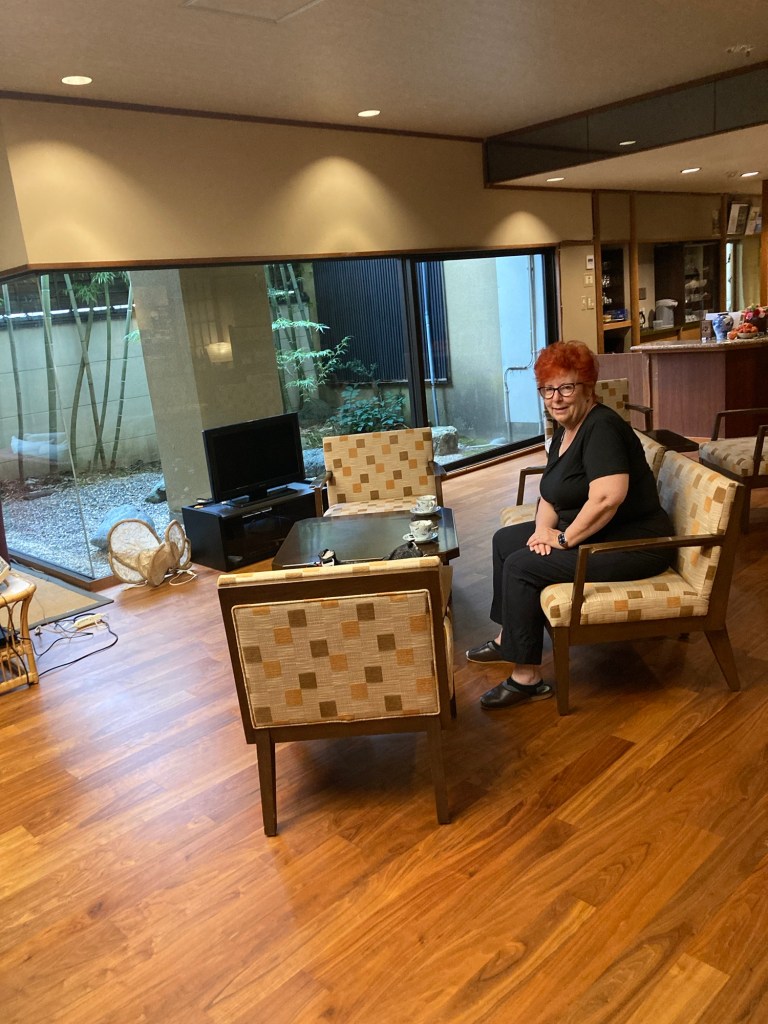
Throughout the hotel there were little niches with sculptures or displays of handcrafts, origami creations – always something interesting to look at. They had a nice lounge where we could have coffee in the morning and no matter where you sat there was a view into a little enclosed outdoor garden, each one different.
The lobby area had a little stream full of tiny little carp to enjoy. When we stepped off the elevator on our floor there was an interesting scent in the air. It turns out that the tatami mats on that floor had all been replaced recently and our room smelt so fresh, like a freshly mown field.
So – should you find yourself in Yuzawa, Niigata prefecture and you want a charming place to stay please do consider Shoshenkaku kagetsu.
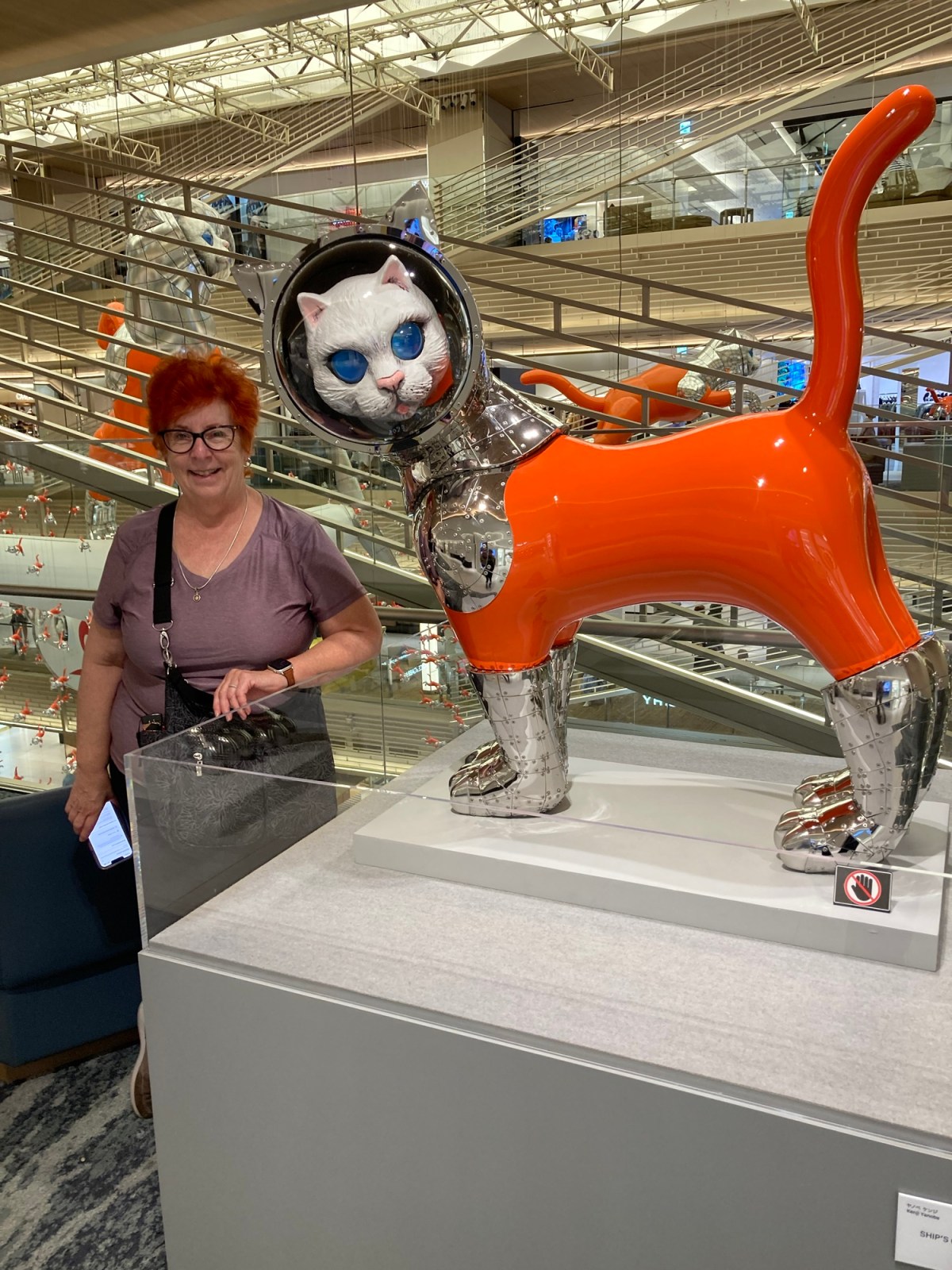
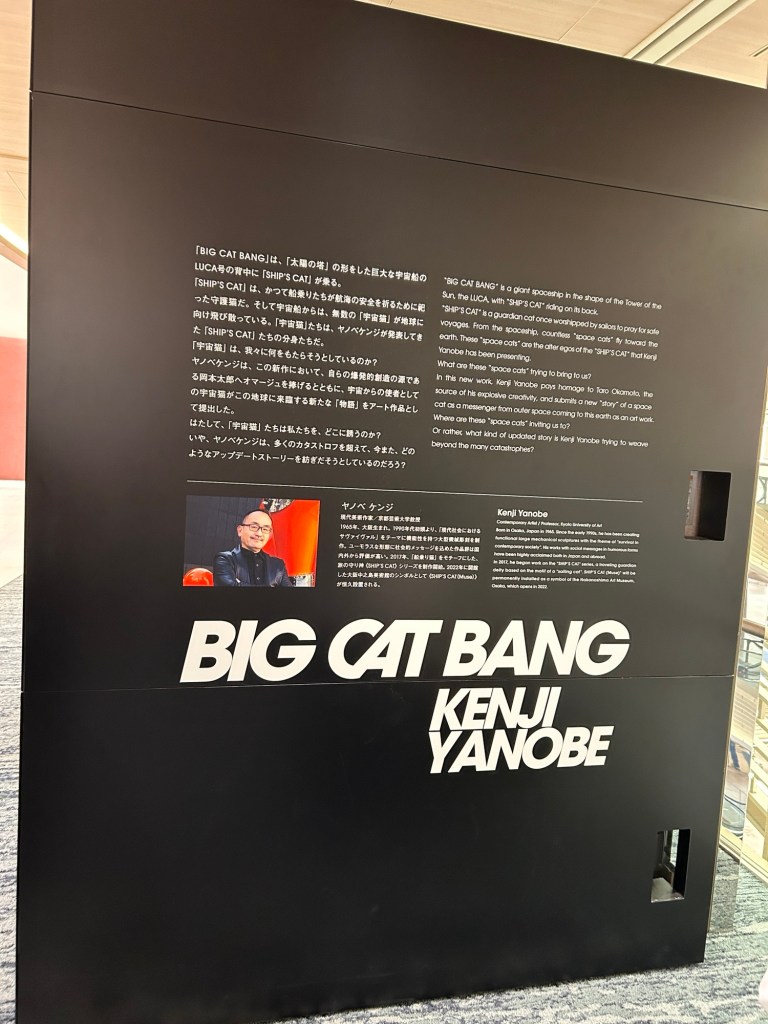
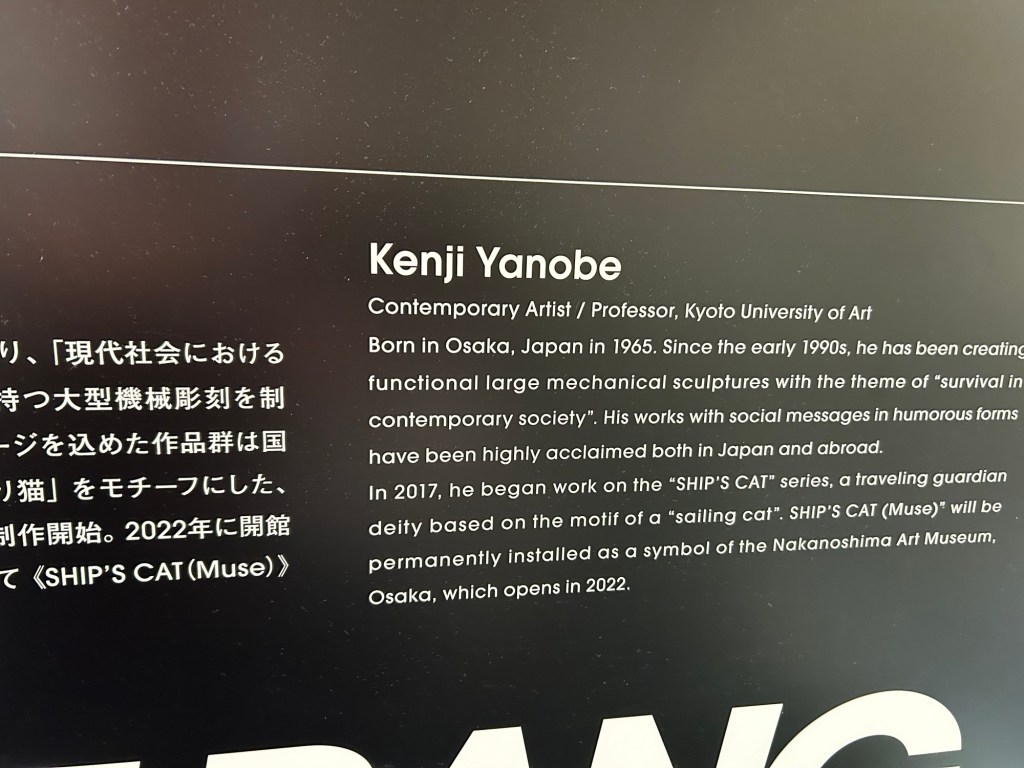
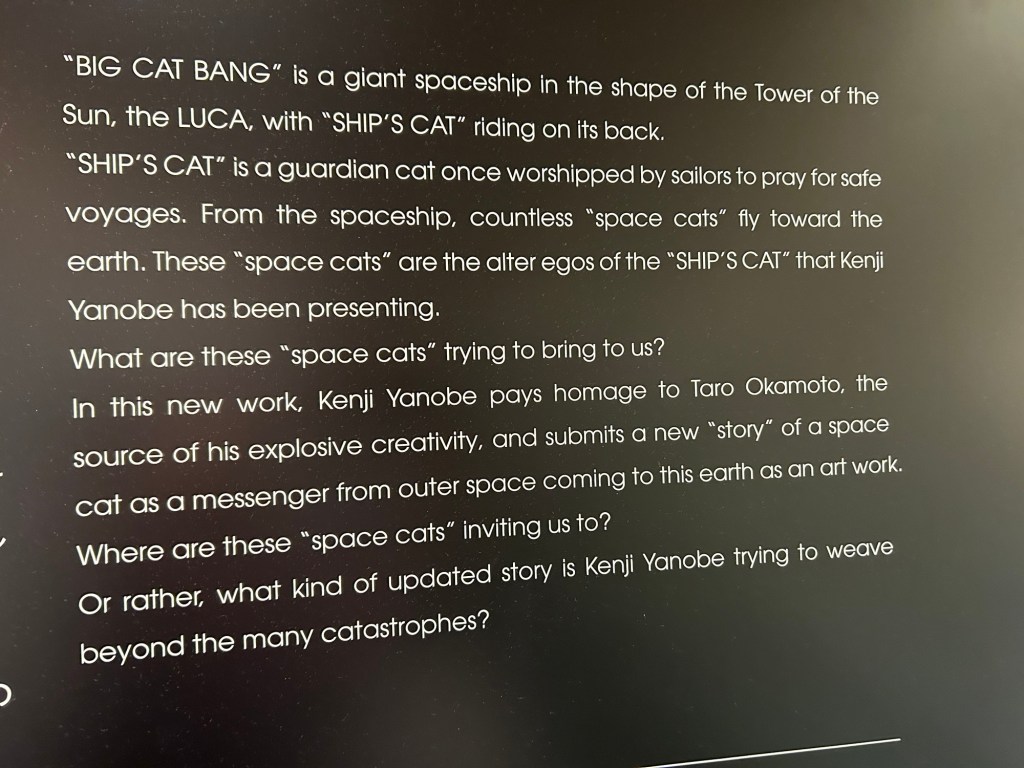
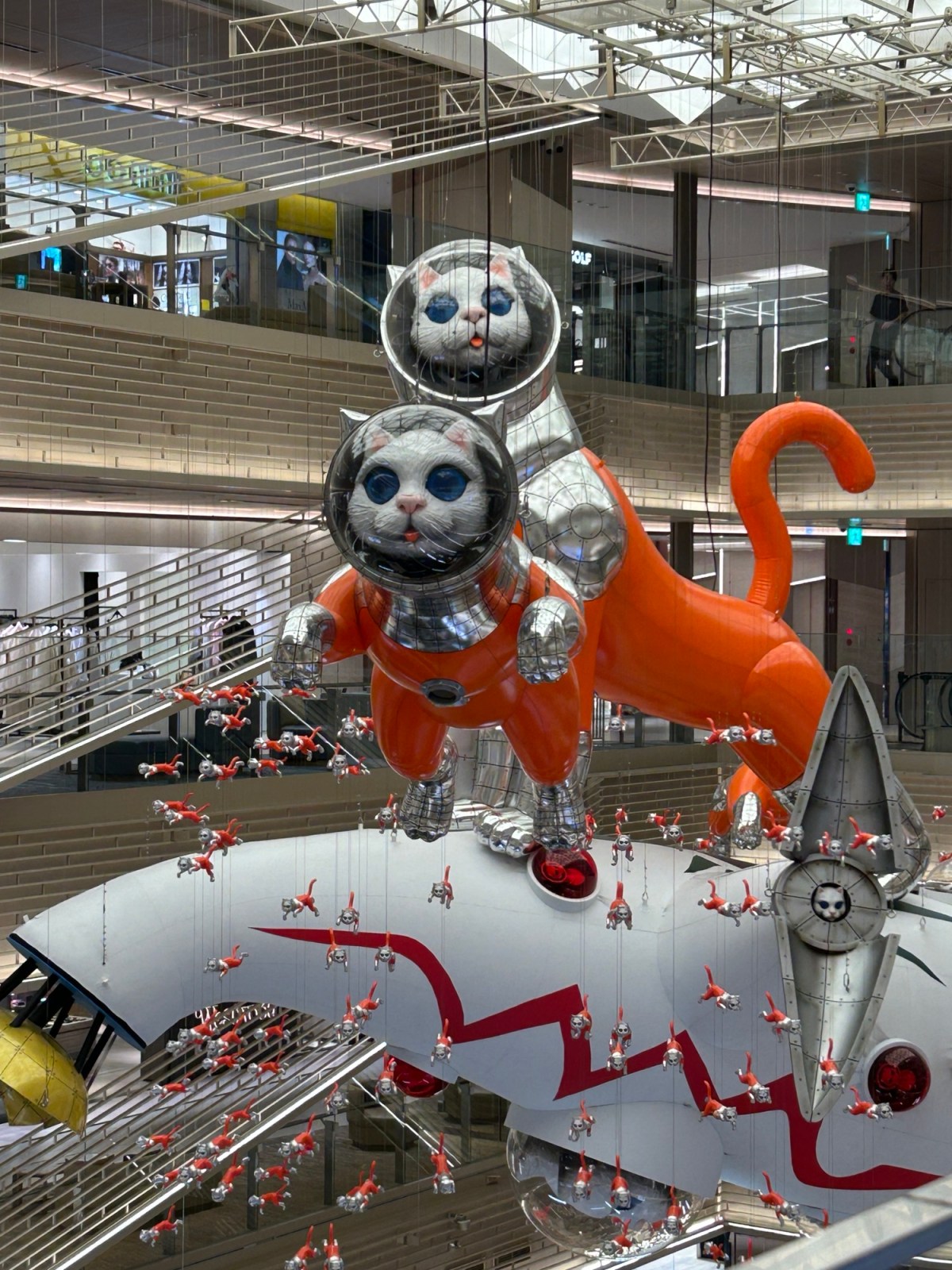
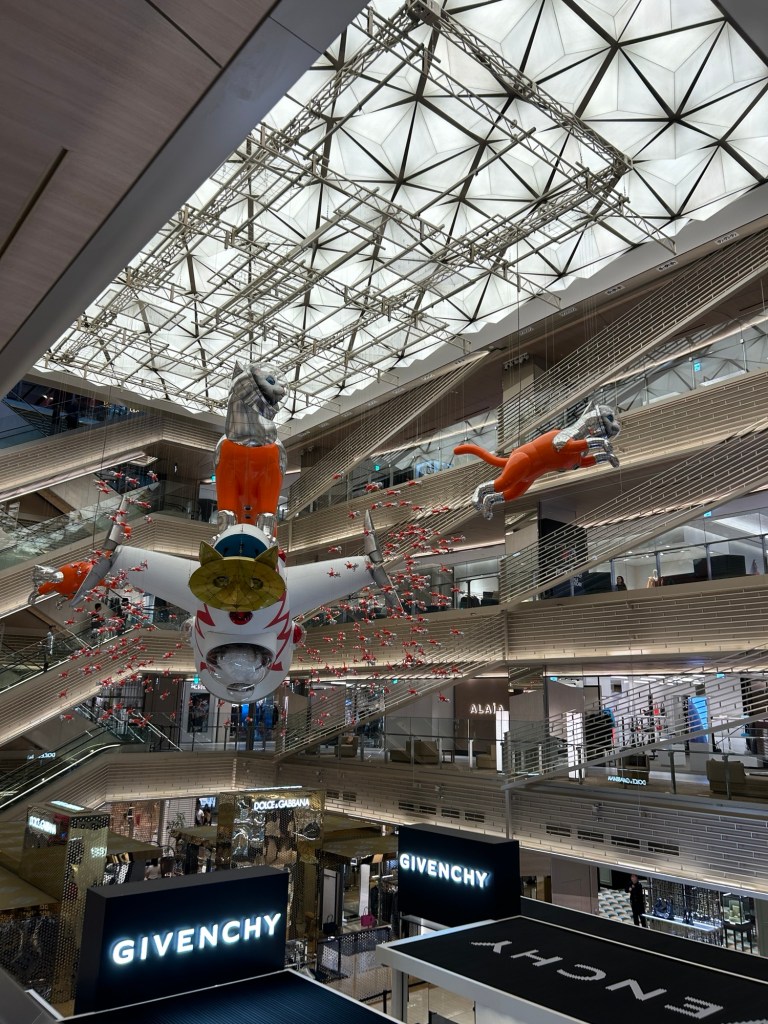
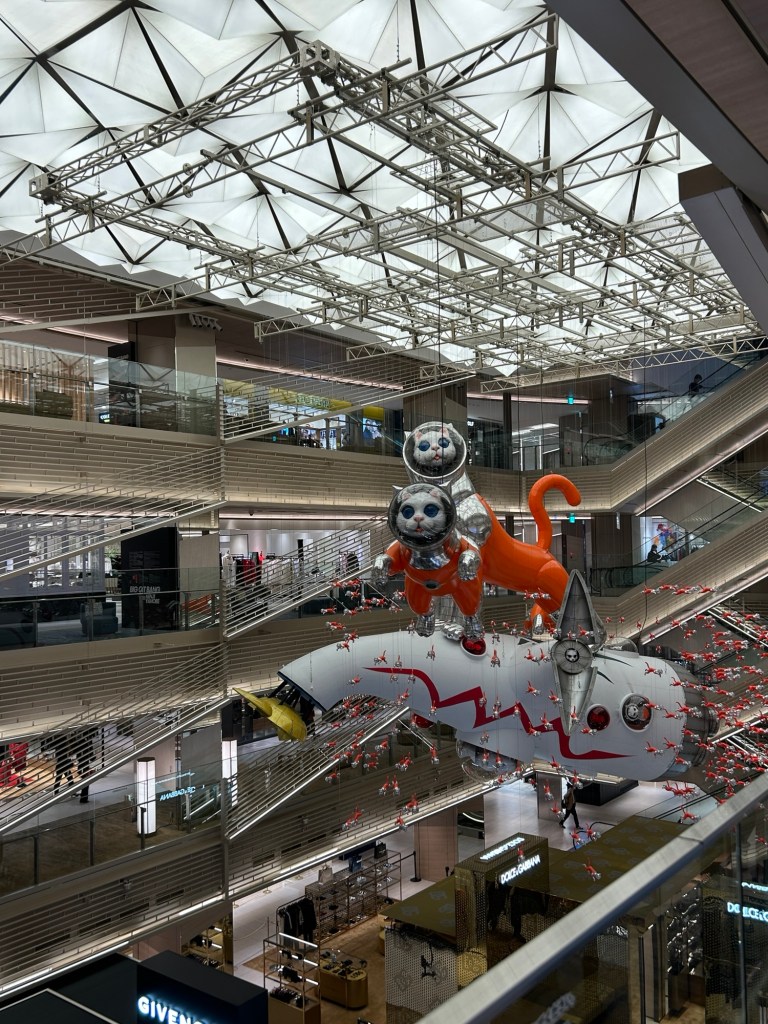
In my most recent post I showed you pictures of Cats in Space in the Ginza 6 mall. At the time I didn’t know what it was all about. On our way out we found some information I’m not sure things are any clearer, but in case you are wondering – here we go!
Translated from Japanese into ArtSpeak, which uses English words but……
Somewhere we saw an article about a shopping complex called Ginza 6 that had a pretty wacky installation in its atrium. We arrived before the mall opened – had to pass the lineup of people waiting to get into Van Cleef & Arpels jewelry store (as one does on a Sunday morning)
Found it!’
Cats in space?
Okay then. And no, I don’t know what or why.
On the top floor is a big Tsutsya bookstore. Which also is an art gallery. They specialize (as far as I can tell) in art, architecture, design books. Very stylish. On the same floor is a very stylish Starbucks.
Another instagrammable spot!
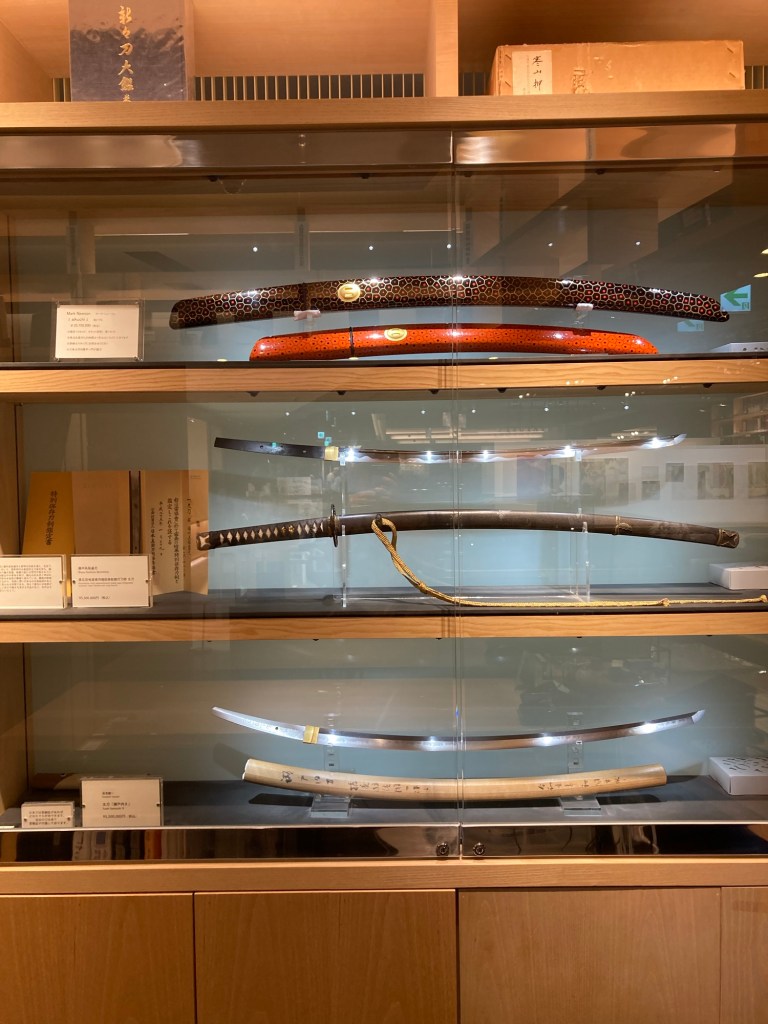
Oh and if you need a Japanese sword you can pick one up here for CAD50,000.
Japan has lots of snowy places but did you know that there is one place less than two hours from Tokyo? I didn’t. Wilf had it in his mind to go to the town of Yuzawa, which is in Niigata Prefecture. Moisture laden wind comes from the Sea of Japan, hits the Japanese alps and drops a lot of that moisture on Yuzawa. No snow in October, of course, but the signs are there…
The town does not have a big population – about 8,000, but it is a stop on the bullet train line to Niigata city. In Hilly parts of Japan the bullet train tends to go through, not up and down the hills, and Yuzawa is no exception – the train pops out of a tunnel, stops and then heads into another tunnel. The train station and tracks are built on what looks like a viaduct to keep the whole thing level. Since the town is nestled amongst the mountains it all works out.
There are 11 ski resorts either in or directly accessible in the valley. While most international skiers got to Nagano or Hokkaido, Yuzawa is 90 minutes from Tokyo and so attracts a lot of short term visitors from the big city. The train station has ranks of luggage and ski lockers. There are shops all along the street offering ski related services. And hotels! Big ones, small ones, ones in town, ones out of town with shuttles. Things are pretty quiet in October but in another month it will be full of people and all the sleepy little bars will be hopping.
But Sharon and Wilf – why are you in this town out of season? Besides the skiing there is a huge rock music festival in July and there is also a triennial art festival. During the 2018 edition of the art show an installation was created in which a tunnel was carved into the rock to access a view of the Kiyotsu Gorge, one of Japan’s ‘Three Great Chasms’ We thought we might go see it. But in the end we didn’t – it turns out to be something best visited by car. The gals at the visitors info centre were very perky and enthusiastic, but…. One bus in the afternoon up there and they were a little unclear about the return process. From the bus stop a 30 minute walk up to the site – on the side of the road on a narrow sidewalk. No washrooms at the site. And perhaps most important of all no conbini (convenience store) up there. Given that rain was threatening we added this all up and thought – nope. On to attraction number two. Sometimes you’ve just gotta pivot.
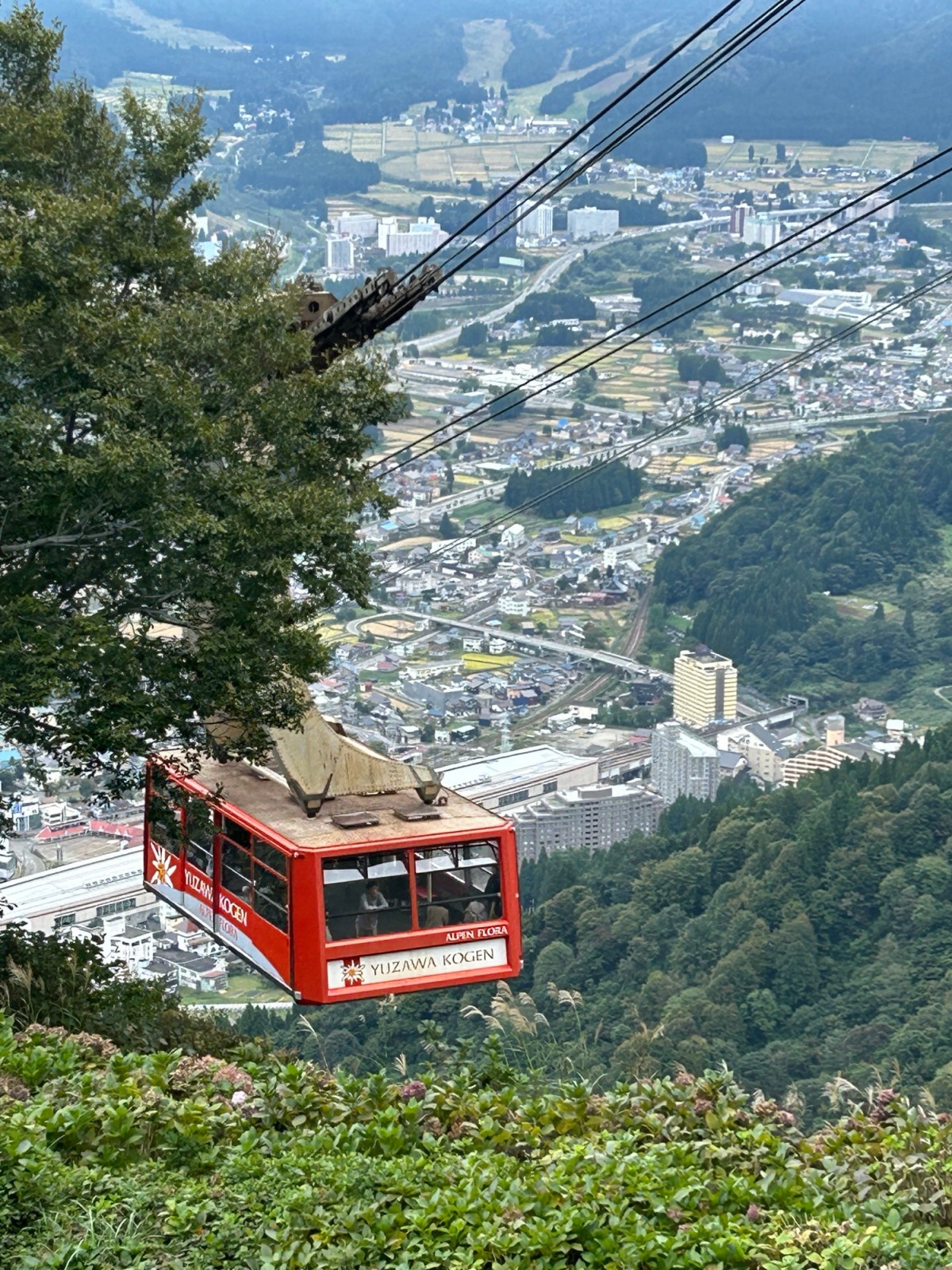
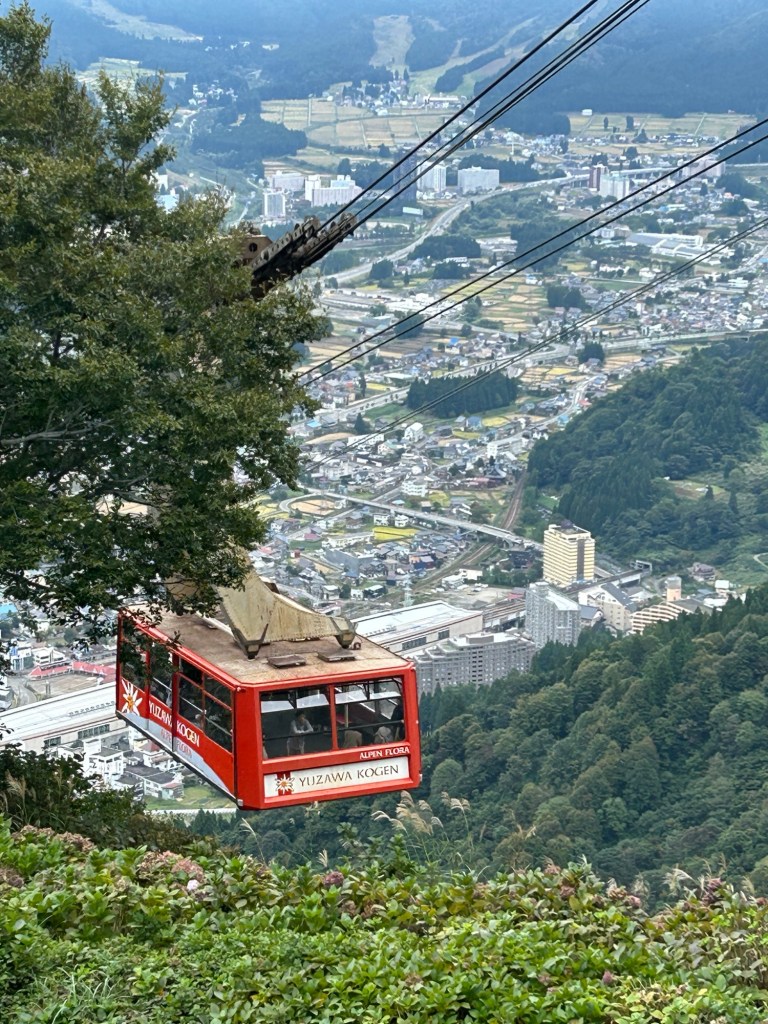
There’s a ski resort above the town accessible by gondola right around the corner from our hotel! I lucked out and got the perfect shot while waiting for our ride down. Here’s what the townsite looks like without the gondola …
You can see the train station – it’s a long one as the bullet train is long. This area if famous for its rice and you can see little rice growing areas in the distance – the view in the other direction has even more rice growing areas.
Anyhoo – up we went and it was beautiful up there. At the base was another big facility for skiers with lockers and change rooms and everything to get them off for the day. From the top of the gondola they could ski down the backside a ways and pick up another lift that would connect them to the next peak over, from which they could ski down and catch a shuttle back to the base of the first gondola. This side was steep – looked like pretty advanced runs. Looking across the town we could see other ski hills that looked a little more beginner friendly.
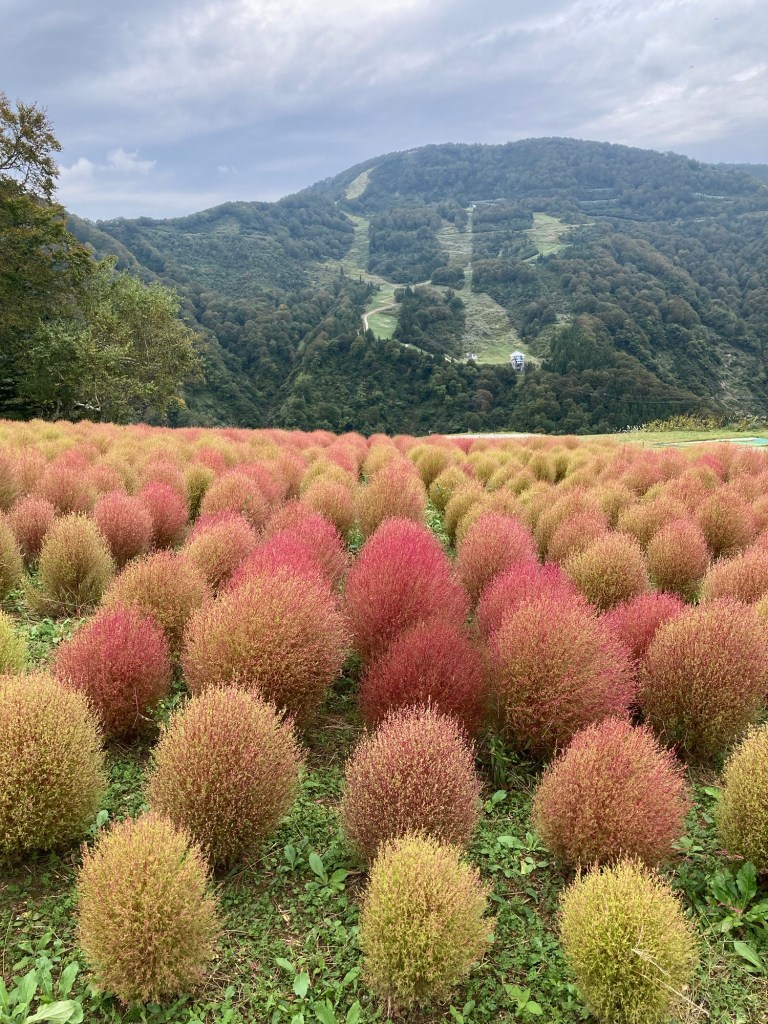
A field of bassia scoparia, aka summer cypress or burning bush with one of the skills beyond. It was beautiful up there. Alpine gardens to walk in
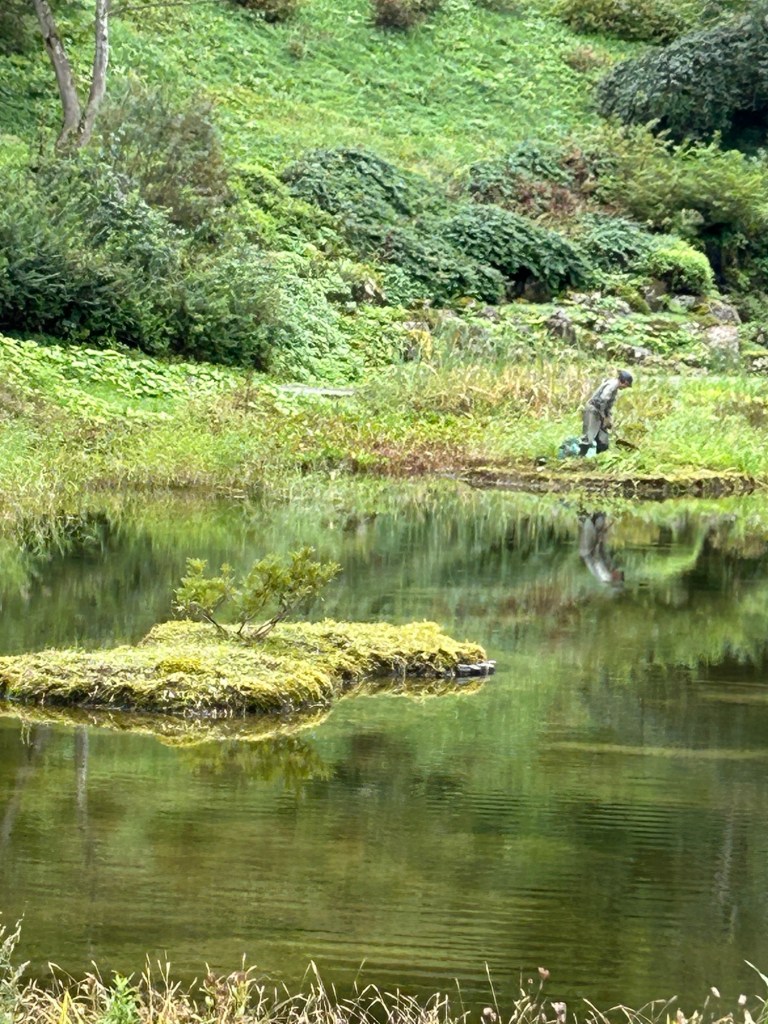
It looks like this fellow is raking the water but he’s actually pulling up the grass on the platform he’s standing on.
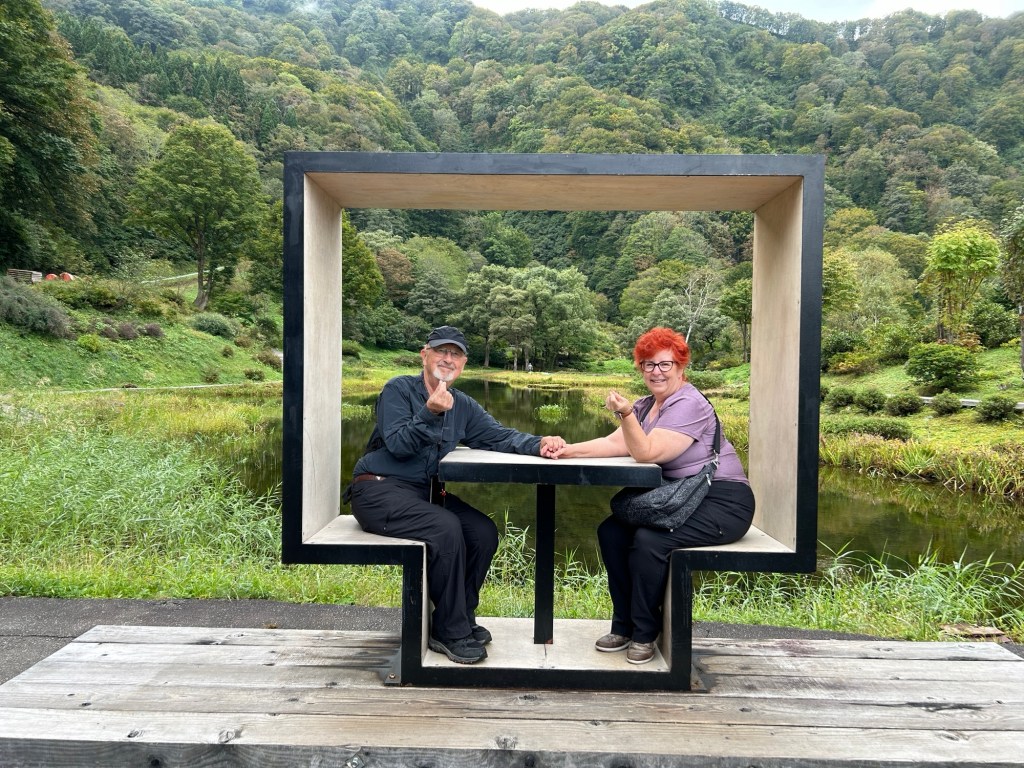
The requisite instagrammable shot. The group of young women who took the picture for us were all a flutter because we held hands…..
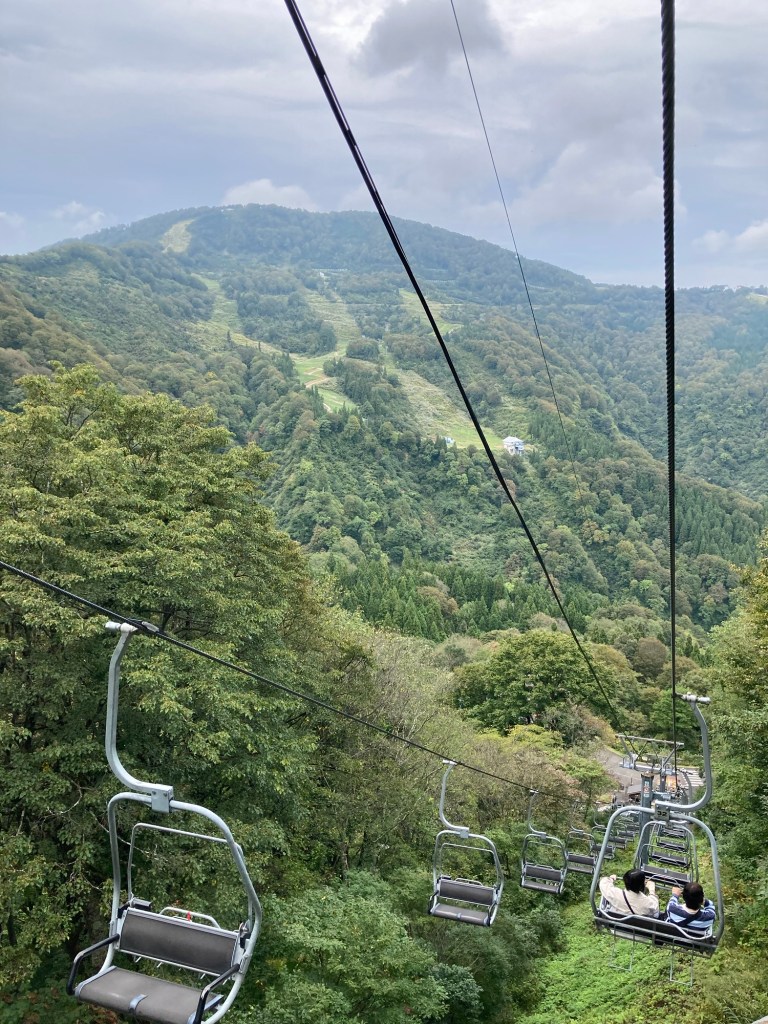
To get to this pond we took a chairlift down into the valley.
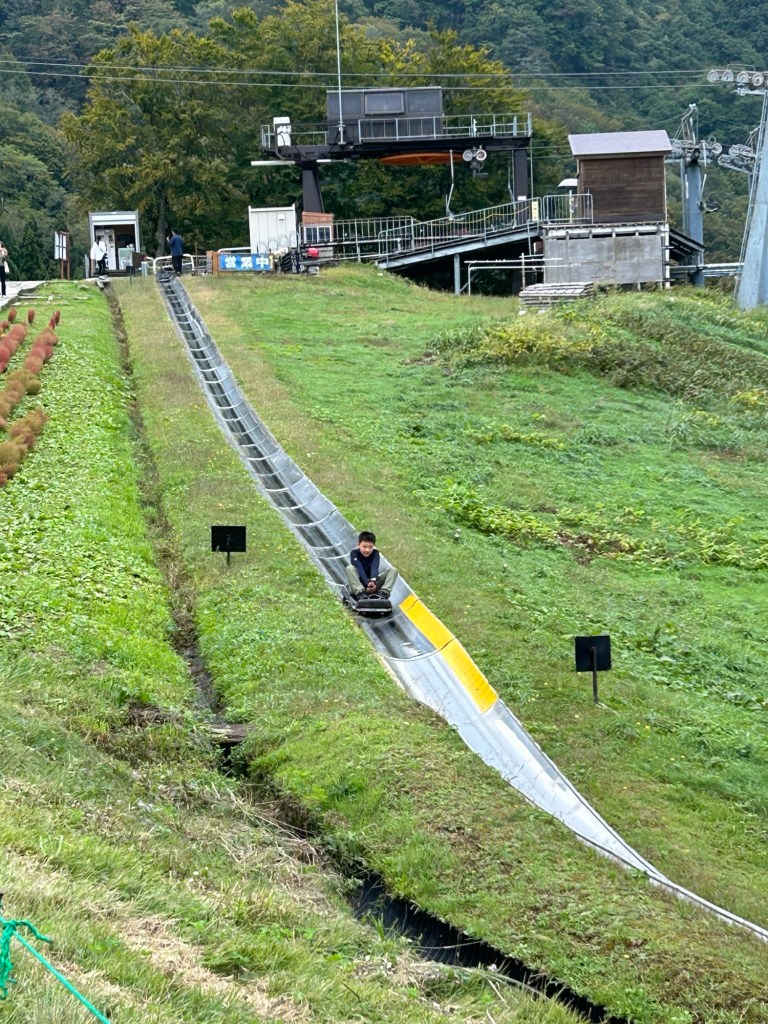
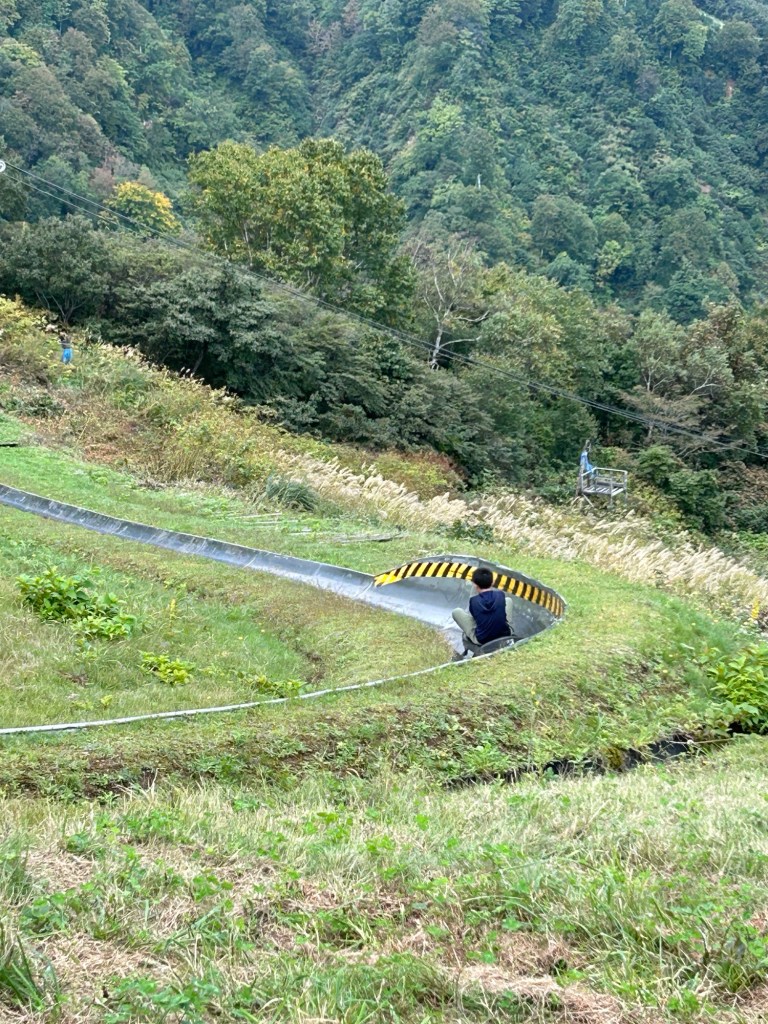
The other way down was….
Zoom Zoom from the chairlift top
There was also a zip line up there. It was a beautiful day, the air was fresh and smelt so good with all the plants around us. It was a lovely way to spend a day.
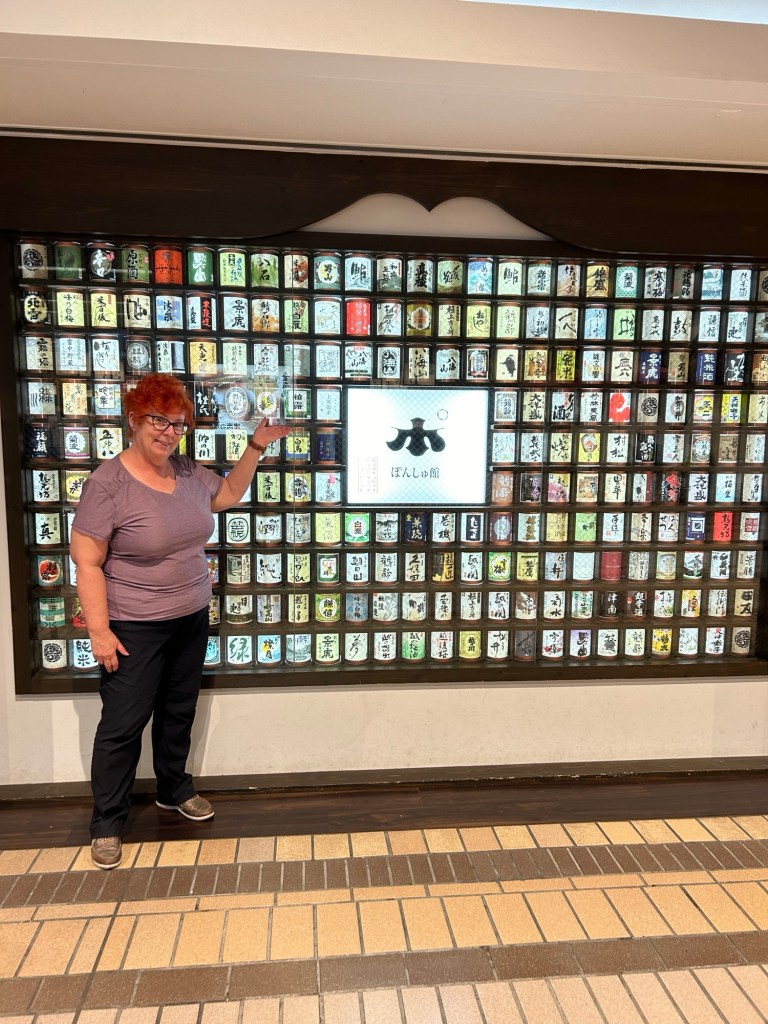
The last thing this town is known for is the ‘wall of sake’. The train station is really big for such a small town, and it has a big market inside. And way at the back…
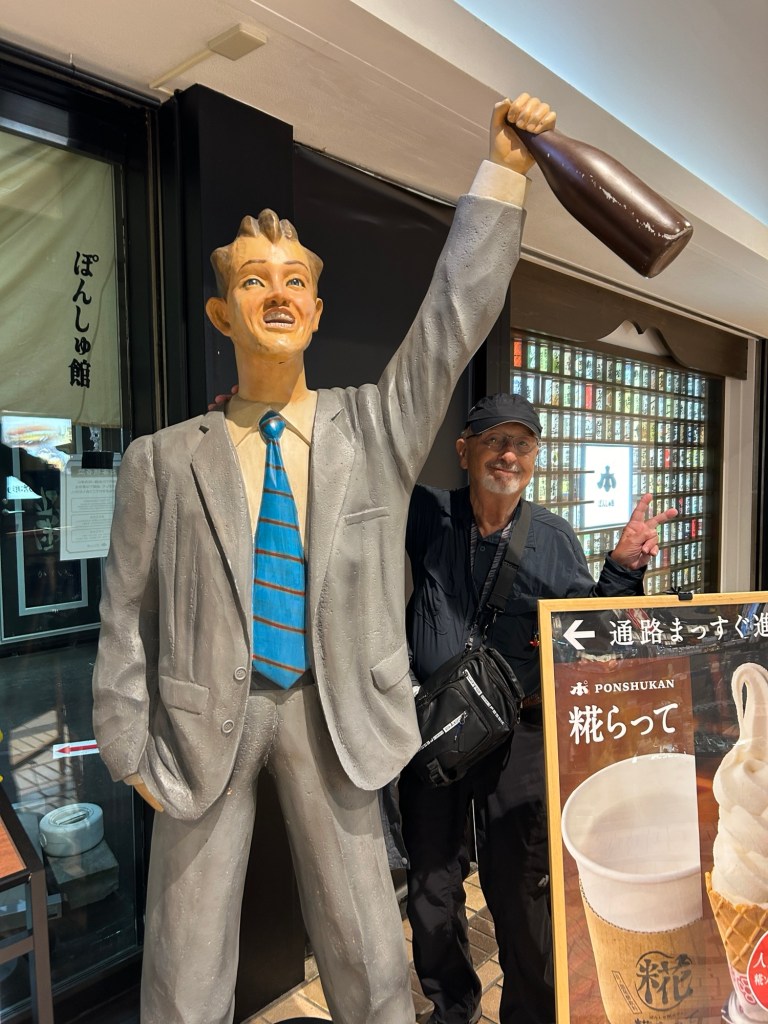
The outside of the sake museum, showing labels of all the 100 or so types they have inside.
Wilf – making friends?
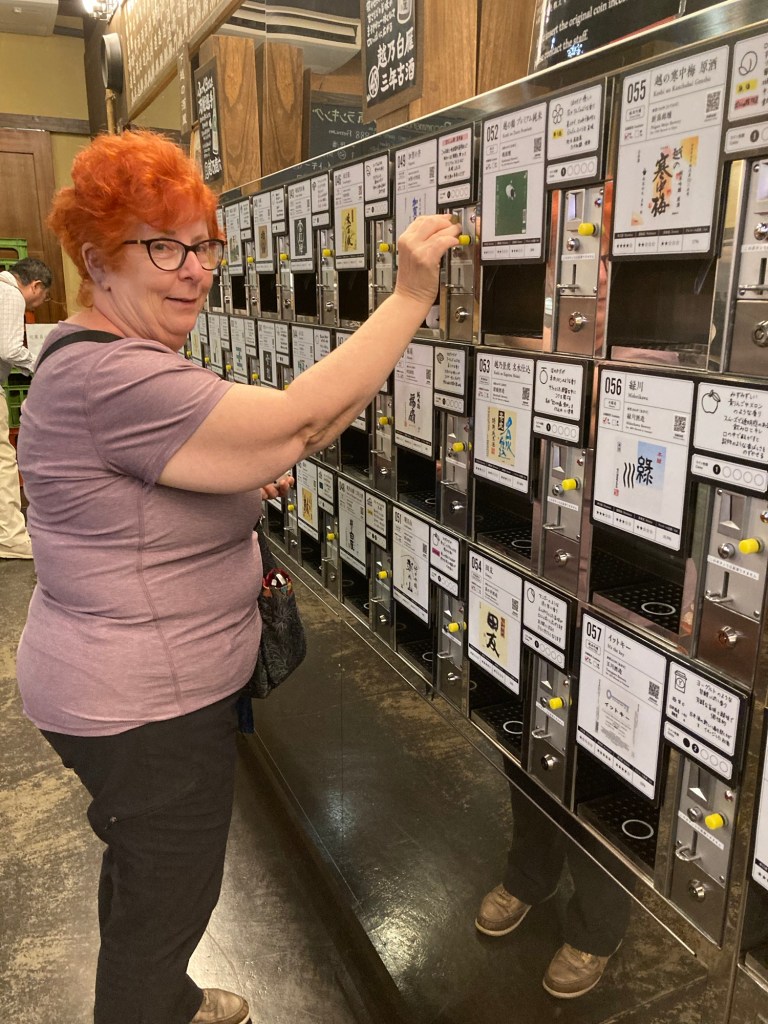
Inside you buy five tokens for 500 Yen.
Each selection costs between 1-3 tokens and you have a little cup to collect your choice. It’s kind of intimidating – so many to choose from. We tried three locals ones and they were all really good. Next to this section you can buy bottles of most of the samples.
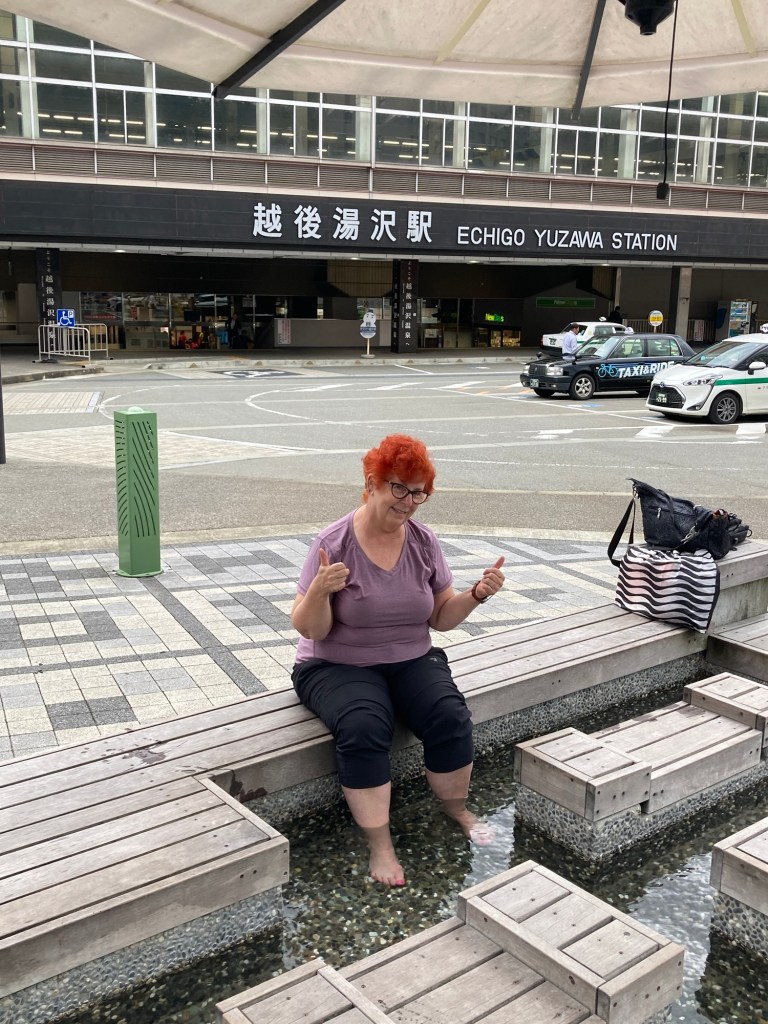
Besides snow, rice and skiing the other thing this town has is lots of hot water. There are many hot springs and the town has several public footpaths around the town – always welcome by footsore tourists!
Somewhere along the way Wilf and I saw a video about taking an overnight ferry in Japan. We thought that might be a thing to do, and made a note of the company. On this trip we discovered that it was possible to take a ferry from Hokkaido to a port north of Tokyo. We looked into it and thought – well, why not?
The Sunflower ferry line runs twice a day in each direction. There is a sailing from Tomakomai, Hokkaido that leaves at 6:30pm, arriving at Oarai, Ibaraki at 2:00 the next day as well as a night ferry that leaves just after midnight and arrives 7:30pm the same day. We decided on the evening ferry and reserved a cabin as soon as the bookings opened.
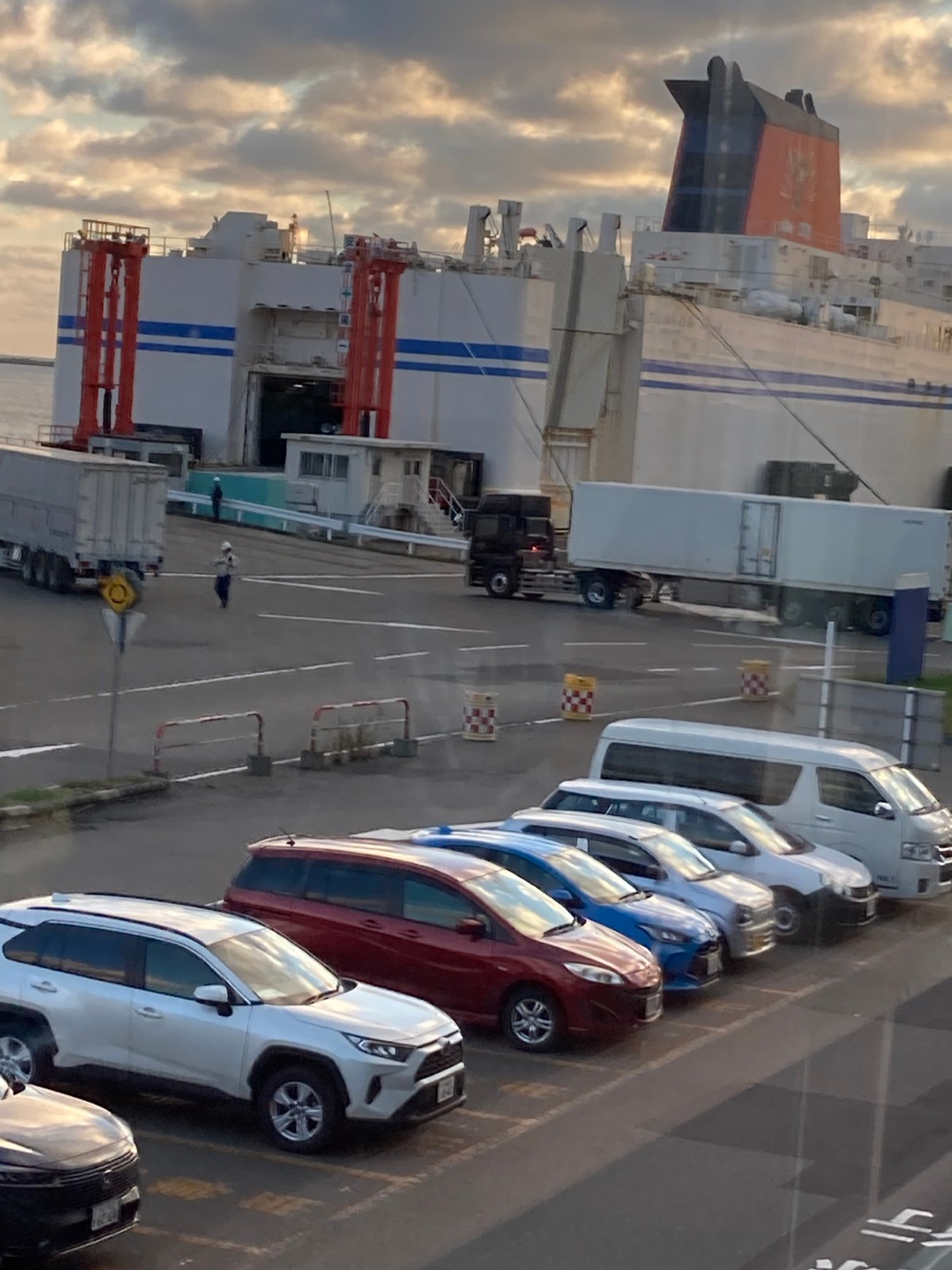
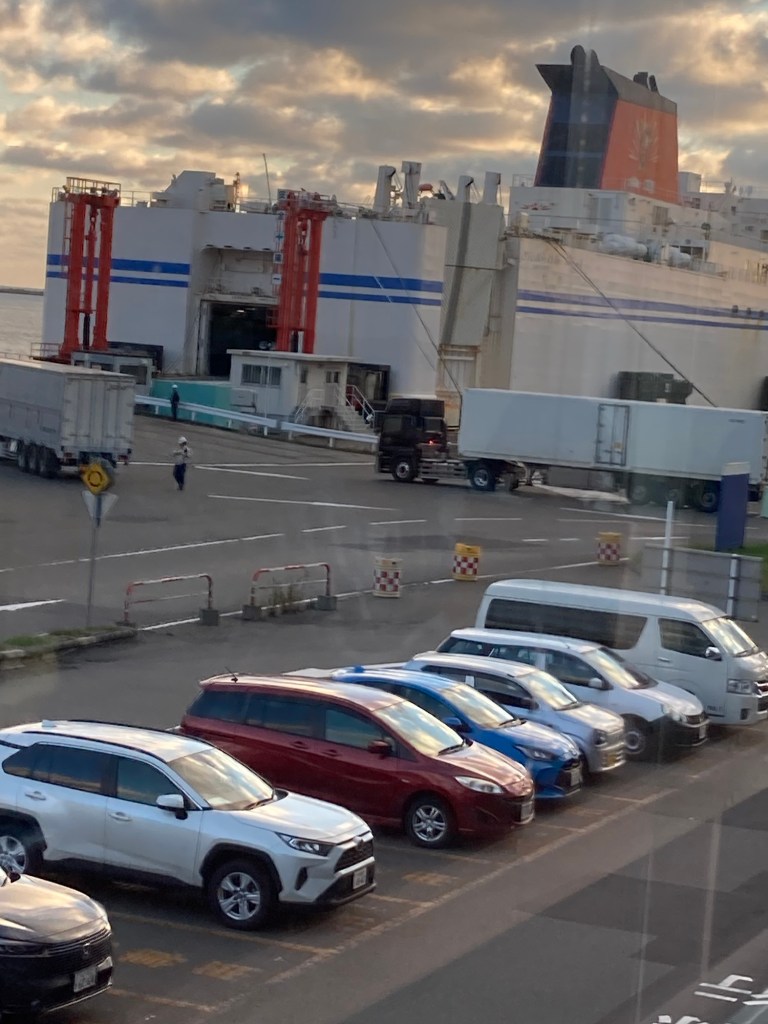
The main job of the ship is moving cargo. The parking lot was full of container trucks, most of which were taken on board by a cab, which then departed to pick up another trailer. The process is reversed at the other end. Lots of trailers on board, not that many drivers. The passenger cars go on with only the drivers – the passengers walk on. Everyone comes up top – no one on the 4 vehicle decks.
Loading the cargo onto the ferry.
Accommodation ranges from suites and cabins to a capsule type room or even recliners. Among the onboard services – which include cafeteria, laundry, a children’s play area, and a pet area, there is a public bath.
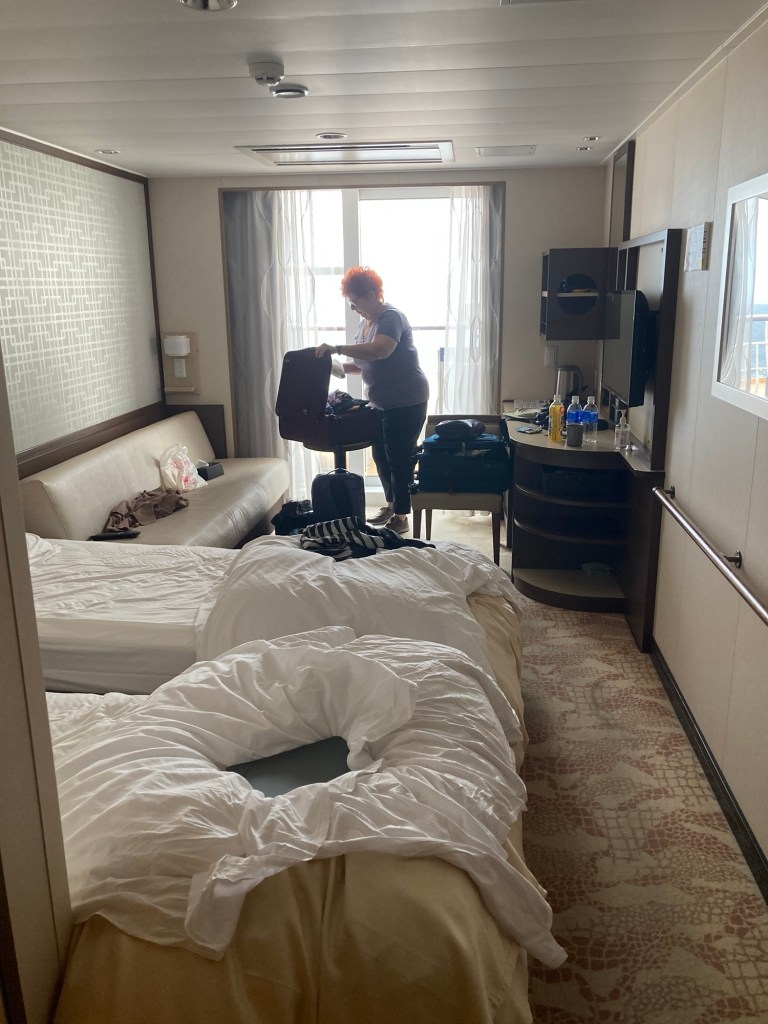
We had booked a cabin, which turned out to be about the size of a small cruise ship cabin.
We had our own bathroom with toilet, sink and shower/tub. And on the shelf – a robe to wear for sleeping or going to the public bath. While at sea!
There were also public lounges to enjoy,
Good spot for me to catch up on my blog posts.
So – life on board? Cafeteria style food was good and plentiful. Everything was labelled and there was a mix of Western and Asian choices for both dinner and breakfast. Other than the cafeteria everything was in Japanese, so my google translate got a good workout. No wi-fi on board, so our internet access was through cellular, which was sometimes a challenge due to the all metal ship. The beds were comfortable and we slept pretty well. Well, except for the motion of the ship which was a bit rambunctious at times! We did use the public baths, which was nice – a hot bath before bed is a good thing. It was all very relaxing.
It falls into the category of ‘things we’re glad to have done but don’t need to do again’, mostly because it takes a long time. For reference – check in for the ferry begins at 3:30, all aboard about 5:30, sail at 6:30. The port is not near the train station – we took a cab rather than sort out the bus schedule. Limited facilities at the port terminal in Tomakomai. In Oarai the situation was similiar – port long way from the train station. We had decided to stay in Oarai overnight once we landed – that was not necessary and we probably should have gotten ourselves to Mito, at least, before continuing onward the next day. But we had not stayed in Oarai we would have missed one fun little adventure.
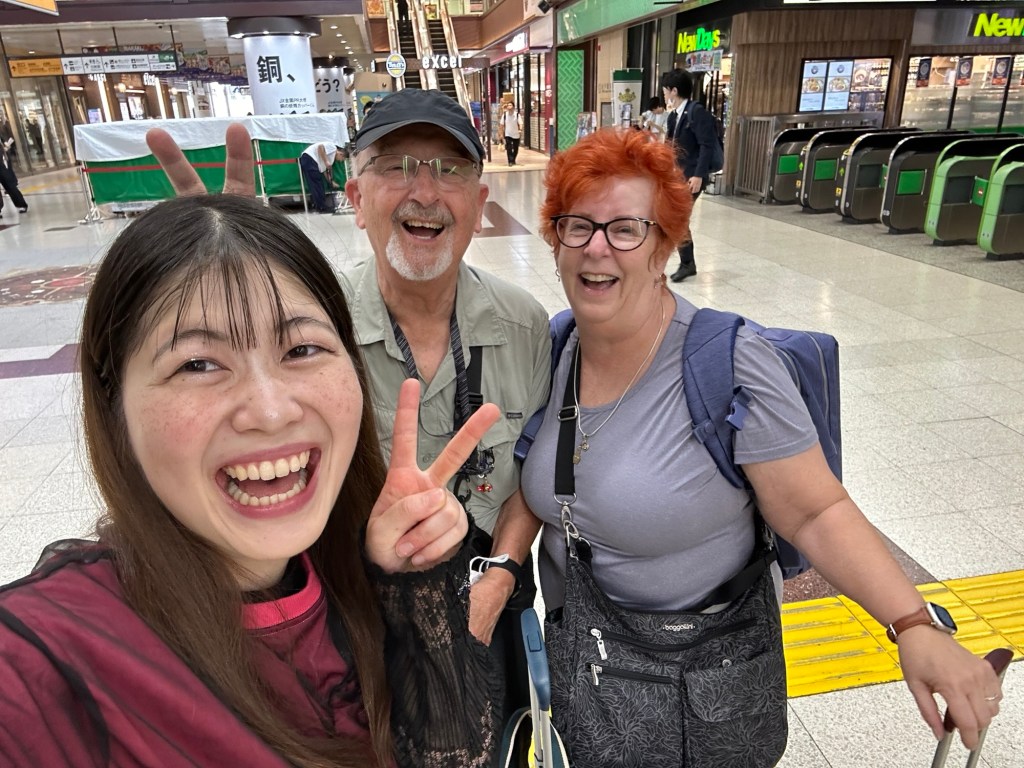
While waiting on the platform for the train in Oarai a young woman struck up a conversation with us. She works at the local aquarium and wanted to practice her English. So many young people are afraid to make mistakes but she was brave and dove right in. We had a fun train ride together, which concluded with selfies, of course!
I’ve told you about Toya Onsen Town, but I wanted to tell you about the beautiful hotel we stayed at. Its full name is The Lake View Toya Nonokaze Resort. Cab drivers only reacted to the ‘Nonokaze’ part. It is on the Main Street of the town – there’s a 7-11 across the street. But it is a world unto itself. It has an enormous lobby and two connected 10 story towers, so it holds a lot of people.
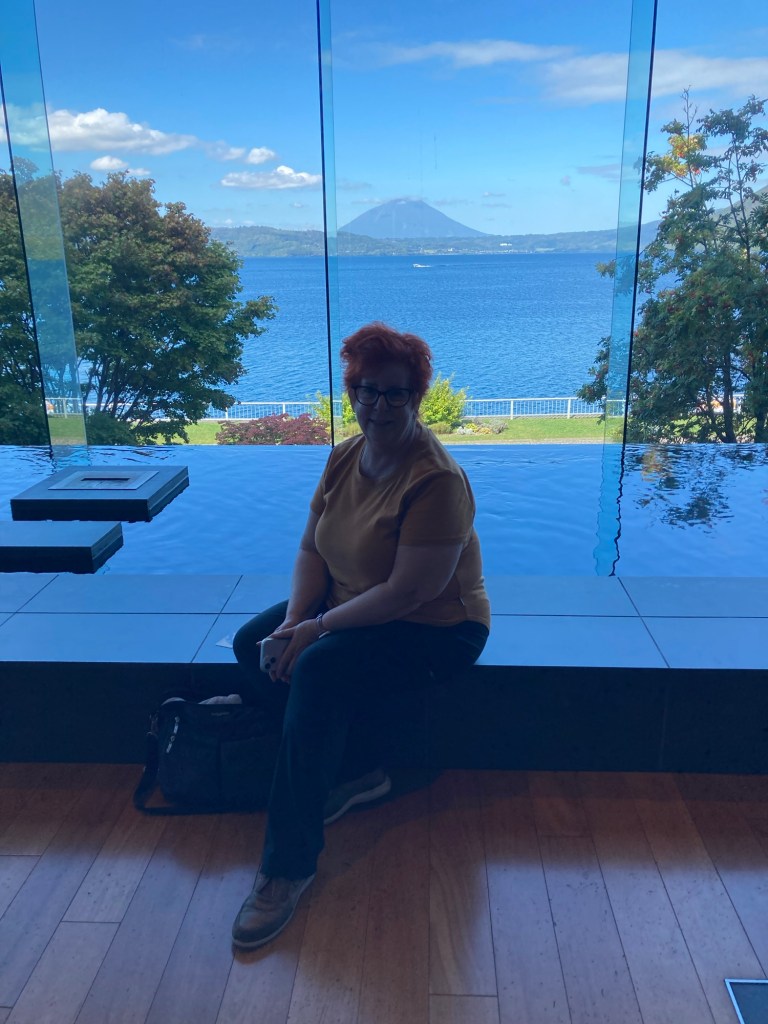
Two story atrium with huge windows. Reflecting pool. View straight out onto the lake.
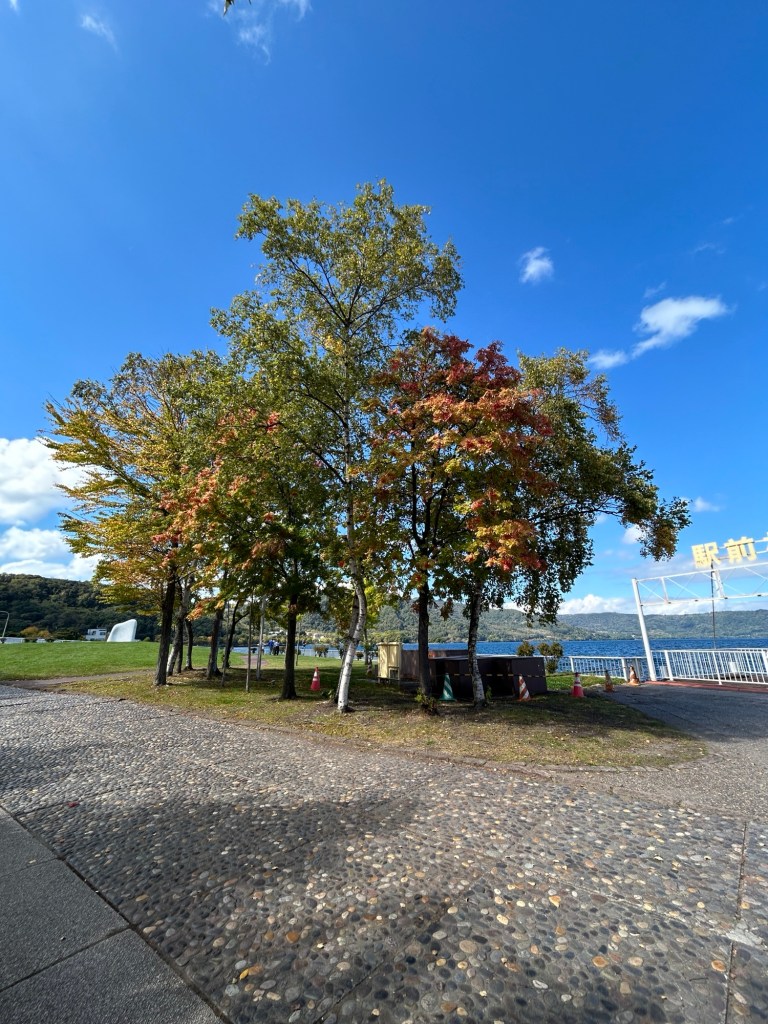
It took until Lake Toya on this trip to see signs autumn.
We had a lovely room with a western style bed – yay! One thing about Japanese hotels – they all provide a sleeping garment. Usually they are a white waffle textured nightshirt that buttons up the front and is about mid-calf length. They are really sized for Japanese people, not people with curves, so sometimes they work, sometimes they don’t. Some hotels provide a cotton yukata, others provide two piece pjs. This is more common when there is a public bath on site and it is common for people to wear these outfits throughout the hotel. (Wilf wants me to clarify for you that public bath does not mean open to all the public. It means there is a communal bath for women, and a communal bath for men. Some hotels have private baths that you can book and couples can go together, or families can share. Bathing culture is a whole thing here. It’s one of the best things about Japan…..)
At Nonokaze when I opened the dresser drawer there was the white nightshirts with a note ‘Please only wear in the room.’ And then two more outfits. Yukatas and sashes – one blue and one red. And two piece pyjama sets – baggy pants and a loose fitting wrap type top, one blue, one red. The note with them said please wear freely throughout the hotel. In the cupboard there were proper heeled slippers and blue and red short lined jackets. A full wardrobe! Replenished daily. The public baths are open most of the day so people will go before or after meals, sometimes twice a day. Lots of people in the hotel clothing all through the hotel and the restaurant. I’m always a little anxious about the yukata – will I get it tied correctly. Will all the goods be covered up and will they stay that way? (Trying to walk at a measured pace so the robe doesn’t fly open takes practice. Especially in slippers)
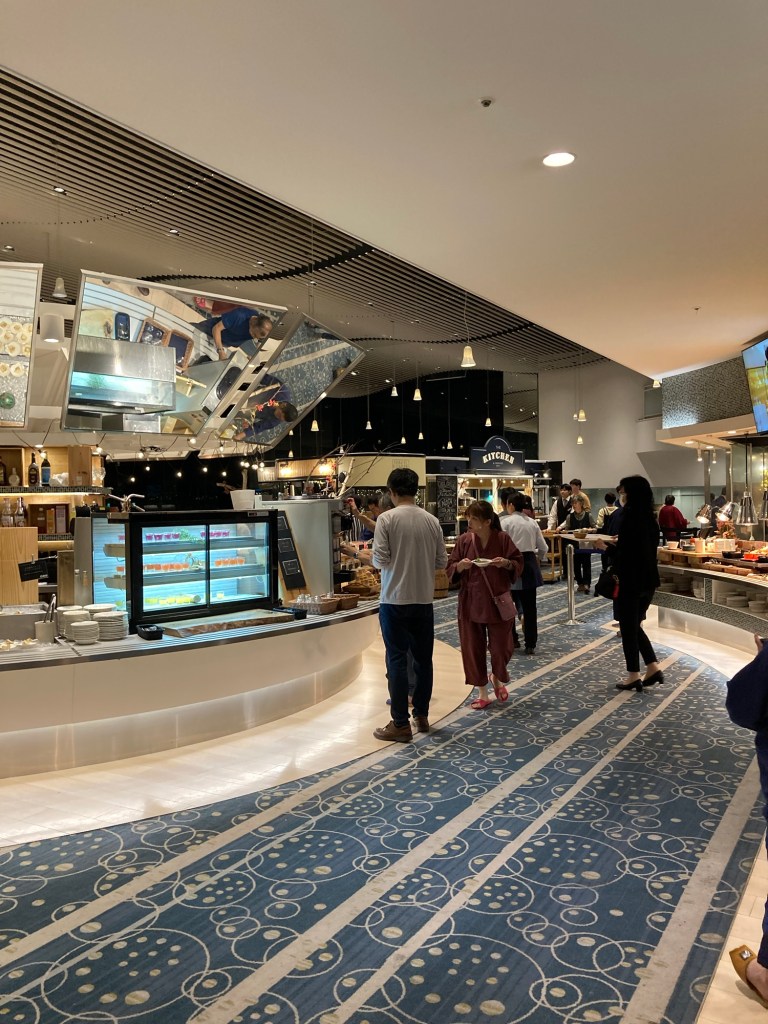
Our accommodation included breakfast and dinner. This time it was not the formal dining as we had at Aizuwakamatsu. This restaurant was a buffet. A buffet that would put a cruise ship to shame. Western and Asian food, lots of local specialties. It was amazing. We met the chef in charge of the Western menu – he’s from France so there were touches of French cuisine evident.
There was a little mini-Airstream trailer in there, one side of which was coffee and drinks station and the other was the pasta chef. Everything was delicious and we got to sample a whole range of Hokkaido specialties – they are known for their dairy products, as well as beef and seafood.
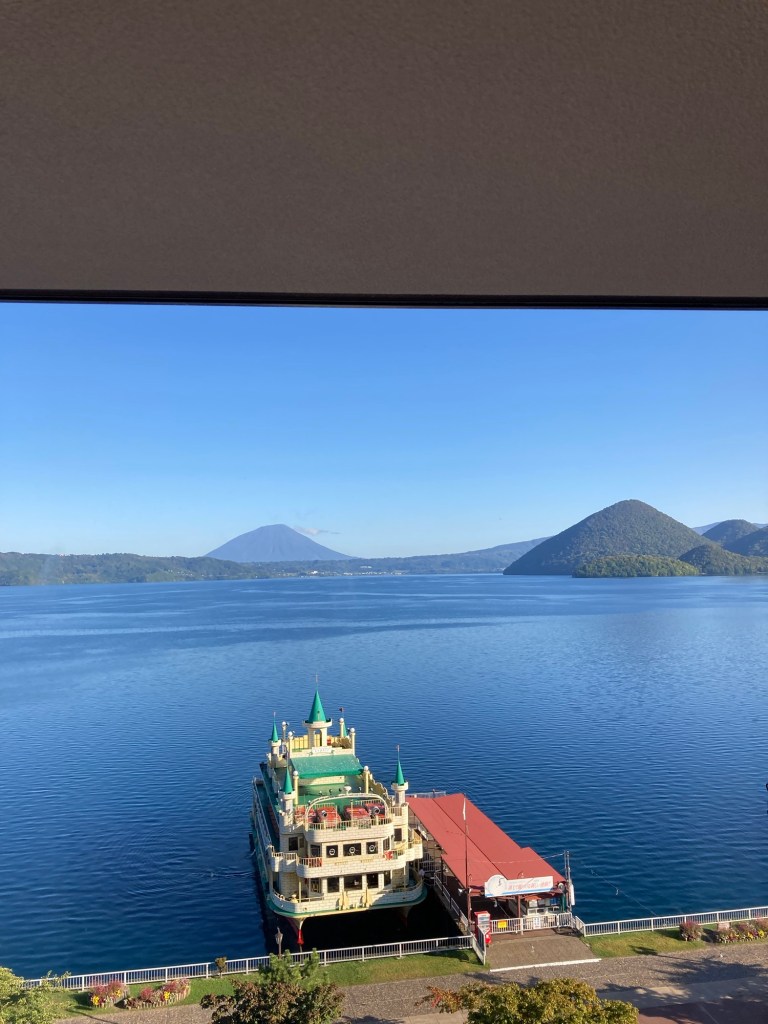
Being right on the lake meant we had front row seats to a gorgeous view and the boating activity.
The floating castle tour boat moored right across from our room. It would take people out to the cone shaped islands to the right of the picture. The stratovolcano in the far distance is Mt Yotei which sort of looks like Mt Fuji
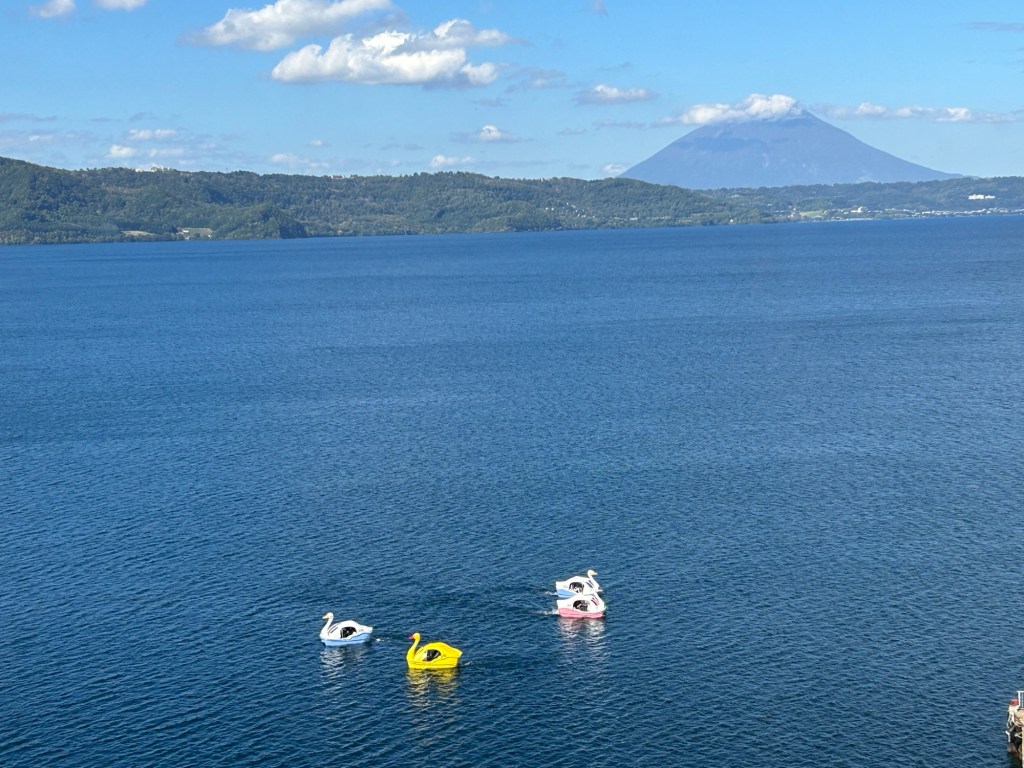
Swan boats for rent. Some are the usual paddle boats, but some have outboard motors, so zoom, zoom!
Not only was it a beautiful hotel with gorgeous views, a luxurious onsen, great food and lovely rooms, but…..
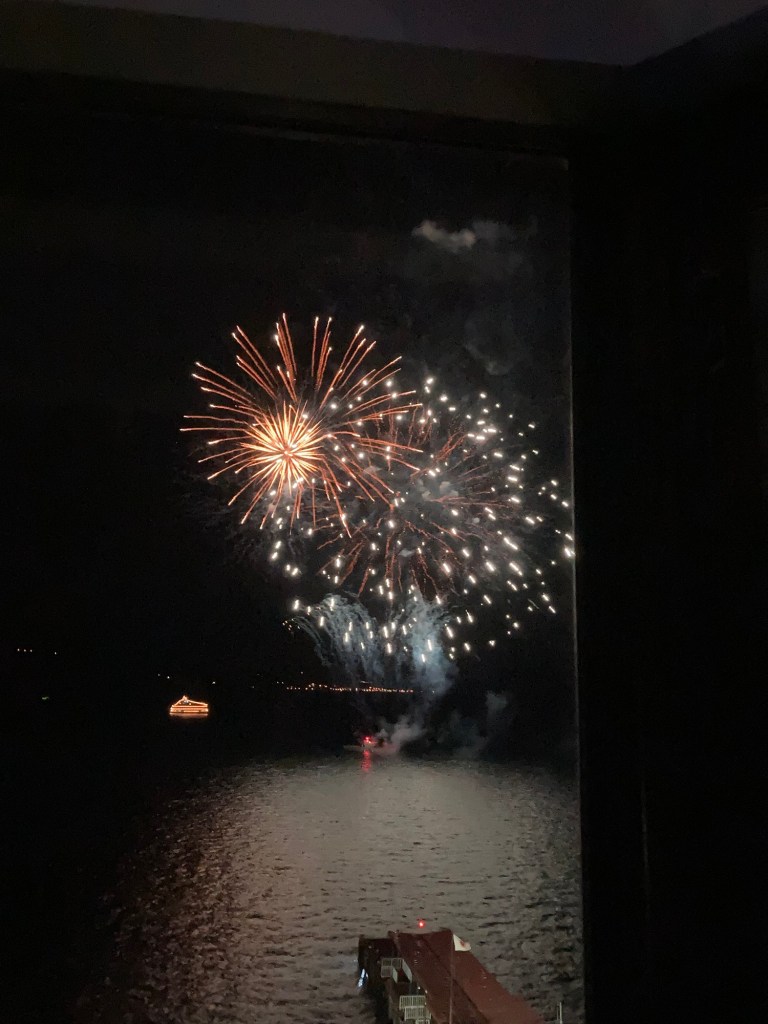
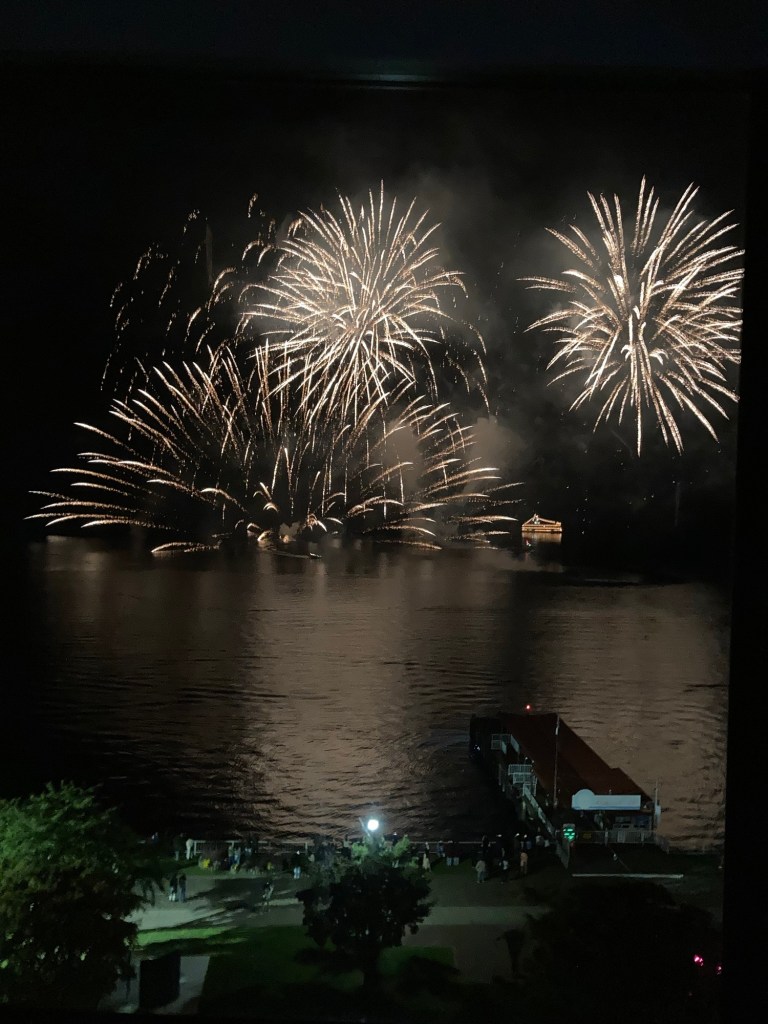
Every night at 8:45 there was a fireworks display on the lake. This is the view from our window. The tour boat is out, on the water, and there’s another boat firing off the fireworks. It starts to the west of us and moves along the coast, stopping in front of the big hotels. On the second night another boat joined in.
The second boat was dropping the fireworks onto the water and then racing off so we wound up with displays like the above – some in the sky, some on the water.
All the places we’ve stayed at have been wonderful and different, but this was really wonderful.
From here we begin out journey back to Tokyo and that includes an entirely new form of accommodation for us – an overnight ferry!
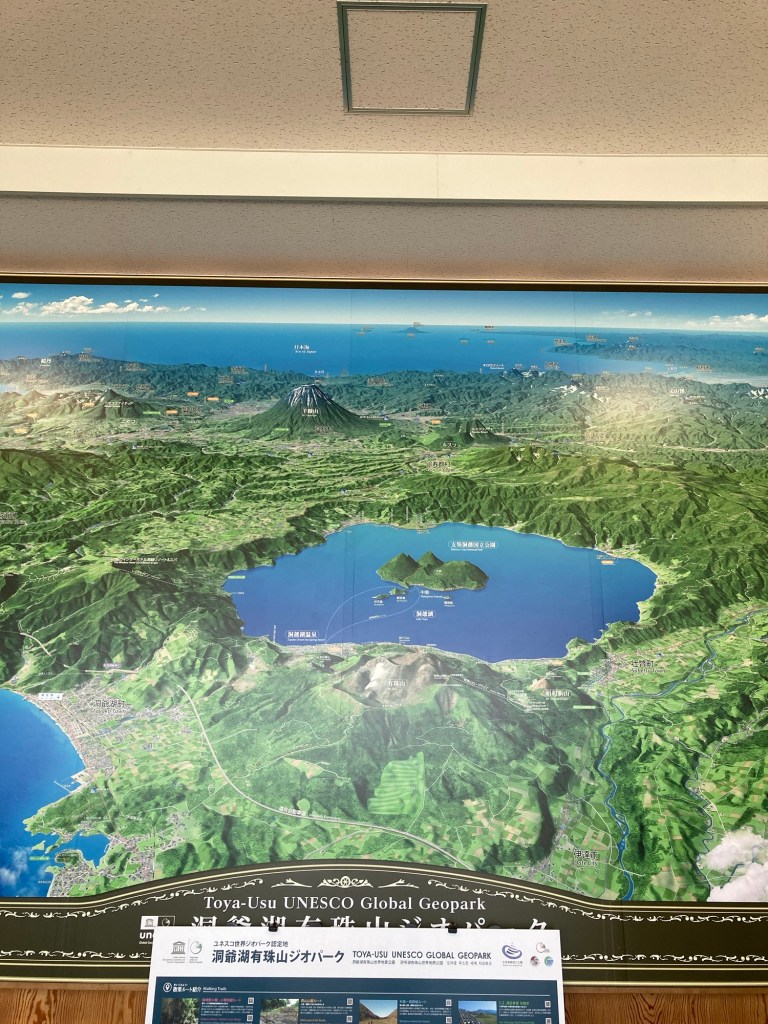
From Hakodate we have taken the train a few hours further to the east, heading for Lake Toya. Perhaps you are asking yourself – what is it this time, you two? Food and drink? A festival? Geology? If you guessed geology you are right! Lake Toya is a water filled volcanic crater, surrounded by more volcanos.
We were headed for Toya onsen town. Most descriptions of onsen towns begin with something like ‘1300 years ago a monk found this location with its hot spring and people have been coming here ever since….” Not so at Lake Toya. The area around the lake, within the caldera has lots of excellent agriculture land. In 1910 the mountain erupted and after it was all over there was a gift from the volcano – hot water! By 1916 the resort was established and 1928 there was train service. Getting from the train station to the resort was a bit of deal, I expect, as the roadway would have went up and over the caldera rim – now there is a tunnel and it is a 15 minute drive.
In the later part of 1943 the postmaster nearby the lake noticed that the agricultural fields were beginning to bulge upwards. He took detailed observations over the next two year as a new mountain was born. Mt Showashinzan is now 300 m tall. Much is covered with trees but the top is rock and it still is smoking
Another eruption occurred in 1977-78, producing significant ash fall. Rain on top of that caused mudslides. Knowing that the hills behind the town were composed of volcanic ash a series of dikes and diversions were built to try and protect the town.
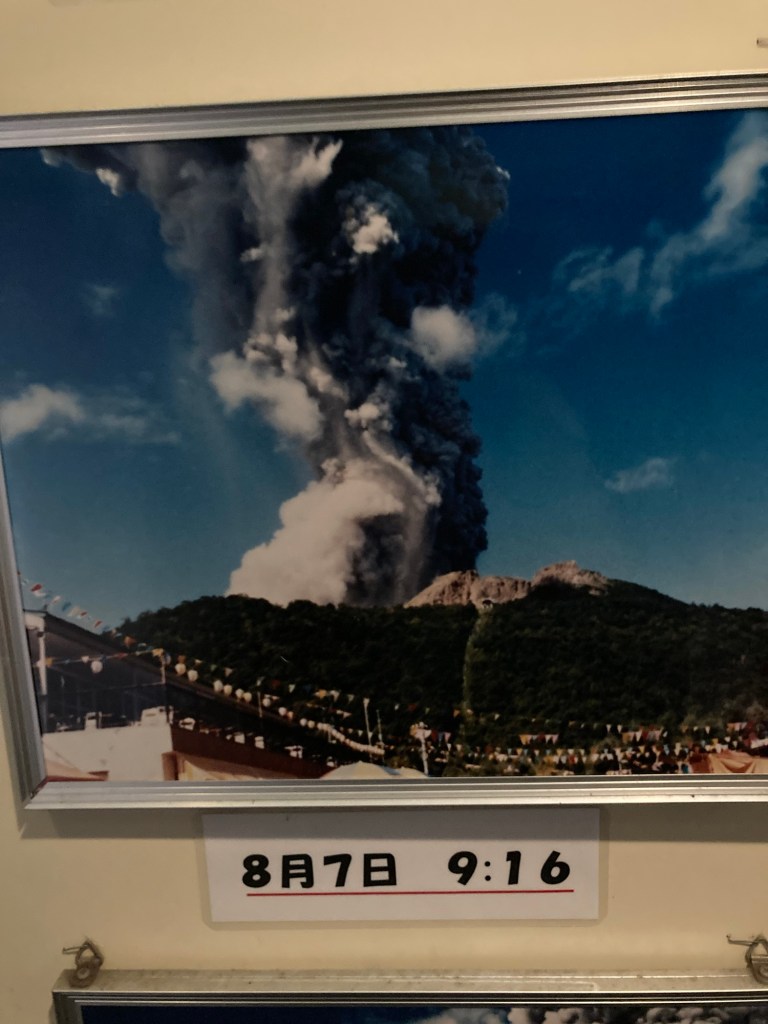
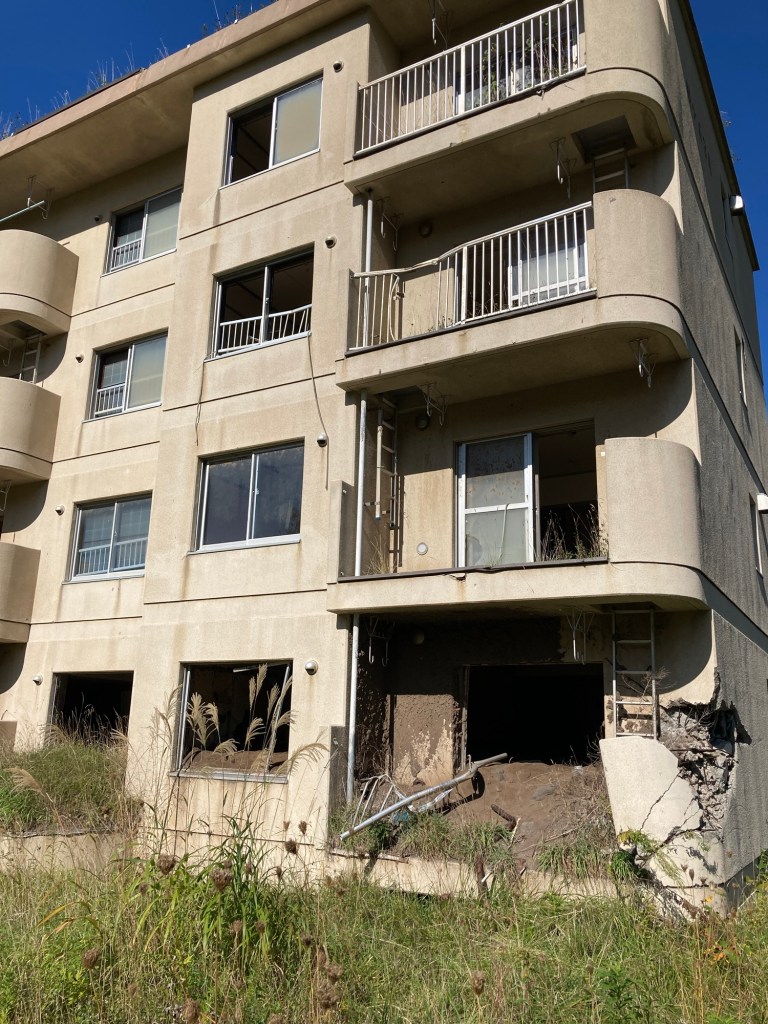
In 2000 the mountain awoke and began erupting. On the seaward flank new craters were formed, and above the town the mud came down. Signs of the eruption had been evident, and 15,000 people were evacuated. There was no loss of life, but tremendous property damage. Hundreds of building were destroyed and many more damaged. The resort along the water had ash fall, but were okay. One area of the town was destroyed. Rather than razing it the damaged buildings have been left. The diversion structures from the previous eruption helped, but did not prevent all damage
Not what you want to see looking out your window.
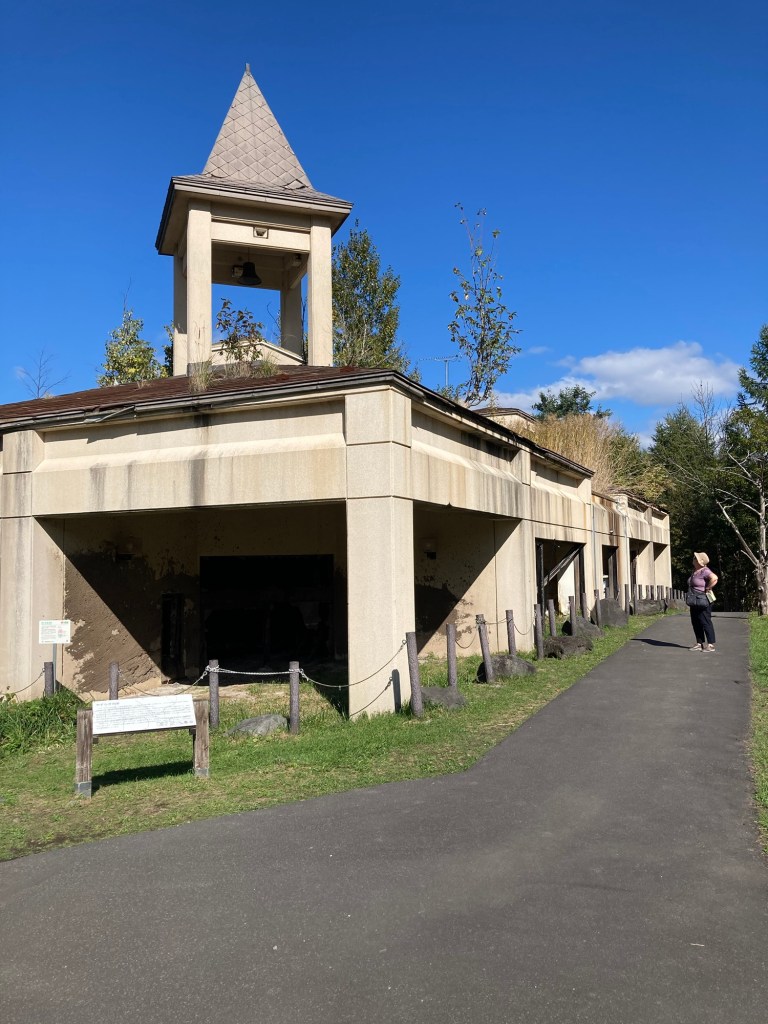
We walked up to the volcano museum, then went up and over the dike behind it to see what remained.
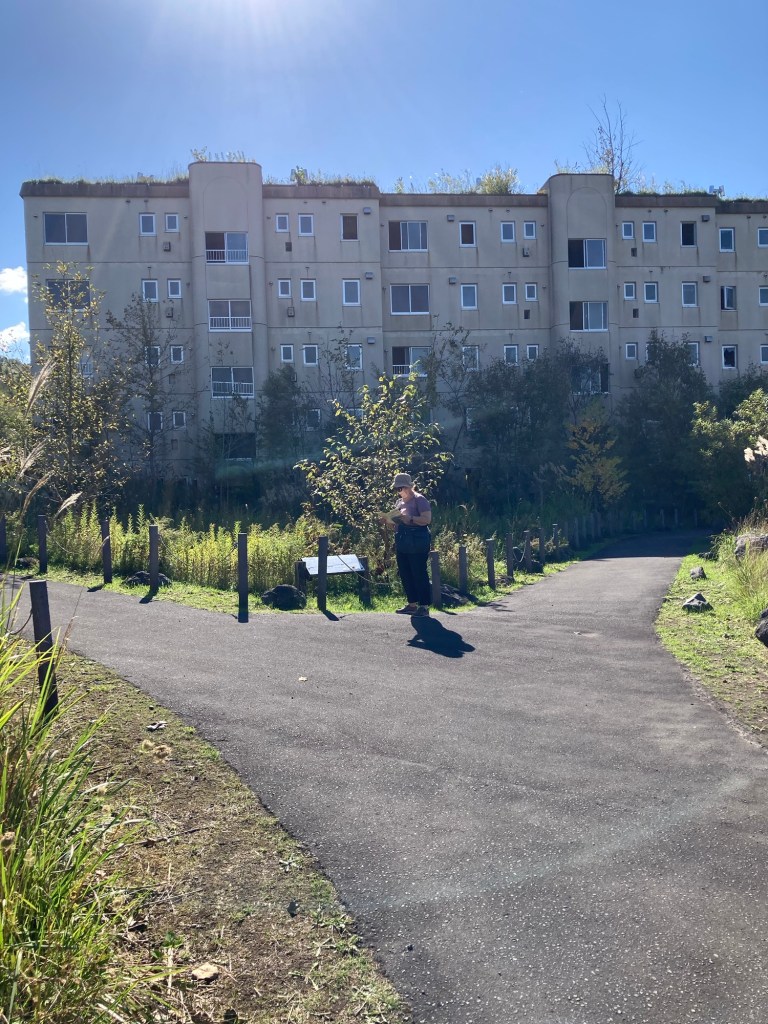
This small apartment building merely looks abandoned from this view point.
Public housing apartment from the lee sideApartment building from the uphill side
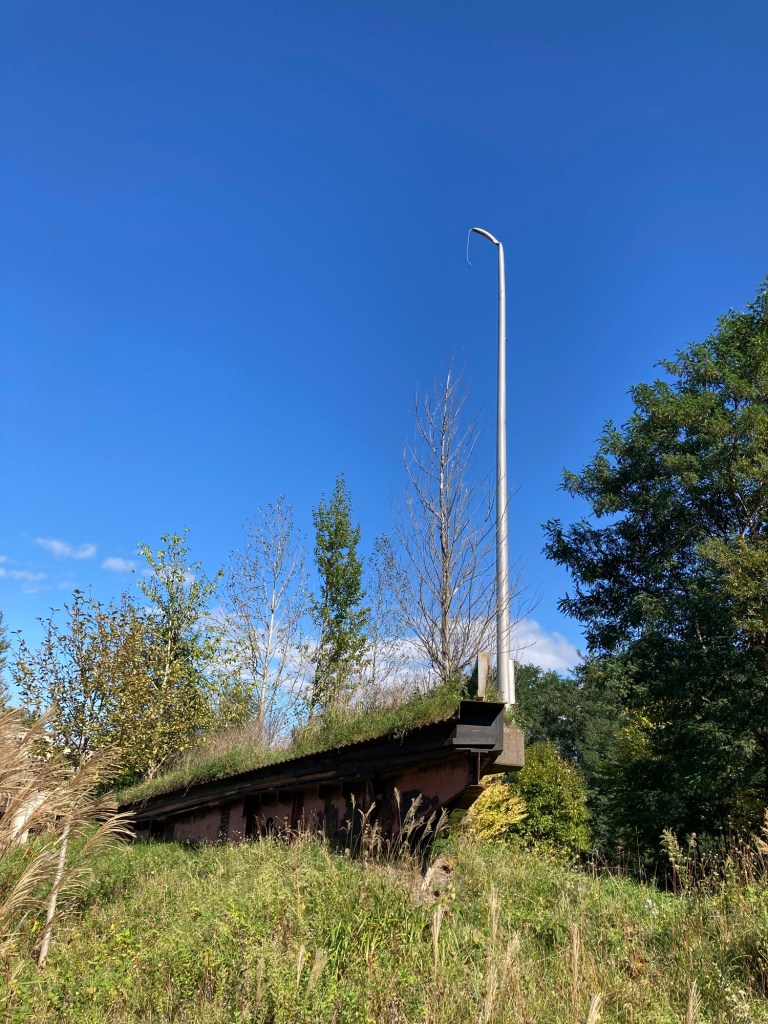
That is not the ground floor suite we are looking at – it is the second floor, full of mud. The damage to corner occurred when the highway bridge swept by.
This was the roadway and the bridge was pulled off and swept away. This building was the school/library/public bath. It is also full of solidified mud. The wall made of steel girders is part of the diversion system.
Besides visiting the site of the 2000 eruption one of the other things to do is take a cable car up to visit Mt Usu itself. It was a beautiful Sunday morning and off we went.
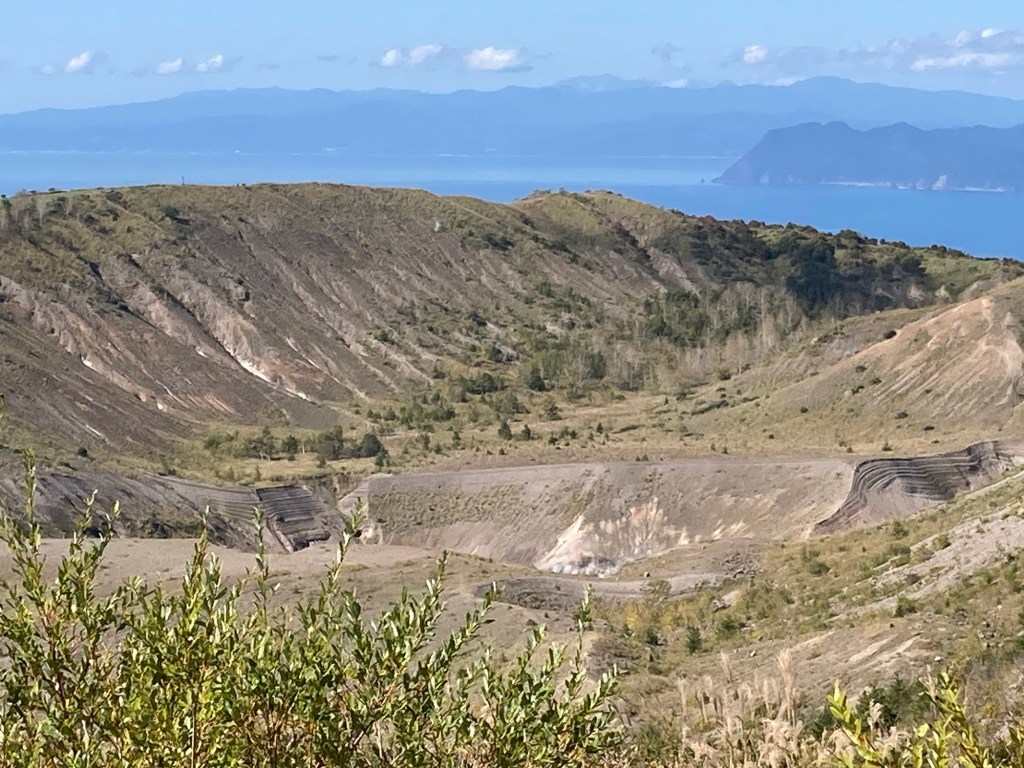
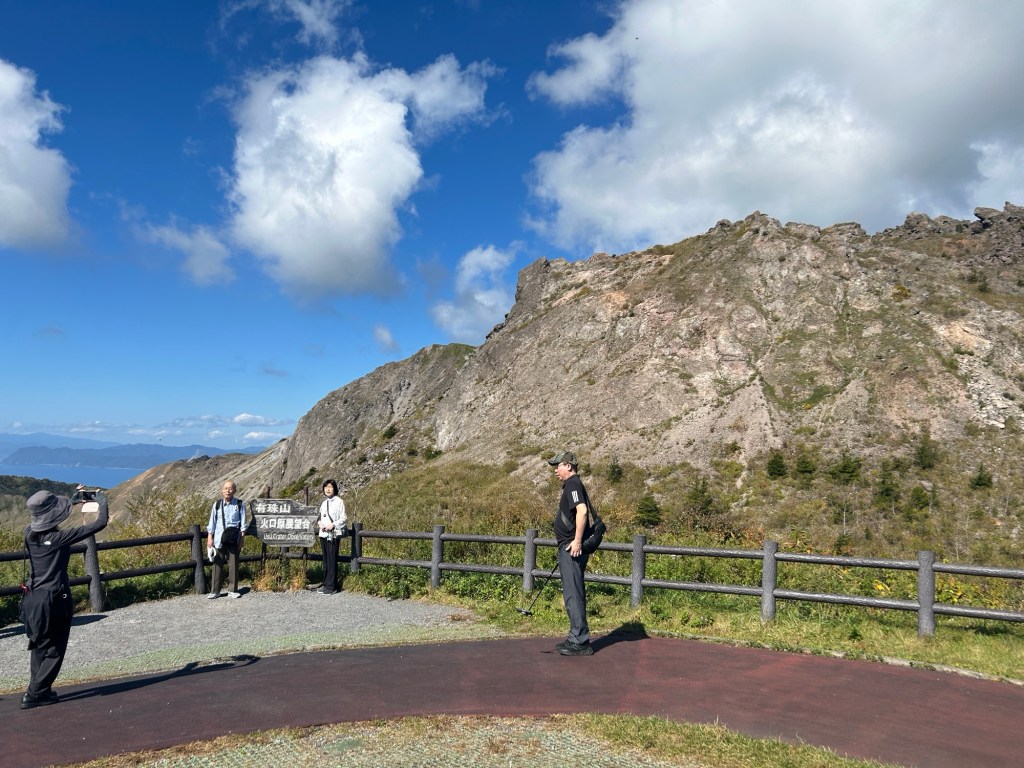
From the top of the cable car we took a walk to the observation area. From there the could look down the most recently formed crater, complete with gaseous emissions.
New crater, the bay in the background.
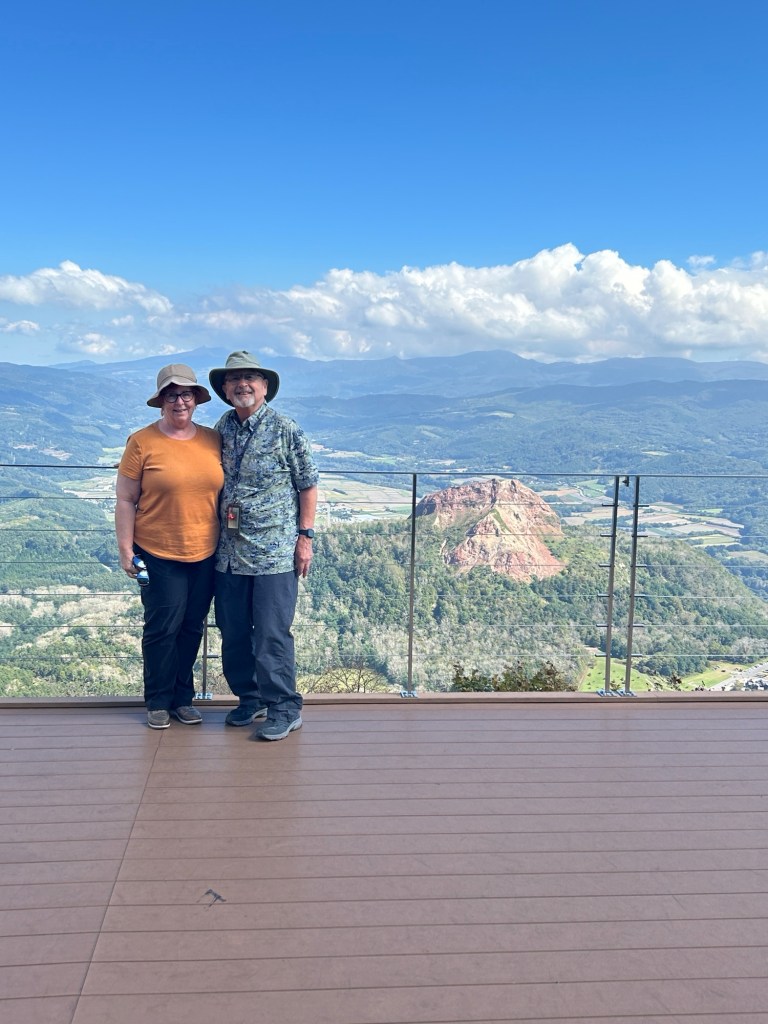
Previously from this point the lake was visible, but the mountain added to itself and now there is this huge outcrop to admire.
Back down at the cable car station there was- of course – a cafe. And there is the most beautiful seating area with comfy chairs spread out across terraces. Perfect spot to admire the view and enjoy the sunshine.
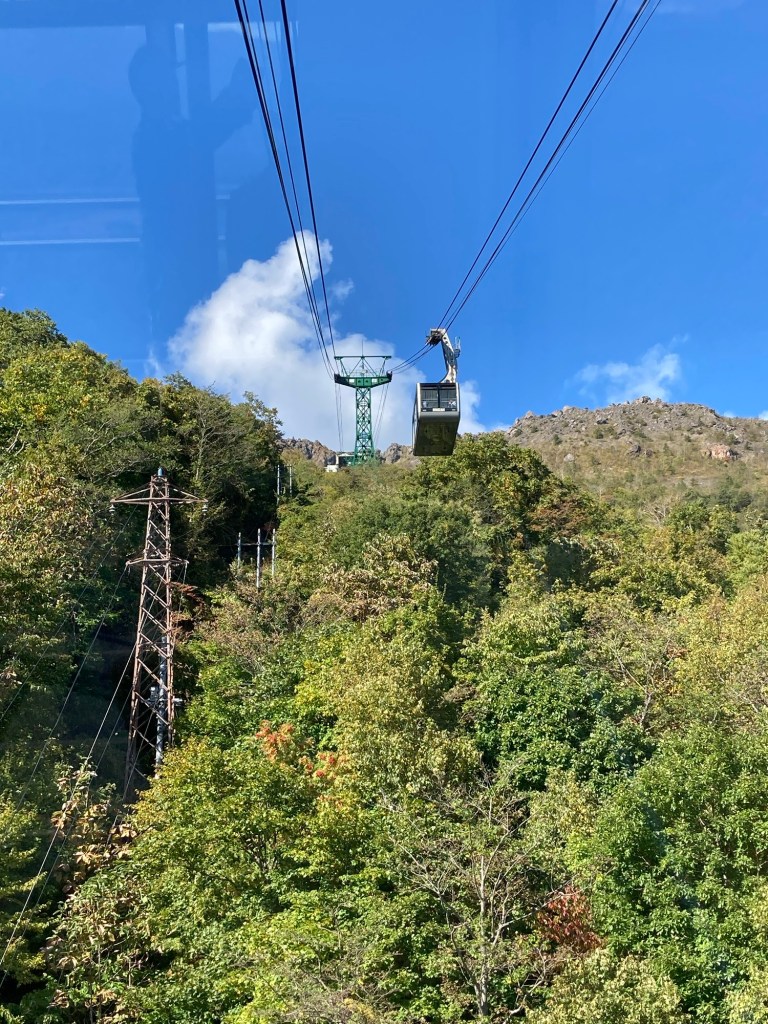
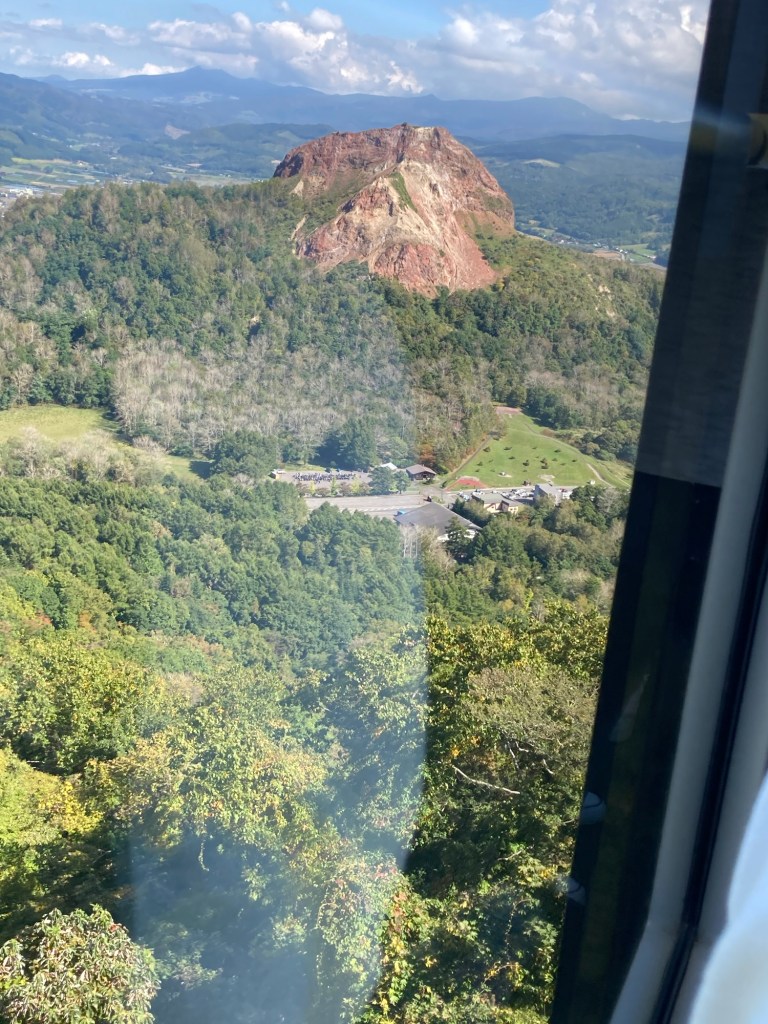
That’s Showashinzan the mountain that grew from a wheat field in the 1940s behind us. Up the cable car (which is called a ropeway but these are big gondola cars)Looking back down toward the parking lot and Mt Showashinzan beyond. To give you an idea of the lay of the land.
Hakodate seems like a fun place. After our exciting breakfast in the morning market we decided to visit Goryoukaku, the historic fort in the city. Even though it is late September it is hot here – mid to high twenties and oof, that took a lot out of us.
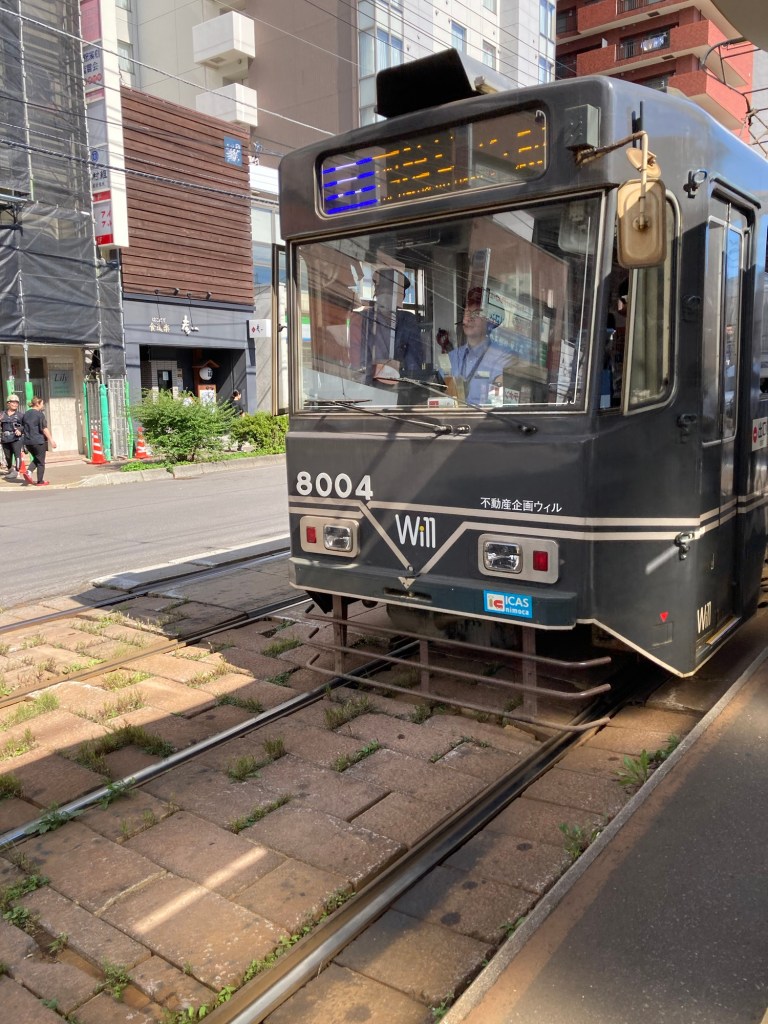
Tram system:
Tram got to around, but it was still a long walk to the fort. Across the street is a tower that overlooks the site. We decided to start there.
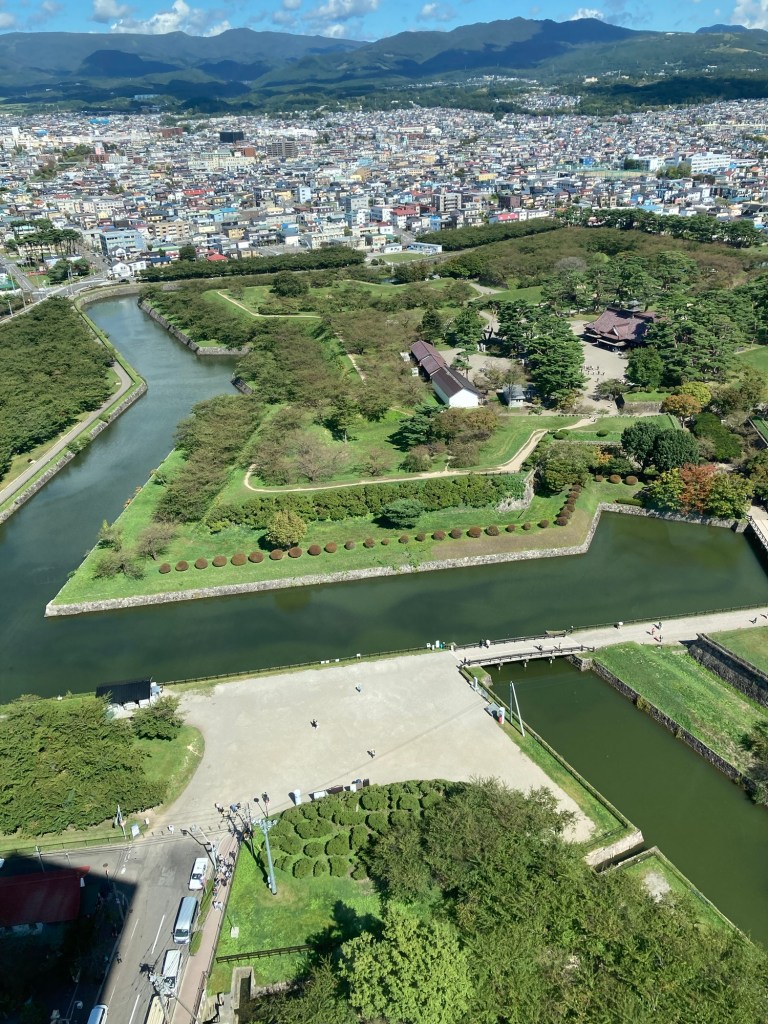
You know how I confidently announced earlier that the rebellion against the Meiji restoration was settled in 1868 in Aizu? Wrong. Turns out things carried on onto Hokkaido. Hakodate was the second Japanese port opened to the west, after Yokohama. Once the Japanese began to go out into the world they brought back many ideas. One was the concept of a star shaped fort to defend a city. We’ve seen them in the Netherlands, and I’m sure many of you are familiar with the citadel in Halifax.
So – Goryoukaku is built. The shogunate is subdued. But there are defectors from the shogun’s navy who are mad at both the shogunate and the restored Emperor. They make their way to Hakodate, seize the star shaped fort and declare The Republic of Ezra. They try to convince that samurai family who were in charge of Hakodate to join them – the clan declines. Fighting ensues and the Imperial forces arrive to put an end to it all. (And yes every time I read or write that I’m thinking of empire in Star Wars terms…)
Here’s a view of the fort and the city.
And after all the fighting and carrying you know what the fort became known for?
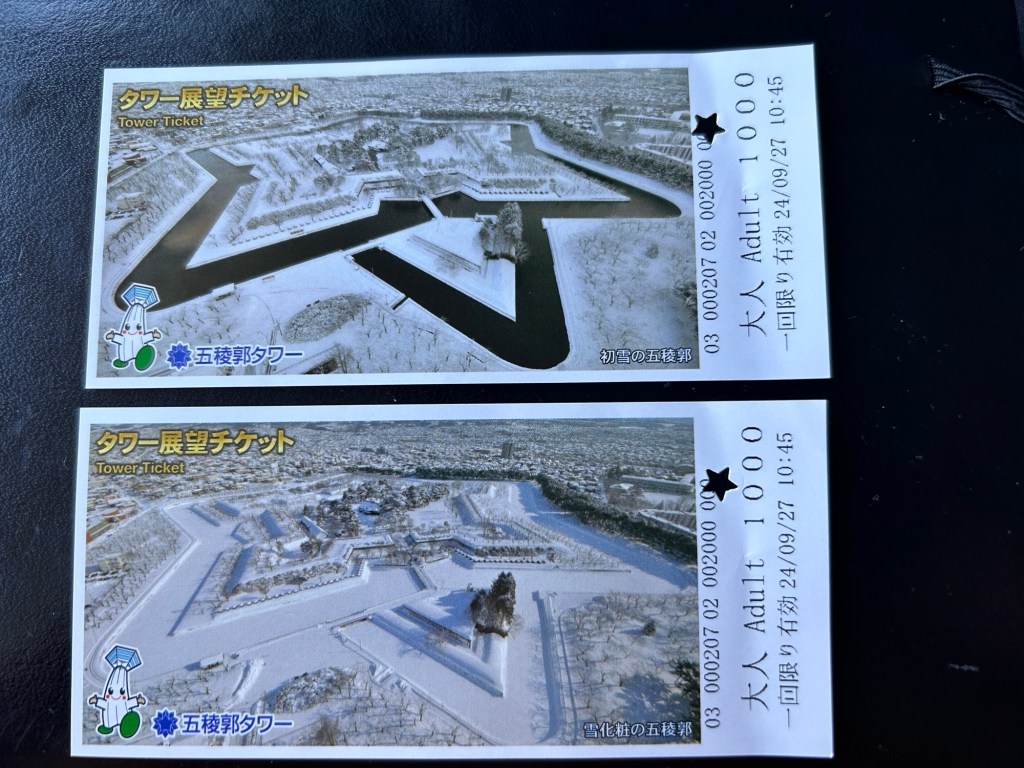
Our tickets to the tower provide a clue:
They get lots of snow here in the winter, and eventually the moat freezes. A business evolved where they would cut out the ice, pack it in straw and send it south.
Back on the tram and off to the brick warehouse district. When trade with the west opened up big brick warehouses were built to store the goods, and many of them still exist. They’ve been transformed into all manner of trendy and tourist friendly businesses.
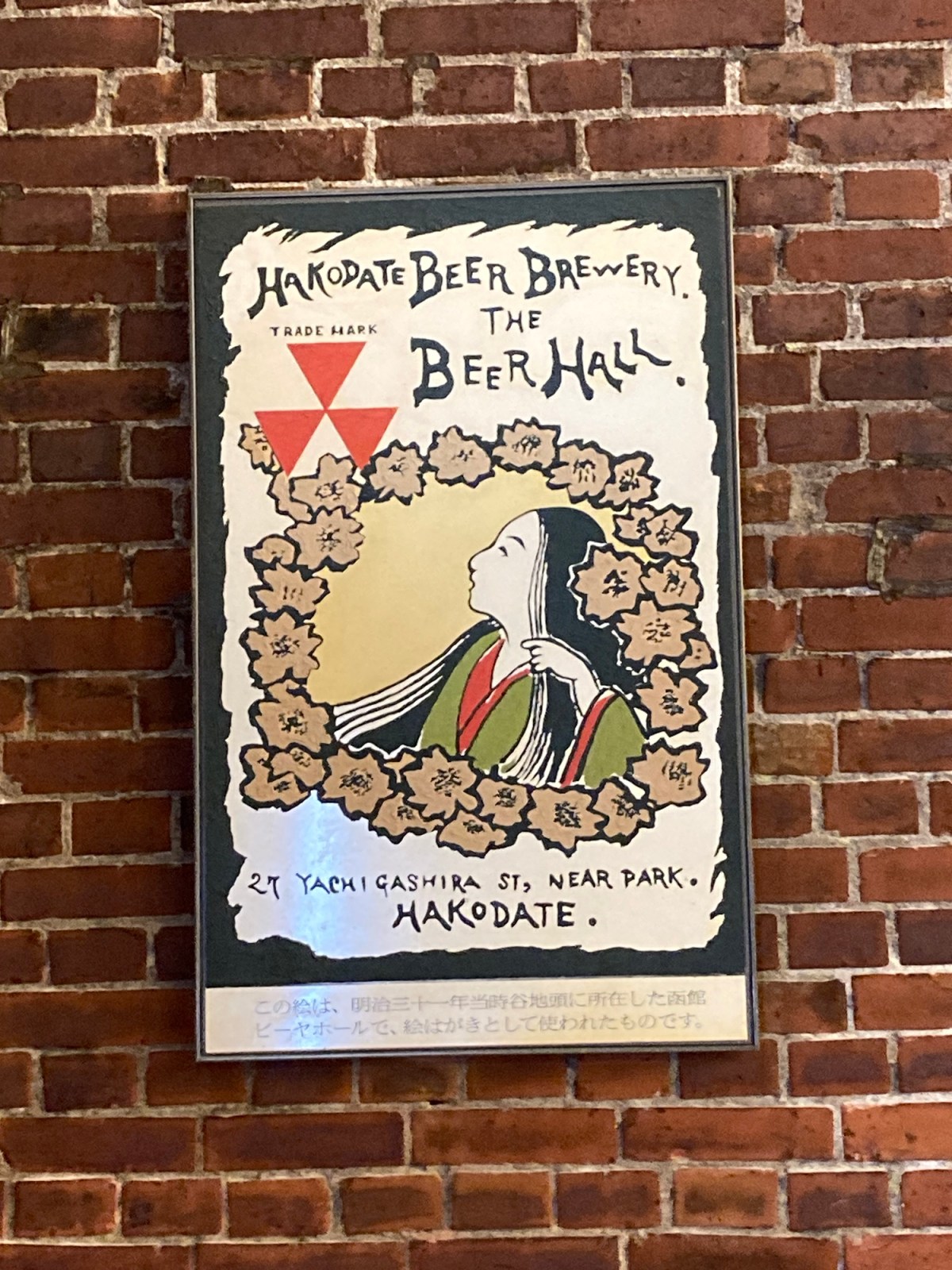
Including?…
I’m sure you were wondering why it has been so long since there were any beer pictures.
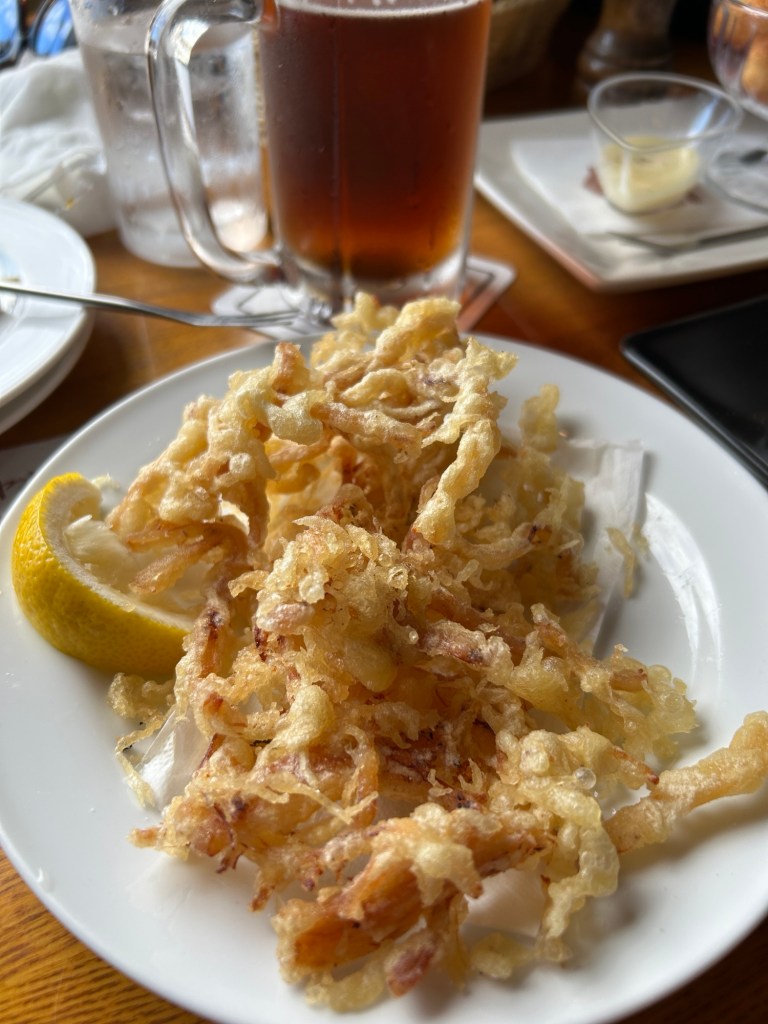
Beer, fish and chips and fried squid.
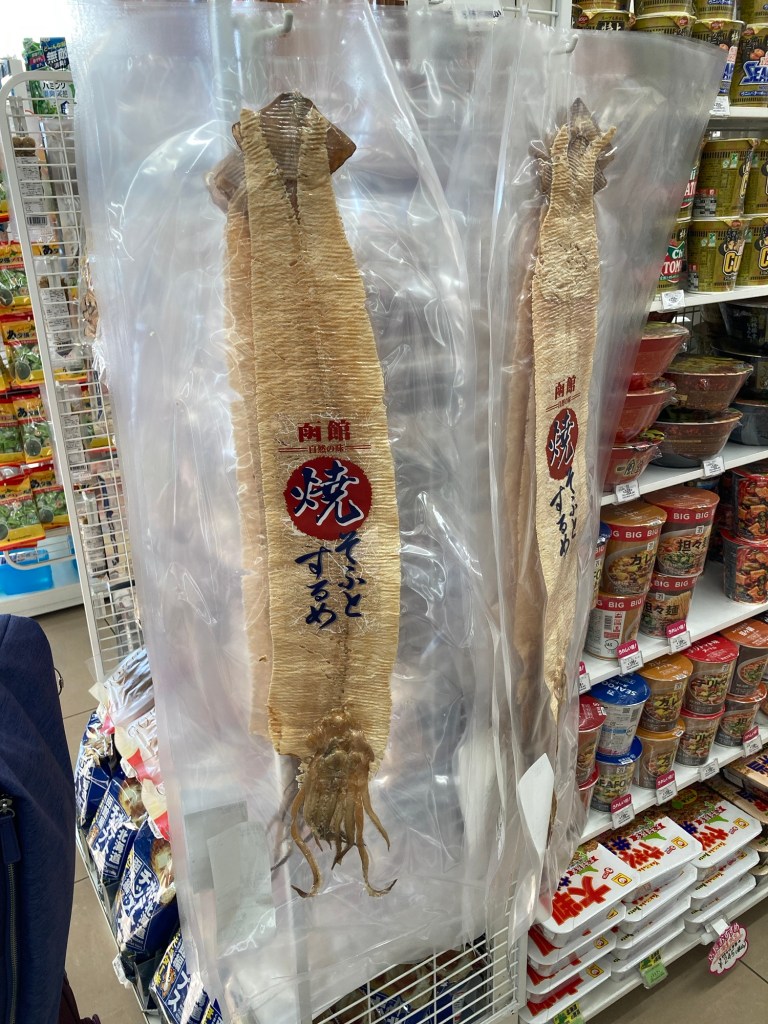
They have machines here that flay the squid and cut into strips, which are then battered and fried, so not like calamari. Why do they do that to the squid, you say?
Because they are huge! This is a dried specimen casually hanging in the 7-11 near our hotel.
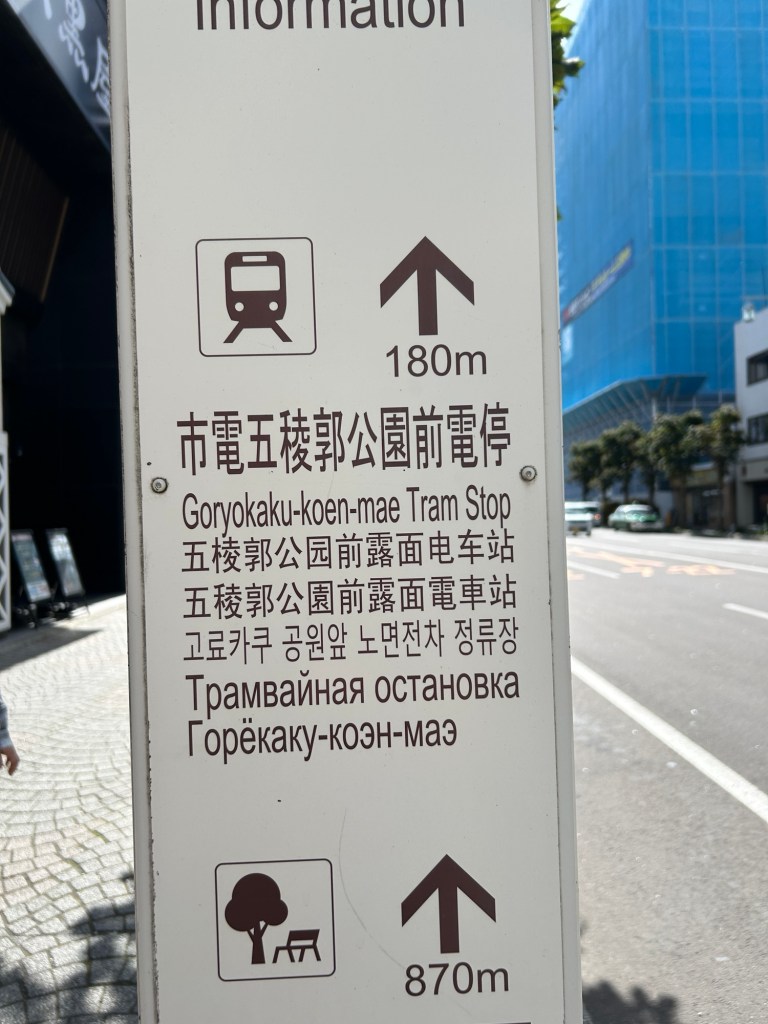
One thing that caught my attention was the tourist directions signs in multiple languages:
Japanese, English, Mandarin, Cantonese, Korean and…. Russian!
So – Hakodate was interesting. Next up Lake Toya onsen town.









 Where I'm At