Ah. Spa.

Some of our hotels have had public baths – some on the roof, some ground level gardens. Always appreciated. In Tokyo our hotel doesn’t have public baths, though we do have a typical Japanese bathroom, which is separate from the toilet and the washstand area. There are public baths in the area that we could go to. Or we could go to a day spa.

Which we did.

Twice.

For both excursions we wound up at Ikeburku Station, which is another mega station in the Tokyo transport system. Several Metro lines, the JR train system and at least one private train line all converge there, and there is an enormous shopping complex on top and all around the station.

We found our way to the Seibu train line, and the surface train to which we were directed – there was something about it….
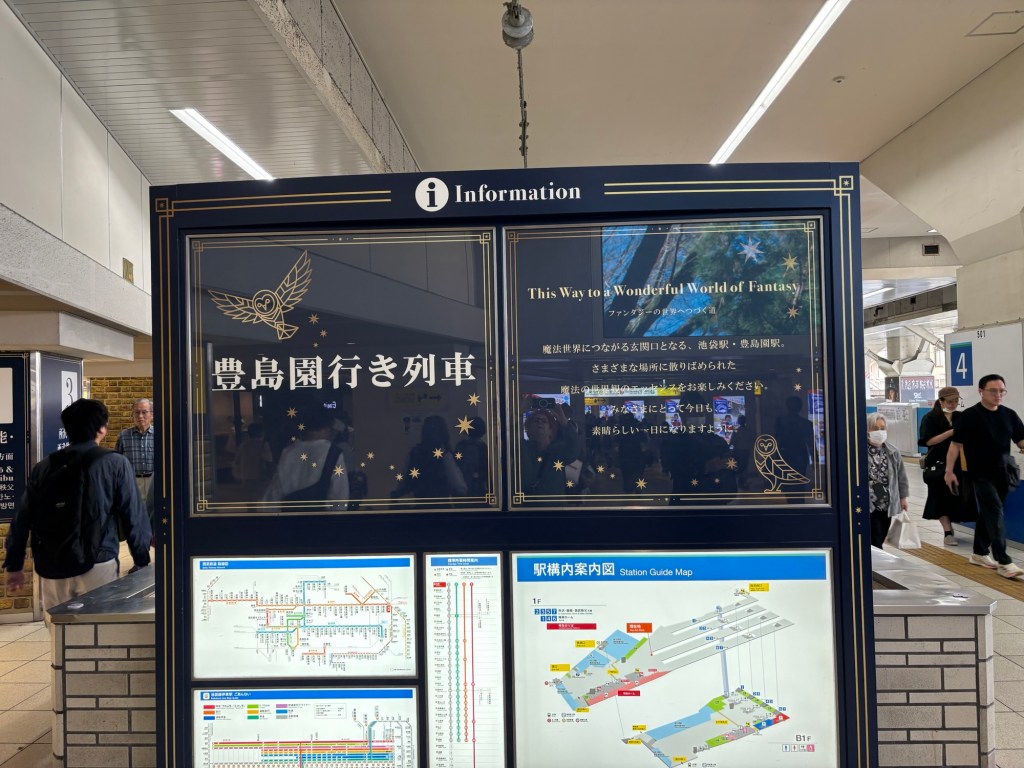
The train itself had the faces of three young wizards painted upon it. We were on the Toshimaen line and we knew that at the final station we would find a garden and our onsen. What we didn’t know that there was new attraction called ‘The Making of Harry Potter Studio Tour’. This is in addition to an entire theme park on the theme of the Harry Potter movies elsewhere in Tokyo. It turns out that for decades there was a big amusement park/water park at Toshimaen. It closed in 2020 and the new park opened last year.

The onsen we were headed for was within sight of the train station. It is called Niwa no yu, which means Garden Hot Springs. It was lovely. In the centre was a glass enclosed circular swimming pool that backed onto a big garden. On each side of the pool we the public baths – men on one side, women on the other. Lovely pools of different temperatures and properties. Places to sit in the garden in a bath, or on a lounge chair. After we had our baths we donned the supplied lounge clothes. Wilf and I met in one of the relaxation rooms, all dark and cozy and promptly fell asleep in the lounge chairs. When we woke up we had a meal in the restaurant before getting dressed and heading back to our hotel. Lovely outing.

So lovely, in fact, that the next morning we were back at Ikebukuro, back on a Seibu line train. A pretty snazzy train, actually.
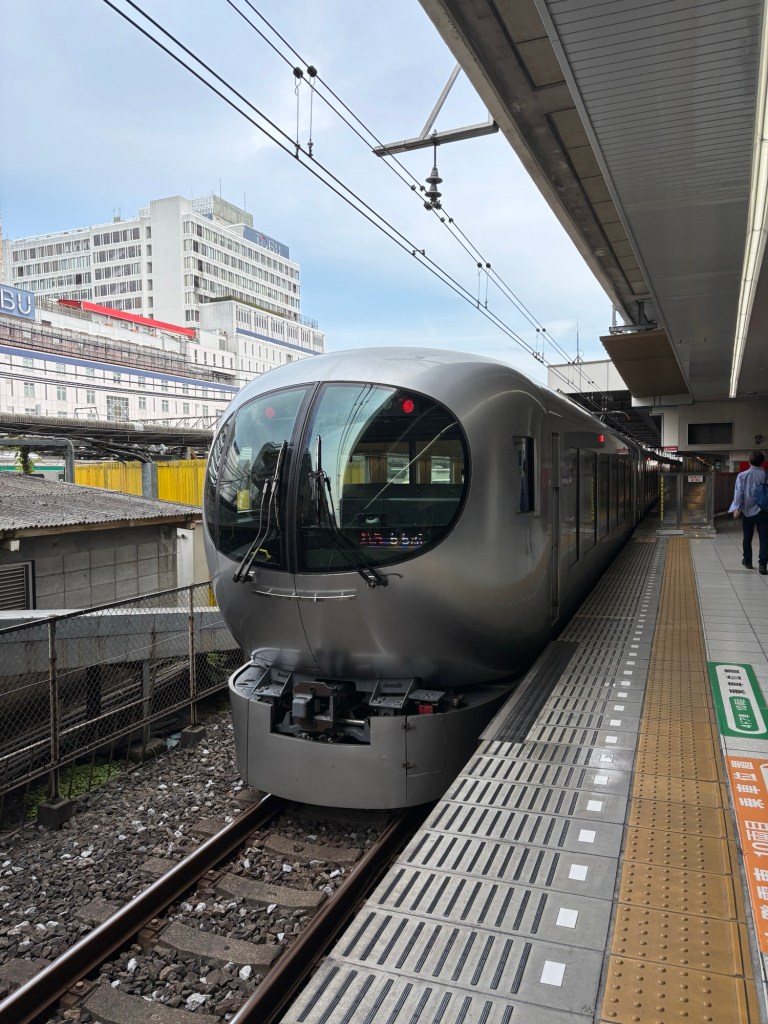
Meet LaView, the limited express bound for Chichibu, 90 minutes from Ikebukuro,
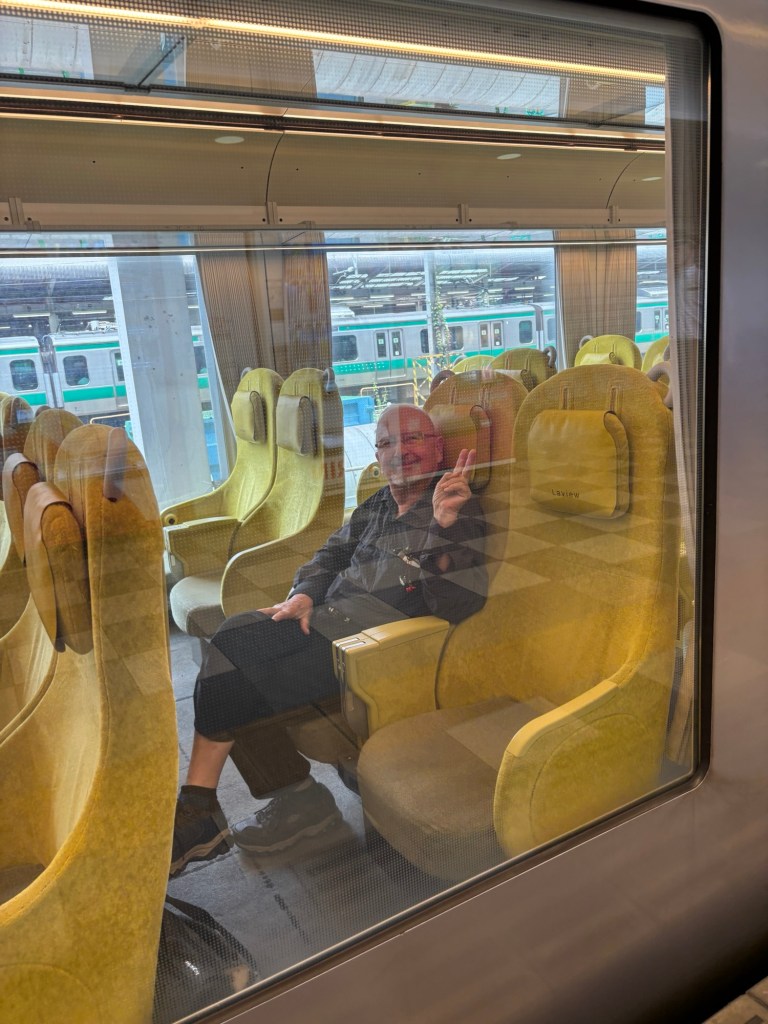
Cozy chairs
Very comfortable.

As a limited express we zoomed along pretty smartly and soon enough we were in Chichibu. Which is nestled in low mountains, one of which they are slowly taking apart… The limestone mine drew Wilf’s interest.

The town and the Seibu train people have put a lot of effort into making this a popular destination. There are hiking trails and fancy camp grounds and bikes to rent. The train station has been spiffed up and has a restaurant/shopping area – and an onsen,

Welcome to Matsuri no Yu (The festival Hot Springs)
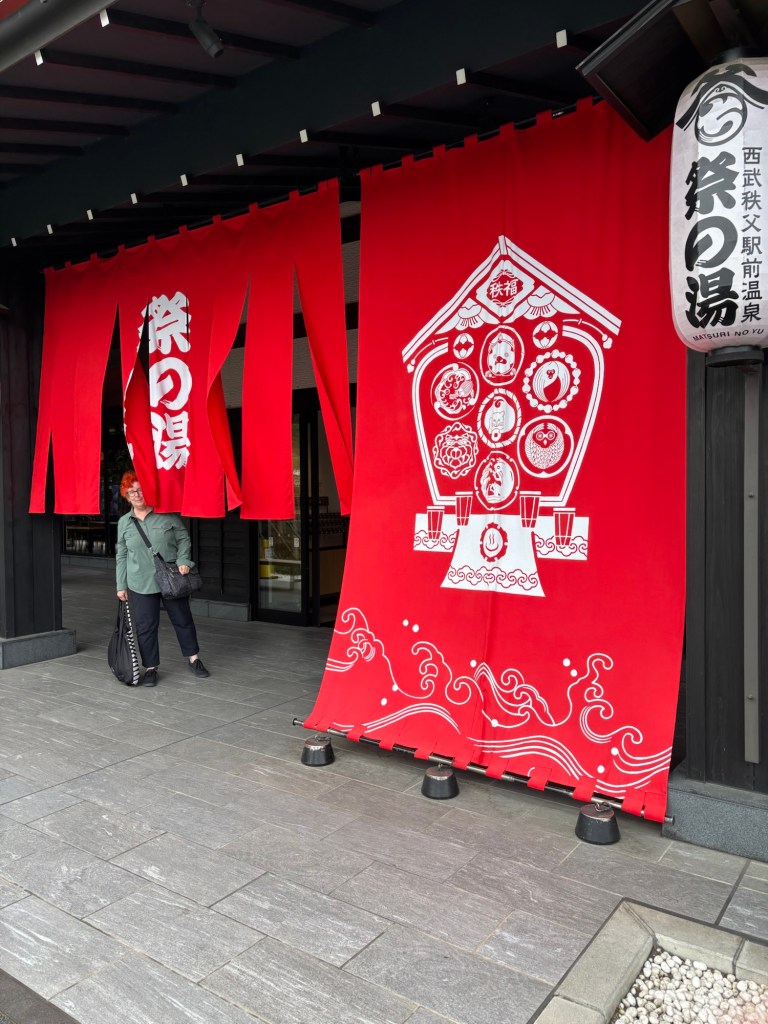
First stop was the restaurant for the local specialty – pork cutlets!

After we had our baths – again lovely gardens and baths and time in the lovely hot water – we met up in the relaxation area. The baths are about 42C and the water is full of minerals, as the water is drawn from deep underground. Phone and cameras are strictly forbidden in the bath areas, but in the rest of the facility they are okay – half the people in the relaxation area snuggled up in the big loungers were looking at their phones,

I, on the other hand…

Had a lovely nap.
Still with Hokusai

I told you about our visit to Obuse last week, where the Hokusai museum was closed but we still go to see his work. In Tokyo we were able to go to a digital exhibit of Hokusai’s work. This meant heading across to Tokyo to Shibuya. We have stayed there in the past, and it is a happening place. But they have been rebuilding and generally renovating like no-one’s business and we have the darnedest time getting out of the metro station. After no small amount of time walking around in circles and arguing with Google maps we finally fought our way out and onto the street, where we could get our bearings.

Anyhoo. The Hokusai exhibit.

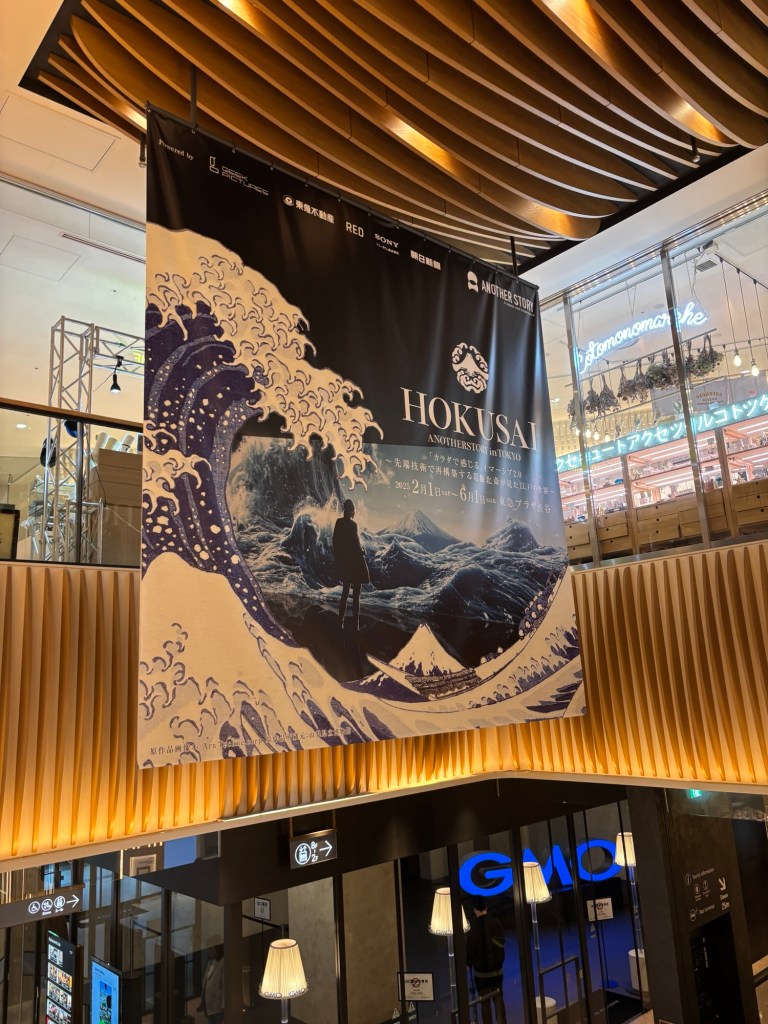
I was very happy to see this banner and know we were in the right place.

The exhibit began with many large panels in Japanese and English, telling the story of Hokusai’s life, of his work, and his influence within Japan and in Europe. There were examples of Van Gogh, Monet and Debussy work as influenced by Hokusai. As I’ve mentioned before he didn’t just create paintings to be reproduced via woodblock printing. He designed textiles and wrote books and painted painted painted. The rest of the exhibit centred on his ‘36 Views of Mt Fuji’.

The first room was called the Room of Earth. In this room several of his paintings that dealt with day to day working scenes were reproduced across the wall in front of us. A painting would appear on the wall and then grow and expand until we were standing inside of it. On the floor part of the painting was projected, and we could interact with it. A winter scene had us standing on a frozen pond, and if we tapped our foot the ice cracked and we could feel it shift. Another scene was of people harvesting crabs – we would find ourselves looking at the sandy shore of the river and the crabs scurrying along and pools of water, which at a tap of the foot would reveal fish in the water. The people in the painting would move about, the trees would bend in the wind. It was quite astonishing.

The next room was the Room of Wind. In this room the paintings were scenes where the wind was active. It was almost disorienting- the painting would appear all around us and then start to move as the sound of the wind whooshed around us. Then another scene would blow in and the images would shift.

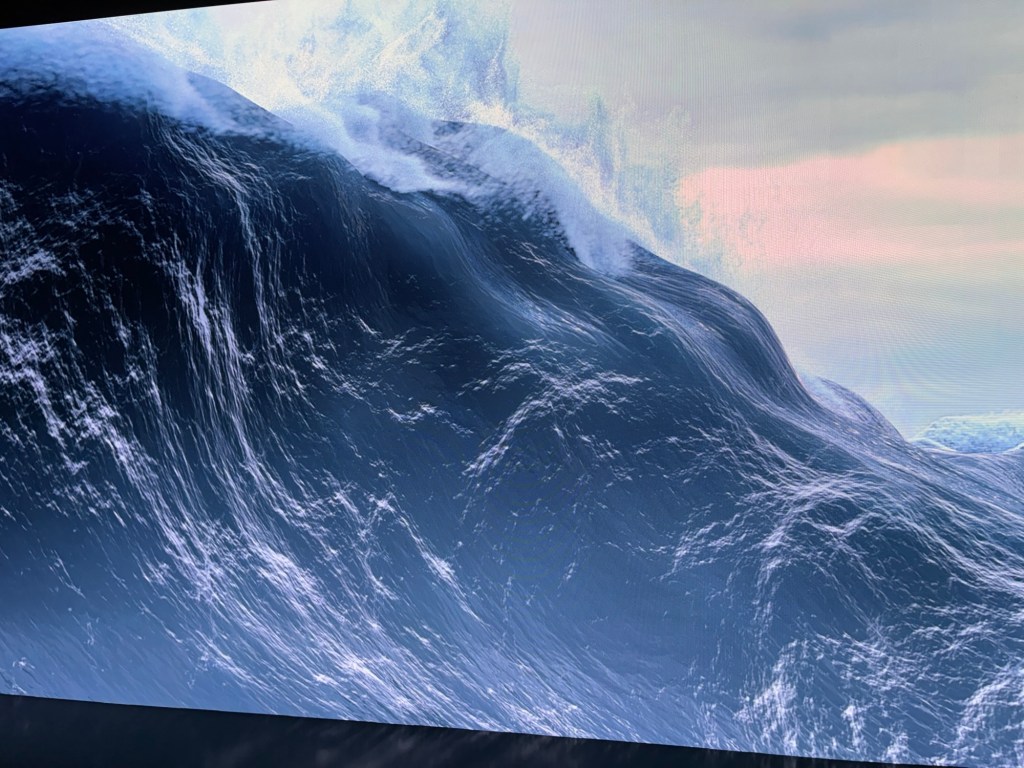
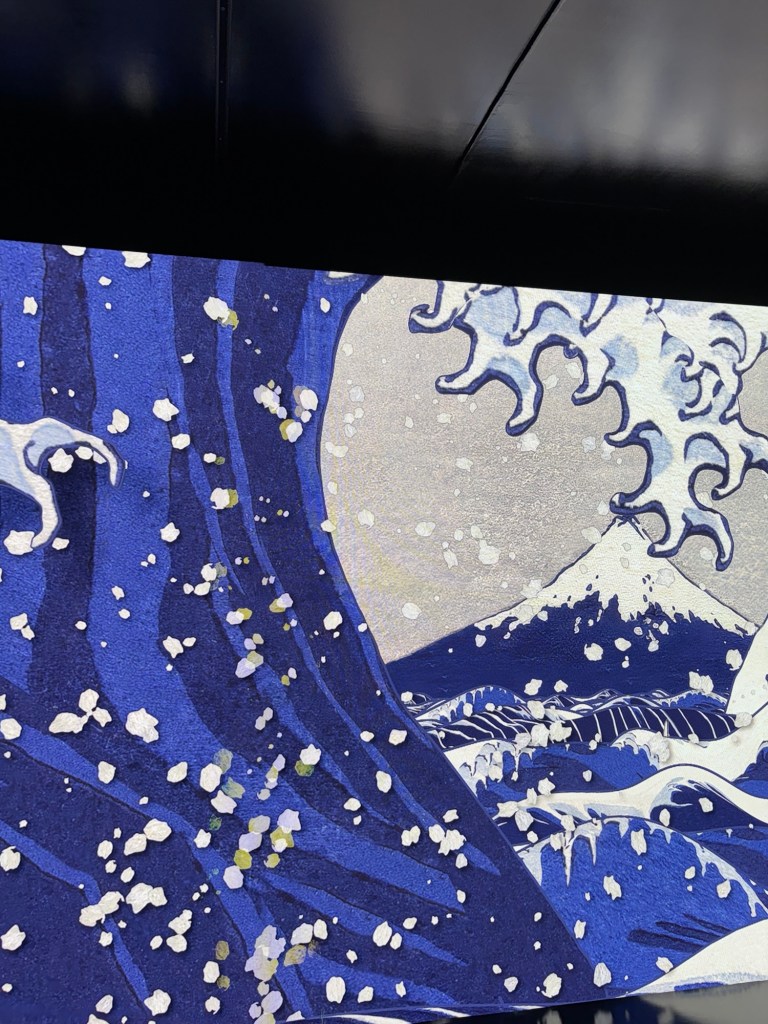
The final piece was about water and waves. It began with a scene right outside the door of the exhibit – the Shibuya scramble – people walking across the intersection. And then the floor began to vibrate under our feet – like there was a train passing under foot. A scene of woodblocks being carved, the texture of the paper, the colours being applied and then zooming out to be a portion of one of the views of Mt Fuji. And then – the ocean. Towering waves, the room shaking as the water was all around us. And suddenly we are in the picture of the Great Wave, with the real waves freezing into the familiar patterns from the print itself. And then the painting began to move as the waves towered higher and higher and the boat of fisherman fought to stay afloat amongst the foaming ocean.

We both ran into problems with videos and pictures in the final room – the frame rate of the presentation did not agree with the camera which led to odd effects. A few stills….

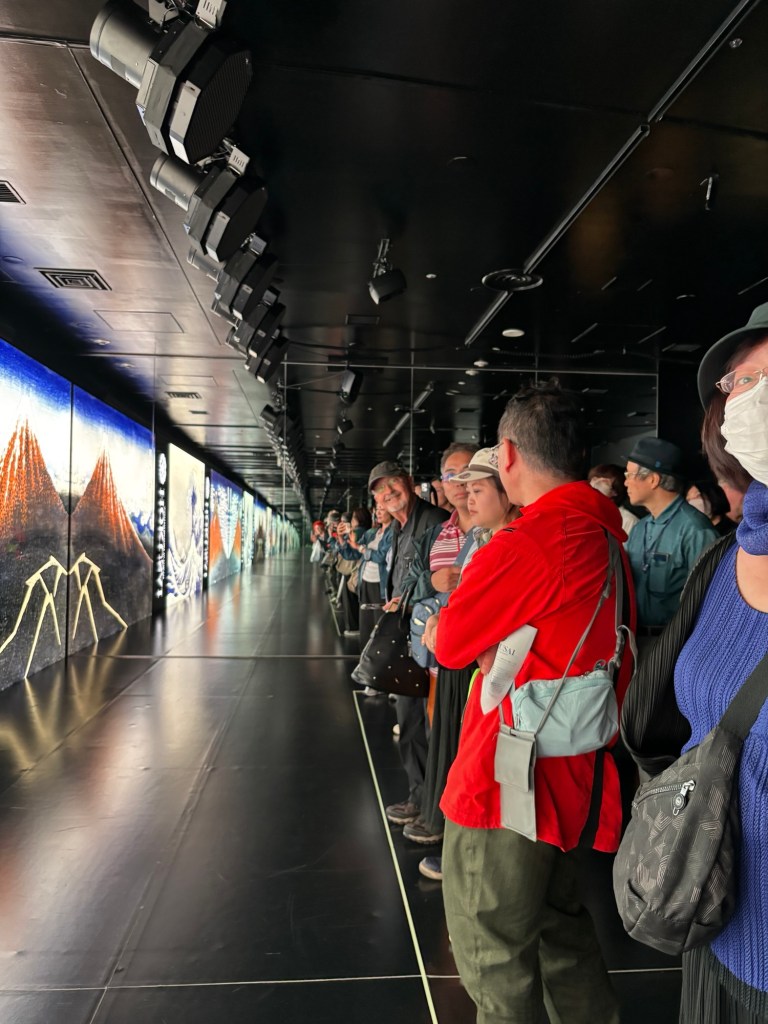
Waiting for the show to start.

I’ve mentioned the spectacle that the team labs digital art exhibits provide, and how I felt that they were not quite…… enough. The Hokusai exhibit had the story, the connection that made it a more complete experience. I found myself wondering if Hokusai would be amused to see his paintings come to life, all those people coming to life in the every day scenes he captured. Seeing the paintings in such detail, at such a scale, really brought home the hard work of life in those days.

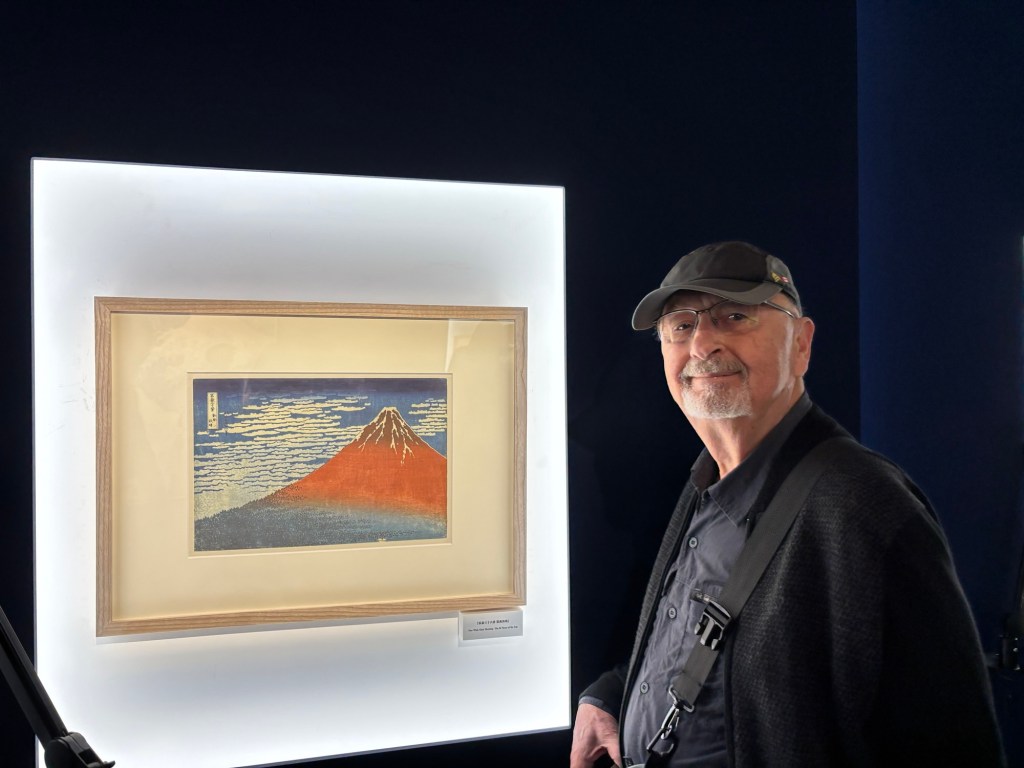
And as a reminder – here are super high quality digital scans of the original woodblock prints to reinforce just how small they actually are (When they’re not being blown up on a 12’high by 20’ long wall)

And after such an amazing experience there was only one thing left to do…

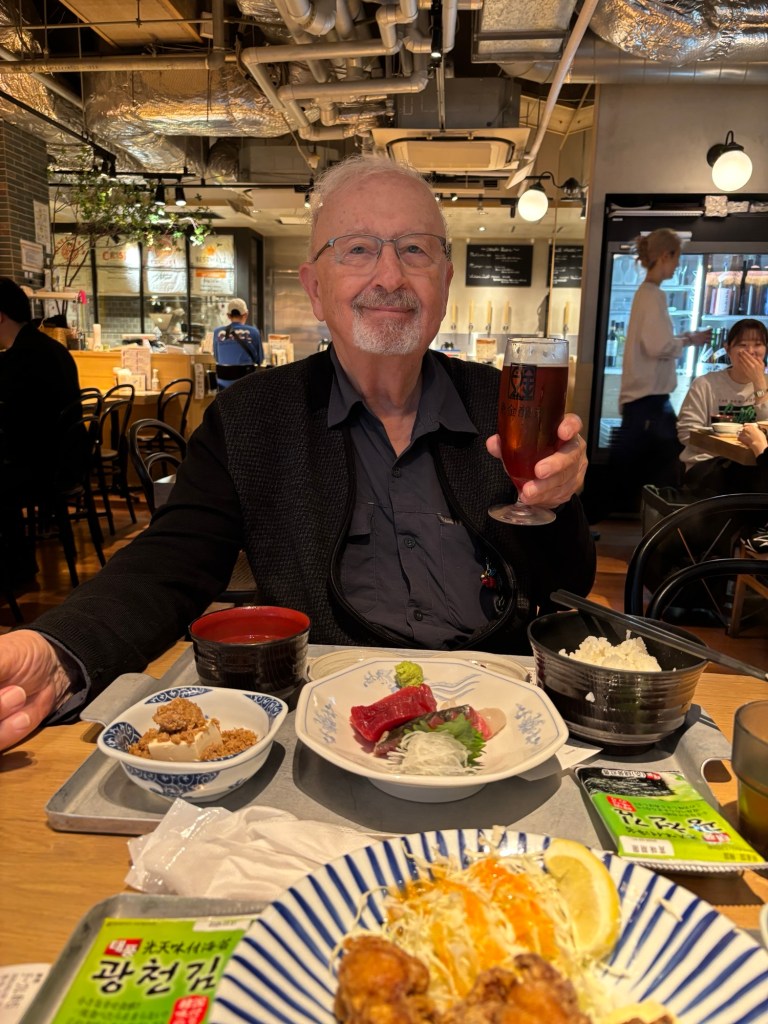
Fried chicken. Sashimi. Beer.

Italia Amore Mio

No – we didn’t make a side trip to Italy. But, just as we’ve been to Oktoberfests in Tokyo (in both October and May) so we found an Italian festival. Presented by the Italian Chamber of Commerce in Japan, it was held in Roppongi. The info said the Roppongi Arena, so off went. We’ve been to Roppongi a few times and never noticed an arena, but hey, we’ve haven’t been everywhere.

Turns out the issue was that we were thinking ‘arena’ like Canadians. You know, a place for hockey games and concerts. Here, it looked like this…

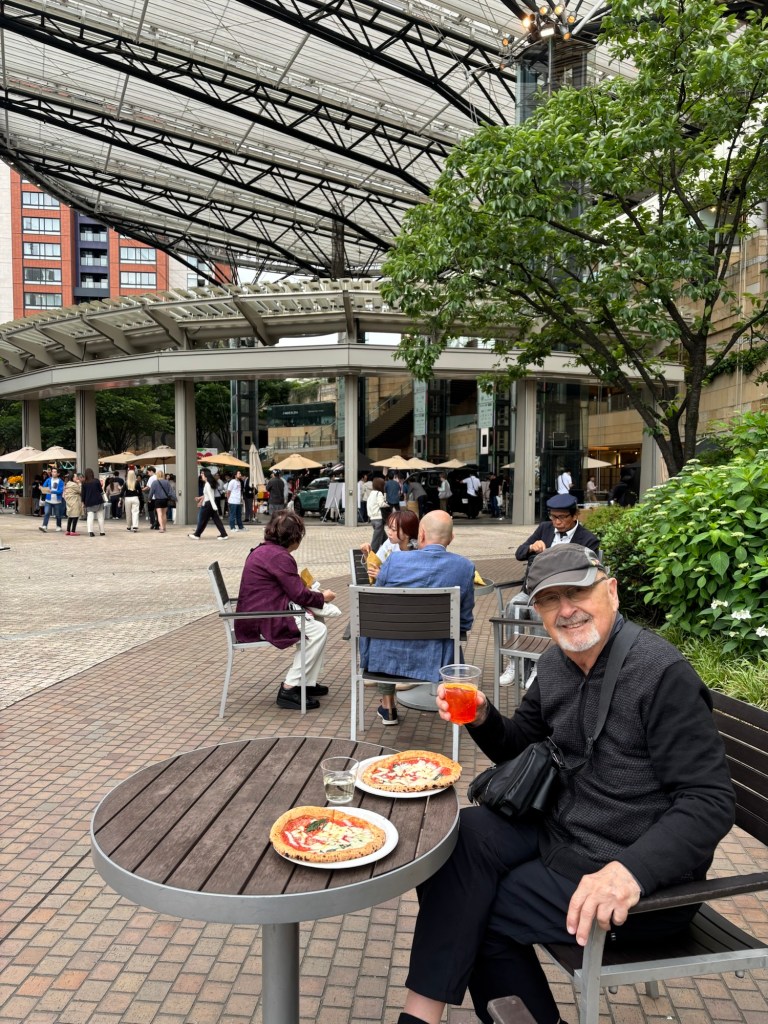
A big open space with a stage and a big canopy – a place to gather. As you can see there was pizza, Aperol Spritz and prosecco to be had!

And….

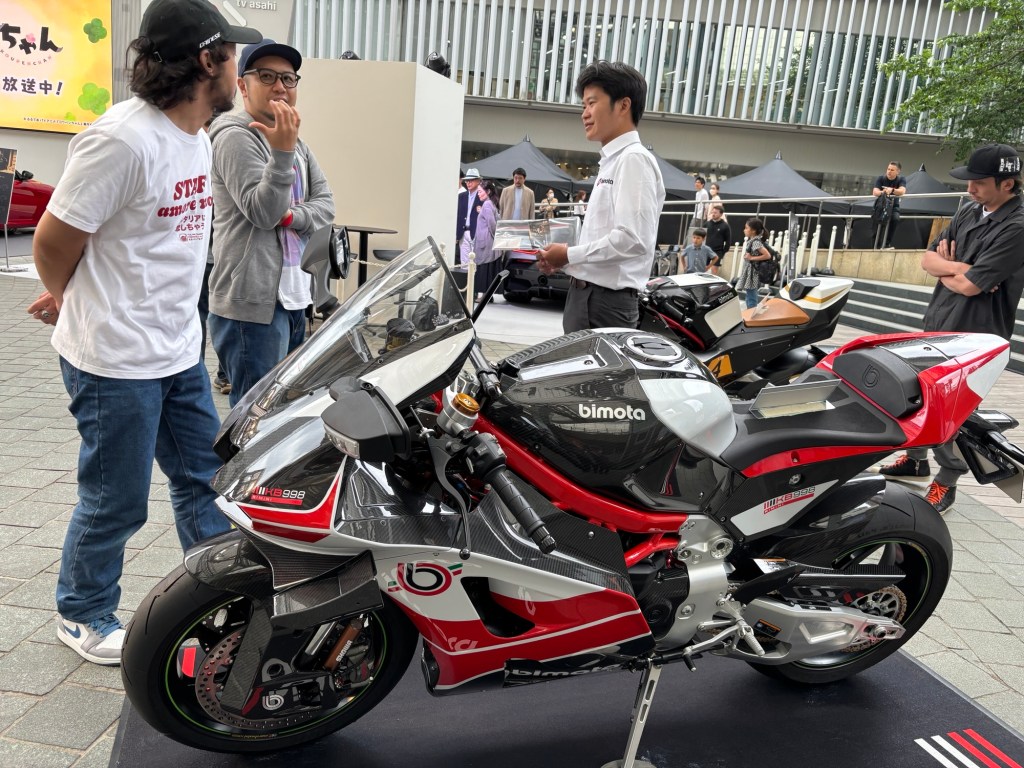
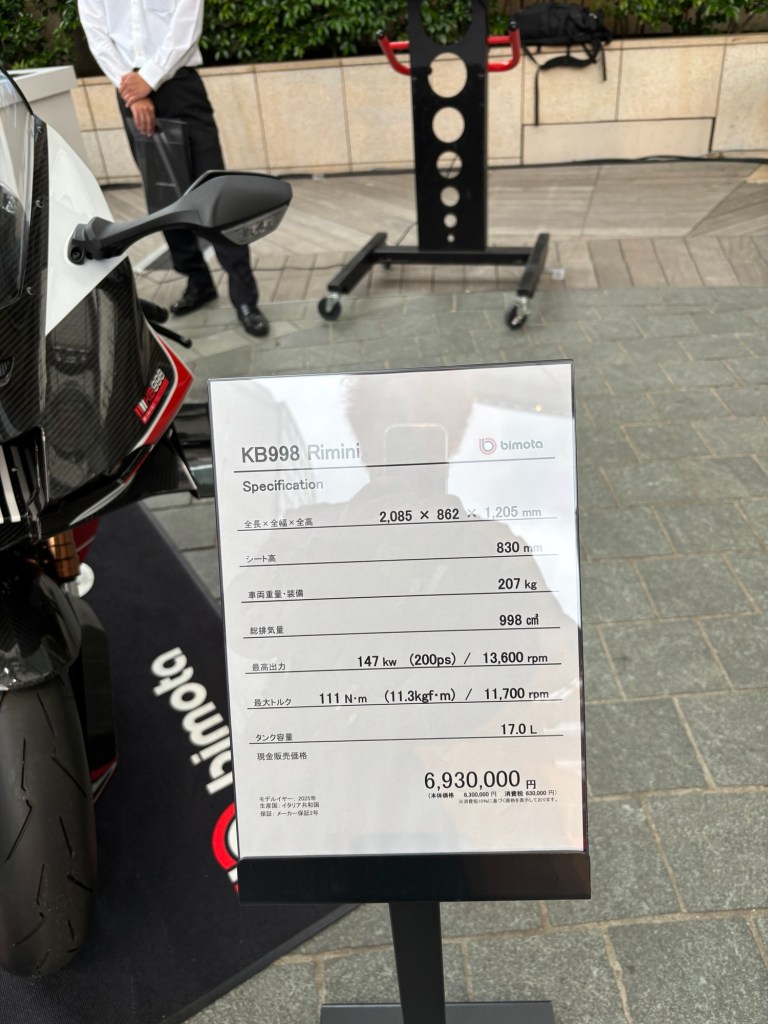
That’s about CAD67,000.00 for the motorbike.

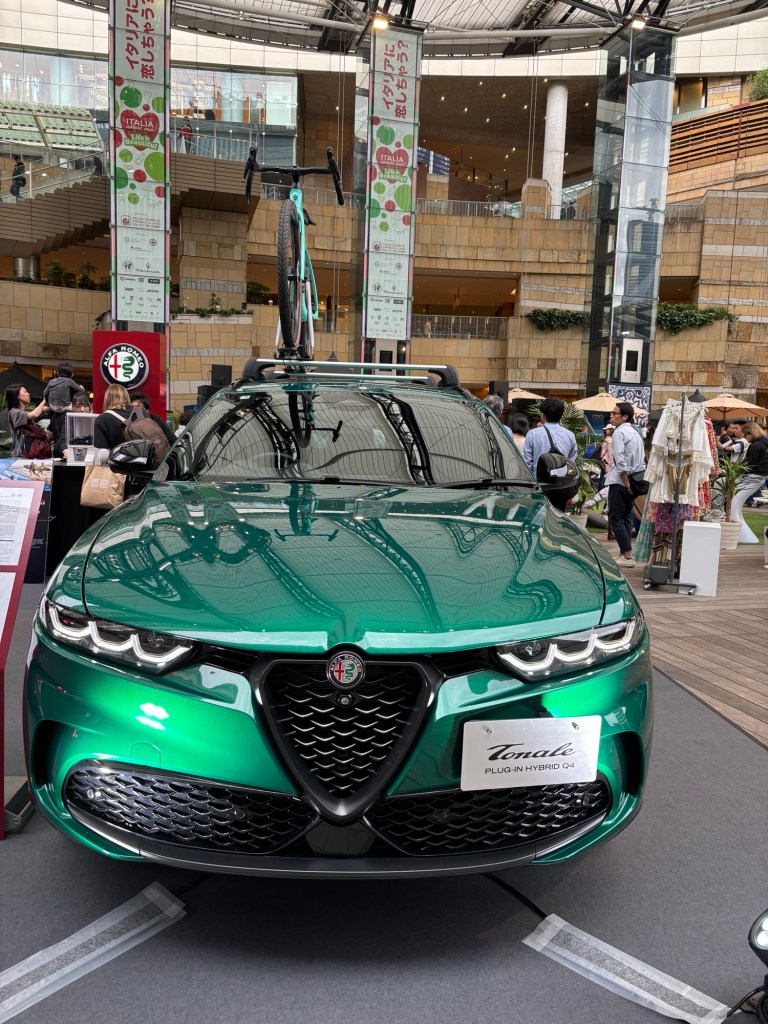
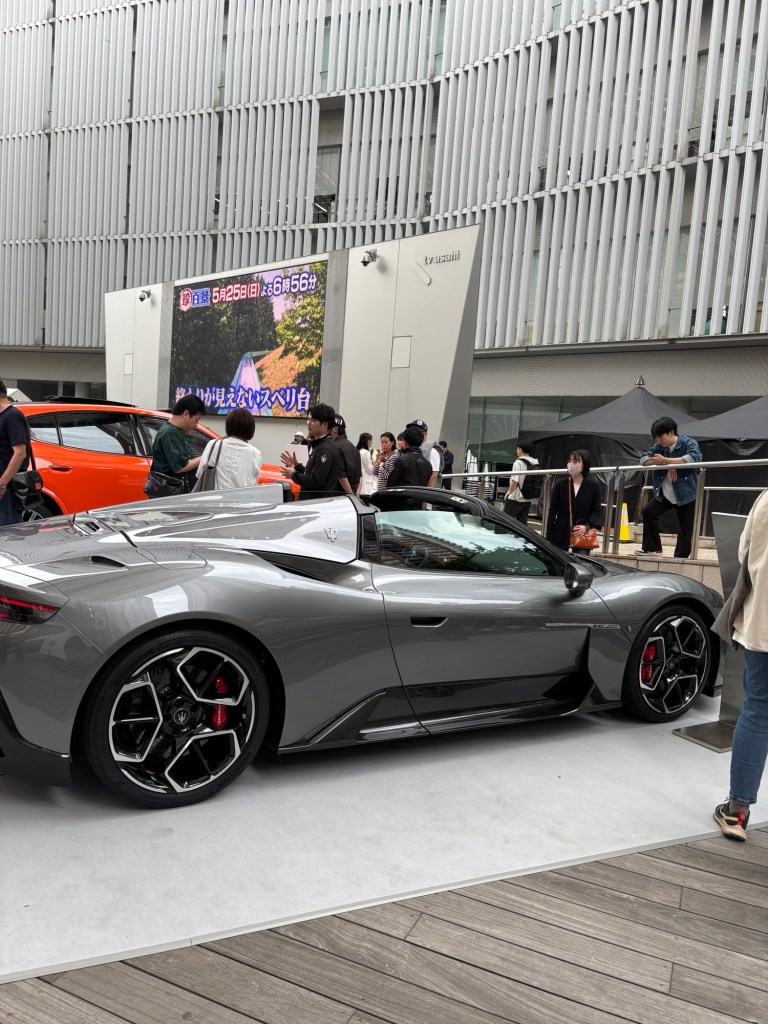
Fancy Italian cars. (No prices – if you had to ask…..)

There was a bespoke yacht broker with their own wine garden, Italian cruise ship companies. Coffee makers, complete with hands on instruction in how to make coffee with a Moka Pot and, of course, food and wine.

I amused myself talking to the food venders in three languages – been awhile since I’ve used my restaurant Italian! The food vendors would talk to me in Italian and the Japanese customers in Japanese and it all worked out.

I’m sure there is a festival from some country every weekend in Tokyo., all it takes is some looking to find them. When we first visited the Roppongi Hills area in 2009 it had just opened and everything looked raw and new. The landscaping has matured and it is a fully functioning city within the city now.

It was later this night that the fire alarm rang and we had to evacuate the hotel (see previous post) so it was quite a day. We eventually had an email from the hotel saying at an unattended cooking pot caused all the commotion.

Best laid plans

Sometimes things do work out. When we are planning our trips to Japan – to anywhere, really, we do a lot of research. Wilf, especially does research. What do we want to see? Nitty gritty stuff – like what are the hours and are they closed on certain days of the week? Hate getting caught by that one… For our trip to the museum in Kawaguchiko we reviewed the website calendar over and over again to be sure that they would be open on the two days that we would be there.

But sometimes – we get caught!

Wilf had us scheduled to take a day trip from Nagano to the little agricultural town of Obuse. One of the things to see there is a small museum dedicated to the artist Hokusai. We went to a big museum dedicated to his work last year in the Sumida area of Tokyo. In the later part of his life Hokusai was invited to come to Obuse by Takai Kozan, a wealthy farmer and patron of the arts. Hokusai stayed in Obuse for several years and there is a small museum dedicated to him.

Except that this year, right now, they are changing from one exhibit to another and the museum is closed. Grr. The children’s area, cafe and shrines are available, but that is it. We decided to go anyway – have lunch, see a bit of the town, etc.

That turned out to be a good decision. Not just because we had a good lunch, but because there was another museum to see!

We got on the train under the main station in Nagano, and after two stops popped above ground, where we continued to ride through small towns and many orchards. We are in a part of the Japan known for its soba noodles, so that was on the menu for lunch. At the Obuse station we went into the tourist information centre and had a great conversation with a young lady there — she had studied at UBC in Vancouver. She confirmed that the Hokusai museum was closed, but told us that the property of Takai Kozan had been restored and was worth a look – it holds some works by Hokusai, as well as some of his contemporaries. And some by his daughter. We also got a restaurant recommendation, which matched what Google had suggested.

A short walk brought us to the restaurant, where we did order the soba noodles. This pictures shows the lunch I ordered. It was very good. But I want you to notice the counter we are sitting at. The whole length is one enormous piece of wood! Beautifully crafted and finished. We faced windows that looked out to the garden.

Being a hot day I went for the chilled soba noodles. You can see them piled on a little tray. In the background is the tempura that is part of the meal, and a small dish of sauce for the tempura. Closest to the camera is a small flask with a cup upside down on it. The plan is to pour some of the sauce from the flask into the little cup, then dip the cool noodles into the cup. And then slurp slurp down go the noodles. When the noodles are all gone the flask is emptied into the cup. There is, beside the teapot on the tray, another pot which contains hot water from cooking the soba. That gets added to the cup and is drunk to finish the meal. And there’s a dish of pickles in there, too. I can now say I’ve had a meal of chilled soba – it is cool and refreshing. Wilf had the chilled noodles over rice with mushrooms, but without the extras sauces. All good!
From there we walked down the street to the Takai Kozan house. He was from a family of sake merchants, and they were successful enough to finance other farmers, who paid them in rice. The property has the restored house as well as a granary where the rice was kept. Takai Kozan was wealthy enough that he could travel, and he hosted artists for long periods of time. Sadly, he does not have a Wikipedia entry for your reference.

It sounds like Hokusai and his buddies had a grand old time in Obuse. Hokusai had the practice of drawing a lion every morning, and there were examples of the different styles he used for his daily drawings. There were also screens that had drawings and poems written all over – rather looked like the result of an evening of sake drinking. Over his long long career Hokusai explored many styles of art – even including making big banners and flags. In the days before big format printers a lot of them were painted directly onto big panels of fabric with giant brushes.

But the thing I wanted to show you was this:

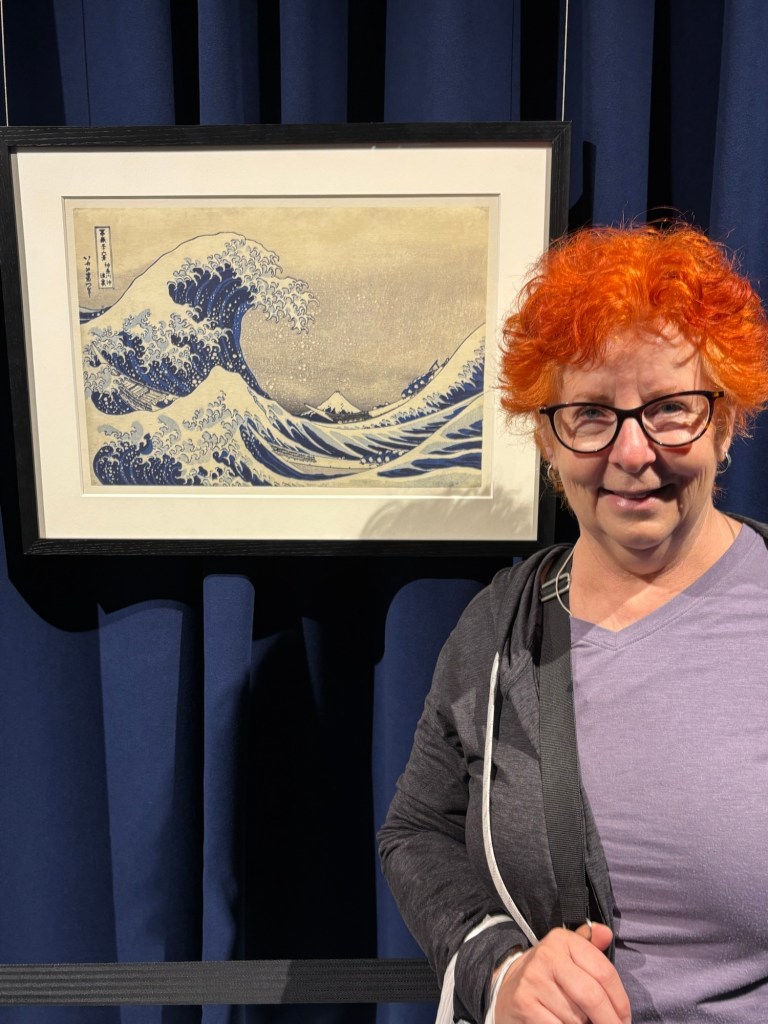
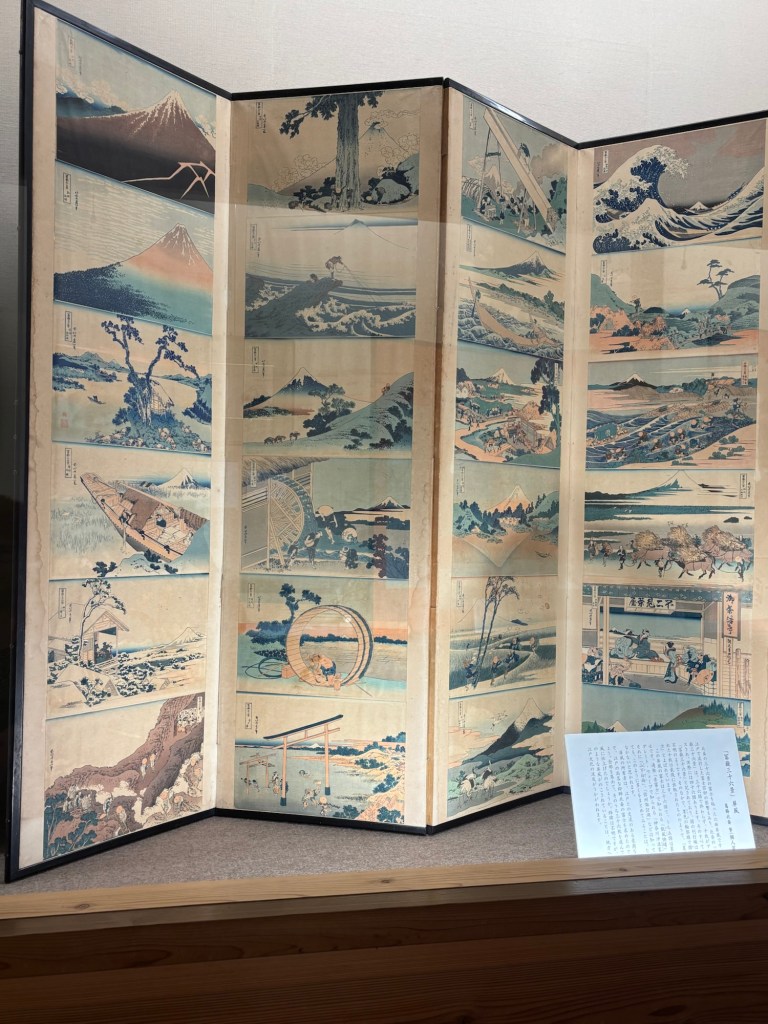
24 of ‘36 views of Mt Fuji’

Do you see the upper right panel? That is ‘The Great Wave off Kanagawa’, one of the most iconic art images of this century.. Did you know it was so small? We see it everywhere. But originally it was a page in a book of prints, about 12” x 18”. Not as big as a billboard!

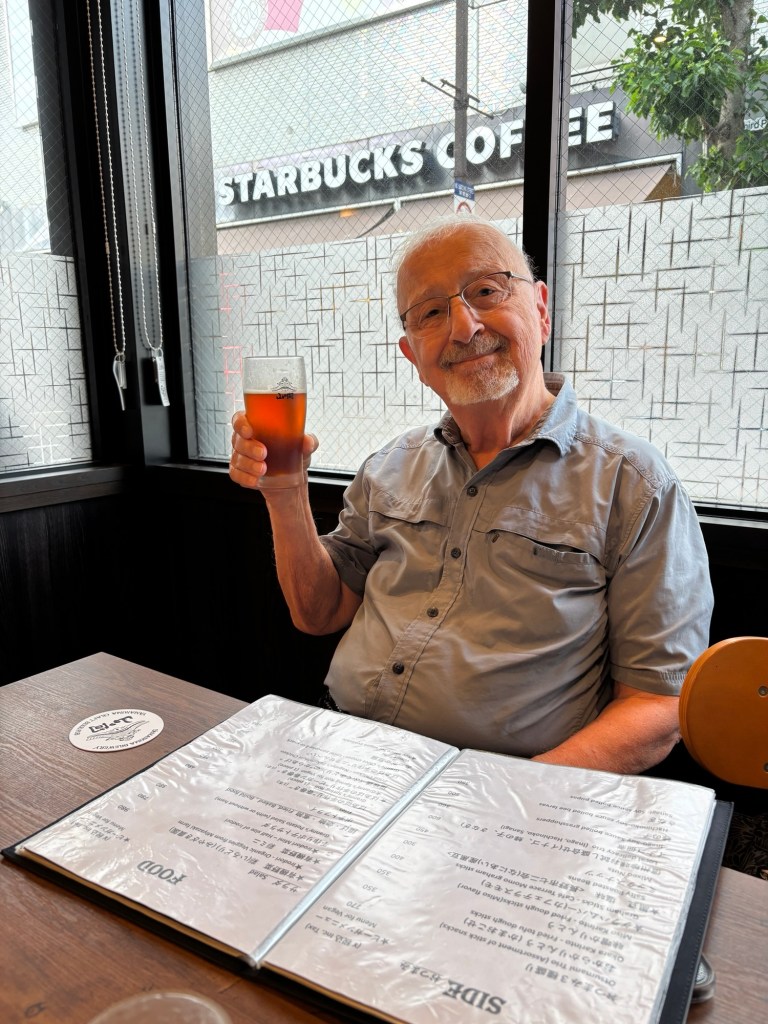
After our visit to Obuse we stopped at the little brewery next to our hotel.

Ubiquitous Starbucks across the street

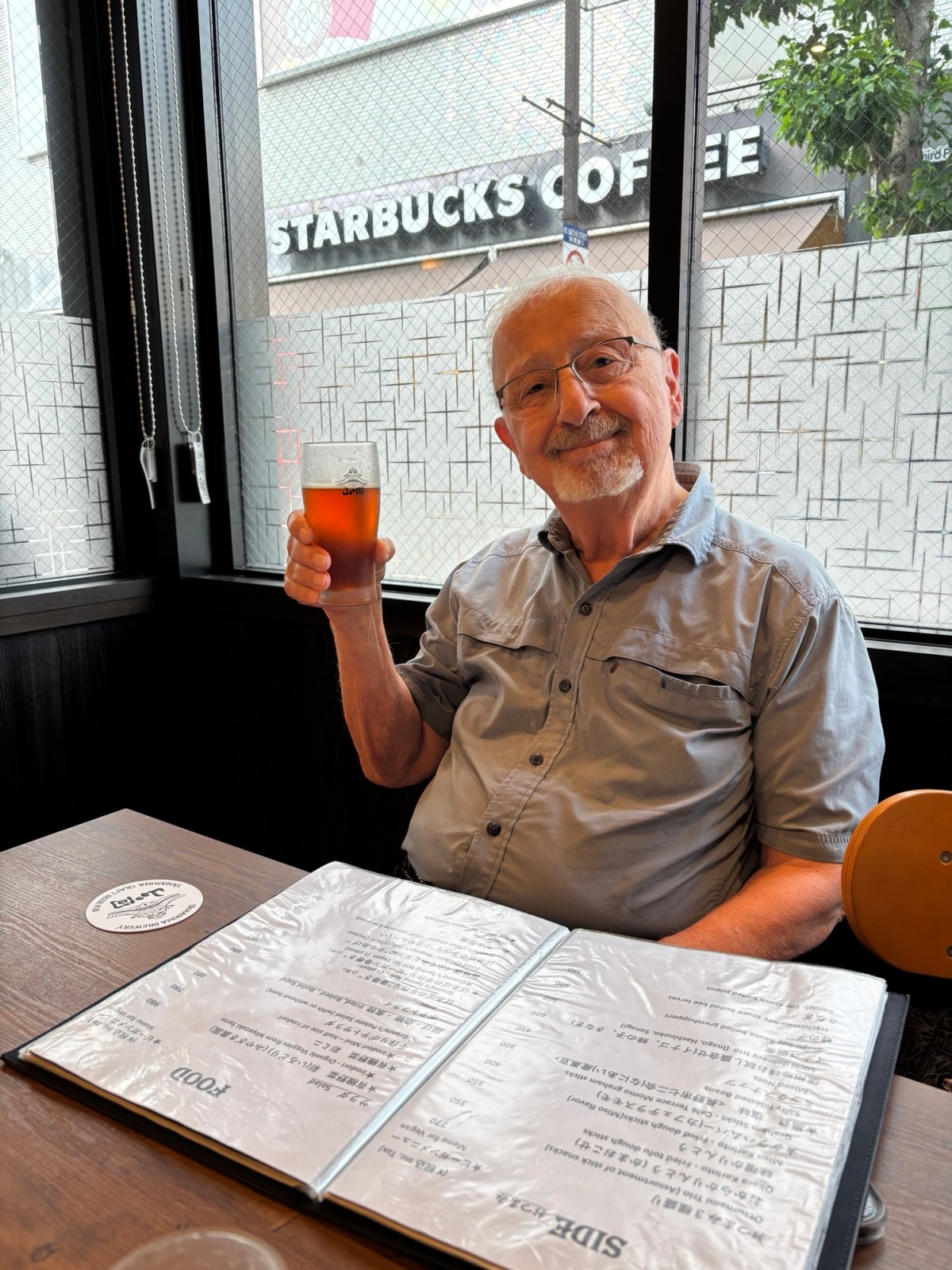
Nice little pub. With some unorthodox bar snacks on offer….

We stuck with the sausage plate.

And Nagano concludes the ‘on the road’ portion of our trip. Tokyo is but 1hr, 15 min away by bullet train.

Hello Nagano

Nagano is a city of about 400,00 people. It sits up in the mountains in a big valley – the trains run through orchards of apples and grapes. The Winter Olympics of 1998 were held in Nagano. The parts of the city we visited were well signed in English – a legacy of their Olympics?

We stayed at the Dormy Inn right near the train station, which was super convenient. Trains and busses handy by, lots of shopping and restaurant options. The Dormy Inn is a national chain – a step above the basic salaryman hotel. Maybe more where the middle management might stay! Morning buffet breakfast. From 9:30 pm til 11:30 there are free servings of ramen in the restaurant. People tend to show up post bath, in their hotel issued pjs for a bed snack. There is a public bath on the roof, with both indoor and outdoor baths. And the rooms are a little bigger than the most basic hotels. We’ve always been happy with them and this was no different.

Not only is there a 7-11 right next door, next to the 7-11 there was a little microbrewery. Bonus. We rely a lot on Google and Google maps to find our way around while in Japan, and it works pretty well. The major issue is usually getting it to figure out where we are. We had a major fail in Nagano. We were looking for a gyoza restaurant. Google seemed to think we were one street over from our hotel which led us on a big circular goose chase through the entertainment district only to wind up – next door to our hotel. On the left side, as opposed to the brewery on the right side. Grr. Had to have two beers to get over that one.

Nagano actually started out as a service town to the temple of Zenko -ji, which has been hosting pilgrims for 1400 years. The temple holds a sacred statue that is too sacred to be seen, and so has been hidden away for a millennia or more. A replica is brought out for veneration.

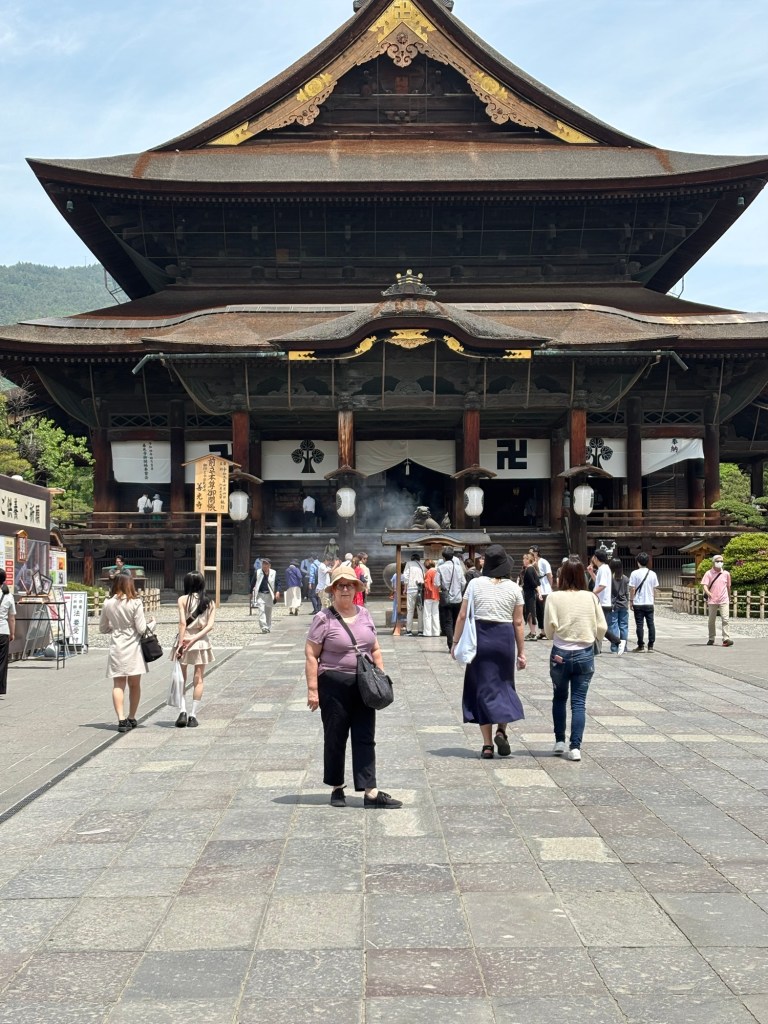
The grounds have many buildings, and many of them are big!

Big gate!

The approach to the temple is a shopping street – the scale of the street tells you that it can be crazy busy at times. On this day it was early but unseasonably hot – 30C by mid morning. We were ahead of the crowds, thankfully.

The main building – the Hondo is also very big!

No pictures inside, but I can attest that it is a vast space filled with golden lanterns and pilgrims coming to pray.

One of the interesting things about these places is the little quirky stories that are represented amongst the big historical buildings.

Like this little statue:

The story was that a raccoon dog wanted to come to the temple to pray, and to dedicate a stone lantern to the Buddha. The raccoon disguised itself as a human (as they do) and came to Zenko-ji. It went for a bath, and was so relaxed that it let slip its human disguise and ran away in embarrassment. A monk saw what had happened and dedicated the lantern for the embarrassed raccoon, and this statue shows the raccoon with its rosary.

The other story is about this cow:

The story is that there was an old woman who never went to Zenko-ji to worship. One day a cow wandered by as she was doing her laundry in the stream. A gust of wind blew her favourite piece of red fabric into the horns of the cow, which then ran away. The old woman ran after the cow all the way to the temple, where it dropped the red scarf – and disappeared. The old woman realized that the cow had been the Buddha, leading her to pray and she became devout. The statue lives in a little building with benches where people can rest out of the weather. In this case – the heat. But they get winter up here in the mountains!

By the time we left the temple the tour groups were streaming up the street. We stopped for gelato – including grated apple flavour made from the local apples, before heading back to our hotel to escape the heat.

That evening the local news basically led with ‘WTF it was sure hot today!’, and as we were watching the thunder began and the skies opened with a big whoosh of rain.

That broke the hot spell and made our next excursion a little more comfortable..

A wrap on Kawaguchiko and on to Nagano

We stayed at a lovely hotel in Kawaguchiko – the Mizno Hotel. It is across from the town itself, looking back at Mt Fuji. Scenes like this…

Two mountains, two fishermen

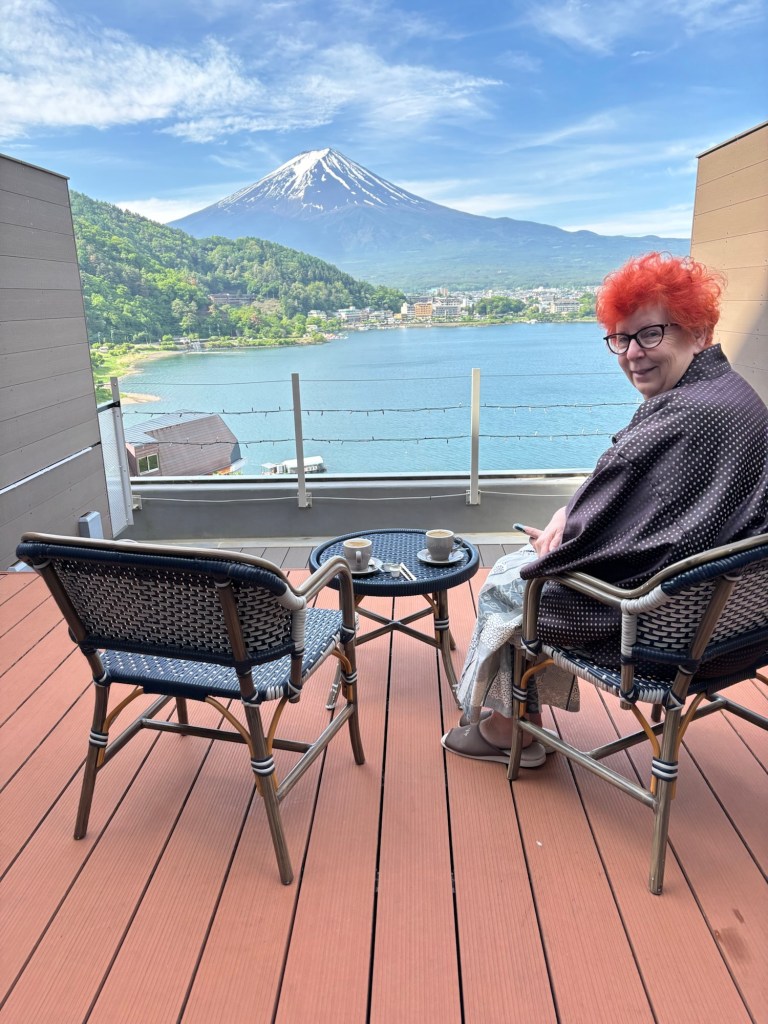
It is a lovely and relaxing spot – we really enjoyed our morning coffee on the deck.

Breakfast was included and it was a bang up multi course affair. There was also a dinner service at the hotel, which was a good thing as we were not convenient to the restaurants in town. Dinner on the first night was shabushabu – hot pot!

And a beer, of course

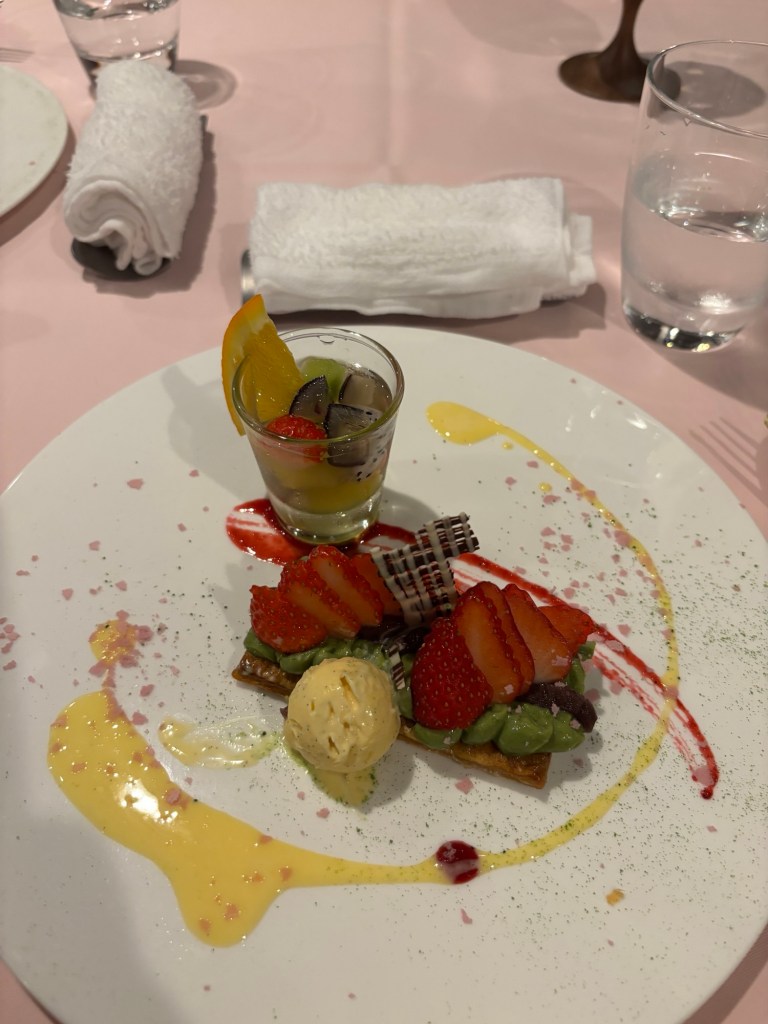
With notice we could also have a French dinner, which we did on the final night. It was amazing – multiple courses, local ingredients, French cuisine.

Fancy dessert- mille feuille with matcha crème and fruit

There was an onsen for a relaxing bath before bed, and a lovely lobby filled with pots and pots of hydrangeas.

The town itself takes a really heavy load of tourists all year round. There is lots of signage in Japanese, English and Chinese. Sadly, many of the tourists are proficient in none of those language, so tremendous patience is required on the part of the locals. Especially the bus drivers. There are fancy resorts along the shore, hostels, guest houses – every kind of accommodation that you can imagine. Every kind of food, too.

When we were figuring out how to get to Kawaguchiko we were having trouble figuring out the train options – we figured we were not searching correctly. It turns out that the train to Kawaguchiko is a private train and does not always show up as connecting to the larger JR train system. It is a commuter train, so no advance ticketing required. Tap your fare card on and then off and you are done.

The day we left we took an early train out of Kawaguchiko to Kofu. The trains we passed on the way were stuffed full of day trippers making their way up. We had a quiet easy ride down. We had thought we would have to go back to Tokyo and Tokyo Station (another train station so big and complicated that it has its own app to help you through it), but when we got to Kofu the very kind ticket agent figured out how to get us to Nagano without going all the way back to Tokyo. By 3:00 (and three trains) we were in Nagano. Another mountain city, but completely different!

Itchiku Kubota Art Museum

My desire to see the Itchiku Kubota Art Museum was what led us to Kawaguchiko. Mr Kubota was a textile artist. He worked in the textile industry, creating fabrics for kimono and for theatrical costumes. When he was a young man he saw a fragment of fabric that had been dyed using techniques since lost to history. He became obsessed with recreating those techniques and by the time he was 60 years old he had figured it out.

Back in the early 1990’s I remember hearing about a touring exhibition of amazing kimono – the show was at the Smithsonian and the Canadian Museum of Civilization. We were in Calgary at the time, so I was not going to see it. I now realize that they were Kubota’s kimono.

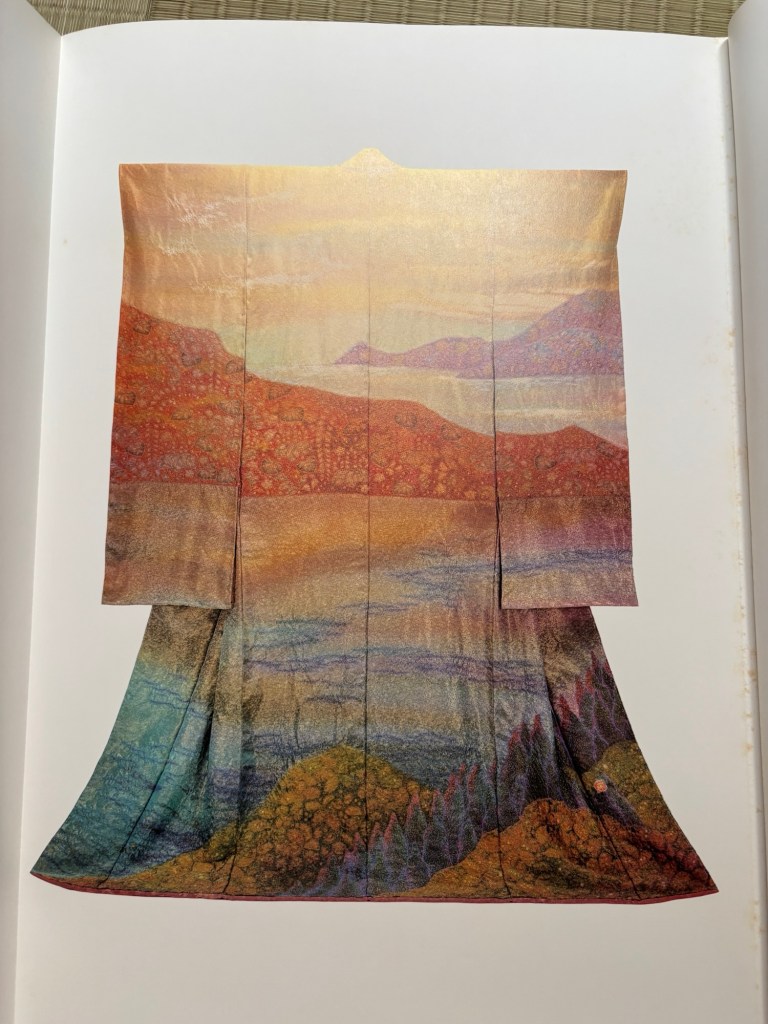
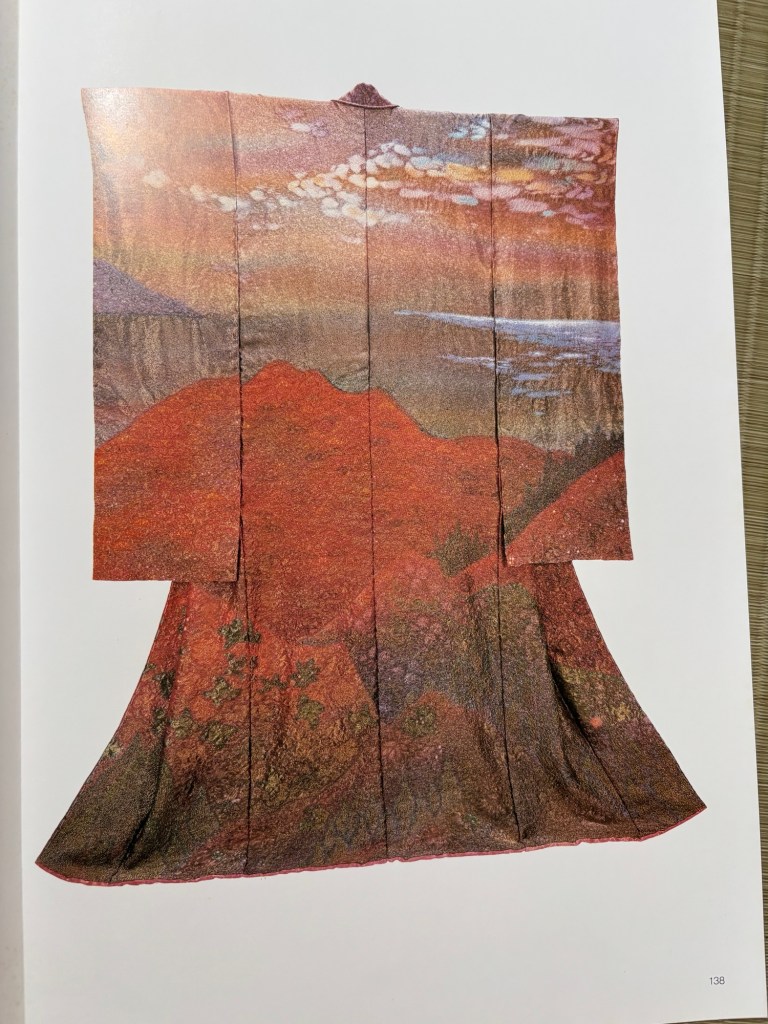
No pictures are allowed in the museum, which is beautiful in its own right. I will provide you with links should care to follow, and a few photos from the book I bought.

Kubota worked both on individual kimono, and made collections that when the kimono were displayed together images swept across them. There are 103 of them – he thought if he lived to be 100 he would complete all the work he wanted to create. He made it to 85 years old.

Itchiku Kubota Art Museum Wikipedia Article

Itchiku Kubota Art Museum Itchiku Kubota Art Museum website (In Japanese, but your browser may translate)

Starting with plain white fabric Kubota and his assistants would stitch, dye, paint, embroider and totally transform the base material into stunning art pieces. While the kimono are art pieces, they remain wearable, functional garments. Heavy, though.

Two landscape kimono.

Showing how the images flow from one kimono to another.

The same kimono viewed from the front.

Excuse my crappy photos taken from the book. Nothing can compare to seeing them in person. As I mentioned some of them are regular sized, others are of a larger scale. Some reference older, historical styles and techniques. Some are shockingly bright, others delicate and mysterious. And always – the amazing texture. The process of creating the designs uses tiny stitches, sewn in to manipulate the fabric and colour placement. When all is said and done the stitching is removed, part of the final decisions involve how much of the texture from the stitching is to be left. In some places the fabric is ironed almost flat, in others the colours stand proud from the overall surface.

Kubota wanted all the colours to be available to him in his work, so he used modern dying products and techniques in addition to more traditional ones. The results are astonishing.

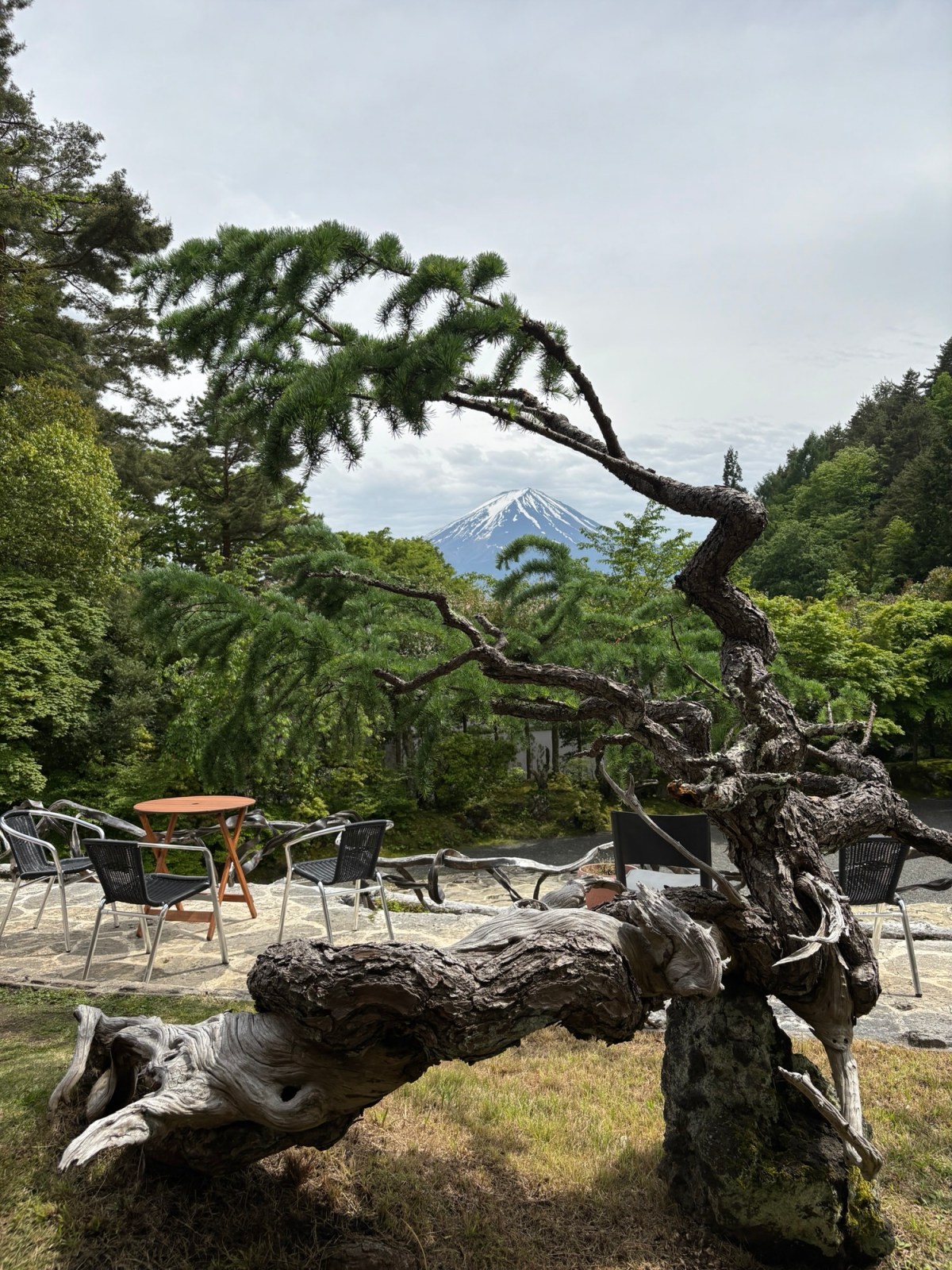
The grounds of the museum are also beautiful – the original building is where he lived and worked. A second building is inspired by Gaudi and seems carved from the rock. It is all surrounded by beautiful gardens.

And of course – the view:

I am so glad that we made the time to come to Kawaguchiko. I’ll be thinking about the work I saw for some time….

Well, that was a first

An interruption to my planned blog schedule to record a first ever event for us. In all our travels in so many places we’ve never been evacuated from our hotel. Until last night (everything is okay don’t worry)

We had a busy day yesterday and watched the two Tokyo ball teams play their Saturday night game (Giants 4, Swallows 2) before an early turn in. I heard Wilf get up and go into the bathroom some time later. He was there for just a few minutes and an alarm went off. At first I thought – did he fall and pull the alarm cord in there? But no – message came on in Japanese and English – ‘Fire reported on the 11th floor. Please standby while we investigate.’ Soothing voice – don’t worry. I was beginning to scope out jackets and shoes and my purse with our passports and so on when the new message came.

家事!家事です!Kaji! Kaji desu! Fire! There is a fire! Even in Japanese I understood that. Instructions to evacuate followed. Here’s our hotel viewed from across the street.

KoKo Hotel, Tawaramachi

We are on the 9th floor. It is 11:10 pm. And it is raining. You can see the staircase behind the building with the orange awning. So, shoes on, sweaters over our night clothes, important stuff in my bag and away we went.

I will say it was calm and organized and everyone just quietly went down the stairs. The open staircase meant we were all being rained on, but everyone took it slow on the metal staircase. Lots of small children, sleepy eyed and confused, being carried down. No smell of smoke, thank heavens. The staircase led us to the elevator lobby, which is separated from the reception area by an automatic door. The lower floor people were in the front lobby and out on the street but we were able to stay inside.

The firemen arrived in their gear and one of them came in and went into the staff area behind the desk. No obvious sense of urgency, so that kept the crowd calm. A supervisor came – complete with clipboard and started up the stairs. By 11:30 we got the all clear and the elevator came back on.

When we checked in on Friday we received a piece of paper telling us that tomorrow- Monday – there would be a fire drill for the staff but it would be nothing for us to worry about. Wonder if tonight will count as a drill for the staff? Everyone seems to have done really well – all was calm and orderly. Perhaps would have been different if we had been able see/hear signs of fire.

So – how was your Saturday night?

Lake Kawaguchiko

When we were planning this trip Wilf was asking me what things I wanted to see. There was a museum that I had always wanted to go to, but it never quite fit in. Technically it is a day trip from Tokyo but a long day, so at least overnight seemed like a good idea. After some investigation Wilf found a hotel in the town nearby and got us booked in there.

The next step was figuring out how to get there and this consumed much of our winter. We would by flying back to Tokyo from Fukuoka, landing at Haneda airport. Trains and buses for the lake area leave from Shinjuku station. Only the most complicated train station in the world that handles 1 million people per day…We usually try to avoid it. There were fewer options for the train so we settled on the bus. But we could only make reservations one month in advance, so we were checking checking checking and we did get a reservation for the bus from Shinjuku to Kawaguchiko Station. We figured we would be able to get the Highway bus from from Haneda to Shinjuku on the day of, as it ran several times an hour and we were not sure of our exact timing at the airport.

At this point I’ll step out for minute to discuss the weather in Japan. More particularly the weather forecasting. What the heck, people? We’ll look at our weather app for a few days forward and it will show expected rain 100mm on Saturday. Yikes – that’s not good. Then the next day we’ll look and the forecast for the same place on Saturday – 5mm. The next time we look – 50mm. How does anyone plan anything? Fukuoka, Tokyo and Kawaguchiko were all calling for rain on our travel day, and quite a bit so we figured there was no avoiding it.

No rain in Fukuoka and we didn’t have to go outside to get to the airport. Raining in Tokyo. The Haneda airport has managed to create a bus platform that, while enclosed, somehow tunnels all the wind in the city through that spot, and the rain. We bought our tickets, got a snack and then went to the platform. Which is covered and yet somehow everyone was getting wind blown and wet. By the time we got to the city it was sheeting down and people on the street were losing the battle between the wind and their umbrellas.

The ride to Kawaguchiko was pleasant and the closer we got the better it got – the sun even came out.

Now, perhaps the name Kawaguchiko rings a faint bell for you? It is a lake and town on the north side of Mt Fuji. Very popular destination – lots of parks and hotels. Passed an amusement park with a truly horrifiying looking roller coaster on the way.

Last year someone posted a picture of a Lawson convenience store with Mt Fuji in the background – a perfect picture. Suddenly the whole world wanted to go and take That Picture. That led to chaos and people standing in the middle of the busy street and blocking the sidewalks and general unhappiness in town, Here is the story – Lawson Picture. They even tried putting up a screen but people just poked holes in it. So we were going to that town!

Also – this winter we watched a Japanese series on Netflix called The Hot Spot, which was set in Kawaguchiko and the neighbouring town. It was a charming and offbeat story and set in the area! The Hot Spot

So – back to our journey. Having left our hotel at 8:15 we arrived at Kawaguchiko Station (having passed the famous Lawson) around 4:00. The station is heaving with tourists. But lo! The shuttle to our hotel is there and we hop on board. A quick scoot and we are up a scary little road to our lovely hotel perched above the lake.

The rain has stopped but the clouds have not lifted, so no mountain to see. But in the morning…..

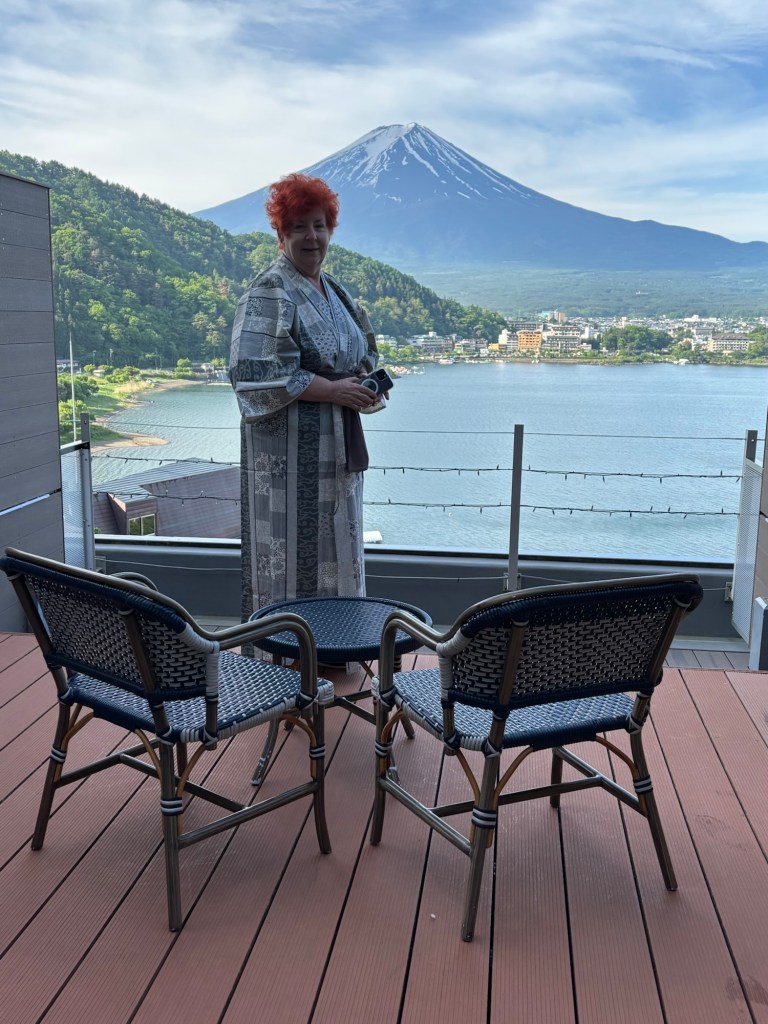
I opened the drapes at 07:00 and there it was. I threw on my hotel yukata and rushed out onto our deck. Wilf captured me taking photos – so excited I don’t even have my glasses on! But look!!!

Continue reading “Lake Kawaguchiko”

Something old and something new.

We weren’t all about the day trips while in Fukuoka. There were things to see in the city (besides the city itself).

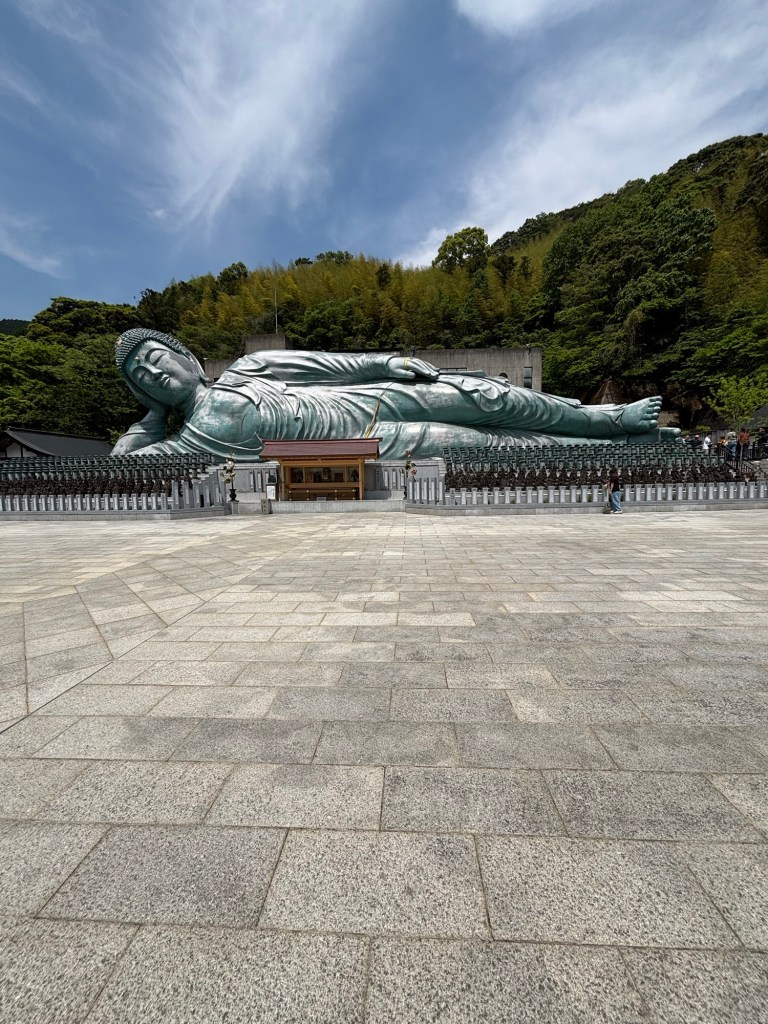
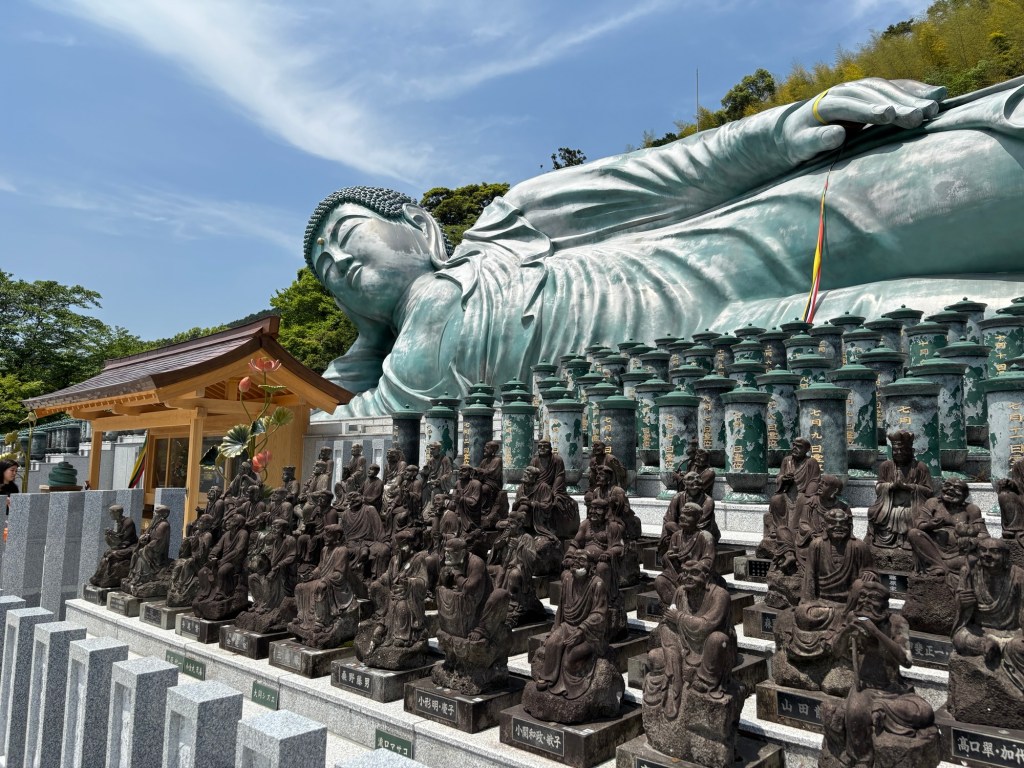
First up there was a big Buddha to see in the suburbs. Said Buddha resides at the Nanzo-in temple. The temple was originally located on Mt Konya and was moved to its present location in the late 19th century where it became a part of a major pilgrimage route. Information about the site says that close to a million people visit it in a year.

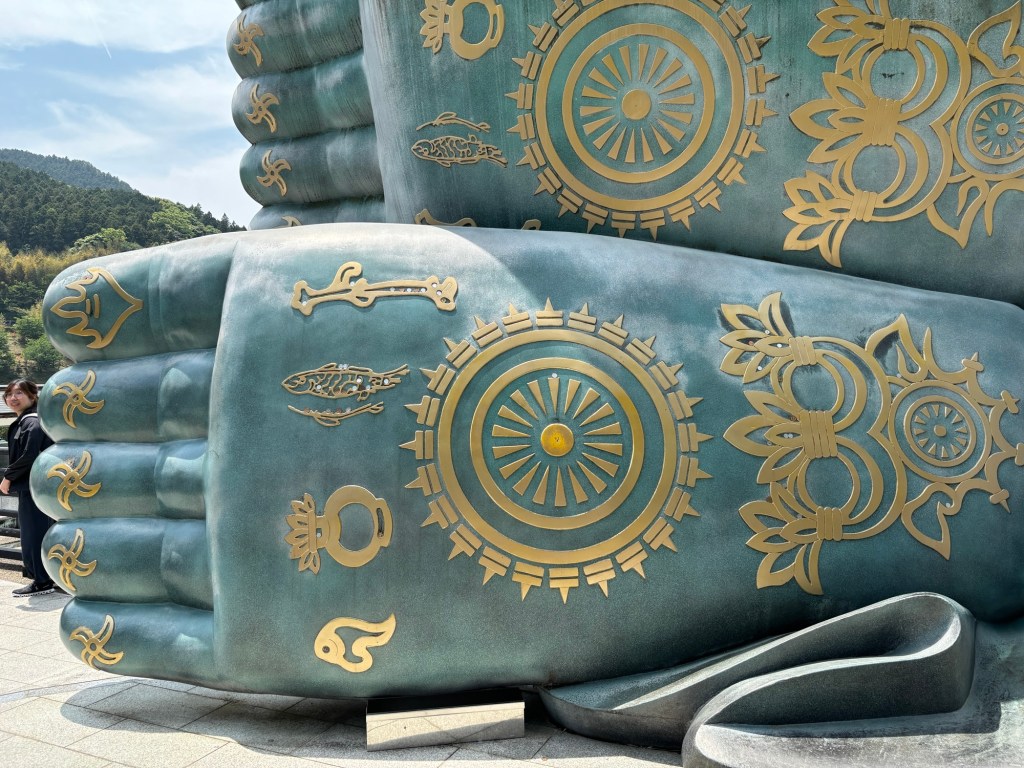
The statue of the reclining Buddha is more recent – it was unveiled in 1995. Weighing in at 300 tons, the statue is 135ft long and 36ft high – immense!

It is a bit of a challenge to get the whole statue into one shot.

The scale of the plaza gives you a bit of an idea of the number of people who visit.

The grounds of the temple were lovely and in addition to the usual flights of steps going up up up there was a long and winding ramp with a rubbery surface that took us up above the temple proper to where the Buddha was resting. The long ramp would make it accessible to wheelchair bound pilgrims.

After a visit to the temple and the Buddha we skipped ahead in time and went to see teamLabs Forest. When we were in Tokyo in 2018 we went to see the first teamLabs digital art project and were quite amazed. It was a combination of music and digital projections and interactive experiences that was unlike anything we’d experienced. Originally planned as a temporary exhibit the teamLabs folks now have permanent exhibits in various places on various themes.

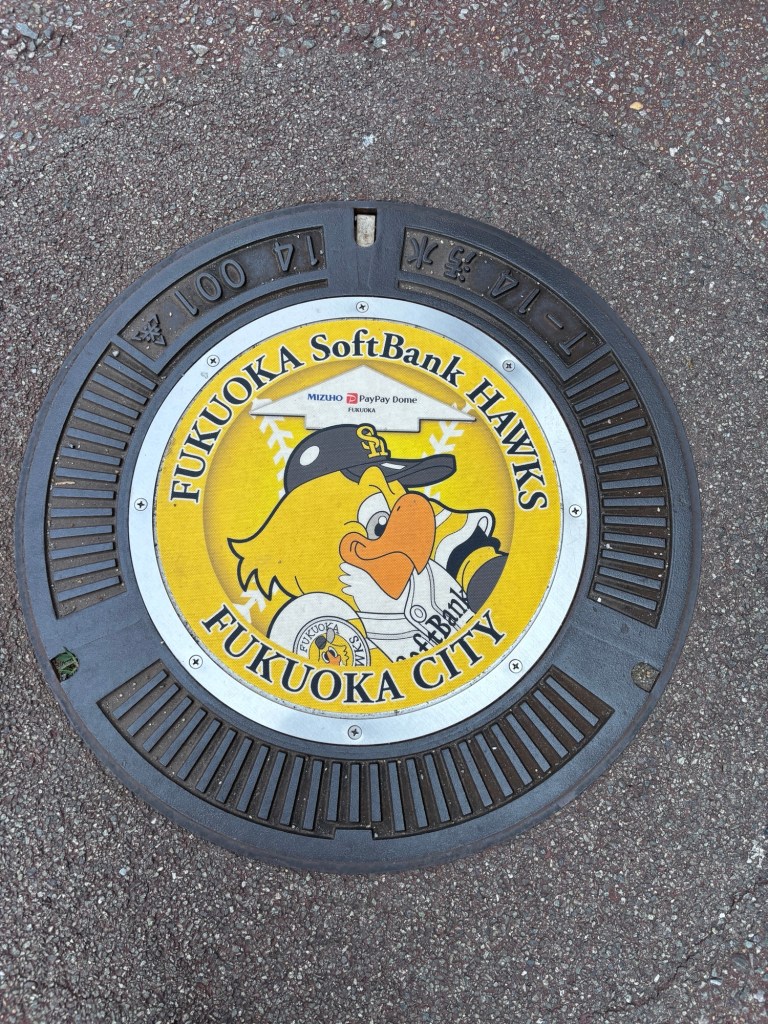
Another subway ride and a walk to the building where the exhibit lives. It turns out to be right beside the baseball statdium, where the Fukuoka SoftBank Hawks play. Hints along the way….

Not much to see from the outside – a big grey building with no windows and an easy to miss entrance. We were pretty much first through the door. The building also has a rollercoaster on the roof which appeared to have single seats suspended below the track – looked very swingy. There was also an unko museum on the upper floor – unko being poop, so a poop museum for children……

Anyhoo. Before we went into the first room we were encouraged to download an app onto our phone so we could interact with the animals. So I did. The idea was that through our camera we would look at the animals as they appear and ‘catch’ them. Information about the animal would then appear on the phone screen to be viewed and then on to the next critter. I felt like I was spending more time fiddling around, trying to make the ‘catch’ work and not really looking at what was going on around me. I decided to experience what was going on around me directly.

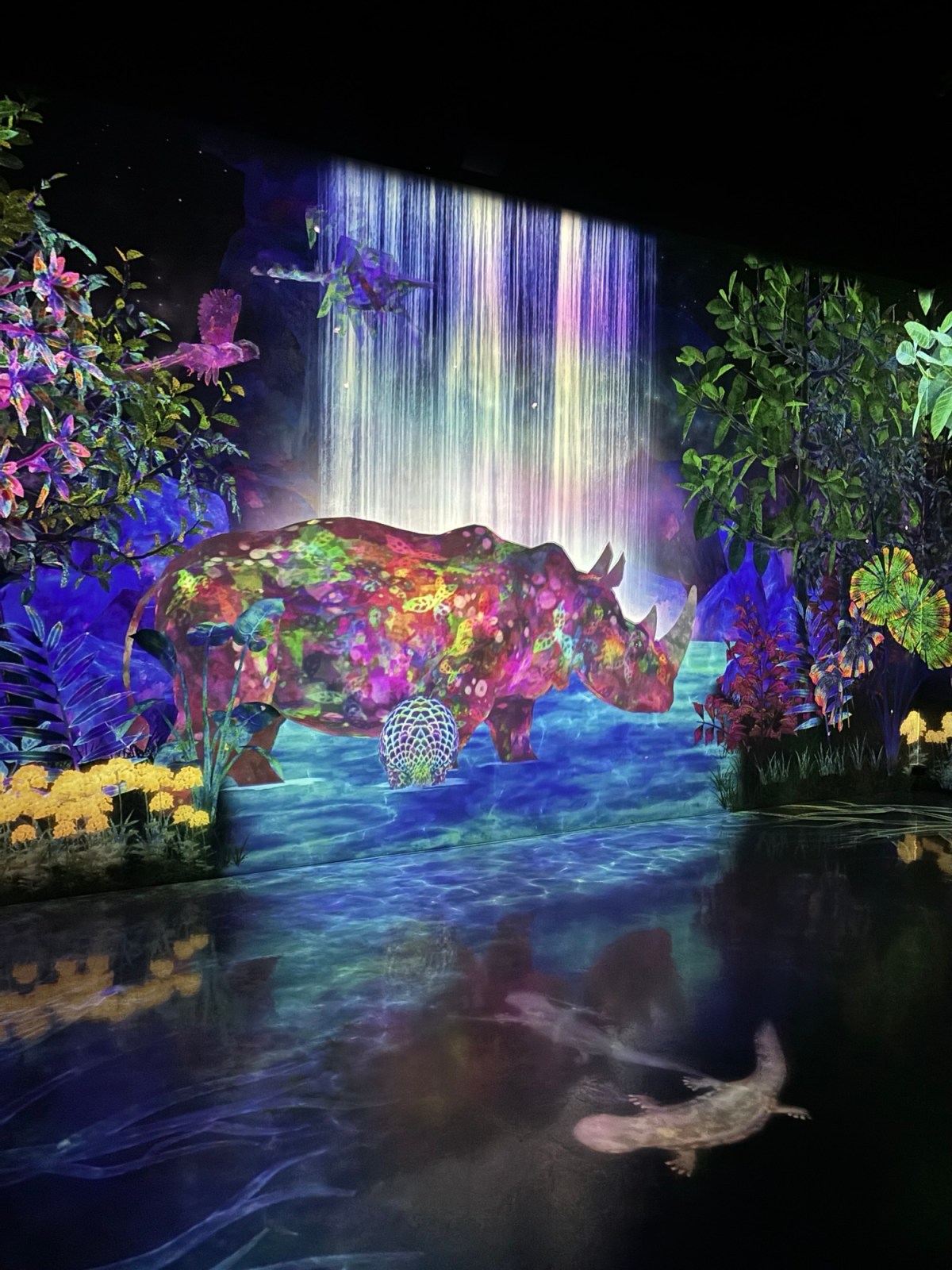
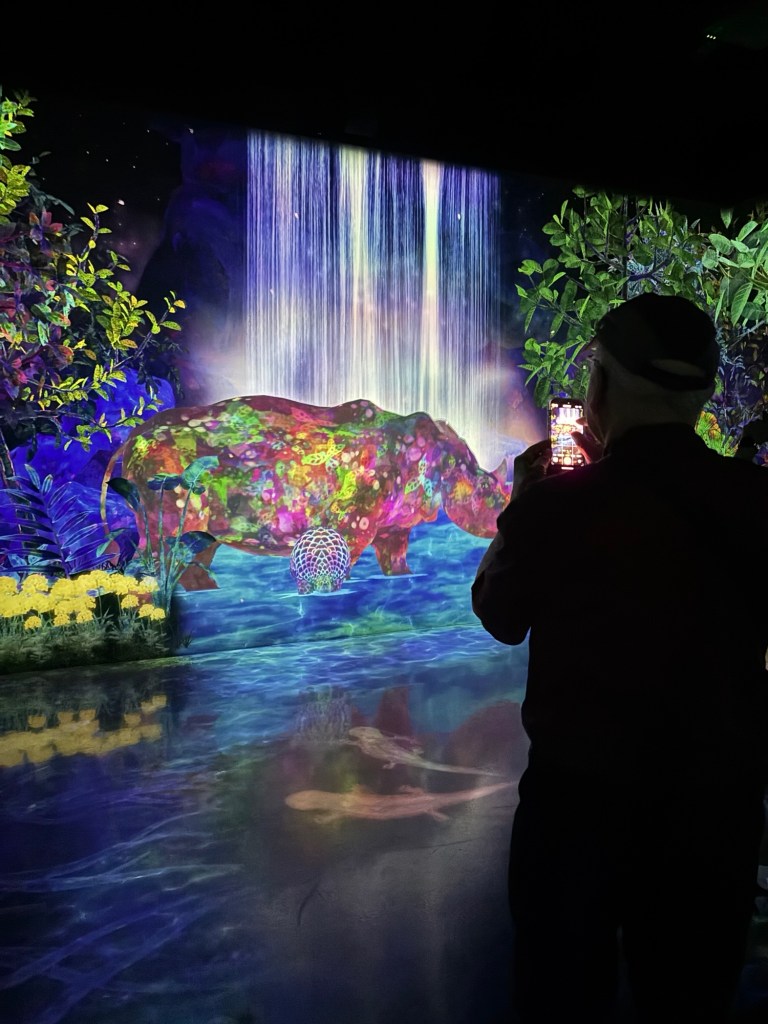
Rhino wandering past Wilf
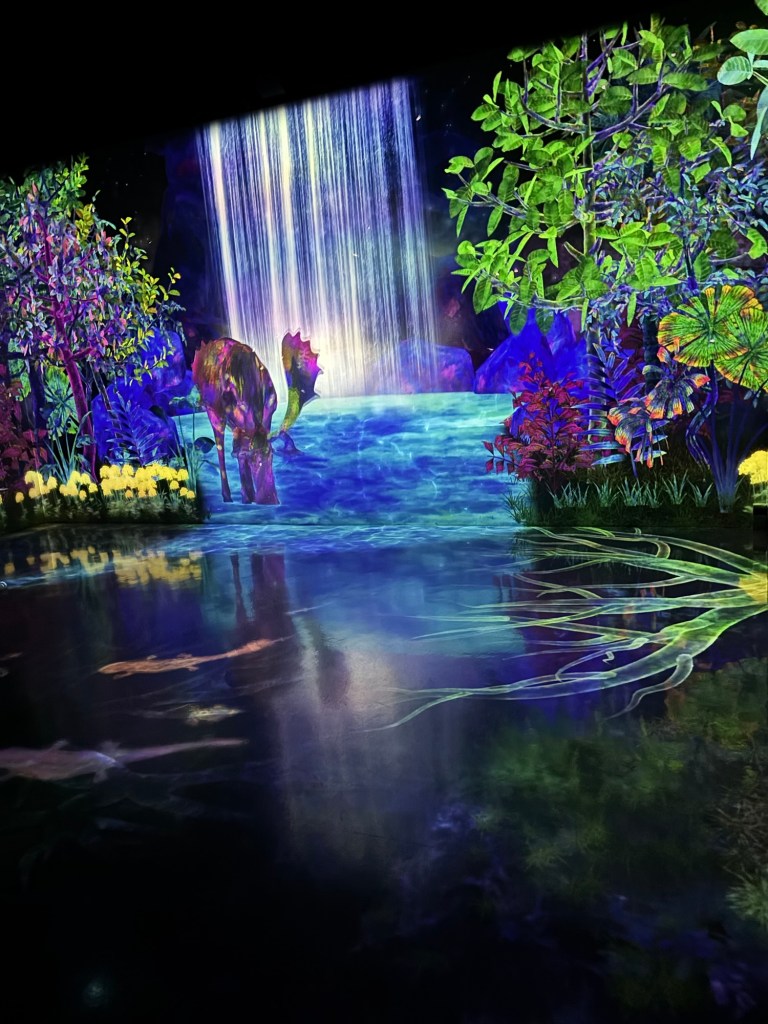
Moose below the waterfall.

Not only were there animals wandering through the forest on the walls around us, but the floor was covered with fish swimming by and birds flying overhead. We moved from room to room through the forest as there was movement all round us. Mirrors helped to make the space seem even more huge than it was, and all the time there was music playing. It was very beautiful.

In the forest

From the forest we moved into the more interactive rooms.

The first room was the ‘Oh, hell no room’. We didn’t get a picture there – too busy getting out. When we entered the room we were standing on a narrow solid strip. As soon as we stepped forward we were on a very squishy floor and we had to fight to stay upright. We were clinging to each other trying to figure out how to get back onto solid ground without having the other tip over. Eventually we did it and walked along the edge of the room. Lots of lights and movement and music.

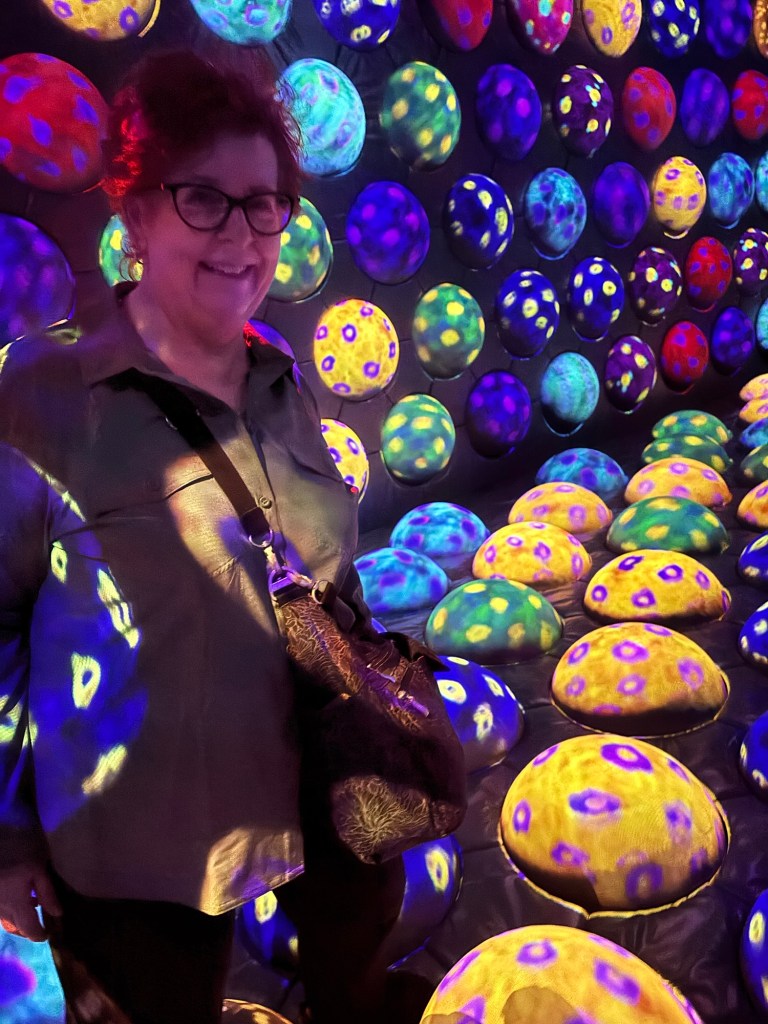
In the next room the walls and floor were covered in pillow like bumps. If you stepped on them they changed pattern or colour and were very squishy.

We decided we’d be better off walking on the black part between the pillows – still soft but stable.

The third room had an undulating but solid floor.

Lots of animals and textures and music. The next room was our favourite ….

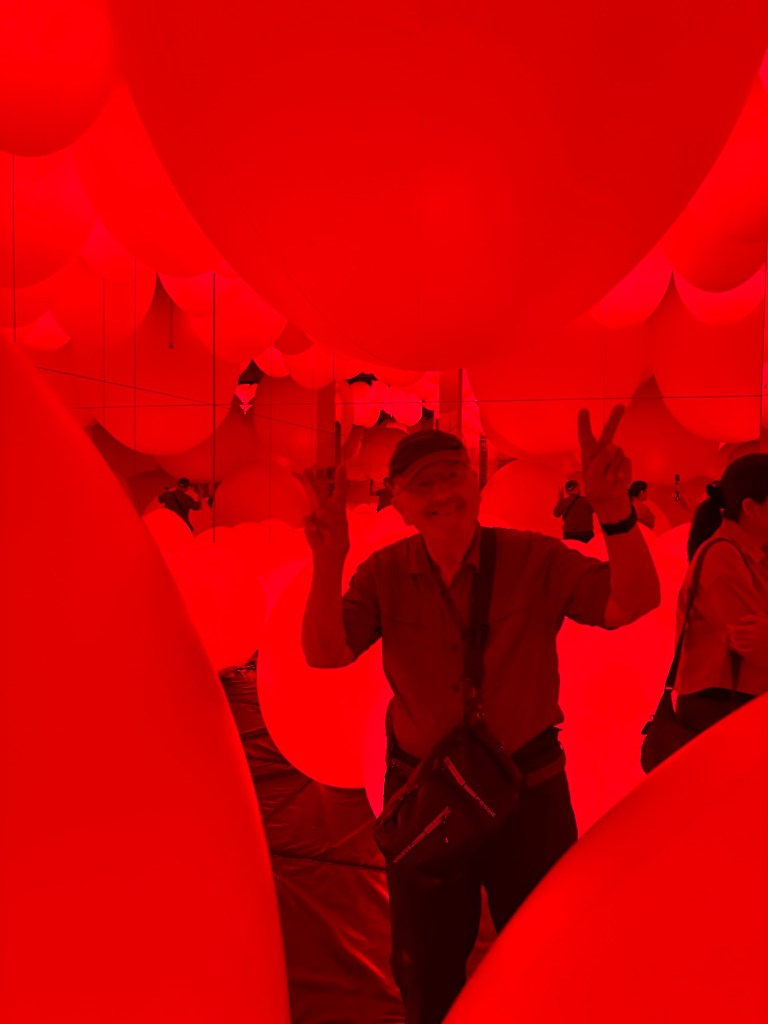
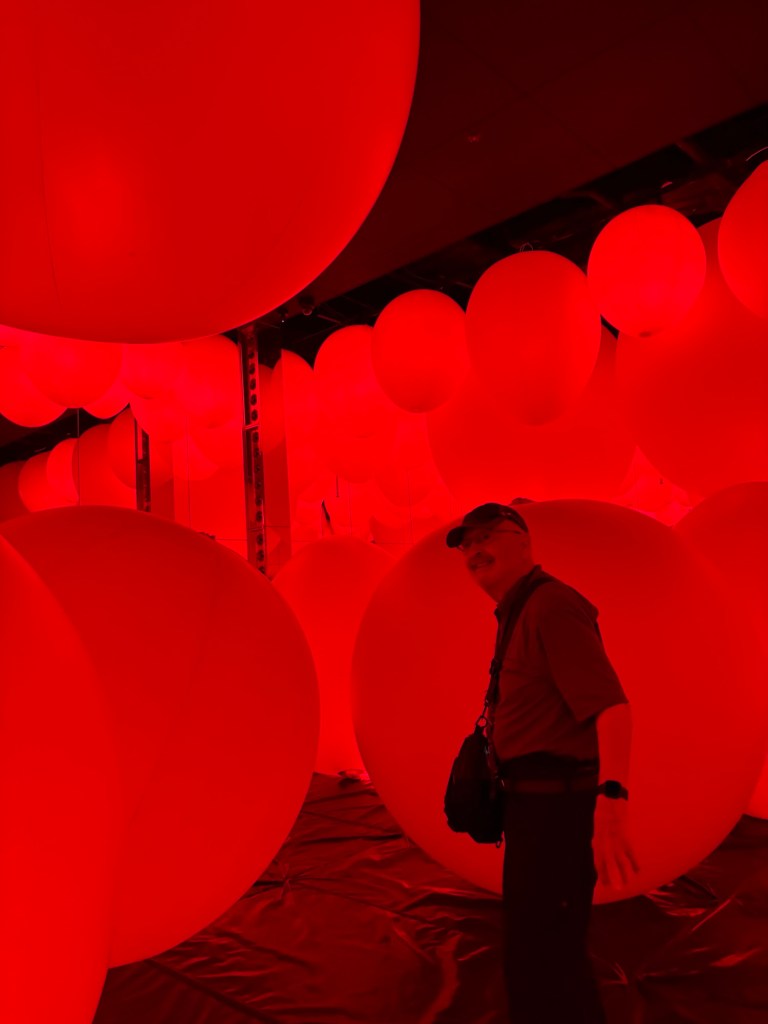
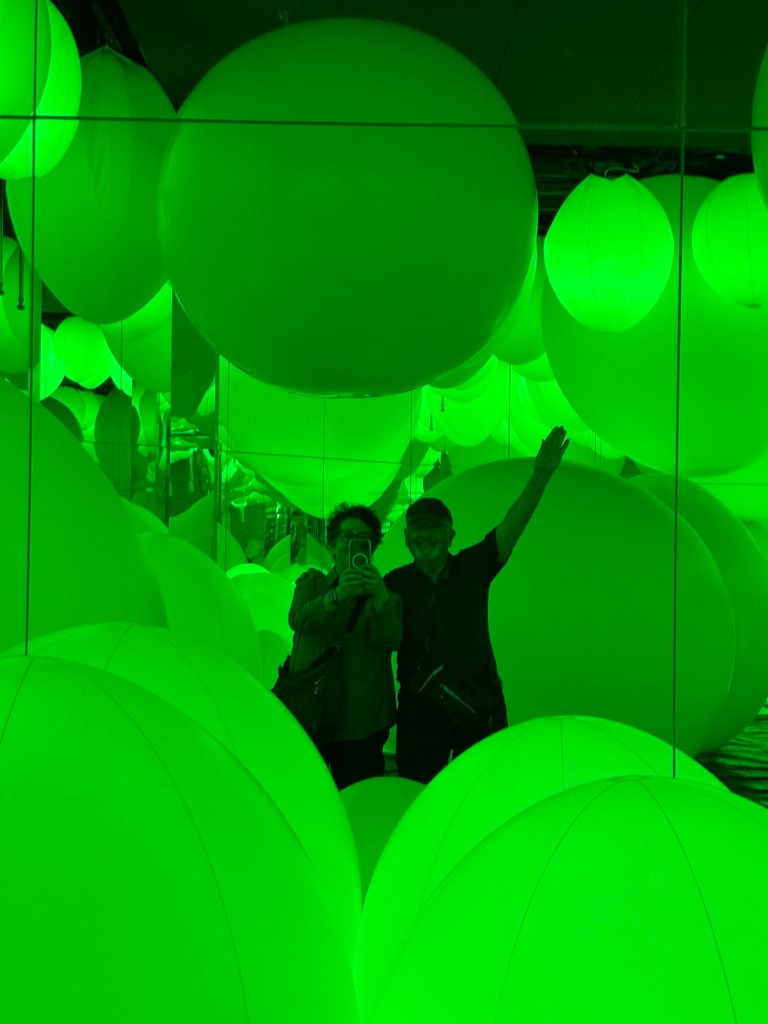
It was full of big spheres that floated about in the breeze, as well as big egg shapes lightly tethered to the floor. As the spheres floated by we could gently bat them away or forward or up as we walked through the egg shapes. The colours shifted every minute or so, and the mirrored walls and ceiling made it feel like an infinity of spheres.

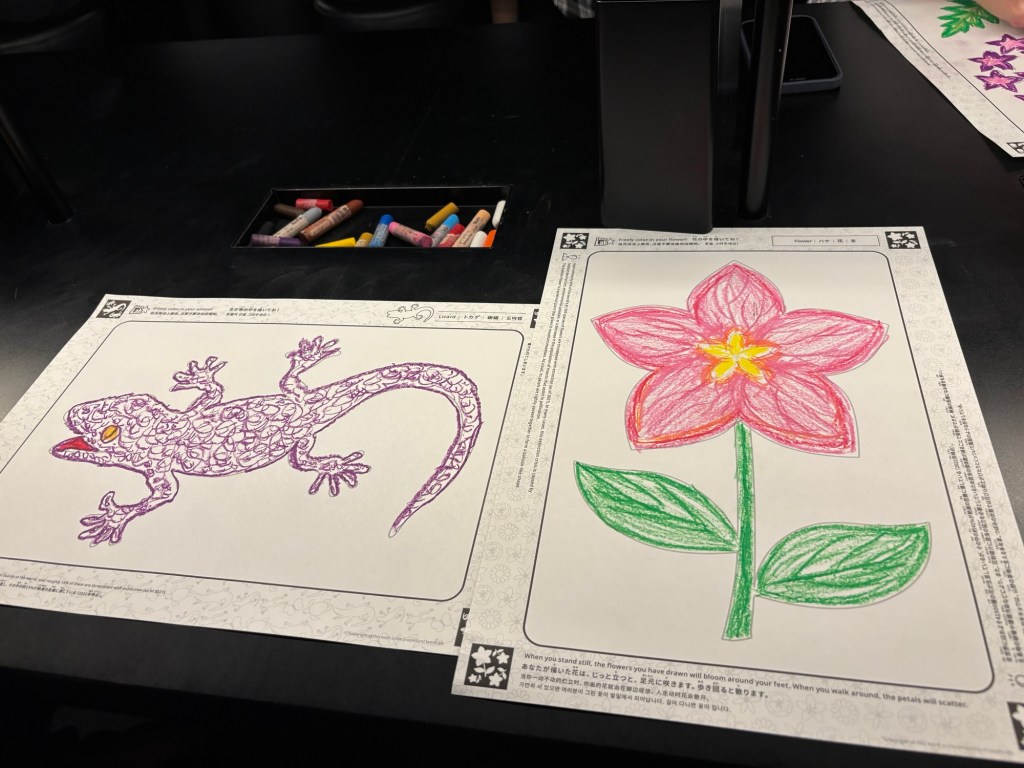
There was also a station we could sit at where we could choose a piece of paper with an outline of an image on it. We would colour it as we chose and when we were done we would hand it to the attendant. She would scan it and when we walked back into the room our image would be on the floor.

Mine was a flower and when I stepped on it it exploded into a shower of petals around my feet. Wilf’s lizard came to life and ran around his feet before running off and joining the other lizards. It took mere seconds between the scan and the animated projection.

When I think about the two teamLabs events we have been to I have the same feeling. It is dazzling and amazing and very cool to be inside of it. And….. I keep longing for a story, for something to react to, some emotional connection. At the end I find myself thinking ‘that was cool, but what was it for?’ Dazzling for dazzling’s sake? In Tokyo there is an immersive digital display about Hokusai, including his Great Wave. We’re going to try and get to that and see if an immersive digital display with a theme feels a bit different.