One for the bucket list!

We are on the Northern Island of Hokkaido. We took the bullet train from Sendai, which included a ride under the ocean. There is a train tunnel that is 100m below the seabed – the underwater portion is just over 23 km long.

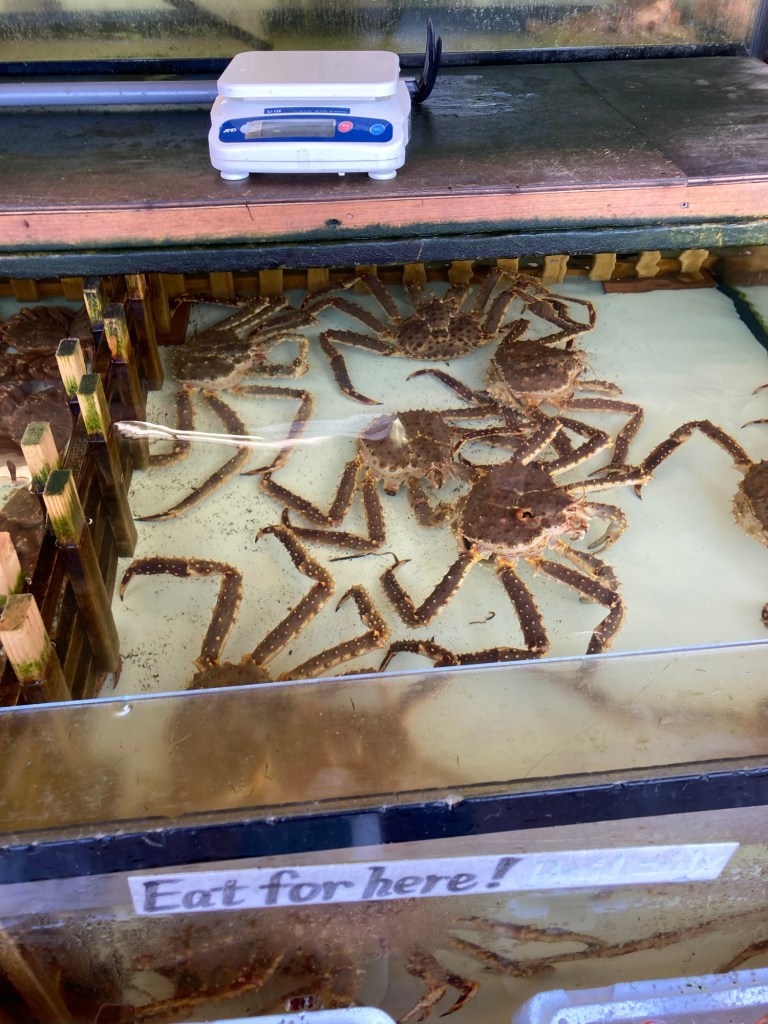
We are staying in Hakodate and are only a few blocks away from the morning market. Wilf had a plan – he had heard that somewhere in the market you could catch a squid and they would turn it into squid sashimi for your breakfast. We set off this morning to see if this was true. It a busy space, with a central building and then spilling into the streets for several blocks. Lots of merchants standing in front of their shops offering ‘asa gohan’ – breakfast. And wow! The selection on offer! The northern waters produce squid and crabs and salmon, all of which was on display.
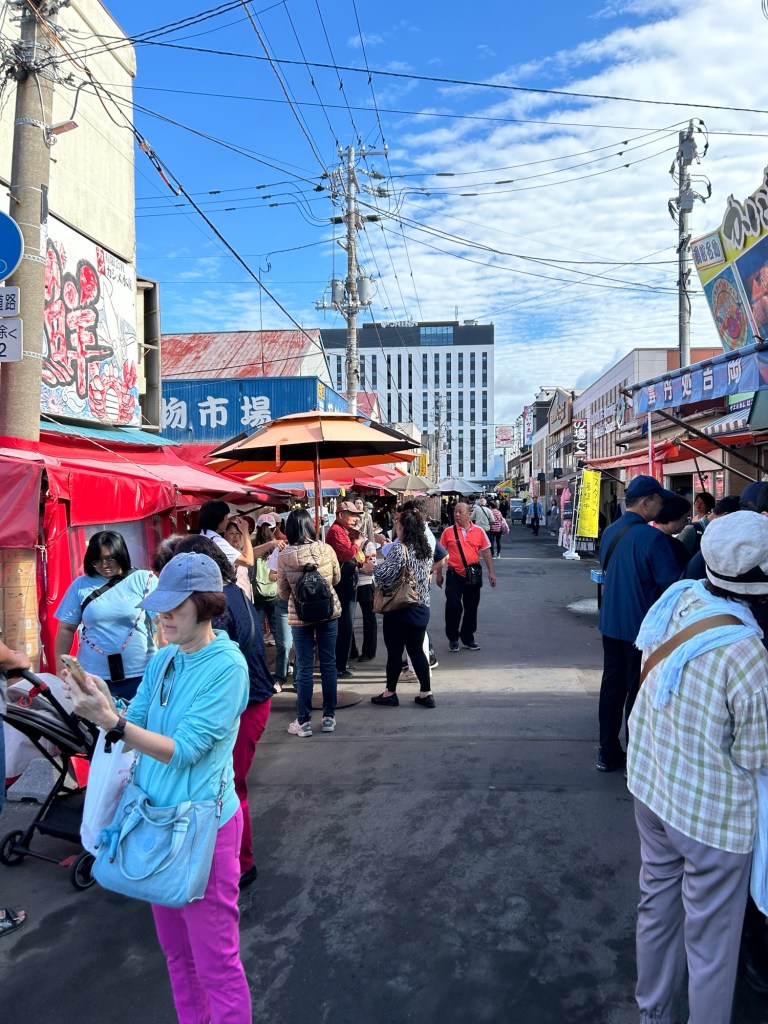
Everyone’s looking for something to eat!
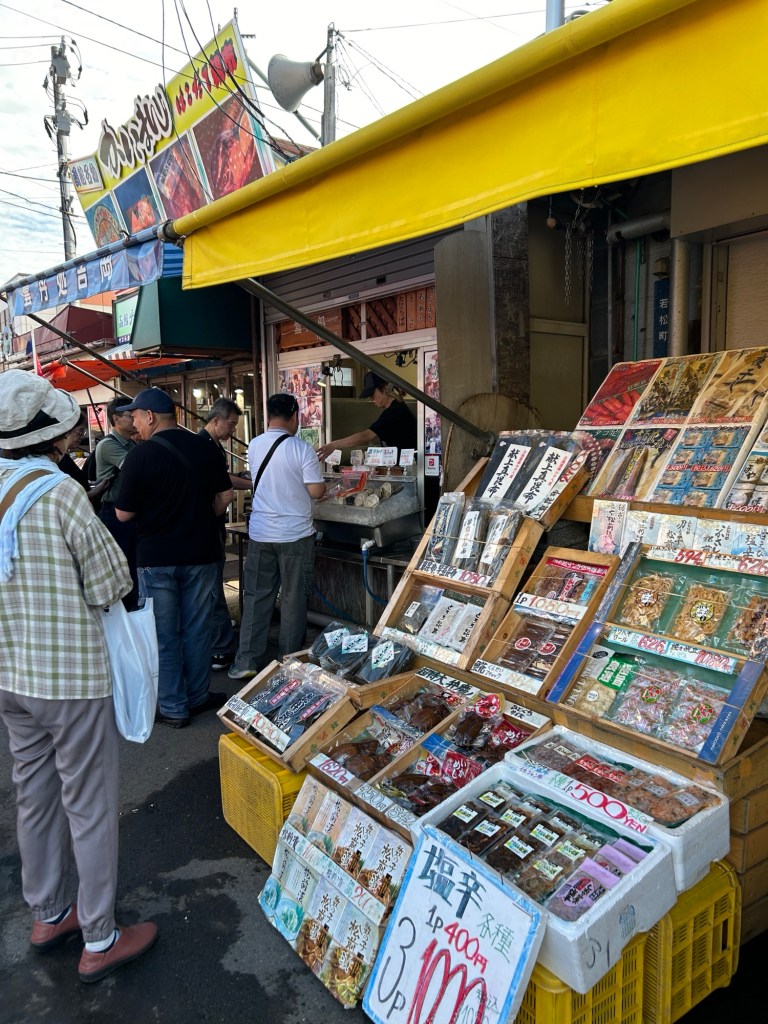
All sorts of preserved ….things

And the produce! It’s melon season, so there were lots of $60 melons, but also lots of less expensive ones – also by the slice. And chestnuts and apples and mushrooms.

We wandered about having trouble finding the restaurant Wilf was aiming for and decided on one that said they had live squid sashimi. So in we went.

The waitress spoke about as much English as I do Japanese but we managed. Every so often I can produce a whole sentence rather than just disjointed words, which causes much surprise. We spent a lot of time last year in my Japanese class working on restaurant ordering, including the phrase ‘お勧めはなんですか‘、which means ‘what would you suggest?’ That has turned out to be a useful sentence!

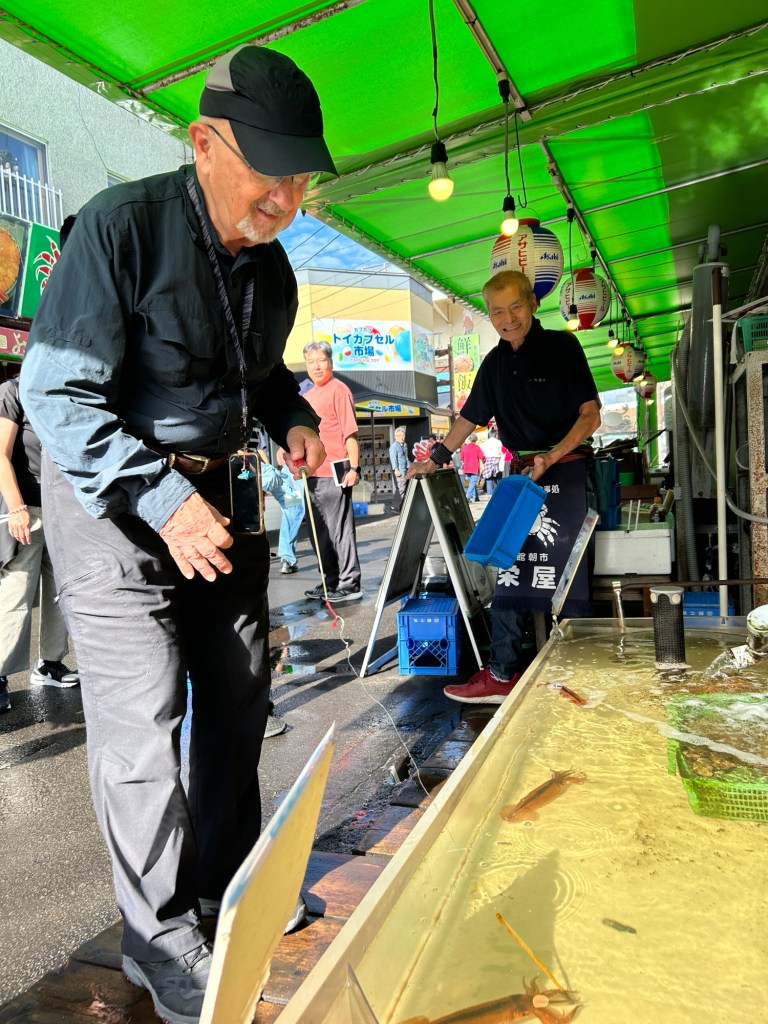
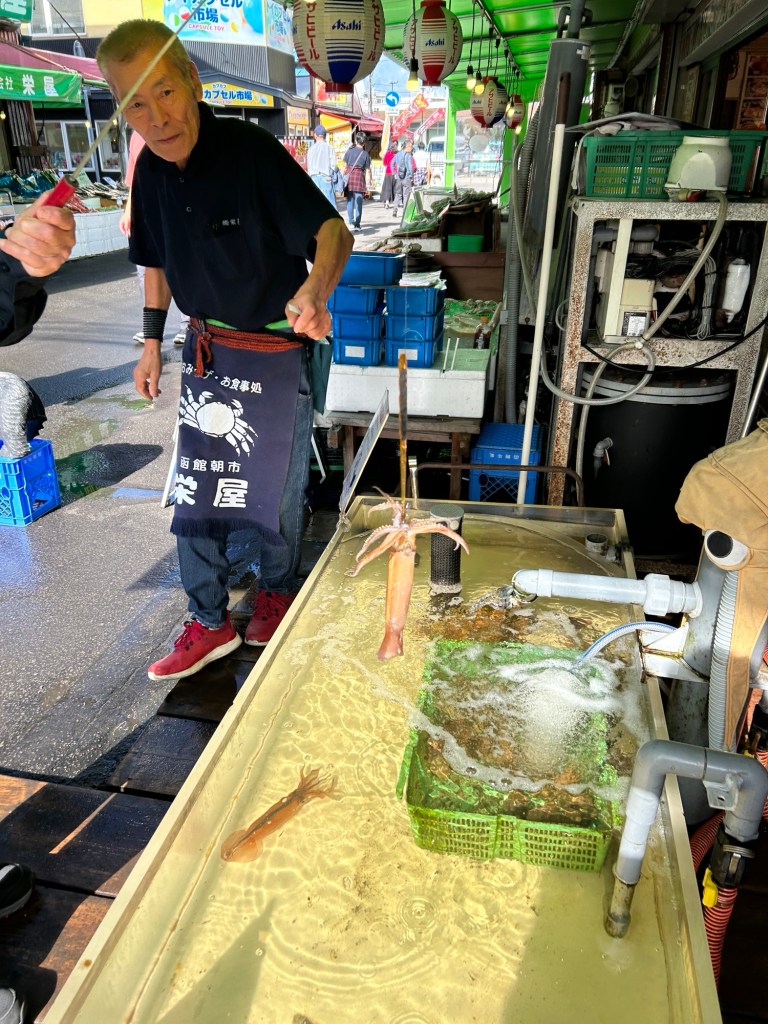
After Wilf ordered his live squid sashimi the waitress said ‘Ika (squid)…. Fishing?. Wilf was out the door right behind her. He’d been reading up on how to do this. The trick is to catch the squid in a way that doesn’t cause it to get mad and squirt ink.

Step 1:
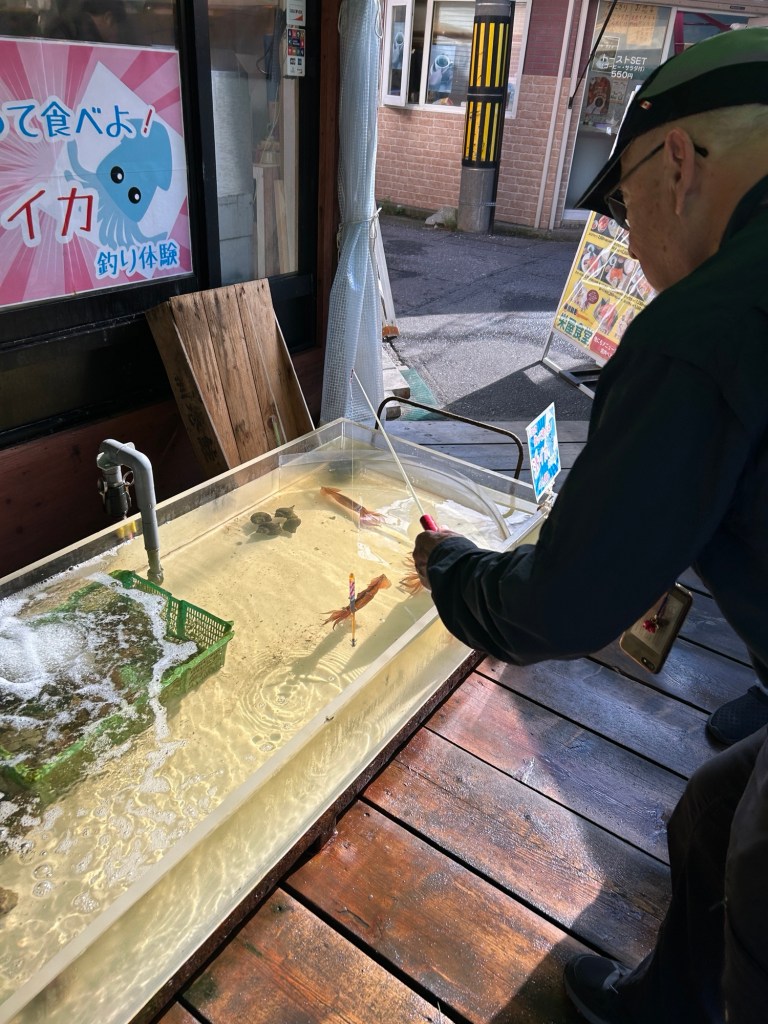
Approach the tank with a stick, string and hook.

Step 2

Approach the squid

Step 3

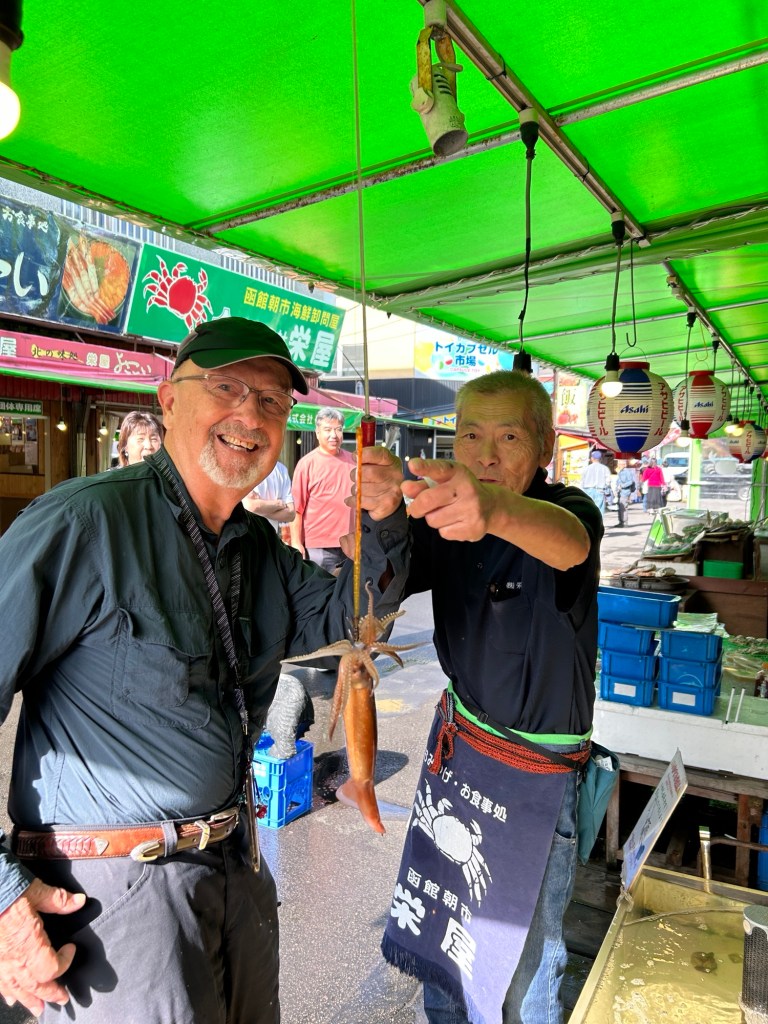
Got it!

Ta Da!

Happy fisherman!

All the people in the shops along the street were watching to see if the old gaijin could catch a squid and he did very quickly! Big round of applause from the folks on the street.

A few minutes later:
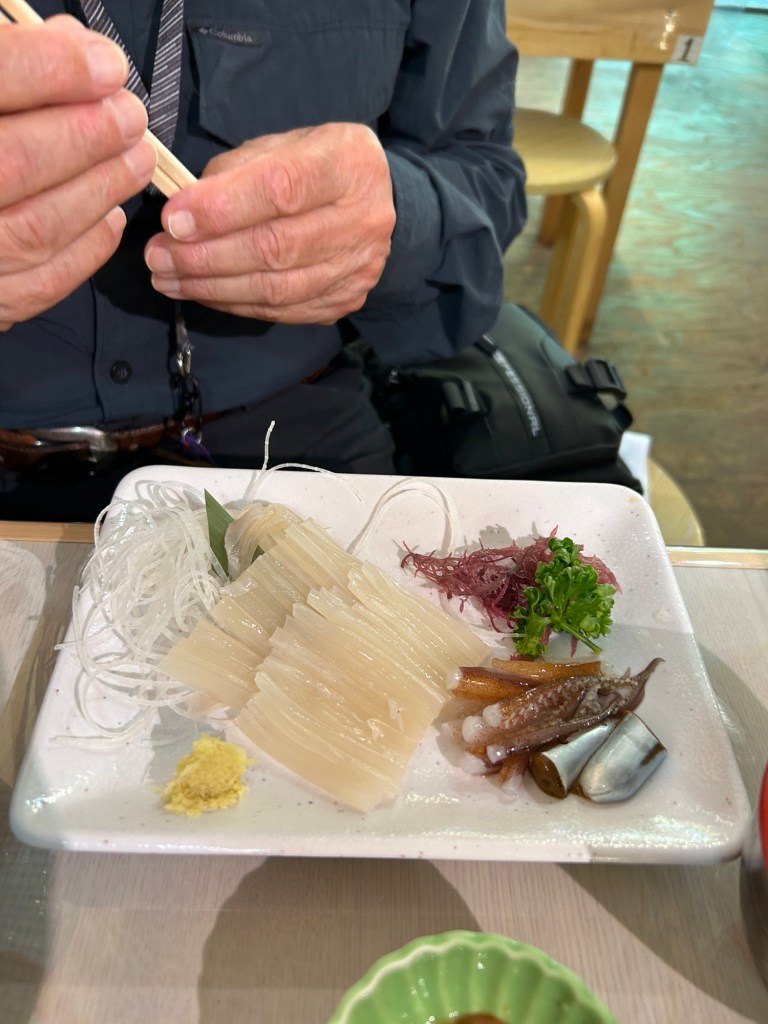
Squid, disassembled.

Since we are in the land of crab and salmon I had a rice bowl with salmon sashimi and sweet crab
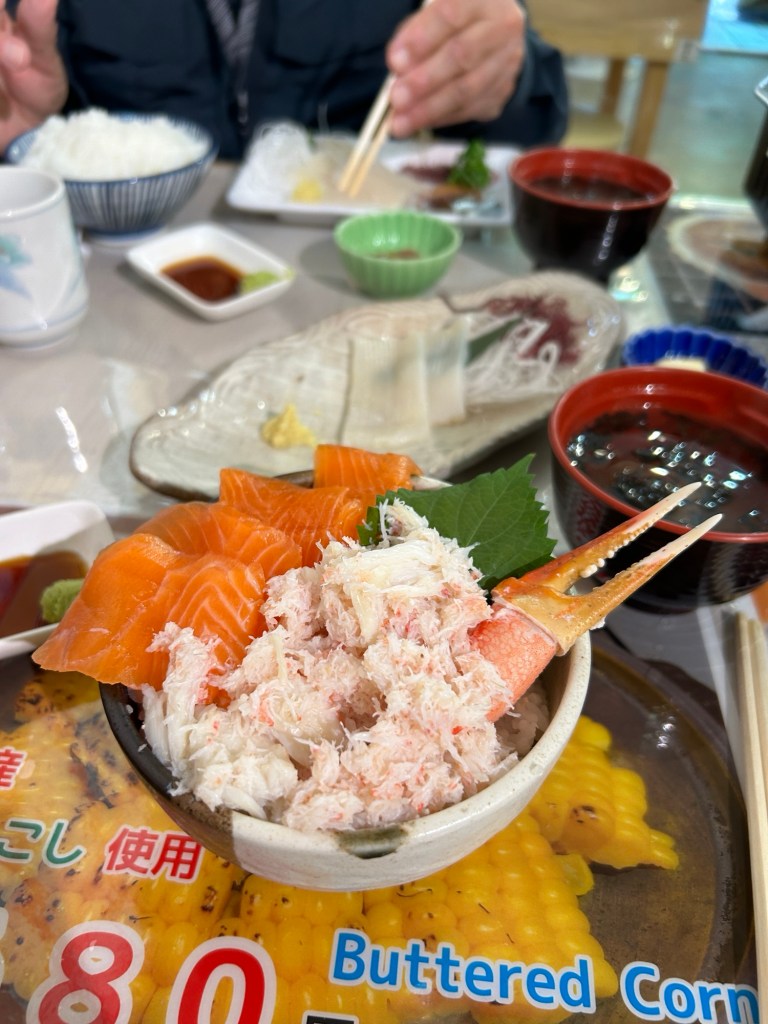
Wilf also had a grilled scallop.
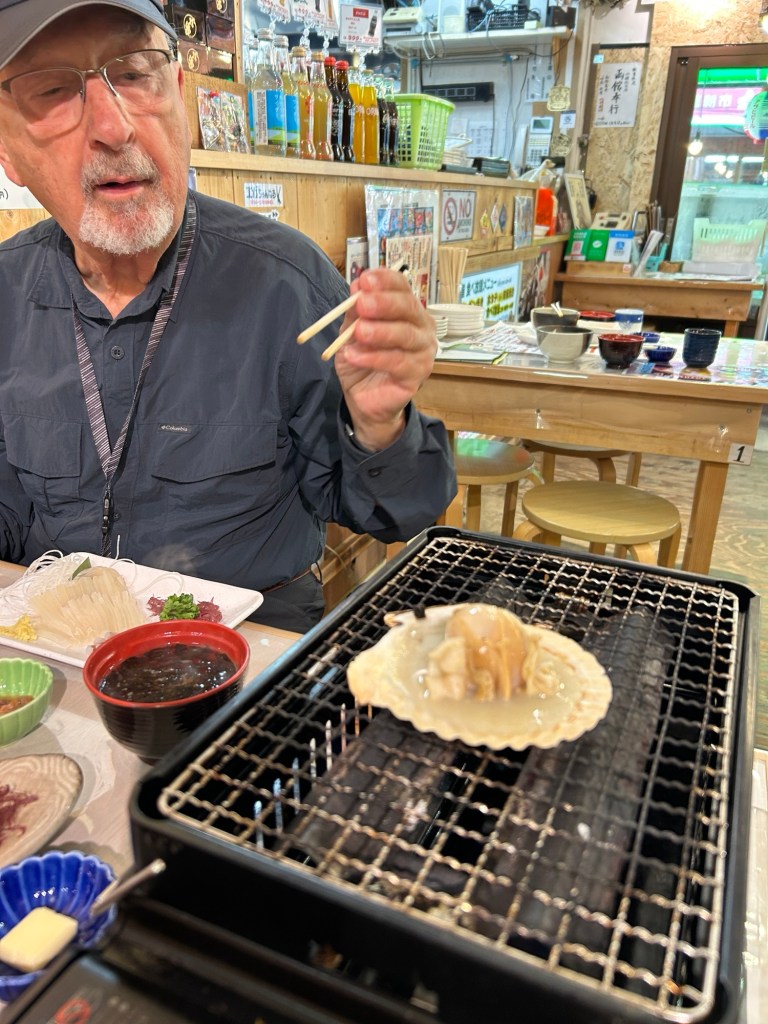
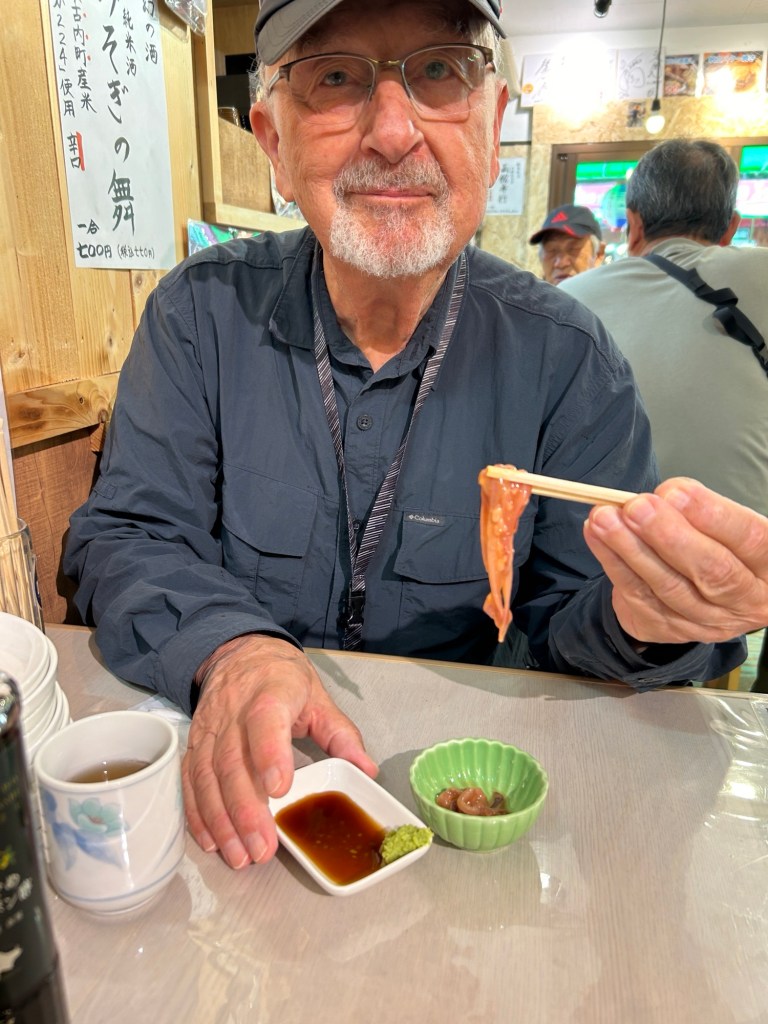
And I’m not sure if they were testing us (him) because a dish of, well there’s no easy way to say this, fish guts appeared. (Which included some pantomime on my part to assure the waitress we knew what it was. And we did because it was on the breakfast menu in Aizu – it was one of the few things we didn’t take a liking to.)
There were other people in the restaurant having their breakfast, and once we got our food ordered we started to pay attention to the table beside us. Big table – eight or nine guys sitting there. The waitress was on to her third chit tracking their order as they pounded through a mountain or seafood, including the giant king crab legs at $48 a pop. At 09:00 one of the got up and came back with a tray of mugs filled with highballs – looked like whiskey sours. They looked like something out of the Sopranos – flashy clothes, expensive food, guys coming and going. They seemed somewhat amused by us, when they deigned to notice us. Seems we stumbled into the local hangout of ‘The Boys”

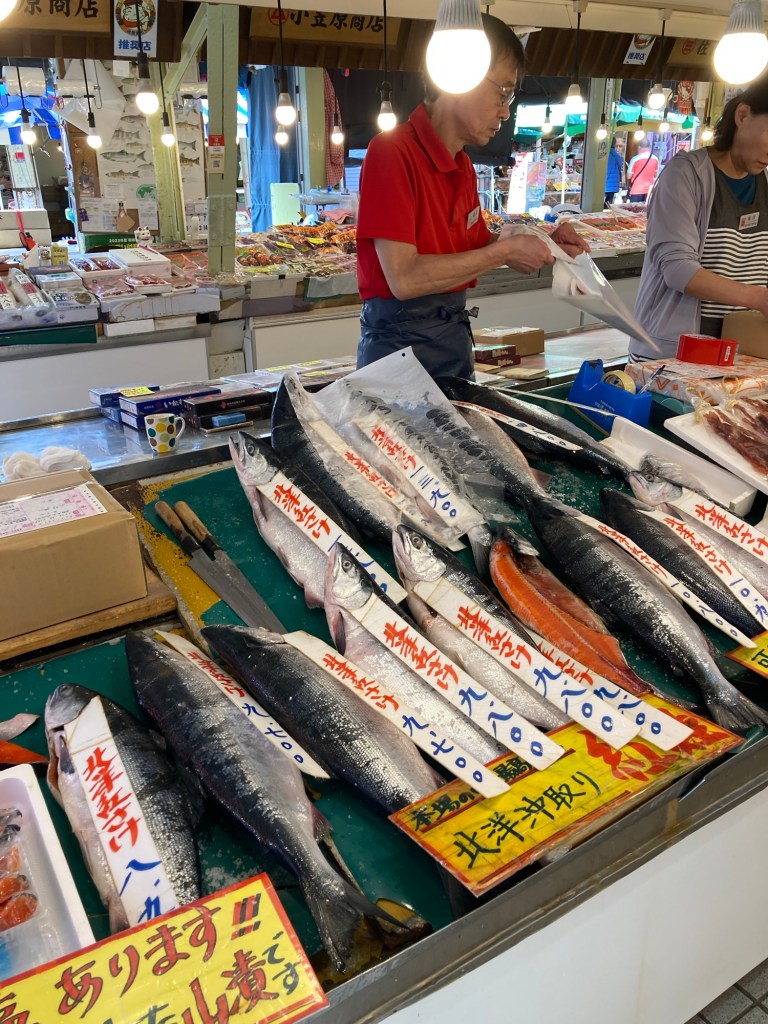
Back out tin the market – some more of the seafood on display
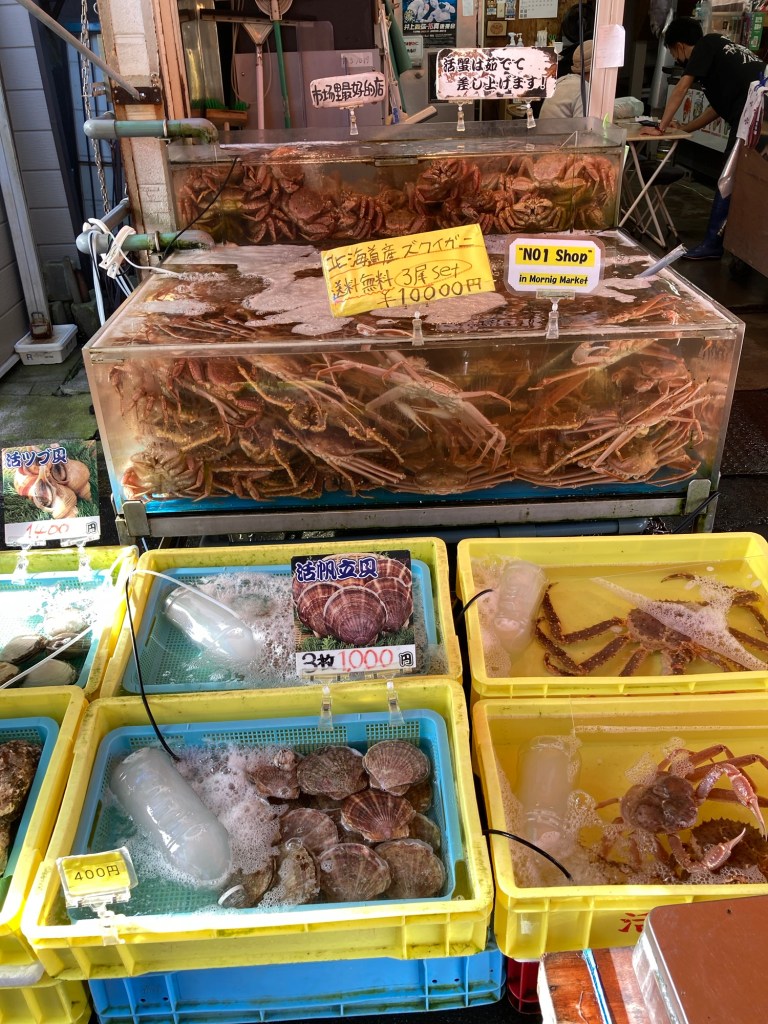
We’ve had splendid fish and seafood all over Japan, but this was next level!
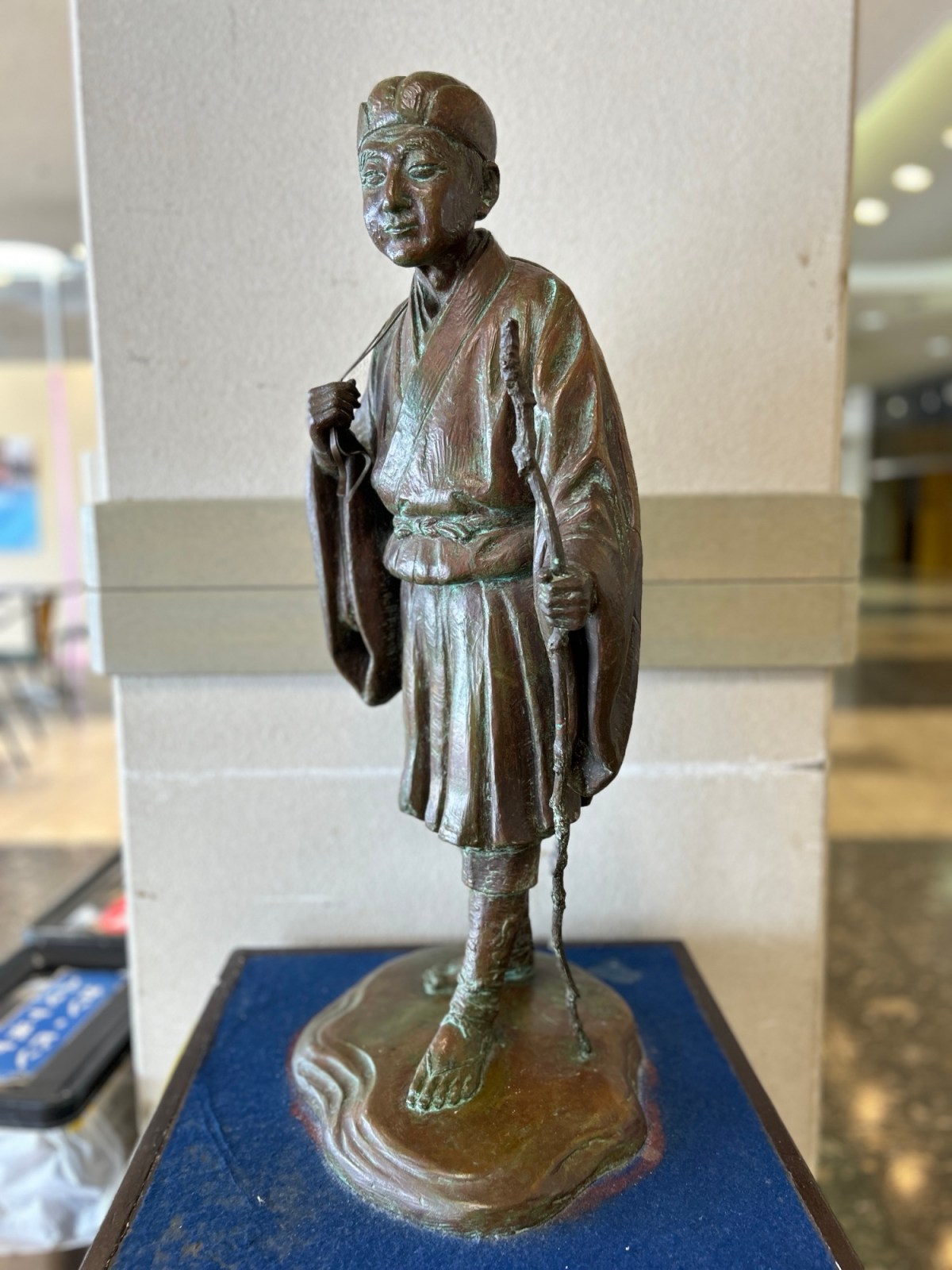
We meet again, Basho-san

When we were in Tokyo in February we discovered that the haiku poet Basho lived in our neighbourhood (okay, the next neighbour hood over, but in the context of Tokyo – neighbours). We went and saw a reconstruction of the hut where he lived, and walked a long the river reading some of his poems.

On this trip we left Aizuwakamatsu and made our way to the city of Sendai. I must admit that as soon as we were checked in to our hotel and had had a nap we went out for pizza and beer – after 4 days of delicious fancy Japanese food it sure hit the spot!
We took the tourist bus around the city – it looks like a nice spot. On the second day we took a train further up the coast to the town of Shiogama, which sits in the large bay called Matsushima. And look who we found there:

Our friend Basho-san, hanging out at the ferry terminal. As well as living in Edo (Tokyo) Basho was itinerant and roamed over large parts of Japan. And he visited Matsushima, declaring it the most beautiful view in Japan.

We had the luxury of a ferry ride, which took us from Shiogama to Matsushima town, threading through the many many islands that dot the bay. Shiogama is a busy port, with a facility for ship repair (the Japanese Coast Guard was in for a check up), a power plant, and all the stuff that goes with boats. Further out in the bay were small boat fishermen, and aquaculture – looked like they were growing oysters.

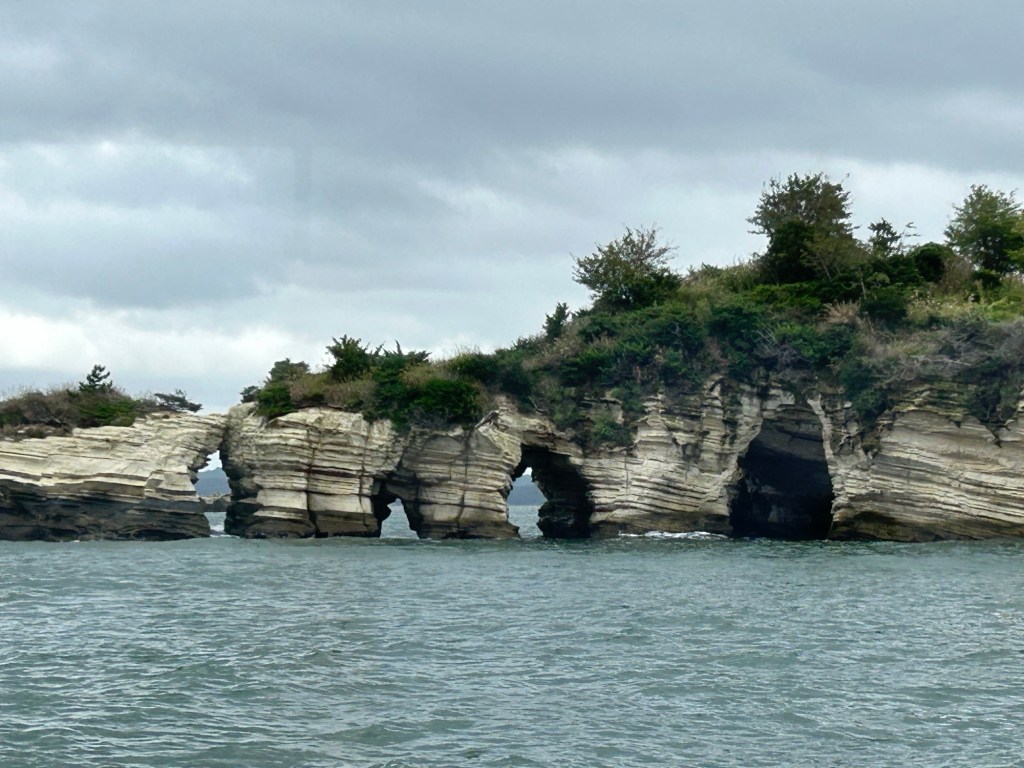
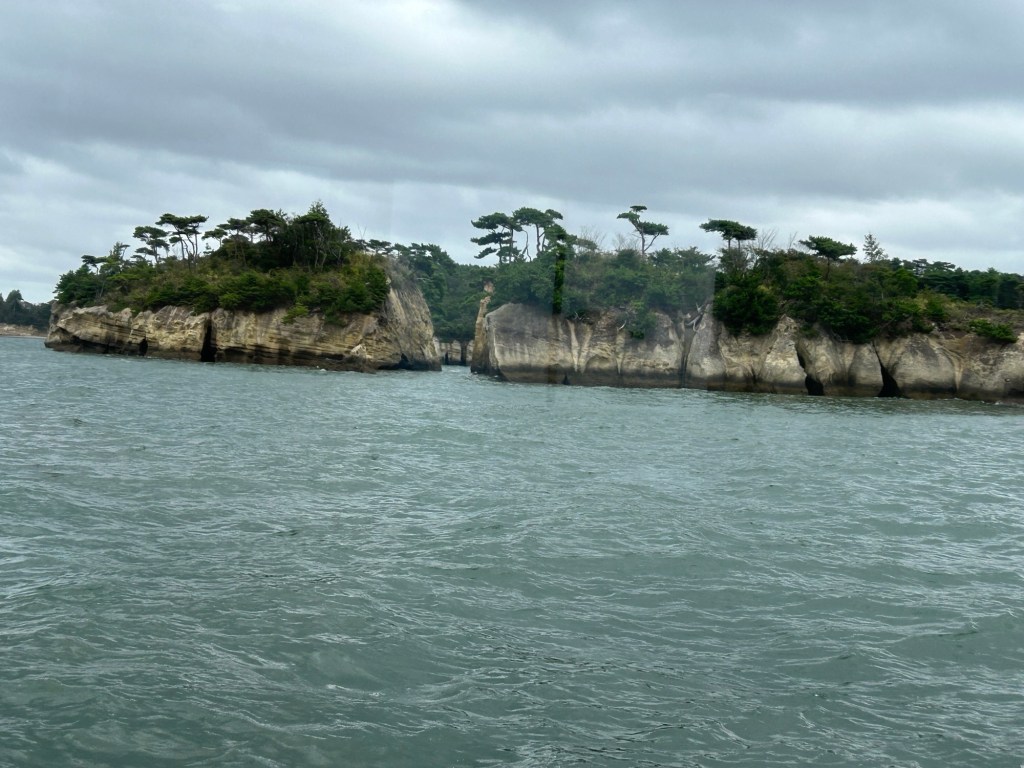
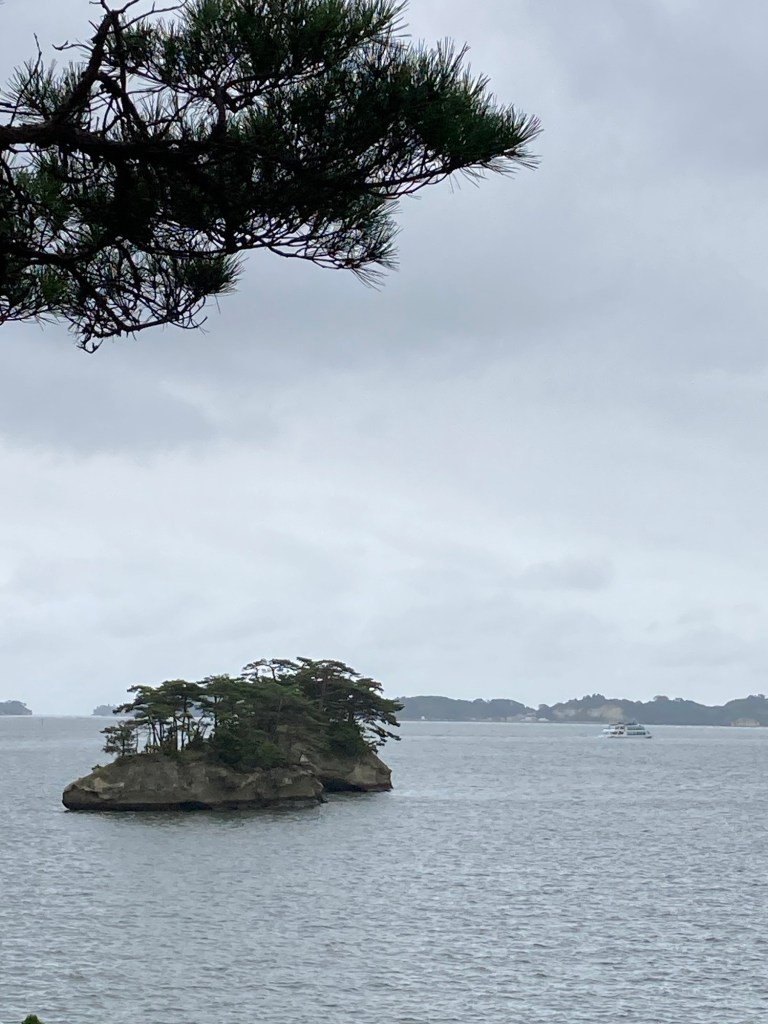
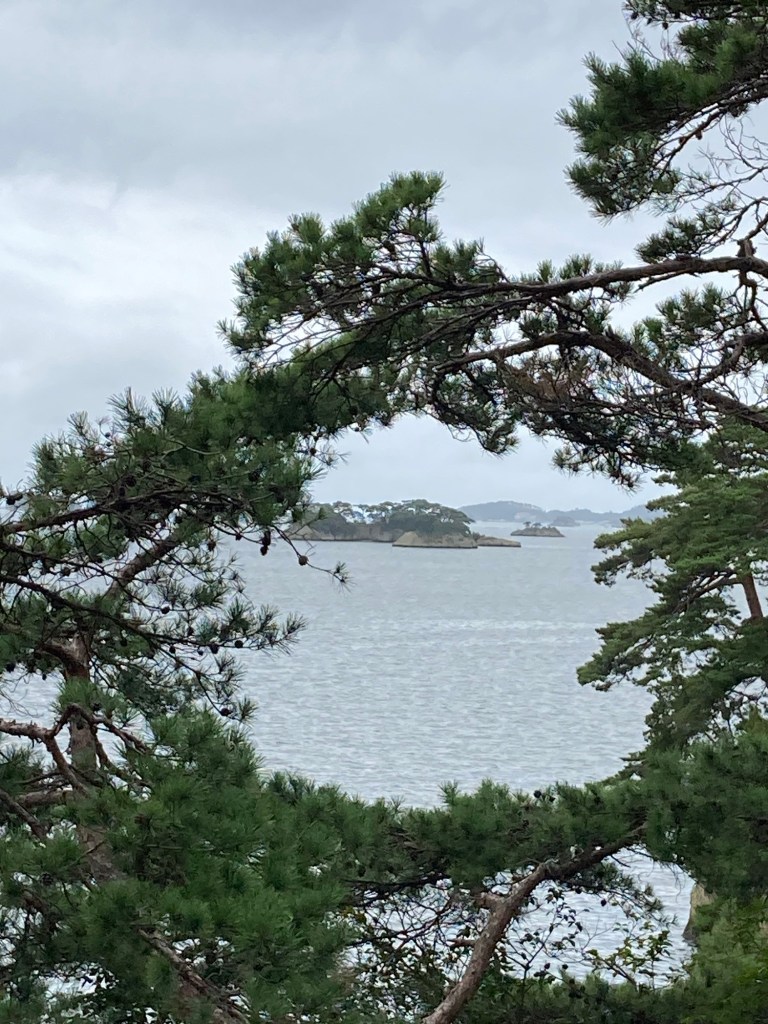
We were there to see the islands..

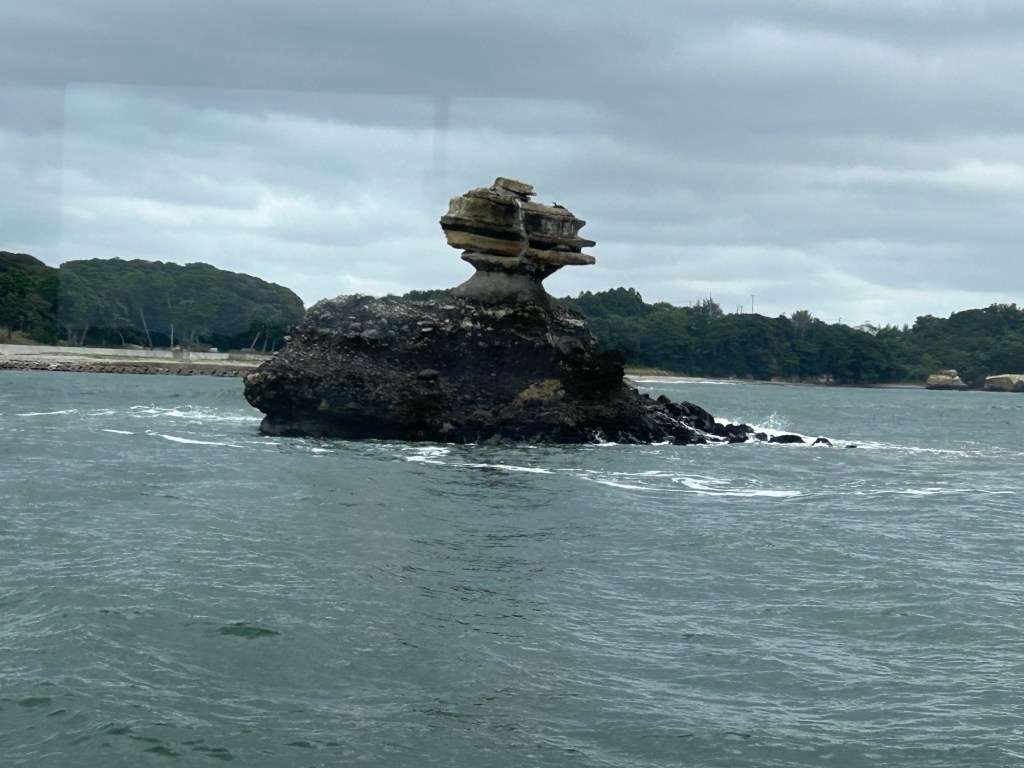
This one is iconic for the bay.

My personal geologist was happy to point out the different layers of rock – some sandstone that weathers easily in the surf, alternating with layers of more resistant conglomerate.

Mastu means pine, so Matsushima = pine island. No the point Christmas tree type pines that we are used to – much more dramatic shapes!

There were only five of us on our boat – I think there were more crew than passengers that day! It was a surprise when we wound our way to Matsushima town to find a big pier with 4 huge boats loading sightseeing passengers on board, lines of people waiting on the dock, and tour groups following their leads waving umbrellas. This is the place where most people who come to see the islands jump off from. It was a happening place. There were tour buses stashed in every spare parking lot, and many of them held the scores of high school students being shepherded through town. Totally different energy than Shiogama. I’m glad we had our lovely quiet ride up the bay.

Wilf had noted that there was a fish market and we headed there for lunch. I was a bit surprised that it was several blocks inland – usually fish markets are right on the water. Turns out this wasn’t a place where people bought fresh fish and seafood right off the boat. But it did provide a great lunch!

First step –

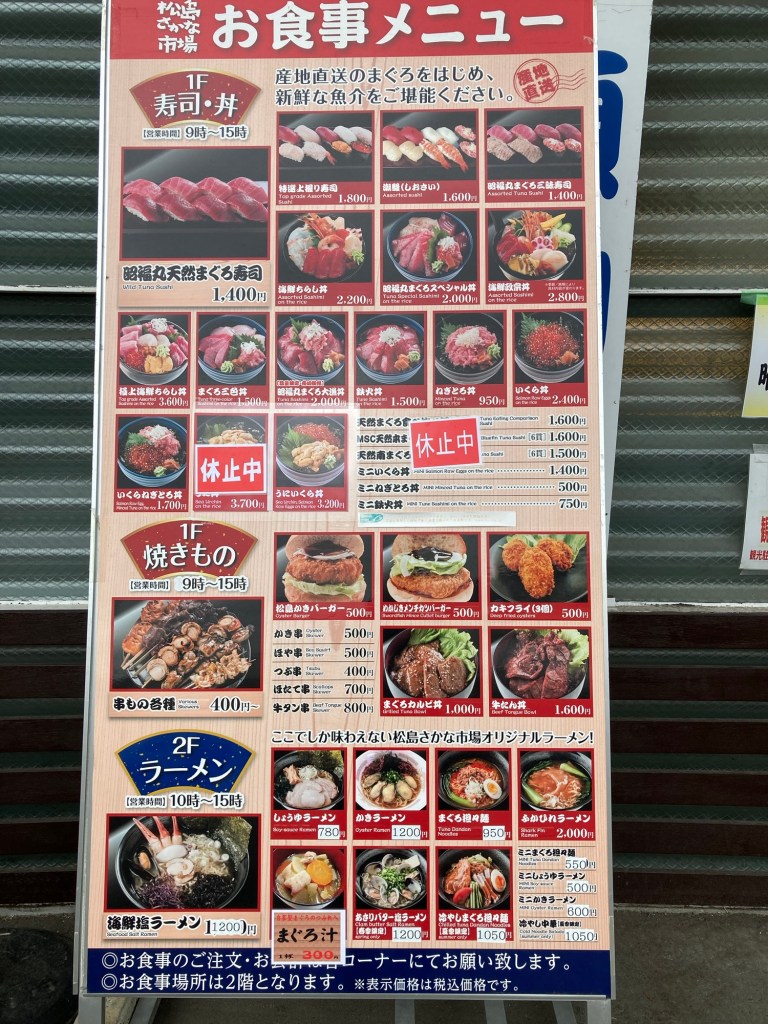
Read the menu board, choose what we wanted and remembered the price shown.

Nest step:

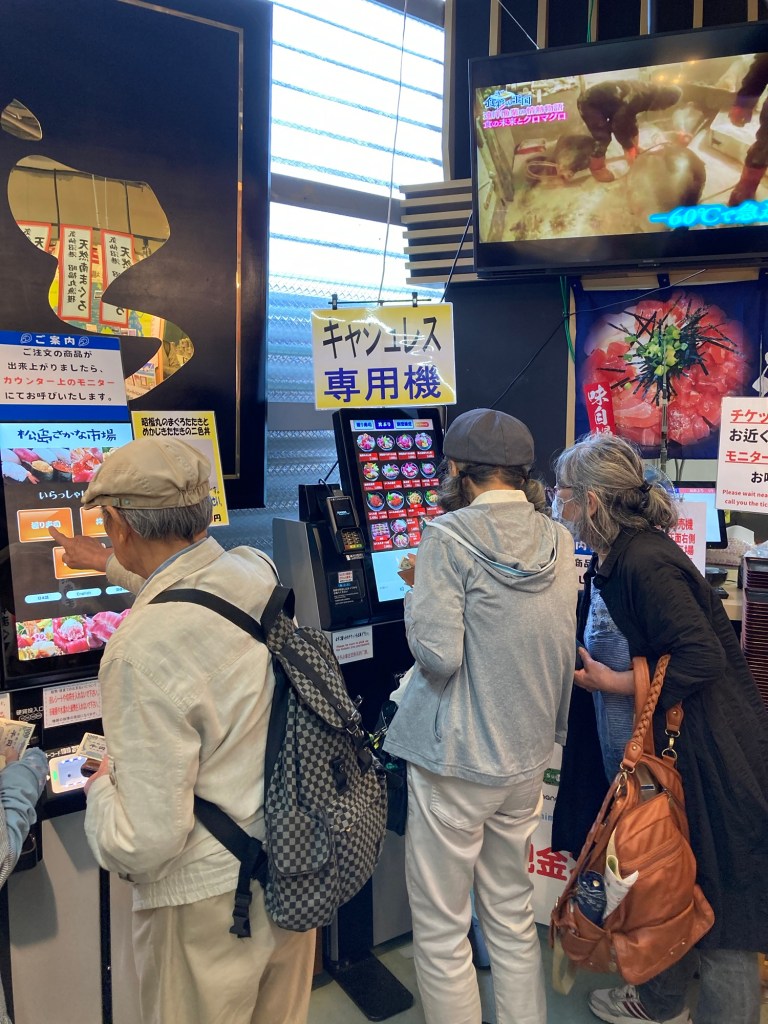
Go inside and approach the ticket machine. Discover that it has an English language option – yay! Slight problem in that none of the names match the menu outside, but by looking a the prices and pictures we order our lunch and take our tickets.

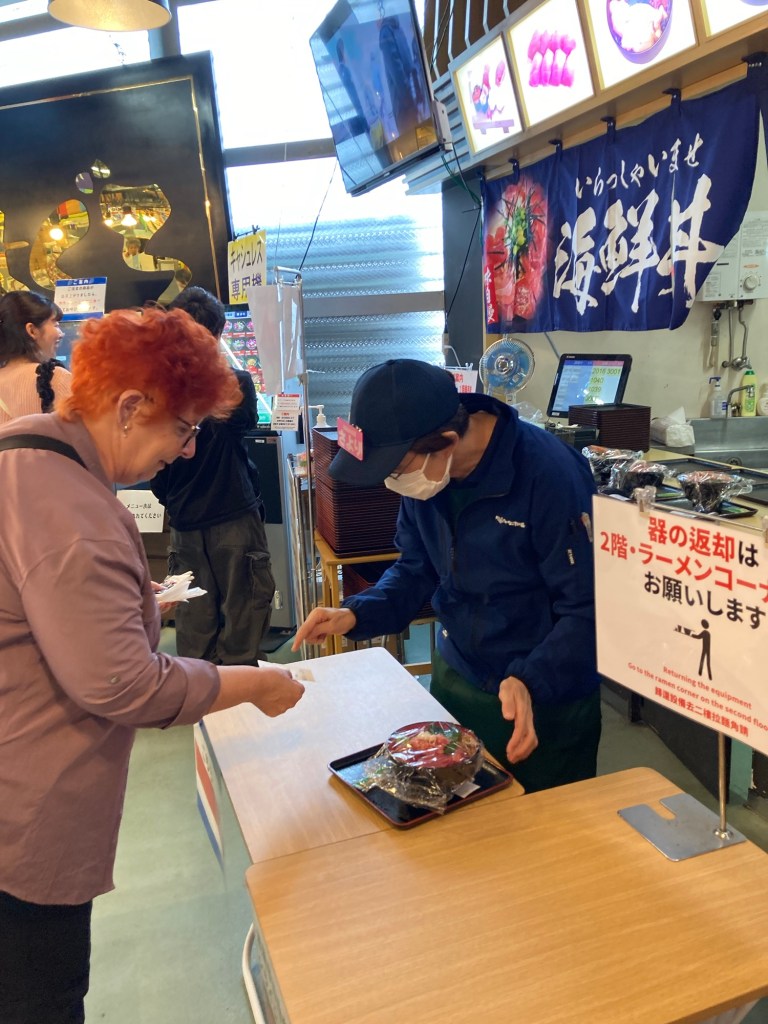
About 5 minutes later our order comes up…

To be collected from the queen of the market.

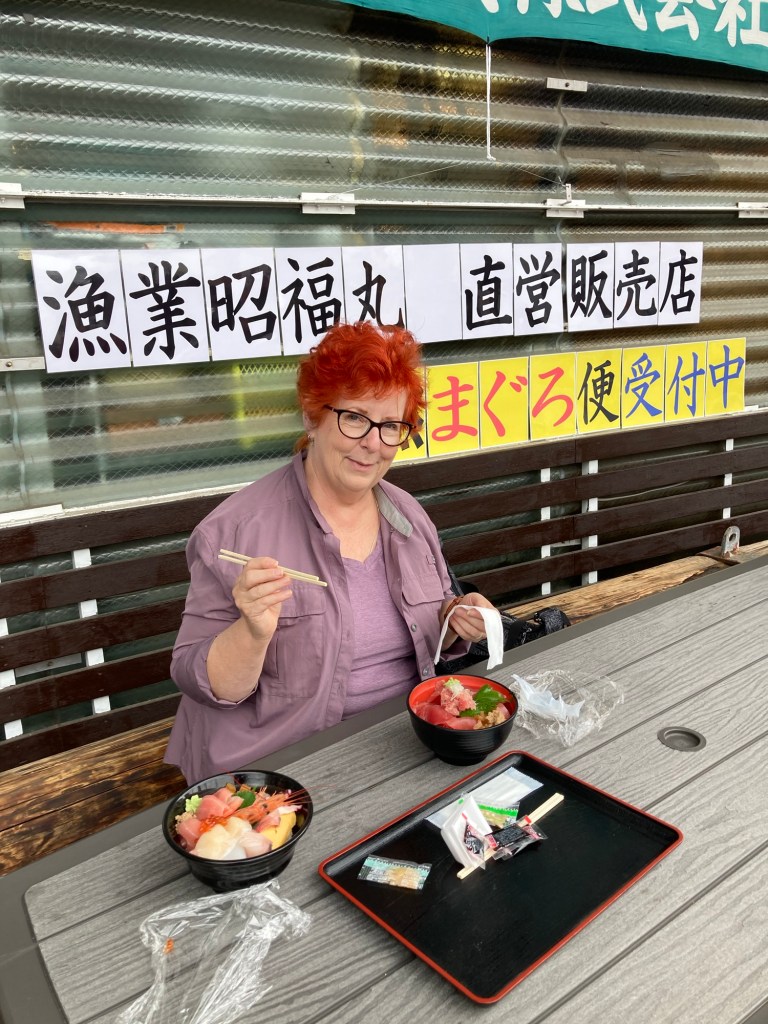
Found a table outside

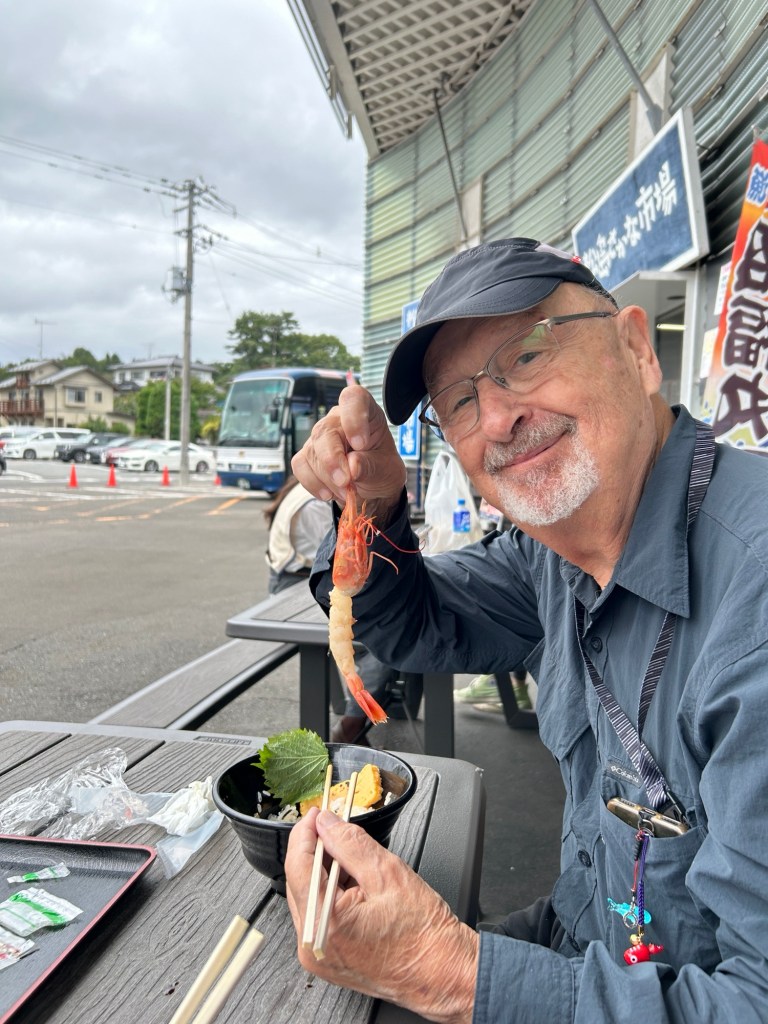
And lunch is served. I had the tuna sashimi bowl. Three kinds of tuna sashimi on a bed of rice with a dab of miso, some ginger and wasabi. Wilf had a seafood mixture over rice.

A prawn, sushi style!

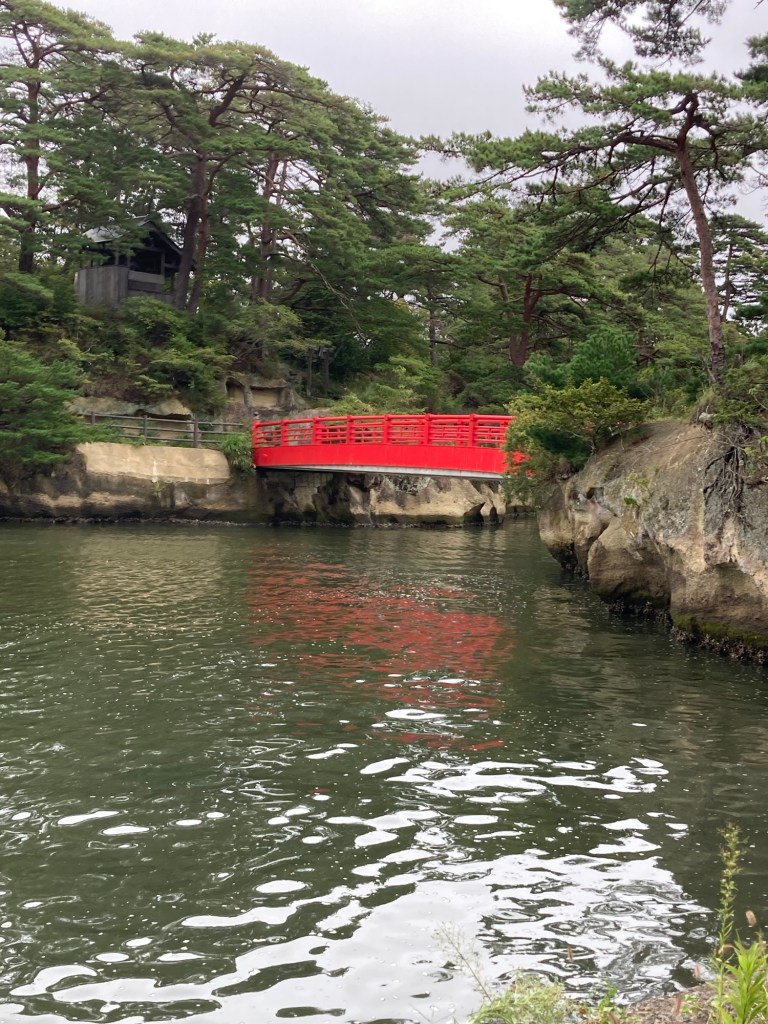
After our lunch we walked along the harbour to visit a little island. It is attached to the mainland by a pretty red bridge, and people have been worshipping here for millennia.

As the day wore on the rain began and the bay began to look more and more like a painting, all in tones of grey.

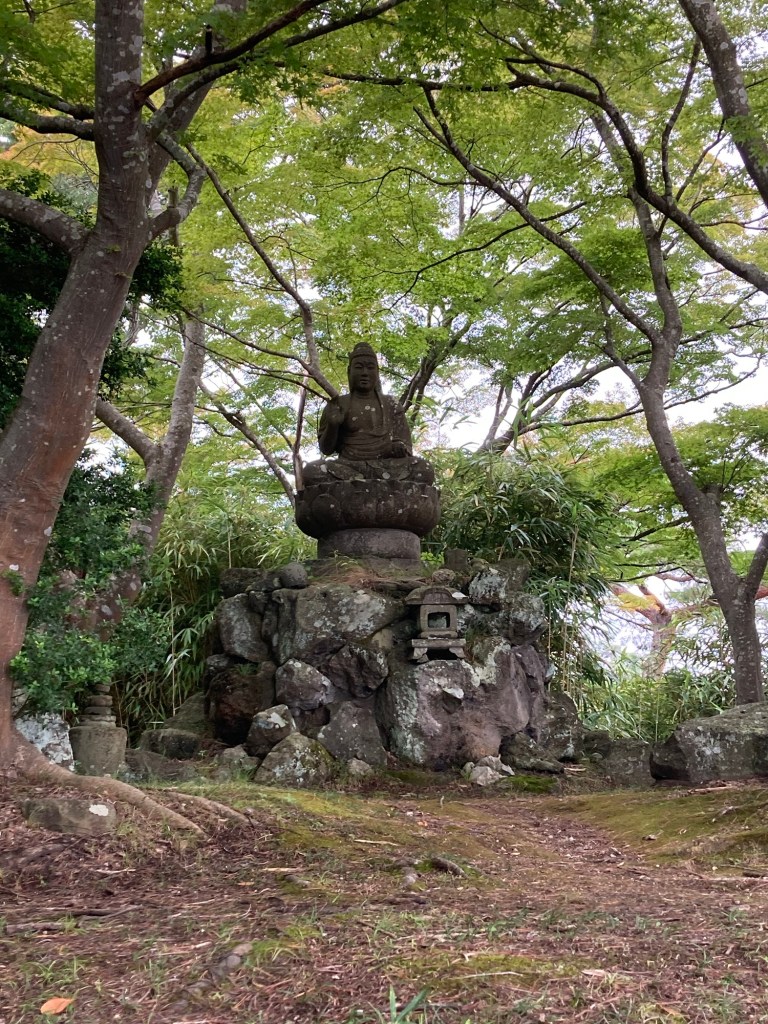
The island has many sculptures, both ones like this sitting out under the trees and others cut into the stone of the island.

Basho wrote many poems, and there is a poem about Matsushima that is sometimes attributed to him, but apparently he did not write it….

松島やああ松島や松島や
matsushima ya aa matsushima ya matsushima ya

matsushima
aaah! matsushima
matsushima..

I’ll leave you instead with a poem that he did write, and that is considered one of the greatest haiku

古池や 蛙飛び込む 水の音

Old pond…

a frog jumps in 

water’s sound

History is complicated

Our last day in Aizuwakamatsu had us pay a visit to Iimoriyama, a hill that overlooks the city.

Our little excursion up the mountain took place after two days of rain, with an accumulation of over 80mm. The day dawned sunny and bright and we were enjoying the city in the sunshine. And then came a little blast of rain just as we arrived at Iimoriyama. We wound up in a deluge up there.

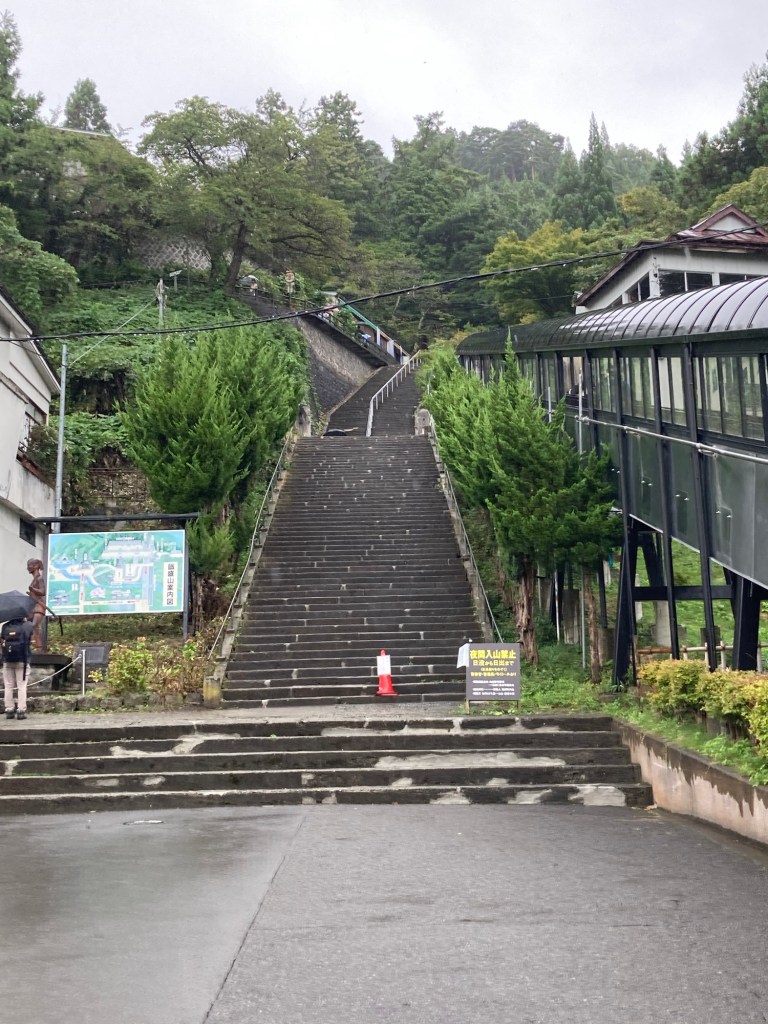
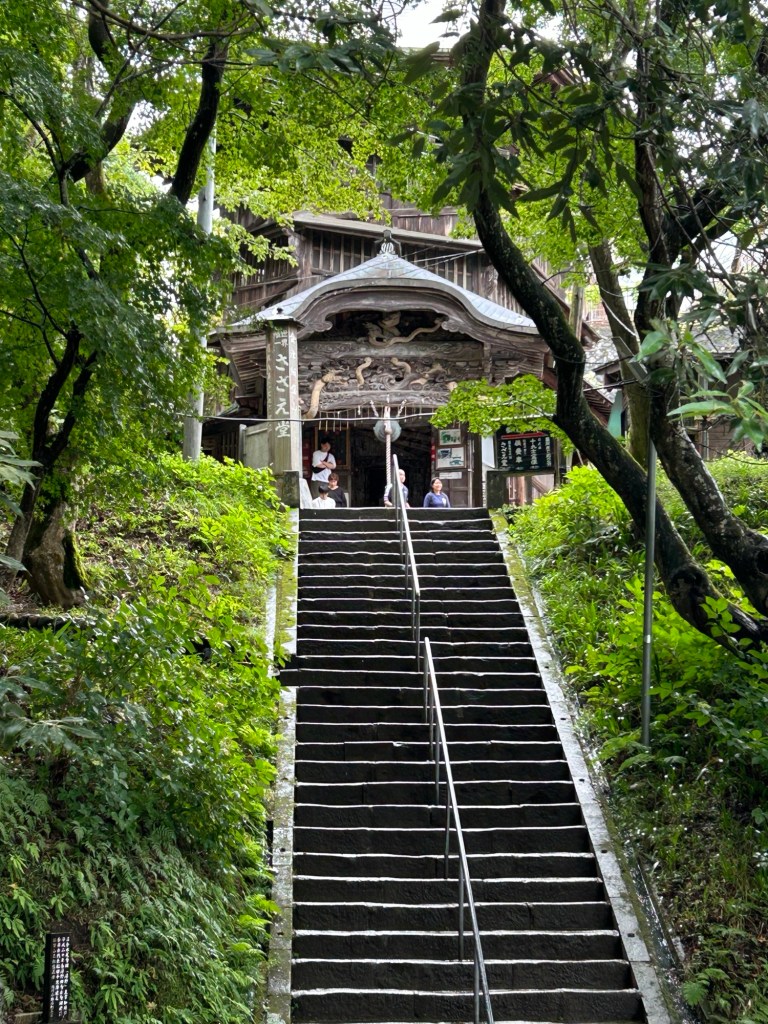
The Sazaedo Temple is a wooden structure built in 1796. As is so often the case one approaches it via an enormous staircase. Just as our hearts sank we looked to the right and there was a covered conveyor belt that would whisk us to the top!

You bet we paid the 250yen each!
Way way up.

The building itself is quite unique. It is hexagonal in shape, and the interior staircase winds up in a double staircase. We walked up one spiral staircase and at the top crossed over a small bridge and then went back down another spiral staircase.

The temple in the pouring rain.
Always with the stairs

The other site on the mountain is tied to the battle that raged in 1868. In the pouring rain I didn’t wind up taking pictures, which I now regret as I’ve been thinking about the site a lot. But the story goes…

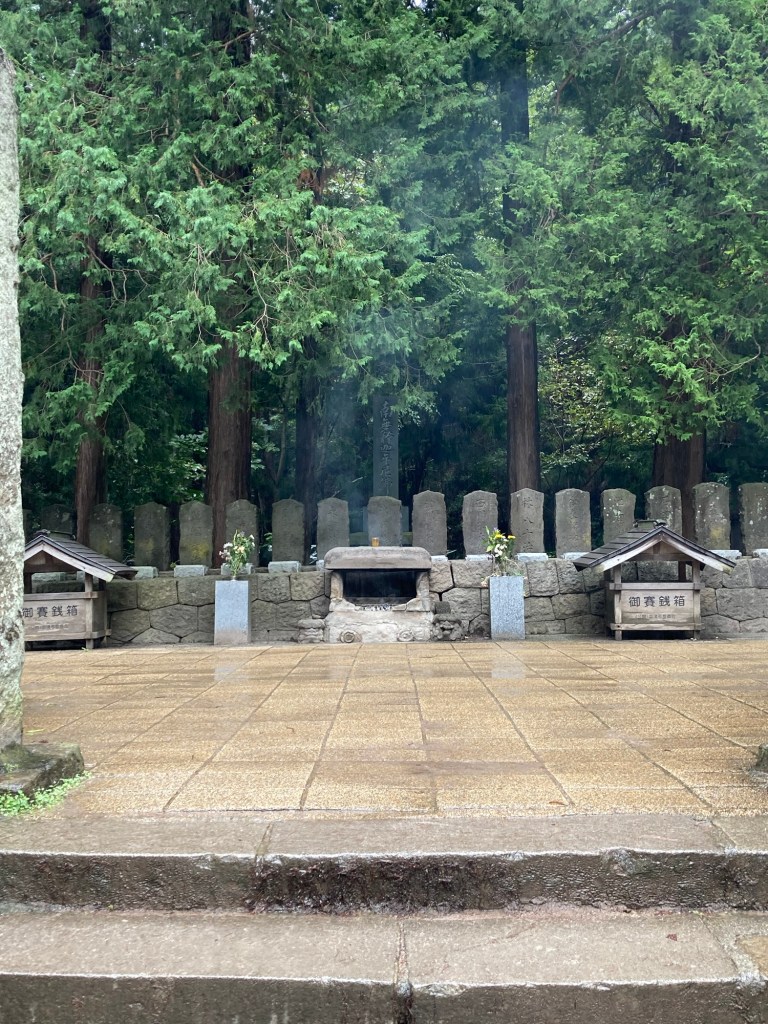
As the defenders of the shogunate prepared for their showdown with the imperial forces various battle groups were formed. In Aizu young samurai class men formed a group called the Byakkotai. They were 16 or 17 years old. A small group of them got separated from their unit on Iimoriyama, and when they looked out in the morning they could see flames in the town and assumed that the castle was burning, that the city had fallen. The unit of twenty boys committed suicide – 1 young man survived.

Unfortunately, they were wrong – the castle had not fallen. The town below the castle was on fire, but the defenders in the castle held out for a month before eventually succumbing. Many of the samurai and their families did commit suicide rather than surrender.

The Imperial government punished the town and the people of Aizu. The clan members were banished to the north. The castle was destroyed. The town’s name was changed from Aizu to Wakamatsu. More recently it was renamed Aizuwakamatsu. The remains of the Byakkotai lay unburied for a long time. Eventually they were buried up on the mountain.

As time passed they young men were lauded as true Samurais, following the code of the warriors. Movies and television programs have been made about them and the local museum has a big display about them.

As we stood up there in the pouring rain, looking at the gravesite, where the graves are still tended and the incense still burns I got to thinking about the fact that Aizuwakamatsu, the samurai city, has built its brand, so to speak, on the glorification of the losing side of the battle.

Given the fascination that the samurais and samurai culture has in the modern world I suppose that should not be a surprise.

Part of the gravesite.

Walking along I came to a large pillar with a huge iron eagle on the top and as I was thinking that it looked like a very militaristic eagle I read the sign beside it. This is the Roman monument, donated by the people of Rome ‘in the year of the Lord, 1928., year of the fascist era, 6’’

Wait – what? A monument donated by Italian Fascists on a hill way in the back of beyond of Japan? Turns out a Japanese diplomat in Italy met Mussolini, and told Il Duce about the Byakkotai. He admired their fighting spirit and sent along the monument, inscribed in Italian with various bronze symbols, of which only the eagle remains.

I was astounded that the eagle – and the column – remain. Is this a part of history that people want to remember and claim? As I thought about it further I got to thinking about the American south – not a dissimilar path. The glorification of the dead on the losing side, the persistence of the symbols of that time.

History is complicated and never very far away from the present.

Staying at an Inn, Japanese style

I am reminded again and again about how geology shapes culture. In North America our landscape is shaped by time and water. But also by ice. In the mountains we may not even think about how the valleys are wide and u-shaped, with rivers meandering along the bottom of the the valley. Japan, too, is shaped by time and water, but not by ice. More by fire, actually. The valleys here are deep and dark through which rage rivers.

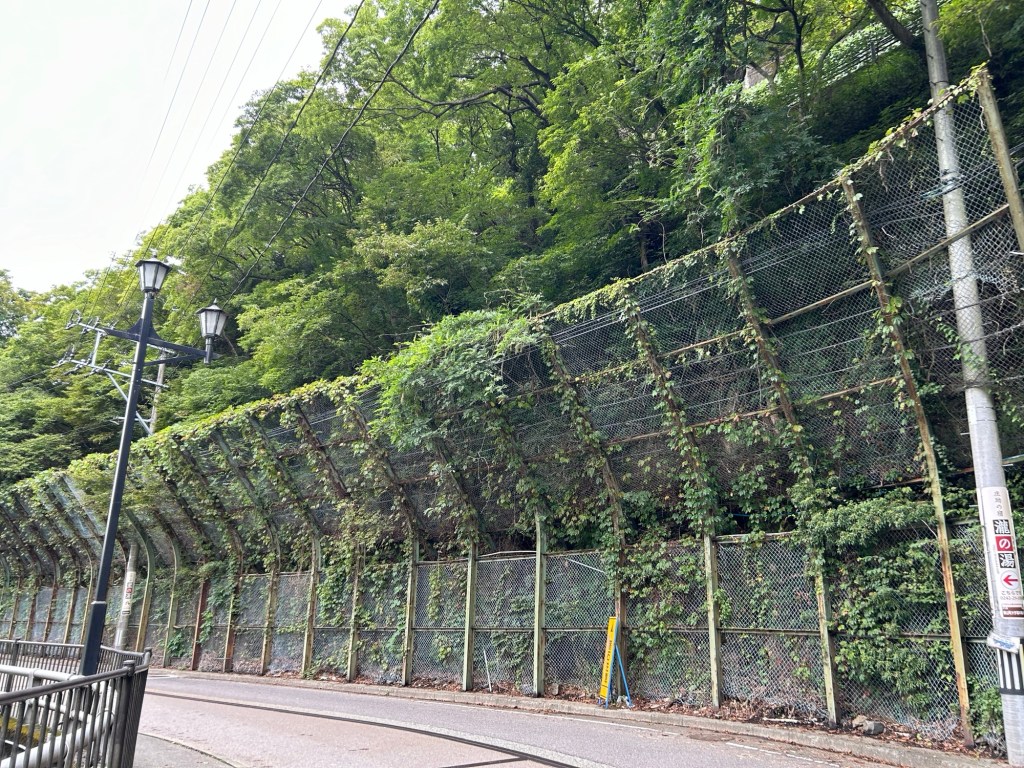
We are staying in a ryokan on the outskirts of Aizuwakamatsu. While the city is fairly flat it nestles up against low mountains . We took the city bus to get here and after rambling along for a bit there was a turn and suddenly we were in a cleft, with the hillside like a cliff on one side and the backs of buildings on the other. The bus had to drive under the last building on the row to turn around and come back up the road to drop us at our hotel.

Wilf waiting for a bus – that’s a two way street.
Looking the other way, with a fence holding back the hill (and the vegetation)

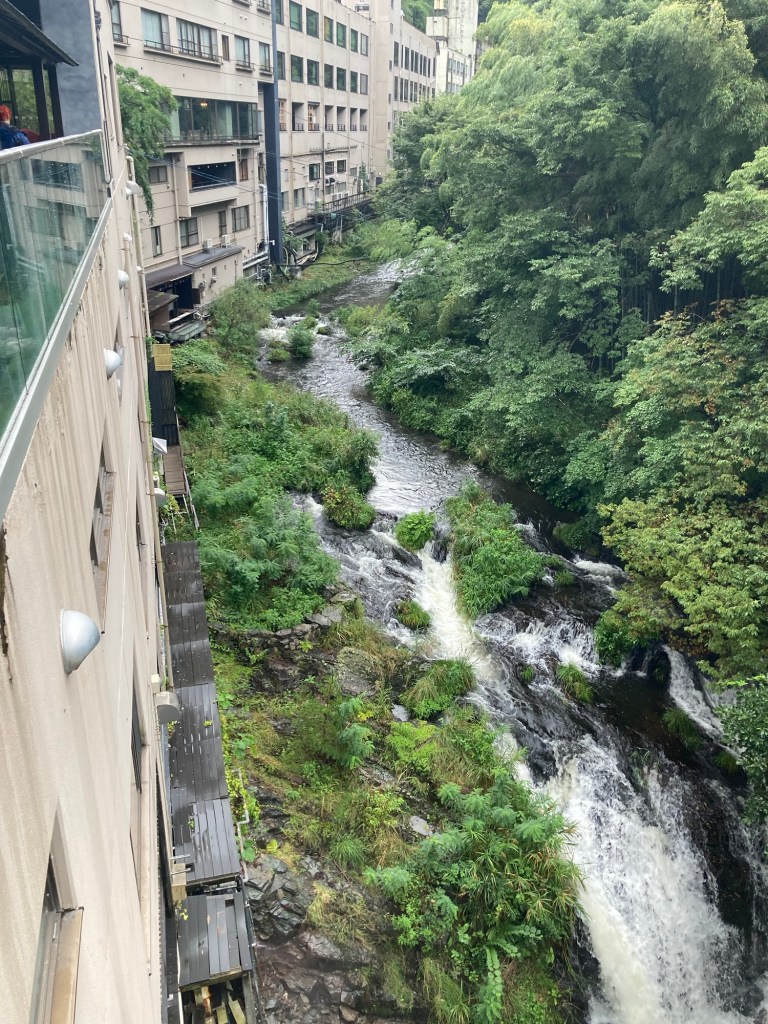
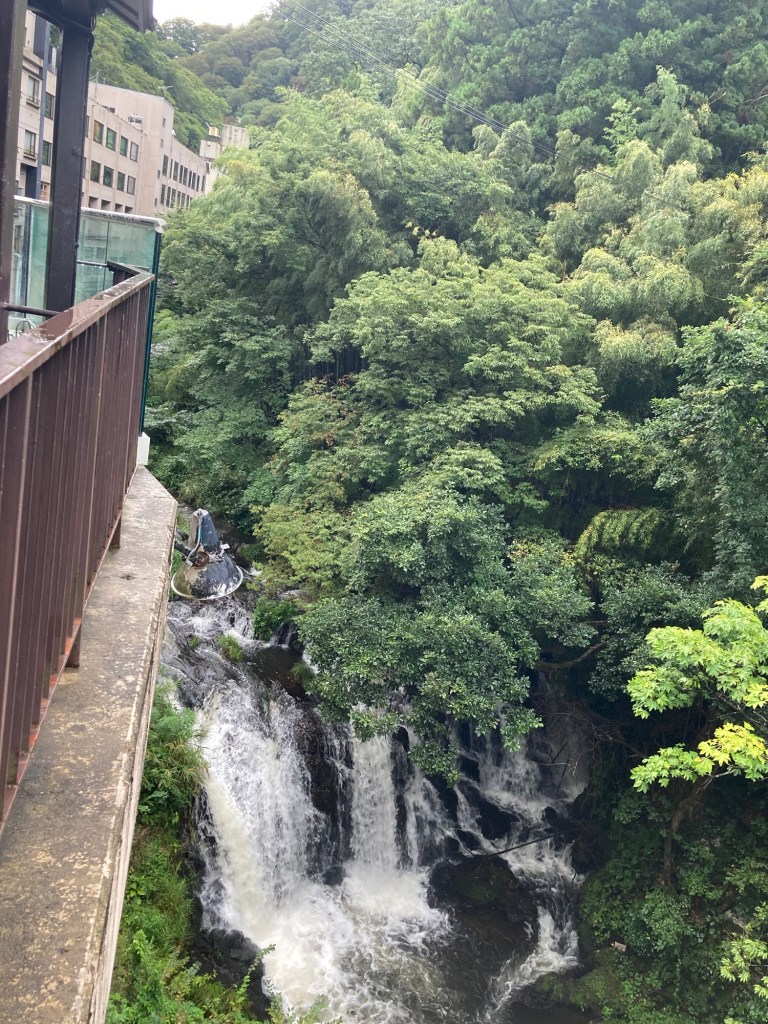
The inn is right on the edge of the Yu River. In fact its name is Takinoyu, which I believe means hot water waterfall. Looking out onto the river side…

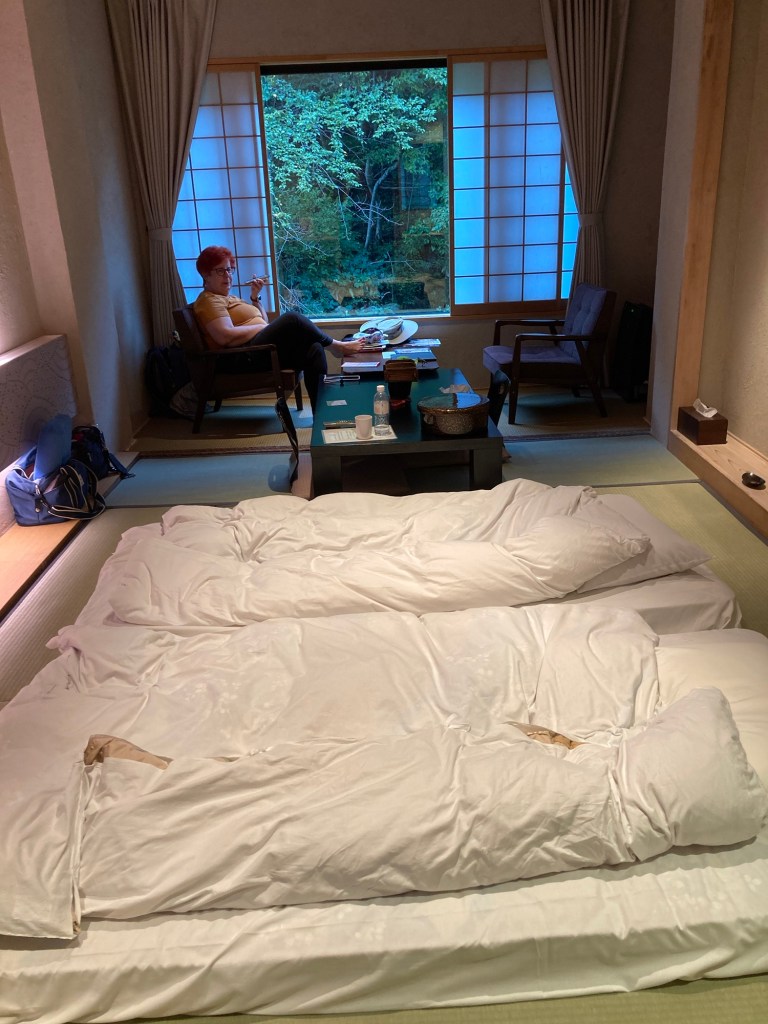
You can see what they mean by waterfall. The hotel is long and thin. The lowest level is the public baths, though there are private baths that can be reserved on the roof and in other nooks and crannies. The rooms are traditional Japanese rooms with tatami mats. And yes that means we sleep on the floor. The bed set up here is very comfortable so that is not a problem. The getting up and down from the floor is more of the problem. They reset the room every morning, which means they put the beds away and put the big table back in the middle of the room. Which is nice, but….. there’s nowhere to lay down for a nap in the afternoon…

Here I am talking to my Mom before the room has been dealt with in the morning. Looking out the window it may look like there is a tree right there, but it’s actually on the other side of the river.

We’re not closes to town, but never fear, meals are included – dinner and breakfast. And they are serious meals – this is fine dining.

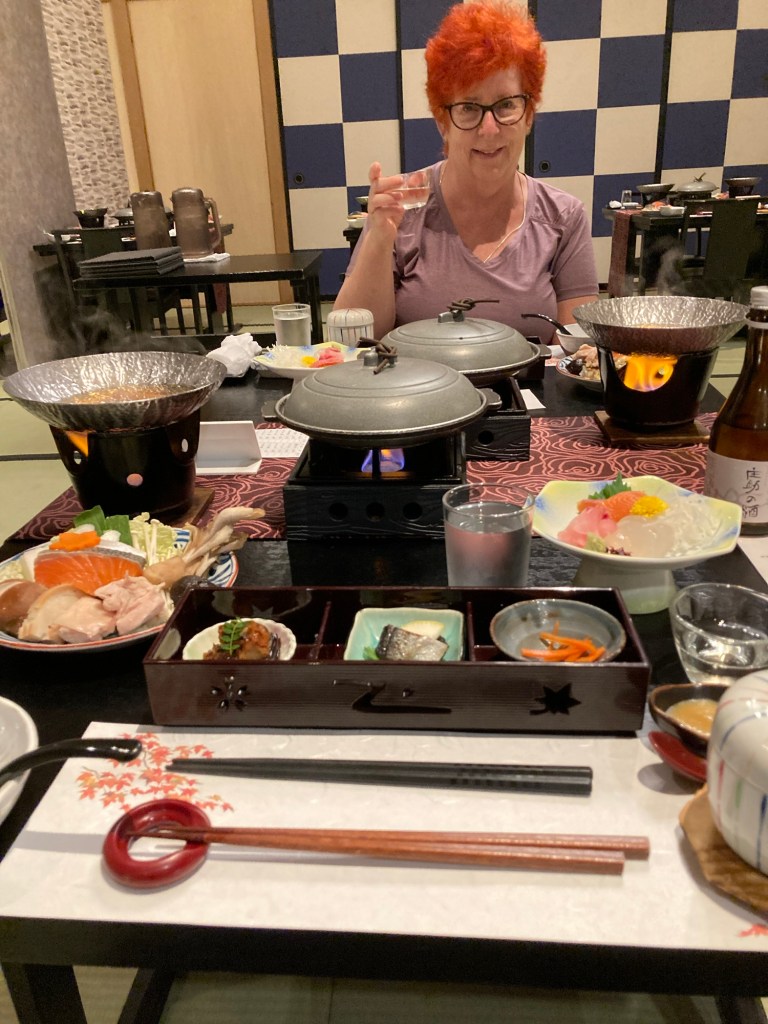
Dinner set up first night. So far each night the food has been different, but the layout the same. Between us you can see little gas heaters. One has a lid. This night there are fall vegetables and pork slices cooking in there. Other nights have been chicken or fish. The bowl to the left contains the liquid for a hot pot, and the dish in front are the ingredients. Once the liquid is boiling we put the meat and veg in to cook. There is also a plate of sashimi, three small appetizers. A bowl of chilled soba noodles arrived later and eventually miso soup, white rice and pickles arrived. Dessert was a pudding of some sort. All very fresh, very local, very delicious.

Breakfast has a similar routine:

Fish, little omelette, various vegetables, some sautéed, some pickled. Fish roe. Little fishy things in the lower right corner. And a dish of pickles, including an infamous ume – a pickled plum that is delicious and oh so sour! There is rice and two kinds of soup to be had as well.

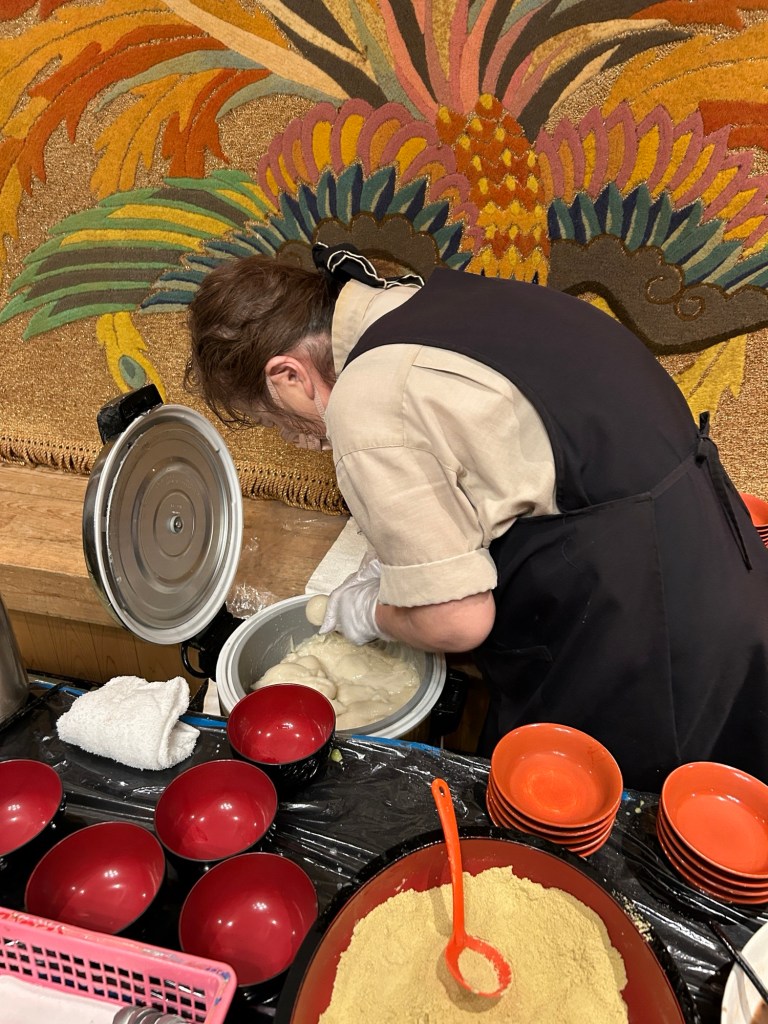
And there’s a little lady a the back of the room with mochi. If you take sweet gelatinous rice, cook it and pound it for a very long time it turns into a sweet, stretchy mass and appears in all sorts of forms. For breakfast she would reach into her rice cooker which was keeping the mochi warm and eventually extract a ping pong ball size piece.

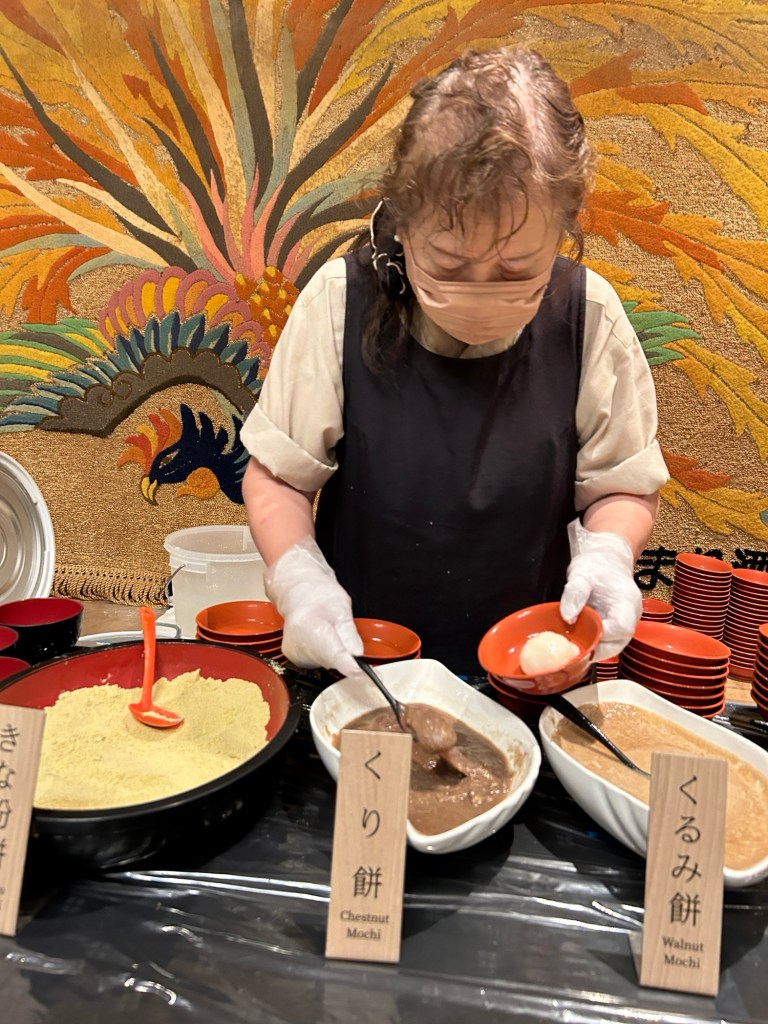
There was a selection of toppings – the above picture shows a bowl of roasted soybean flour, which the mochi is rolled in.

I chose a scoop of chestnut purée

And it was very good!

At first it is a little intimidating to be faced with so many dishes. But there is only a few bites of everything, so it is not overwhelming. It all goes together to make a satisfying meal.

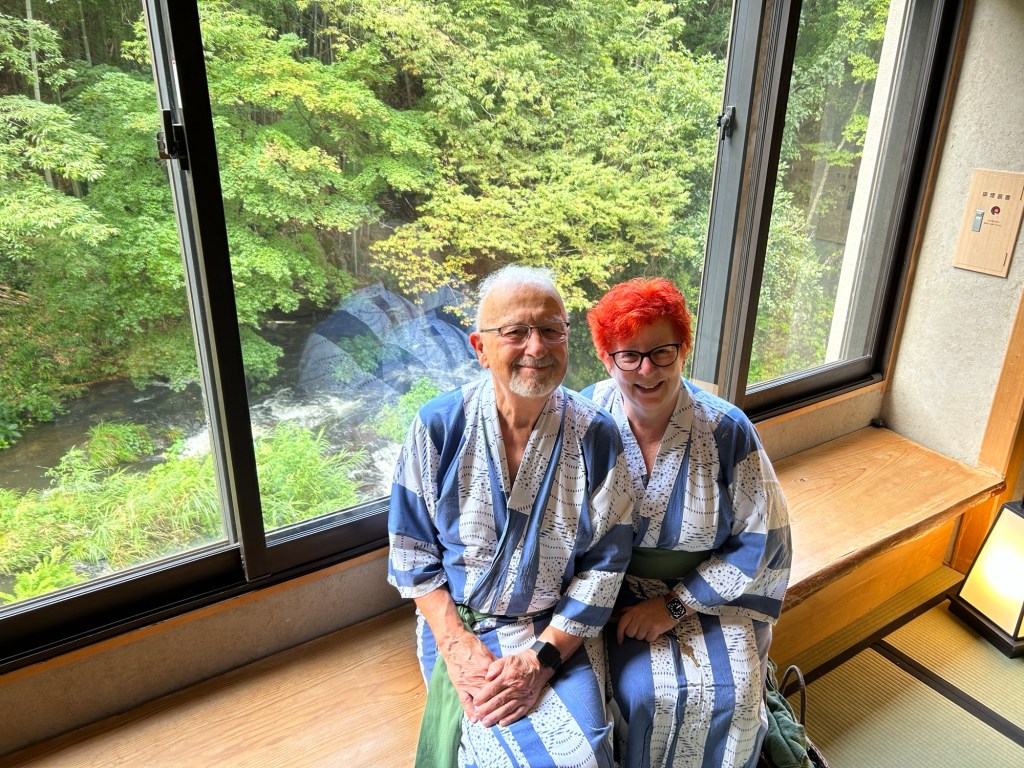
Because this is a hot spring resort with lots of places to enjoy the hot water everyone is issued a cotton yukata and it is totally normal to wear it around the hotel and to meals. And even though the food is formal people come straight from the bath to eat so everyone is dressed in matching robes. Here we are after breakfast this morning

At the beginning of this entry I mentioned the connection between geology and culture. Seeing these narrow valleys with the forest pressing urgently down, where days are often dark and the forest grows fast makes me realize why there are so many Japanese folk tales about ‘things that live in the forest’.

The end of the Samurai.

Have you seen the new version of ‘Shogun’? It is really fantastic, and covers a pivotal time in Japanese history. We are in the city of Aizu-wakamatsu, who brand themselves as the Samurai City. Events here in the 19th century closed the bracket on the chapter opened in ‘Shogun’

After a long period of civil war, in the year 1602 the Tokugawa shogunate began, and lasted until 1868. While there was an Emperor, he was a figurehead, relegated to life in Kyoto. The Shogun ruled with an iron fist from Edo (which is now Tokyo). It seemed like this would be the way forever. Until the American s arrived in 1853, demanding that the Shogun open the country to trade. This was the beginning of the end of the Shogun’s feudal reign. The Emperor was restored to power as ruler, an event known as the Meiji Restoration. There was resistance, and rebellions broke out sporadically through the country. It all came to a head in 1868 in the city of Aizuwakamatsu. The shogun’s supporters were vanquished and banished and the Meiji restoration was secure.

Every September 23 the city of Aizu celebrates the events with a festival and we decided we needed to see it. The city is in Fukushima prefecture in a big inland valley. There are small ski resorts in the surrounding hills. We’re not quite into the Japanese alps, but they get quite a lot of snow up here.

Turns out they get a lot of rain up here, too. Like holy cow a lot of rain!

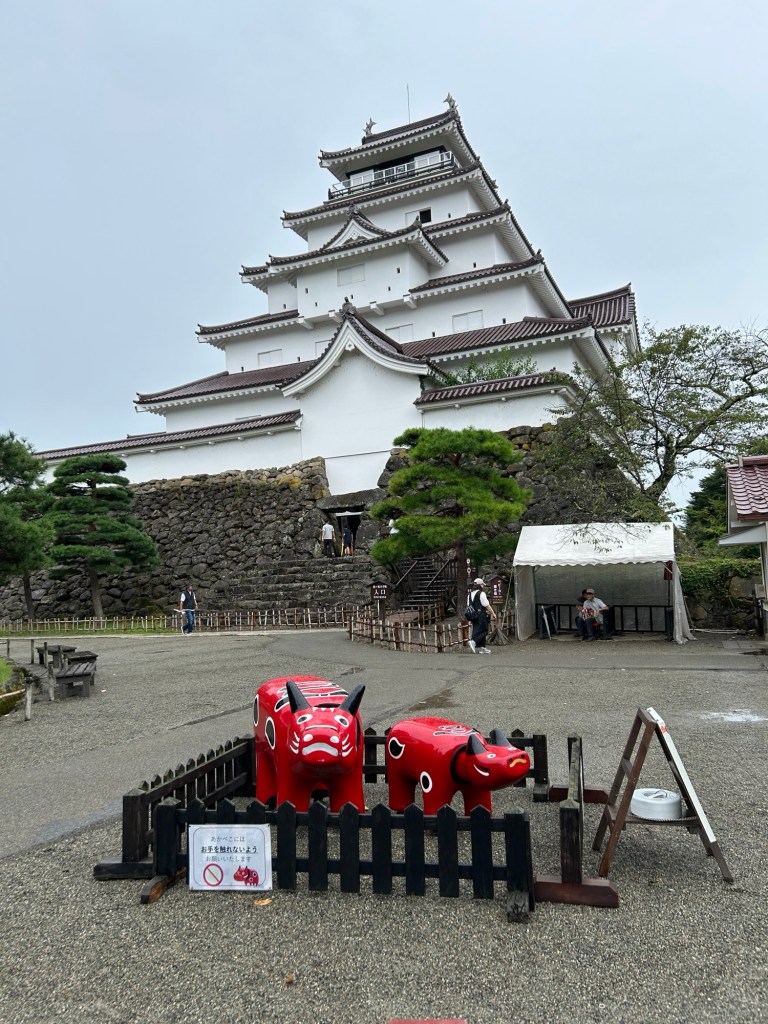
The original castle was destroyed after the insurrection, but it was reconstructed by 1965.

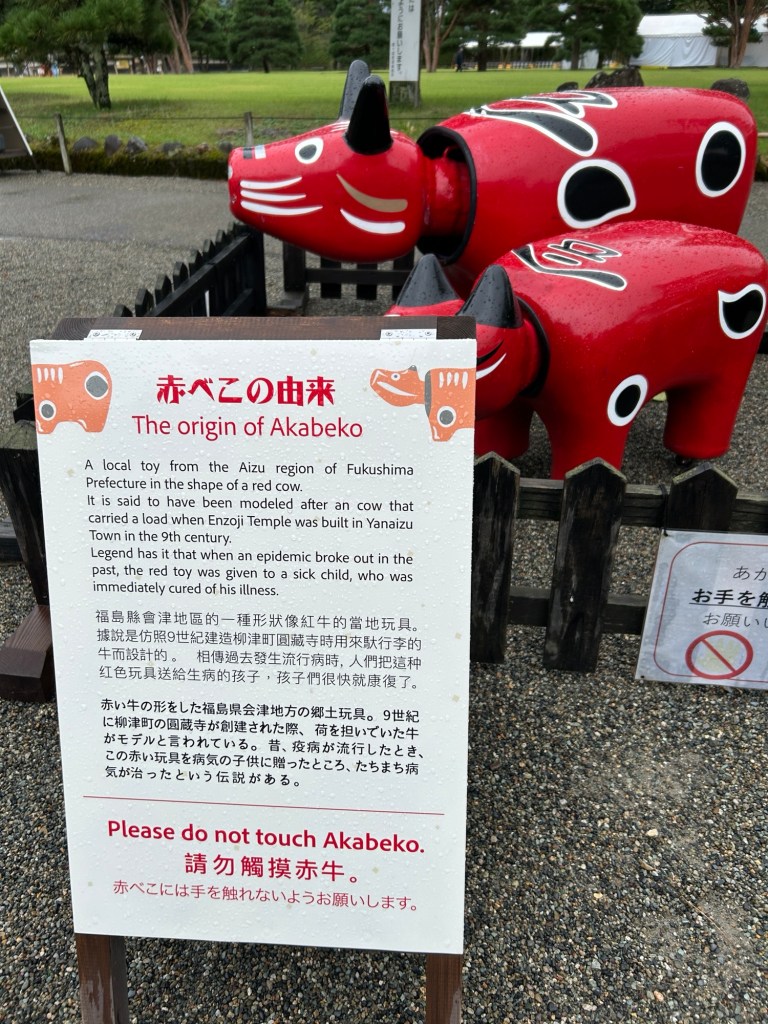
Yes, there is a story about the red cows. They are called Akabeko, and have a story…

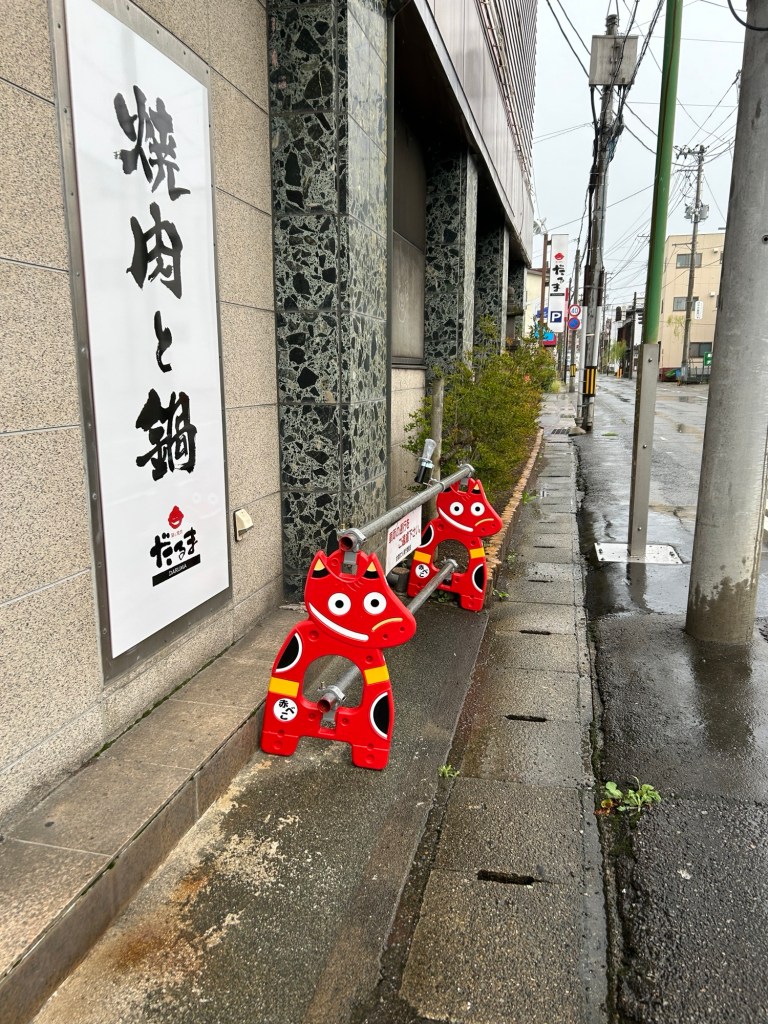
They are Everywhere here!

Haven’t seen a Hello Kitty, a Pikachu or a Kumamon since we’ve been here, but little red cows are everywhere.

Anyhoo. The castle is very nice and the inside is an interesting museum of the area. After the war the losing side was banished to the northern end of the island, but it looks like many of the capable people were reabsorbed into Japanese society becoming teachers and police officers.

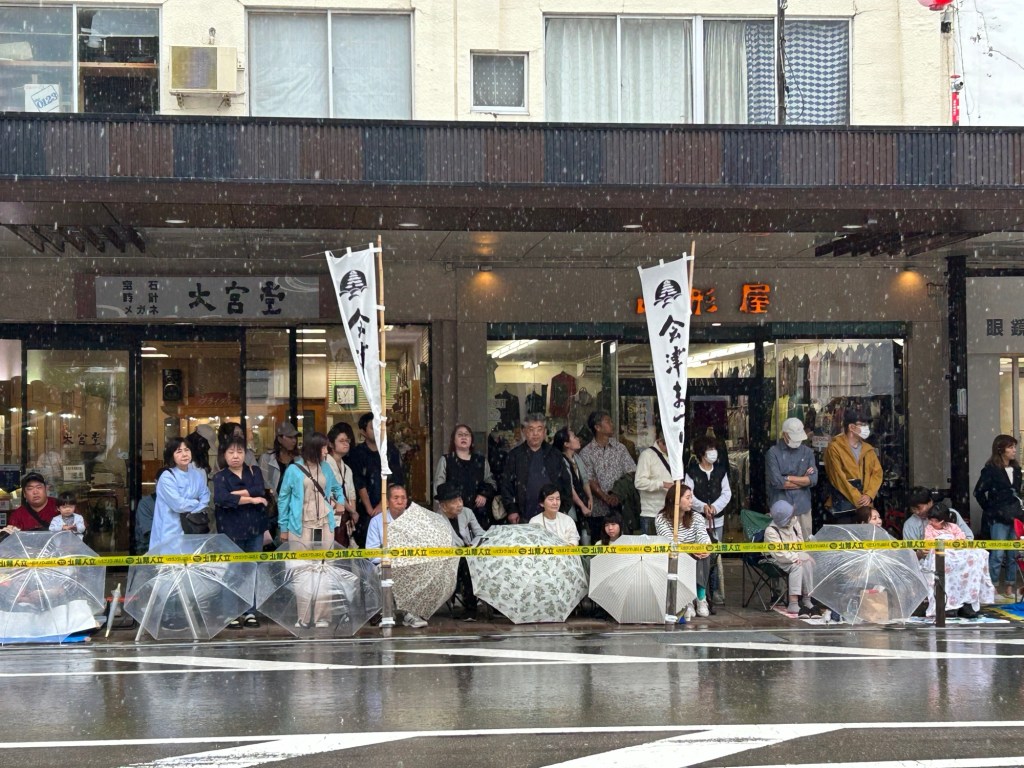
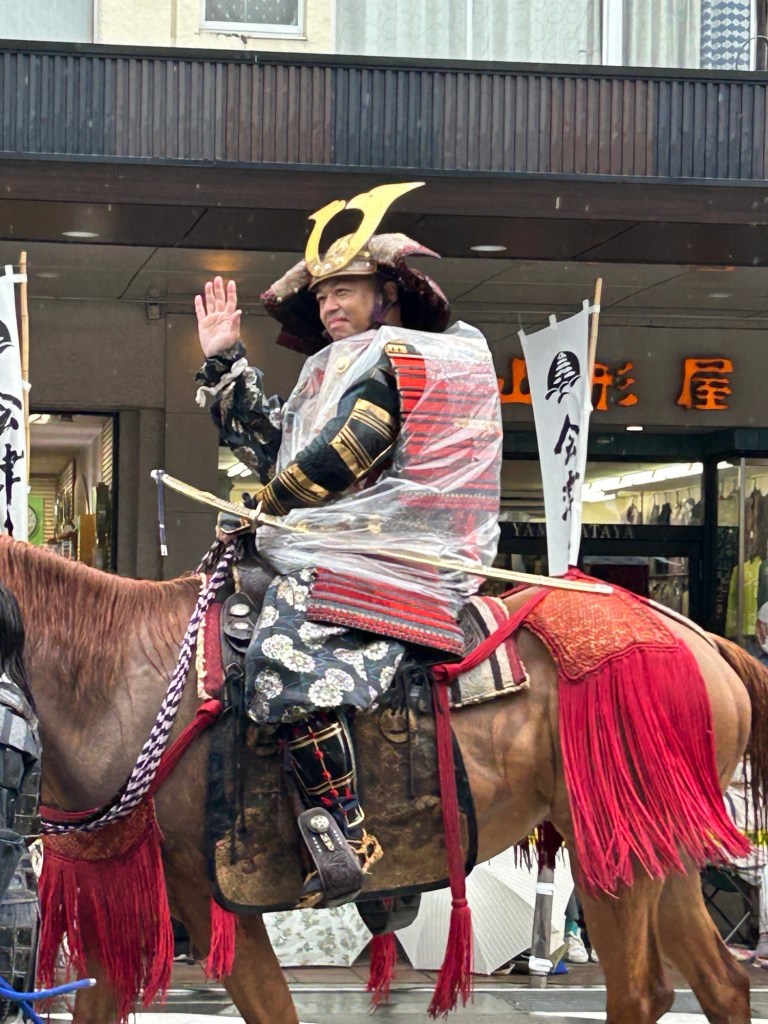
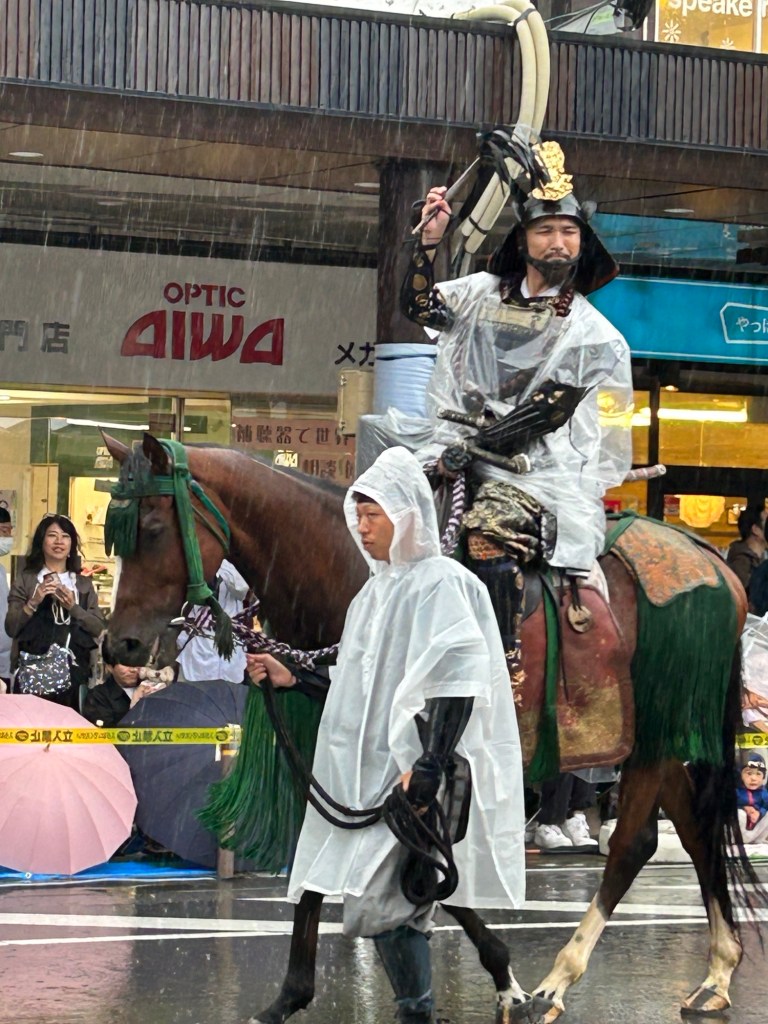
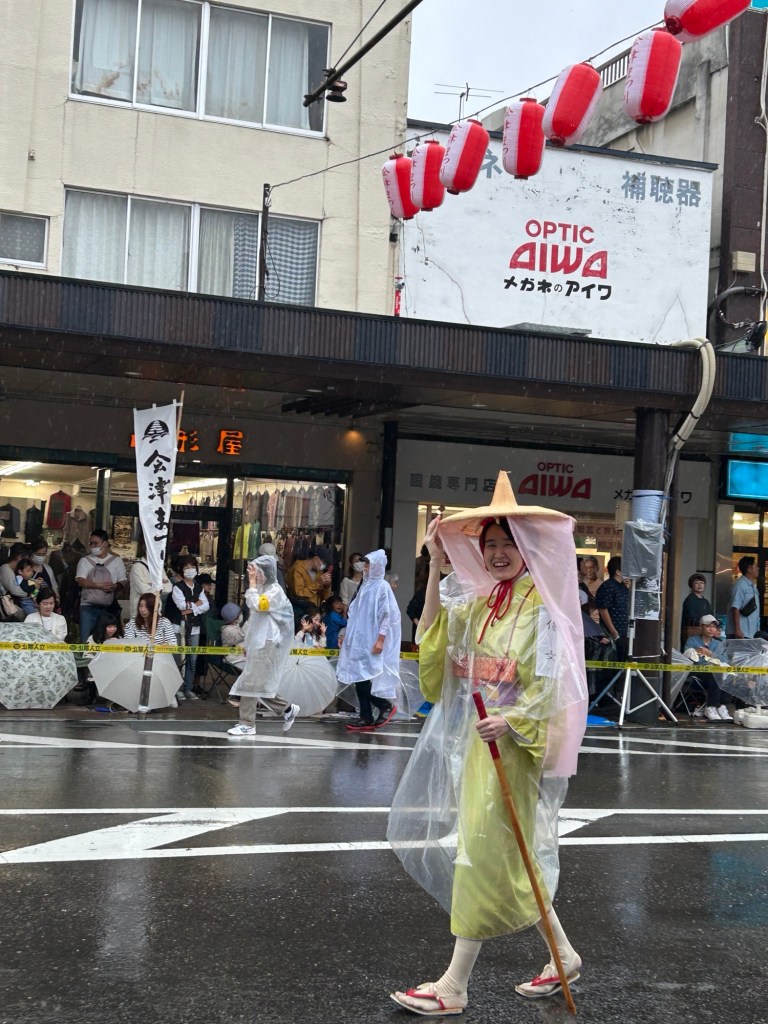
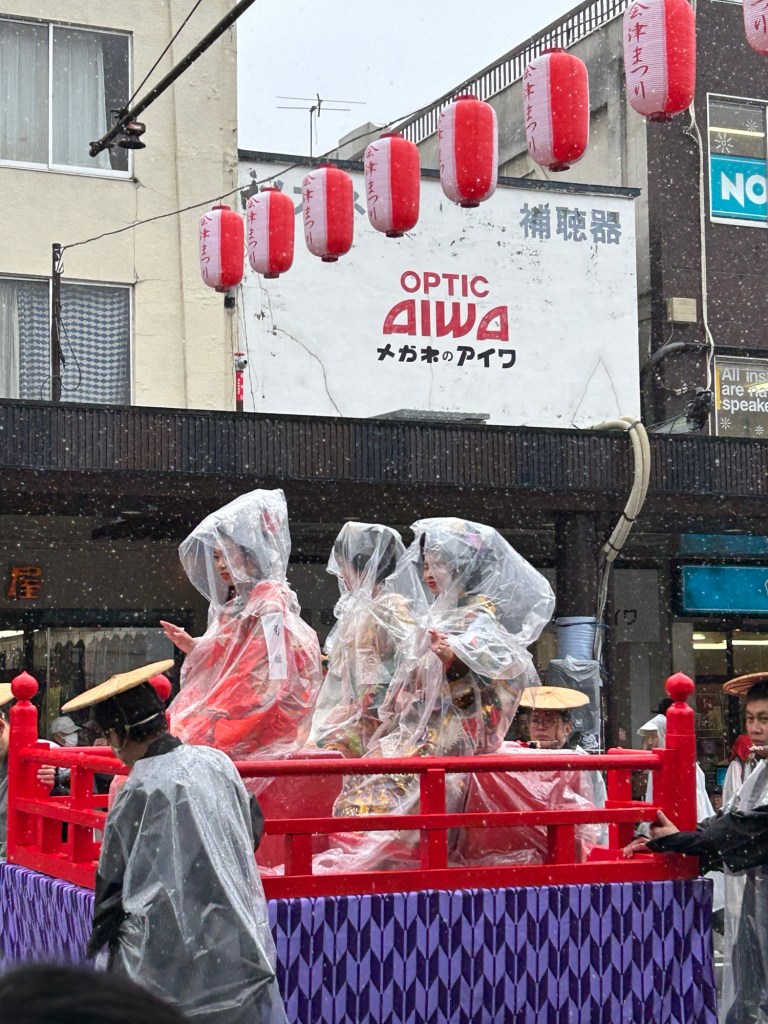
The high point of the Aizu Festival is a parade that involves 500 participants in costume. With horses…. We were uncertain because on Saturday it rained and rained and rained. A good 30mm worth. Sunday we got up and went to the info centre at the train station and they were very confident that the parade would happen. No matter that it was pouring. We sloshed down the street, heading for the shopping district. A few food stalls appeared, and then we heard cannons being fired. And sure enough when we got further down the street we found everyone.

This part of this street is arcaded so we could get out of the torrential rain. The parade participants – not so much….

There was a big range of clothing and weapons as the participants represented the rulers of the city over a 400 year span. There were also drummers, sword dancers and a variety of performers. It was quite a spectacle and we were glad to have been able to see it. Too bad bout the rain, though. It was quite a production for a city of about 120,000 residents.

Well. That never happens….

There are some certainties in life. The sun rises in the east and sets in the west. Taxes. And that the trains in Japan will be on time. We know not to be a minute late because the train will come and go right on schedule. If there is a delay of a minute – gasp – the announcements become a long string of apologies.

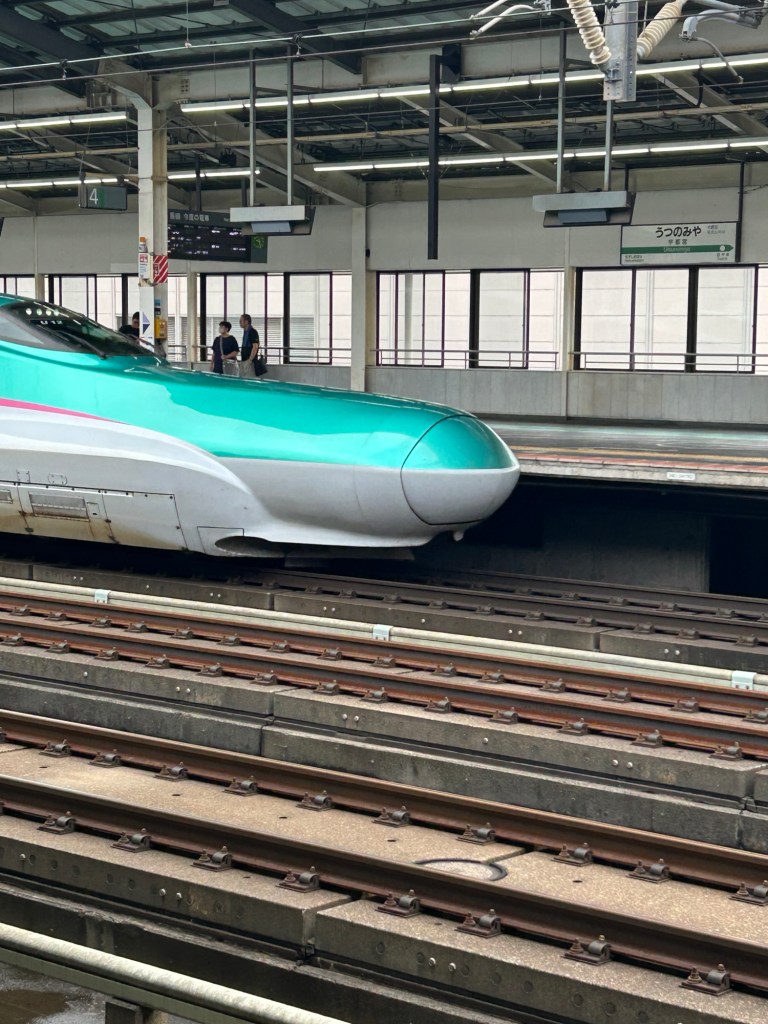
We set off this morning, heading for the city of Utsunomiya, about 90 minutes on the Shinkansen from Tokyo. Short walk from the hotel to the subway,, short subway ride to the big train station at Ueno, found the track, picked up something to eat.

While we were waiting for our train to arrive other trains would pass through the station. And there was even a pair of trains joined together. That sleek sexy nose of the Shinkansen actually pivots open and the train can be joined to another. How about that.

Anyhoo, our train arrived, we found our seats and settled in. Turns out it is too early in the season for the vending machines to dispense hot coffee in cans, and carrying a cup of coffee along with suitcases, knapsacks et al seemed like a bad idea, so we were enjoying a morning bottle of cold latte, which is better than it sounds. Eventually we realized that the doors were still open and we weren’t going anywhere. Time passes, still nothing. And then the announcements begin. We are the only non business people in the car. Everyone else is a salary man, pounding away on their computers, or sleeping. The announcements are a storm of Japanese out of which I can grab a few place names, but clearly something is wrong. Our 8:30 departure is long past – 9:00 goes by. Around about 9:30 an announcement in English – something has happened further up the line and the entire Tohoku Shinkansen line is suspended. Don’t know why but sounds like equipment failure.

We eat our bento box and wait. 10:00 passes and our fellow passengers begin to leave. We don’t know another way to get where we are going, so decide to stay. I eventually realized that I can use my translation app to capture the announcements and at 10:50 the announcements says get off the train, cross the platform and get on the next train that arrives, go one stop and transfer to another train. So – we do that. Get off the train, at least. Fortunately a lady on the platform took pity on us and helped us out. But of course when the train arrived it was already full of people, so we all had to stand. Off the train at Omiya, whip through the station and onto another train (thank you for our guardian angel who was going the same way and swept us along to the correct train). Of course that train was already full of people so we stood until we got to our stop.

Sheesh! What a mess! Turns out two trains ,which had been coupled together became decoupled while flying along at 315km/hr. When the emergency brakes kicked in the trains were 300 meters apart on the track. No derailment, no one injured. But a five hour suspension of the service. The train station at Utsunomiya was a zoo. We managed to get someone to amend our ticket so that we could get a refund for our fare (any delay over two hours and they’ll refund you) but they were still in the thick of things dealing with moving people around, so we’ll sort that out out later. We were among the 45,000 people affected by the stoppage.

So why Utsunomiya? Knowing its us you won’t be surprised if there is a geology angle, right? We stored our luggage and caught a local bus, which took us to the Oya Museum. The rock formations in this area are made of volcanic ash laid down under water 20 million years ago and then raised into hills in central Japan. So, we went to see some:

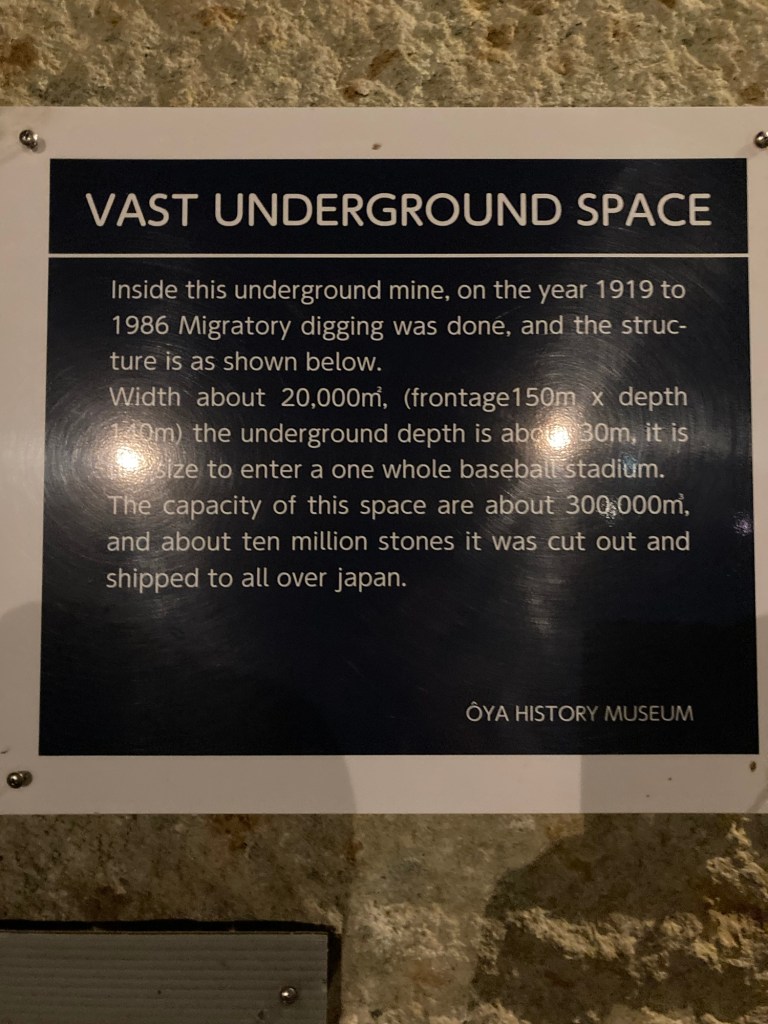
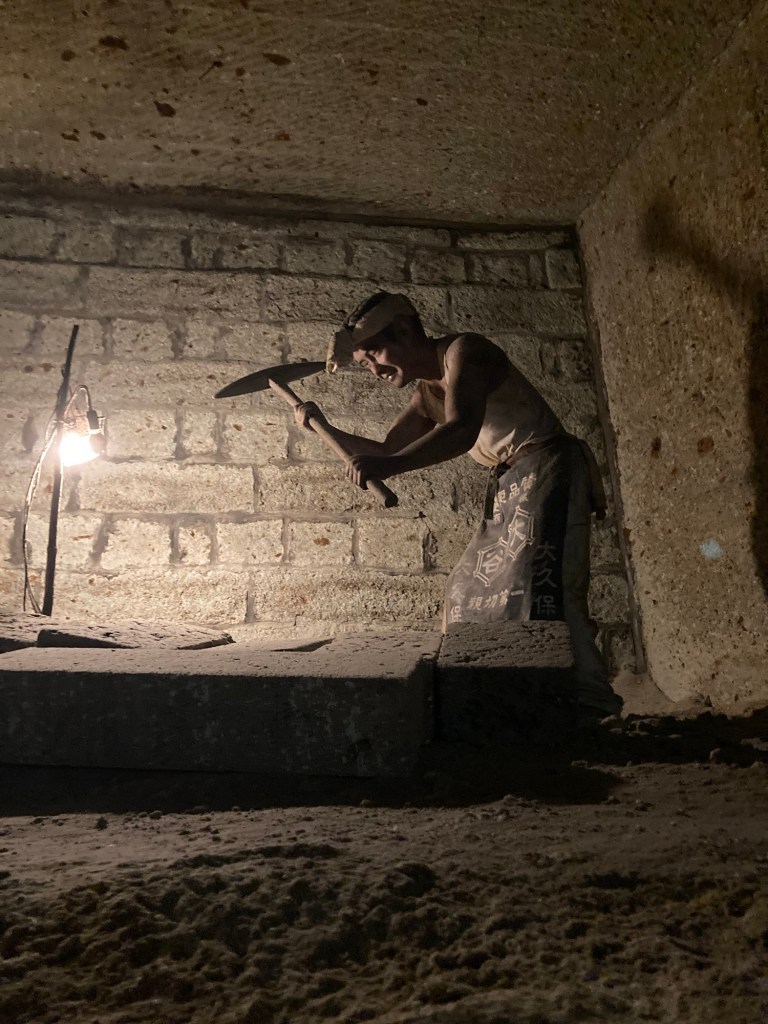
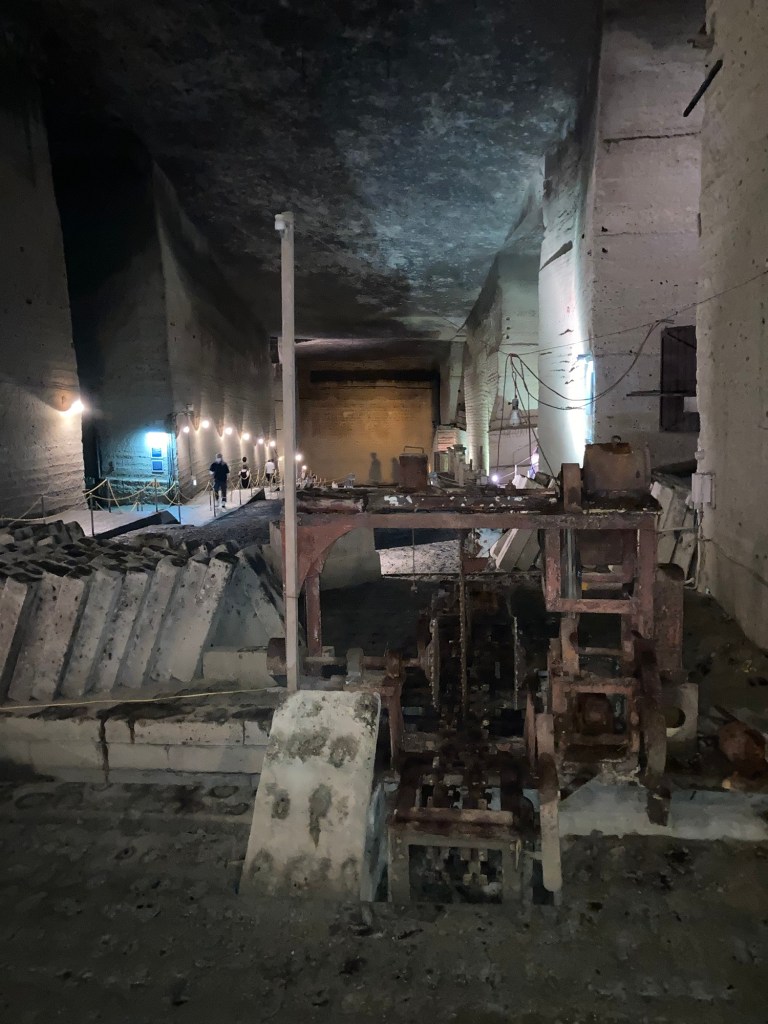
Excuse the reflections, but that summed it up. We went down down down into the ground where the rock had been mined out, first by hand and then by machine.

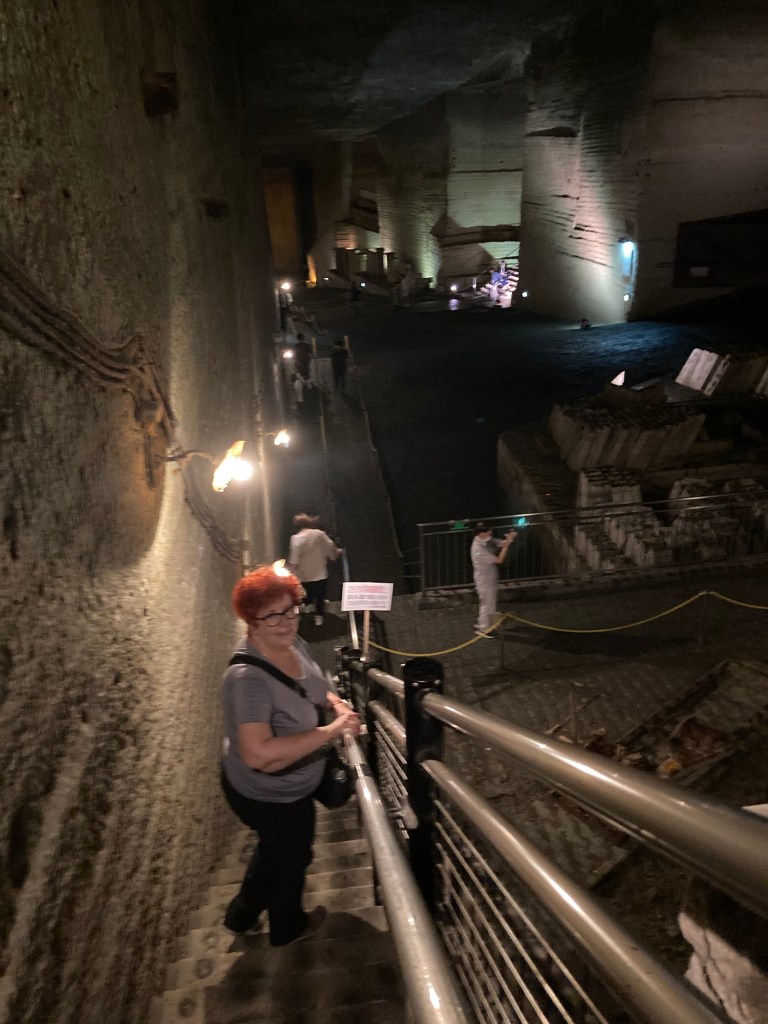
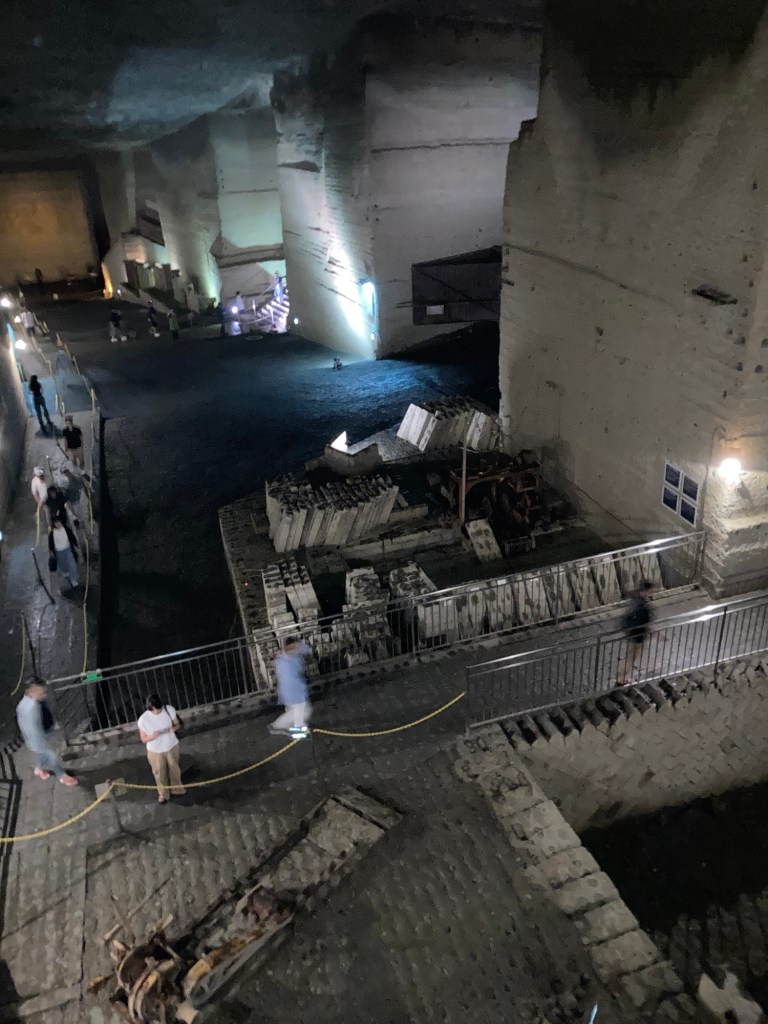
Wilf was astounded at how it was mined. Unlike hard rock mining, there were no elaborate support structures – it was more like a salt mine. It was lovely and cool down there, and we wandered about theses enormous cavernous spaces.

There were rooms and stairs and walkways , pools of water and shafts that lead to the surface . During the Second World War airplanes were built down there.

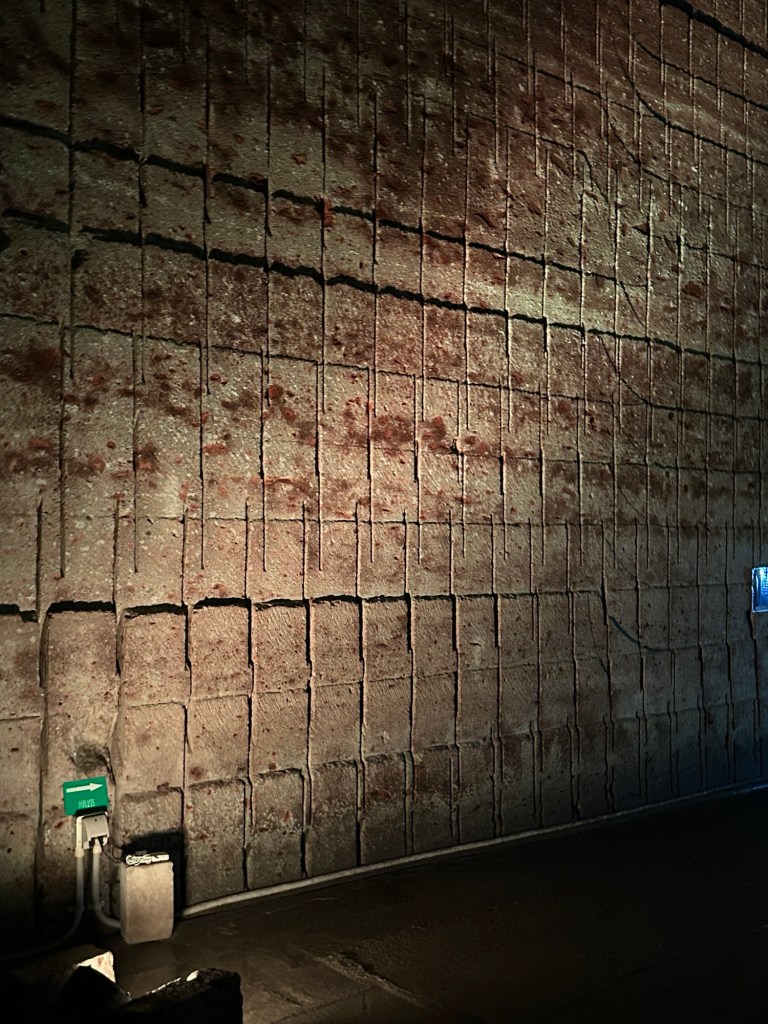
The walls bear the marks of both hand work and machine work.

The hard way….
Still not easy, but faster!

All this activity left some interesting marks on the wall.

Power saws at work

The quality of the stone varied – the above pictures show sections with more iron, which oxidizes to brown. Other areas were an even cream colour. The texture is quite porous and we saw no examples where they put a polish on it. In the early 1920’s Frank Lloyd Wright was commissioned to design the a new version of the Imperial Hotel in Tokyo and the stone from Oya was used for the building. Subsequently it was not considered competent for building and is mostly used for cladding and decorative elements.

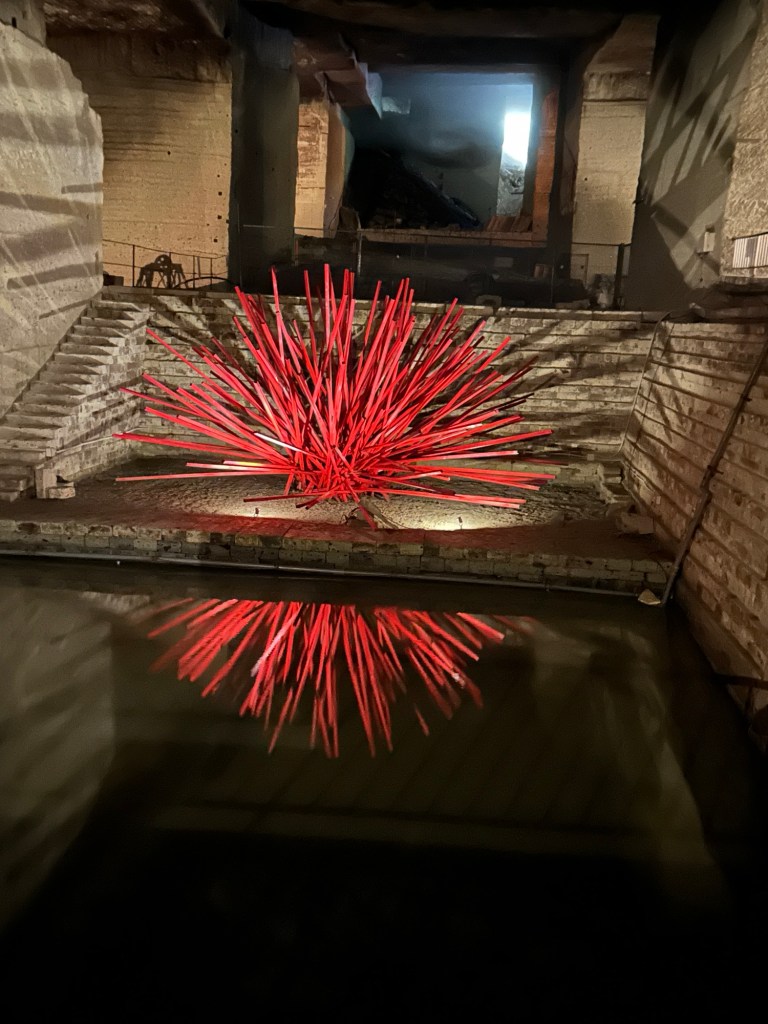
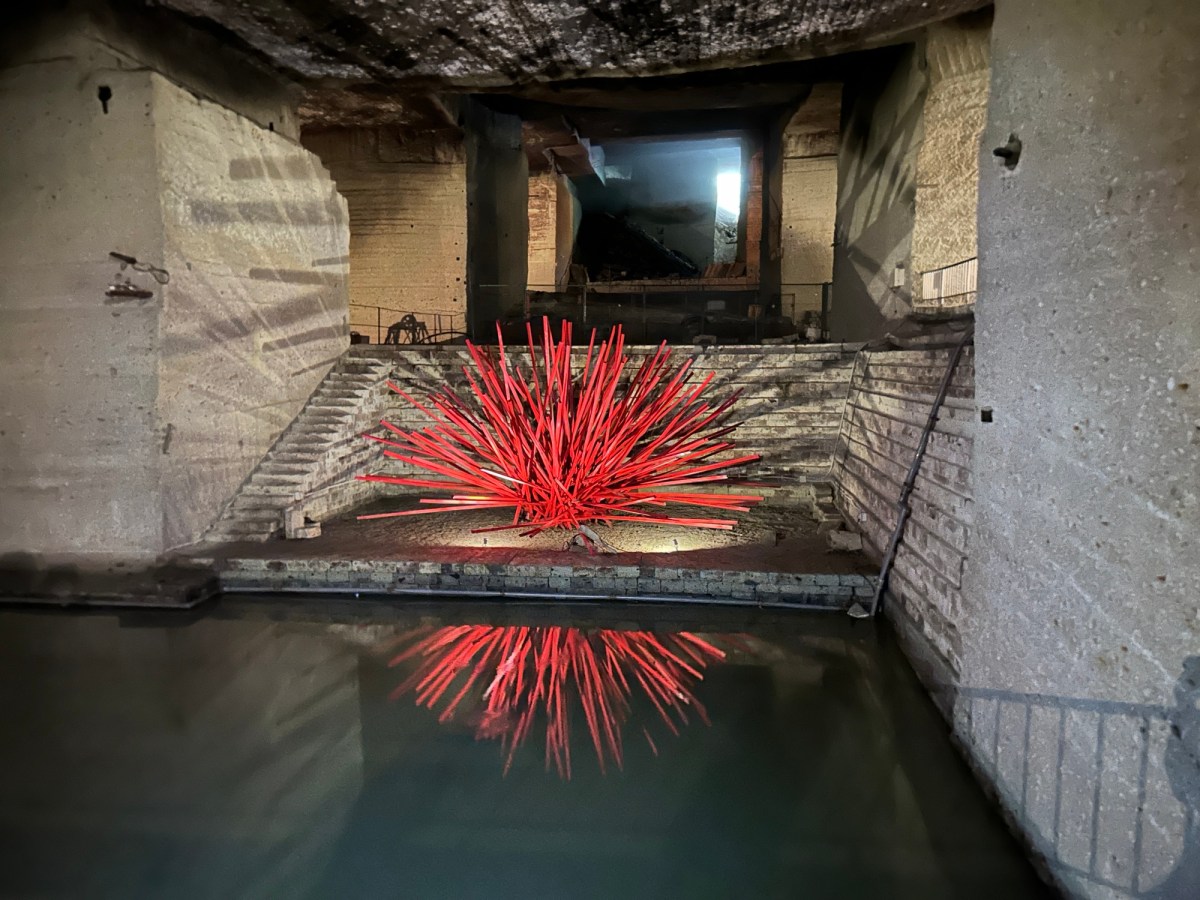
So what to do with an abandoned mine, besides hosting tourists? The site lives on as an event space. You can get married down there. There were pictures of various promotional events – product launches for car and luxury goods companies. Concerts. Sets for movies and music videos. Art installations.

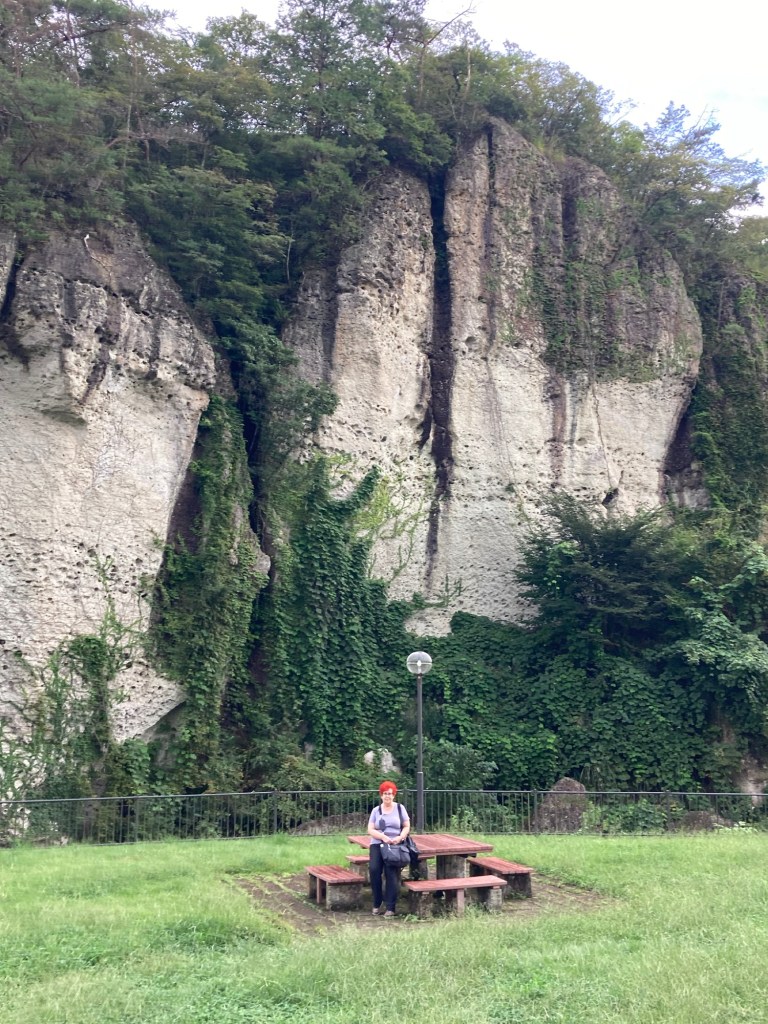
And then, if all this wasn’t enough we went next door. On the other side of the hill, as it were. The hills look like this:

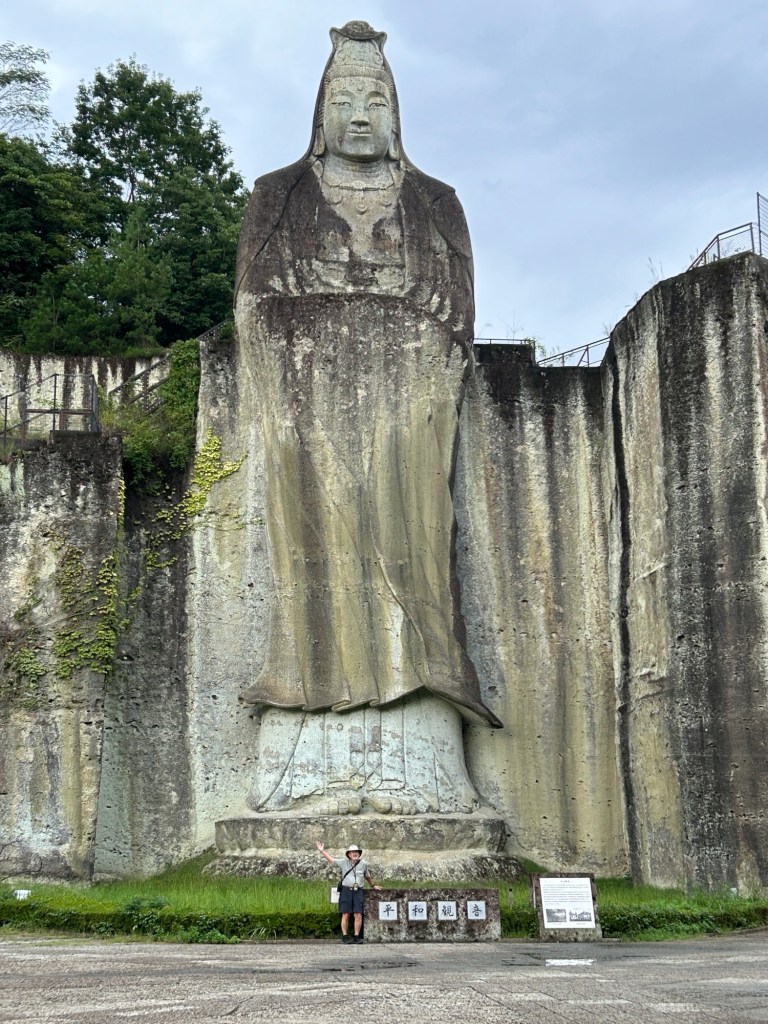
Except when the locals decide to carve a representation of the Buddhist goddess Kannon into the living rock. Then it looks like this:

Wilf at the bottom for scale. After the war she was carved into the hill as a memorial to the war dead and dedicated to peace.

So – big day for us and we were plenty tired. Our hotel had a Spa in the Sky on the 14th floor so we could soak our bones. And as important – there was a laundry facility. With dryers! Clean clothes – yay!

After Utsunomiya we’re off to another place with a long name, but that’s a story for another day.

Still with the moon

As I mentioned yesterday we have arrived in Japan at the time of Tsukimi, the mid autumn festival that celebrates the harvest and the change in seasons. (Feeling a little salty about the whole ‘change of seasons’ thing as it was 34C here today. Not what we would consider autumn weather…..)

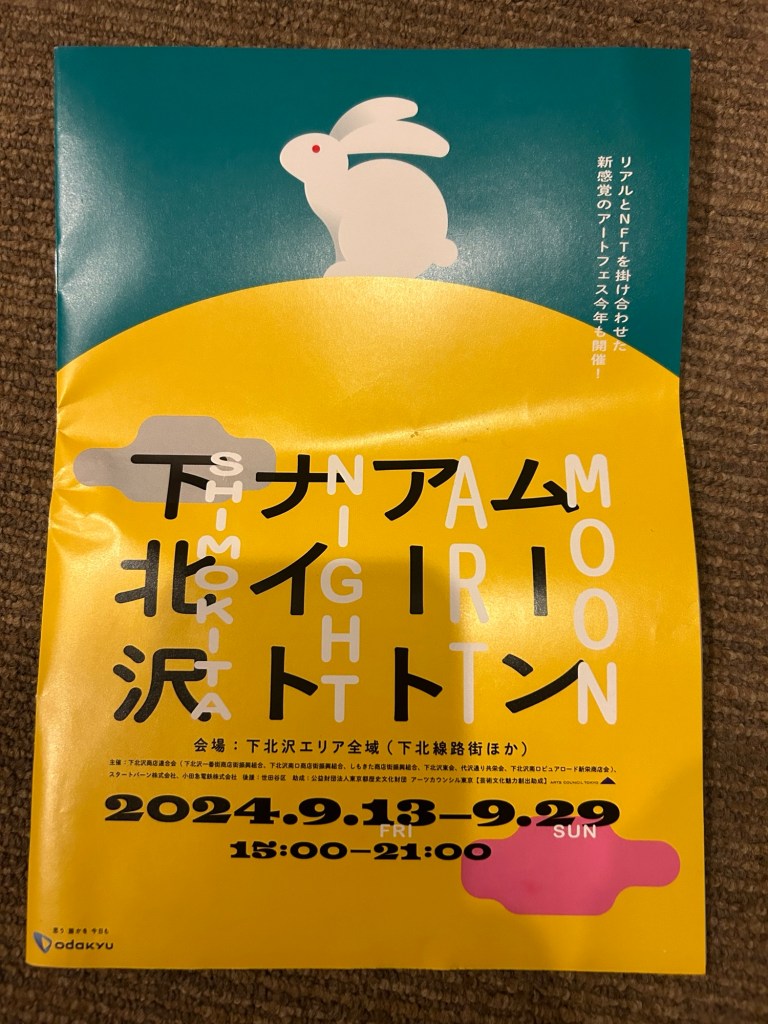
In the district of Shimokitazawa there is a moon festival with several art installations. We had it on our list as a thing to do but figured we’d get to it when return to Tokyo at the end of our trip. Sounded like a plan until today, when we discovered that the event was over on September 29th. Okay then – guess it’s tonight or not at all.

Let me just point out that today was intended to be an easy day. A day to sleep when needed to deal with the jet lag, to ease into things. We walked out the door just after 8:00 to be hit with a blast of 30C humidity and sun. We were reduced to skulking along the street, clinging to the shadows, hiding in doorways while we waited for lights to change.

We went to Ueno station to sort out some train tickets and thought we’d go for a walk through the shopping area under the tracks. Didn’t get too far before we had to bail into the first place that had outdoor seats for sticks of fruit and mango bubble tea at a Korean spot.We eventually staggered back to our hotel and had a Power Nap that had us feeling pretty perky. Enough so that we decided to make the hour long trip across the city to see what Shimokitazawa had to offer.

Before I tell you about it let me tell you that on our ‘quiet’ day, as I am writing to you, my watch tells me that today I walked 15,151 steps, which is 9.36km.

Fortunately the event was well organized and the signage was very good.

Rabbits and the moon…

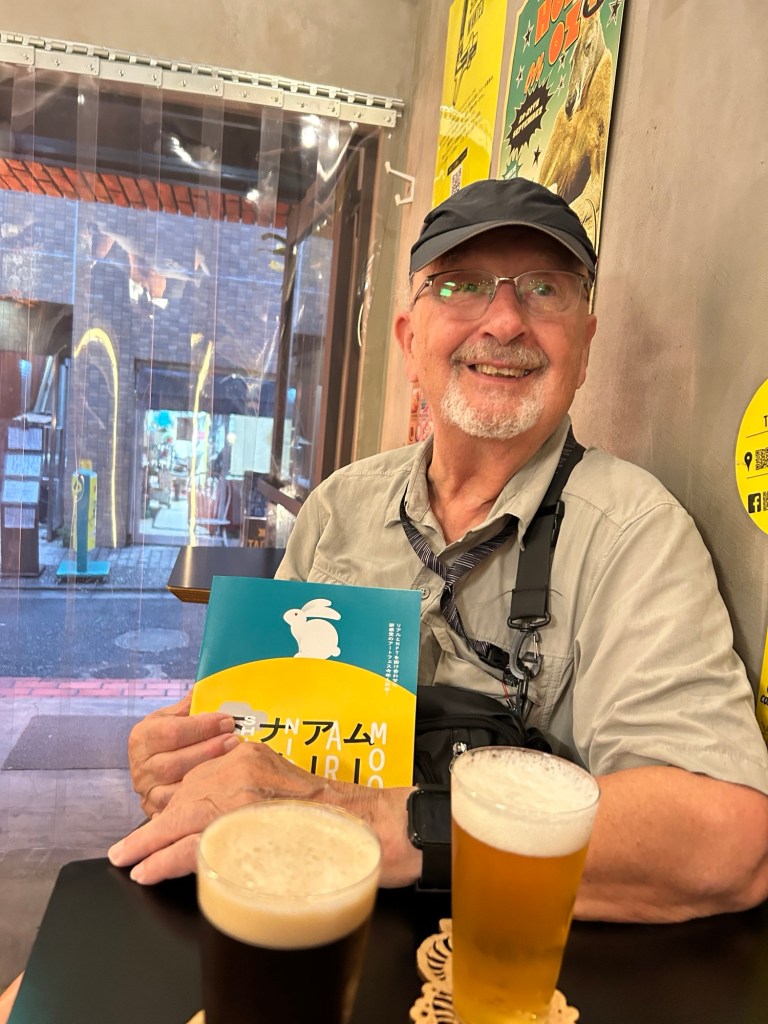
There were three public installations to see, in addition to many collaborations with local businesses. We arrived late afternoon in a light drizzle and decided that we should wait for it to fall dark, so we did what we often do, and asked Mr Google ‘craft beer near me’, which led us to the Tap and Growler, a tiny pub with 10 seats and an abundance of beers.

Quite the hairdo provided by the humidity!

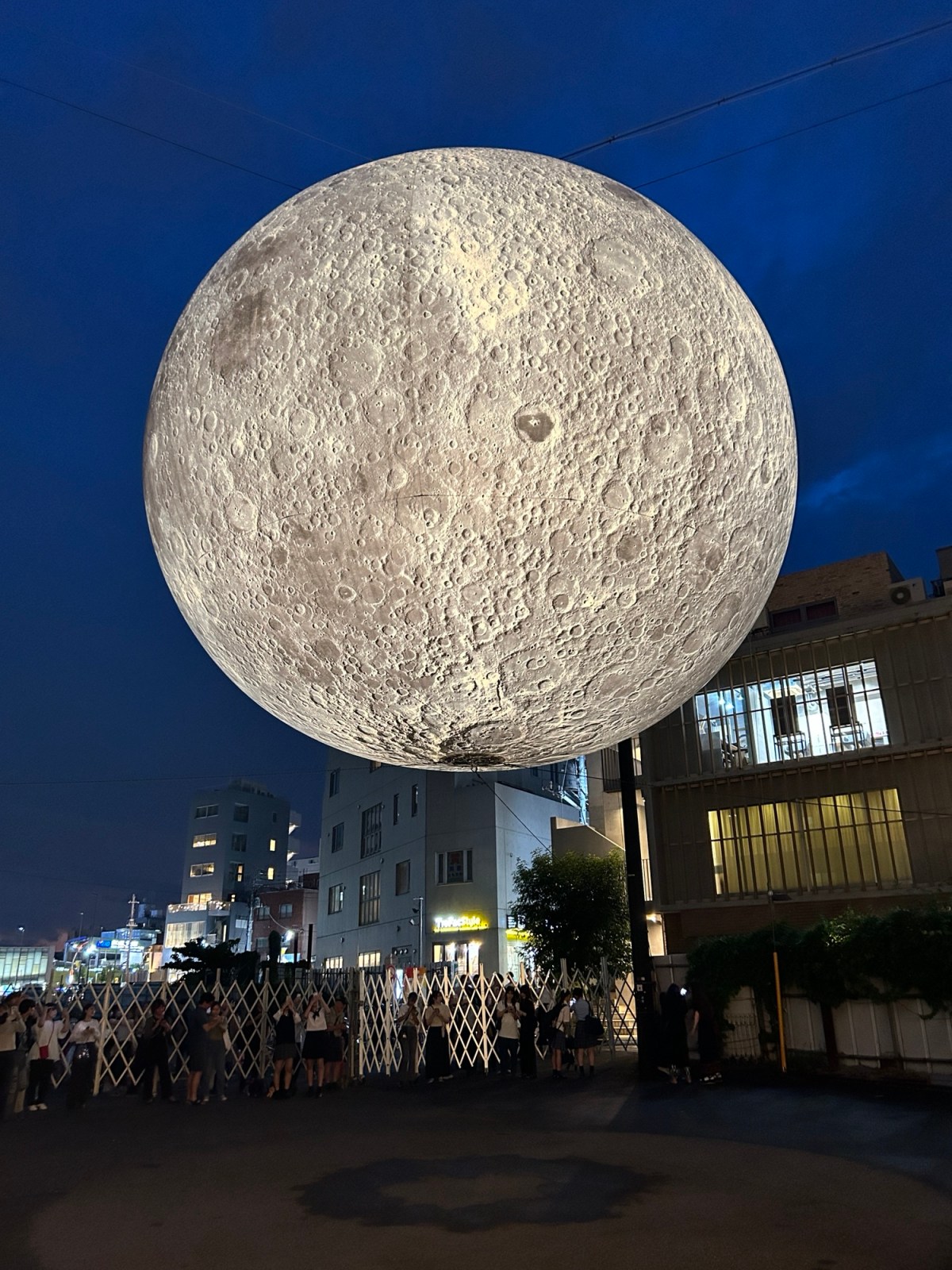
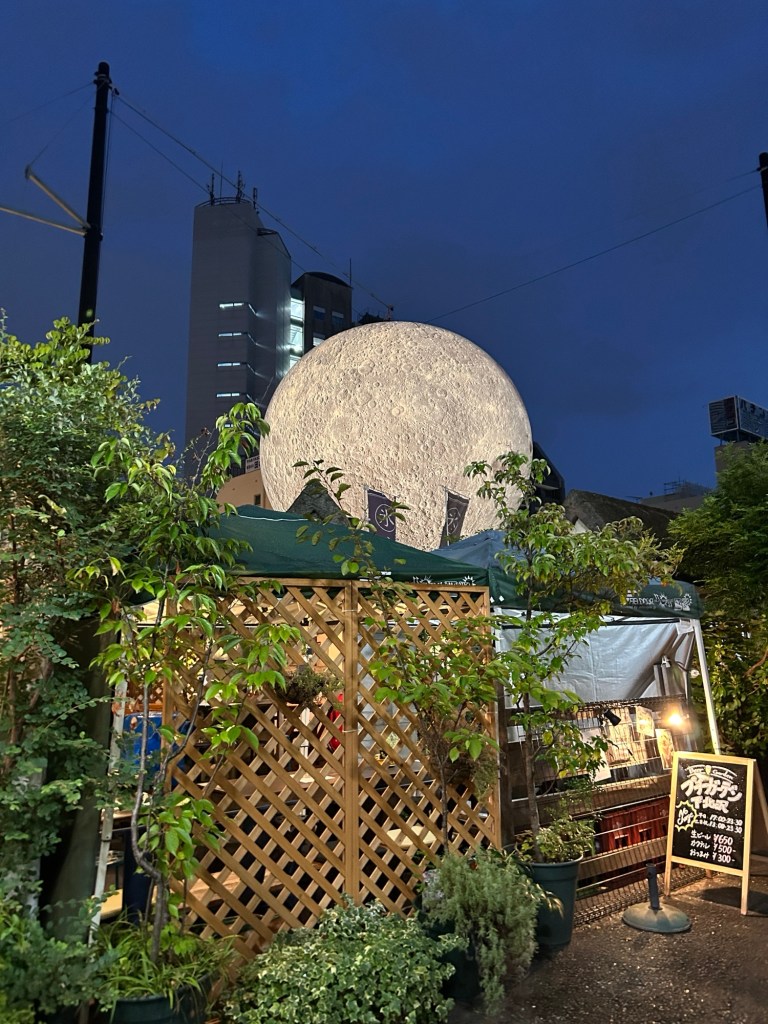
Down the street we went, and around the corner we went and found – the moon!

Hovering over an empty lot, turning gently in the wind. Peeking behind other buildings:

A delightful surprise!

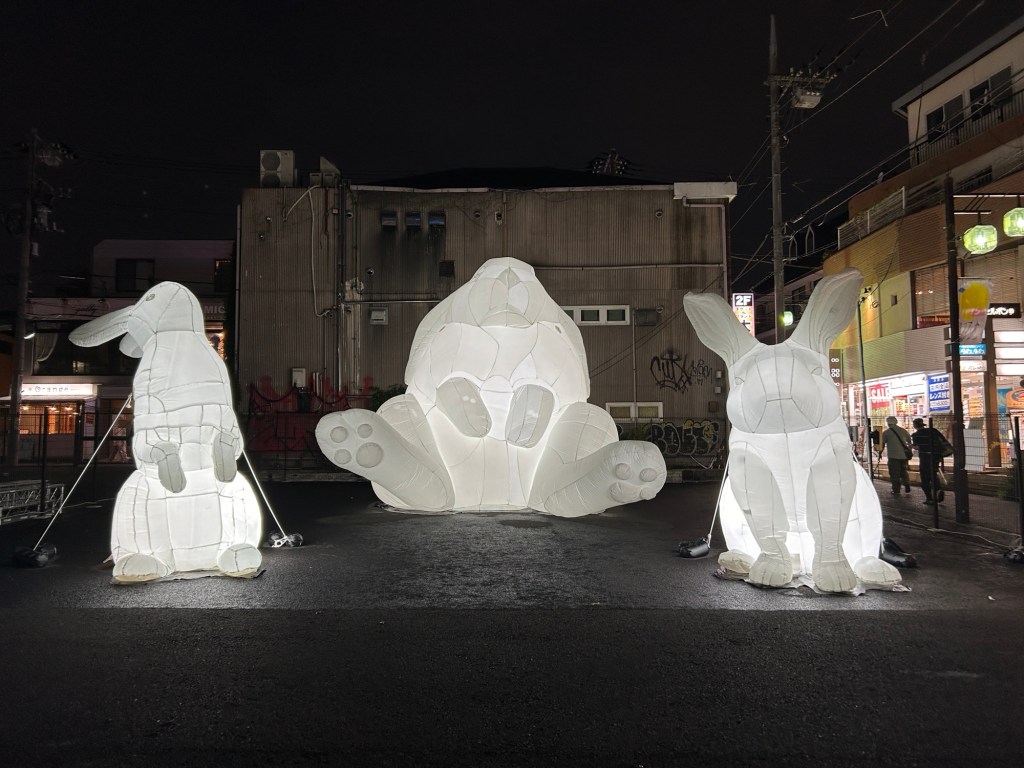
Up another series of streets we found

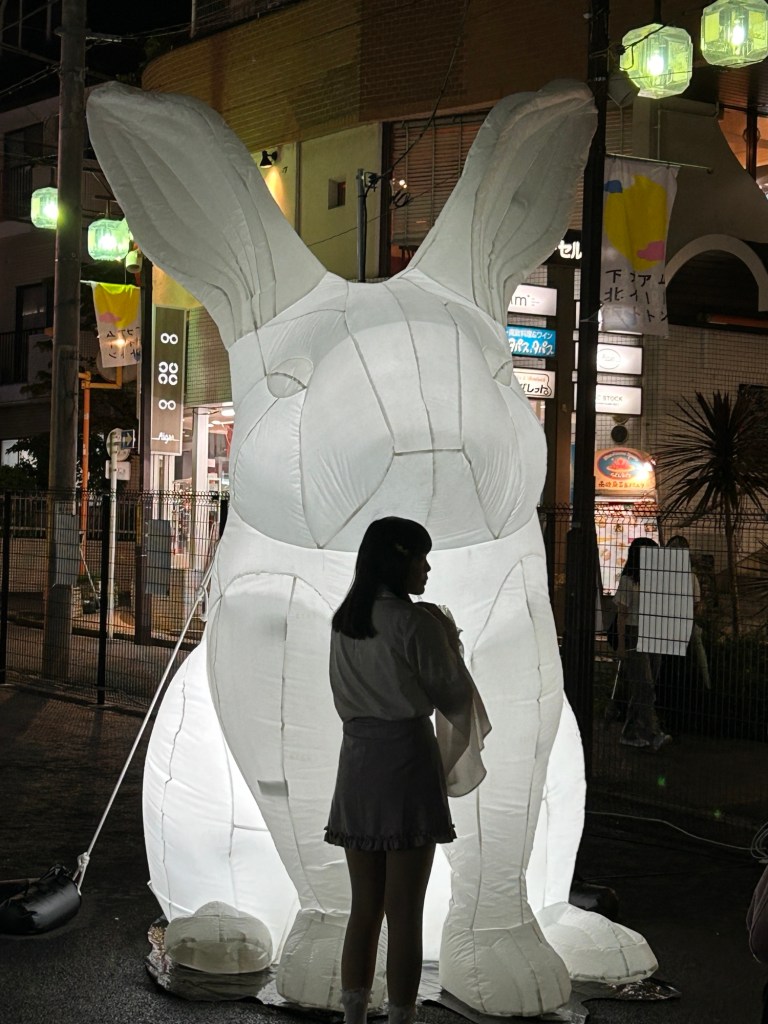
A gathering of rabbits, shining in the night!

The third installation we a bit of a walk to the other side of the station, and it, too was about light.

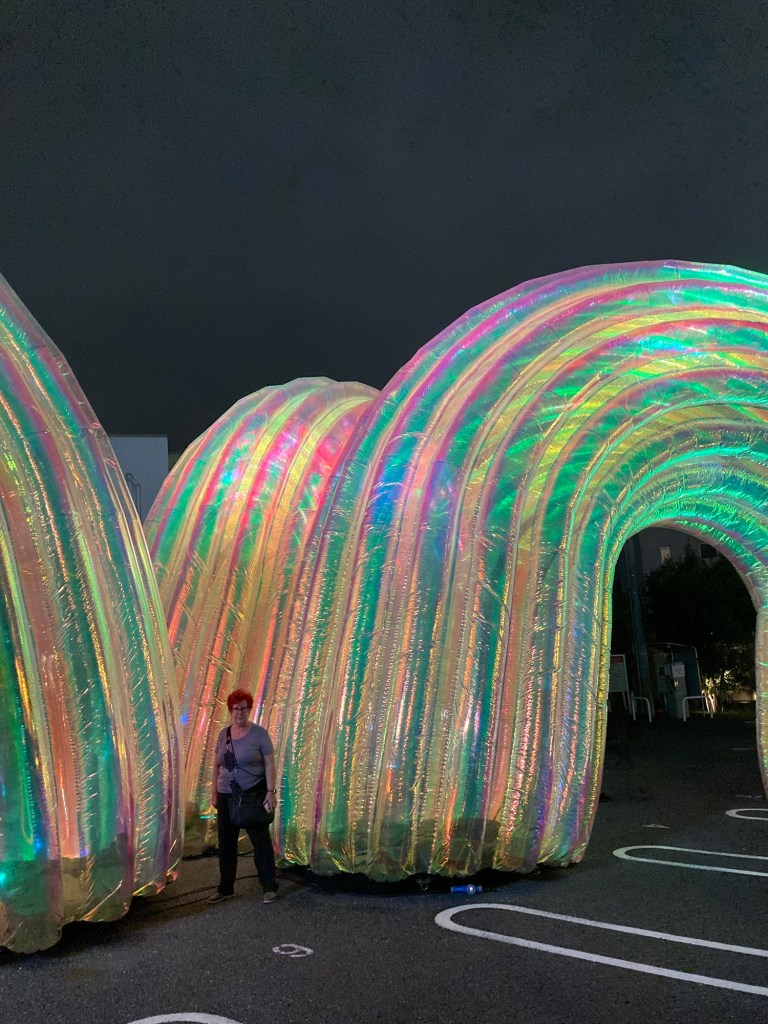
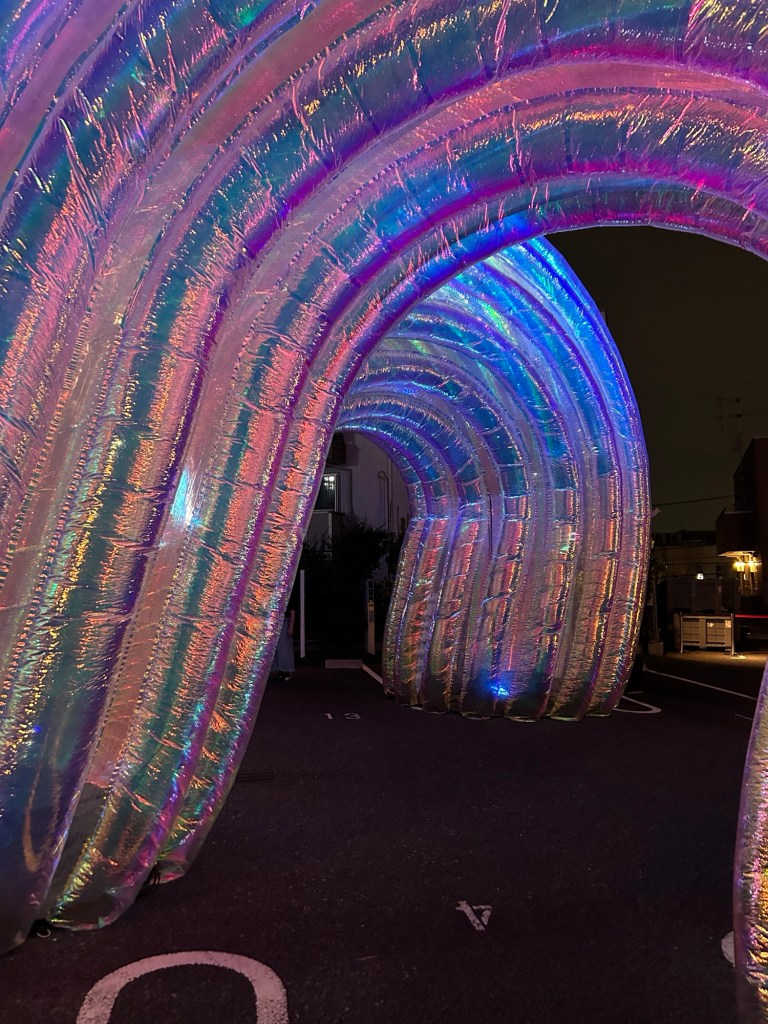
In other life this space is a parking lot. But for awhile these giant inflatable arches are perched instead of cars. The lights change colour and shimmer in the dark. They’re kind of neat up close but part of the fun is seeing them from a distance – an incongruous shimmer of colour that gradually resolves into a series of arches to explore.

Tomorrow we hit the road for further adventures – maybe we’ll find some cooler temps?

When the moon hits your eye….

And here we are, once again, in Tokyo. 30C at 7:00pm!

This is the time of the moon viewing festival, also known as the mid-Autumn festival. In the west we refer to the man in the moon, but in Japan they see a rabbit. We will be exploring moon cakes and other seasonal treats while we are here (rumour has it McDonalds has a special tsukimi menu!)

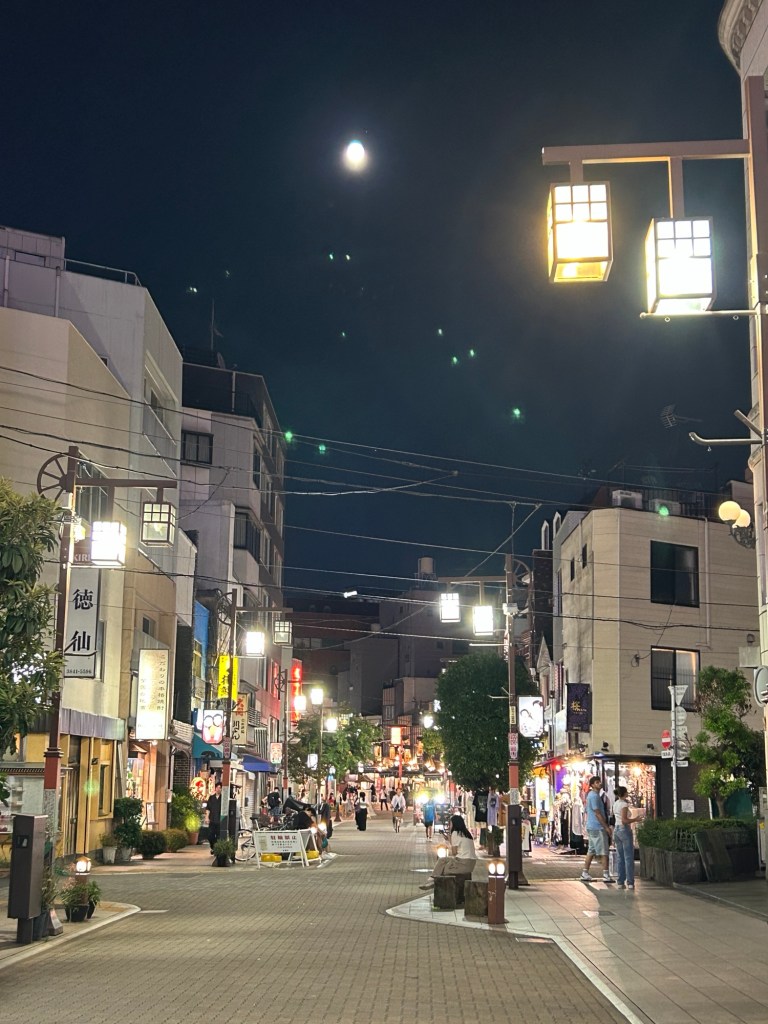
But tonight as we arrived, there was the moon shining down on our street!

Tsukimi in Asakusa

A well ordered society…..

We’ve been roaming around Singapore, getting to some areas that are new to us. Its a busy place, buildings going up all over. Lots of traffic. Everything seems to be very tidy. We haven’t been everywhere, but we haven’t seen any litter, or graffiti. There are garbage cans in the parks and they are not overflowing. The subways are spotless. Its not a perfect place and I’m sure there are people who are unhoused. But we don’t see them – certainly not camping in public parks.

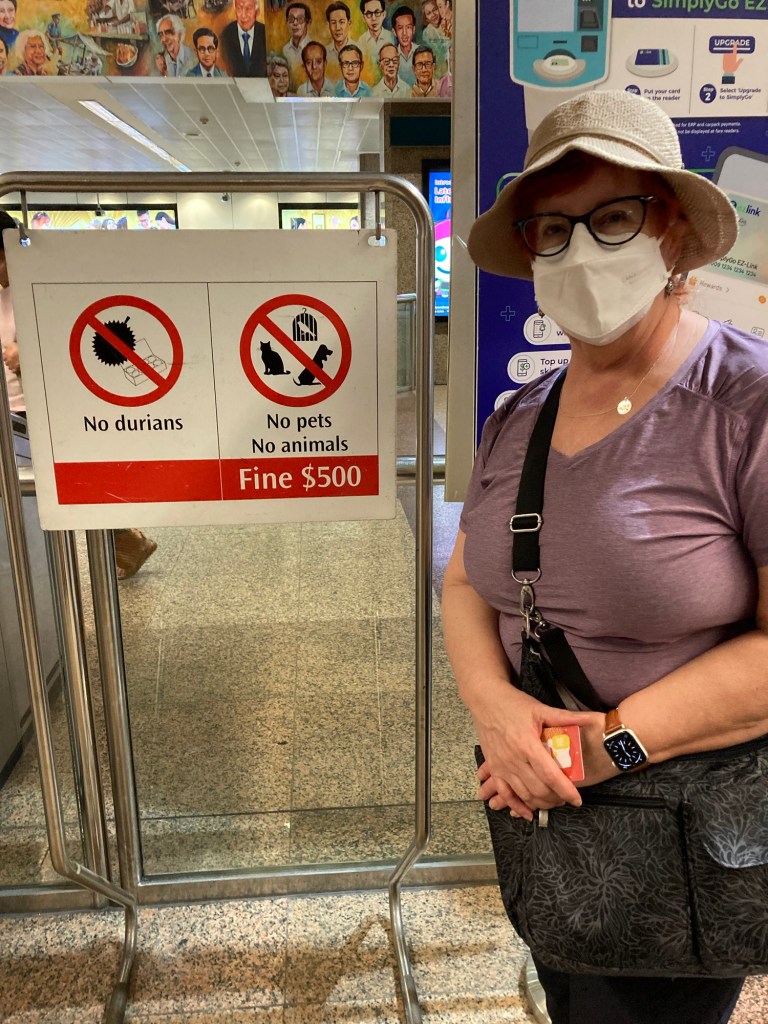
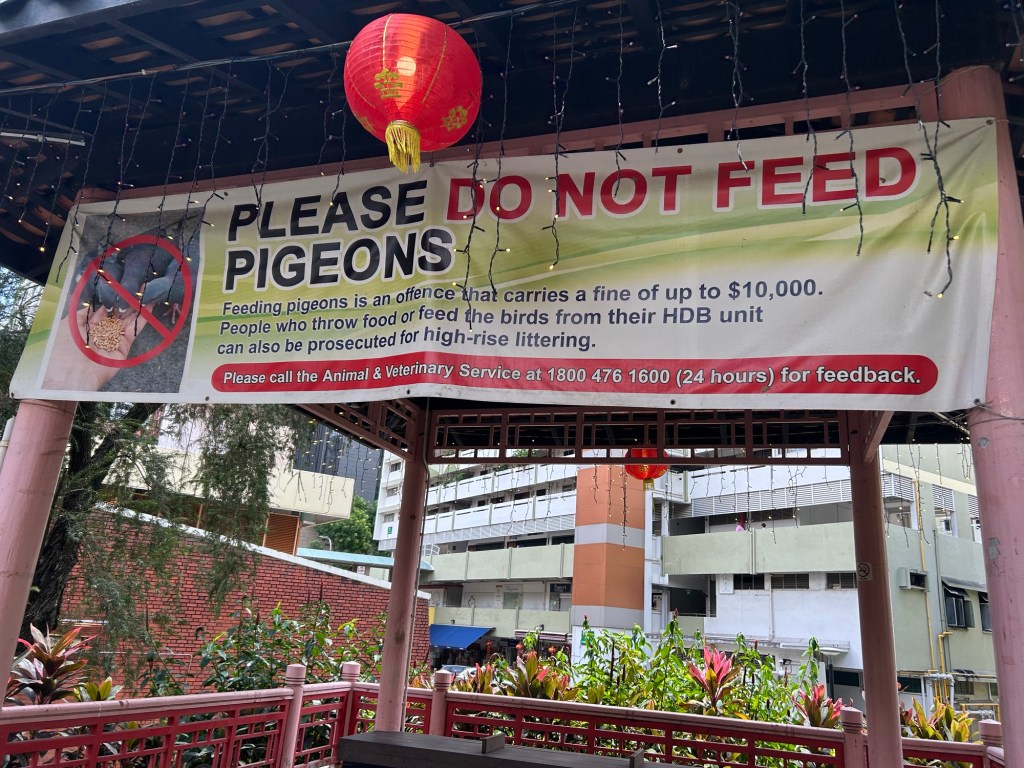
What we do see a lot of are signs. Lots of signage directing behavior. There’s the infamous ‘no durian fruit on the subway sign…

Feeding pigeons is also a no-no – with serious fines

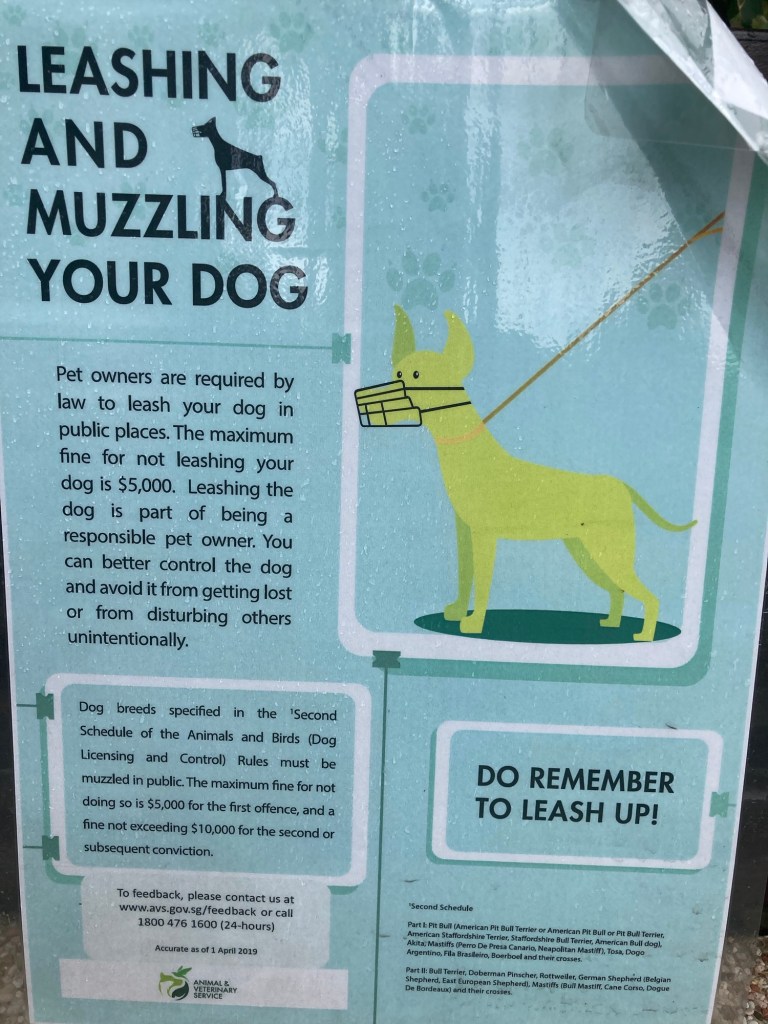
And don’t be letting your dog roam about.

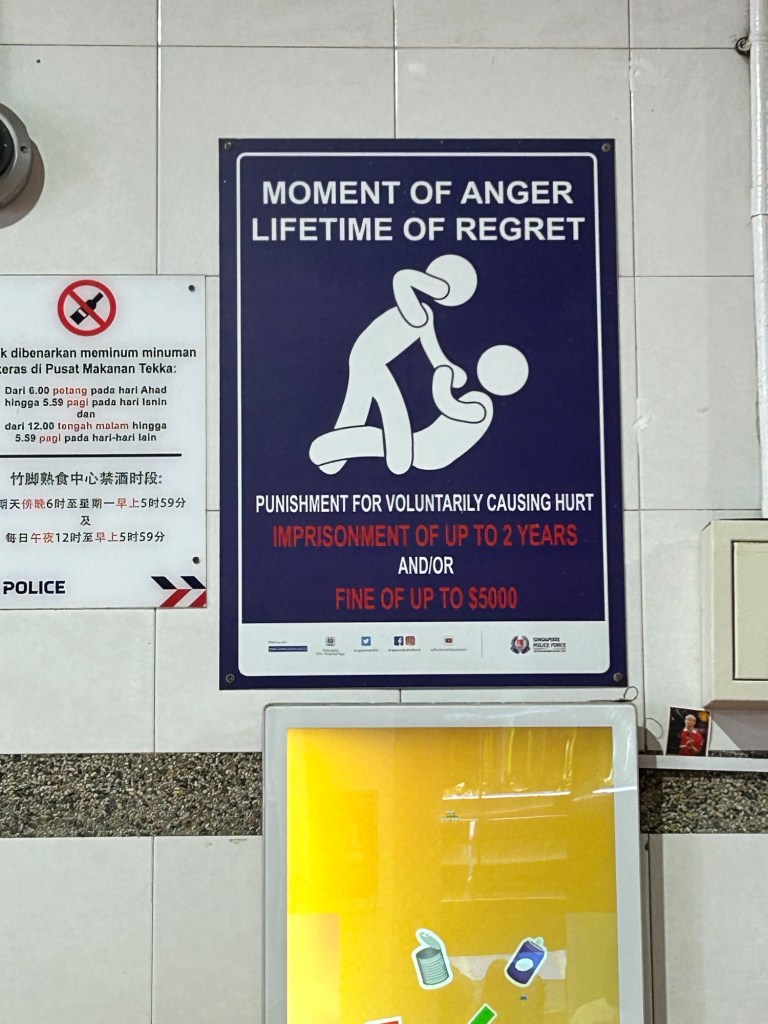
One of the food centres we visited had this one:

makes one wonder what goes on at that place?

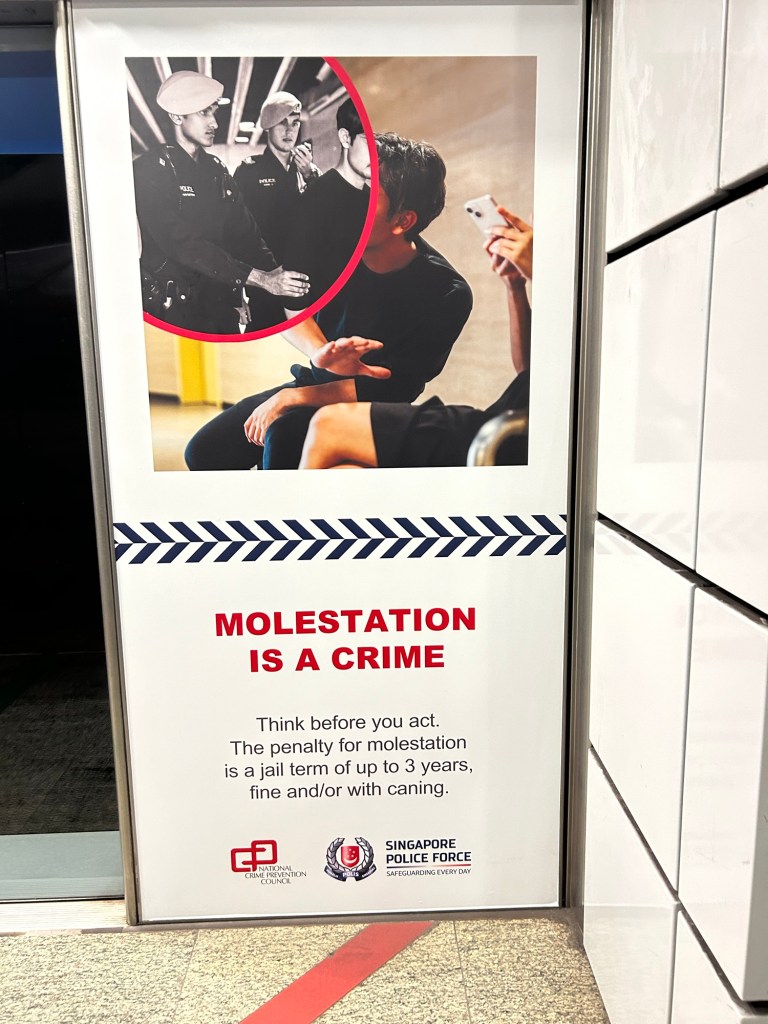
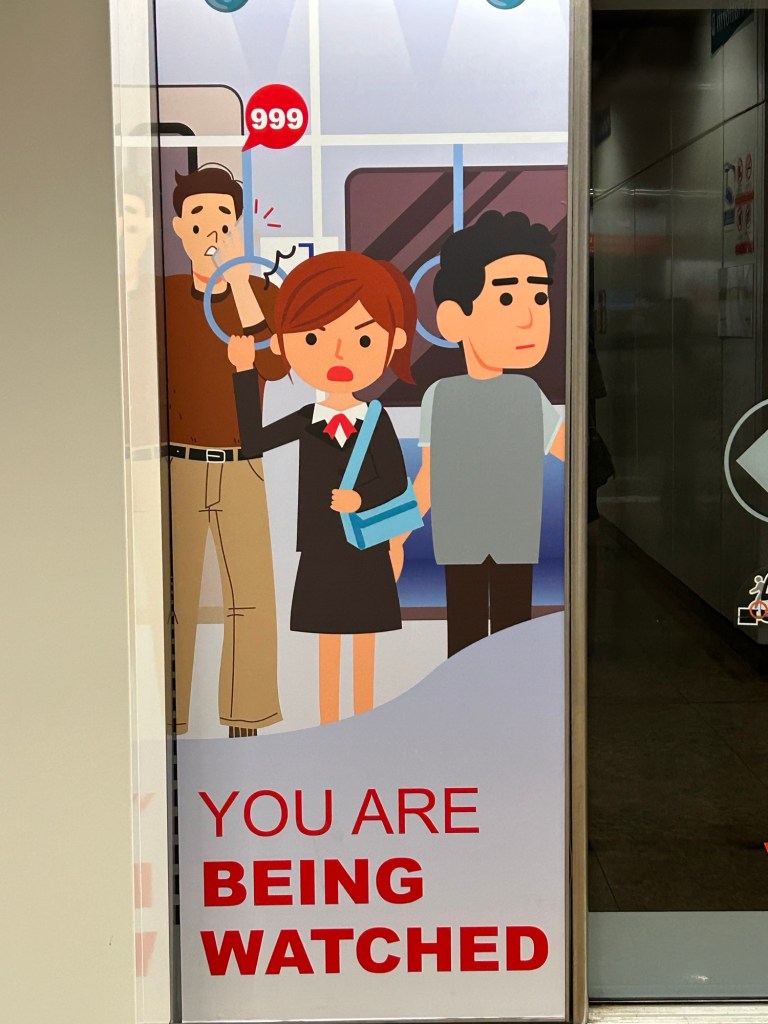
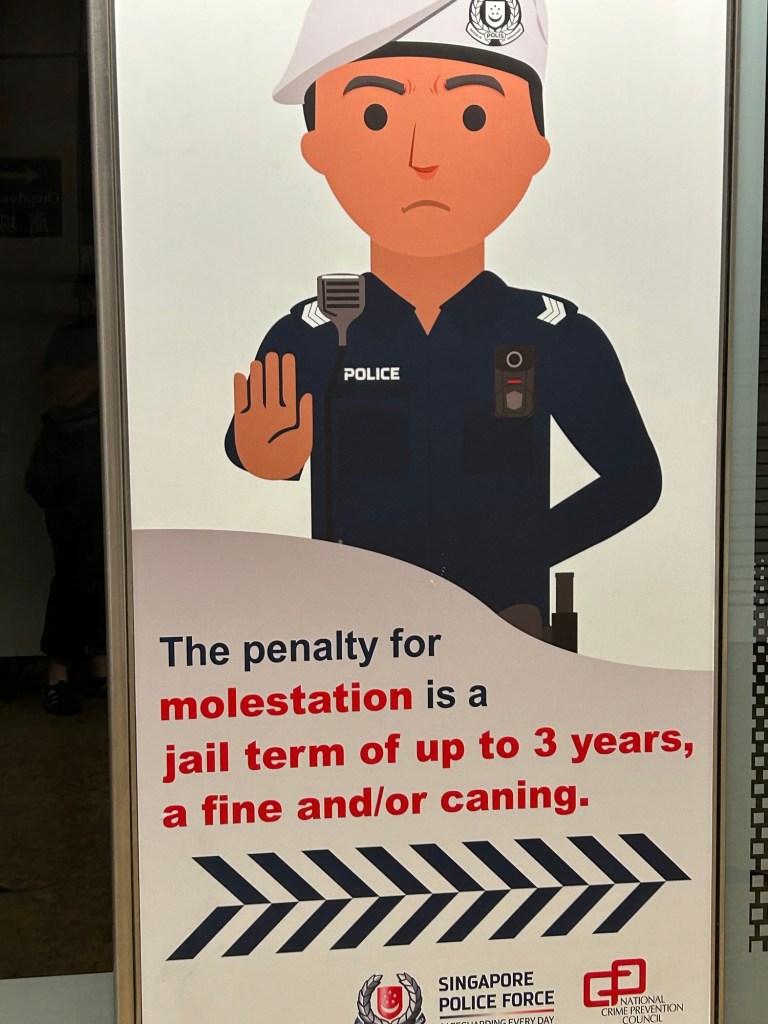
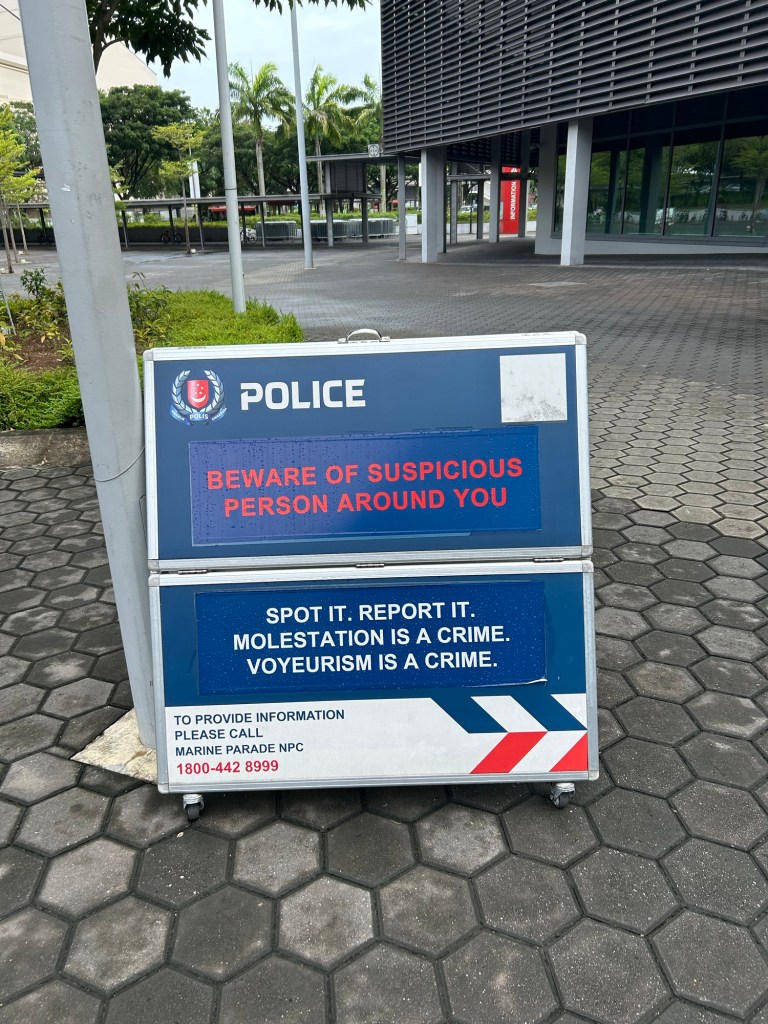
And the subway has lots of reminders about lots of things

And they are not kidding about being watched – the number of cameras everywhere is quite surprising.

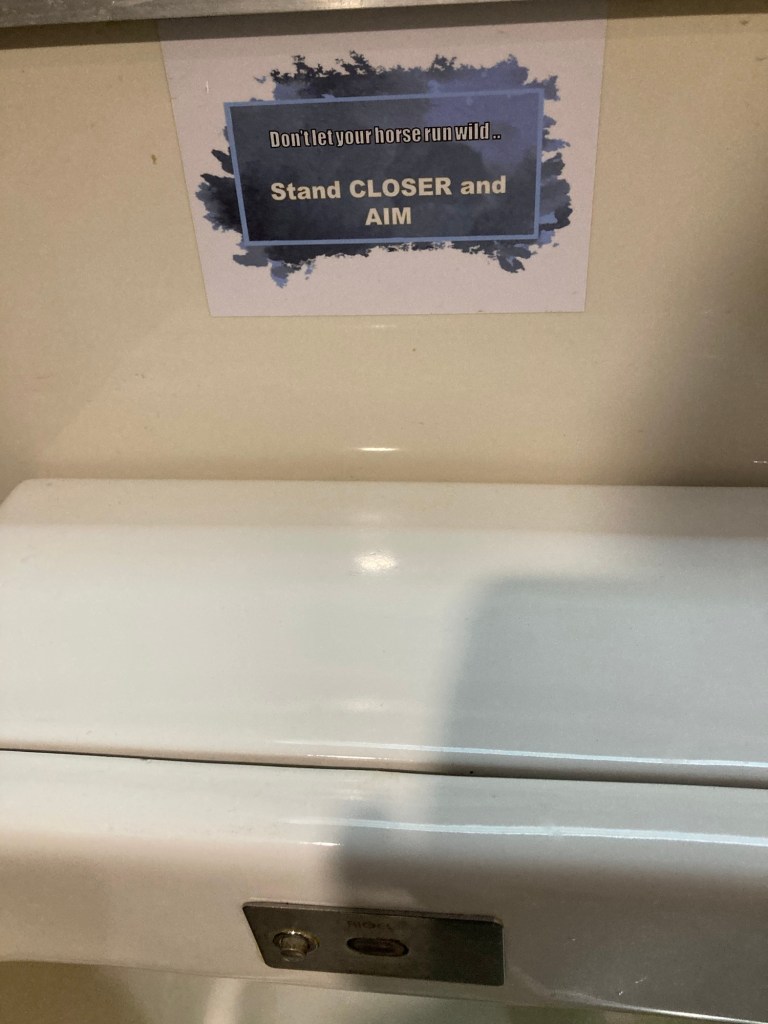
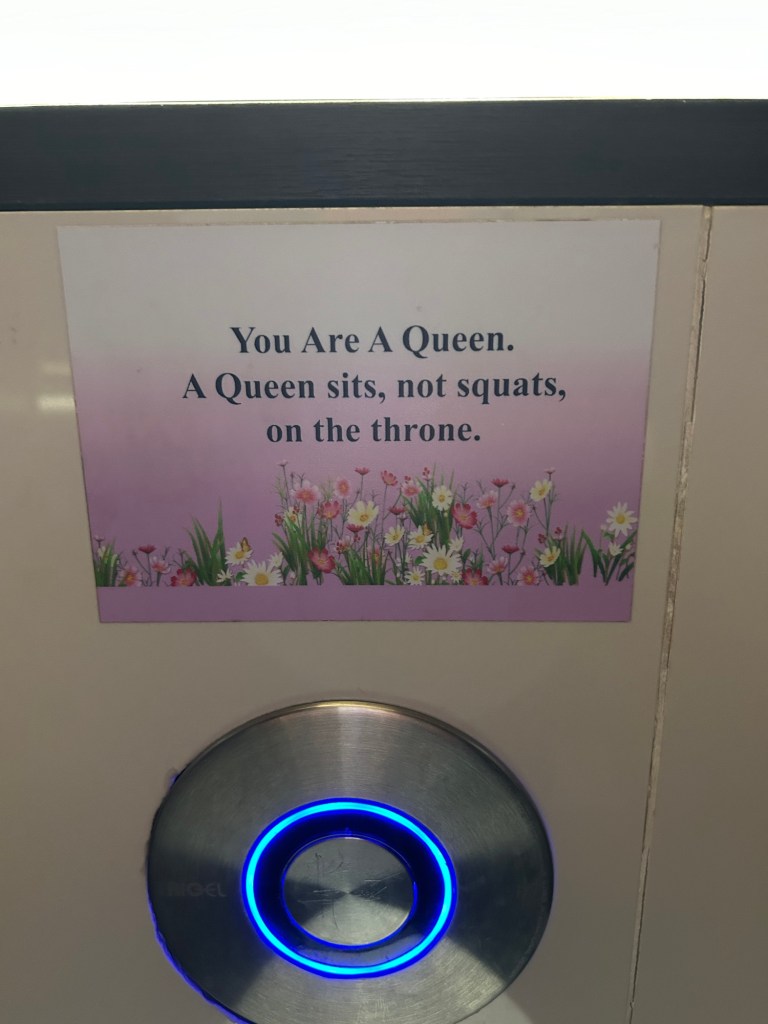
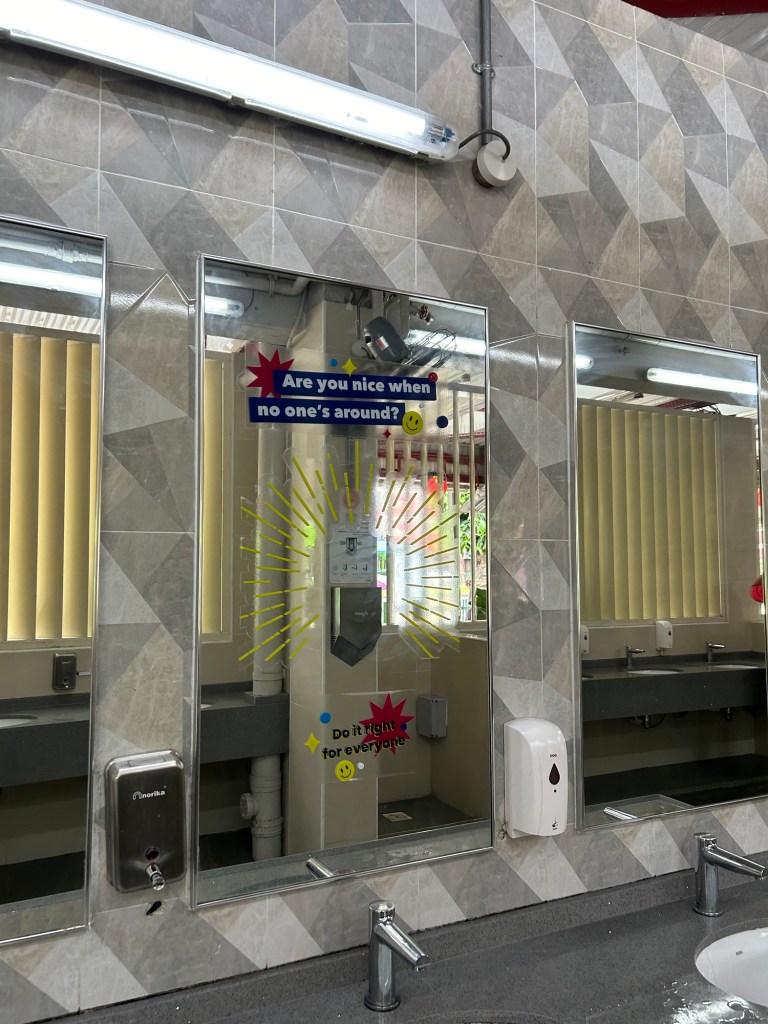
And then there the ‘let’s use the public toilets nicely’ messages.

Gent’s version
And for the ladies.
On the mirror it says ‘Are you nice when no one’s around? Do it right for everyone’

And lastly – this message on the table at the food centre near us.

The housing board will add 19,600 new flats to the pool in 2024.

And then there’s the rules around smoking……

Sharon and Wilf go to the birds

When we are traveling on big trips like this one Wilf does a huge amount of research. In the case of this trip – much postponed and reworked – the research went on for years. He drafts up a calendar, marking events that happen on certain days and filling in other days to keep us entertained. He does the planning, I’m in charge of execution.

This morning he was a bit cagey and announced that today’s excursion was a surprise. Okay then – off we went. Onto the newest subway line and off to the suburbs. I knew a park was involved and when we got to Mayflower Station I had Mr Google point us in the direction of the park. (and I’ll just mention it was 30C plus and terribly humid. We were not looking for the usual Mr Google diversions…)

We got to the food centre and through it we could see the park. Wilf was muttering to himself ‘Oh no – are we too early or too late? Where are they?’

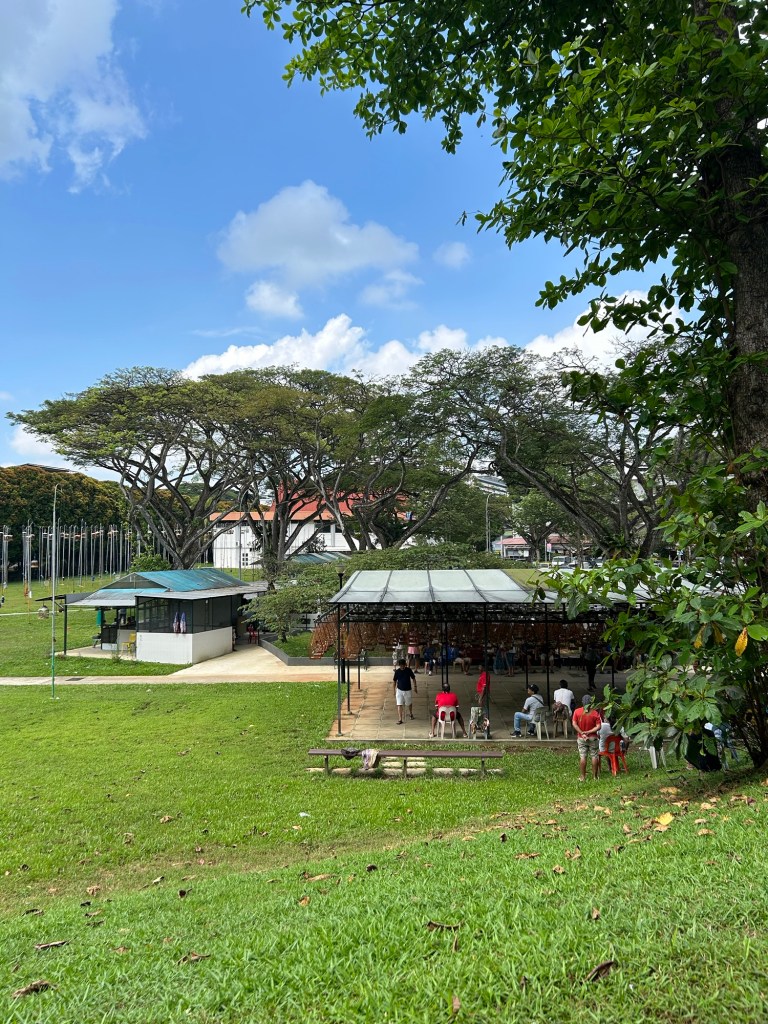
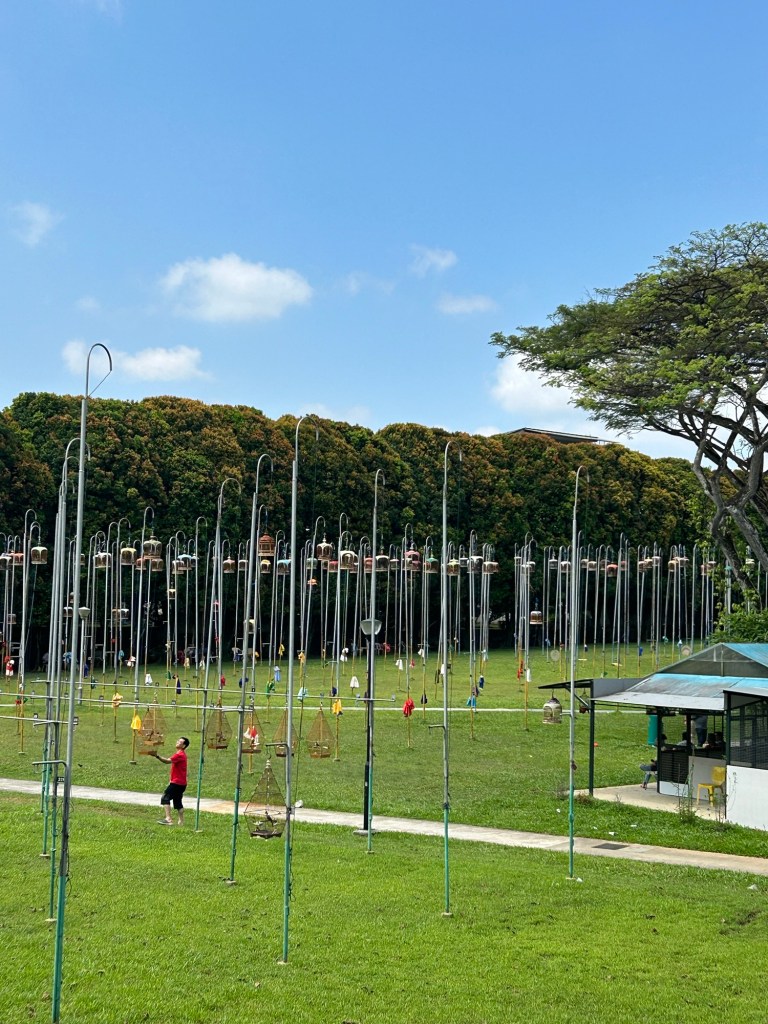
And then we came around the corner to this….

Yes, I know it looks like a field of flagpoles. In fact this is …

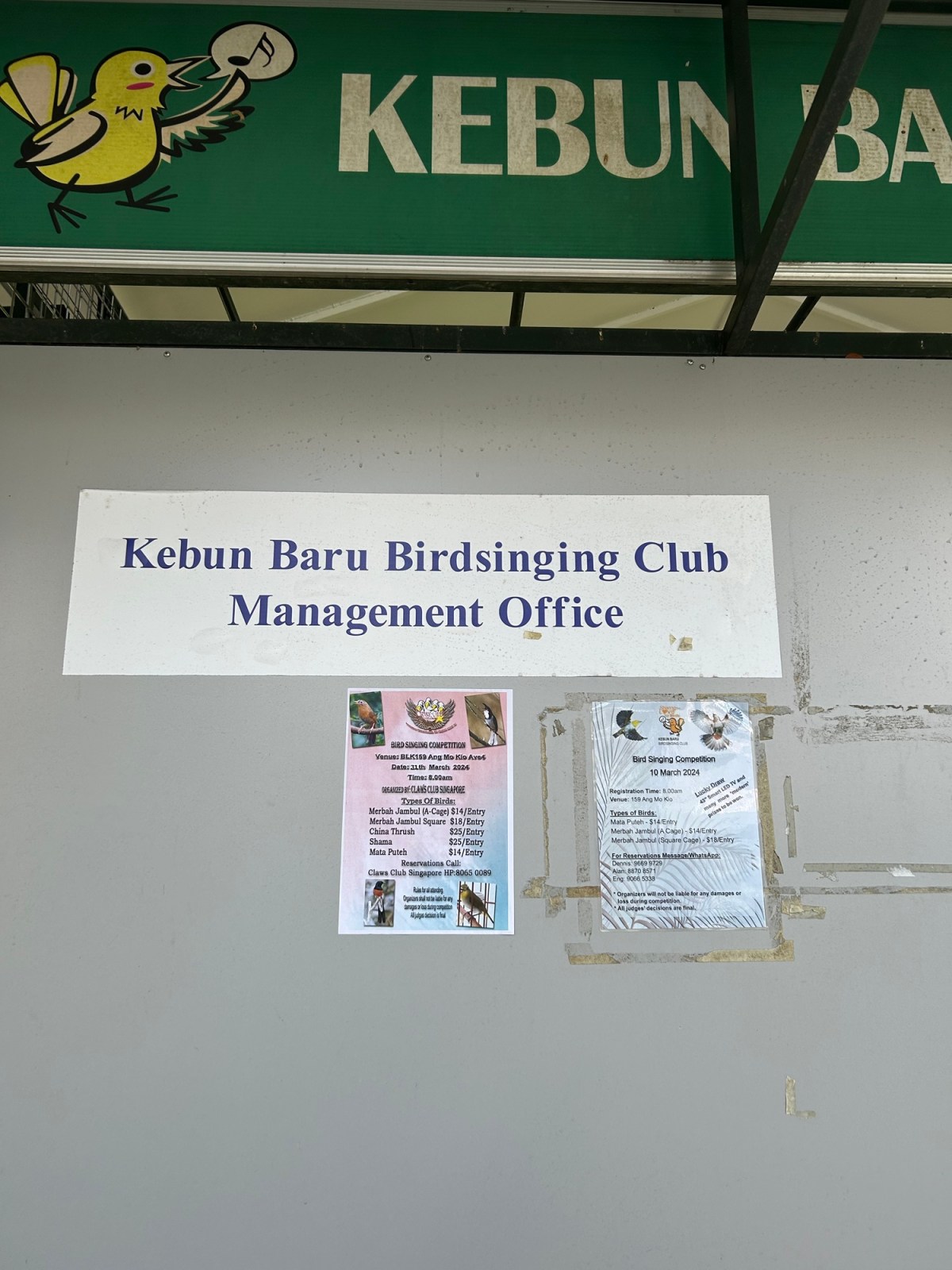
The Kebun Baru Birdsinging Club. The only one left in Singapore and the largest in SouthEast Asia. Bird aficionados from all over Singapore come here – especially on Sundays – and bring their birds for an airing. The field of poles (there are hundreds of them) are for zebra doves . Zebra doves nest in trees, so they get to sit up in the sky with a view. This seems to be a predominantly male activity, and the whole time we were there men would arrive carrying bird cages with a cloth cover and walk out, untie a line and drop a hook down, uncover the cage, attach it to the hook and hoist the cage into the air. The men had chairs and they would sit and chat while their birds sang to each other.

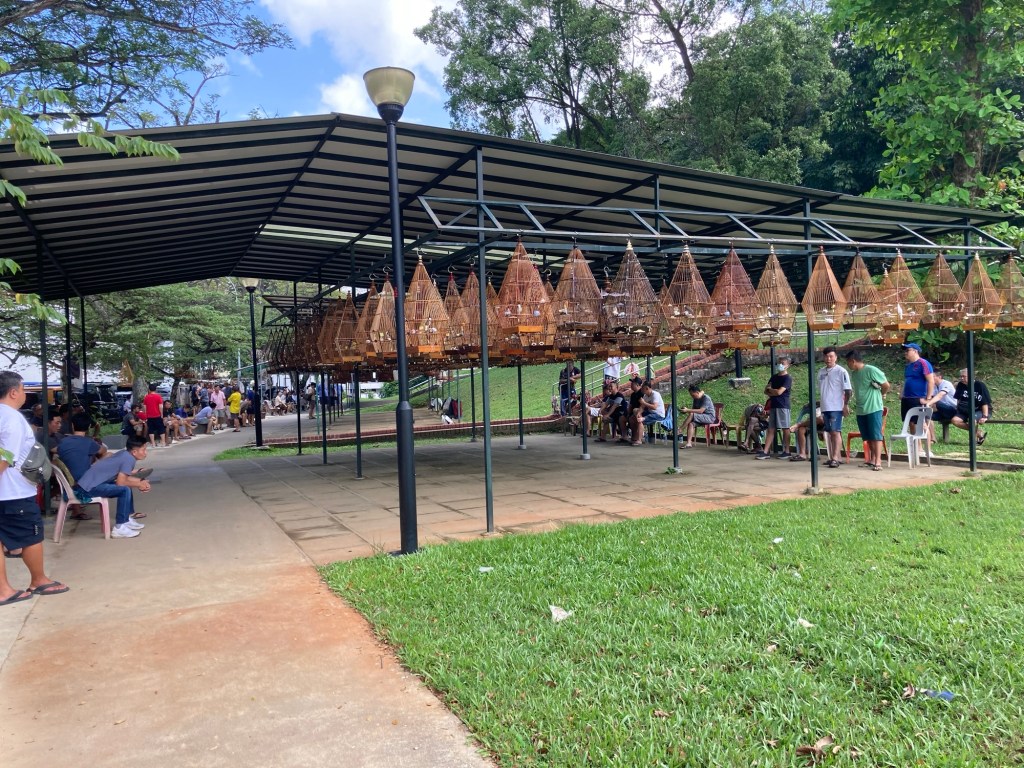
There is another whole section for birds that live in small trees and shrubs – these are small roofed areas. The birds are clustered by type – redwhiskered bulbuls, long tailed shamas and an assortment of tiny songbirds. All swaying in the breeze. All the cages hang from hooks and each hook is numbered. At first I thought each person had an assigned position but as we watched there seemed to be a lot of moving cages around – a bird would be in one place for awhile, then moved to the other side of the compound.

Apparently there are competitions held regularly and the birds are judged on their attractiveness and their singing. And they can be very expensive.

The Singaporean government regulates housing, and provides most of the housing in the city/state. Eighty percent of people live in public housing. In the district where we are staying the public flats are 15 to 20 stories, arranged in clusters of about 5 buildings. These clusters have ground floor shops, food courts, daycare, medical facilities, playgrounds, parks and more. There are often schools, especially primary schools, associated with these clusters. They are served by the excellent transit system, which is ever growing. And the fact is, in an island nation, the only way to go is up.

In the area where the Birdsinging Club is the public housing is not quite as dense – the buildings are not as tall. But from the map below you can see the clusters of housing units. But I do wonder what the arrived of the new subway line will do – will some of these older housing complexes fall so that bigger ones can be put in their place?

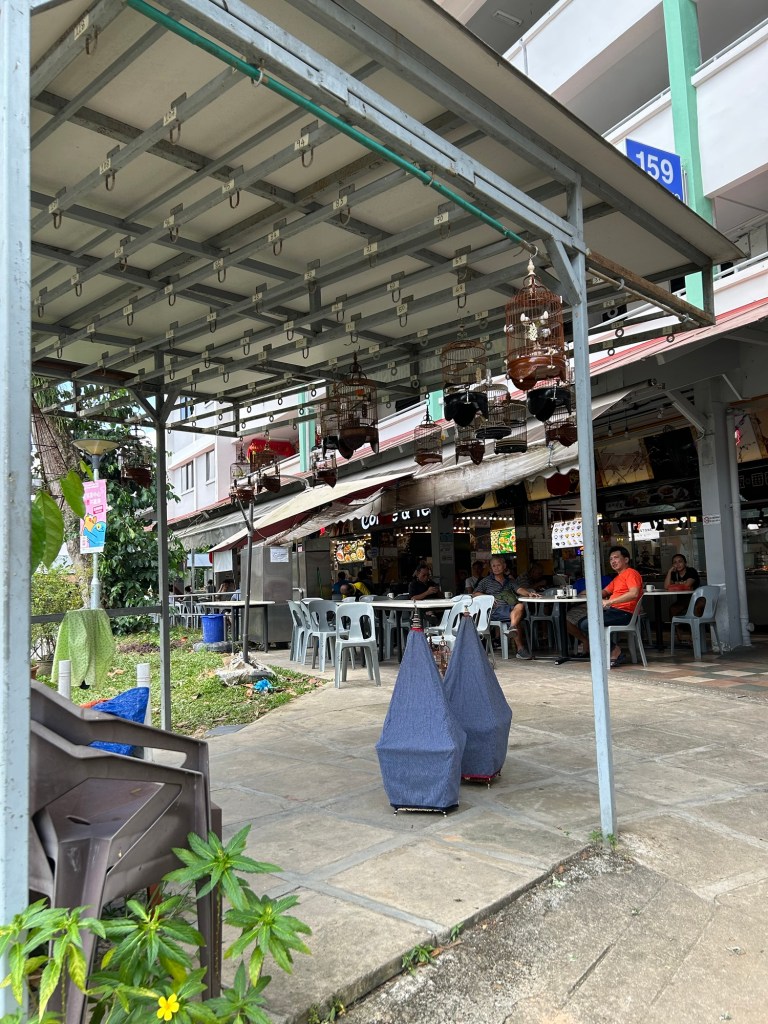
You know you are near the Birdsinging Club when the food centre has a little atrium off of it so the uncles can safely stash their birds while they go in for a snack. No animals in the food centre!

And here’s a video of what it sounds like with all those birds! And I should mention how beautiful their cages are – fine woodwork, hand painted china water dishes, carving and inlay. Really lovely.