Sometimes things do work out. When we are planning our trips to Japan – to anywhere, really, we do a lot of research. Wilf, especially does research. What do we want to see? Nitty gritty stuff – like what are the hours and are they closed on certain days of the week? Hate getting caught by that one… For our trip to the museum in Kawaguchiko we reviewed the website calendar over and over again to be sure that they would be open on the two days that we would be there.
But sometimes – we get caught!
Wilf had us scheduled to take a day trip from Nagano to the little agricultural town of Obuse. One of the things to see there is a small museum dedicated to the artist Hokusai. We went to a big museum dedicated to his work last year in the Sumida area of Tokyo. In the later part of his life Hokusai was invited to come to Obuse by Takai Kozan, a wealthy farmer and patron of the arts. Hokusai stayed in Obuse for several years and there is a small museum dedicated to him.
Except that this year, right now, they are changing from one exhibit to another and the museum is closed. Grr. The children’s area, cafe and shrines are available, but that is it. We decided to go anyway – have lunch, see a bit of the town, etc.
That turned out to be a good decision. Not just because we had a good lunch, but because there was another museum to see!
We got on the train under the main station in Nagano, and after two stops popped above ground, where we continued to ride through small towns and many orchards. We are in a part of the Japan known for its soba noodles, so that was on the menu for lunch. At the Obuse station we went into the tourist information centre and had a great conversation with a young lady there — she had studied at UBC in Vancouver. She confirmed that the Hokusai museum was closed, but told us that the property of Takai Kozan had been restored and was worth a look – it holds some works by Hokusai, as well as some of his contemporaries. And some by his daughter. We also got a restaurant recommendation, which matched what Google had suggested.
A short walk brought us to the restaurant, where we did order the soba noodles. This pictures shows the lunch I ordered. It was very good. But I want you to notice the counter we are sitting at. The whole length is one enormous piece of wood! Beautifully crafted and finished. We faced windows that looked out to the garden.

Being a hot day I went for the chilled soba noodles. You can see them piled on a little tray. In the background is the tempura that is part of the meal, and a small dish of sauce for the tempura. Closest to the camera is a small flask with a cup upside down on it. The plan is to pour some of the sauce from the flask into the little cup, then dip the cool noodles into the cup. And then slurp slurp down go the noodles. When the noodles are all gone the flask is emptied into the cup. There is, beside the teapot on the tray, another pot which contains hot water from cooking the soba. That gets added to the cup and is drunk to finish the meal. And there’s a dish of pickles in there, too. I can now say I’ve had a meal of chilled soba – it is cool and refreshing. Wilf had the chilled noodles over rice with mushrooms, but without the extras sauces. All good!
From there we walked down the street to the Takai Kozan house. He was from a family of sake merchants, and they were successful enough to finance other farmers, who paid them in rice. The property has the restored house as well as a granary where the rice was kept. Takai Kozan was wealthy enough that he could travel, and he hosted artists for long periods of time. Sadly, he does not have a Wikipedia entry for your reference.
It sounds like Hokusai and his buddies had a grand old time in Obuse. Hokusai had the practice of drawing a lion every morning, and there were examples of the different styles he used for his daily drawings. There were also screens that had drawings and poems written all over – rather looked like the result of an evening of sake drinking. Over his long long career Hokusai explored many styles of art – even including making big banners and flags. In the days before big format printers a lot of them were painted directly onto big panels of fabric with giant brushes.
But the thing I wanted to show you was this:
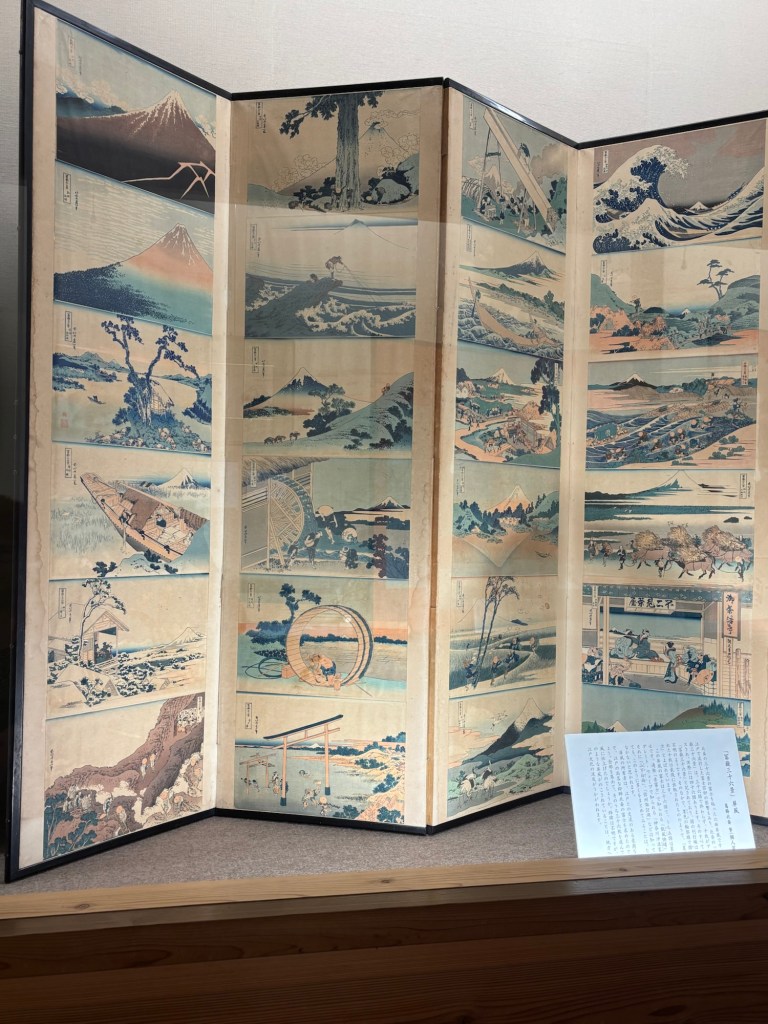
Do you see the upper right panel? That is ‘The Great Wave off Kanagawa’, one of the most iconic art images of this century.. Did you know it was so small? We see it everywhere. But originally it was a page in a book of prints, about 12” x 18”. Not as big as a billboard!
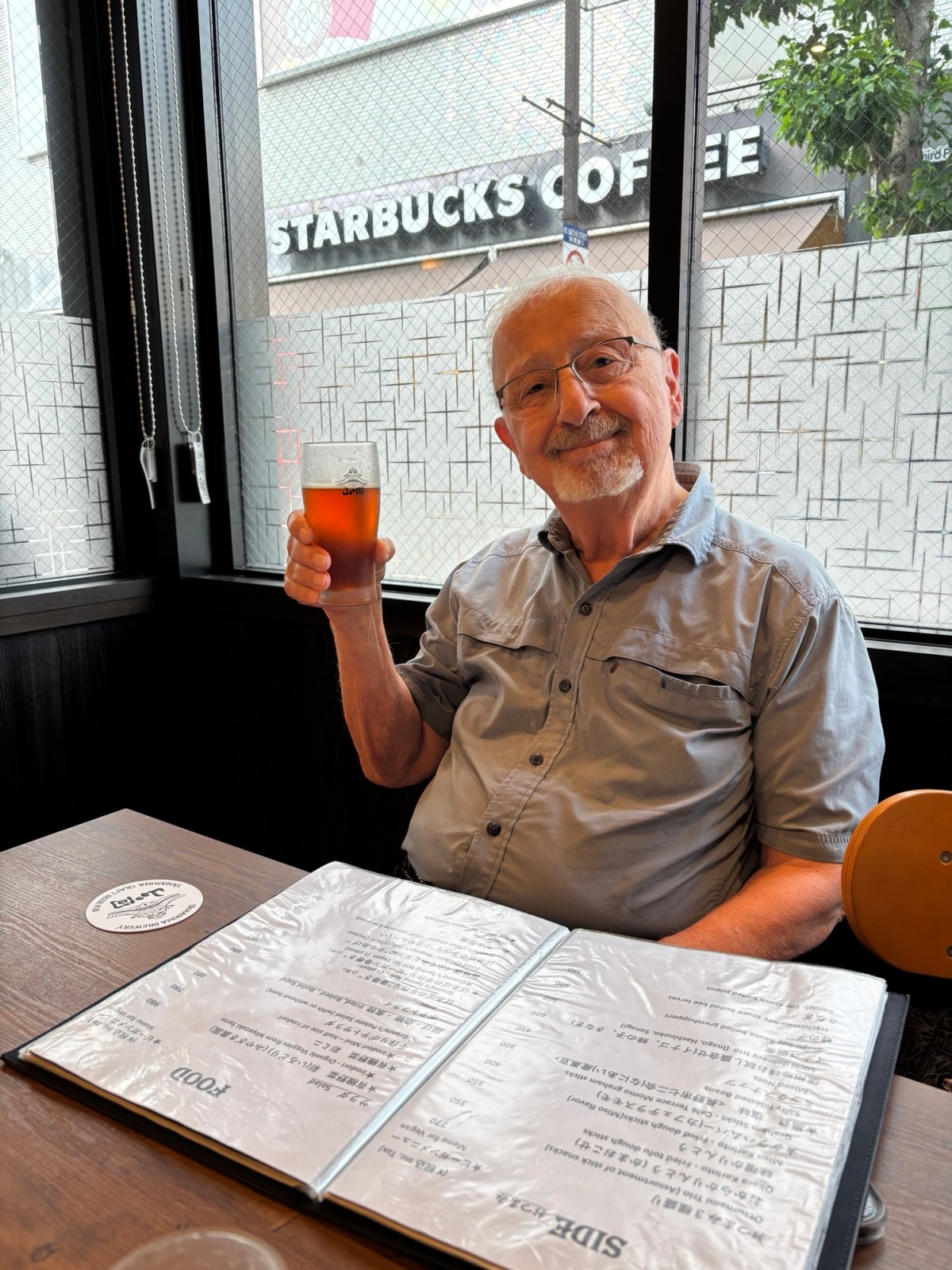
After our visit to Obuse we stopped at the little brewery next to our hotel.
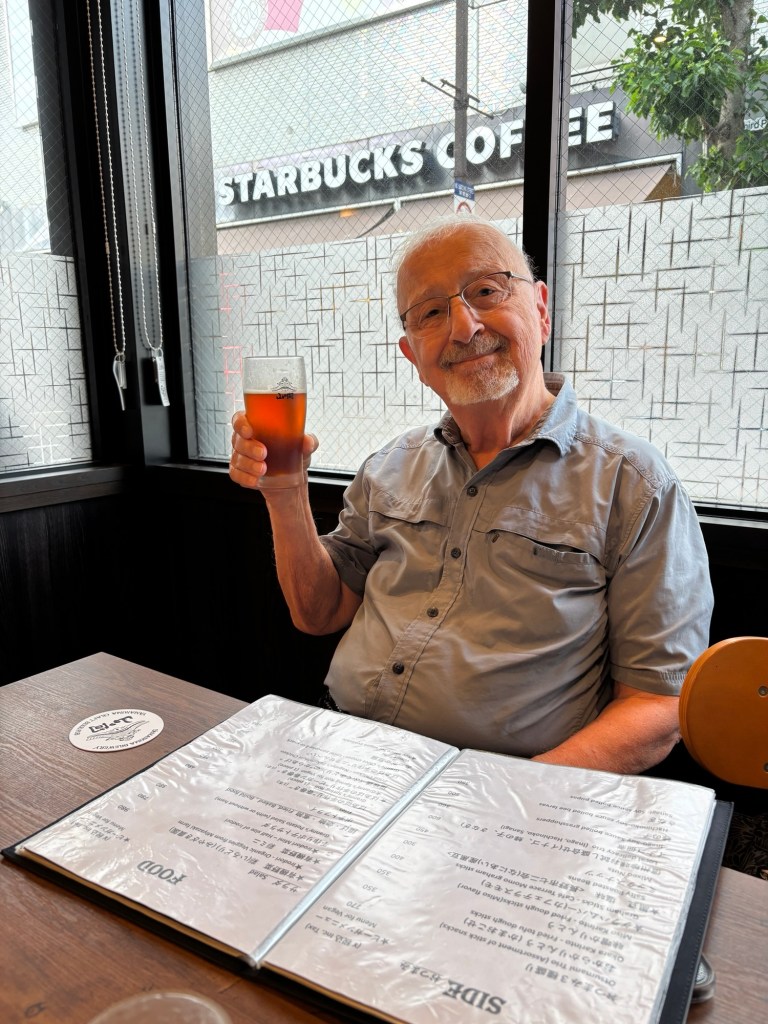
Nice little pub. With some unorthodox bar snacks on offer….

And Nagano concludes the ‘on the road’ portion of our trip. Tokyo is but 1hr, 15 min away by bullet train.

 Where I'm At