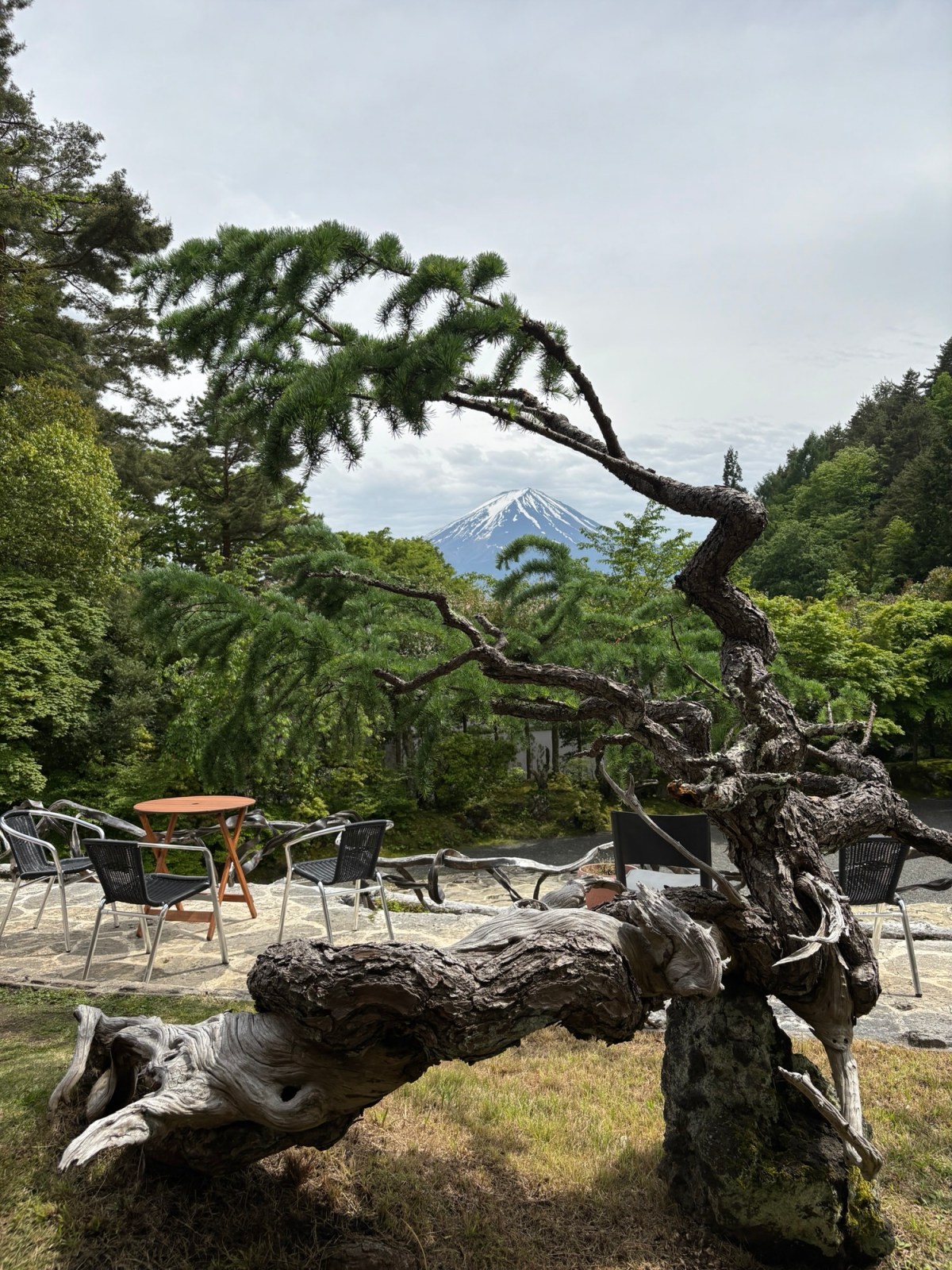
My desire to see the Itchiku Kubota Art Museum was what led us to Kawaguchiko. Mr Kubota was a textile artist. He worked in the textile industry, creating fabrics for kimono and for theatrical costumes. When he was a young man he saw a fragment of fabric that had been dyed using techniques since lost to history. He became obsessed with recreating those techniques and by the time he was 60 years old he had figured it out.
Back in the early 1990’s I remember hearing about a touring exhibition of amazing kimono – the show was at the Smithsonian and the Canadian Museum of Civilization. We were in Calgary at the time, so I was not going to see it. I now realize that they were Kubota’s kimono.
No pictures are allowed in the museum, which is beautiful in its own right. I will provide you with links should care to follow, and a few photos from the book I bought.
Kubota worked both on individual kimono, and made collections that when the kimono were displayed together images swept across them. There are 103 of them – he thought if he lived to be 100 he would complete all the work he wanted to create. He made it to 85 years old.
Itchiku Kubota Art Museum Wikipedia Article
Itchiku Kubota Art Museum Itchiku Kubota Art Museum website (In Japanese, but your browser may translate)
Starting with plain white fabric Kubota and his assistants would stitch, dye, paint, embroider and totally transform the base material into stunning art pieces. While the kimono are art pieces, they remain wearable, functional garments. Heavy, though.
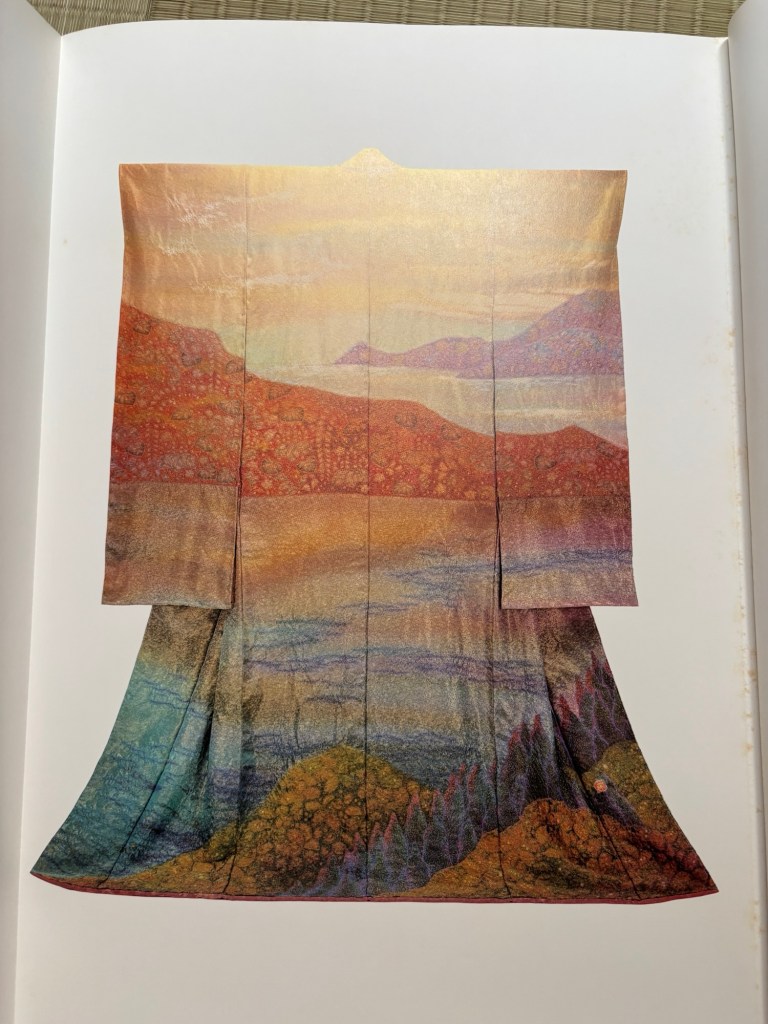
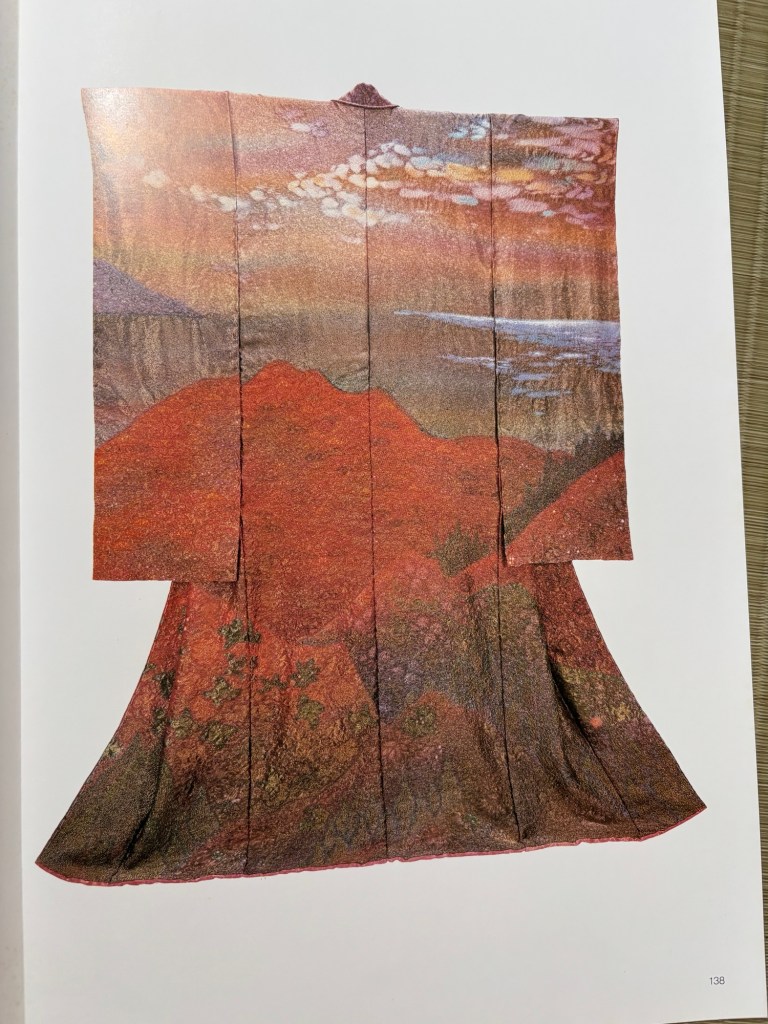
Two landscape kimono.

Showing how the images flow from one kimono to another.

The same kimono viewed from the front.
Excuse my crappy photos taken from the book. Nothing can compare to seeing them in person. As I mentioned some of them are regular sized, others are of a larger scale. Some reference older, historical styles and techniques. Some are shockingly bright, others delicate and mysterious. And always – the amazing texture. The process of creating the designs uses tiny stitches, sewn in to manipulate the fabric and colour placement. When all is said and done the stitching is removed, part of the final decisions involve how much of the texture from the stitching is to be left. In some places the fabric is ironed almost flat, in others the colours stand proud from the overall surface.
Kubota wanted all the colours to be available to him in his work, so he used modern dying products and techniques in addition to more traditional ones. The results are astonishing.
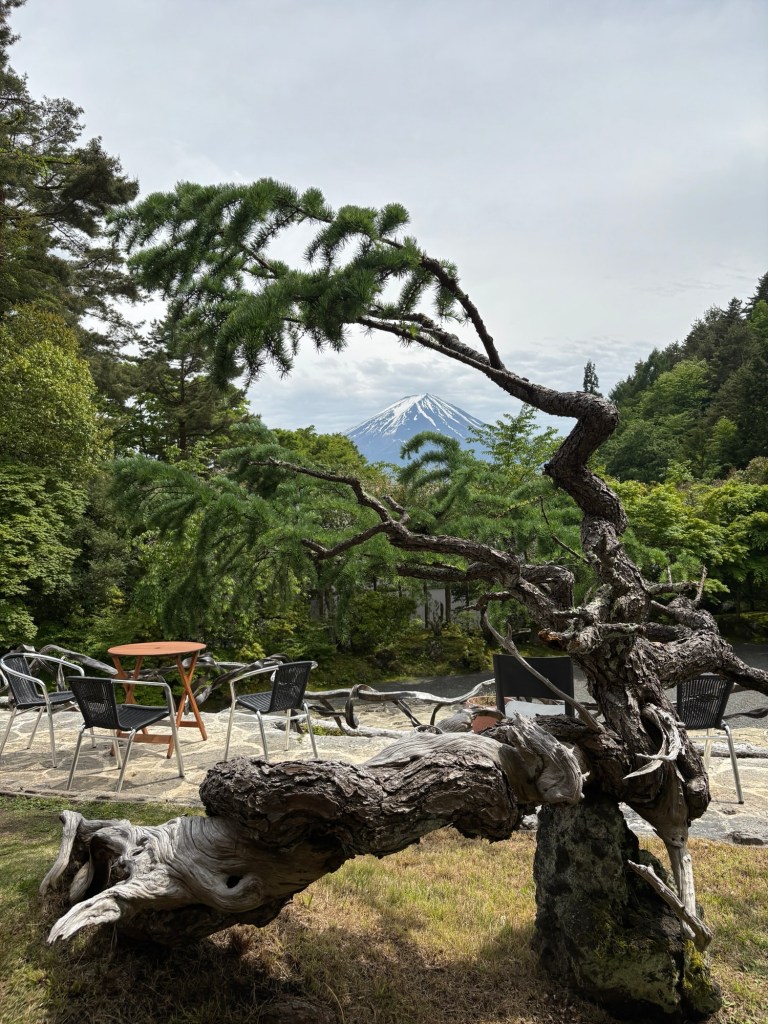
The grounds of the museum are also beautiful – the original building is where he lived and worked. A second building is inspired by Gaudi and seems carved from the rock. It is all surrounded by beautiful gardens.
And of course – the view:
I am so glad that we made the time to come to Kawaguchiko. I’ll be thinking about the work I saw for some time….

 Where I'm At