I am reminded again and again about how geology shapes culture. In North America our landscape is shaped by time and water. But also by ice. In the mountains we may not even think about how the valleys are wide and u-shaped, with rivers meandering along the bottom of the the valley. Japan, too, is shaped by time and water, but not by ice. More by fire, actually. The valleys here are deep and dark through which rage rivers.
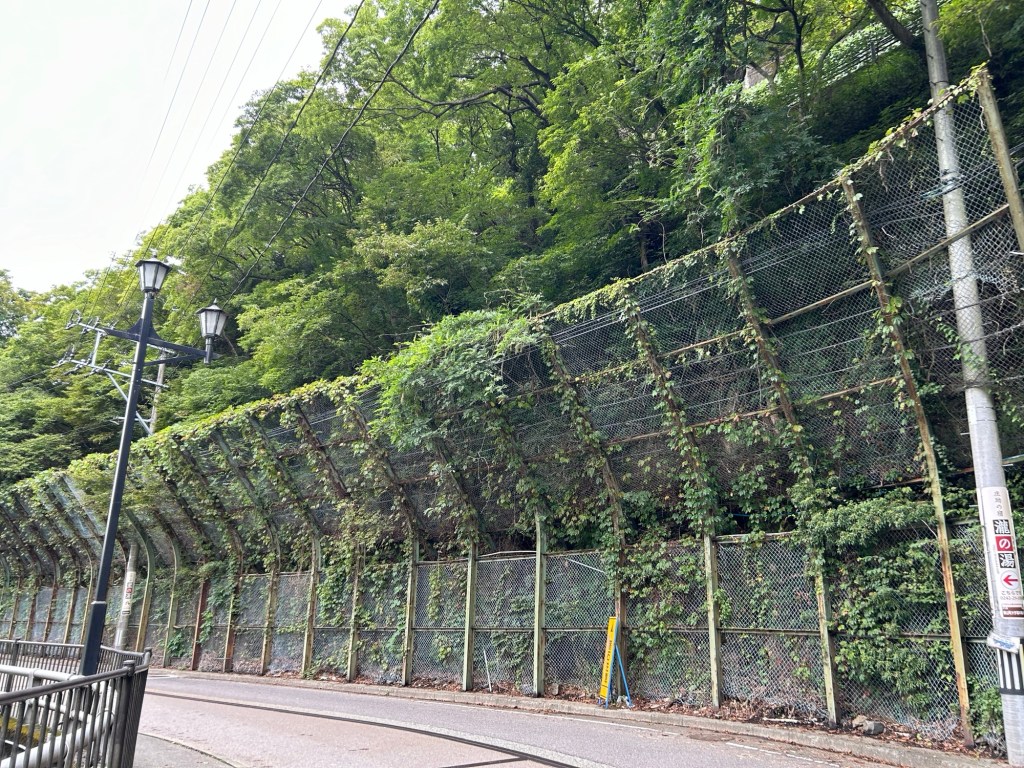
We are staying in a ryokan on the outskirts of Aizuwakamatsu. While the city is fairly flat it nestles up against low mountains . We took the city bus to get here and after rambling along for a bit there was a turn and suddenly we were in a cleft, with the hillside like a cliff on one side and the backs of buildings on the other. The bus had to drive under the last building on the row to turn around and come back up the road to drop us at our hotel.

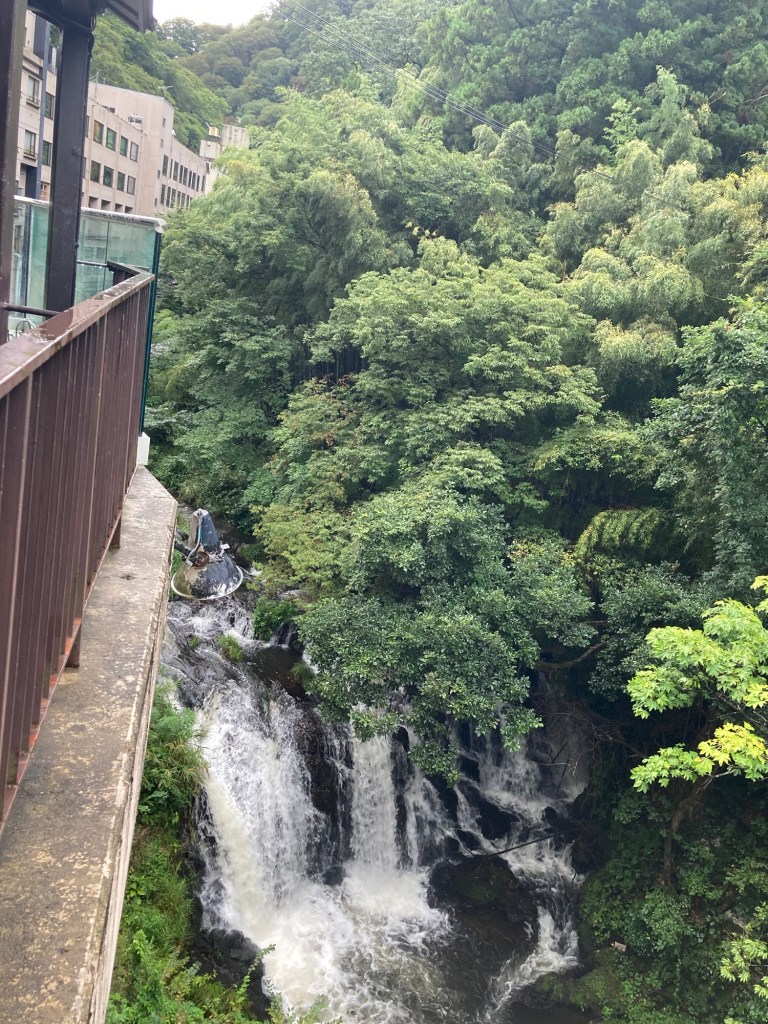
The inn is right on the edge of the Yu River. In fact its name is Takinoyu, which I believe means hot water waterfall. Looking out onto the river side…
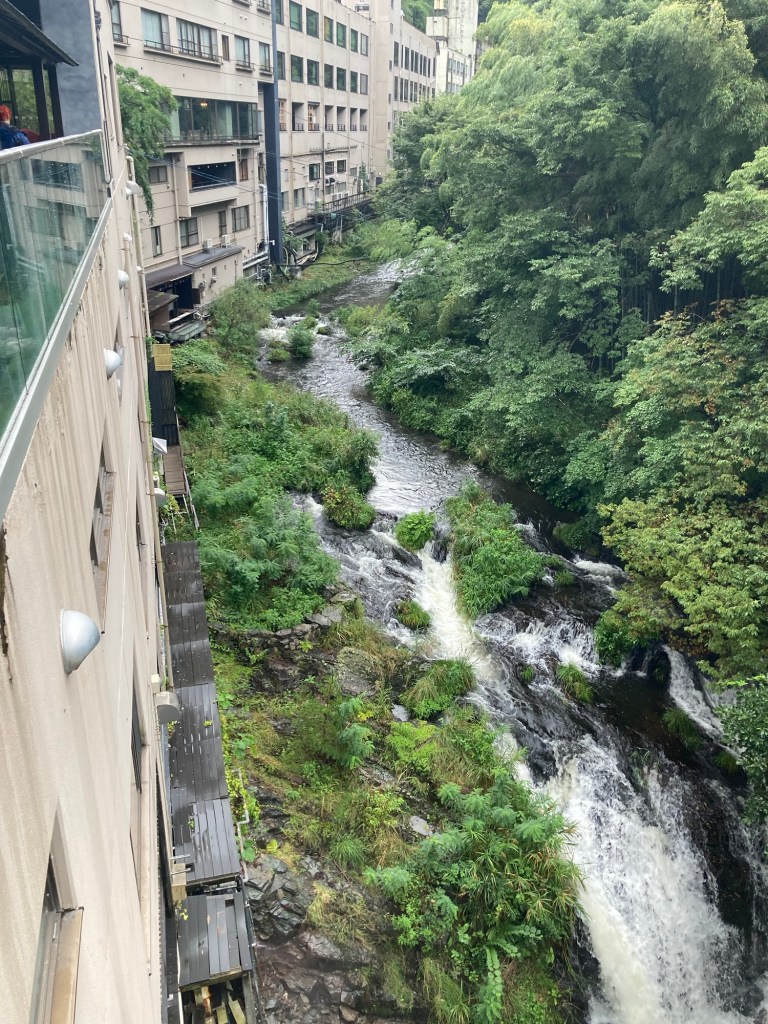
You can see what they mean by waterfall. The hotel is long and thin. The lowest level is the public baths, though there are private baths that can be reserved on the roof and in other nooks and crannies. The rooms are traditional Japanese rooms with tatami mats. And yes that means we sleep on the floor. The bed set up here is very comfortable so that is not a problem. The getting up and down from the floor is more of the problem. They reset the room every morning, which means they put the beds away and put the big table back in the middle of the room. Which is nice, but….. there’s nowhere to lay down for a nap in the afternoon…
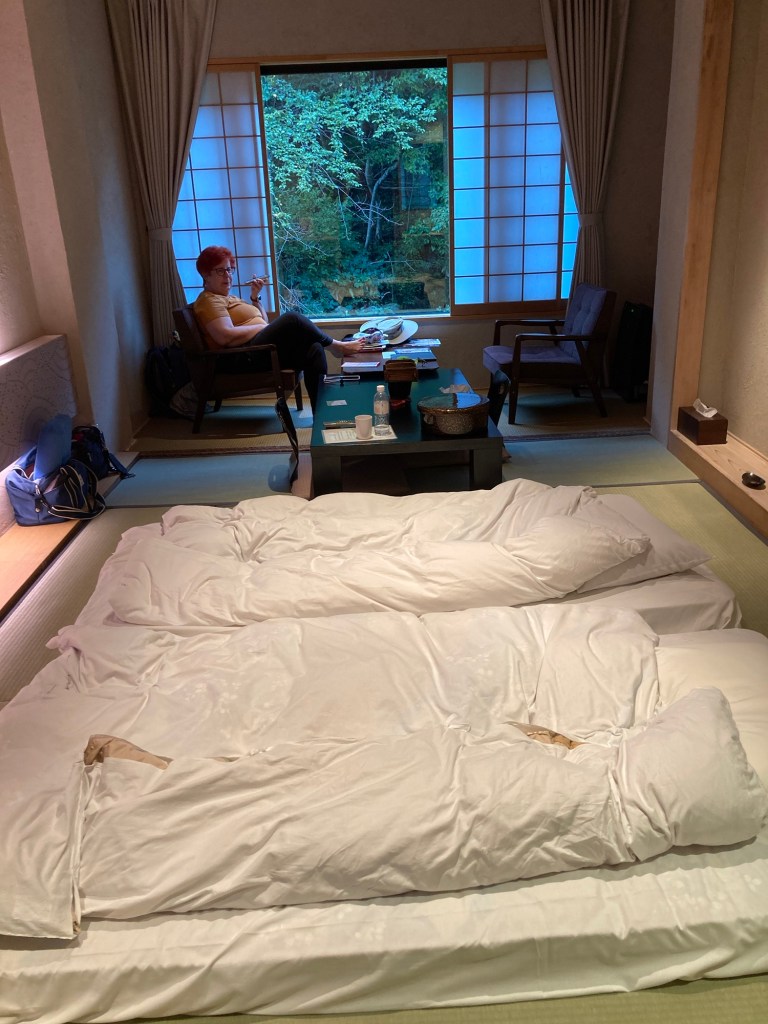
Here I am talking to my Mom before the room has been dealt with in the morning. Looking out the window it may look like there is a tree right there, but it’s actually on the other side of the river.
We’re not closes to town, but never fear, meals are included – dinner and breakfast. And they are serious meals – this is fine dining.
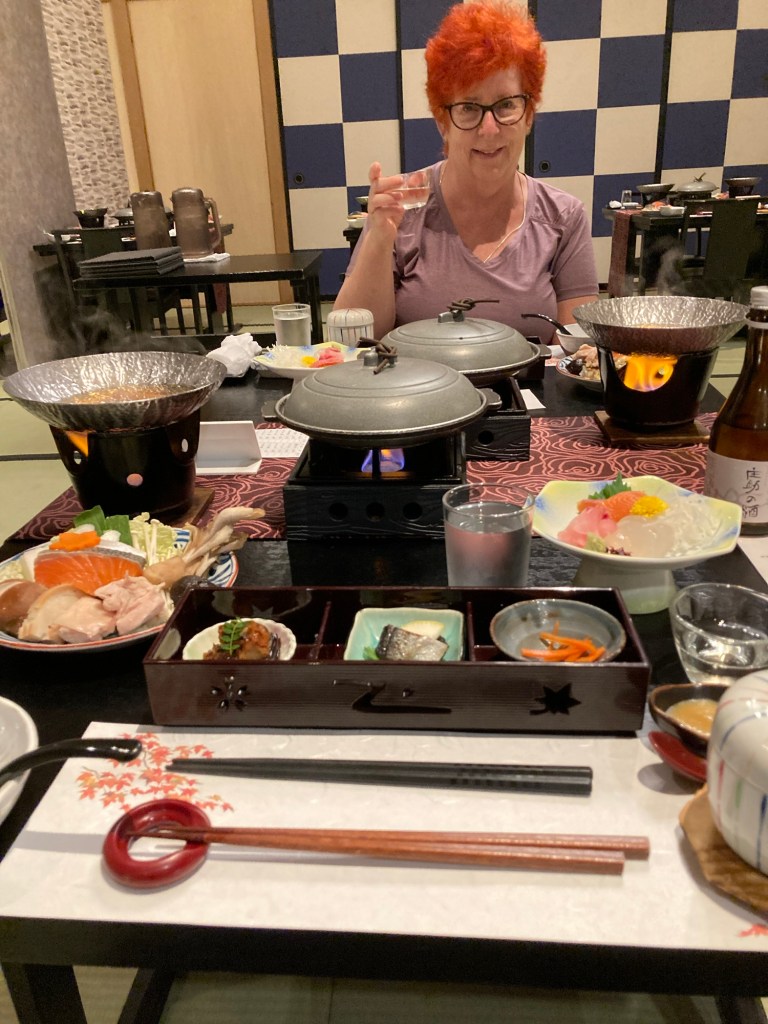
Dinner set up first night. So far each night the food has been different, but the layout the same. Between us you can see little gas heaters. One has a lid. This night there are fall vegetables and pork slices cooking in there. Other nights have been chicken or fish. The bowl to the left contains the liquid for a hot pot, and the dish in front are the ingredients. Once the liquid is boiling we put the meat and veg in to cook. There is also a plate of sashimi, three small appetizers. A bowl of chilled soba noodles arrived later and eventually miso soup, white rice and pickles arrived. Dessert was a pudding of some sort. All very fresh, very local, very delicious.
Breakfast has a similar routine:

Fish, little omelette, various vegetables, some sautéed, some pickled. Fish roe. Little fishy things in the lower right corner. And a dish of pickles, including an infamous ume – a pickled plum that is delicious and oh so sour! There is rice and two kinds of soup to be had as well.
And there’s a little lady a the back of the room with mochi. If you take sweet gelatinous rice, cook it and pound it for a very long time it turns into a sweet, stretchy mass and appears in all sorts of forms. For breakfast she would reach into her rice cooker which was keeping the mochi warm and eventually extract a ping pong ball size piece.
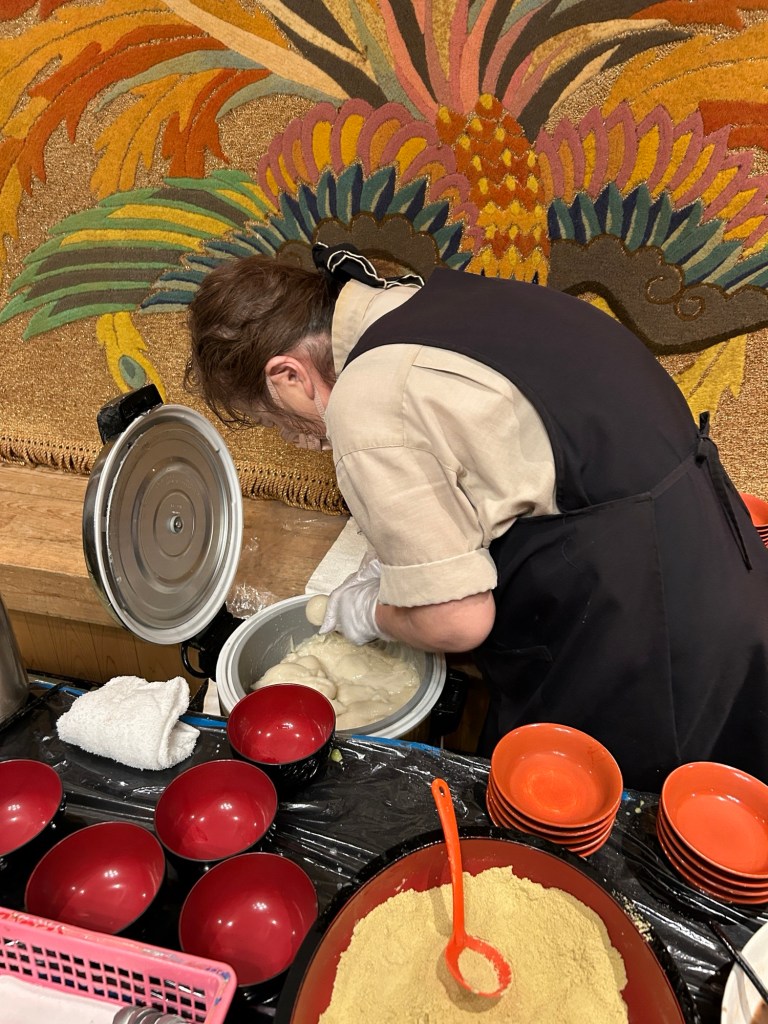
There was a selection of toppings – the above picture shows a bowl of roasted soybean flour, which the mochi is rolled in.
I chose a scoop of chestnut purée
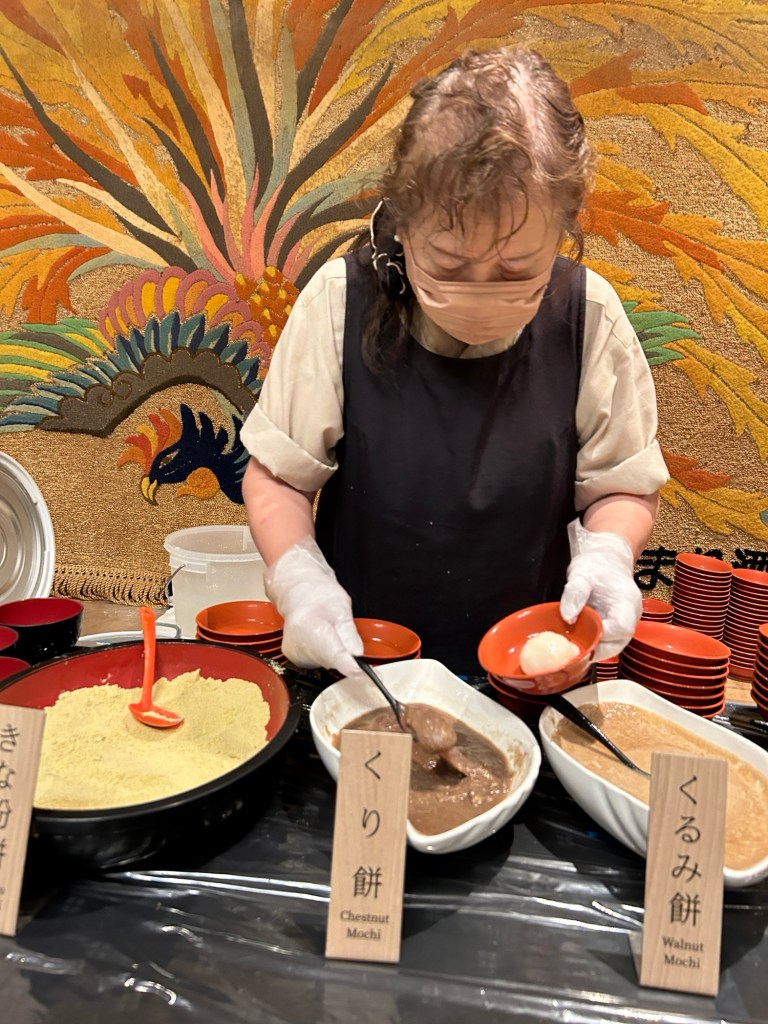
And it was very good!
At first it is a little intimidating to be faced with so many dishes. But there is only a few bites of everything, so it is not overwhelming. It all goes together to make a satisfying meal.
Because this is a hot spring resort with lots of places to enjoy the hot water everyone is issued a cotton yukata and it is totally normal to wear it around the hotel and to meals. And even though the food is formal people come straight from the bath to eat so everyone is dressed in matching robes. Here we are after breakfast this morning
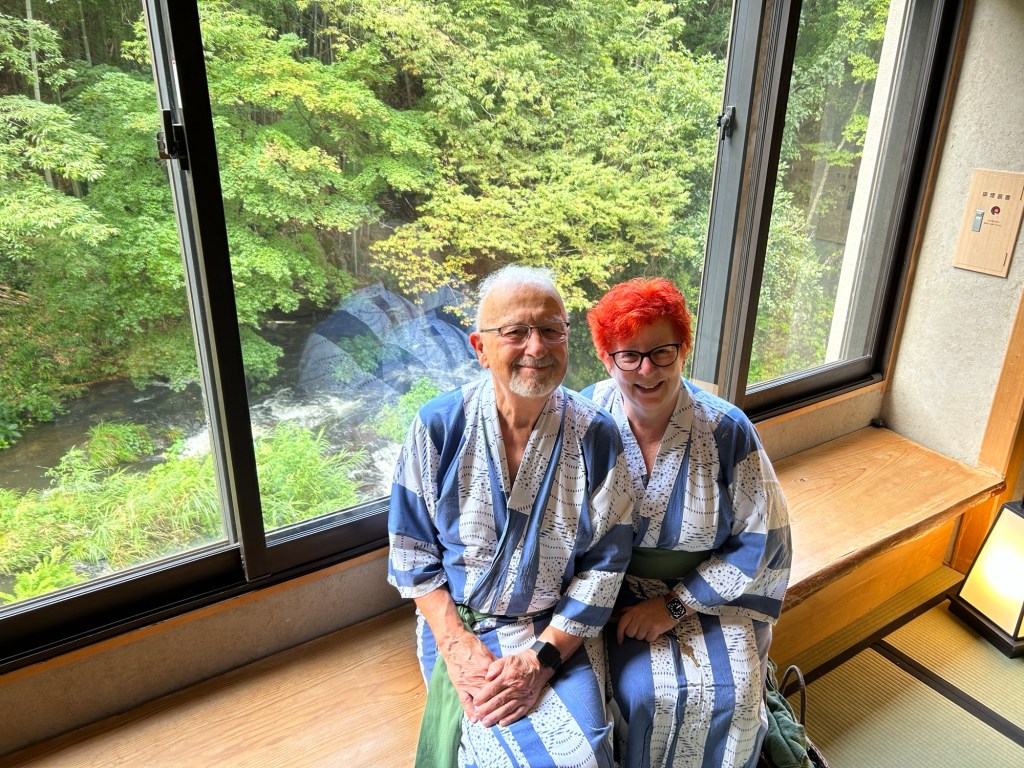
At the beginning of this entry I mentioned the connection between geology and culture. Seeing these narrow valleys with the forest pressing urgently down, where days are often dark and the forest grows fast makes me realize why there are so many Japanese folk tales about ‘things that live in the forest’.

 Where I'm At