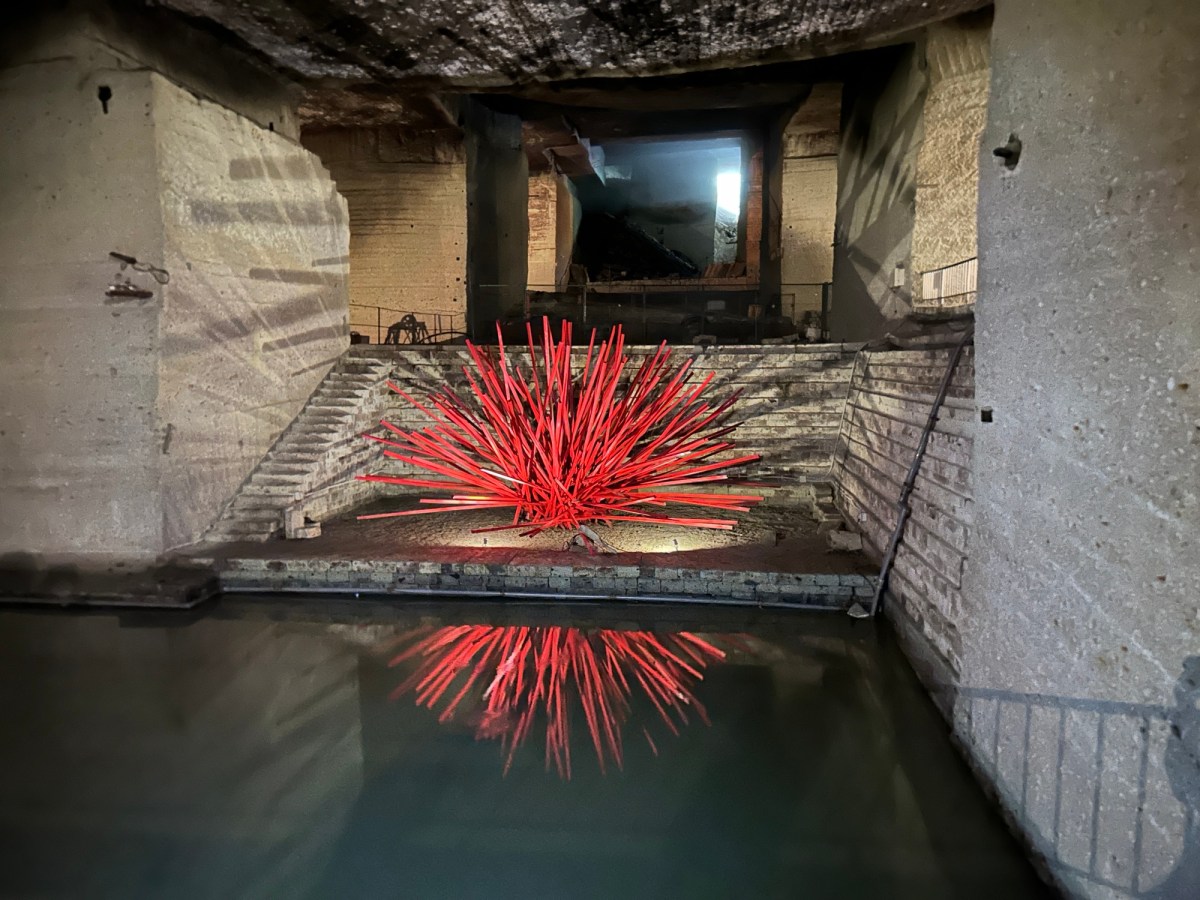
There are some certainties in life. The sun rises in the east and sets in the west. Taxes. And that the trains in Japan will be on time. We know not to be a minute late because the train will come and go right on schedule. If there is a delay of a minute – gasp – the announcements become a long string of apologies.
We set off this morning, heading for the city of Utsunomiya, about 90 minutes on the Shinkansen from Tokyo. Short walk from the hotel to the subway,, short subway ride to the big train station at Ueno, found the track, picked up something to eat.
While we were waiting for our train to arrive other trains would pass through the station. And there was even a pair of trains joined together. That sleek sexy nose of the Shinkansen actually pivots open and the train can be joined to another. How about that.
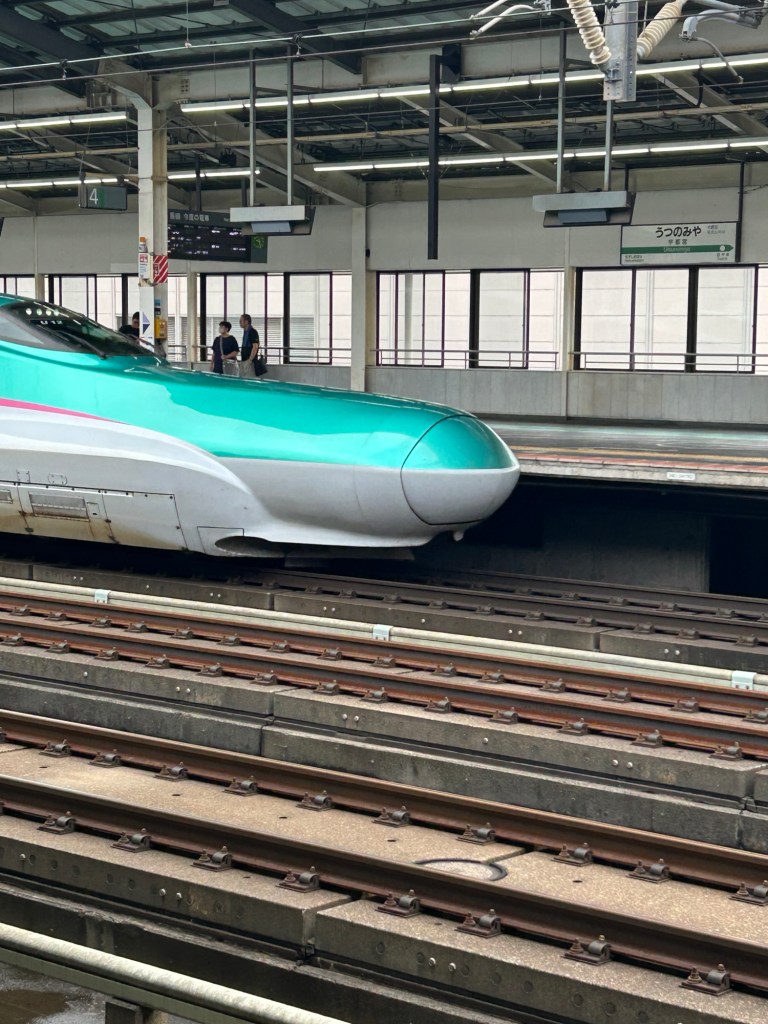
Anyhoo, our train arrived, we found our seats and settled in. Turns out it is too early in the season for the vending machines to dispense hot coffee in cans, and carrying a cup of coffee along with suitcases, knapsacks et al seemed like a bad idea, so we were enjoying a morning bottle of cold latte, which is better than it sounds. Eventually we realized that the doors were still open and we weren’t going anywhere. Time passes, still nothing. And then the announcements begin. We are the only non business people in the car. Everyone else is a salary man, pounding away on their computers, or sleeping. The announcements are a storm of Japanese out of which I can grab a few place names, but clearly something is wrong. Our 8:30 departure is long past – 9:00 goes by. Around about 9:30 an announcement in English – something has happened further up the line and the entire Tohoku Shinkansen line is suspended. Don’t know why but sounds like equipment failure.
We eat our bento box and wait. 10:00 passes and our fellow passengers begin to leave. We don’t know another way to get where we are going, so decide to stay. I eventually realized that I can use my translation app to capture the announcements and at 10:50 the announcements says get off the train, cross the platform and get on the next train that arrives, go one stop and transfer to another train. So – we do that. Get off the train, at least. Fortunately a lady on the platform took pity on us and helped us out. But of course when the train arrived it was already full of people, so we all had to stand. Off the train at Omiya, whip through the station and onto another train (thank you for our guardian angel who was going the same way and swept us along to the correct train). Of course that train was already full of people so we stood until we got to our stop.
Sheesh! What a mess! Turns out two trains ,which had been coupled together became decoupled while flying along at 315km/hr. When the emergency brakes kicked in the trains were 300 meters apart on the track. No derailment, no one injured. But a five hour suspension of the service. The train station at Utsunomiya was a zoo. We managed to get someone to amend our ticket so that we could get a refund for our fare (any delay over two hours and they’ll refund you) but they were still in the thick of things dealing with moving people around, so we’ll sort that out out later. We were among the 45,000 people affected by the stoppage.
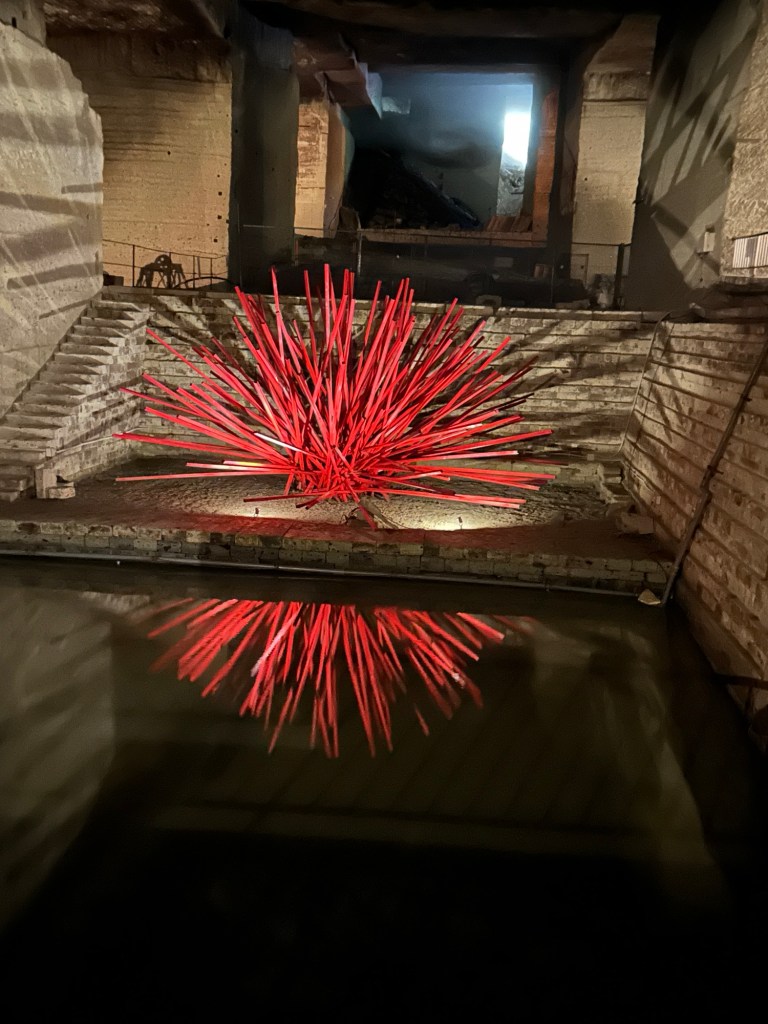
So why Utsunomiya? Knowing its us you won’t be surprised if there is a geology angle, right? We stored our luggage and caught a local bus, which took us to the Oya Museum. The rock formations in this area are made of volcanic ash laid down under water 20 million years ago and then raised into hills in central Japan. So, we went to see some:
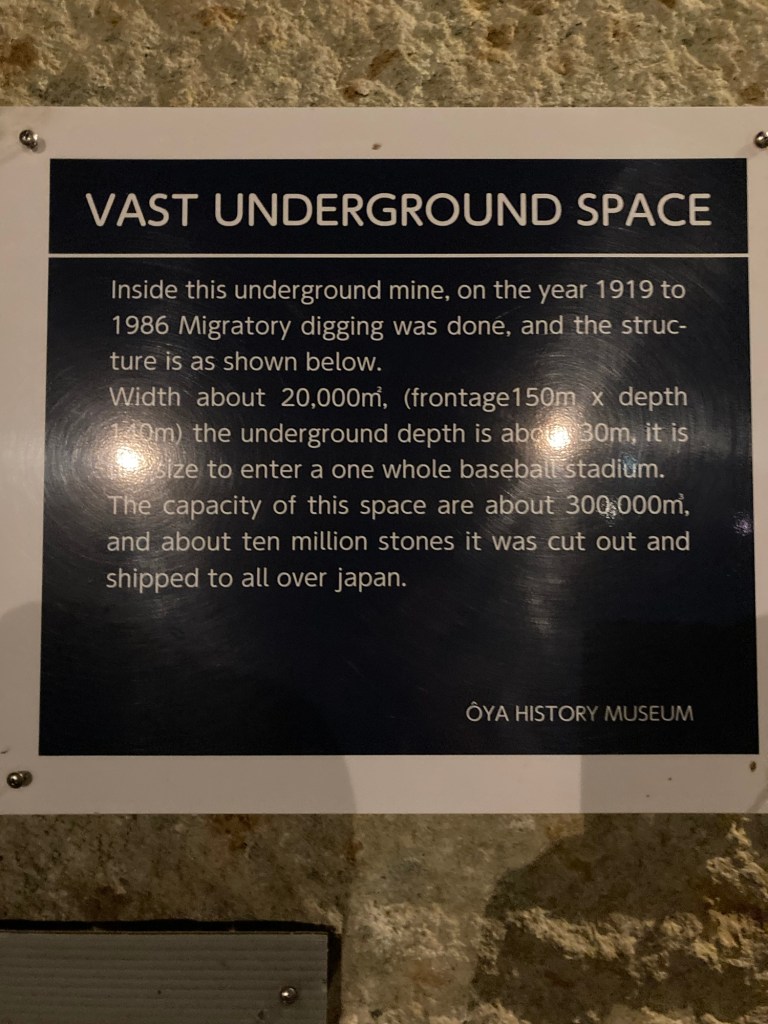
Excuse the reflections, but that summed it up. We went down down down into the ground where the rock had been mined out, first by hand and then by machine.
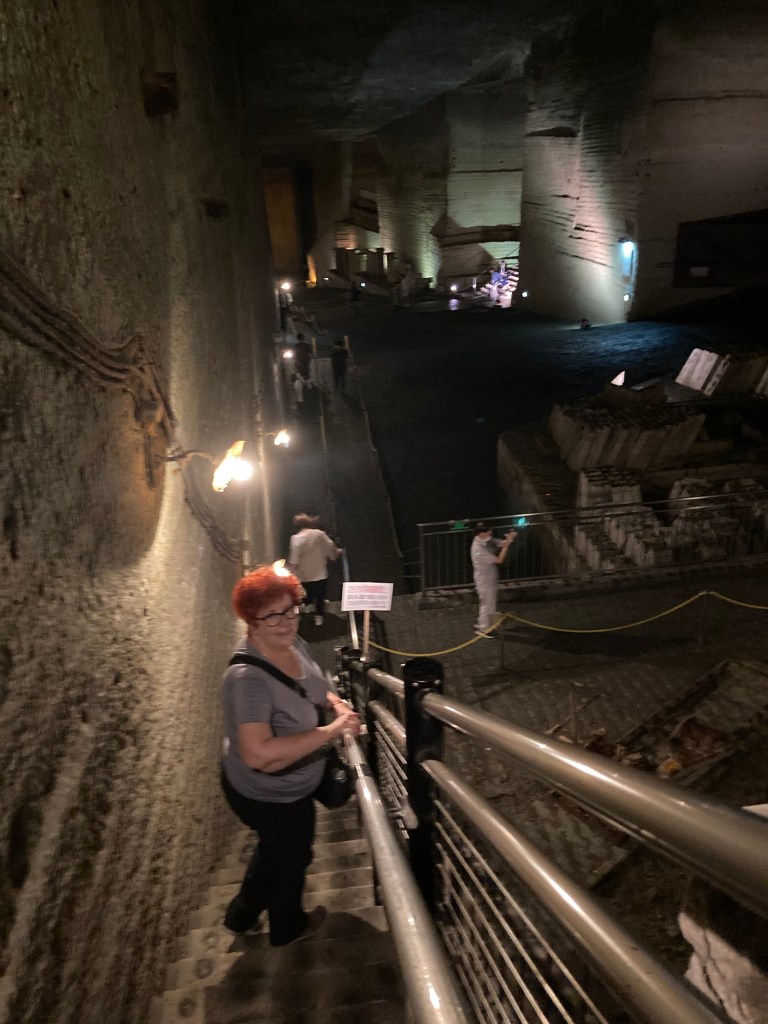
Wilf was astounded at how it was mined. Unlike hard rock mining, there were no elaborate support structures – it was more like a salt mine. It was lovely and cool down there, and we wandered about theses enormous cavernous spaces.
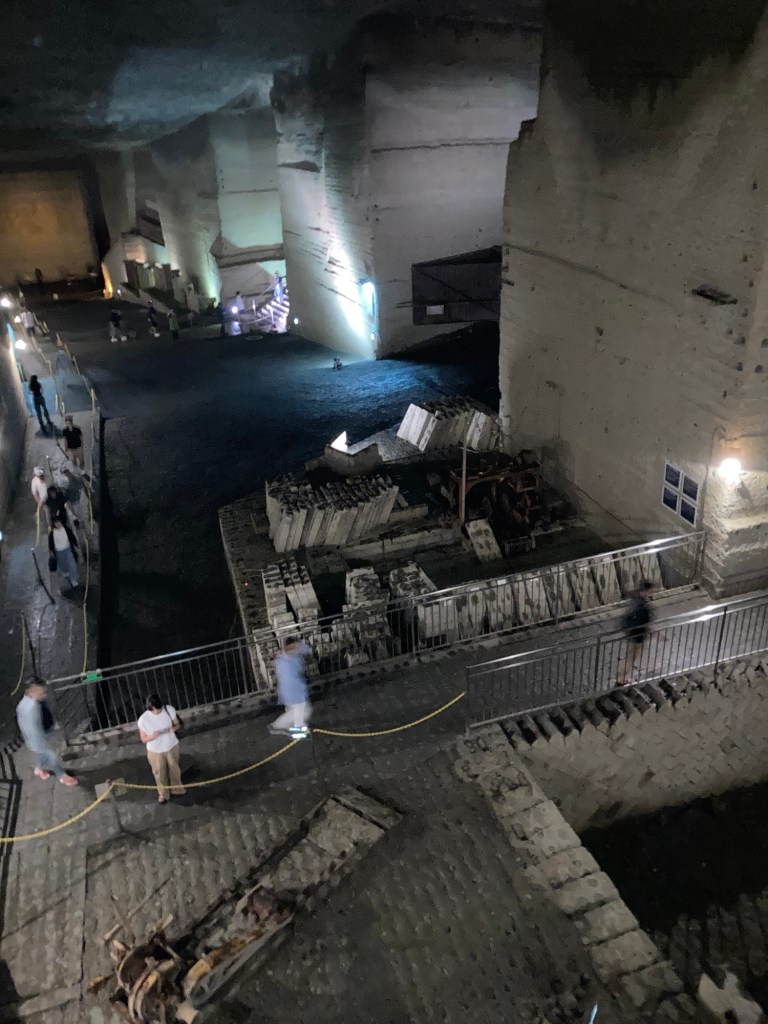
There were rooms and stairs and walkways , pools of water and shafts that lead to the surface . During the Second World War airplanes were built down there.
The walls bear the marks of both hand work and machine work.
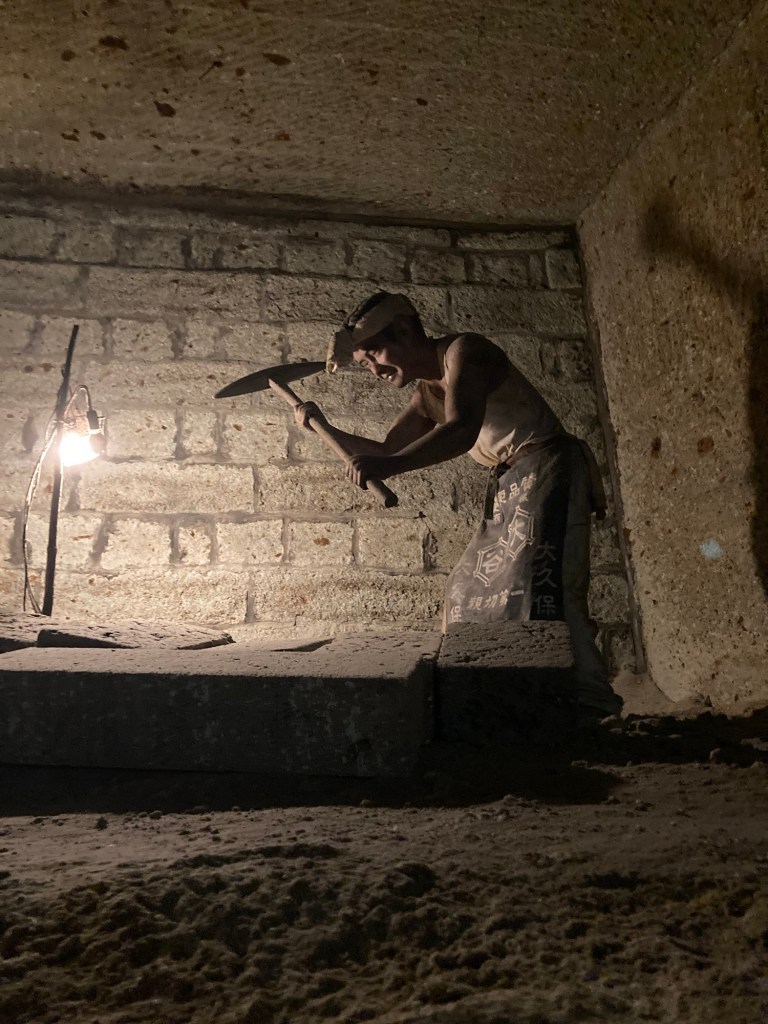
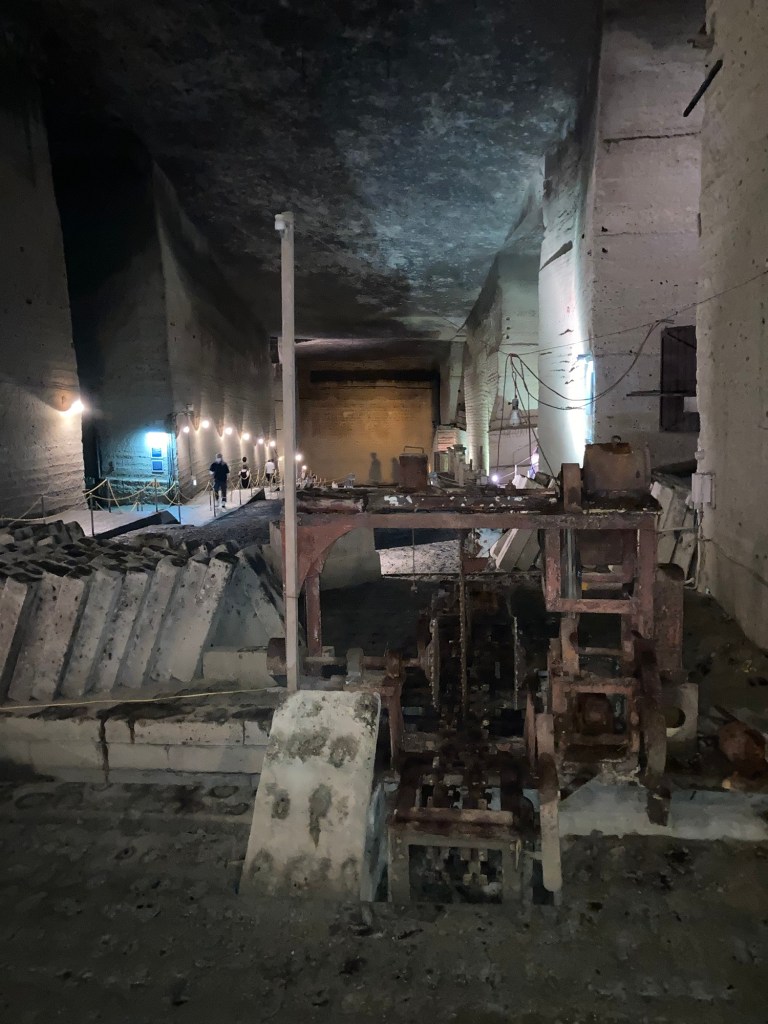
All this activity left some interesting marks on the wall.
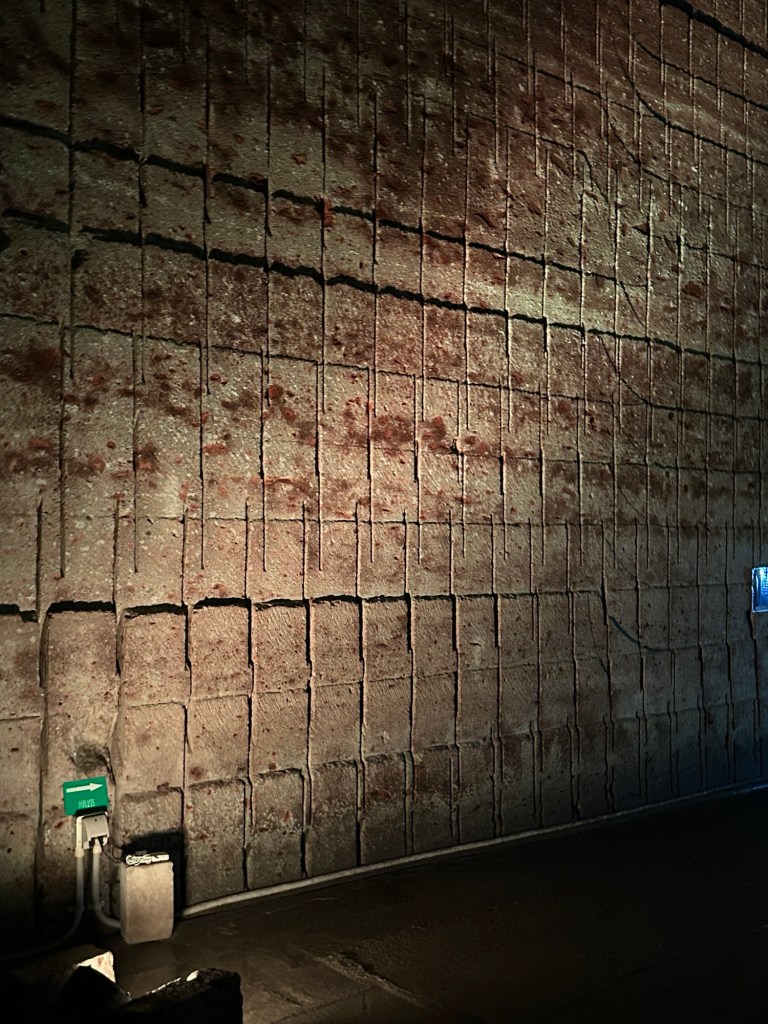
The quality of the stone varied – the above pictures show sections with more iron, which oxidizes to brown. Other areas were an even cream colour. The texture is quite porous and we saw no examples where they put a polish on it. In the early 1920’s Frank Lloyd Wright was commissioned to design the a new version of the Imperial Hotel in Tokyo and the stone from Oya was used for the building. Subsequently it was not considered competent for building and is mostly used for cladding and decorative elements.
So what to do with an abandoned mine, besides hosting tourists? The site lives on as an event space. You can get married down there. There were pictures of various promotional events – product launches for car and luxury goods companies. Concerts. Sets for movies and music videos. Art installations.

And then, if all this wasn’t enough we went next door. On the other side of the hill, as it were. The hills look like this:
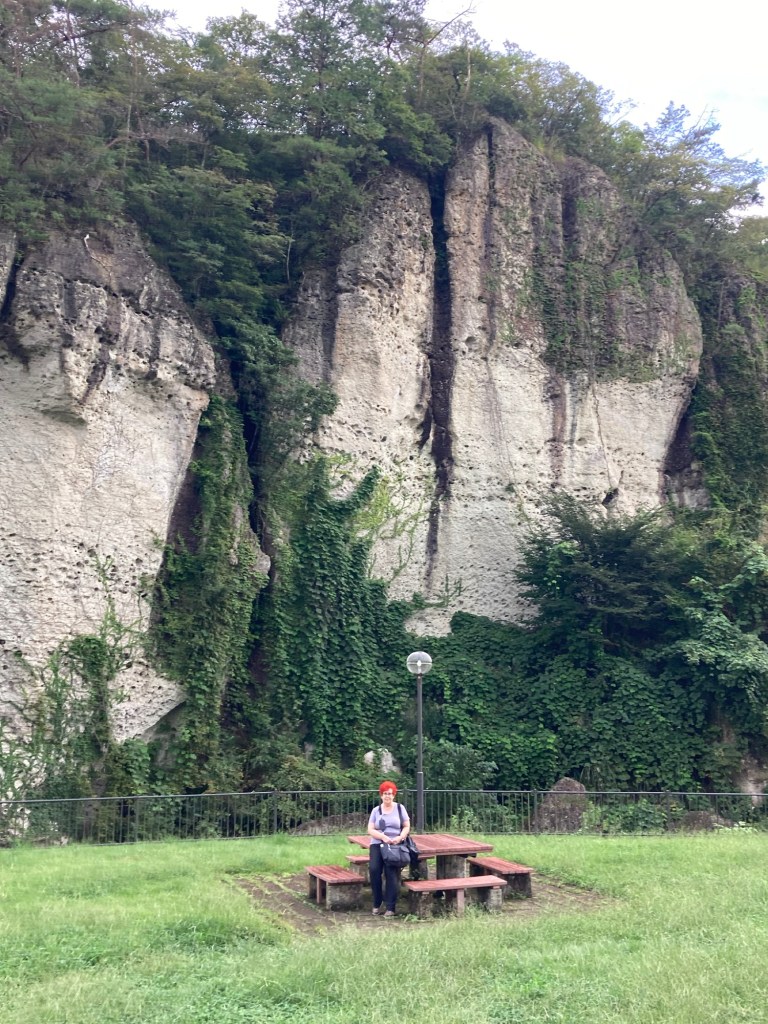
Except when the locals decide to carve a representation of the Buddhist goddess Kannon into the living rock. Then it looks like this:
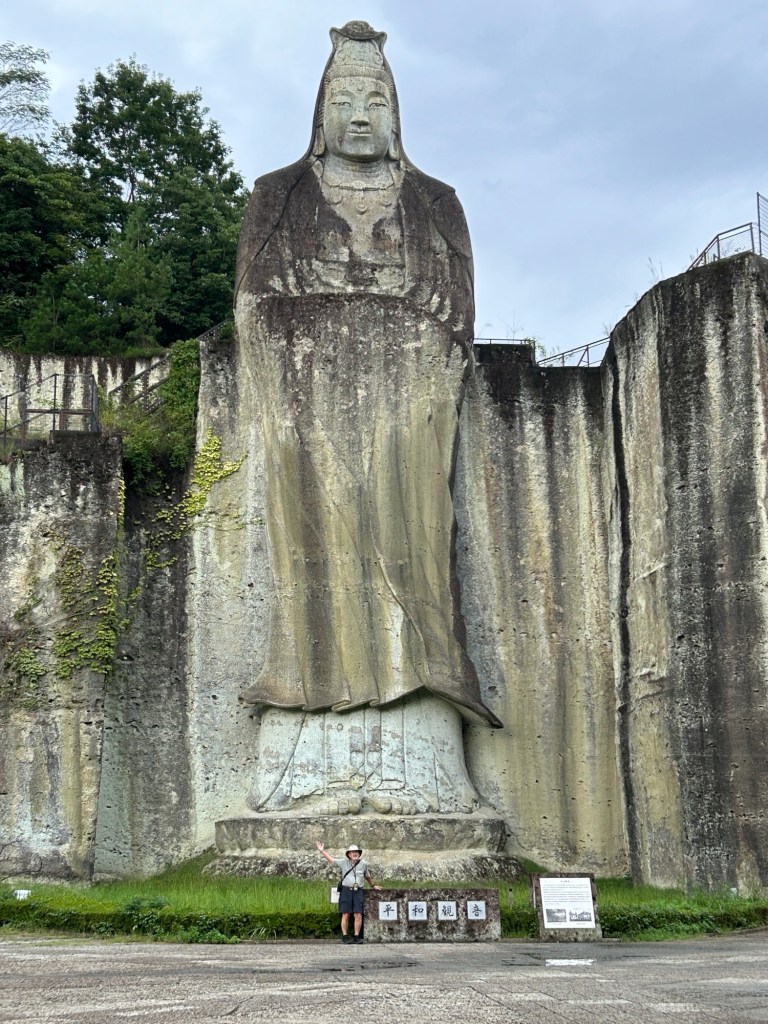
Wilf at the bottom for scale. After the war she was carved into the hill as a memorial to the war dead and dedicated to peace.
So – big day for us and we were plenty tired. Our hotel had a Spa in the Sky on the 14th floor so we could soak our bones. And as important – there was a laundry facility. With dryers! Clean clothes – yay!
After Utsunomiya we’re off to another place with a long name, but that’s a story for another day.

 Where I'm At