When we are traveling on big trips like this one Wilf does a huge amount of research. In the case of this trip – much postponed and reworked – the research went on for years. He drafts up a calendar, marking events that happen on certain days and filling in other days to keep us entertained. He does the planning, I’m in charge of execution.
This morning he was a bit cagey and announced that today’s excursion was a surprise. Okay then – off we went. Onto the newest subway line and off to the suburbs. I knew a park was involved and when we got to Mayflower Station I had Mr Google point us in the direction of the park. (and I’ll just mention it was 30C plus and terribly humid. We were not looking for the usual Mr Google diversions…)
We got to the food centre and through it we could see the park. Wilf was muttering to himself ‘Oh no – are we too early or too late? Where are they?’
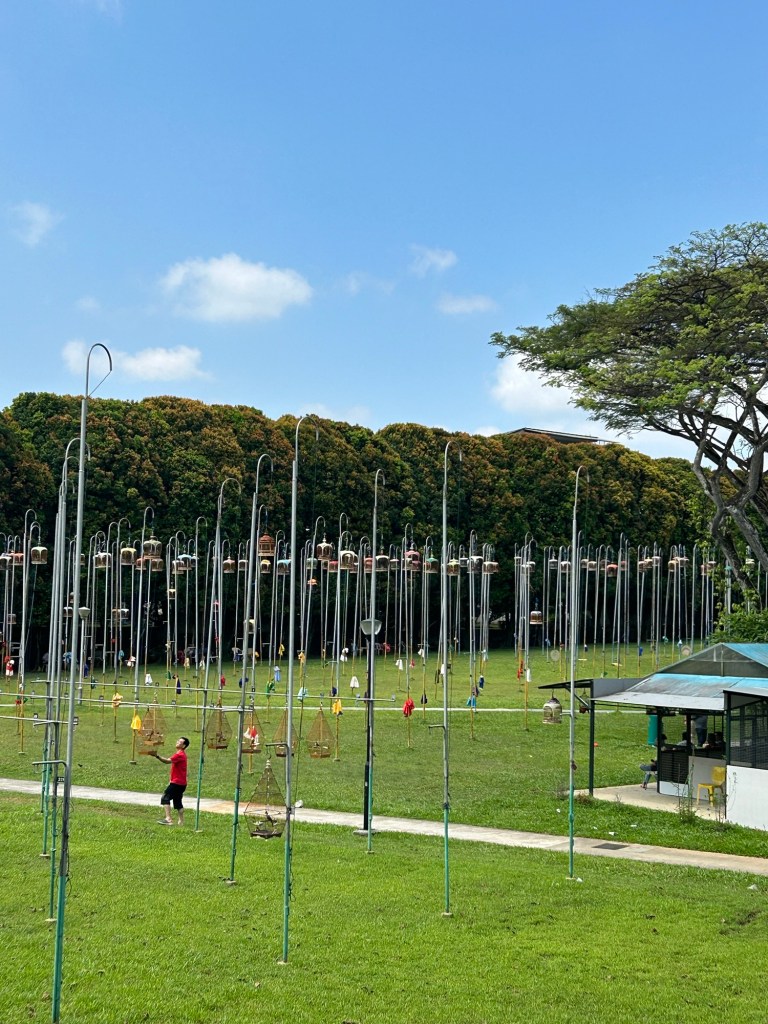
And then we came around the corner to this….

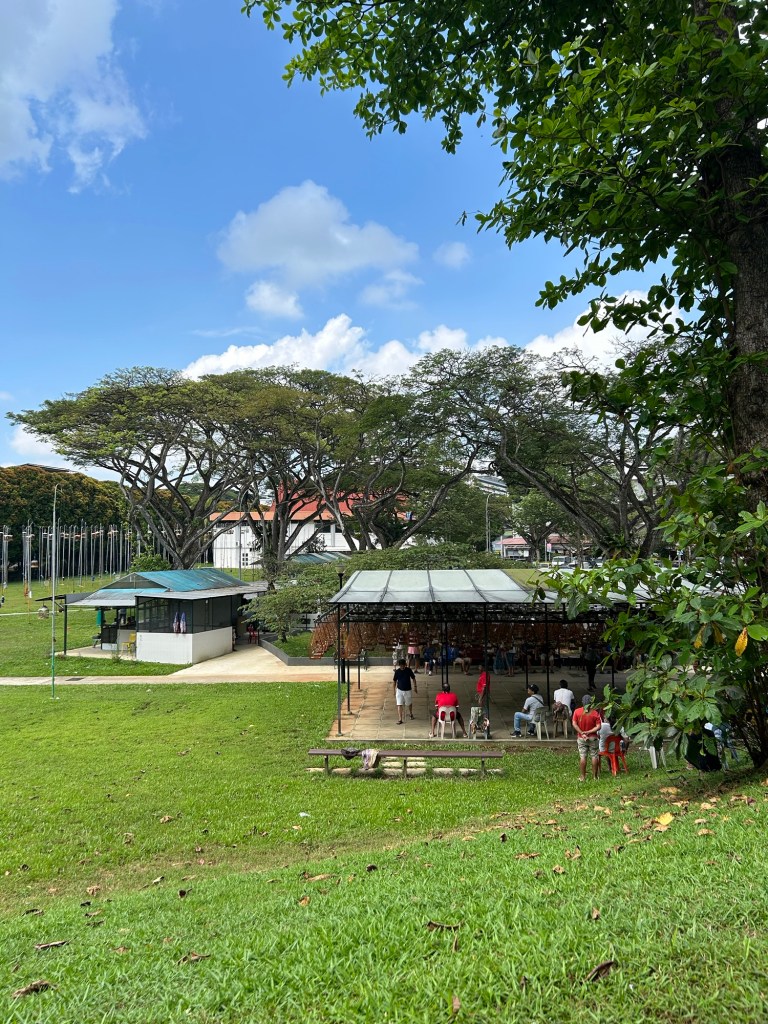
Yes, I know it looks like a field of flagpoles. In fact this is …
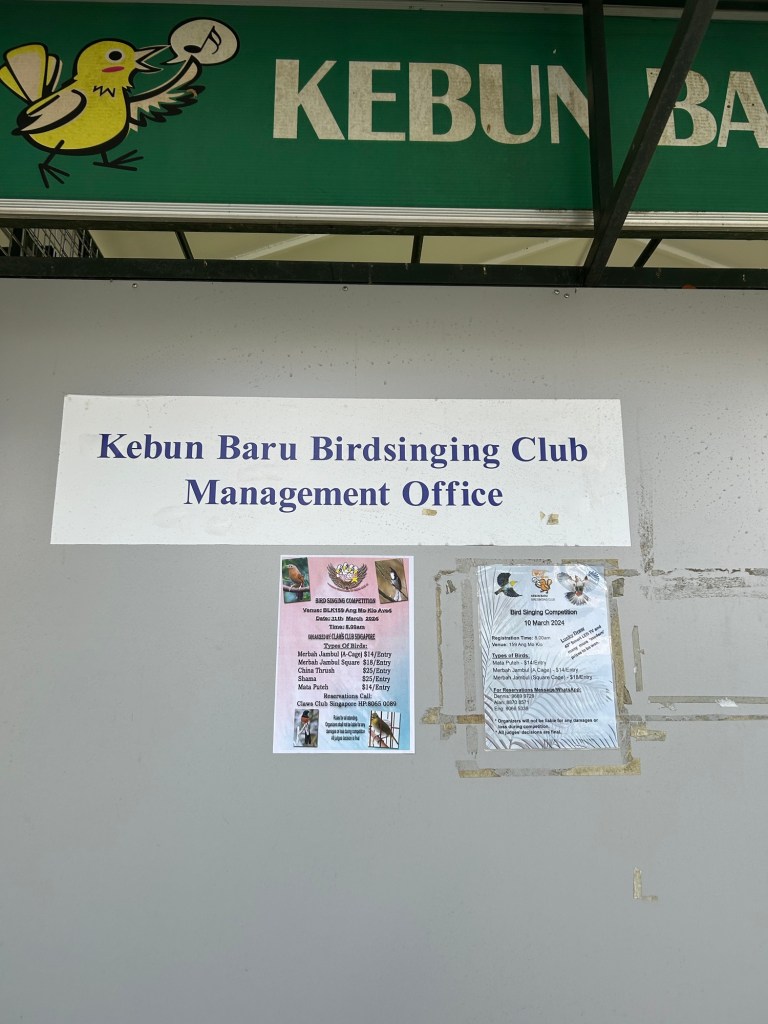
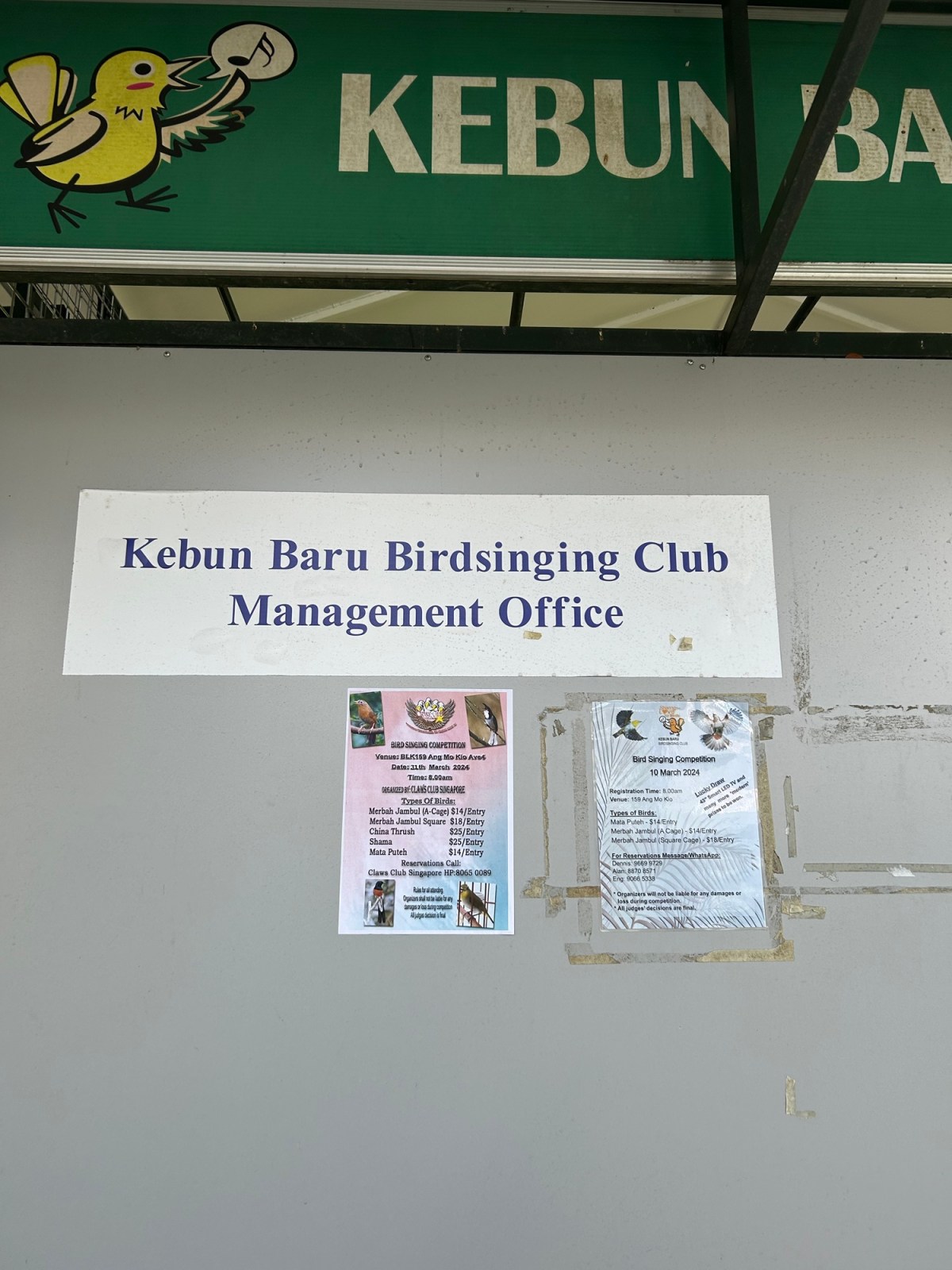
The Kebun Baru Birdsinging Club. The only one left in Singapore and the largest in SouthEast Asia. Bird aficionados from all over Singapore come here – especially on Sundays – and bring their birds for an airing. The field of poles (there are hundreds of them) are for zebra doves . Zebra doves nest in trees, so they get to sit up in the sky with a view. This seems to be a predominantly male activity, and the whole time we were there men would arrive carrying bird cages with a cloth cover and walk out, untie a line and drop a hook down, uncover the cage, attach it to the hook and hoist the cage into the air. The men had chairs and they would sit and chat while their birds sang to each other.
There is another whole section for birds that live in small trees and shrubs – these are small roofed areas. The birds are clustered by type – redwhiskered bulbuls, long tailed shamas and an assortment of tiny songbirds. All swaying in the breeze. All the cages hang from hooks and each hook is numbered. At first I thought each person had an assigned position but as we watched there seemed to be a lot of moving cages around – a bird would be in one place for awhile, then moved to the other side of the compound.
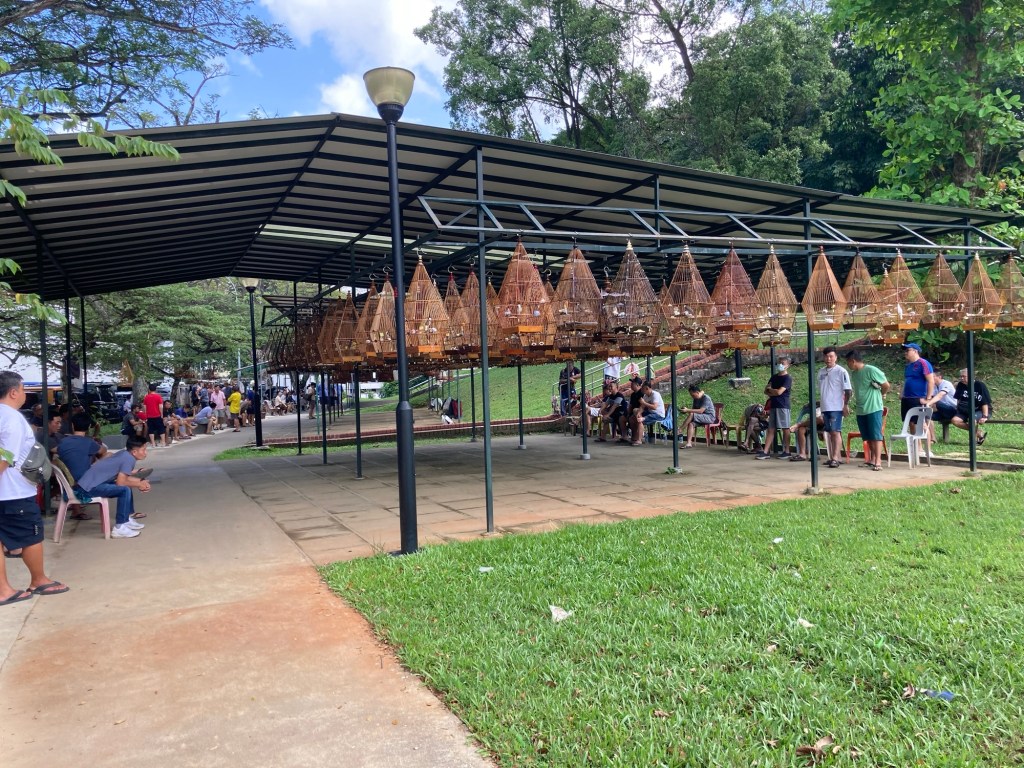
Apparently there are competitions held regularly and the birds are judged on their attractiveness and their singing. And they can be very expensive.
The Singaporean government regulates housing, and provides most of the housing in the city/state. Eighty percent of people live in public housing. In the district where we are staying the public flats are 15 to 20 stories, arranged in clusters of about 5 buildings. These clusters have ground floor shops, food courts, daycare, medical facilities, playgrounds, parks and more. There are often schools, especially primary schools, associated with these clusters. They are served by the excellent transit system, which is ever growing. And the fact is, in an island nation, the only way to go is up.
In the area where the Birdsinging Club is the public housing is not quite as dense – the buildings are not as tall. But from the map below you can see the clusters of housing units. But I do wonder what the arrived of the new subway line will do – will some of these older housing complexes fall so that bigger ones can be put in their place?
You know you are near the Birdsinging Club when the food centre has a little atrium off of it so the uncles can safely stash their birds while they go in for a snack. No animals in the food centre!
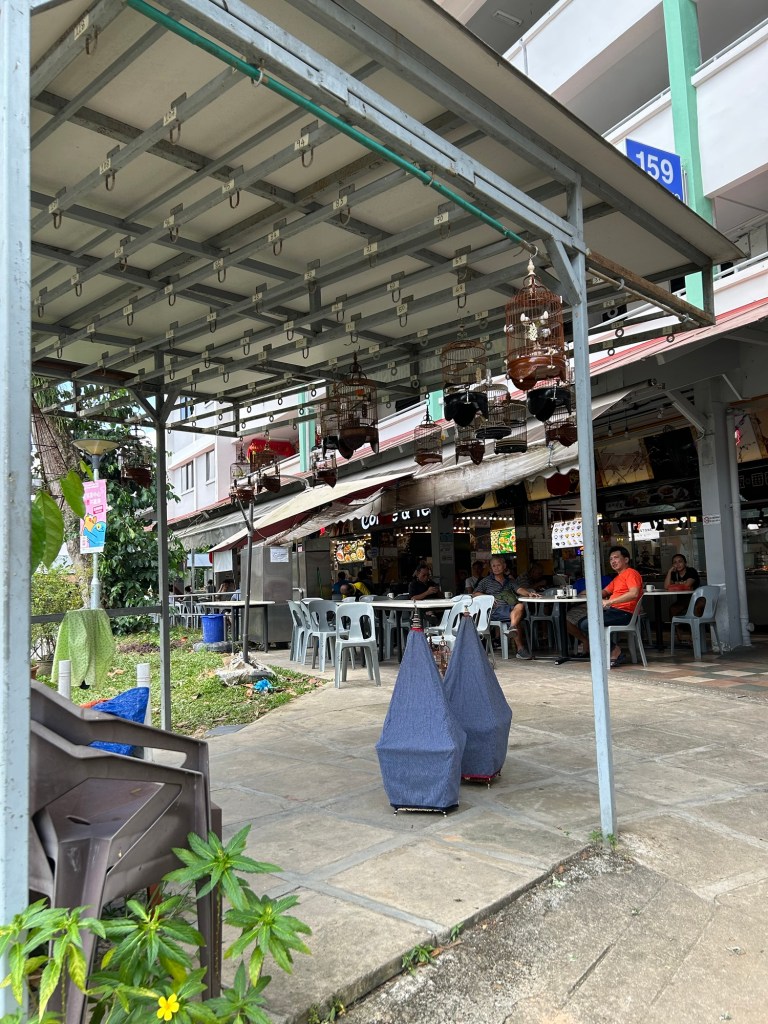
And here’s a video of what it sounds like with all those birds! And I should mention how beautiful their cages are – fine woodwork, hand painted china water dishes, carving and inlay. Really lovely.

 Where I'm At